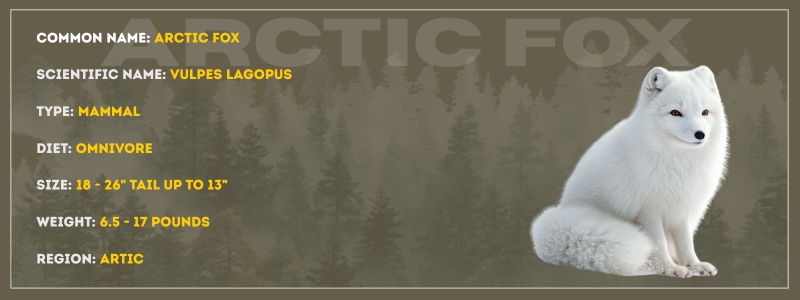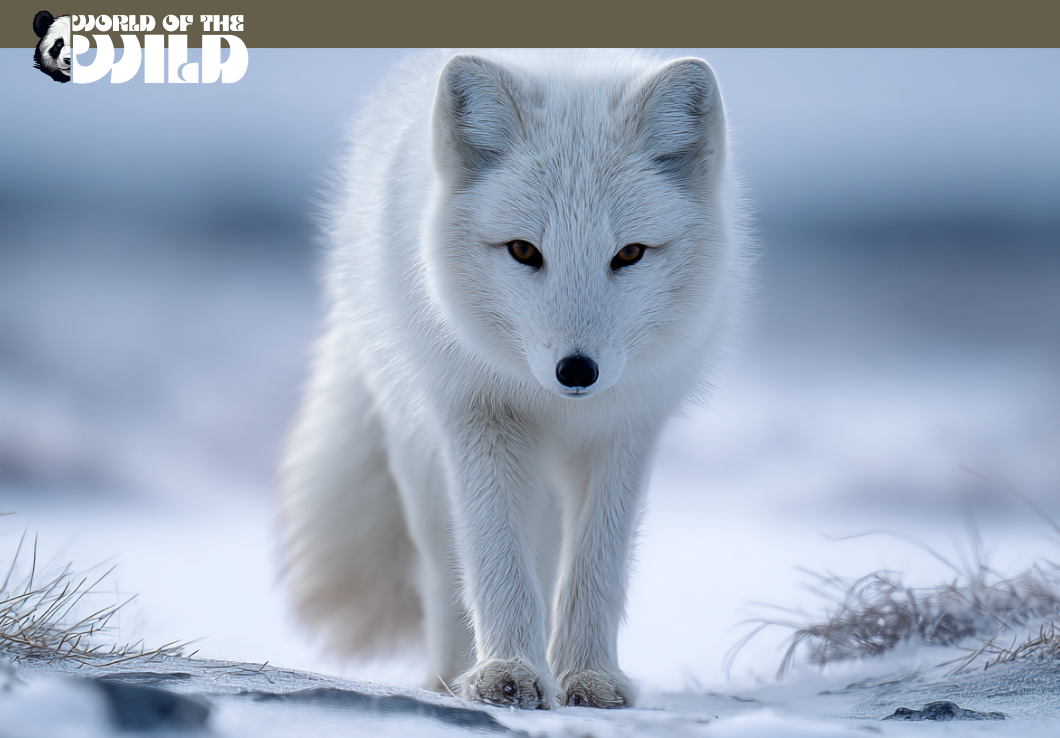

The Arctic is a world of blinding white, a silent expanse where survival is a daily miracle. Yet, moving through this frozen landscape with an almost supernatural grace is one of nature’s most perfect creations: the Arctic Fox (Vulpes lagopus).
Imagine an animal that not only thrives in temperatures plunging below -50°C but does so with an enchanting beauty that has earned it the title of the “Ghost of the North.” This tiny, resilient carnivore is a living emblem of adaptation. Its existence is a testament to the power of natural selection, making it not just fascinating, but a crucial indicator of the health of our planet’s most vulnerable ecosystem—the vast, beautiful, and rapidly changing tundra.
✨ Quick Facts: Tundra Trivia
Here are 5 intriguing facts that showcase the Arctic Fox’s unique mastery of its extreme environment:
- The Ultimate Insulation: The Arctic Fox has the best insulation of any mammal, allowing it to maintain a core body temperature even when the surrounding air temperature is -40°C
- A Mobile Pantry: It is one of the few animals that deliberately caches (stores) food in numerous small stashes throughout its territory to ensure survival during the scarce winter months.
- True North Navigators: They are known to undertake epic, often solitary migrations across sea ice, sometimes traveling thousands of kilometers in search of food. One young female was recorded traveling over 3,500 km from Norway to Canada in just 76 days!
- Hearing Through the Snow: The fox can listen to the faint sounds of small prey moving beneath a thick layer of snow. Once located, it performs a dramatic, vertical pounce, known as “mousing,” to break through the crust and catch its meal.
- Master of the Den: They often use the same elaborate, multi-entrance den for centuries, dug into hillsides or large mounds. These dens can be passed down through many generations of foxes.
🧬 Species Classification and Relatives
The Arctic Fox belongs to the biological family Canidae, which includes domestic dogs, wolves, and other foxes.
| Classification Rank | Scientific Name |
| Kingdom | Animalia |
| Phylum | Chordata |
| Class | Mammalia |
| Order | Carnivora |
| Family | Canidae |
| Genus | Vulpes |
| Species | Vulpes lagopus |
The name lagopus literally means “hare-footed,” referring to its fur-covered paws. While the Arctic Fox doesn’t have major subspecies, it is closely related to other true foxes in the genus Vulpes, most notably the Red Fox (Vulpes vulpes). The Red Fox is a major competitor for the Arctic Fox, as the former has been steadily moving north into Arctic Fox territory due to warming temperatures.
🦊 Appearance: Nature’s Perfect Parka
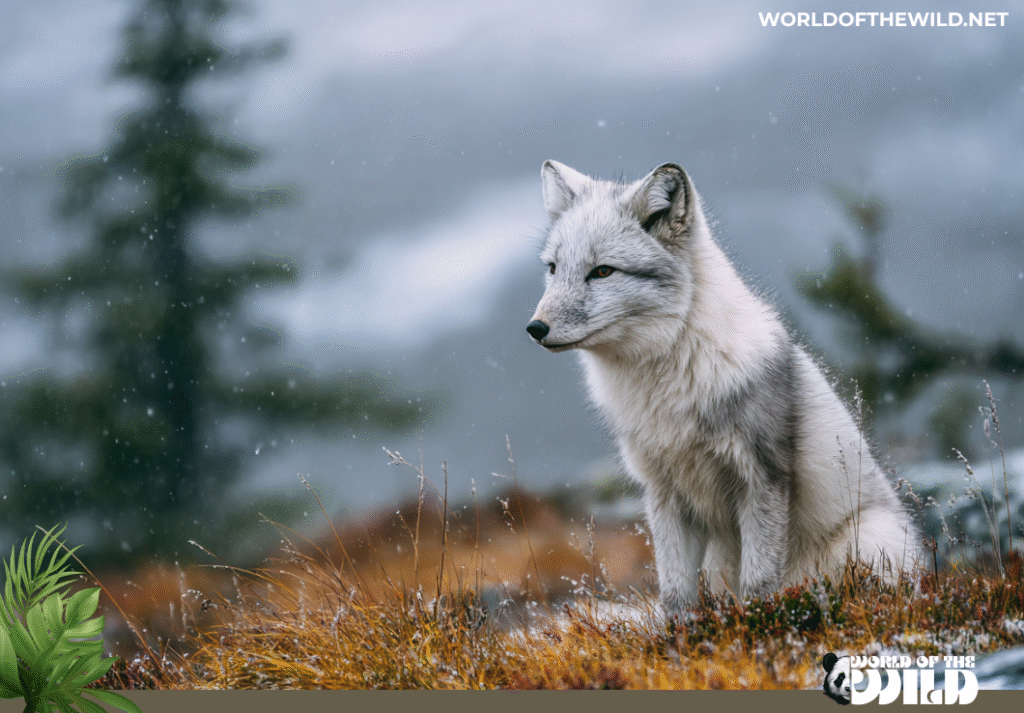
The Arctic Fox is a small, compact, and deceptively stout canid, built like a tiny, round tank to conserve heat.
- Size and Weight: It is generally smaller than the Red Fox. Adults typically stand about 25-30 cm tall at the shoulder, with a body length of 46 to 68 cm, and a bushy tail (brush) that adds another 30 cm. They usually weigh between 2.9 and 9.4 kg, with males being slightly larger.
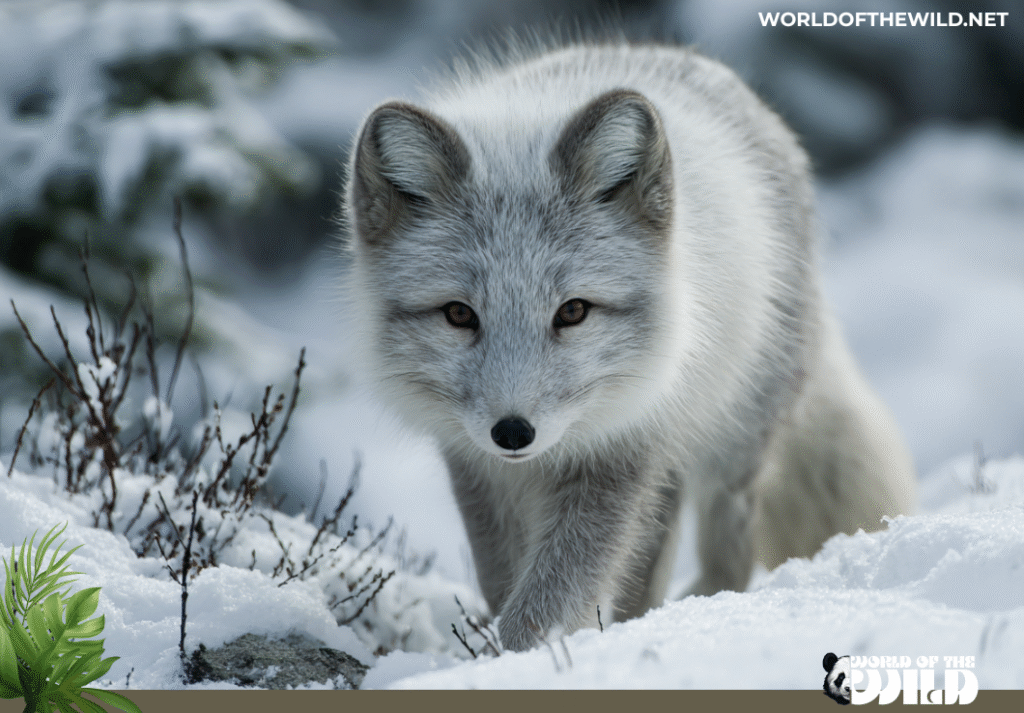
- Color and Pelage: Their most remarkable feature is their dense, multi-layered coat. They have two main color morphs:
- White Morph: Turns brilliant, camouflage white in winter and a brownish-grey in summer.
- Blue Morph: Remains a dark bluish-grey to chocolate brown year-round, which provides better camouflage in coastal and rocky, snow-less areas.
- Distinctive Features: They have short, rounded ears, a short muzzle, and short legs—all minimizing exposed surface area to the cold. Their most distinctive adaptation is the thick layer of fur covering the soles of their paws, acting like built-in snowshoes and insulative booties.
🐾 Behavior: Solitary Survivalist
The Arctic Fox is primarily solitary outside of the mating season and the period of raising pups.
- Daily Rhythm: They are often active during any part of the day, depending on the season and prey availability. During the deep winter, they may become less active to save energy.
- Communication: They communicate using a variety of vocalizations, including barks, howls, chattering, and a scream or cackle used to warn off rivals. Scent marking is also crucial for territorial defense and mating.
- Unique Adaptations:
- The Curl: When resting, the fox curls up, tucking its nose and paws under its densely furred tail. This posture acts as a perfect thermal blanket, ensuring maximum heat retention.
- Caravanning: In very rare cases and during times of extreme food scarcity, small groups of Arctic Foxes may sometimes be observed traveling together, likely benefiting from shared foraging efforts or following a large animal carcass.
🕰️ Evolution: Ancient Roots
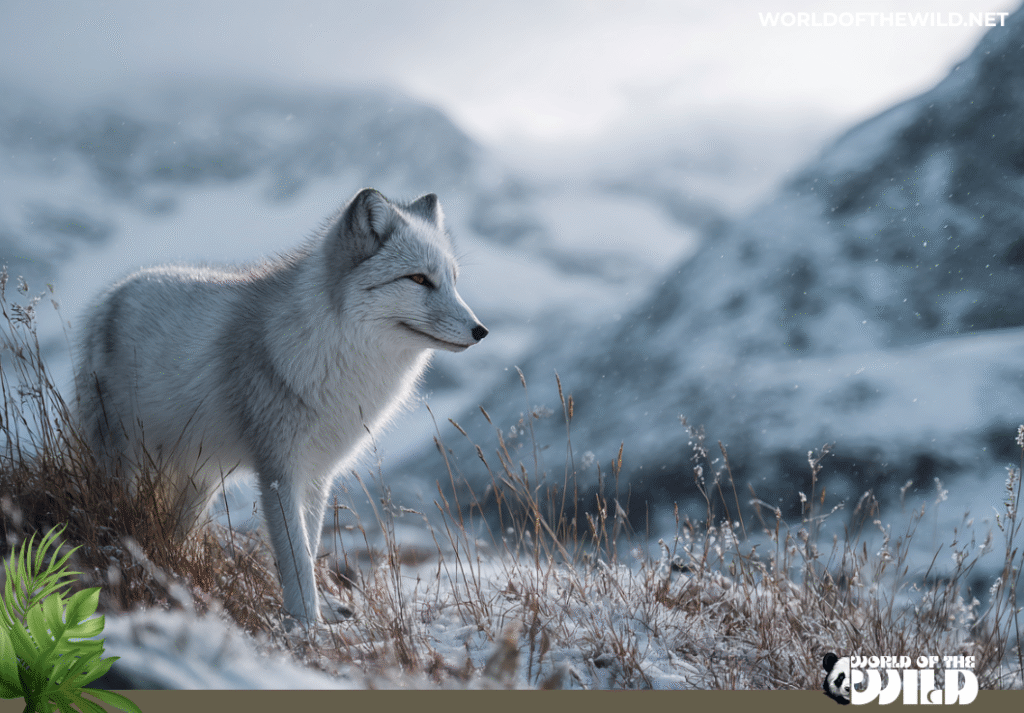
The Arctic Fox is believed to have originated in Eurasia during the late Pliocene epoch, approximately $4.5$ million years ago. It is thought to be one of the most ancient and long-established canids in the Arctic region.
A significant evolutionary milestone was the development of its extraordinary fur coat. As global temperatures dropped during the Pleistocene ice ages (starting about 2.5 million years ago), the ancestors of Vulpes lagopus evolved the dense, compact body shape, short extremities, and thick insulation that allowed them to survive the extreme cold. Its adaptability in hunting and scavenging has allowed it to persist in the harsh, resource-poor environment while other species struggled.
🗺️ Habitat: The Global Tundra
- Geographic Range: The Arctic Fox has a circumpolar distribution, meaning it is found throughout the entire Arctic region of the Northern Hemisphere. This includes the northern parts of:
- Alaska (USA)
- Canada
- Greenland
- Iceland
- Norway
- Sweden
- Finland
- Russia (Siberia)
- Environment: The specific environments are Arctic Tundra and coastal areas. The tundra is characterized by:
- Permafrost: Permanently frozen ground that limits deep vegetation growth.
- Low Vegetation: Dominated by mosses, lichens, sedges, and dwarf shrubs.
- Features: The fox prefers areas with rocky outcrops, coastal cliffs, or river banks where it can dig its elaborate, multi-generational dens. They often venture out onto the sea ice in winter.
🍽️ Diet: An Opportunistic Omnivore
The Arctic Fox is a highly successful and opportunistic carnivore/omnivore. Its diet is incredibly varied, depending on the season and location.
- Primary Food Sources:
- Lemmings and Voles: These small rodents are the primary food source, especially during the summer. Population cycles of the fox are directly tied to the boom-and-bust cycles of lemming populations.
- Birds and Eggs: They prey on ground-nesting birds, such as snow geese, ducks, and seabirds, often raiding their nests for eggs and chicks.
- Marine Mammals: Along the coast, they scavenge on carrion left by polar bears, such as seal, walrus, and whale carcasses.
- Vegetation: They will supplement their diet with berries and seaweed, especially when animal prey is scarce.
- Hunting/Foraging: The fox uses its keen sense of hearing to locate small prey under the snow (the “mousing” technique). It is also a relentless scavenger, following larger predators like the Polar Bear to feed on their leftovers.
🔪 Predators and Threats: A Harsh Existence
Despite their resilience, Arctic Foxes face significant dangers both from natural forces and human activity.
- Natural Predators:
- Golden Eagles and Snowy Owls: Can prey on pups and occasionally smaller adults.
- Polar Bears: While not primary predators, they will kill foxes that stray too close to a kill.
- Red Foxes (Anthropogenic Threat): The warming climate allows the larger and more aggressive Red Fox to expand its territory northward, leading to direct competition and sometimes the killing of Arctic Fox pups and adults.
- Anthropogenic Threats:
- Climate Change (Primary Threat): This is the single greatest long-term threat. Melting sea ice restricts the fox’s access to new territories and food sources (scavenging off the ice), while warming tundra facilitates the northward expansion of the Red Fox.
- Oil and Gas Exploration: Resource development in the Arctic leads to habitat fragmentation and disturbance of den sites.
- Trapping/Hunting: While controlled in many areas, historical and current trapping for the fox’s beautiful pelt remains a localized threat in some regions.
👨👩👧👦 Reproduction and Life Cycle
Life for an Arctic Fox is relatively short but involves intense family cooperation during the breeding season.
- Mating Rituals: Mating occurs between April and May. Arctic Foxes are generally monogamous during a single breeding season, and pairs often return to the same ancestral den each year.
- Gestation and Offspring: The gestation period is approximately 52 days.
- Litter Size: The litter size is famously large, averaging 5 to 8 pups (kits), but can be as high as 25—the largest litter recorded for any carnivore! This boom-and-bust reproductive strategy is essential for taking advantage of sudden, massive increases in lemming populations.
- Parental Care: Both the mother (vixen) and the father (dog) are involved in raising the kits. The father primarily hunts and brings food back to the den.
- Life Cycle: Kits are born blind and helpless, fully opening their eyes around 10-14 days. They are weaned after about 6-8 weeks and typically become independent by the time they are 3 to 4 months old. Sexual maturity is reached around 9 to 10 months.
- Average Lifespan: In the wild, their lifespan is generally short, averaging 3 to 4 years, though individuals have been known to live up to 10 or 11 years in captivity.
📈 Population: A Fragile Status
The global population of the Arctic Fox is relatively stable, but this masks serious regional vulnerabilities.
- Conservation Status: Least Concern (LC)
- Global Population Estimate: The global population is generally estimated to be in the hundreds of thousands.
- Population Trends: While globally stable, populations are facing significant decline and have been classified as threatened or endangered in specific regions:
- Fennoscandia (Norway, Sweden, Finland): Populations here are Critically Endangered and require intensive conservation efforts due to severe reduction from historical trapping and climate-driven Red Fox competition.
- Iceland: The population is stable and robust, as the Red Fox never colonized the island.
📣 Conclusion: The Race Against the Thaw
The Arctic Fox is a marvel of evolutionary engineering, a creature custom-built for one of the world’s most unforgiving environments. From its incredible insulation to its sophisticated mousing pounce, it exemplifies the resilience of life at the top of the world.
However, the ghost of the north is racing against an invisible enemy: a rapidly warming world. Its main food source, its critical sea-ice highway, and its historic territories are all under threat from climate change, with the rising shadow of the Red Fox making survival even harder. Conserving the Arctic Fox means more than protecting a single species; it means tackling the climate crisis head-on to preserve the integrity of the entire Arctic ecosystem.
Let the sight of this beautiful, enduring survivor serve as a call to action. We must slow the thaw, or risk losing this tiny, magnificent spirit of the ice forever.