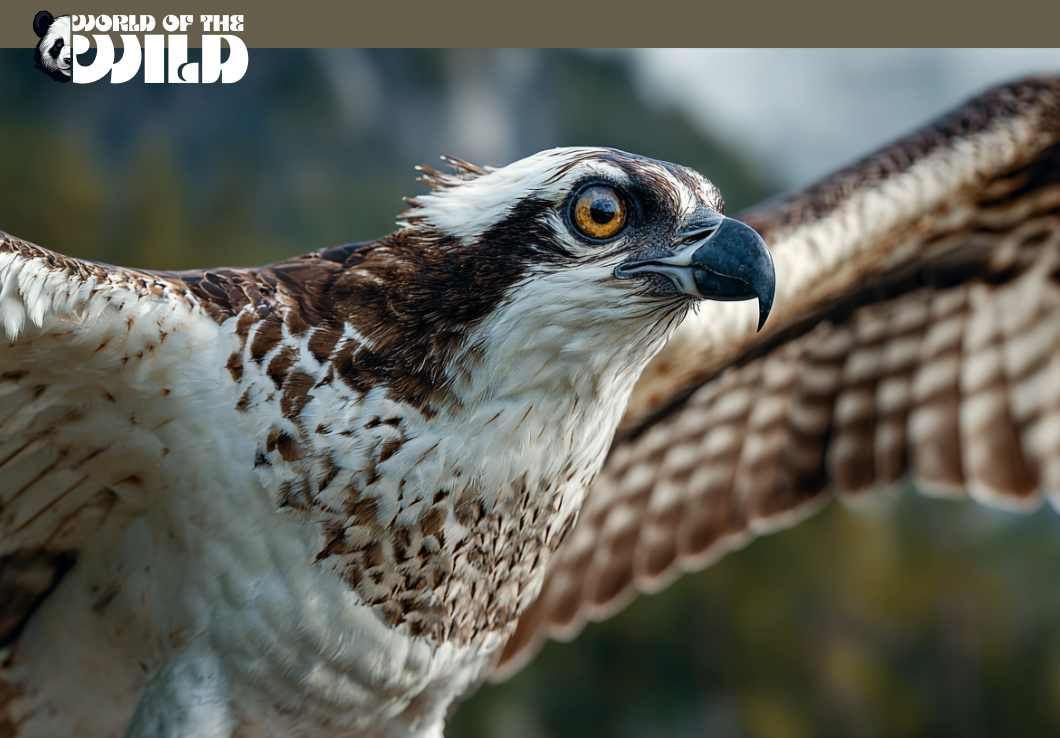

There are few sights in the natural world as spectacular as a bird of prey plunging from the sky. But when that hunter hits the water with a powerful splash and emerges, not with terrestrial prey, but with a wriggling fish clutched in its talons, you know you’ve just witnessed the mastery of the Osprey (Pandion haliaetus). Often mistaken for a bald eagle from a distance, the Osprey is a unique raptor that has perfected the art of piscivory—being an exclusive fish-eater. Its dedication to this aquatic diet, combined with a remarkable comeback from near-extinction, makes the Osprey one of the most fascinating and significant feathered residents of our global wetlands.
🧐 Quick Facts About the Osprey
Get ready to impress your friends with these intriguing facts about the “fish hawk”:
- Reversible Toe: Unlike most raptors, the Osprey has a specialized outer toe that is reversible, allowing it to grasp fish with two toes forward and two toes back. This arrangement provides a powerful, vise-like grip, ensuring the slippery prey doesn’t escape.
- A “Fish” Grip: Ospreys have small, sharp spines called spicules or denticles on the pads of their feet, which act like gripping sandpaper, further aiding in holding onto slick, wet fish.
- Fish Aerodynamics: When flying with a captured fish, the Osprey will expertly adjust its grip mid-flight to ensure the fish is always held head-forward. This reduces drag and makes the flight back to the nest more energy-efficient.
- Global Traveler: Ospreys are one of the most widespread raptors in the world, found on every continent except Antarctica.
- Built-in Snorkel: Ospreys can dive completely underwater to catch a fish, sometimes disappearing for a second or two before emerging, often completely soaked but triumphant.
- Unique Family: The Osprey is so specialized and distinct from other birds of prey that it is placed in its own unique taxonomic family, Pandionidae.
🧬 Species and Classification
The Osprey holds a truly unique place in the avian family tree, standing apart from other hawks, eagles, and falcons.
| Classification Rank | Taxonomic Name |
| Kingdom | Animalia |
| Phylum | Chordata |
| Class | Aves |
| Order | Accipitriformes |
| Family | Pandionidae |
| Genus | Pandion |
| Species | haliaetus |
While it is the sole member of its genus (Pandion) and family (Pandionidae), there are four generally recognized subspecies that reflect its vast global distribution:
- Pandion haliaetus haliaetus: The nominate subspecies, found in the Palearctic (Europe, North Africa, Asia).
- Pandion haliaetus carolinensis: The North American subspecies, which is strongly migratory, traveling to South America in winter.
- Pandion haliaetus ridgwayi: The non-migratory subspecies found in the Caribbean.
- Pandion haliaetus cristatus: The smallest and most sedentary subspecies, found in coastal Australia and Tasmania.
🦅 Appearance: Built for the Hunt
The Osprey has a striking and unmistakable appearance, built for its specialized hunting style.
- Size and Weight: Ospreys are medium-to-large raptors. They typically weigh between 2.0 to 4.6 pounds (about 0.9 to 2.1 kilograms).
- Wingspan: Their impressive wingspan ranges from 4.8 to 6.0 feet (145 to 180 centimeters). Their long, slender wings give them a distinctive “M” shape when viewed from below during flight.
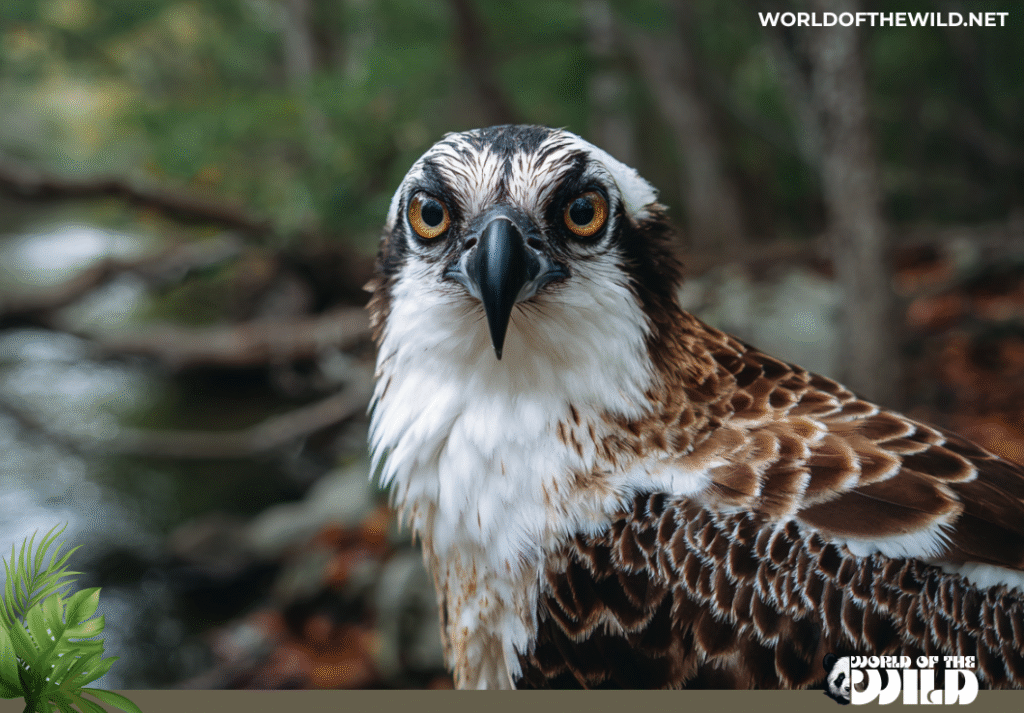
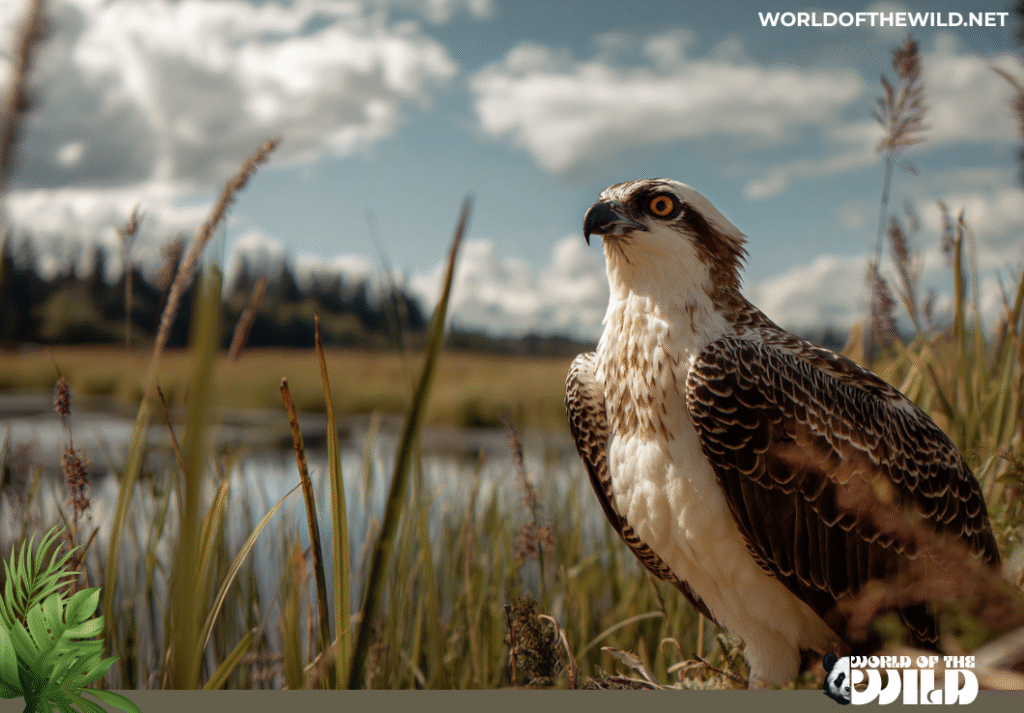
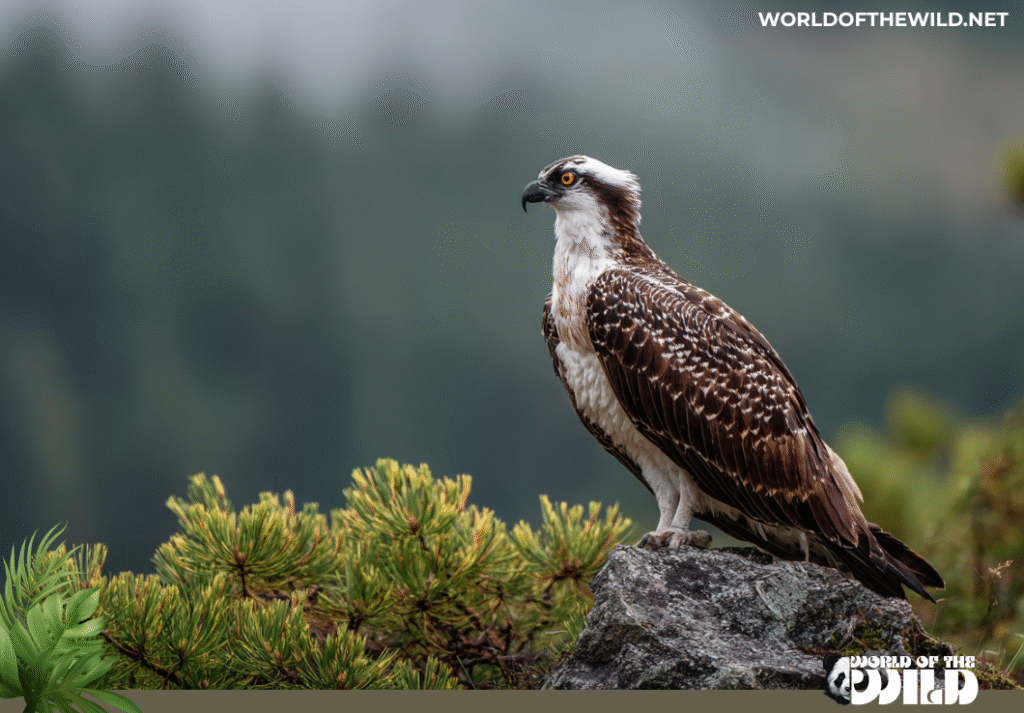
- Coloration: The Osprey’s plumage is sharply defined. The upperparts of the body and wings are a uniform, glossy dark brown. The underparts are mostly white, providing excellent camouflage against the bright sky when viewed by fish in the water.
- Distinctive Features: The most recognizable feature is the dark brown mask that runs from the eye down the side of the neck against the white head, giving it a fierce, banded look. Its eyes are a bright yellow, and its powerful talons are large and hooked, designed specifically to grip and carry fish.
🧭 Behavior: Master of the Air-to-Water Attack
The Osprey is primarily a solitary bird outside of the breeding season, though they may nest in loose colonies where resources are abundant.
- Hunting Technique: Their behavior is defined by their hunting method: they soar high above the water, sometimes hovering, to spot fish. Once a target is locked, they fold their wings back and execute a spectacular, powerful dive, often hitting the water feet-first with a tremendous splash.
- Communication: Their most common vocalization is a series of sharp, piping whistles, often transcribed as “cheep-cheep-cheep,” used for alarm or communication between a nesting pair.
- Nest Building: Ospreys are renowned for their massive, messy nests, called eyries. They are built atop dead trees, artificial platforms, utility poles, or channel markers, always near water. A single pair may use and add to the same nest for many years, with some nests growing to be several feet high and wide!
🕰️ Evolution: An Ancient Lineage
The evolutionary story of the Osprey is one of profound specialization. Its unique physical and genetic characteristics have led researchers to classify it separately from all other birds of prey.
The earliest fossils clearly identifiable as belonging to the Pandion lineage date back to the Miocene epoch (about 23 to 5 million years ago). Its ancestors are thought to have diverged early from the main raptor family tree (Accipitridae).
The most significant evolutionary milestone was the perfection of its piscivorous adaptations—the reversible outer toe, the spicules on the foot pads, and the dense, oily plumage that sheds water effectively. This specialization allowed the Osprey to colonize aquatic environments globally and occupy a niche that few other large raptors could fill, a testament to the power of evolutionary fine-tuning.
🏞️ Habitat: Coastlines and Waterways
The Osprey has one of the most extensive distributions of any raptor, truly making it a cosmopolitan species.
- Geographic Range: It breeds across North America, Europe, Asia, and Australia. Migratory populations spend winters in South America and Africa.
- Specific Environment: Ospreys are inextricably linked to water. They are found in diverse aquatic environments, including:
- Coastal marshes and estuaries
- Lakes and reservoirs
- Rivers and large streams
- Mangrove swamps
The defining feature of their habitat is the availability of shallow, unpolluted water that supports abundant fish populations, and a suitable elevated structure for nest building near their fishing grounds.
🐟 Diet: An Obligate Carnivore
The Osprey is a carnivore, and an exceptionally specialized one at that.
- Primary Food Sources: It is an obligate piscivore, meaning fish make up over 99% of its diet. They prefer medium-sized, non-game fish that swim close to the surface, typically weighing between 5 to 10 ounces (about 140 to 280 grams). Common prey species include flounder, menhaden, carp, trout, and various panfish.
- Hunting: Ospreys hunt by flying slowly and methodically over the water. They locate fish visually, sometimes from heights of 100 feet or more. Once a target is sighted, the bird adjusts its position, then dives, rotating its feet forward in the last few seconds to hit the water talons-first, often submerging completely for the catch.
⚔️ Predators and Threats
While the Osprey is a formidable bird, it faces threats both in the air and from human activity.
- Natural Predators: Adult Ospreys have few natural predators. Occasionally, bald eagles, great horned owls, or other large raptors may predate on eggs, chicks, or fledglings, or even kleptoparasitize an adult (steal its catch). Raccoons and snakes can also raid the nests.
- Anthropogenic Threats:
- Pesticides (Historical): The most significant threat in the 20th century was the widespread use of DDT. This pesticide caused eggshell thinning, leading to catastrophic breeding failure across North America and Europe. This threat has largely been mitigated since the DDT ban.
- Habitat Loss: The continuous development of coastal and riparian areas removes nesting sites and degrades water quality, reducing the available fish supply.
- Electrocution: Nests built on utility poles can lead to electrocution, a common cause of death in some regions.
- Climate Change: Changes in weather patterns can affect fish migration and survival, indirectly impacting the Osprey’s food source.
🐣 Reproduction and Life Cycle
The reproductive journey of the Osprey is one of dedication and partnership.
- Mating Rituals: The breeding season typically begins in early spring upon the bird’s return from migration. Mating rituals involve spectacular aerial displays by the male, often including high-flying dives known as the “sky-dance,” and bringing gifts of fish to the female.
- Gestation (Incubation): The female typically lays 2 to 4 eggs, which are incubated for about 37 days. Both parents share the incubation duties, though the female does the majority.
- Offspring: Chicks hatch covered in down and are altricial (helpless). They are fed exclusively by the female with fish provided by the male. The young fledge (take their first flight) at about 8 to 10 weeks old but remain dependent on the parents for food for several more weeks.
- Life Cycle and Lifespan: Ospreys reach sexual maturity at about 3 to 5 years of age. They can live for a significant time in the wild, with the average lifespan being around 15 to 20 years. The oldest recorded wild Osprey lived to over 25 years.
📈 Population and Conservation
The Osprey’s story is one of one of the most successful conservation recoveries in recent history.
- Conservation Status: Globally, the Osprey is classified as Least Concern by the IUCN Red List.
- Population Estimate: While precise global figures are difficult to obtain, the North American population alone is estimated to be over 160,000 individuals, and populations are considered stable or increasing in most parts of its range.
- Population Trends: Following the ban on DDT and concerted conservation efforts, including the installation of artificial nesting platforms, Osprey populations have rebounded dramatically since the 1970s. Their recovery is often cited as a major conservation success story, proving that targeted action can save species from the brink.
🌟 Conclusion: A Conservation Triumph
The Osprey is far more than just a large bird of prey; it is an evolutionary masterpiece, a testament to nature’s ability to perfectly adapt a creature to its niche. From its reversible toe and spiny foot pads to its breathtaking, fish-first dive, every aspect of its being is dedicated to the aquatic hunt. The story of its decline due to DDT and its incredible, roaring return to our waterways is a powerful symbol of hope and the effectiveness of environmental regulation.
The Osprey reminds us that the health of a top predator is a direct reflection of the health of its entire ecosystem. As we continue to develop coastlines and utilize natural resources, we must remember the simple fact: protect the waters, and the magnificent sky hunter will thrive.