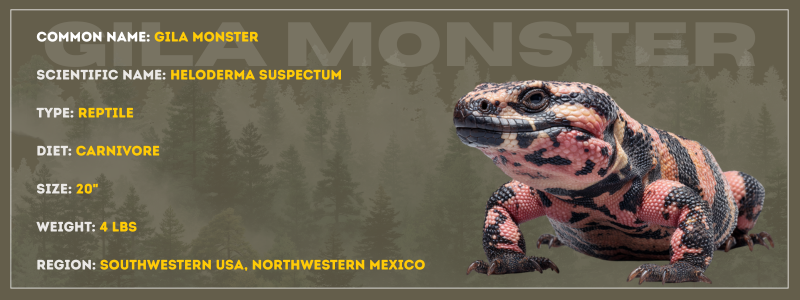

In the scorching deserts of the American Southwest, a creature moves with deliberate slowness across sun-baked rocks, its body adorned in striking patterns of black and pink beads that shimmer like living jewelry. This is the Gila monster (Heloderma suspectum)—one of only two venomous lizards in the world and a reptile so shrouded in myth and misunderstanding that early settlers believed its breath alone could kill a person. Yet far from being the fearsome dragon of frontier legend, the Gila monster is a surprisingly docile, slow-moving animal that has survived relatively unchanged for millions of years. This remarkable reptile represents an evolutionary success story, having developed a unique venom delivery system and survival strategies that allow it to thrive in one of North America’s harshest environments. As both a medical marvel and an ecological indicator species, the Gila monster deserves our fascination and protection.
Facts
1. Medical Miracle: The Gila monster’s venom contains a compound called exendin-4, which has been synthesized to create Exenatide, an FDA-approved medication for treating type 2 diabetes. This drug helps regulate blood sugar and has generated hundreds of millions in pharmaceutical revenue.
2. Extreme Efficiency: Gila monsters can consume up to one-third of their body weight in a single meal and may eat only 5-10 times per year, storing fat in their thick tails to survive months without food.
3. Ancient Lineage: These lizards belong to one of the oldest living lizard families, with fossil records showing their ancestors existed during the Cretaceous period alongside dinosaurs, making them living fossils that have survived for over 100 million years.
4. Tenacious Bite: When a Gila monster bites, it doesn’t inject venom like a snake—instead, it chews, allowing venom to flow through grooves in its teeth into the wound. They’re notorious for refusing to let go once they bite down.
5. Underground Lifestyle: Gila monsters spend approximately 95% of their lives underground in burrows, emerging primarily during the brief periods following seasonal rains when temperatures are more moderate.
6. Impressive Memory: Research has shown that Gila monsters possess remarkable spatial memory and can remember the locations of food sources and water for at least a year.
7. Protected Status: The Gila monster was one of the first venomous animals to receive legal protection in North America, with Arizona prohibiting their collection as early as 1952.
Species
The Gila monster belongs to the following taxonomic classification:
- Kingdom: Animalia
- Phylum: Chordata
- Class: Reptilia
- Order: Squamata
- Family: Helodermatidae
- Genus: Heloderma
- Species: Heloderma suspectum
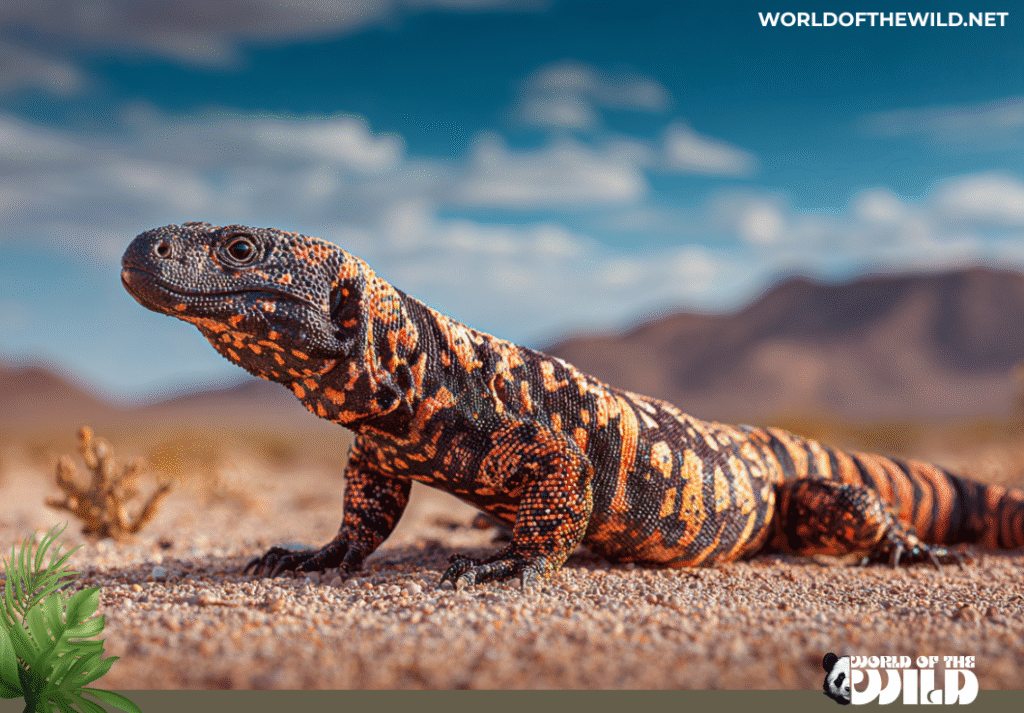
Within the species Heloderma suspectum, scientists recognize two distinct subspecies based on geographic distribution and coloration patterns. The reticulated Gila monster (Heloderma suspectum suspectum) inhabits southern regions and displays a more uniform pattern of dark markings with less contrast. The banded Gila monster (Heloderma suspectum cinctum) ranges through northern territories including much of Arizona and displays more distinctive crossbands of pink, orange, or yellow against black.
The Gila monster shares its family, Helodermatidae, with only one other genus: Heloderma horridum, the Mexican beaded lizard, which includes several subspecies found throughout Mexico and parts of Central America. These are the only venomous lizards recognized in the world, making the family Helodermatidae extraordinarily unique among reptiles. Recent genetic studies have suggested that the separation between Gila monsters and beaded lizards occurred approximately 20 million years ago.
Appearance
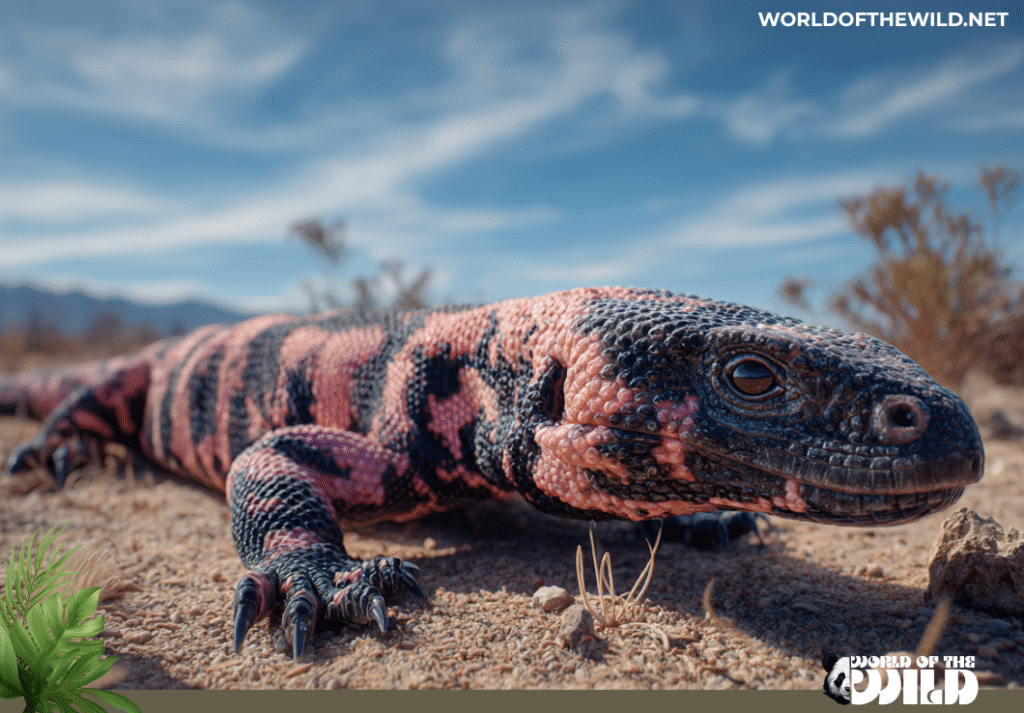
The Gila monster is a heavy-bodied, slow-moving lizard with a distinctive and unmistakable appearance. Adults typically measure 18-24 inches (45-60 cm) in total length, though exceptional individuals may reach 26 inches. They are robust animals, weighing between 1.5-5 pounds (0.7-2.3 kg), with some well-fed specimens exceeding this range.
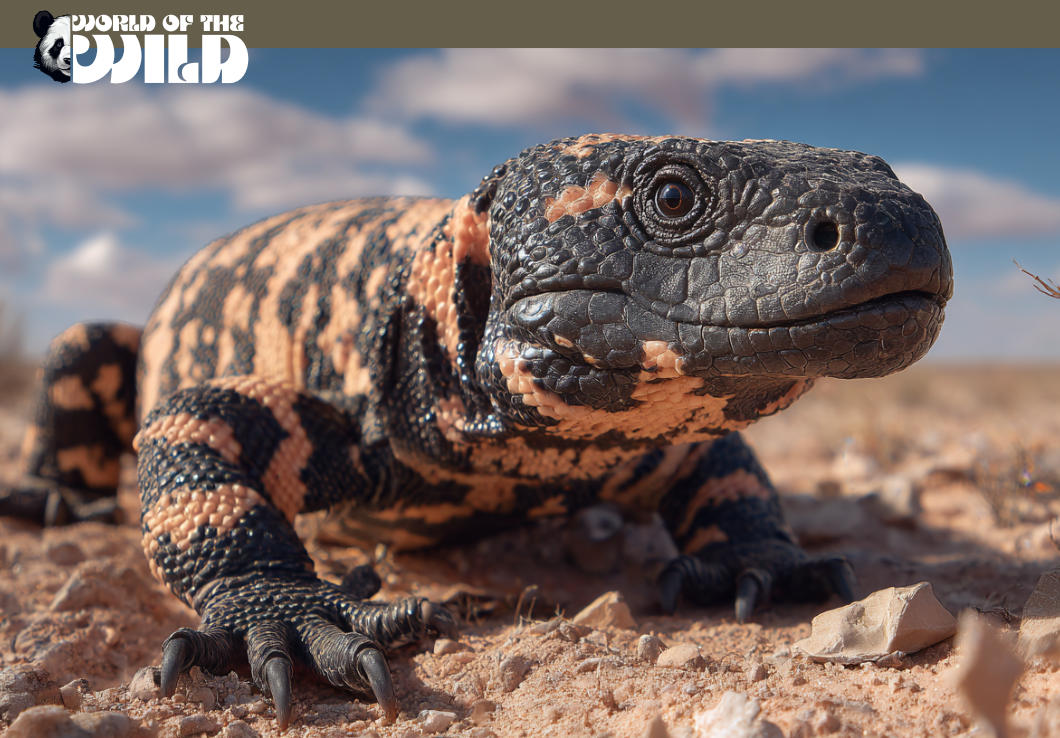
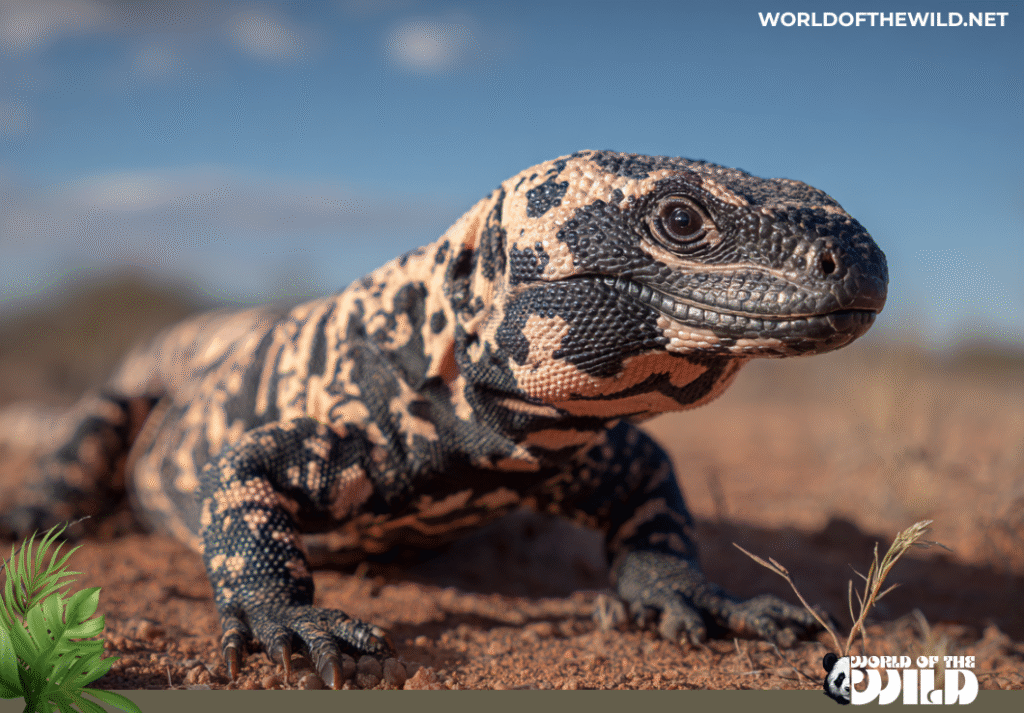
The most striking feature of the Gila monster is its remarkable coloration. The skin appears covered in small, bead-like scales called osteoderms—bony deposits beneath the scales that provide protection like chain mail armor. These scales create intricate patterns of black with contrasting bands or reticulations of pink, orange, yellow, or occasionally white, varying by subspecies and individual. The banded subspecies displays more distinct crossbands, while the reticulated subspecies shows a mottled, networked pattern.
The head is large, broad, and somewhat flattened, with a blunt snout and powerful jaws equipped with grooved teeth designed for venom delivery. Their eyes are small with round pupils, and their vision is relatively poor compared to other lizards. The tongue is thick, dark, and forked, used for chemical detection much like snakes. The body is cylindrical and thick, supported by short, muscular legs with curved claws adapted for digging. Perhaps most characteristically, the tail is thick and sausage-like, serving as a fat storage organ that allows the animal to survive extended periods without food. A well-fed Gila monster displays a plump, rounded tail, while a thin tail indicates an animal in poor condition or recent food scarcity.
Behavior
The Gila monster leads a largely solitary and secretive existence, spending the vast majority of its life hidden from view. These lizards are primarily active during the twilight hours of dawn and dusk (crepuscular) or at night (nocturnal), particularly during the warmer months. They emerge from underground burrows or rocky shelters primarily during spring and early summer, with activity peaking in April and May when temperatures are moderate and prey is abundant.
Despite their fearsome reputation, Gila monsters are generally docile and non-aggressive toward humans. They move with a distinctive, plodding gait, typically traveling no more than one mile from their home burrow. When threatened, they respond defensively rather than aggressively—opening their mouth wide as a warning, hissing loudly, and sometimes performing a threat display by arching their back. They rarely bite unless directly handled, stepped upon, or otherwise provoked.
Social interactions occur primarily during the breeding season, when males engage in ritualized combat for access to females. These wrestling matches involve two males intertwining their bodies and attempting to pin each other to the ground, though these contests rarely result in injury. Communication occurs through chemical signals detected by their forked tongues, which they flick frequently to sample scent particles in the air and on surfaces.
Gila monsters demonstrate surprising intelligence and problem-solving abilities for reptiles. They possess excellent spatial memory, allowing them to navigate back to preferred shelter sites and remember productive hunting locations across seasons. Research has documented individuals returning to the same hibernation sites year after year, sometimes traveling considerable distances to reach these preferred locations. They’ve also shown the ability to learn and modify their behavior based on experience, including avoiding areas where they’ve encountered danger.
One of their most remarkable behavioral adaptations involves thermoregulation and energy conservation. By spending up to 95% of their time underground, they avoid temperature extremes and minimize water loss—critical adaptations for desert survival. When they do emerge, they bask carefully to reach optimal body temperatures before hunting or other activities.
Evolution
The Gila monster represents an ancient reptilian lineage with a fossil record extending back to the age of dinosaurs. The family Helodermatidae first appeared during the Cretaceous period, approximately 100 million years ago, making these creatures living fossils that have survived multiple mass extinction events, including the catastrophe that eliminated non-avian dinosaurs 66 million years ago.
Fossil evidence suggests that the ancestors of modern Gila monsters and beaded lizards were once far more widespread and diverse than they are today. Paleontologists have discovered helodermatid fossils across North America, including in regions where these lizards no longer exist, such as Wyoming, South Dakota, and Nebraska. During the Oligocene and Miocene epochs (roughly 33-5 million years ago), the family reached its greatest diversity, with multiple genera and species distributed across the continent.
The genus Heloderma itself arose approximately 20-25 million years ago, with the divergence between the Gila monster and Mexican beaded lizard occurring around 20 million years ago as geographic barriers separated ancestral populations. Climate changes during the Pliocene and Pleistocene epochs (5 million-12,000 years ago) gradually restricted their range to the warmer, more arid regions they occupy today.
The evolution of venom in Gila monsters represents one of the most fascinating aspects of their natural history. Unlike snakes, which evolved venom independently, lizard venom appears to have originated from a common ancestor shared by both venomous lizards and snakes. The venom delivery system in Gila monsters is more primitive than in snakes—rather than hollow fangs for injection, they possess grooved teeth that channel venom through chewing action. This suggests that the helodermatid venom system represents an earlier evolutionary stage in the development of reptilian venom.
Recent genetic and biochemical studies have revealed that Gila monster venom is chemically complex, containing numerous bioactive compounds including peptides that affect blood pressure, blood clotting, and glucose metabolism. These compounds likely evolved not just for predation but for defense and possibly for subduing relatively large prey items.
Habitat
The Gila monster inhabits the desert and semi-arid regions of the southwestern United States and northwestern Mexico. Its geographic range includes southern Nevada, southwestern Utah, southern and western Arizona, southwestern New Mexico, and the Mexican states of Sonora and Sinaloa. The species reaches its greatest abundance in the Arizona Upland subdivision of the Sonoran Desert, though populations exist in the Mojave Desert, Chihuahuan Desert, and various transitional zones.
These lizards occupy a variety of habitat types within their range, showing remarkable adaptability to different desert ecosystems. In the Sonoran Desert, they thrive in areas dominated by saguaro cactus, paloverde trees, and ironwood, preferring habitats with a mix of rocky terrain and vegetation. They’re frequently found in bajadas (the gently sloping outwash plains at the base of mountains), rocky foothills, and canyon bottoms where arroyos (dry stream beds) provide both shelter and hunting opportunities. The banded subspecies extends into higher elevations, occasionally found in grasslands and oak woodland communities up to approximately 5,000 feet.
Critical habitat features include suitable sheltering sites—the Gila monster requires access to underground burrows, rock crevices, or abandoned mammal dens where it can escape temperature extremes and maintain moisture. They often occupy burrows excavated by desert tortoises, ground squirrels, or pack rats, though they’re also capable of limited digging themselves. Rocky outcrops with deep fissures provide ideal refuge sites, particularly for overwintering.
The habitat must also provide access to seasonal water sources and adequate prey populations. Gila monsters are often associated with riparian corridors—areas near intermittent or permanent water sources where vegetation is denser and prey animals concentrate. During the spring breeding season, they may be found near washes where they hunt for ground-nesting birds and rodent burrows.
Interestingly, Gila monsters demonstrate strong site fidelity, with individual lizards occupying relatively small home ranges that typically encompass only 1-2 square miles. Males generally range more widely than females, particularly during breeding season. The availability of suitable hibernation sites appears to be a limiting factor for population density in many areas.
Diet
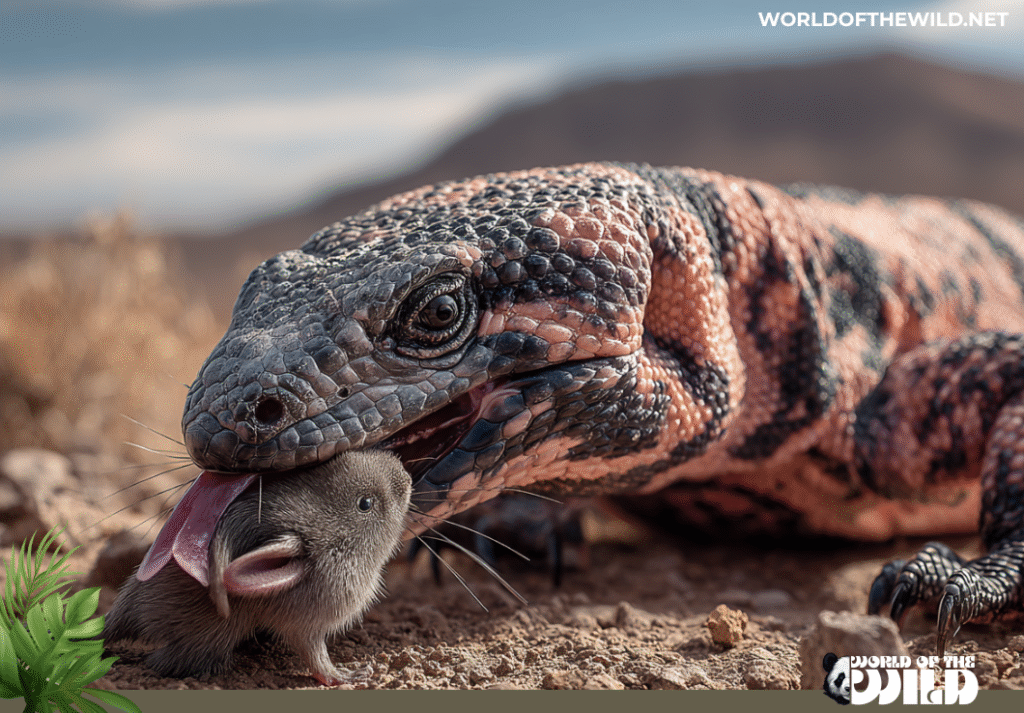
The Gila monster is a carnivore with a specialized diet focused primarily on the eggs and young of vertebrate prey. Their feeding ecology is unusual among lizards, as they rarely hunt adult prey and instead target animals in their most vulnerable life stages.
The primary food sources include bird eggs and nestlings, particularly those of ground-nesting species such as quail, doves, roadrunners, and various desert songbirds. During spring breeding season when birds are nesting, eggs may comprise the majority of a Gila monster’s diet. They’re remarkably adept at locating nests, using their sensitive sense of smell to detect eggs even when buried or hidden in dense vegetation. Their powerful jaws can easily crush bird eggs, which they consume shell and all.
Mammal nests form the second major component of their diet. Gila monsters actively hunt for the burrows of rodents, rabbits, and other small mammals, consuming newborn young with great efficiency. They’ve been documented raiding the dens of pack rats, ground squirrels, cotton rats, and cottontail rabbits. Young rabbits (kits) are particularly vulnerable and represent a substantial meal when available.
Reptile eggs also feature prominently in their diet, including the eggs of other lizards and desert tortoises when encountered. Less commonly, they may consume young reptiles, amphibians found near water sources, and even the eggs of their own species.
The hunting strategy of the Gila monster is based on methodical searching rather than active pursuit. They move slowly across their territory, constantly flicking their forked tongues to detect chemical cues from potential prey. Once a nest or burrow is located, they use their strong claws and jaws to excavate or tear open the site. Their venom, while not necessary for subduing eggs or young animals, may help immobilize nestlings and provide some digestive benefits.
One of the most remarkable aspects of Gila monster feeding biology is their ability to survive on remarkably few meals. Adults may feed only 5-10 times per year, gorging when food is available and storing up to 40% of their body weight as fat in their thick tails and bodies. This adaptation allows them to survive the long periods between successful hunts, making them supremely well-adapted to the feast-or-famine reality of desert life.
Predators and Threats
Despite their venomous defense, Gila monsters face predation, particularly during vulnerable life stages. Natural predators include several large carnivores capable of killing or consuming these lizards. Coyotes are perhaps the most significant natural predator, with evidence suggesting they’ve learned to flip Gila monsters and attack the vulnerable underside. Birds of prey, including hawks, golden eagles, and great horned owls, occasionally take Gila monsters, especially younger individuals. Other potential predators include bobcats, mountain lions (which may kill but not consume them), and large snakes such as kingsnakes and coachwhips, which can prey upon juvenile Gila monsters.
However, the greatest threats to Gila monster populations are anthropogenic—caused by human activities. Habitat loss and fragmentation represent the most severe long-term threat. Urban and suburban development throughout the Southwest has destroyed vast areas of suitable habitat, particularly in Arizona where human population growth has been explosive. The expansion of cities like Phoenix and Tucson has eliminated prime Gila monster habitat and created isolated population fragments that face genetic concerns.
Agricultural development and overgrazing by livestock have degraded habitat quality in many areas, reducing prey availability and eliminating shelter sites. The construction of roads creates both direct mortality through vehicle strikes and fragmentation effects that isolate populations and prevent genetic exchange.
Climate change poses an emerging threat that may become increasingly severe. Prolonged droughts can reduce prey populations and eliminate critical water sources. Shifts in temperature patterns may alter the timing of prey availability, potentially creating mismatches between when Gila monsters emerge from hibernation and when food is most abundant. Increased frequency of extreme heat events may restrict the already limited periods when Gila monsters can safely emerge and be active.
Illegal collection for the pet trade remains a persistent problem despite legal protections. Gila monsters command high prices in illegal wildlife markets, creating incentives for poaching. Additionally, some individuals are killed due to fear and misunderstanding—the “good snake is a dead snake” mentality that still persists in some rural areas.
Off-road vehicle recreation damages habitat and can directly kill Gila monsters, particularly when they’re using roads and trails for thermoregulation. Invasive species, particularly buffelgrass in the Sonoran Desert, alter fire regimes and can eliminate native vegetation that provides shelter and supports prey populations.
Reproduction and Life Cycle
Gila monsters have a relatively slow reproductive rate, which makes population recovery challenging when numbers decline. The breeding season occurs during spring, typically from April through June, coinciding with increased activity and feeding opportunities. This timing allows females to build sufficient energy reserves for egg production.
Courtship and mating are preceded by male combat rituals. Males engage in wrestling matches during which they intertwine their bodies, each attempting to pin the other to the ground and establish dominance. These contests can last for hours and rarely result in serious injury. The successful male then courts the female through tactile stimulation, using his chin and body to stroke her, and occasionally gentle biting. If receptive, the female allows mating, during which the male uses one of his paired hemipenes to fertilize her.
Females store sperm and may delay fertilization, giving them some control over the timing of egg development. After fertilization, females undergo a gestation period of approximately 45-60 days during which they develop eggs internally. In late spring or early summer (typically May through July), gravid females seek suitable nest sites, preferring areas with sandy or loose soil that receives sun exposure but has some protection from extreme heat.
The female excavates a burrow or depression approximately 5 inches deep and deposits her clutch, which typically contains 3-12 eggs (most commonly 5-7). The eggs are elongated and leathery, measuring roughly 2.5 inches long. After laying, the female covers the nest and departs, providing no parental care. The eggs are left to incubate underground through the hot summer months.
Incubation is temperature-dependent and relatively long for reptiles, lasting approximately 120-150 days (about 4-5 months). Eggs typically hatch in late summer or early fall (August through October), though some may overwinter and hatch the following spring. Hatchlings are strikingly colored, measuring approximately 6 inches in length and weighing only 1-1.5 ounces. They are immediately independent, equipped with functional venom glands and all the instincts necessary for survival.
Young Gila monsters grow slowly, taking 3-5 years to reach sexual maturity. During this vulnerable period, they face high mortality rates from predation, desiccation, and starvation. Those that survive to adulthood have impressive lifespans—wild Gila monsters regularly live 20-30 years, with some individuals potentially reaching 35-40 years. Captive specimens have exceeded 35 years, and there are unconfirmed reports of individuals living beyond 40 years, making them among the longest-lived lizards.
Females typically reproduce every other year or even less frequently, as the energetic investment in egg production is substantial and requires adequate fat reserves. This low reproductive output—combined with delayed maturity and specific habitat requirements—makes Gila monster populations particularly vulnerable to decline and slow to recover from population reductions.
Population
The Gila monster is currently classified as Near Threatened on the IUCN Red List of Threatened Species, indicating that while not immediately facing extinction, the species is approaching threatened status and requires conservation attention. This represents a downgrade from previous assessments that considered the species of lower concern, reflecting increasing recognition of population declines and habitat threats.
Estimating the global population of Gila monsters is challenging due to their secretive nature and the fact that they spend most of their lives underground. No comprehensive range-wide population census exists, but researchers estimate that tens of thousands of individuals likely remain across their range, with the highest densities occurring in protected areas within Arizona’s Sonoran Desert region. However, population densities are naturally low—even in prime habitat, researchers typically document only 1-4 individuals per square mile.
Population trends vary geographically, but the overall trajectory appears to be declining. In Arizona, which harbors the majority of the species’ range, populations have been lost from some peripheral areas, and density has decreased in regions experiencing development pressure. Urban expansion around Phoenix has eliminated populations from areas where they were historically documented. Similarly, populations in Nevada, Utah, and New Mexico—already on the periphery of the species’ range—are small, isolated, and considered vulnerable.
Some positive signs exist within well-protected areas. Populations in national parks, national monuments, and large wilderness areas appear relatively stable, suggesting that adequate habitat protection can sustain viable populations. The Tucson region has shown some success in maintaining Gila monster populations despite urbanization, largely due to preservation efforts and the retention of large natural areas.
The species receives legal protection throughout its range. In the United States, it is listed as protected in all states where it occurs—Arizona, Nevada, Utah, and New Mexico all prohibit collection, harassment, or killing. In Mexico, the Gila monster is protected under federal wildlife laws. Additionally, the species is listed under CITES Appendix II, which regulates international trade. However, enforcement challenges remain, and illegal collection continues in some areas.
Long-term monitoring programs, particularly in Arizona, provide valuable data on population trends and have documented concerning declines in some areas while revealing stability in others. Genetic studies indicate that some populations are becoming isolated, raising concerns about reduced genetic diversity and limited gene flow.
Conclusion
The Gila monster stands as a testament to the power of evolutionary adaptation and the remarkable diversity of life in North America’s desert ecosystems. This ancient reptile, whose lineage survived the extinction of dinosaurs and persisted through millions of years of environmental change, now faces its greatest challenge from human activities. From its distinctive beaded appearance and specialized venom to its extreme energy efficiency and impressive longevity, the Gila monster embodies the ingenious solutions nature develops to thrive in harsh environments.
Beyond its inherent ecological value, this creature has provided humanity with unexpected gifts—particularly the diabetes medication derived from its venom, which has improved millions of lives and generated billions in economic value. This alone should remind us that protecting biodiversity is not merely an ethical imperative but a practical investment in future medical and scientific discoveries.
The Gila monster’s status as Near Threatened serves as a warning that even species that have survived for millions of years can decline rapidly under the pressure of habitat destruction and human encroachment. However, their persistence in protected areas demonstrates that with adequate conservation measures—preserving habitat, enforcing protective laws, and maintaining connectivity between populations—we can ensure these remarkable reptiles continue their ancient lineage.
Whether you encounter one slowly crossing a desert trail or never see one outside of photographs, the Gila monster deserves our respect and protection. Support conservation organizations working to preserve southwestern desert habitats, advocate for responsible land-use planning that considers wildlife corridors, and help combat the illegal wildlife trade by never purchasing wild-caught reptiles. In protecting the Gila monster, we preserve not just a species, but a living connection to the age of dinosaurs and a symbol of the Southwest’s unique natural heritage.