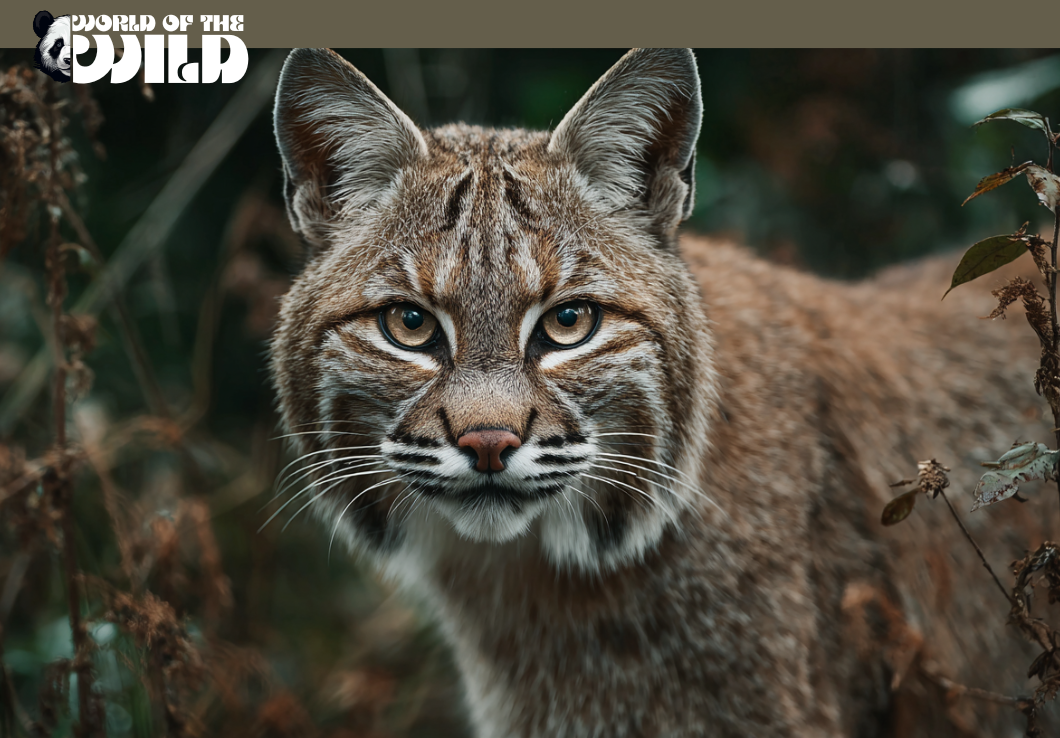

In the dappled shadows of an early morning forest, a tawny shape moves with liquid grace between the trees, its tufted ears swiveling to catch every sound. This is the bobcat—North America’s most successful wild feline and one of nature’s most accomplished survivors. Named for its stubby, “bobbed” tail, this medium-sized cat has conquered habitats from Canadian forests to Mexican deserts, adapting to environments that would challenge most predators. While larger and more charismatic cats often steal the spotlight, the bobcat represents a masterclass in evolutionary adaptation, combining stealth, power, and intelligence in a compact, efficient package. As human development increasingly fragments wild spaces, understanding this resilient feline becomes not just fascinating but essential to preserving the delicate balance of North American ecosystems.
Facts
- Silent Stalker: Bobcats can leap up to 12 feet in a single bound when pouncing on prey, using their powerful hind legs to launch surprise attacks from seemingly impossible distances.
- Swimming Cats: Unlike most felines, bobcats are accomplished swimmers and will readily enter water to catch fish, amphibians, or to escape danger—defying the typical cat stereotype.
- Vocal Repertoire: These cats possess an impressive range of vocalizations including chirps, growls, screams, hisses, and even a unique “caterwaul” during mating season that sounds eerily similar to a human child crying.
- Territory Titans: A single male bobcat may claim a territory spanning up to 30 square miles, which he marks with urine, feces, and scent glands, while females maintain smaller ranges of 5-10 square miles.
- Ancient Coexistence: Bobcats have lived alongside humans in North America for over 10,000 years, surviving the extinction of saber-toothed cats and other megafauna that disappeared at the end of the Ice Age.
- Whisker Navigation: The distinctive facial ruff and whiskers of a bobcat aren’t just for show—they serve as highly sensitive tactile sensors that help the cat navigate in complete darkness and detect prey hiding in underground burrows.
- Population Paradox: Despite extensive hunting and trapping throughout the 20th century (with millions killed for their pelts), bobcat populations have rebounded remarkably, making them one of the few large predators thriving in the modern era.
Sounds of the Bobcat
Species
Kingdom: Animalia
Phylum: Chordata
Class: Mammalia
Order: Carnivora
Family: Felidae
Genus: Lynx
Species: Lynx rufus
The bobcat belongs to the genus Lynx, which contains four living species worldwide: the bobcat (Lynx rufus), the Canada lynx (Lynx canadensis), the Eurasian lynx (Lynx lynx), and the Iberian lynx (Lynx pardinus). Within Lynx rufus, taxonomists recognize up to 13 subspecies based on geographic distribution and subtle morphological differences, though modern genetic analysis suggests these distinctions may be less pronounced than once believed.
The most commonly recognized subspecies include the eastern bobcat (L. r. rufus), found throughout the eastern United States; the desert bobcat (L. r. baileyi), adapted to southwestern arid regions; and the northwestern bobcat (L. r. fasciatus), inhabiting the Pacific Northwest. The Mexican bobcat (L. r. escuinapae) represents the southernmost populations in Central Mexico.
The bobcat’s closest relative is the Canada lynx, with which it occasionally hybridizes in overlapping territories. However, the two species occupy distinct ecological niches—the Canada lynx specializes in deep-snow environments and has evolved to hunt primarily snowshoe hares, while the bobcat demonstrates far greater habitat flexibility and dietary diversity.
Appearance
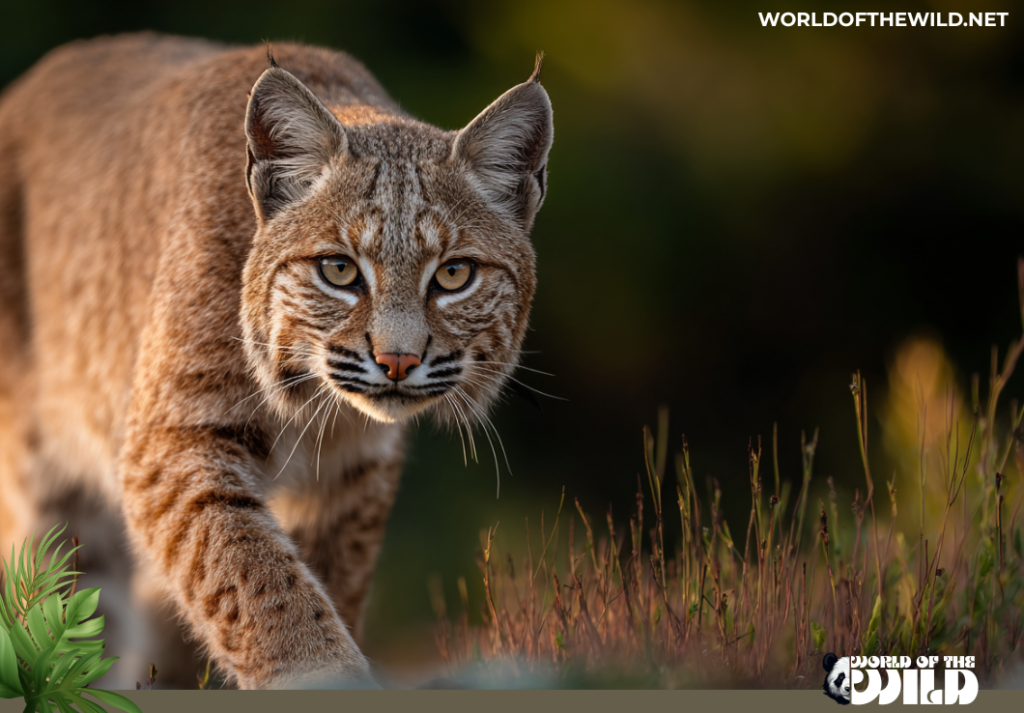
The bobcat presents a study in compact power, standing 18-24 inches at the shoulder and measuring 26-41 inches from nose to tail base. Adult males typically weigh between 18-35 pounds, though exceptional individuals may reach 40 pounds, while females are smaller at 15-30 pounds. Regional variation is significant; southern populations tend toward smaller sizes, while northern bobcats grow larger—a pattern consistent with Bergmann’s rule of thermoregulation.
The coat displays remarkable variation depending on habitat and season. Most bobcats sport a tawny brown or grayish base color overlaid with distinctive dark spots, bars, and streaks that provide exceptional camouflage. The belly is white or cream with bold black spots. Desert-dwelling bobcats tend toward paler, more yellowish tones, while forest populations exhibit richer browns and more pronounced markings. A winter coat grows denser and grayer, replacing the sleeker summer pelage.
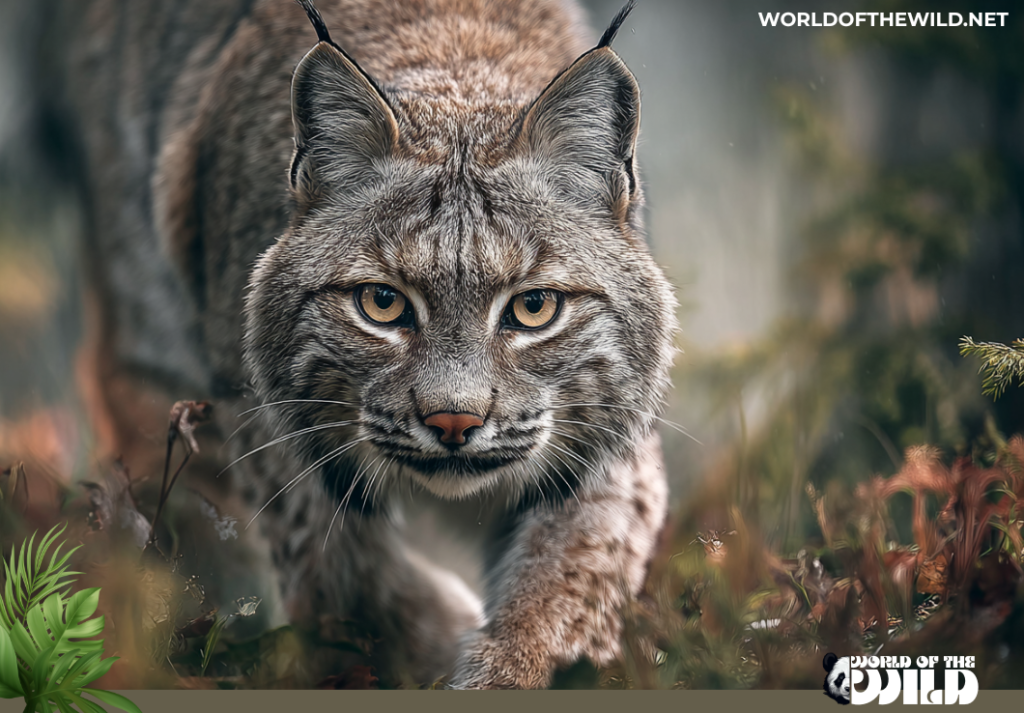
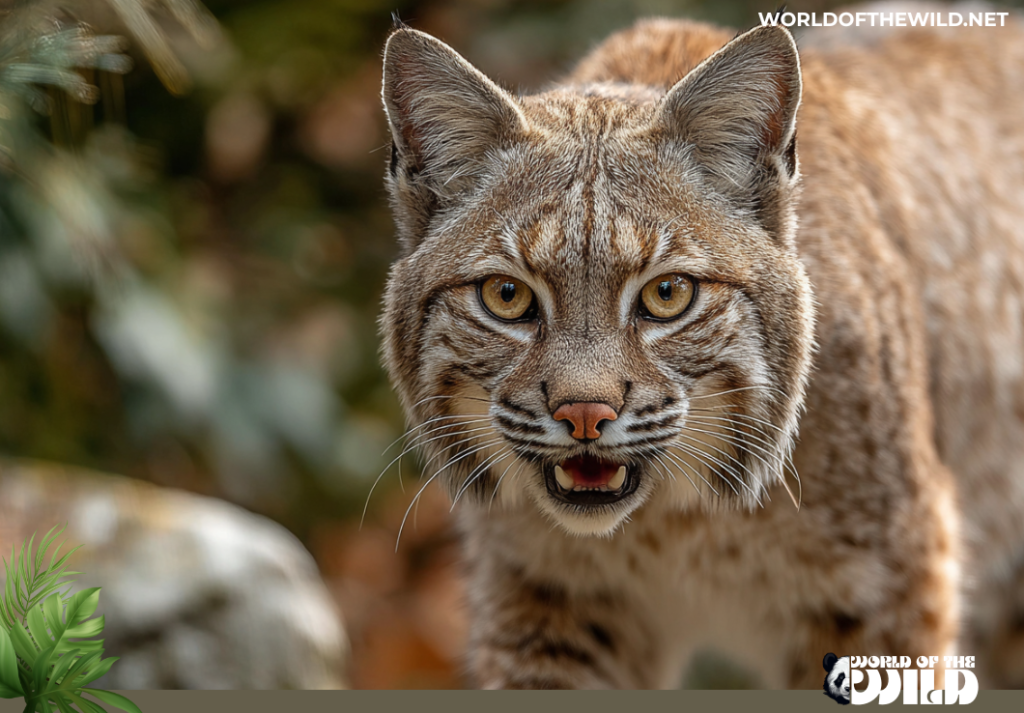
The face features white patches around the eyes and on the cheeks, bordered by prominent black lines that extend down the neck. The ears are topped with characteristic short black tufts—less prominent than those of the Canada lynx but still distinctive. The bobcat’s namesake tail measures only 4-7 inches long, appearing stubby or “bobbed,” with a black tip on the top surface and white underneath, creating a flashlike visual signal.
Long, powerful legs seem almost disproportionate to the body, with the hind legs noticeably longer than the front, facilitating explosive jumping ability. The large, furry paws act as natural snowshoes, with retractable claws that remain razor-sharp through constant use and grooming. Males develop prominent cheek ruffs—thick fur surrounding the face—that become more pronounced with age, giving mature males a distinctly broader-headed appearance.
Behavior
Bobcats epitomize the solitary lifestyle typical of most feline predators. These cats operate as lone hunters throughout most of the year, with the only sustained social bonds occurring between mothers and their offspring. Males and females occupy overlapping territories, meeting only briefly during the mating season before resuming their independent existence.
Activity patterns vary by season and prey availability, but bobcats generally qualify as crepuscular, meaning they’re most active during dawn and dusk twilight hours. However, they demonstrate remarkable behavioral flexibility, shifting to nocturnal hunting in areas with heavy human activity or diurnal patterns when pursuing daytime-active prey. Research using motion-activated cameras reveals that individual bobcats may patrol the same hunting grounds at regular intervals, suggesting sophisticated temporal and spatial awareness.
Communication occurs primarily through scent marking rather than vocalization. Bobcats maintain an extensive system of scrapes—shallow depressions scratched into the ground and marked with urine or feces—along territorial boundaries and travel routes. These chemical signposts convey information about the marker’s sex, reproductive status, and territorial claims. Visual markers also play a role; bobcats frequently rake their claws down tree trunks, leaving both visible scars and scent from interdigital glands.
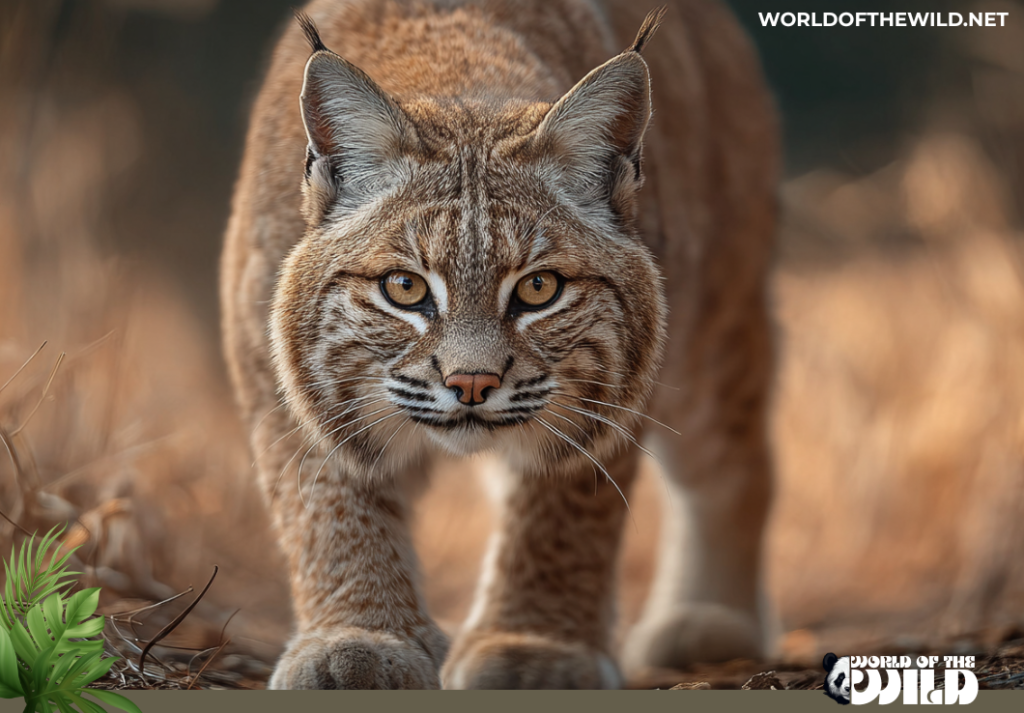
The hunting technique showcases the bobcat’s supreme patience and explosive power. Rather than chasing prey over long distances like canids, bobcats employ a stalk-and-ambush strategy. They move with deliberate slowness, using available cover to approach within striking distance—typically 20-30 feet—before launching a lightning-fast rush. The pounce culminates in a precise killing bite to the neck or skull, utilizing oversized canine teeth that can pierce vertebrae or penetrate the brain case.
Intelligence manifests in numerous ways. Bobcats cache surplus kills by covering them with leaves, snow, or dirt, returning to feed over several days. They modify hunting strategies based on prey type, weather conditions, and past success rates. Captive bobcats have demonstrated problem-solving abilities and can learn to manipulate simple mechanisms. Most remarkably, these cats have proven remarkably adaptable to human-modified landscapes, learning to navigate suburban areas, cross highways, and exploit anthropogenic food sources while maintaining their fundamental wild nature.
Evolution
The evolutionary story of the bobcat reaches back approximately 2.6 million years to the Pliocene-Pleistocene boundary. The genus Lynx likely originated in Africa before dispersing into Eurasia and, eventually, North America. Fossil evidence suggests that lynx species crossed the Bering land bridge during glacial periods when sea levels dropped and exposed the Beringia corridor connecting Asia and Alaska.
The bobcat’s immediate ancestor, Lynx issiodorensis, appeared in the fossil record of North America roughly 2 million years ago. This proto-bobcat was slightly larger than modern bobcats and less specialized, occupying a broader ecological niche. As the Ice Age progressed through repeated glacial cycles, the ancestral population diverged into two distinct lineages: one adapted to the deep snows and boreal forests of the far north (becoming the Canada lynx), while the other evolved greater versatility to exploit the diverse habitats south of the ice sheets (becoming the bobcat).
The split between bobcat and Canada lynx likely occurred between 2.0 and 1.6 million years ago, with each species developing distinct specializations. The Canada lynx evolved enlarged, heavily furred paws for traveling across deep snow and became closely tied to snowshoe hare population cycles. The bobcat, by contrast, retained a more generalized body plan, moderate paw size, and diverse dietary preferences that allowed it to thrive across varied environments.
During the last glacial maximum approximately 20,000 years ago, bobcat populations were likely confined to ice-free refugia in the southern United States and Mexico. As glaciers retreated, bobcats expanded northward, recolonizing territories and establishing the modern distribution. Genetic studies reveal relatively high genetic diversity compared to many large carnivores, suggesting healthy population sizes throughout recent evolutionary history and multiple refugial populations that maintained gene flow.
The bobcat survived alongside numerous now-extinct Pleistocene megafauna including saber-toothed cats, dire wolves, and American lions. Its success where larger, more specialized predators failed likely stems from its behavioral flexibility, generalist diet, and ability to exploit a wide range of prey sizes and habitat types—evolutionary advantages that continue to serve the species well in the Anthropocene.
Habitat
Bobcats claim the title of North America’s most widely distributed native felid, occupying an enormous range stretching from southern Canada through the United States to southern Mexico. The northern limit extends across southern British Columbia, Alberta, Saskatchewan, and throughout the Great Lakes region. The southern boundary reaches into central Mexico, including portions of the states of Oaxaca and Michoacán.
This extensive distribution reflects exceptional habitat versatility. Bobcats thrive in temperate deciduous and mixed forests, coniferous forests, chaparral, coastal swamps, desert regions, and even suburban environments. The unifying requirement is not a specific habitat type but rather adequate cover and sufficient prey density. Bobcats need dense vegetation—whether forest undergrowth, rocky outcrops, brush thickets, or cactus patches—to conceal their hunting approaches and provide secure resting sites.
In eastern regions, bobcats favor mature forests with complex understories, often associated with rocky terrain that provides den sites in caves, hollow logs, or beneath boulder piles. The animals show particular affinity for transition zones or “edge habitats” where forests meet meadows or agricultural fields, as these areas concentrate diverse prey populations. Swamps and wetlands in the southeastern United States support robust bobcat populations, with individuals developing semi-aquatic hunting skills.
Western bobcats occupy dramatically different landscapes. In the arid Southwest, they navigate desert scrubland dominated by mesquite, creosote bush, and various cacti, using rocky canyons and dry washes as travel corridors. Mountain populations range from foothills to elevations exceeding 9,000 feet, though they typically avoid areas with persistent deep snow that favors the Canada lynx.
Surprisingly, bobcats have colonized urban and suburban areas with remarkable success. Cities across North America now host resident bobcat populations that navigate human-dominated landscapes with ghostly efficiency. These urban bobcats maintain largely nocturnal schedules, utilize green spaces and drainage corridors, and prey primarily on introduced species like rats and rabbits while generally avoiding human contact.
Territory size varies dramatically based on prey availability and habitat quality. A bobcat in prey-rich environments may require only 1-2 square miles, while those in marginal desert habitat might range across 30-50 square miles. Home ranges are not exclusively defended territories; while core areas receive intensive patrolling and scent marking, peripheral zones often overlap with neighboring bobcats with temporal separation reducing direct encounters.
Diet
The bobcat stands as an obligate carnivore with impressively diverse tastes, though rabbits and hares form the dietary cornerstone across most of its range. Eastern cottontails, desert cottontails, and jackrabbits can comprise 50-75% of the diet where these lagomorphs are abundant. The relationship between bobcat hunting success and rabbit populations shows tight correlation—in years of rabbit boom, bobcat reproduction increases; in bust years, survival rates decline.
Beyond rabbits, bobcats consume an astonishing array of prey reflecting opportunistic hunting prowess. Small mammals feature prominently: rodents including mice, rats, voles, ground squirrels, and tree squirrels provide consistent protein, particularly when lagomorph populations crash. Bobcats regularly tackle larger prey; adult male bobcats can kill white-tailed deer, especially fawns and weakened adults during winter. Such kills provide substantial calories and may sustain a bobcat for a week or more.
Birds constitute a significant dietary component, particularly ground-nesting species and those roosting within reach. Wild turkeys, quail, grouse, and waterfowl all fall victim to stalking bobcats. The cats demonstrate remarkable agility in capturing roosting birds at night, climbing trees with surprising speed to snatch sleeping prey.
Regional and seasonal dietary variations demonstrate behavioral flexibility. Southeastern bobcats exploit the abundant reptile and amphibian communities, regularly consuming snakes, lizards, turtles, and frogs. Coastal populations hunt shorebirds and scavenge marine carrion. Desert bobcats prey heavily on pocket mice, kangaroo rats, and javelinas. In agricultural areas, bobcats opportunistically hunt feral cats, opossums, and skunks.
Hunting technique reflects prey size and behavior. Small rodents receive the classic cat pounce—a high arcing leap that pins the prey beneath the forepaws, followed by a rapid killing bite. Larger prey like rabbits require stalking to within a few body lengths before an explosive chase covering 20-30 yards maximum. Deer hunting involves extended stalking and ambush from above, with the bobcat using its weight to knock down the prey before delivering a suffocating throat bite.
Bobcats are not above scavenging, readily feeding on carrion when encountered, though they prefer fresh kills. They possess powerful jaws and specialized carnassial teeth that slice through hide and muscle efficiently. A successful kill is rarely consumed in one sitting; bobcats typically feed to satiation, then cache the remainder by scraping leaves, snow, or dirt over the carcass before departing to rest. They return at intervals over 2-5 days until the food is exhausted or spoiled.
Predators and Threats
Adult bobcats occupy an interesting position in the food web—large enough to avoid most predation but small enough to face threats from apex predators. Mountain lions represent the most significant natural predator, particularly in western regions where these large cats overlap with bobcat territories. Pumas occasionally kill bobcats, possibly to eliminate competition for prey or defend kill sites. Similarly, wolves in their historical range occasionally killed bobcats, though this interaction has become rare given the wolf’s restricted modern distribution.
Coyotes present a more complex relationship. While not typically predators of adult bobcats, coyotes will kill bobcat kittens when encountered and compete directly for similar prey. The relationship varies regionally; in areas without larger predators, coyotes may suppress bobcat populations through resource competition and occasional direct killing. However, bobcats generally dominate one-on-one encounters with similar-sized coyotes.
Golden eagles pose a threat to young bobcats and possibly to small adults, particularly in open habitats where the aerial predators can spot and stoop on terrestrial prey. Alligators in southern swamps occasionally capture bobcats, though such predation remains uncommon. Great horned owls represent a significant threat to young kittens still in the den or recently weaned.
Human-caused mortality far exceeds natural predation as a mortality factor. Vehicular collisions kill thousands of bobcats annually, particularly in areas where highways bisect traditional territories. Road mortality represents the leading documented cause of death in many populations and can create barriers to gene flow between isolated populations.
Regulated hunting and trapping continue across much of the bobcat’s range, with annual harvests historically reaching 90,000 animals during peak pelt price periods in the 1980s. While current regulations aim for sustainable harvest, localized overharvest remains a concern, particularly where refuges are inadequate or enforcement is lax. The international fur trade, while diminished from historical peaks, still drives demand for bobcat pelts.
Habitat loss and fragmentation represent insidious long-term threats. Conversion of wild lands to agriculture, suburban sprawl, and resource extraction eliminate suitable bobcat habitat and subdivide populations. While bobcats demonstrate remarkable adaptability to human-modified landscapes, they require connectivity between habitat patches to maintain genetic diversity and allow dispersal.
Rodenticide poisoning poses an emerging threat as bobcats prey on poisoned rodents and ingest anticoagulant compounds that cause fatal internal bleeding. Studies in California revealed alarming exposure rates to these toxins in bobcat populations near human settlements.
Disease threats include rabies, though bobcats typically suffer low infection rates compared to other carnivores. Feline diseases including feline leukemia virus and feline immunoassociation disease can affect bobcat populations, potentially transmitted through contact with domestic and feral cats. Mange caused by parasitic mites occasionally affects individuals, causing severe itching, hair loss, and secondary infections that can prove fatal.
Reproduction and Life Cycle
Bobcats follow a seasonal reproductive cycle, though timing varies by latitude. In northern populations, breeding concentrates in February and March, while southern bobcats may breed year-round with peaks in spring and fall. The mating season triggers dramatic behavioral changes in normally solitary cats. Males expand their territorial patrols, traveling extensively in search of receptive females. Females advertise their reproductive readiness through increased vocalization—the eerie caterwauls that echo through winter forests—and intensified scent marking.
When a male locates a receptive female, he follows her closely for several days, with the pair engaging in brief but intense courtship. Multiple males may track a single female, leading to fierce competition and occasionally violent encounters between rival males. The female ultimately controls breeding access, mating with one or more males during her estrus period. Copulation itself is brief but repeated frequently over several days.
Following successful mating, the male departs and provides no parental care. The female undergoes a gestation period of approximately 60-70 days, during which she seeks out a secure den site. Preferred locations include hollow logs, rock caves, dense brush thickets, or the abandoned burrows of other animals. Some females maintain multiple den sites, moving kittens if the primary site becomes compromised.
Litters typically contain 2-4 kittens, though litter size varies from one to six based on prey availability and maternal condition. Newborn bobcats weigh merely 10-12 ounces, arrive blind and helpless, and depend entirely on maternal care. Their eyes open at 9-10 days, revealing startling blue eyes that gradually transition to the yellow or amber of adults.
Kittens grow rapidly on their mother’s rich milk, though development follows a measured pace compared to smaller felines. At four weeks, they begin taking solid food from kills their mother brings to the den. By eight weeks, they venture from the den to explore the immediate area under maternal supervision. The mother demonstrates hunting techniques, beginning with dead or crippled prey and progressing to live animals as the kittens’ skills improve.
The family unit remains intact through the summer and early fall, with kittens accompanying their mother on hunting forays and learning the essential skills of stalking, pouncing, and killing. Young bobcats engage in extensive play behavior that rehearses hunting skills—stalking siblings, pouncing on moving objects, and wrestling matches that build coordination and strength.
Dispersal typically occurs between 8-11 months of age as kittens reach near-adult size. The mother’s increasing intolerance and the approach of the next breeding season drive young bobcats to seek their own territories. Young males typically disperse farther than females, traveling 25-50 miles or more from their natal range, while females may establish territories adjacent to or overlapping their mother’s range.
Sexual maturity arrives at 12-24 months, though most females do not successfully reproduce until their second year. Males may mature physically by 18 months but often cannot compete for breeding access until reaching full adult size at 2-3 years.
Survival rates for young bobcats remain low, with approximately 50% mortality in the first year due to starvation, predation, disease, and accidents. Those surviving to adulthood face an annual mortality rate of 15-30% depending on environmental conditions and human impacts.
Wild bobcats rarely exceed 10-12 years of age, though well-documented individuals have reached 14-15 years. Captive bobcats may live into their early twenties with veterinary care and consistent nutrition, though such longevity remains exceptional even in protected settings.
Population
The bobcat enjoys a conservation status of “Least Concern” according to the International Union for Conservation of Nature (IUCN), reflecting stable to increasing populations across the majority of its range. This designation represents a conservation success story, as bobcat populations rebounded remarkably from historic lows in the mid-20th century when unregulated trapping and habitat loss had decimated numbers across many regions.
Current population estimates suggest between 2.3 and 3.5 million bobcats inhabit North America, though precise figures remain challenging given the species’ secretive nature and vast range. The United States supports the overwhelming majority of the global population, with every state except Delaware hosting resident bobcats. Canada’s population is estimated at 30,000-50,000 individuals concentrated in southern provinces, while Mexico hosts perhaps 50,000-100,000 bobcats in suitable habitat.
Population density varies dramatically based on habitat quality and prey availability. Prime habitats in the southeastern United States may support densities of one bobcat per 1-2 square miles, while marginal desert regions might host only one individual per 20-30 square miles. Eastern deciduous forests, southwestern deserts, and coastal regions all maintain healthy, sustainable populations.
The species has demonstrated remarkable resilience and adaptability to changing conditions. After near-elimination from much of the Midwest and some eastern states during the early 20th century, bobcats have recolonized former range through natural dispersal and, occasionally, reintroduction programs. States like Illinois, Indiana, and Iowa now host expanding populations after decades of absence.
Several factors contribute to the bobcat’s positive conservation outlook. Regulated hunting and trapping have replaced the unrestricted harvest that once threatened populations. Most states and provinces now manage bobcat harvests through season limits, bag limits, and mandatory reporting requirements. The diminished value of fur in modern markets has reduced trapping pressure compared to historical peaks.
The bobcat’s behavioral flexibility and dietary breadth allow it to persist in fragmented and disturbed habitats where more specialized carnivores fail. Suburban populations continue to surprise researchers as bobcats navigate human-dominated landscapes and exploit anthropogenic food sources without losing their fundamental wild character.
However, not all trends point in positive directions. Some populations face localized pressures that warrant concern. In highly fragmented landscapes, isolated populations risk genetic bottlenecks and reduced fitness. Road mortality remains unsustainably high in some regions, effectively creating barriers to movement and gene flow. Urban expansion continues to chip away at habitat, particularly in rapidly developing regions of the Sun Belt.
Climate change presents uncertain future impacts. Warming temperatures may allow bobcats to expand their northern range but could also stress southern populations adapted to specific temperature regimes. Changes in prey communities driven by altered precipitation patterns and shifting vegetation communities may disadvantage bobcat populations in some regions while benefiting others.
Trophy hunting and the pet trade represent minor but persistent concerns. Some states allow unlimited harvest, raising questions about sustainability in the face of other cumulative impacts. A small but troubling trade in bobcat kittens for the exotic pet market continues despite regulations, threatening wild populations through poaching and raising serious animal welfare concerns.
Conclusion
The bobcat stands as a testament to nature’s resilience and adaptability in an era of unprecedented environmental change. This ghost of North America’s wild places has survived the extinction of megafauna, weathered centuries of persecution, adapted to human-dominated landscapes, and emerged as one of the continent’s most successful large predators. From Canadian boreal forests to Mexican thorn scrub, from undisturbed wilderness to suburban greenbelts, the bobcat maintains its silent vigil—hunting, surviving, and thriving with remarkable tenacity.
Yet the bobcat’s conservation success should not breed complacency. These cats face an uncertain future as habitat fragmentation accelerates, climate patterns shift, and human populations expand into remaining wild spaces. Every roadway that bisects bobcat territory, every development that eliminates hunting habitat, and every reduction in connectivity between populations chips away at the foundation supporting this species’ remarkable adaptability.
We share this continent with the bobcat, often unknowingly passing within yards of an animal whose evolutionary history stretches back millions of years. These encounters—or more often, near-misses—represent precious threads connecting us to wild nature even in modified landscapes. Protecting the bobcat means preserving more than a single species; it means maintaining the ecological integrity of countless habitats, protecting prey populations, and acknowledging that room exists for wildness alongside human ambition. The bobcat asks only for adequate cover, sufficient prey, and safe passage—modest requirements that, if met, ensure this magnificent feline will continue to haunt North America’s wild edges for generations to come.
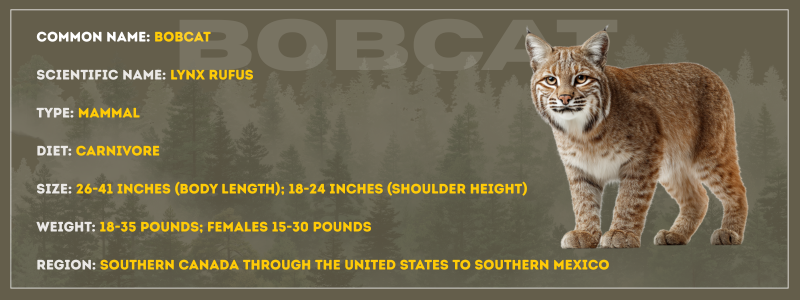
Scientific Name: Lynx rufus
Diet Type: Obligate Carnivore
Size: 26-41 inches (body length); 18-24 inches (shoulder height)
Weight: Males 18-35 pounds; Females 15-30 pounds
Region Found: Southern Canada through the United States to southern Mexico
Hungry for More? The hunt doesn’t end here. Dive into our complete collection of Big Cat guides and articles.