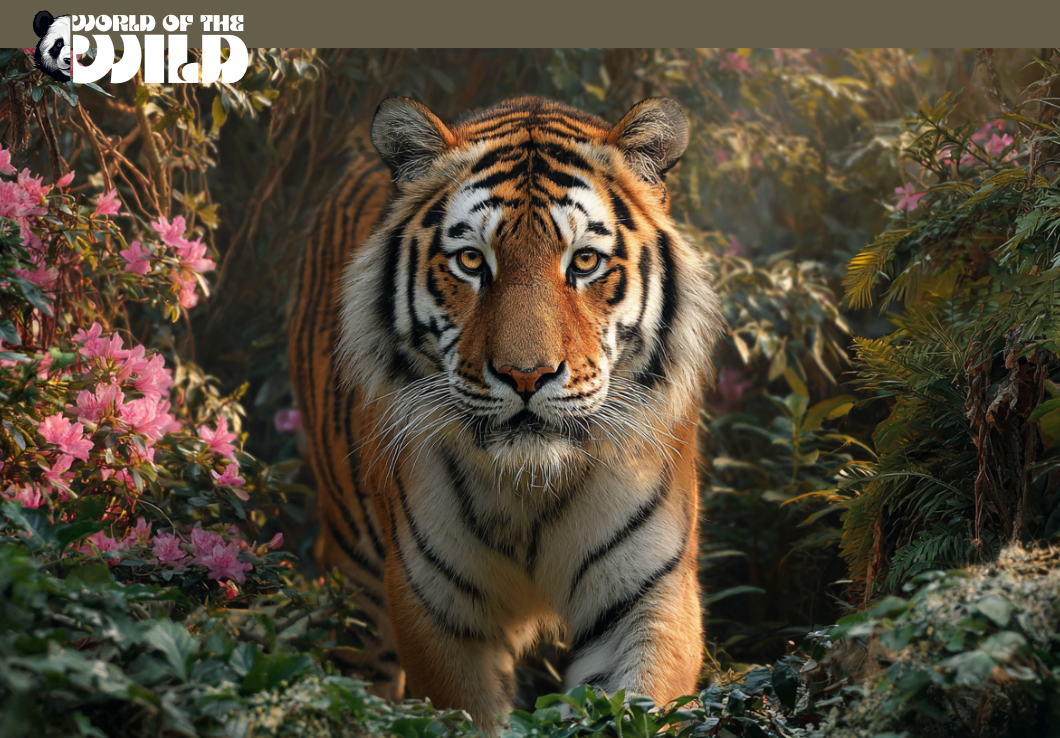

In the dense, whispering jungles and sun-dappled swamps of the Indian subcontinent reigns a creature of unparalleled power and grace—the Bengal Tiger (Panthera tigris tigris). With its fiery orange coat slashed by bold, black stripes, it is the very embodiment of the wild, a living legend that commands both awe and fear. But beyond its stunning beauty and apex predator status, the Bengal Tiger is a critically important keystone species whose fate is inextricably linked to the health of its entire ecosystem. This article invites you on a journey to explore the life, lineage, and challenges facing one of the world’s most magnificent big cats.
Fascinating Facts about the Bengal Tiger
Here are a few quick, compelling, and lesser-known facts about the ‘Lord of the Jungle’:
- Unique Fingerprints: Just like human fingerprints, the stripe pattern on every Bengal Tiger is unique, allowing researchers to identify individuals in the wild.
- Powerful Roar: A tiger’s roar can be heard up to 3 kilometers (1.9 miles) away.
- Nocturnal Hunters: While they hunt during the day, tigers are primarily crepuscular and nocturnal, preferring to stalk their prey during the twilight hours or under the cover of darkness.
- Swimming Prowess: Unlike most cats, Bengal Tigers are excellent swimmers and are often found cooling off in water or even dragging prey across rivers. They can swim for miles.
- Scent Marking: They mark their territory not just with urine and scratch marks, but also by spraying a mixture of scent gland secretions and urine, often called “scent posts.”
- False Eyes: The distinctive white spots on the back of their ears, called ocelli, are thought to act as “false eyes,” perhaps to deter potential attackers from behind or help cubs follow their mother through dense brush.
🧬 Species and Classification
The Bengal Tiger belongs to a classic scientific lineage, firmly rooted in the animal kingdom’s structure:
| Classification Rank | Group |
| Kingdom | Animalia |
| Phylum | Chordata |
| Class | Mammalia |
| Order | Carnivora |
| Family | Felidae (True Cats) |
| Genus | Panthera |
| Species | P. tigris |
| Subspecies | P. t. tigris |
The genus Panthera includes four other “roaring cats”: the lion (P. leo), the jaguar (P. onca), the leopard (P. pardus), and the snow leopard (P. uncia).
Historically, there were nine tiger subspecies, but three—the Bali, Caspian, and Javan tigers—are now extinct. The remaining six are:
- Bengal Tiger
- Siberian (Amur) Tiger
- South China Tiger
- Malayan Tiger
- Indochinese Tiger
- Sumatran Tiger
The Bengal Tiger is the most numerous of all the subspecies.
Appearance and Physical Traits
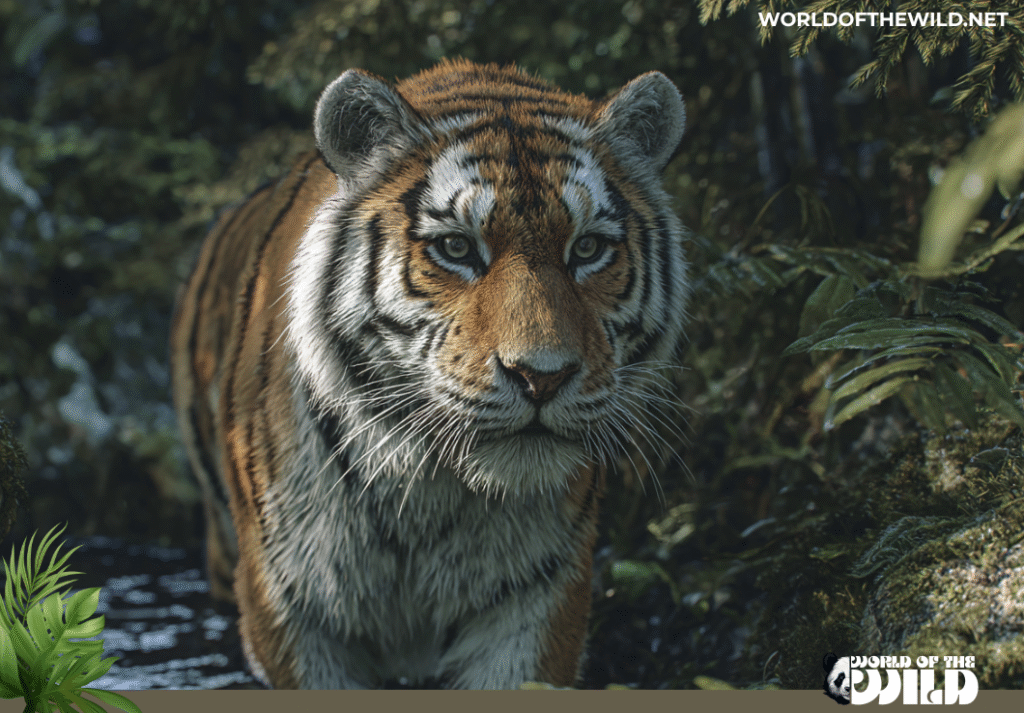
The Bengal Tiger is second only to the Siberian Tiger in size, making it one of the largest and most powerful cats on Earth.
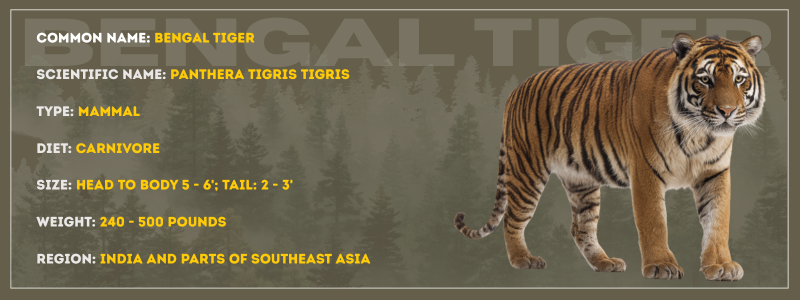
- Size and Weight: Males are generally larger than females. They typically stand about 90–110 cm (35–43 in) tall at the shoulder. The total length, including the tail, can range from 270–310 cm (8.9–10.2 ft) for males and 240–265 cm (7.9–8.7 ft) for females. Adult males weigh between 180–258 kg (397–569 lb), while females weigh 100–160 kg (220–350 lb).
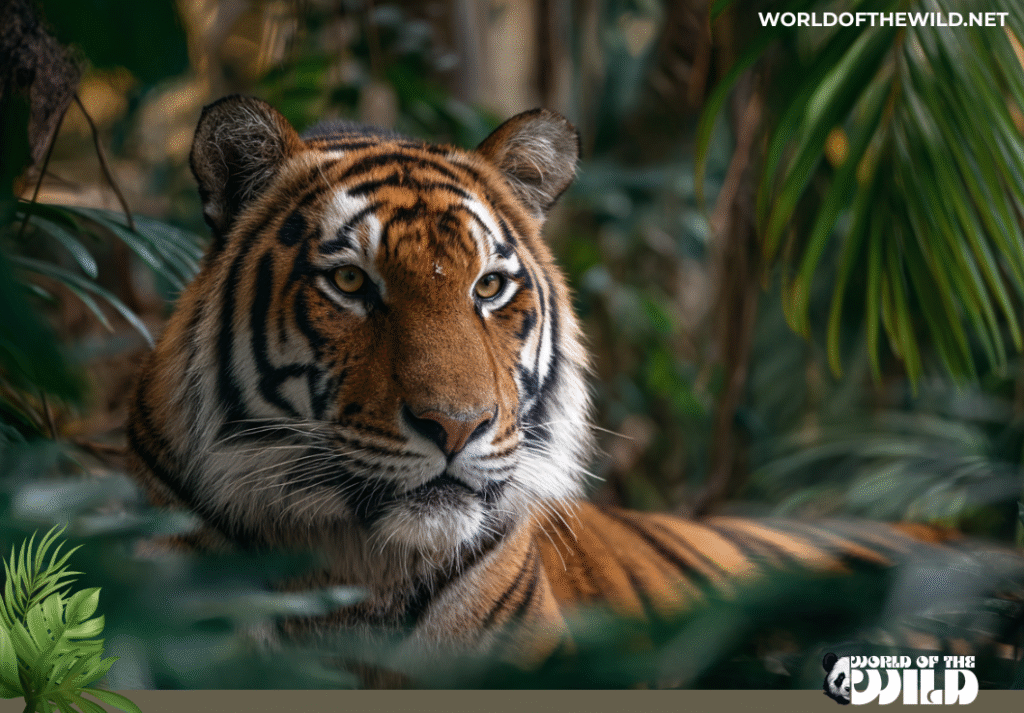
- Coat and Coloration: Their coat is short, dense, and ranges from a tawny yellow to a reddish-ochre. The most distinct feature is the pattern of dark black or grayish stripes that vary widely in density and length.
- Distinctive Features: They possess a long, muscular tail used for balance, especially when making sharp turns while chasing prey. Their forelimbs are immensely powerful, equipped with sharp, retractable claws and a fearsome bite.
🐾 Behavior and Adaptations
Tigers are classic examples of solitary predators. They typically only come together for mating.
- Social Behavior: An adult tiger lives alone and defends a large territory from other tigers of the same sex. A male’s territory often overlaps with the territories of several females.
- Communication: They communicate through a diverse range of vocalizations, including roars (for long-distance), chuffing (a soft, non-threatening greeting), grunts, and hisses. Scent marking is critical for establishing boundaries and advertising reproductive status.
- Hunting: They are ambush predators, relying on stealth and surprise. Their camouflage allows them to melt into the shadows. They hunt by stalking and then rushing their prey, delivering a powerful bite to the neck or throat to swiftly subdue the animal.
- Adaptations: Their muscular legs allow for incredible bursts of speed over short distances. Their rough, sandpaper-like tongue (papillae) is used to strip feathers or fur from prey and scrape meat from bones.
A Tale of Evolution
The journey of the tiger began in East Asia. The genus Panthera is believed to have split from other cats around 6 to 10 million years ago.
- Early Ancestors: The earliest known tiger-like cat, Panthera palaeosinensis, lived in China approximately 2 million years ago.
- Spread: As the species evolved, it began migrating, spreading from southern China into the Korean peninsula, the Indian subcontinent, and as far west as Turkey and the Russian Far East.
- Genetic Bottleneck: Genetic studies suggest that all modern tiger subspecies diverged relatively recently, likely during the Pleistocene Ice Age’s climatic shifts, which separated populations and led to unique adaptations in different regions. The Bengal Tiger represents the population that successfully adapted to the dense tropical and subtropical habitats of South Asia.
🌳 Habitat and Geographic Range
The Bengal Tiger is primarily found on the Indian Subcontinent.
- Geographic Range: Its core range spans India, Bangladesh, Nepal, and Bhutan. India holds the vast majority of the global population.
- Specific Environment: The Bengal Tiger is incredibly adaptable and thrives in a wide range of habitats, including:
- Tropical dry and moist deciduous forests
- Grasslands and Savannas
- Alluvial grasslands (like those in Nepal’s Terai region)
- Mangrove swamps (most famously the Sundarbans, shared by India and Bangladesh, where the tiger has developed adaptations to live in brackish water).
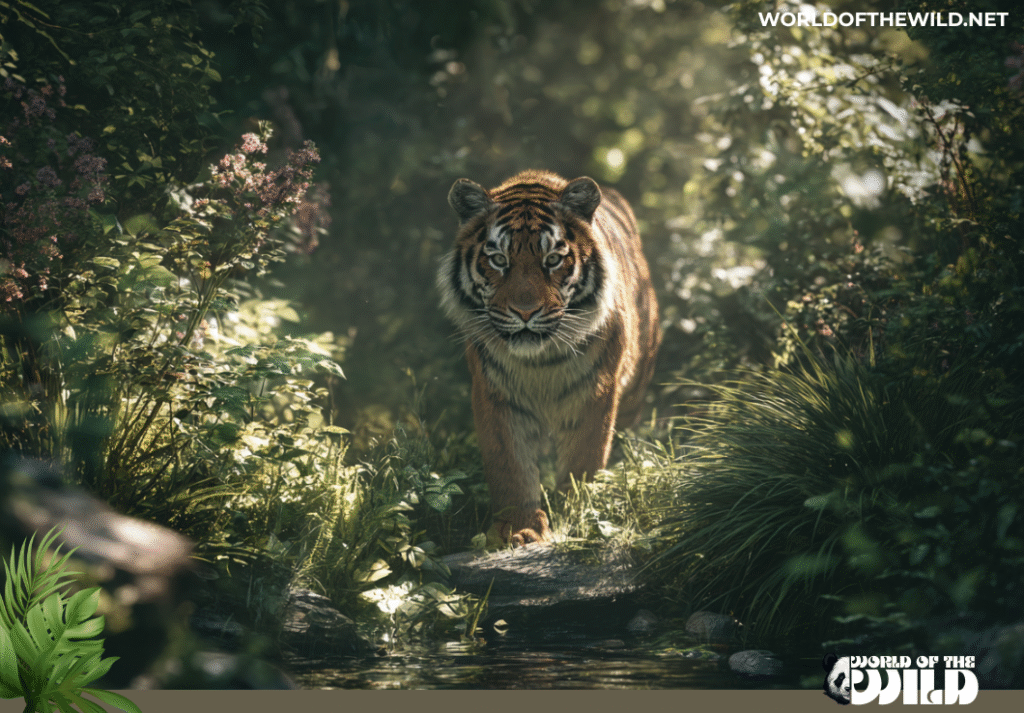
The primary features of its habitat are dense cover for stalking and reliable access to water.
Diet and Hunting
The Bengal Tiger is a pure carnivore, occupying the top tier as an apex predator in its ecosystem.
- Primary Food Sources: It primarily preys on large-bodied ungulates (hoofed mammals) such as:
- Sambar Deer
- Chital (Spotted Deer)
- Wild Boar
- Gaur (Indian Bison) (largest prey)
- Water Buffalo
- Hunting Strategy: A tiger needs to successfully hunt a large prey animal roughly once every 8 to 10 days to sustain itself. They often consume a large kill over several days, dragging the carcass to a secluded spot to feed. They primarily use their powerful neck muscles and sharp canine teeth to sever the spinal cord or suffocate the prey.
Threats and Survival
An adult Bengal Tiger has no natural predators in the wild. Its only real threat is injury from large prey during a hunt or territorial fights with other tigers.
- Anthropogenic Threats: The greatest danger to the Bengal Tiger comes from human activity, driving down populations:
- Habitat Loss and Fragmentation: As human populations grow, forests are cleared for agriculture, infrastructure, and settlements, isolating tiger populations and limiting their ability to find food and mates.
- Poaching: Tigers are poached for their body parts, which are used in traditional Asian medicine and as status symbols. The demand for tiger bone, skin, and organs fuels a dangerous black market.
- Human-Tiger Conflict: As habitat shrinks, tigers increasingly venture into human settlements, leading to conflict when they prey on livestock. This often results in retaliatory killings by villagers.
- Prey Depletion: Illegal hunting of the tiger’s prey animals (like deer and boar) reduces the tiger’s food base, putting further pressure on their survival.
Reproduction and Life Cycle
The Bengal Tiger’s life cycle is one of solitary hunting and dedicated, though short-lived, maternal care.
- Mating: Tigers do not have a fixed breeding season. A female (tigress) is receptive for only a few days. Mating is brief but frequent over this period.
- Gestation: The gestation period lasts approximately 104 to 106 days.
- Offspring: A litter typically consists of 2 to 4 blind and helpless cubs. The mother raises them alone, providing all the food and teaching them essential hunting skills.
- Life Cycle: Cubs begin to eat solid food at about two months and are fully independent between 18 and 30 months of age. They then disperse to find their own territory. In the wild, the average lifespan is around 8 to 10 years, but they can live up to 15 years.
Conservation Status and Population
The conservation status of the Bengal Tiger reflects its precarious position in the wild.
- Conservation Status: Endangered (EN), according to the IUCN Red List.
- Global Population Estimate: The most recent comprehensive surveys suggest the global wild population of $P.$ $t.$ $tigris$ is somewhere between 3,167 and 3,782 mature individuals. India, in particular, has seen successful conservation efforts, with its population rising significantly in recent years.
- Trends: While the overall global trend for tigers remains a struggle, the Bengal Tiger population, specifically in India and Nepal, has shown a notable positive trend due to sustained anti-poaching and habitat protection initiatives like India’s Project Tiger. This success, however, is fragile and requires constant vigilance.
The Call to Protect Royalty
The Bengal Tiger is more than just a magnificent creature; it is a vital indicator of the ecological health of the vast forests and wetlands it inhabits. Its survival ensures the survival of countless other species that rely on the same protected habitat. The story of the Bengal Tiger is a powerful illustration of both human impact and human potential. While poaching and habitat destruction have pushed this species to the brink, dedicated conservation efforts have shown that recovery is possible.
The roar of the tiger is a timeless soundtrack of the wild. It is our collective responsibility to ensure that this sound echoes through the jungles for generations to come. Support conservation organizations, demand sustainable sourcing, and remember that every choice you make has an impact on the striped royalty of the natural world.
Hungry for More? The hunt doesn’t end here. Dive into our complete collection of Big Cat guides and articles.