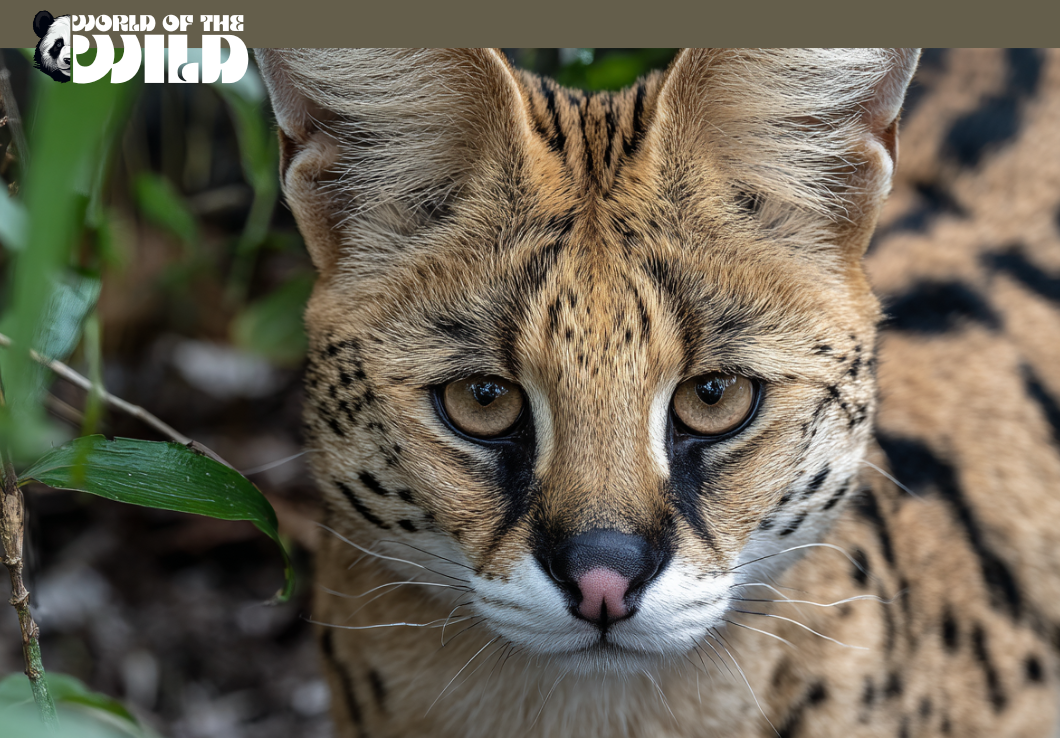

In the tall grasses of the African savanna, a slender golden cat with impossibly long legs and radar-dish ears stands perfectly still, head cocked to one side. Suddenly, it launches itself nearly ten feet into the air in a graceful arc, coming down with pinpoint precision on prey it heard rustling in the grass. This is the serval, one of Africa’s most specialized and successful hunters, and arguably one of the most extraordinary felines on Earth.
While lions and leopards command our attention with their size and power, the serval has evolved into something altogether different—a precision instrument designed for one purpose: hunting small prey in tall grasslands. With the highest success rate of any cat species and adaptations that seem almost alien, the serval represents a fascinating branch of feline evolution that deserves far more recognition than it receives.
Facts
- Incredible Success Rate: Servals have the highest hunting success rate of any cat species, with nearly 50% of their hunts resulting in a kill—compared to just 10% for most big cats.
- Supersonic Hearing: Their enormous ears can detect the ultrasonic vocalizations of rodents underground and can rotate independently to pinpoint prey with astonishing accuracy.
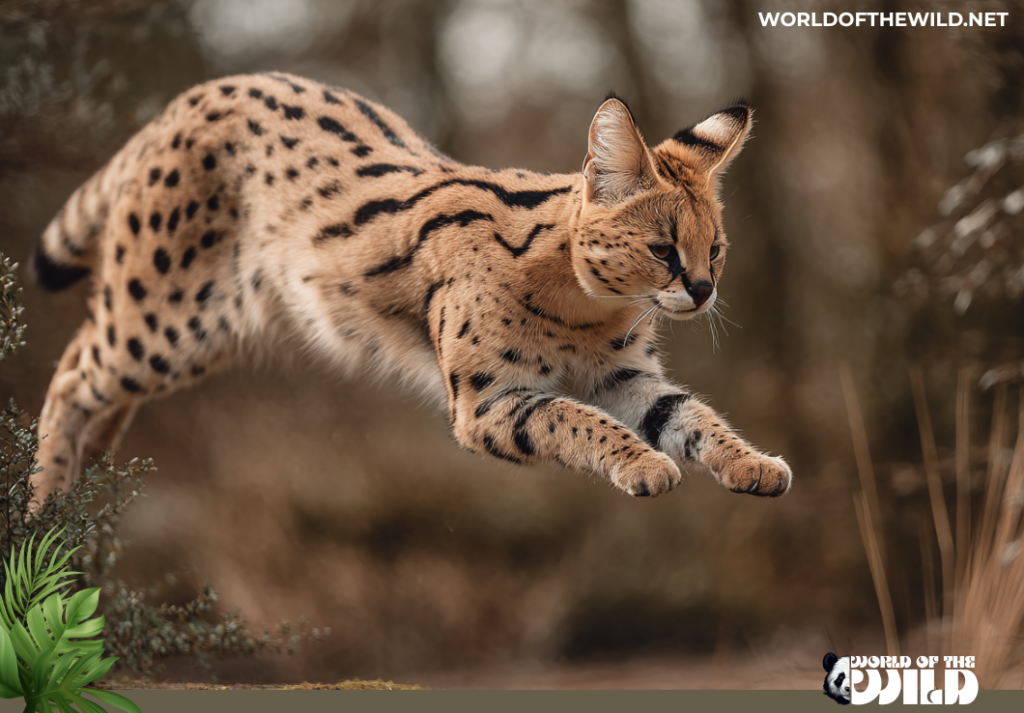
- Olympic Jumpers: Servals can leap up to 12 feet (3.6 meters) horizontally and 10 feet (3 meters) vertically from a standing position, often catching birds in mid-flight.
- Longest Legs Proportionally: Relative to body size, servals have the longest legs of any cat species, giving them a distinctive, almost otherworldly appearance.
- Patient Stalkers: A serval may stand motionless for up to 15 minutes, listening intently for prey before making its explosive pounce.
- Rarely Drink Water: Servals obtain most of their hydration from the prey they consume and can go extended periods without drinking water directly.
- Communication Through Dance: When greeting each other, servals perform an elaborate ritual that includes circling, rubbing heads, and standing on hind legs while pawing at each other.
Species
Kingdom: Animalia
Phylum: Chordata
Class: Mammalia
Order: Carnivora
Family: Felidae
Genus: Leptailurus
Species: Leptailurus serval
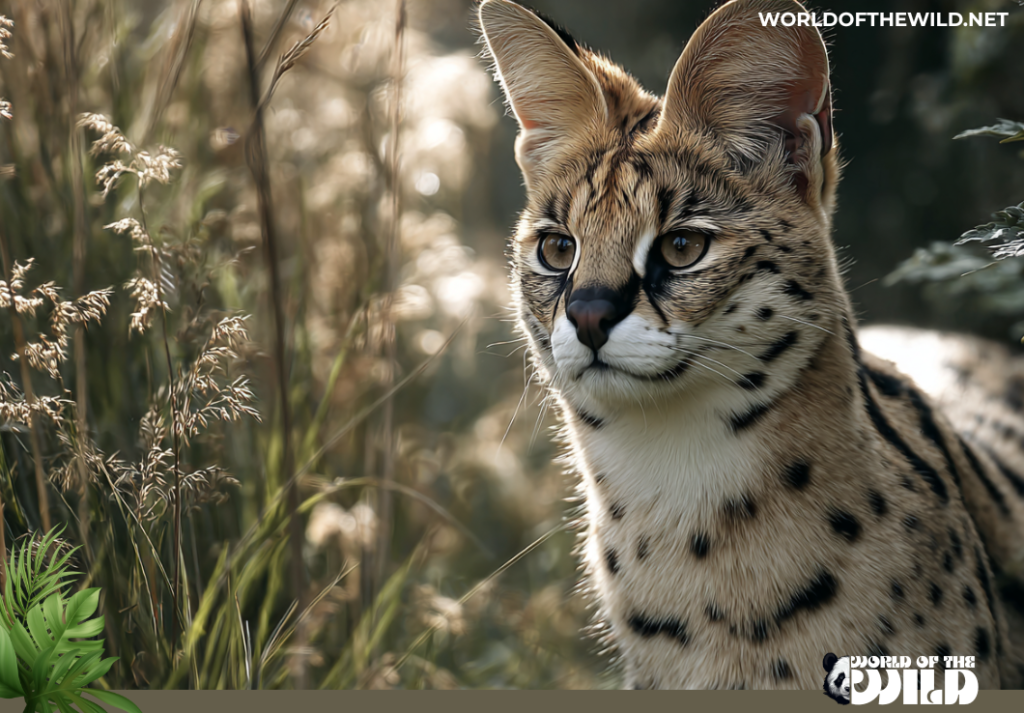
The serval is the sole member of the genus Leptailurus, setting it apart from other African cats. While it was historically grouped with the caracal and African golden cat in the genus Felis, genetic analysis revealed it deserved its own classification due to its unique evolutionary path.
There are approximately 18 recognized subspecies of serval, differentiated primarily by geographic distribution and minor variations in coat patterns and size. Some of the notable subspecies include:
- Leptailurus serval serval (Cape serval) – Found in southern Africa
- Leptailurus serval lipostictus (East African serval) – The most common subspecies
- Leptailurus serval constantinus (North African serval) – Nearly extinct
- Leptailurus serval brachyurus (West African serval) – Smaller with shorter tail
Melanistic (black) servals occur naturally but are extremely rare, found primarily in the highlands of East Africa. These individuals retain their spotted pattern, visible as black-on-black markings in certain lighting.
Appearance
The serval is a study in elegant elongation. Standing 21-24 inches (54-62 cm) at the shoulder, these cats possess a build unlike any other feline. Their legs are extraordinarily long—the longest in proportion to body size of any cat—giving them a distinctive stilted appearance that proves perfectly adapted to their hunting style in tall grass.
Adult servals typically weigh between 18-40 pounds (8-18 kg), with males being slightly larger than females. Their bodies stretch 26-39 inches (67-100 cm) in length, with an additional tail of 9-18 inches (24-45 cm). Despite their impressive height, servals are relatively lightweight and built for agility rather than power.
The coat is truly striking: a golden-yellow to buff background adorned with bold black spots and stripes that create a pattern unique to each individual. The spots are larger on the body and smaller on the legs, while two or three prominent black stripes run from the top of the head down the back of the neck. The tail features several black rings and a black tip.
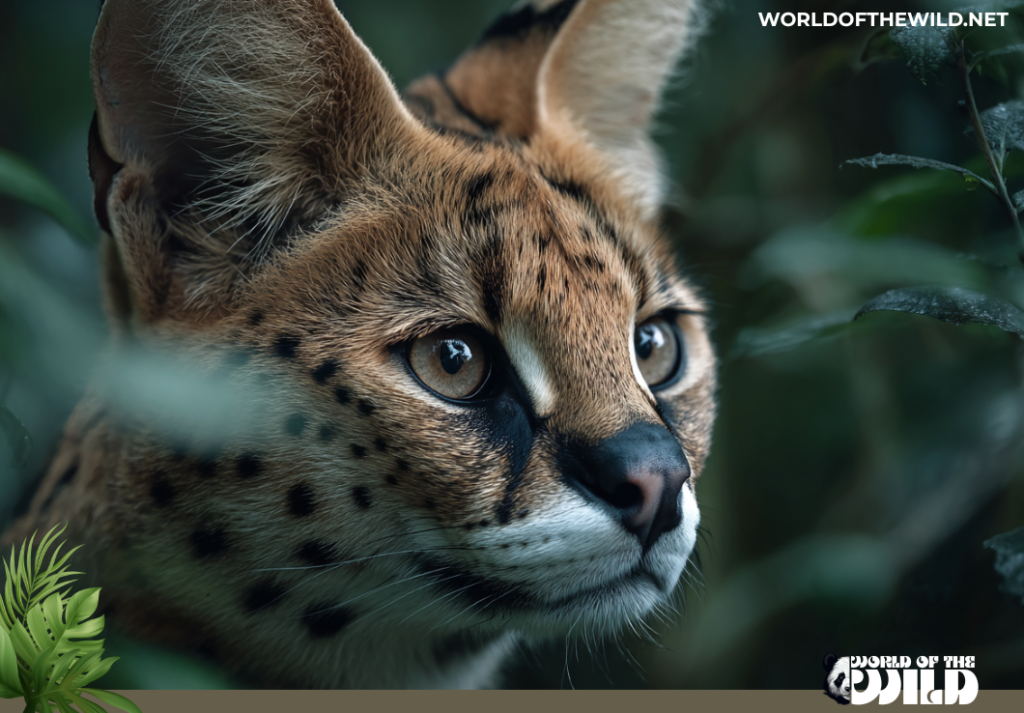
Perhaps most remarkable are the ears—enormous, rounded, and set high on a small, delicate head. These ears can be 3-4 inches tall and are backed by distinctive white spots called “ocelli” that may serve as false eyes to confuse prey or deter predators. The serval’s eyes are large and amber-colored, providing excellent vision for spotting movement in their grassland habitat.
Behavior
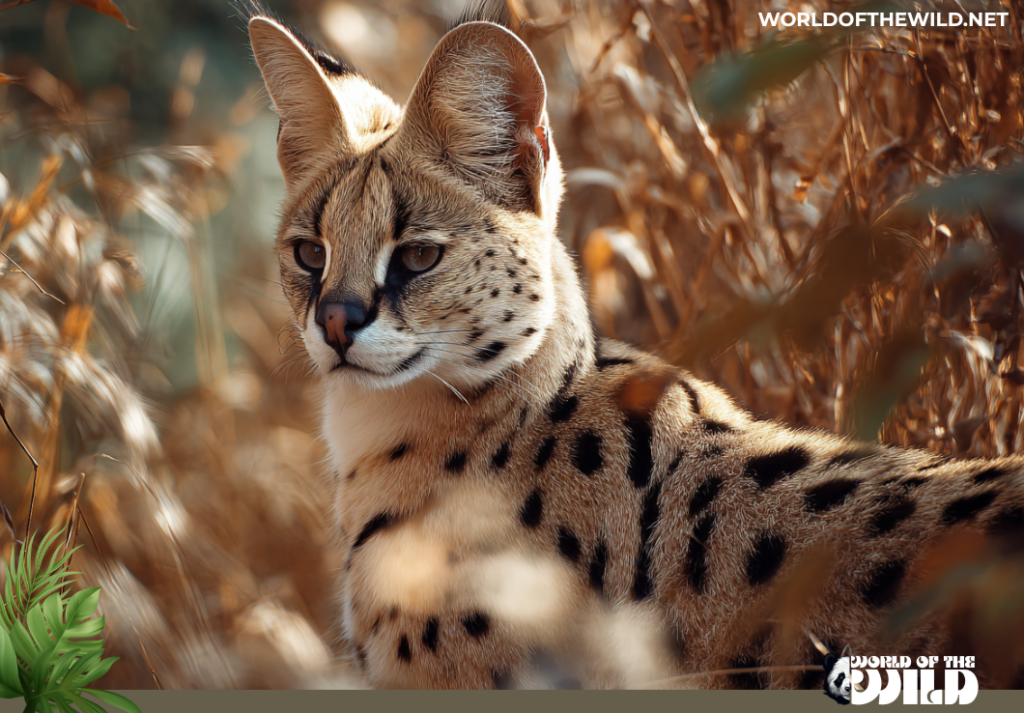
Servals are predominantly solitary and crepuscular, most active during the twilight hours of dawn and dusk when their prey is most active. However, they will hunt both day and night depending on conditions, weather, and prey availability. Each serval maintains a home range of 4-12 square miles, with males occupying larger territories that may overlap with several females.
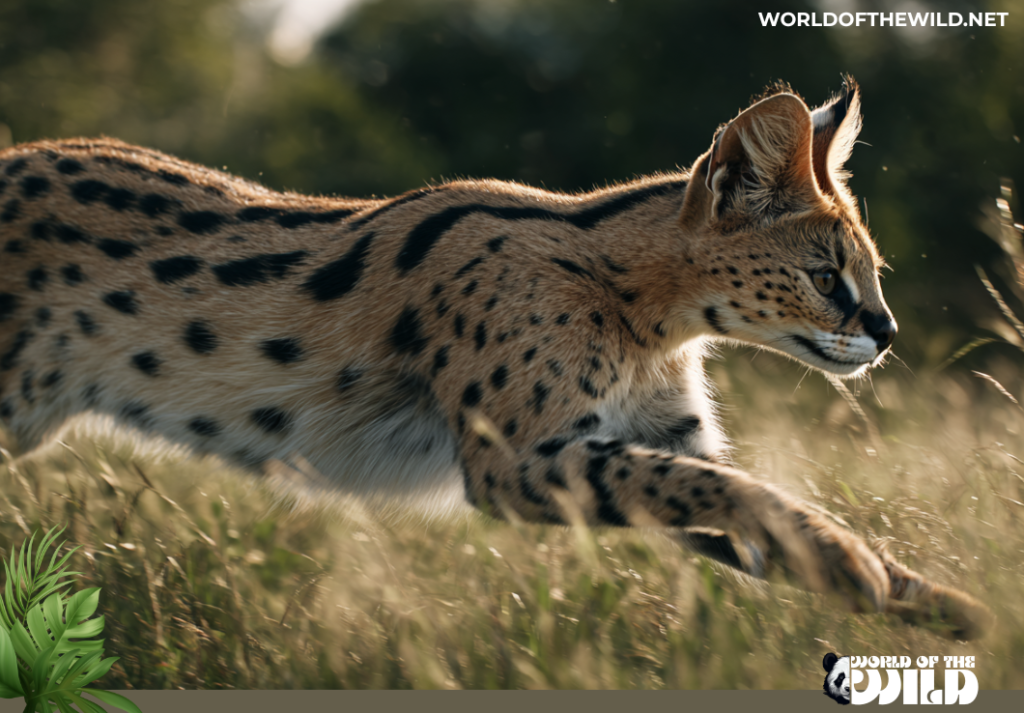
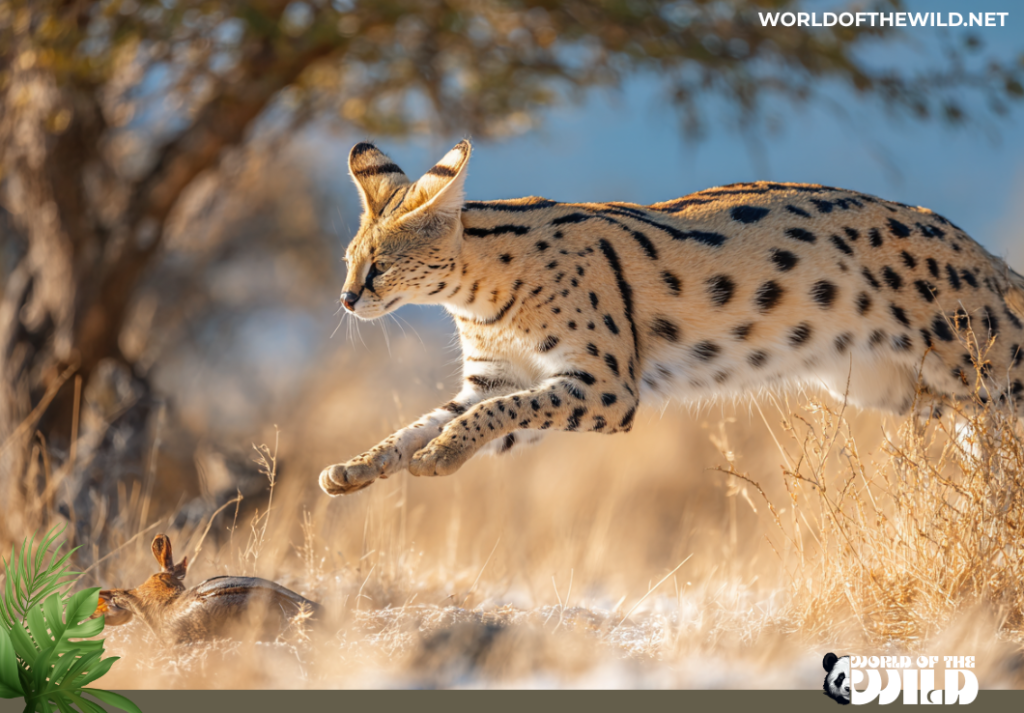
Their hunting technique is mesmerizing to observe. A serval stalks through tall grass with high-stepping strides, pausing frequently to listen with head cocked and ears swiveling like satellite dishes. When prey is detected—sometimes from vibrations alone—the cat may stand motionless for up to 15 minutes, mapping the exact location of the animal beneath the grass or underground. Then comes the explosive launch: the serval springs straight up and forward in a graceful arc, coming down with both front paws extended, pinning or stunning the prey on impact.
This “pouncing” hunting style is so successful that servals capture prey in roughly half their attempts—an extraordinary success rate that surpasses even the most skilled predators. They make an estimated 20-30 pounces per hour while actively hunting, resulting in several catches during a typical night’s hunt.
Communication among servals involves a variety of vocalizations including purrs, chirps, hisses, growls, and a high-pitched cry used during mating. They also communicate through scent marking, using urine, feces, and glandular secretions to mark territory boundaries. The elaborate greeting ceremony between servals—involving head rubbing, circling, and standing on hind legs—suggests a complex social intelligence despite their solitary nature.
Servals are excellent swimmers and will not hesitate to enter water to catch prey or escape danger. They’re also capable climbers, though they spend most of their time on the ground where their long legs provide maximum advantage.
Evolution
The evolutionary history of the serval reveals a fascinating journey of specialization. The Felidae family began diversifying approximately 11 million years ago, but the serval’s lineage represents a relatively more recent specialization, emerging around 3-5 million years ago during the Pliocene epoch.
Genetic studies suggest that servals share a common ancestor with the caracal and African golden cat, diverging into their own unique evolutionary path around 5.6 million years ago. This divergence led to the creation of the monotypic genus Leptailurus, meaning “light cat,” referencing the serval’s slender build.
The serval’s extraordinary adaptations—particularly the elongated legs, enlarged ears, and specialized hunting technique—evolved in response to the expansion of grassland habitats across Africa during the late Miocene and Pliocene epochs. As forests gave way to savannas, early serval ancestors found a niche hunting small rodents hidden in increasingly tall grass. Natural selection favored individuals with longer legs for seeing and moving through grass, larger ears for detecting prey acoustically, and the ability to make precision vertical leaps.
Fossil evidence of ancient servals is sparse, but remains have been found in deposits dating to the Pleistocene epoch in both Africa and potentially southern Europe, suggesting their range was once more extensive. The modern serval represents the culmination of millions of years of refinement into a highly specialized grassland predator.
Habitat
Servals are found throughout much of sub-Saharan Africa, with their range extending from Senegal in the west to Ethiopia in the east, and south to South Africa. However, their distribution is patchy and closely tied to specific habitat requirements. They are notably absent from the dense rainforests of the Congo Basin, the extremely arid regions of the Sahara, and southwestern Africa’s deserts.
The ideal serval habitat consists of well-watered savannas with tall grasses, reeds, and other vegetation near water sources. They show a strong preference for areas with mosaics of grassland and wetland, including reed beds, marshes, and the edges of seasonal floodplains. These environments provide abundant rodent populations and the cover needed for their hunting style.
Servals require access to permanent or seasonal water sources and are rarely found far from rivers, streams, or wetlands. This dependence on water-rich habitats makes them sensitive to drought and habitat degradation. They can adapt to elevations from sea level up to 12,000 feet (3,800 meters), with populations found in the highlands of East Africa.
While primarily associated with grasslands, servals also inhabit bamboo thickets, forest-grassland mosaics, and occasionally agricultural lands near wetlands. They avoid dense forests where their long legs and specialized hunting technique offer little advantage, as well as extremely arid regions where prey is scarce.
Human expansion has significantly reduced suitable serval habitat across Africa, particularly through wetland drainage, agricultural conversion, and urban development. However, they can persist in modified landscapes if sufficient prey and cover remain.
Diet
Servals are obligate carnivores with a diet consisting almost entirely of small prey. They are specialist rodent hunters, with various species of rats, mice, and vlei rats comprising up to 90% of their diet in some areas. This focus on rodents smaller than half their own body weight is unusual among cats and reflects their specialized hunting technique.
Beyond rodents, servals consume a diverse menu of small animals including shrews, hares, birds (both ground-dwelling and those caught in flight), reptiles, amphibians, fish, and insects. They are particularly fond of catching francolins, guinea fowl, and other game birds. During seasonal abundance, they may focus on specific prey like harvester termites emerging from their mounds or frogs during the rainy season.
The hunting strategy is auditory rather than visual. Servals use their exceptional hearing to locate prey moving through grass, underground in burrows, or in shallow water. Once detected, they employ their signature pounce—leaping high and striking down with remarkable accuracy. Large prey like hares may be killed with a bite to the neck, while smaller prey is often killed on impact or with rapid bites.
An adult serval requires approximately 1-2 pounds (450-900 grams) of meat per day. Their high hunting success rate means they can meet this requirement efficiently, typically catching multiple small prey items per night. They eat quickly and will often consume prey whole, including bones, fur, and feathers, though they fastidiously discard the digestive tracts of rodents.
Interestingly, servals rarely scavenge and almost never cache or store prey, preferring to hunt fresh meals as needed.
Predators and Threats
Despite being agile hunters themselves, servals face predation from several larger African carnivores. Leopards are their primary natural predators and will actively hunt servals when the opportunity arises. Other threats include lions, hyenas, and African wild dogs, though these species more commonly kill servals opportunistically or when defending their own kills. Large raptors such as martial eagles and Verreaux’s eagles occasionally take young servals.
However, the greatest threat to serval populations comes from human activities. Habitat loss through wetland drainage, agricultural expansion, and urban development eliminates the specialized environments servals require. The conversion of grasslands to farmland and the drainage of marshes for mosquito control have significantly reduced suitable habitat across their range.
Servals are hunted for their pelts, particularly in West Africa where their spotted coats are highly valued for traditional ceremonial clothing. Though international trade is regulated, poaching continues in some regions. They are also persecuted by farmers who view them as threats to domestic poultry, despite servals preferring wild prey when available.
The exotic pet trade poses an emerging threat, with servals captured for sale both within Africa and internationally. This trade is largely illegal but continues due to demand for exotic cats. Road mortality is increasingly problematic as infrastructure expands through serval habitat, with these cats often struck by vehicles while hunting or moving between territories.
Climate change presents a long-term threat by altering rainfall patterns and potentially reducing the wetland habitats critical to serval survival. As an indicator species for healthy grassland-wetland ecosystems, declining serval populations signal broader environmental degradation.
Reproduction and Life Cycle
Servals do not have a fixed breeding season, though births peak during the rainy season when prey is most abundant. Females advertise their receptivity through increased vocalization and scent marking, attracting males from neighboring territories. Courtship is brief, and males play no role in raising offspring.
After a gestation period of 65-75 days, females give birth to litters of 1-5 kittens, though 2-3 is most common. Birth dens are typically located in abandoned burrows, dense vegetation, or rock crevices offering protection from predators. The kittens are born blind and helpless, weighing just 7-9 ounces (200-250 grams).
Serval kittens develop relatively slowly compared to other small cats. Their eyes open at 9-13 days, and they begin taking solid food at about one month while continuing to nurse. The mother is fiercely protective and will move her kittens frequently to avoid detection by predators. She teaches them hunting techniques starting around 6 months, with the young practicing their characteristic pounce on insects and small prey.
Kittens remain with their mother for approximately 12 months, learning the sophisticated hunting techniques required for success. Males reach sexual maturity at 18-24 months, while females can breed slightly earlier at 15-18 months. Young males typically disperse farther from their birthplace than females, reducing inbreeding.
In the wild, servals live approximately 10 years on average, though some individuals may reach 15-20 years under optimal conditions. Captive servals have lived beyond 20 years. The first year is the most dangerous, with juvenile mortality rates potentially exceeding 50% due to predation, starvation, and other factors.
Population
The serval is currently classified as “Least Concern” by the International Union for Conservation of Nature (IUCN), indicating that globally the species is not immediately threatened with extinction. However, this classification masks significant regional variations in population health.
Global population estimates are difficult to determine precisely due to the serval’s wide distribution and secretive nature, but the species is thought to number in the tens of thousands across sub-Saharan Africa. Populations are healthiest in East African countries like Tanzania, Kenya, and Botswana, where large protected areas and suitable habitat remain.
The North African subspecies (L. s. constantinus) is critically endangered and possibly extinct in the wild, having disappeared from most of its historic range in Algeria and Morocco. West African populations have declined significantly due to habitat loss and hunting for pelts. Southern African populations remain relatively stable but face increasing pressure from habitat conversion.
Population trends vary by region. In areas with strong wildlife protection and intact wetland ecosystems, servals remain common. However, populations near agricultural areas and human settlements face declining trends. The species’ dependence on specific habitat types makes it vulnerable to environmental changes, and climate projections suggest potential range contractions in some areas.
Servals occur in numerous protected areas across Africa, including many national parks and game reserves where they benefit from habitat protection and reduced human persecution. However, they also persist outside protected areas where suitable habitat remains, making landscape-level conservation important for their long-term survival.
Conclusion
The serval stands as one of nature’s most elegant solutions to the challenge of hunting small prey in tall grasslands. Through millions of years of evolution, this remarkable feline has developed into a precision instrument—a cat that hunts by sound rather than sight, launches itself skyward with balletic grace, and succeeds where other predators would fail. With their impossibly long legs, satellite-dish ears, and aerial hunting prowess, servals remind us that evolution often produces solutions far more creative than we might imagine.
Yet for all their extraordinary adaptations, servals face an uncertain future. While not immediately threatened with extinction, these cats serve as indicators of ecosystem health, their presence signaling intact grassland-wetland mosaics that support countless other species. As we drain wetlands, convert grasslands, and fragment landscapes, we don’t just threaten servals—we undermine entire ecosystems.
The serval’s story is not yet fully written. Whether these magnificent cats continue to leap through African grasslands for generations to come depends on our commitment to preserving the wild spaces they need. By protecting wetlands, supporting wildlife corridors, and valuing intact ecosystems over short-term exploitation, we ensure that future generations will have the opportunity to witness one of nature’s most spectacular hunters in action. The serval deserves nothing less than our dedicated conservation efforts—not just for their sake, but for the health of the remarkable African landscapes they call home.
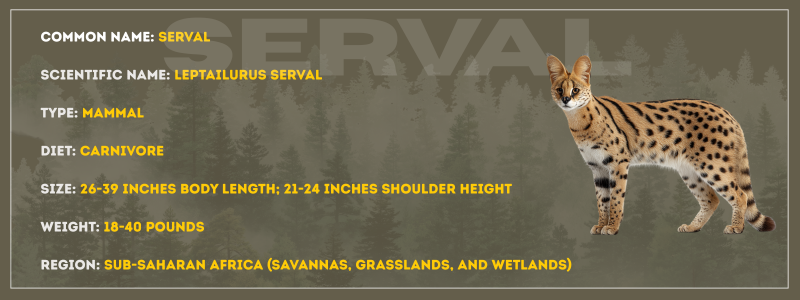
Scientific Name: Leptailurus serval
Diet Type: Carnivore (primarily rodent specialist)
Size: 26-39 inches (67-100 cm) body length; 21-24 inches (54-62 cm) shoulder height
Weight: 18-40 pounds (8-18 kg)
Region Found: Sub-Saharan Africa (savannas, grasslands, and wetlands)
Hungry for More? The hunt doesn’t end here. Dive into our complete collection of Big Cat guides and articles.