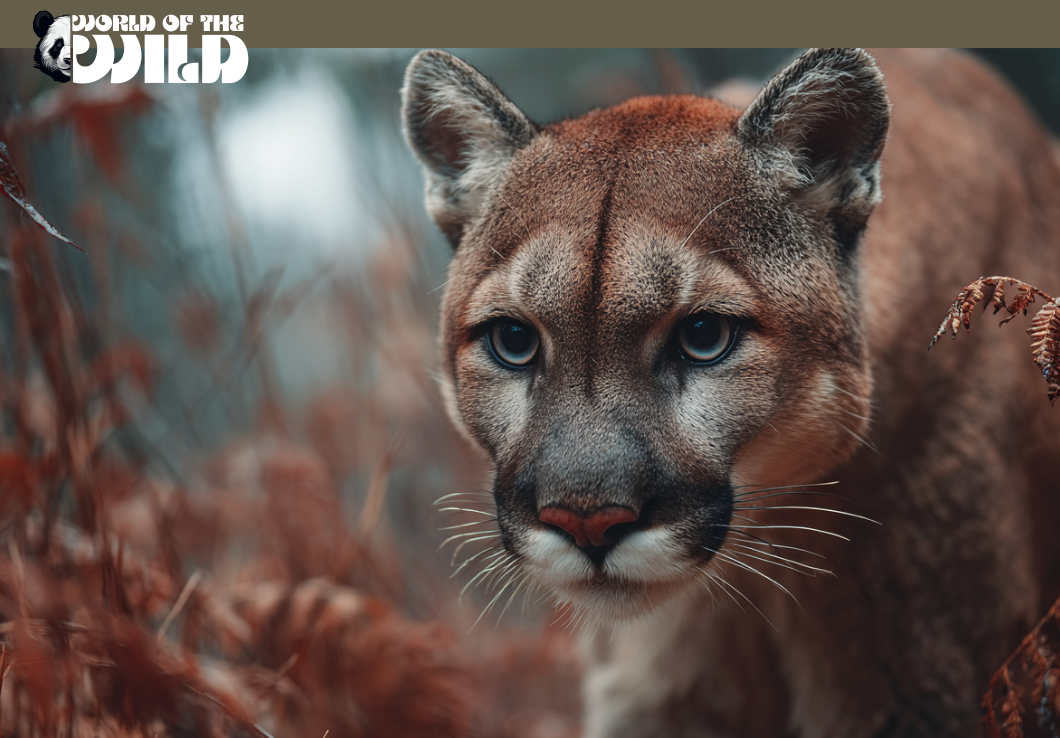

In the dappled shadows of a Rocky Mountain forest, a tawny silhouette moves with liquid grace. Eyes like amber coals pierce through the twilight, watching, waiting. This is the cougar—a supreme predator that has mastered the art of invisibility despite being one of the largest cats in the Americas. Known by more names than perhaps any other animal on Earth—mountain lion, puma, panther, catamount—this enigmatic feline has captivated human imagination for millennia while remaining frustratingly elusive to most who seek it.
The cougar stands as a testament to adaptability and resilience, having once ranged from the Canadian Yukon to the southern Andes, occupying nearly every habitat type imaginable. Despite centuries of persecution and habitat loss, this magnificent predator continues to survive in the hidden corners of the wilderness, playing a crucial role in maintaining the ecological balance of the ecosystems it inhabits. Understanding the cougar means understanding the delicate interplay between apex predators and the wild landscapes that still persist in our modern world.
Facts
- The Name Champion: The cougar holds the Guinness World Record for the animal with the most names, boasting over 40 different monikers in English alone, including puma, mountain lion, panther, catamount, and painter.
- Vertical Virtuosos: Cougars possess extraordinary jumping abilities, capable of leaping 15 feet vertically and up to 40 feet horizontally from a standstill—equivalent to clearing a school bus lengthwise.
- Purr, Don’t Roar: Unlike their larger cousins in the Panthera genus, cougars cannot roar. Instead, they purr, chirp, whistle, and produce eerie screams that sound remarkably similar to a woman’s scream.
- Solitary Wanderers: Male cougars maintain some of the largest territories of any land predator, with ranges spanning up to 300 square miles—roughly the size of New York City.
- Young Nomads: Young male cougars may travel over 100 miles from their birth territory to establish their own home range, with one documented individual traveling nearly 1,000 miles from South Dakota to Connecticut.
- Crepuscular Hunters: Cougars are most active during dawn and dusk (crepuscular), though they will hunt at any time when opportunity presents itself, showing remarkable flexibility in their hunting schedule.
- Efficient Killers: A single cougar can kill one deer-sized animal every 7-10 days, and in some regions, they’re responsible for more deer deaths annually than human hunters.
Sounds of the Cougar
Species
Taxonomic Classification:
- Kingdom: Animalia
- Phylum: Chordata
- Class: Mammalia
- Order: Carnivora
- Family: Felidae
- Genus: Puma
- Species: Puma concolor
The cougar belongs to the subfamily Felinae, which includes all the small and medium cats, despite the cougar’s impressive size. Interestingly, genetic studies have revealed that the cougar’s closest living relatives are the jaguarundi and the cheetah, rather than the larger roaring cats.
Historically, up to 32 subspecies of cougar were recognized based on geographic location and minor morphological differences. However, modern genetic analysis has dramatically simplified this classification. As of recent taxonomic revisions, most authorities recognize only two subspecies:
1. North American Cougar (Puma concolor couguar): Encompasses all cougars found in North and Central America, including what were previously considered separate subspecies like the Florida panther, which is now recognized as a regional population rather than a distinct subspecies.
2. South American Cougar (Puma concolor concolor): Includes all populations found throughout South America.
The extinct Eastern cougar, once believed to be a separate subspecies, has been reclassified as part of the North American cougar, with its “extinction” actually representing the extirpation of cougars from eastern North America rather than the loss of a unique genetic lineage.
Appearance
The cougar presents a study in streamlined feline perfection, built for power, stealth, and explosive speed. Adult males typically measure 6 to 8 feet in total length, including their distinctive 2 to 3-foot tail, and stand approximately 24 to 35 inches at the shoulder. Males are substantially larger than females, weighing between 115 and 220 pounds, while females typically range from 64 to 141 pounds. The largest cougars are found in the northern parts of their range, following Bergmann’s rule, with specimens from Canada and the northern United States reaching the upper weight limits.
The coat color varies significantly across the species’ range but typically consists of a tawny, grayish-tan, or reddish-brown pelage that provides excellent camouflage in diverse environments. The underside—including the chest, belly, and inner legs—is notably lighter, often creamy white or pale gray. This counter-shading helps break up the cat’s outline in dappled forest light.
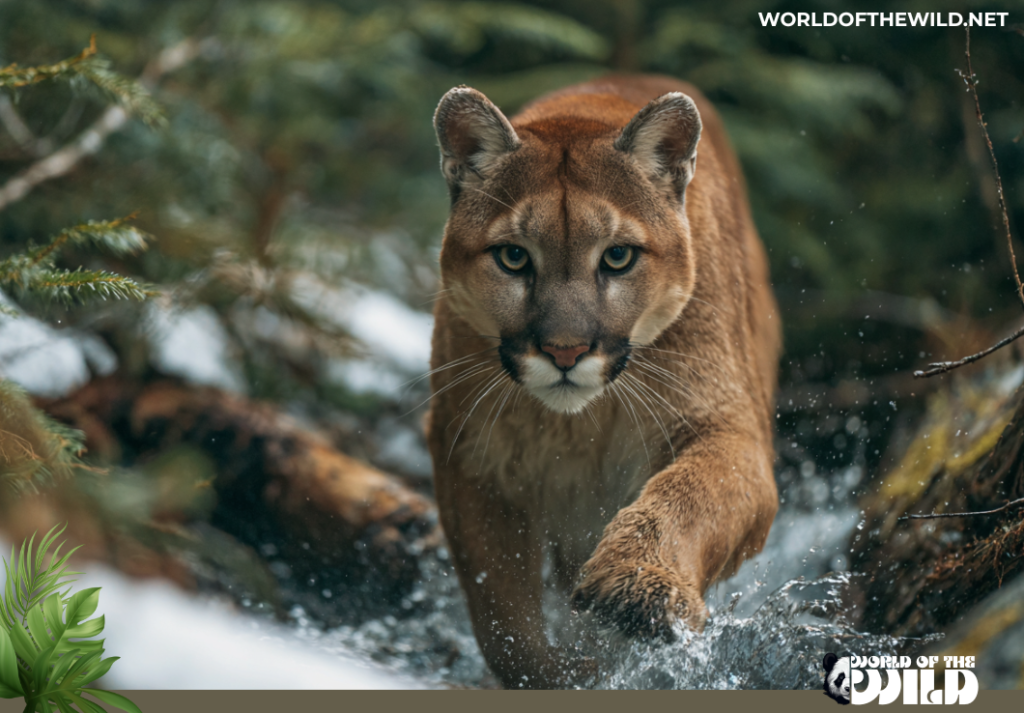
The face features distinctive markings: white around the muzzle and chin, with black accents bordering the nose and marking the backs of the rounded ears. The ears themselves are proportionally small and backed with black fur surrounding a lighter center patch. Perhaps the cougar’s most striking facial feature is its eyes—varying from gold to greenish-gold to amber—set in a powerfully built skull with pronounced cheekbones.
The tail is perhaps the cougar’s most recognizable feature: long, thick, and cylindrical, tipped with black or dark brown. This tail serves as a counterbalance during pursuit and when navigating treacherous terrain. The legs are powerfully muscled and proportionally long, ending in large paws equipped with retractable claws up to 1.5 inches long. The hind legs are notably more muscular than the forelegs, providing the explosive power necessary for the cougar’s legendary leaps.
Cougar kittens are born with a strikingly different appearance: spots and rosettes cover their bodies, and their tails are ringed. These markings fade gradually, typically disappearing completely by 12 to 18 months of age, though some adults retain faint spotting on their lower legs.
Behavior
The cougar epitomizes feline independence and solitary prowess. Unlike their social relatives, the lions, cougars are intensely solitary animals outside of mating periods and the mother-offspring bond. Adult males and females maintain separate territories that overlap only slightly, with males defending much larger ranges that may encompass the territories of several females.
Communication among these solitary hunters occurs primarily through scent marking. Cougars create “scrapes”—mounds of dirt, leaves, or snow marked with urine and sometimes feces—to advertise their presence to other cougars. These scrapes serve as territorial boundaries and information centers, conveying the marker’s sex, reproductive status, and individual identity. Visual markers like claw marks on trees supplement these olfactory signals.
Vocally, cougars produce a surprisingly varied repertoire despite their inability to roar. They purr when content, much like domestic cats but at a much louder volume. Mother cougars and kittens communicate through whistling chirps. Perhaps most famously, cougars produce blood-curdling screams during the breeding season—piercing wails that echo through canyons and forests, often mistaken for human screams by startled witnesses.
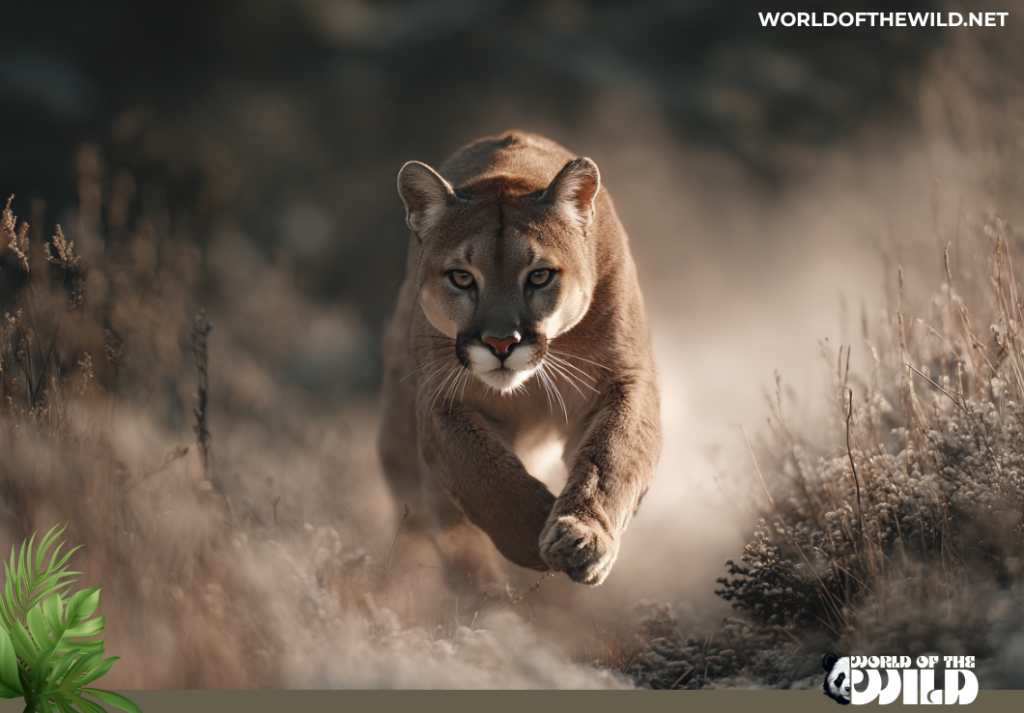
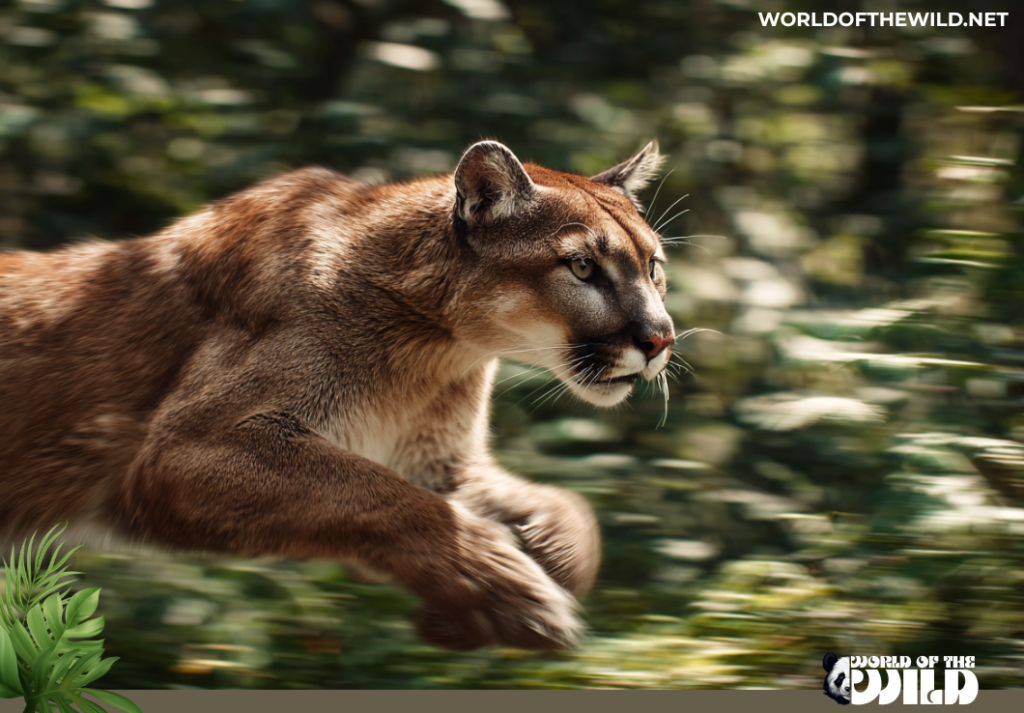
The cougar’s hunting behavior showcases remarkable intelligence and adaptability. These cats are ambush predators par excellence, relying on stealth and patience rather than sustained speed. A typical hunt involves stalking prey carefully, using every available bit of cover, before launching a devastating attack from close range. They can accelerate to speeds of 40-50 mph in short bursts, but their true genius lies in approaching undetected.
Once within striking range—typically 30 to 50 feet—the cougar explodes from cover with powerful bounds. The kill is usually achieved with a suffocating bite to the throat or by breaking the prey’s neck with a powerful bite to the back of the skull. After the kill, cougars often drag prey to a secluded spot, sometimes moving animals several times their own weight impressive distances. They cache their kills under leaves, dirt, and debris, returning to feed over several days.
Activity patterns vary by region and prey availability, but cougars are predominantly crepuscular, most active during dawn and dusk hours. However, they show remarkable flexibility, adjusting their schedules based on prey behavior, human activity, and environmental conditions. In areas with heavy human presence, cougars often shift to nocturnal activity patterns.
Despite their power and predatory prowess, cougars are remarkably shy around humans. They will typically flee when they detect human presence, and attacks on humans are exceedingly rare. This wariness likely represents both innate caution and learned behavior, as cougars that become habituated to humans often end up dead.
Evolution
The evolutionary story of the cougar is one of migration, adaptation, and survival through dramatic climatic changes. The genus Puma originated in North America approximately 8.5 million years ago during the Late Miocene epoch. Fossil evidence suggests the earliest Puma-like cats appeared in what is now the southeastern United States.
The evolutionary lineage of modern cougars can be traced through several extinct species. Puma pardoides, appearing around 3 million years ago, represents an early ancestor. This species was smaller than modern cougars and retained more primitive characteristics. As the Pleistocene epoch unfolded, the lineage gave rise to larger, more specialized forms.
During the Pleistocene, North America hosted several large felids, including the American lion and the saber-toothed cat Smilodon. The cougar’s ancestors coexisted with these now-extinct megafauna, carving out their ecological niche by focusing on medium-sized prey and developing their characteristic adaptability.
A crucial chapter in cougar evolution occurred when ancestral populations crossed the Isthmus of Panama into South America approximately 2 to 3 million years ago, shortly after the land bridge formed. This colonization event had profound consequences. In South America, cougars encountered entirely new prey species and habitats, driving rapid adaptation. Meanwhile, North American populations faced the dramatic climate fluctuations of the Ice Ages.
Genetic studies have revealed surprising insights into cougar evolutionary history. Analysis of mitochondrial DNA suggests that North American cougars experienced a severe population bottleneck approximately 10,000 years ago, coinciding with the megafaunal extinctions at the end of the Pleistocene. This bottleneck resulted in remarkably low genetic diversity among North American cougars—all North American individuals show less genetic variation than typically found within a single population of most other large mammals.
South American cougars retained greater genetic diversity, likely because they didn’t experience the same dramatic bottleneck. The division between North and South American lineages remains relatively subtle, supporting the current two-subspecies classification.
Interestingly, molecular studies have revealed that the cougar’s closest living relatives are not the large cats of the Panthera genus but rather the much smaller jaguarundi of Central and South America and, more surprisingly, the cheetah of Africa. These three species shared a common ancestor approximately 6.7 million years ago. This relationship explains why cougars, despite their size, share characteristics with smaller cats—including the ability to purr but not roar, a flexible hyoid bone structure, and certain cranial features.
The cougar’s evolutionary success lies in its adaptability. Unlike many specialized predators that went extinct when their preferred prey disappeared, cougars developed a generalist strategy, capable of hunting anything from insects to elk, and thriving in environments from tropical rainforests to snowy mountain peaks.
Habitat
The cougar lays claim to one of the most extensive ranges of any terrestrial mammal in the Western Hemisphere, historically spanning from the Canadian Yukon to the southern tip of South America—a distance of over 10,000 miles. This remarkable distribution reflects the species’ extraordinary ecological flexibility and adaptability.
Currently, viable cougar populations in North America are primarily found in the western United States and Canada, with strongholds in the Rocky Mountains, Sierra Nevada, Cascade Range, and the coastal ranges of California and British Columbia. Small, isolated populations persist in the Black Hills of South Dakota, the Badlands, and amazingly, Florida, where the critically endangered Florida panther population maintains a tenuous foothold in the Big Cypress National Preserve and Everglades ecosystem.
In Central and South America, cougars maintain more continuous populations, ranging from the tropical forests of Mexico through Central America and across virtually every habitat type in South America, from the Amazon Basin to the windswept steppes of Patagonia.
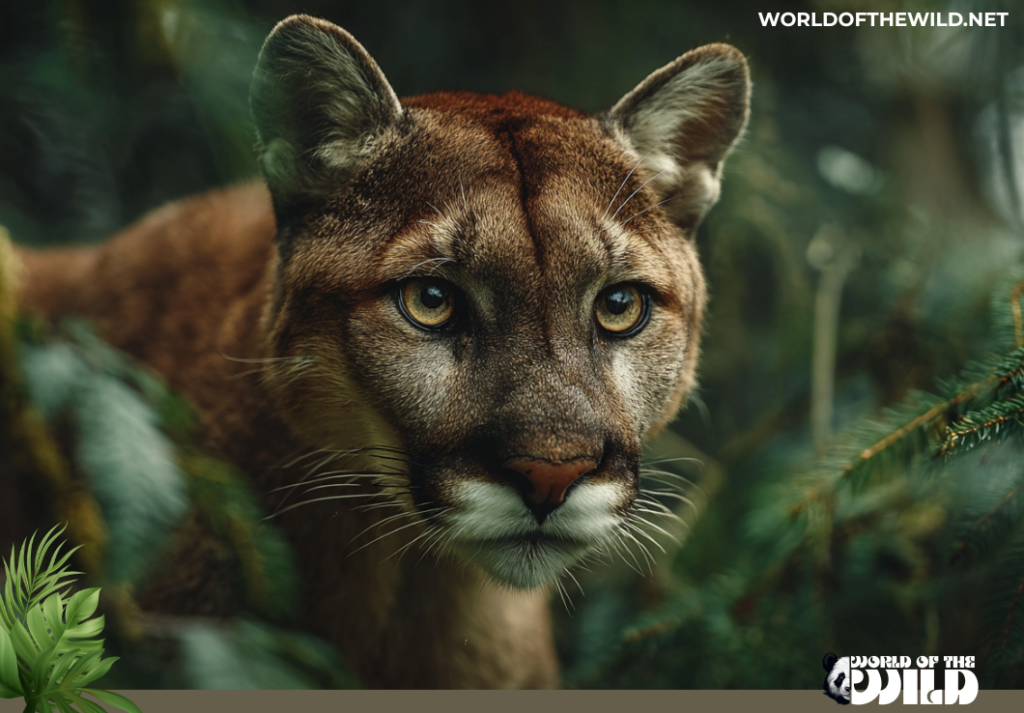
The cougar’s habitat versatility is genuinely remarkable. These cats thrive in coniferous forests, where dense undergrowth provides stalking cover and deer are abundant. They inhabit deciduous and mixed forests, prowling beneath canopies of oak, maple, and beech. In the Southwest, cougars have adapted to desert scrublands and rocky canyon country, where they hunt mule deer among saguaro cacti and juniper.
Mountain environments represent prime cougar habitat. These cats regularly patrol alpine meadows and subalpine forests at elevations exceeding 10,000 feet, their thick winter coats enabling them to hunt through deep snow. Conversely, cougars also inhabit lowland tropical rainforests, where they navigate through steamy jungles hunting capybaras, peccaries, and brocket deer.
In South America, cougars occupy pampas grasslands, where they hunt through waist-high grasses, and even the harsh, treeless expanses of Patagonia, where they prey on guanacos against backdrops of glaciers and dramatic peaks. They’ve been documented in mangrove swamps, cloud forests, and even the outskirts of major cities, demonstrating their ability to exploit marginal habitats.
Key habitat requirements for cougars include: adequate prey populations (usually ungulates), sufficient vegetative cover for stalking and denning, and low human density or human tolerance. Rocky outcrops, dense vegetation, and varied terrain provide the structural complexity cougars prefer for hunting and rearing young. While cougars can tolerate some level of human modification, they generally avoid areas with extensive development, high road densities, and intensive agriculture.
Home range sizes vary dramatically based on prey density, terrain, and sex. In prey-rich areas, female territories may be as small as 10-25 square miles, while males may require 50-150 square miles. In prey-poor regions, particularly in desert environments or high-elevation areas with lower prey densities, male territories can exceed 300 square miles.
Diet
The cougar is an obligate carnivore—a hypercarnivore, to be precise—with a diet consisting almost entirely of meat. These apex predators are remarkably effective hunters, with adaptations and behaviors finely tuned for capturing and consuming prey.
Deer represent the cougar’s primary food source across most of their range. In North America, white-tailed deer, mule deer, and elk constitute the bulk of cougar diet in many regions, with a single adult cougar consuming approximately one deer-sized animal every 7-10 days. In South America, various deer species including marsh deer, pampas deer, and brocket deer fill this dietary niche, supplemented by South American ungulates like guanacos and vicuñas in certain regions.
However, the cougar’s dietary breadth is impressive, ranging from insects to animals seven times their own weight. Moose calves, caribou, bighorn sheep, and even young bison may be taken, particularly by large male cougars. Medium-sized prey includes peccaries, coyotes, raccoons, beavers, porcupines, snowshoe hares, rabbits, and armadillos. In certain regions, cougars have been documented feeding on unusual prey: in Florida, alligators occasionally fall victim to panthers, while in some areas, domestic livestock becomes an unfortunate dietary component.
Smaller prey shouldn’t be underestimated in cougar diet. These cats will readily consume ground squirrels, mice, birds (including wild turkeys and grouse), and even insects and grass when larger prey is scarce. This dietary flexibility has been crucial to their survival across diverse habitats.
The cougar’s hunting strategy reflects their ambush predator lifestyle. Unlike coursing predators like wolves that chase prey over long distances, cougars rely on stealth, patience, and explosive power. The hunting sequence typically unfolds as follows:
First, the cougar uses keen eyesight and hearing to locate potential prey—their vision is particularly acute in low light conditions, giving them significant advantage during crepuscular hours. Once prey is identified, the stalk begins. Moving with remarkable silence and utilizing every tree, rock, and contour of terrain, the cougar closes distance. Their large paws act as snowshoes in winter and muffle footfalls, while their tawny coat blends seamlessly with dappled forest light or rocky terrain.
The stalk may last minutes or hours, with the cougar freezing motionless whenever prey looks up, becoming virtually invisible. When within striking range—typically 30-50 feet but sometimes as close as 15 feet—the attack launches. Powerful hind legs propel the cougar forward in bounds of up to 20 feet, closing distance in seconds. The cat aims for the prey’s back or side, using momentum and powerful forelimbs equipped with sharp, retractable claws to seize and bring down the target.
The killing bite follows swiftly: a powerful bite to the throat, compressing the trachea and major blood vessels until the prey suffocates, or a bite to the base of the skull or neck, severing the spinal cord. The cougar’s massively powerful jaws and strategically placed canine teeth—designed to slip between vertebrae—make this an efficient process.
After the kill, cougars exhibit interesting caching behavior. They often drag prey to a secluded location—sometimes moving carcasses several hundred yards—and cover them with leaves, pine needles, dirt, and debris. This caching serves multiple purposes: it conceals the kill from scavengers like bears, coyotes, and birds, maintains meat quality, and allows the cougar to feed multiple times without hunting. A cougar will return to a cached kill for 3-7 days, feeding intermittently until the meat spoils or is depleted.
Predators and Threats
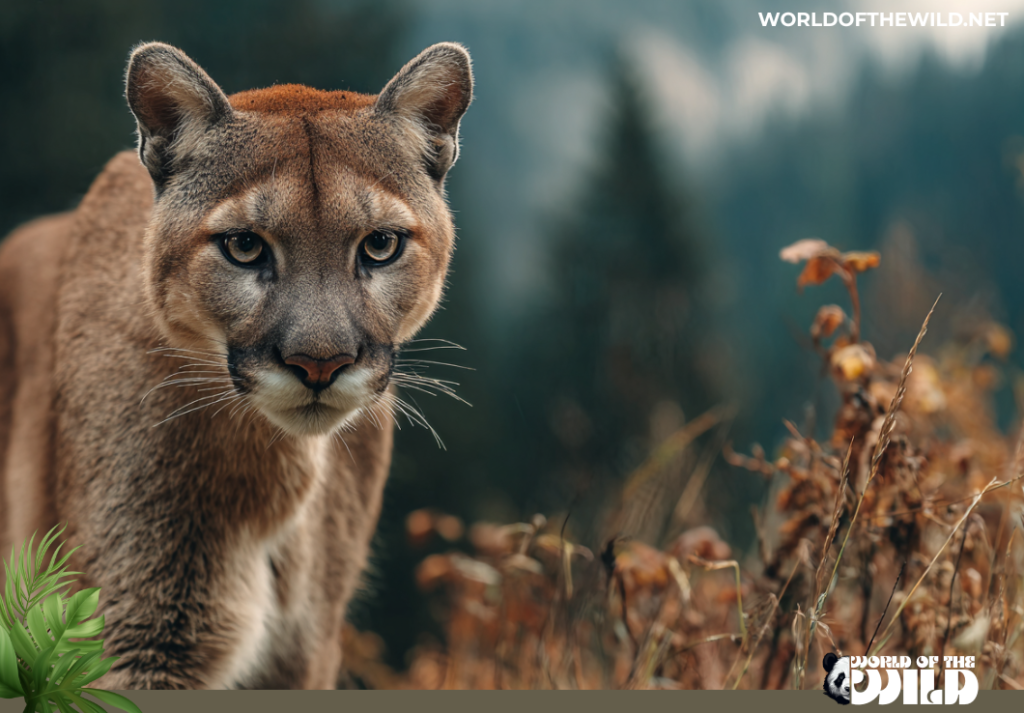
As apex predators, adult cougars face few natural threats, but they are not entirely without danger. The primary natural predators of cougars are other large carnivores, though predation is relatively rare and typically involves younger or weaker individuals.
Bears—both black bears and grizzly bears—pose the most significant natural threat. While cougars generally avoid confrontations with bears, territorial disputes over carcasses can turn deadly. Grizzly bears, in particular, have been documented killing cougars, and both bear species will kill cougar kittens opportunistically. The relationship between cougars and bears is complex: they compete for similar prey, and bears will readily usurp cougar kills through sheer size advantage.
Wolf packs represent another natural threat, particularly in areas where wolf reintroduction has occurred. While a single wolf is no match for an adult cougar, a wolf pack can kill cougars through coordinated attacks, especially when defending kills or territories. Documented cases of wolves killing cougars have increased as wolf populations recover in Montana, Wyoming, and Idaho.
Other cougars present perhaps the most consistent threat. Male cougars are highly territorial and will kill other adult males—and occasionally females—that intrude on their territories. Infanticide is documented, with incoming males sometimes killing kittens sired by previous territorial males, a behavior that brings females back into estrus more quickly.
For cougar kittens, threats multiply dramatically. Golden eagles, coyotes, bobcats, lynx, wolverines, jaguars (in overlapping South American ranges), and large owls all pose risks to young cougars, particularly those separated from their mothers.
However, natural predation pales in comparison to anthropogenic threats—human-caused dangers that represent the primary challenge to cougar populations:
Habitat Loss and Fragmentation: As human development expands into wildlands, cougar habitat disappears beneath subdivisions, roads, and agricultural lands. Fragmentation is particularly insidious, breaking large, continuous habitats into isolated patches that cannot support viable cougar populations. Roads represent both physical barriers and direct mortality sources through vehicle strikes.
Direct Persecution: For over two centuries, cougars have been actively hunted, trapped, and poisoned by humans. While many U.S. states now manage cougars as game animals with regulated hunting seasons, unregulated killing continues in some areas. Trophy hunting remains controversial, with concerns about maintaining viable populations and the cascading ecological effects of removing apex predators.
Conflict with Humans: As humans increasingly encroach on cougar habitat and cougars occasionally prey on livestock or pets, conflicts arise. Cougars deemed problematic are often killed, even when they’re simply following natural behaviors. Attacks on humans, while extremely rare—averaging about 4 per year in the U.S. and Canada—generate intense public fear and often result in lethal removal of individual cats.
Prey Depletion: Overhunting or management practices that reduce deer and elk populations below natural levels can eliminate cougars’ primary food source, forcing them into conflict situations or starvation.
Inbreeding Depression: Small, isolated populations, like the Florida panther, face genetic bottlenecks that reduce fitness, increase susceptibility to disease, and threaten long-term viability. The Florida panther exhibited concerning signs of inbreeding, including heart defects, kinked tails, and low sperm quality, requiring genetic rescue through introduction of Texas cougars.
Rodenticides and Toxins: Secondary poisoning from rodenticides and other toxins represents an emerging threat, particularly for cougars living near human-modified landscapes. These cats accumulate toxins through prey that have consumed poison, leading to immune system suppression, bleeding disorders, and death.
Disease: While cougars are generally disease-resistant, proximity to domestic animals introduces risks. Feline immunodeficiency virus (FIV), plague, and parasites from domestic and feral cats can affect cougar populations.
Climate Change: Changing climate patterns alter prey distributions, snowpack levels (affecting hunting success), and habitat suitability, forcing cougars to adapt to rapidly shifting conditions.

Reproduction and Life Cycle
Cougar reproduction follows patterns typical of solitary big cats, with complex behaviors ensuring genetic diversity while maintaining the species’ solitary lifestyle. Unlike many animals with distinct breeding seasons, cougars can breed year-round, though regional peaks often occur. In North America, birth peaks typically happen in late spring and summer, while in equatorial regions, breeding shows less seasonal variation.
Sexual maturity arrives between 2-3 years for both sexes, though females typically breed for the first time around 2.5 years, while males may not successfully breed until they establish territories around 3-4 years old. The disparity reflects the intense competition among males for breeding opportunities.
Mating begins when a female enters estrus (heat), a period lasting approximately 8-9 days. During estrus, females advertise their receptivity through increased vocalization—those famous screams that haunt mountain forests—and intensified scent marking. Males detect these signals and may travel considerable distances to locate receptive females.
When a male locates an estrous female, courtship begins, though “courtship” might be too gentle a term for cougar mating behavior. The pair engages in a tense dance involving mutual circling, vocalizations, and occasional aggressive displays. The male must be persistent but cautious—females are formidable and may attack if approached inappropriately.
Mating itself is brief but repeated frequently over the 1-6 days the pair remains together. Copulation is intense, lasting only seconds but occurring dozens of times per day. The male typically bites the female’s neck during mating, and vocalizations from both cats—growls, snarls, and yowls—create a cacophony that can be heard considerable distances.
After mating, the male departs, providing no parental care. If conception doesn’t occur, the female cycles back into estrus in roughly 23 days. If pregnant, a gestation period of approximately 90-96 days (roughly three months) follows.
As parturition approaches, the female seeks a secure den site—typically a rocky cave, hollow beneath deadfall, dense thicket, or sheltered outcrop that provides protection from weather and predators. In this natal den, the female gives birth to a litter averaging 2-3 kittens, though litters can range from 1 to 6 cubs.
Cougar kittens are born blind, deaf, and helpless, weighing only about one pound. Their spotted coats and ringed tails provide camouflage in the dappled light of the den. Eyes open at around 10 days old, revealing blue irises that will eventually transition to the golden-amber of adults.
For the first two weeks, kittens remain entirely dependent on mother’s milk, huddled together for warmth when she’s hunting. The mother returns regularly to nurse, clean, and guard her offspring. Around 2-3 weeks, kittens begin tentative exploration of the immediate den area, though they won’t venture far for several more weeks.
At approximately 6-8 weeks, kittens begin eating meat that their mother provides, though they continue nursing for 2-3 months. This transition period is critical—the mother must hunt more frequently to feed growing cubs while teaching them early lessons about prey and predators.
As the kittens grow stronger and more coordinated, the mother relocates them to a series of “auxiliary dens”—temporary resting sites throughout her territory. This nomadic behavior may help avoid parasite buildup and reduce chances of predators discovering the vulnerable kittens.
Around 3-4 months old, cubs begin accompanying their mother on hunts, though initially they’re more hindrance than help, lacking the patience and stealth necessary for success. These outings serve as critical apprenticeships, where kittens learn to identify prey, read terrain, stalk effectively, and deliver killing bites.
The kittens’ spotted coats begin fading around 6 months and typically disappear by 12-18 months, their adult pelage emerging as they mature. Throughout this period, the mother is fiercely protective, defending her offspring from any threat, including male cougars, bears, and other predators.
As cubs approach 12-18 months, they become increasingly proficient hunters, capable of taking down small prey independently. However, they remain with their mother until 15-26 months old—much longer than many other cat species. This extended apprenticeship ensures they’ve mastered hunting techniques and territorial behaviors necessary for survival.
Dispersal typically occurs when cubs reach 15-26 months old, though males often leave earlier and disperse farther than females. The mother may become pregnant again at this point, typically breeding every 18-20 months if cubs survive. Dispersing young face tremendous challenges—they must navigate through occupied territories, locate available habitat, secure prey, and avoid conflicts with resident adults. Mortality during this period is extremely high, with estimates suggesting 50-60% of dispersing cougars die within their first year of independence.
Young females often establish territories adjacent to or overlapping with their mother’s range, while males must disperse much farther—typically 50-100 miles but sometimes over 1,000 miles—to find vacant territories. This sex-biased dispersal helps prevent inbreeding and maintain genetic diversity.
In the wild, cougars that survive to independence typically live 8-13 years, though some individuals reach 18-20 years. In captivity, where they face no hunting pressure, starvation risk, or territorial conflicts, cougars can live 20-25 years. However, wild cougars face constant challenges: territorial fights, injuries from prey, disease, starvation, and human-caused mortality. Many never reach old age, dying during dispersal or territorial conflicts.
Reproductive success varies dramatically. A female cougar producing three litters in her lifetime, with perhaps 1-2 cubs from each litter surviving to maturity, achieves significant reproductive success. This low reproductive rate makes cougar populations vulnerable to overharvest and means recovery from population declines occurs slowly.
Population
The cougar’s conservation status presents a complex picture that varies dramatically across its vast range. Globally, the International Union for Conservation of Nature (IUCN) classifies the cougar as “Least Concern,” a designation reflecting the species’ extensive range and relatively large overall population. However, this broad classification masks significant regional variation and ongoing threats that warrant careful management attention.
Estimating total cougar numbers remains challenging due to their elusive nature and vast territories. Current estimates suggest approximately 50,000 cougars exist across North and South America combined, though some authorities place the figure higher, potentially 60,000-80,000 individuals. These numbers represent a dramatic recovery from historical lows in the mid-20th century when cougar populations in North America plummeted due to intensive persecution campaigns.
In the western United States, cougar populations have stabilized or are slowly increasing in many areas, with an estimated 30,000 individuals across 14 states. California harbors approximately 4,000-6,000 cougars, Colorado likely hosts 3,000-7,000, Montana maintains roughly 3,000-5,000, and Wyoming supports about 2,000-3,000. British Columbia in Canada holds one of the largest cougar populations north of Mexico, estimated at 4,000-6,000 individuals.
However, significant conservation concerns exist. The Florida panther represents one of the most critically endangered mammals in North America, with only 120-230 individuals surviving in southern Florida. This population faced near-extinction in the 1990s, bottlenecked to perhaps 20-30 individuals, resulting in severe inbreeding depression. A genetic rescue program introducing eight female Texas cougars in 1995 proved remarkably successful, revitalizing genetic diversity and leading to population recovery. Yet the Florida panther remains imperiled, threatened by habitat loss, vehicle strikes (the leading cause of death), and limited habitat availability.
In eastern North America, cougars were declared extinct by the U.S. Fish and Wildlife Service in 2018. The “eastern cougar” was officially removed from the endangered species list, acknowledging that the large cat that once roamed from Michigan to South Carolina had been extirpated by the early 1900s. However, individual cougars—likely dispersing males from western populations—are occasionally documented in eastern states like Nebraska, Minnesota, Wisconsin, Michigan, and even Connecticut, suggesting the potential for eventual recolonization if suitable habitat and prey persist.
In Central and South America, cougar populations remain more continuous and widespread, though accurate population estimates are difficult to obtain. Countries like Brazil, Argentina, Chile, Peru, and Colombia maintain significant cougar populations, benefiting from larger tracts of relatively intact habitat. However, even in these regions, habitat fragmentation, human-wildlife conflict, and persecution pose ongoing challenges.
Population trends vary regionally. In many areas of western North America, populations are stable or increasing, reflecting successful wildlife management programs, regulated hunting, and public support for conservation. However, in areas experiencing rapid human population growth and development, cougar numbers face downward pressure from habitat loss and increased human-cougar conflicts.
Several factors complicate population monitoring and conservation. Cougars exist at naturally low densities—even in prime habitat, population densities rarely exceed 3-5 adults per 100 square kilometers. Their extensive home ranges mean substantial habitat areas are required to support viable populations. Fragmentation can isolate populations, leading to genetic problems similar to those experienced by Florida panthers.
Trophy hunting remains a management tool in most western states and provinces, with regulated harvest intended to maintain populations at levels that minimize human-wildlife conflict while ensuring population persistence. However, hunting can have unintended consequences: removing resident males may create territorial vacuums that draw in multiple younger, inexperienced males who may be more likely to engage in problematic behaviors. Additionally, female hunting mortality can impact population growth since females represent the reproductive component of the population.
An encouraging trend is growing recognition of cougars’ ecological importance as apex predators. Research has demonstrated that cougars help regulate prey populations, influence prey behavior in ways that benefit ecosystem health (the “ecology of fear”), and even provide carcasses that support scavenger communities including everything from eagles to beetles. This understanding has fostered greater public appreciation and support for cougar conservation.
Conclusion
The cougar stands as a testament to the resilience and adaptability of wild nature in an increasingly human-dominated world. From the frozen peaks of the Canadian Rockies to the steamy jungles of the Amazon, from desert canyonlands to humid Florida swamps, these magnificent cats have carved out existences in virtually every habitat type imaginable—a feat matched by few other large predators. Their success lies not in specialized adaptations to a single environment but in behavioral flexibility, hunting prowess, and the ability to thrive in solitude.
Yet despite their adaptability, cougars remain vulnerable to the accelerating pressures of the modern world. Habitat fragmentation, human encroachment, and direct persecution continue to threaten populations, particularly in isolated pockets like Florida where genetic bottlenecks and limited space constrain recovery. The cougar’s story reminds us that even the most successful adaptations cannot overcome habitat loss, that even the most elusive predators cannot hide from humanity’s expanding footprint.
The future of cougars depends on our willingness to share space with wildness, to tolerate occasional conflicts, and to recognize that apex predators provide irreplaceable ecological services. These ghost cats ask for remarkably little—sufficient prey, connected habitats, and space to live unseen. In protecting cougars, we protect the integrity of entire ecosystems, from the plants that flourish when deer are kept in check by predation to the countless scavengers that benefit from cougar kills.
As you hike through cougar country, remember: they are watching from the shadows, gold eyes tracking your passage, yet choosing restraint over confrontation. Perhaps that’s the greatest lesson cougars offer—that power and restraint, wildness and wisdom, can coexist. In choosing to conserve cougars, we’re not just saving a species; we’re preserving the possibility of a world where mystery still roams the mountains and wildness still haunts the forests. That’s a world worth fighting for.
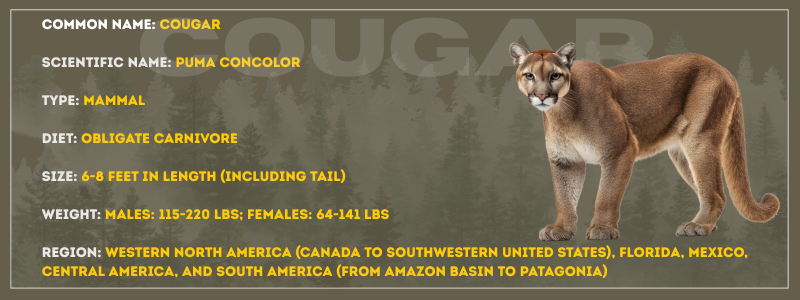
Scientific Name: Puma concolor
Diet Type: Obligate carnivore (hypercarnivore)
Size: 6-8 feet in length (including tail)
Weight: Males: 115-220 lbs; Females: 64-141 lbs
Region Found: Western North America (Canada to southwestern United States), Florida, Mexico, Central America, and South America (from Amazon Basin to Patagonia)
Hungry for More? The hunt doesn’t end here. Dive into our complete collection of Big Cat guides and articles.