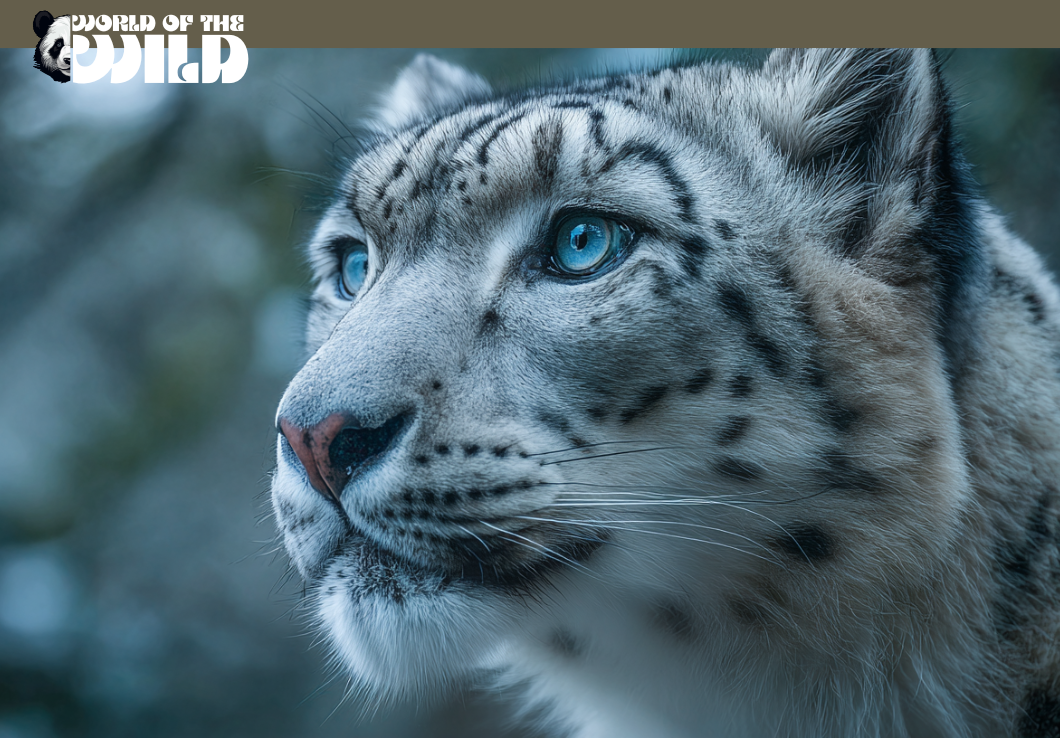

In the thin air of Asia’s highest mountain ranges, where oxygen is scarce and temperatures plummet to deadly extremes, stalks one of the world’s most elusive predators. The snow leopard, often called the “ghost of the mountains,” moves through its harsh domain with an otherworldly grace that has captivated humans for centuries. This magnificent cat remains one of the least understood large predators on Earth, wrapped in mystery and myth. Beyond its stunning beauty and remarkable adaptations, the snow leopard serves as a critical indicator of mountain ecosystem health, making its survival essential not just for the species itself, but for the countless other organisms that share its unforgiving home. As climate change reshapes the high-altitude landscapes where these cats have thrived for millennia, understanding and protecting the snow leopard has never been more urgent.
Facts
- Snow leopards cannot roar like other big cats due to a different larynx structure; instead, they produce a variety of vocalizations including chuffing, growling, and a distinctive high-pitched yowl.
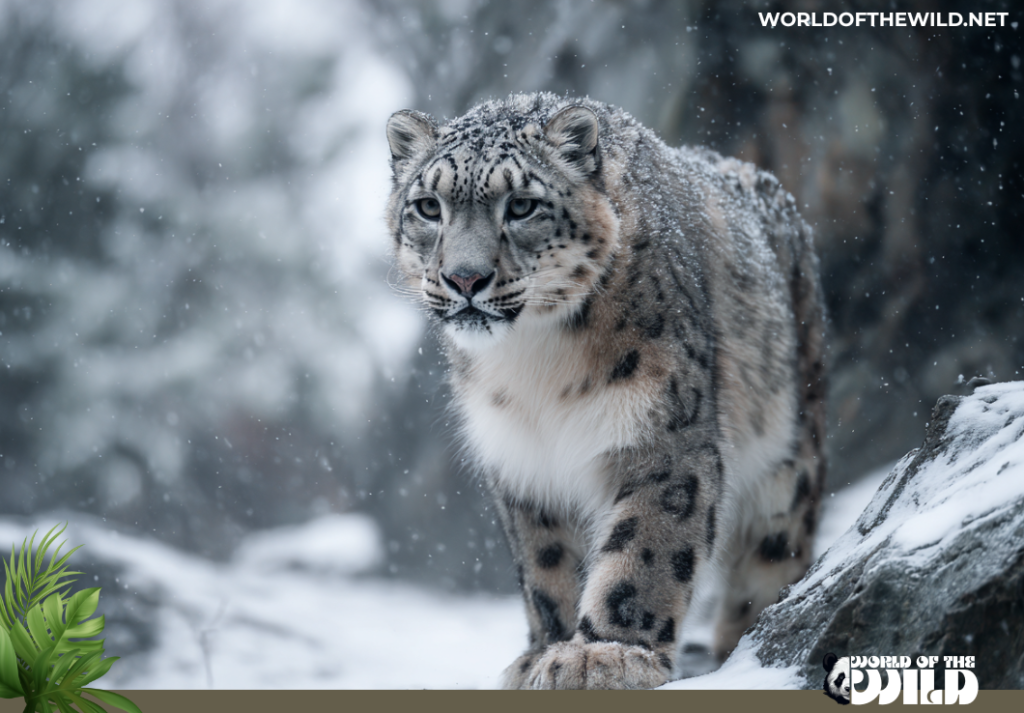
- Their enormous paws act as natural snowshoes, measuring up to 4 inches wide and covered with fur to provide traction on snow and ice while distributing their body weight to prevent sinking.
- A snow leopard’s tail is nearly as long as its entire body, measuring 80-105 cm, and serves multiple purposes including balance on rocky terrain, warmth when wrapped around the body during rest, and fat storage for lean times.
- These cats can leap up to 50 feet in a single bound, using their powerful hind legs to navigate the vertical terrain of their mountain habitat with extraordinary agility.
- Snow leopards have evolved chest cavities that are larger than those of other cats their size, allowing their lungs and nasal passages to efficiently extract oxygen from the thin mountain air at altitudes up to 18,000 feet.
- Unlike most big cats, snow leopards are active during dawn and dusk (crepuscular), which helps them avoid the extreme temperature fluctuations of their high-altitude environment.
- Their pale eyes range from gray to light green, unusual among big cats and perfectly adapted to the intense UV radiation and snow glare of their mountain habitat.
Sounds of the Snow Leopard
Species
The snow leopard belongs to the taxonomic classification of Kingdom Animalia, Phylum Chordata, Class Mammalia, Order Carnivora, Family Felidae, Genus Panthera (though this was debated until 2017 when genetic studies confirmed its placement), and Species uncia. Its scientific name is Panthera uncia, though it was formerly classified as Uncia uncia in its own separate genus.
For many years, scientists debated whether the snow leopard truly belonged in the Panthera genus alongside lions, tigers, leopards, and jaguars. The resolution came through molecular analysis, which revealed that snow leopards are actually the sister species to tigers, having diverged from a common ancestor approximately 3.9 million years ago. Despite this reclassification, the snow leopard retains its species name “uncia,” derived from the Old French “once,” itself borrowed from the original Latin “lyncea.”
Currently, no distinct subspecies of snow leopard are officially recognized, though some genetic variation exists across the species’ vast range. Recent genomic studies have identified three distinct genetic populations corresponding to northern, central, and western regions of the snow leopard’s distribution, but these variations are not significant enough to warrant subspecies designation. This genetic homogeneity is relatively unusual for a species distributed across such an extensive geographic area and may be explained by historical gene flow and the species’ relatively recent evolutionary origins.
Appearance
The snow leopard is a study in adaptive beauty, with every physical feature sculpted by the demands of high-altitude survival. Adults typically measure 90-130 cm in body length, with males weighing between 45-55 kg and females slightly smaller at 35-40 kg. Their stocky, muscular build provides the power needed for navigating steep, rocky terrain and taking down prey often larger than themselves.
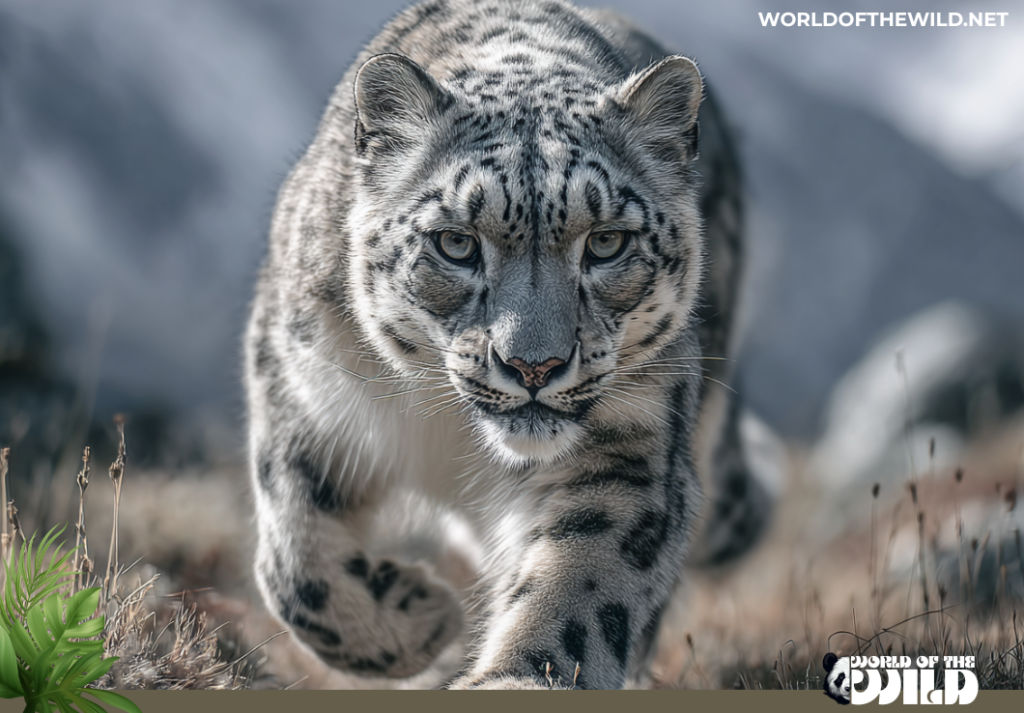
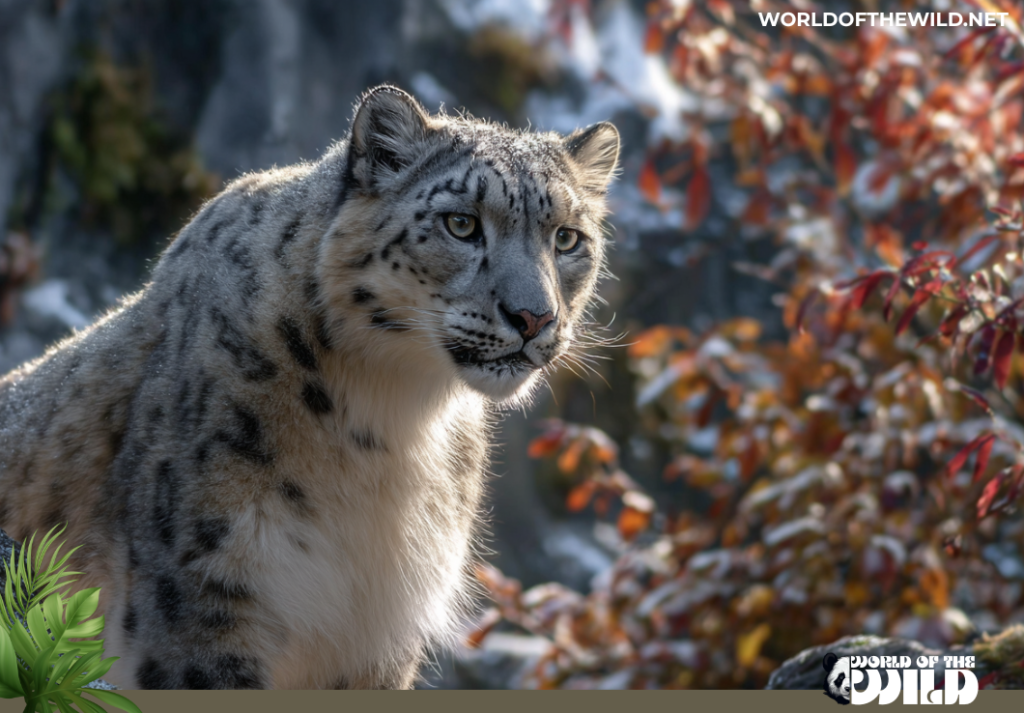
The snow leopard’s coat is perhaps its most striking feature, a masterpiece of natural camouflage consisting of a thick, smoky-gray base color adorned with dark gray to black rosettes and spots. Unlike the solid-bordered rosettes of common leopards, snow leopard markings are often more irregular and broken, with larger rosettes on the back and flanks gradually transitioning to smaller solid spots on the head, neck, and lower limbs. This intricate pattern provides exceptional concealment among the rocky outcrops and patchy snow of their habitat. The fur on their undersides is nearly white, creating countershading that helps them blend into their environment from multiple angles.
Their fur itself is a marvel of insulation, growing up to 12 cm long on the back and tail, making it the longest and densest of any wild cat species. This luxurious coat consists of a dense woolly underfur topped with longer guard hairs, creating an air-trapping layer that provides remarkable protection against temperatures that can drop to -40°C. Even the paws are heavily furred on both top and bottom, providing both warmth and traction.
The snow leopard’s head is distinctively rounded with a shortened muzzle compared to other big cats, an adaptation that warms cold air before it enters the lungs. Their small, rounded ears minimize heat loss, while their pale gray-green to light blue eyes are set in a broad face that accommodates enlarged nasal passages. These wide nasal cavities are lined with extensive blood vessels that warm incoming air and help the cat breathe efficiently in the oxygen-depleted atmosphere of high altitudes. The snow leopard’s powerful neck and shoulders support the athletic leaps and prey-handling abilities essential to survival in their challenging environment.
Behavior
Snow leopards are fundamentally solitary creatures, coming together only during the brief mating season. Each cat maintains a home range that varies dramatically in size depending on prey availability, from 30 square kilometers in prey-rich areas to over 1,000 square kilometers in more barren regions. They mark these territories using scrapes (created by raking their hind feet), scent markings from cheek rubbing and urine spraying, and visual signs such as rock piles they repeatedly visit. Despite being territorial, snow leopards show considerable overlap in their ranges, particularly between males and females, and appear to time their movements to minimize direct encounters with one another.
These cats are predominantly crepuscular, most active during dawn and dusk, though their activity patterns can shift seasonally or in response to prey movements. They spend much of their inactive time resting in caves, rocky outcrops, or crevices that provide shelter from harsh weather and concealment from potential threats. When active, snow leopards are remarkably efficient hunters, using the broken terrain of their habitat to stalk prey with extraordinary patience. They may spend hours slowly advancing on potential meals, using every boulder and depression for cover, before launching their explosive final approach.
Communication among snow leopards occurs primarily through indirect means, given their solitary nature. They produce a variety of vocalizations including hisses, growls, and a distinctive loud yowl used during the mating season that can carry across mountain valleys. The inability to roar—a trait they share with smaller cats despite their size and classification—is due to a partially ossified hyoid bone in their throat. Instead, they chuff when greeting one another, a breathy, non-threatening sound that facilitates the rare peaceful encounters between individuals.
Snow leopards demonstrate remarkable intelligence and adaptability in their hunting strategies, learning the specific movement patterns of prey in their territory and adjusting their tactics accordingly. They have been observed using the same ambush locations repeatedly over years, suggesting sophisticated spatial memory and learning. Their famous agility allows them to pursue prey down near-vertical slopes, and they often hunt from above, using gravity to assist in bringing down animals much larger than themselves. After a successful kill, snow leopards may drag carcasses to protected locations and remain with them for several days, an efficient strategy in an environment where the next meal is never guaranteed.
Evolution
The evolutionary story of the snow leopard is one of adaptation to extreme conditions and divergence from warmer-climate ancestors. The genus Panthera itself originated approximately 10.8 million years ago in Central Asia, with the snow leopard lineage splitting from the tiger lineage roughly 3.9 million years ago during the Pliocene epoch. This divergence occurred as Asian climates began cooling and mountain ranges continued their dramatic uplift, creating the high-altitude niches that would become the snow leopard’s exclusive domain.
Fossil evidence of snow leopard ancestors remains frustratingly sparse, largely because the rocky mountain environments where these cats evolved are not conducive to fossil preservation. However, the oldest confirmed Panthera fossils from Central Asia date to approximately 3.8 million years ago, coinciding with the period when snow leopards began their evolutionary journey. The lack of roaring ability in snow leopards, once thought to indicate primitive characteristics, is now understood to be a derived trait—an evolutionary modification from roaring ancestors rather than retention of an ancient condition.
The snow leopard’s evolutionary path was heavily influenced by the dramatic geological and climatic changes occurring in Central Asia during the Pliocene and Pleistocene. The continued uplift of the Himalayas, Karakoram, and other Asian mountain ranges created expanding high-altitude habitats while simultaneously isolating populations in increasingly extreme environments. These conditions drove intense selective pressure for traits that enhanced survival in cold, oxygen-poor, and resource-scarce conditions. The result was a suite of specializations including the enlarged nasal cavities, exceptional fur density, shortened extremities to minimize heat loss, and powerful hind legs for navigating vertical terrain.
Molecular clock analyses suggest that the modern snow leopard underwent significant population expansion during the late Pleistocene, approximately 50,000 years ago, possibly coinciding with the establishment of the current high-altitude prey communities. More recently, genetic evidence indicates population bottlenecks during the last glacial maximum around 20,000 years ago, followed by recovery as climates warmed and prey populations rebounded. This relatively recent evolutionary history helps explain the species’ limited genetic diversity compared to other big cats with longer independent lineages.
Habitat
Snow leopards inhabit some of the most remote and inhospitable terrain on Earth, occupying the high mountain ranges of Central and South Asia across 12 countries including Afghanistan, Bhutan, China, India, Kazakhstan, Kyrgyzstan, Mongolia, Nepal, Pakistan, Russia, Tajikistan, and Uzbekistan. Their range spans approximately 1.8 million square kilometers, though much of this represents potential rather than occupied habitat, as these elusive cats maintain relatively low population densities even in ideal conditions.
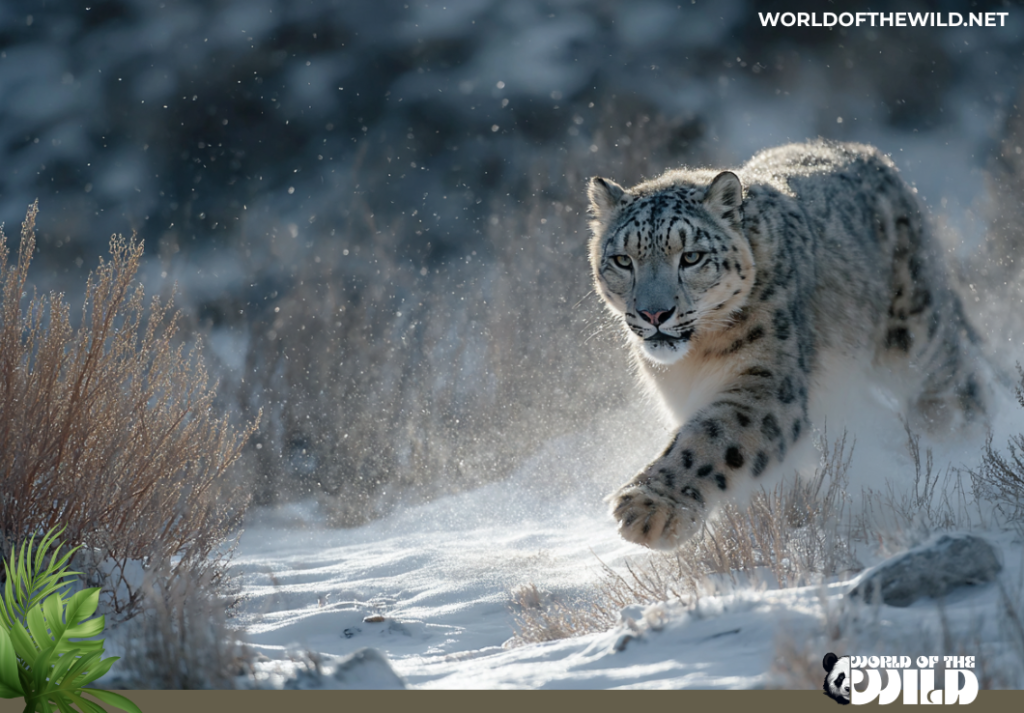
The defining characteristic of snow leopard habitat is altitude. These cats typically live between 3,000 and 5,500 meters above sea level, though they occasionally descend to 1,800 meters in winter following migrating prey or venture above 5,500 meters in pursuit of hunting opportunities. At these elevations, the environment is characterized by thin air containing only 60-70% of the oxygen available at sea level, intense solar radiation, extreme temperature fluctuations between day and night, and prolonged harsh winters where temperatures regularly plunge far below freezing.
Snow leopards show a strong preference for broken, rocky terrain featuring cliffs, ridges, gullies, and abundant rock outcrops. This topography serves multiple functions: it provides concealment for stalking prey, offers protected resting sites in caves and crevices, creates natural corridors for movement between areas, and supports the wild ungulate populations that form the cats’ primary prey base. Vegetation in snow leopard habitat is typically sparse, consisting of alpine meadows, scrublands dominated by juniper and rhododendron at lower elevations, and progressively more barren landscapes at higher altitudes where only occasional grasses, herbs, and lichens survive.
The specific habitat characteristics vary significantly across the snow leopard’s range. In the Himalayas, they occupy steep mountainsides with extensive cliff systems and seasonal access to rich alpine meadows. The Mongolian and Chinese populations tend to inhabit more gently rolling mountains with less dramatic relief but equally harsh climatic conditions. In the Altai and Tian Shan ranges, snow leopards utilize a mosaic of rocky ridges and valleys with greater vegetation diversity. Despite these regional variations, all snow leopard habitats share the common features of rugged terrain, sparse vegetation, cold temperatures, and the presence of suitable prey populations.
Seasonal movements are common among snow leopards, with many individuals following prey migrations to lower elevations during winter when deep snow makes hunting in high alpine areas nearly impossible. These movements can cover vertical distances of several thousand meters and may result in temporary ranges that differ dramatically from summer territories. Such seasonal adaptability is crucial for survival in environments where resource availability fluctuates dramatically throughout the year.
Diet
The snow leopard is an obligate carnivore, meaning its physiology is entirely adapted to a meat-based diet. These apex predators are remarkably catholic in their prey selection, capable of taking down animals ranging from small rodents and birds to ungulates three times their own body weight. This dietary flexibility is essential for survival in an environment where prey availability is unpredictable and populations fluctuate significantly across seasons and years.
The primary prey species for snow leopards varies geographically but consistently consists of wild ungulates. Blue sheep (bharal) represent the most important prey species across much of the Himalayas, often comprising 50-70% of the diet in these regions. In Central Asia, Siberian ibex fill a similar ecological niche as the principal prey, while Argali sheep become important where their ranges overlap with snow leopards. Additional wild prey includes Himalayan tahr, markhor, urial, Tibetan antelope, wild boar, marmots, pikas, and various species of deer. Snow leopards demonstrate remarkable hunting prowess, regularly taking down blue sheep and ibex weighing 40-60 kg, and occasionally successfully hunting animals weighing up to 150 kg.
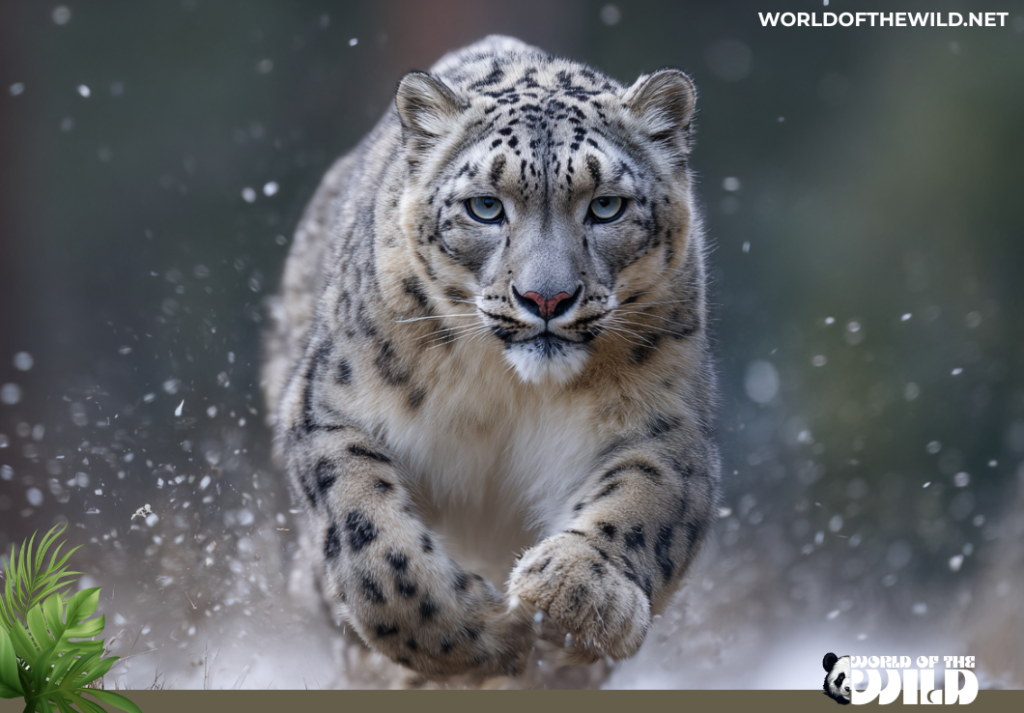
Hunting strategy varies with terrain and prey species, but snow leopards typically employ a stalk-and-ambush approach that capitalizes on their exceptional camouflage and the broken topography of their habitat. They may spend hours patiently approaching prey, using every available feature for concealment, before launching a rapid final rush from as close as 20-30 meters. When hunting on steep slopes, they often position themselves above prey, using gravity to assist in bringing down animals. The kill is typically achieved through a powerful bite to the neck or throat, with the snow leopard’s robust skull and strong jaw muscles providing the necessary force.
A successful kill on a large ungulate can sustain a snow leopard for up to a week, during which the cat typically remains in the vicinity of the carcass, feeding periodically and resting nearby. In harsh winter conditions, snow leopards may cache portions of kills under rocks or snow, returning to feed over several days. This ability to gorge and then fast for extended periods is crucial in an environment where successful hunts may be separated by many days of fruitless searching.
Livestock depredation represents a significant and controversial aspect of snow leopard feeding ecology. In many parts of their range, domestic animals including sheep, goats, horses, and yak calves have become important supplementary or even primary prey, particularly during winter when wild prey descends to lower elevations and poorly protected livestock becomes more accessible. This predation on domestic animals creates the single greatest source of human-snow leopard conflict and represents a major conservation challenge requiring carefully designed mitigation strategies.
Predators and Threats
As apex predators occupying remote high-altitude environments, adult snow leopards face virtually no natural predation. Their position at the top of the food chain means that threats from other species are minimal, though aggressive prey animals occasionally injure snow leopards during hunts, and territorial disputes with other snow leopards can result in serious injuries or death. Cubs are more vulnerable and may occasionally fall prey to wolves or brown bears, though such predation appears rare given the inaccessibility of den sites and the protective vigilance of mother snow leopards.
The primary threats to snow leopard survival are overwhelmingly anthropogenic, arising from complex interactions between human activities and snow leopard ecology. Retaliatory killing in response to livestock depredation represents the most immediate and significant threat across much of the species’ range. Herder communities, often subsisting at the margins of economic viability, can ill afford the loss of even a single animal to predation. When snow leopards kill livestock, frustrated herders may respond by shooting, poisoning, or trapping the offending animal. This retribution killing is often carried out despite legal protections for snow leopards because enforcement in remote mountain regions is challenging and because the economic burden of livestock loss falls entirely on individual families with limited resources.
Illegal hunting for the lucrative wildlife trade constitutes another major threat. Snow leopard pelts command high prices in black markets, and their bones are sometimes used in traditional Asian medicine as substitutes for increasingly scarce tiger bones. Demand persists despite international trade bans and domestic protections, driven by status consumption and traditional beliefs about medicinal properties. Sophisticated poaching networks can generate substantial profits, creating persistent pressure on snow leopard populations even in protected areas.
Habitat degradation and fragmentation pose increasingly serious long-term threats. Expanding human settlements, livestock grazing, and infrastructure development are encroaching into formerly remote snow leopard habitat. Overgrazing by domestic livestock reduces the vegetation that supports wild ungulate populations, forcing prey animals into smaller, more marginal areas and consequently compressing snow leopard ranges. Mining operations, road construction, and hydroelectric projects fragment habitats, creating barriers to snow leopard movement and gene flow between populations. These developments are particularly concerning because snow leopards naturally exist at low densities and require large territories, making them especially vulnerable to habitat fragmentation.
Climate change represents perhaps the most insidious and least tractable threat. Rising temperatures are causing treelines to shift upward, converting alpine meadows and rocky habitats into forested areas unsuitable for both snow leopards and their prey. Changing precipitation patterns affect vegetation communities, altering the distribution and abundance of ungulate populations. Glacial retreat modifies water availability and vegetation patterns throughout mountain watersheds. Models predict that climate change could eliminate 30% or more of current snow leopard habitat by 2070, effectively pushing the species off the roof of the world with nowhere higher to retreat.
Prey depletion through excessive hunting of wild ungulates by humans compounds these threats. In many regions, wild prey populations have been significantly reduced by subsistence and sport hunting, forcing snow leopards to rely more heavily on livestock and bringing them into greater conflict with humans. The interconnected nature of these threats creates a complex conservation challenge requiring multifaceted solutions addressing both immediate survival needs and long-term habitat security.
Reproduction and Life Cycle
Snow leopards reach sexual maturity between two and three years of age, though females occasionally breed successfully at younger ages in captivity. In the wild, most cats likely do not successfully reproduce until they have established territories and developed the hunting prowess necessary to support themselves and eventual offspring. The mating season is tightly constrained by the harsh mountain climate, occurring between January and March to ensure that cubs are born during late spring when conditions are becoming more favorable and prey is more abundant.
During the breeding season, the usually silent snow leopards become surprisingly vocal. Females advertise their receptivity through increased scent marking and loud, persistent yowling that carries across mountain valleys. Males, detecting these signals, may travel considerable distances to locate receptive females, and multiple males may be attracted to a single female’s territory. Competition between males is typically resolved through intimidation displays rather than serious combat, though injuries can occur. The female ultimately chooses her mate, and the pair may spend several days together, mating repeatedly before the male departs to resume his solitary existence.
Gestation lasts approximately 90-100 days, with births typically occurring between April and June. Females select well-protected den sites in caves, rock crevices, or among boulder fields that provide shelter from harsh weather and concealment from potential threats. The same den sites may be used by successive generations if they remain suitable. Litters consist of two to three cubs on average, though litter sizes can range from one to five. The cubs are born blind and helpless, weighing only 300-600 grams, and are covered with thick fuzzy fur that already displays the spotted pattern characteristic of the species.
For the first week of life, cubs are entirely dependent on their mother’s milk and warmth. Their eyes open at around seven to nine days, and they begin to venture outside the den at approximately two months of age. Weaning occurs gradually over several months, with cubs beginning to eat meat around two months old but continuing to nurse until they are five to six months old. The mother brings prey back to the den area initially, then begins taking the cubs to kill sites as they grow stronger and more mobile.
The cubs remain with their mother for 18-22 months, during which time they learn the complex skills necessary for survival. The mother teaches them to hunt through a gradual process that begins with observation, progresses to participation in hunts on smaller prey, and eventually culminates in successful independent hunting. Young snow leopards practice stalking and pouncing behaviors through play, developing the coordination and timing that will be essential for adult survival. By the time they disperse, usually during their second winter, young snow leopards have developed sufficient hunting competence to survive independently, though their inexperience means mortality rates remain high during their first year alone.
Snow leopards in the wild typically live 10-15 years, though some individuals may reach 20 years under optimal conditions. Captive snow leopards, freed from the hazards of prey acquisition, environmental extremes, and territorial conflicts, regularly live into their early twenties. Adult mortality in wild populations appears to be primarily driven by injury during hunting, territorial conflicts, starvation during periods of prey scarcity, and human-caused mortality. Female reproductive success is constrained by the long period of cub dependency, meaning that a female snow leopard may only successfully raise three to five litters during her lifetime, producing perhaps 8-15 offspring total, of which only a fraction will survive to reproduce themselves. This slow reproductive rate makes snow leopard populations particularly vulnerable to increased mortality from any source.
Population
The snow leopard is classified as Vulnerable on the IUCN Red List, a designation reflecting serious population declines and ongoing threats throughout much of its range. This classification represents an improvement from the previous Endangered status, revised in 2017 based on better population data and refined understanding of the species’ distribution. However, this change remains controversial among conservation biologists, many of whom argue that improved data collection methods revealing more individuals than previously documented should not be confused with actual population recovery, and that the species continues to face severe threats warranting greater concern.
Estimating snow leopard population numbers presents enormous challenges due to the species’ elusive nature, the remoteness and inaccessibility of its habitat, and its naturally low population densities. Current estimates suggest a global population of approximately 4,000-6,500 mature individuals, with the most recent assessments favoring figures toward the lower end of this range. China holds the largest population, possibly containing 60-70% of the total, followed by Mongolia, India, Pakistan, and other range countries with progressively smaller populations. However, these numbers are based on extrapolations from limited survey data and carry considerable uncertainty.
Population density studies from the best-surveyed areas reveal that snow leopards exist at remarkably low numbers even in prime habitat. Typical densities range from 0.5 to 1.2 individuals per 100 square kilometers, meaning that protecting viable populations requires enormous areas. In marginal habitats or regions where prey populations have been depleted, densities may fall below 0.5 per 100 square kilometers, raising questions about long-term population viability in such areas.
Population trends vary geographically but are generally concerning. Some well-protected areas with active conservation programs, particularly in Nepal and India, show stable or possibly increasing populations. However, broader regional trends suggest ongoing declines, particularly in regions experiencing rapid development, intensive livestock grazing, and climate change impacts. The species has been extirpated from portions of its historical range, and genetic studies reveal concerning signs of population fragmentation and reduced gene flow between remaining populations.
The effective population size—the number of individuals contributing genes to the next generation—is considerably lower than the total population due to the species’ social structure. Many adult snow leopards never successfully reproduce due to inability to establish territories, premature mortality, or failure to attract mates. This means that the genetic population is smaller and more vulnerable to inbreeding and genetic drift than the total population numbers might suggest. Some isolated populations, particularly those in peripheral mountain ranges with limited connectivity to larger populations, show evidence of reduced genetic diversity that could impair long-term adaptability.
Particular concern exists for populations in certain regions where multiple threats converge. Afghanistan’s population has been devastated by decades of conflict and instability. The Mongolian population faces challenges from extreme climate variability and traditional hunting practices. Pakistani populations contend with high levels of human-wildlife conflict and habitat degradation from overgrazing. These regional variations emphasize that snow leopard conservation requires localized approaches tailored to specific threats and socioeconomic contexts rather than one-size-fits-all solutions.
Conclusion
The snow leopard stands as a testament to evolution’s power to shape life for even the most extreme environments on Earth. Every aspect of this magnificent cat—from its smoke-gray camouflage and impossibly long tail to its enlarged nasal passages and snowshoe paws—represents a finely tuned adaptation for survival on the roof of the world. Yet despite their evolutionary sophistication and their millennia-old presence in Asian mountains, snow leopards face an uncertain future. The convergence of retaliatory killing, illegal trade, habitat loss, prey depletion, and climate change creates a gauntlet of threats that even the ghost of the mountains may not be able to navigate.
The fate of snow leopards ultimately rests in human hands. Their survival depends on our willingness to implement and enforce protections, compensate herders for livestock losses, support local communities in developing alternative livelihoods, address climate change, and preserve the vast intact landscapes these cats require. Conservation efforts are showing promise in some regions, demonstrating that with sufficient commitment and resources, humans and snow leopards can coexist. But time is running out. The same remoteness that has protected snow leopards for so long cannot shield them from the increasingly pervasive impacts of human activities. If we fail to act decisively now, we risk losing not only an irreplaceable species but also a vital indicator of the health of Asia’s mountain ecosystems. The ghost of the mountains is calling for our help—the question is whether we will answer before it fades away forever.
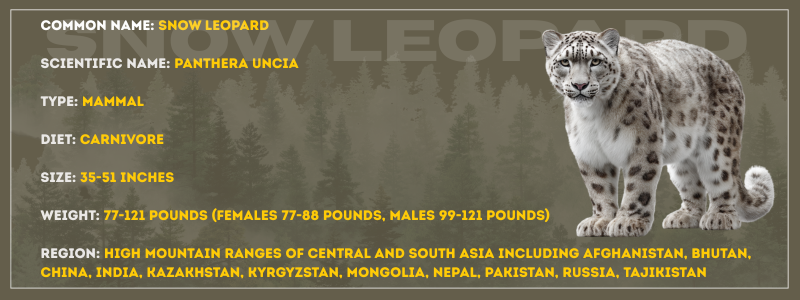
Scientific Name: Panthera uncia
Diet Type: CarnivoreSize: 90-130 cm (body length)
Weight: 35-55 kg (females 35-40 kg, males 45-55 kg)
Region Found: High mountain ranges of Central and South Asia including Afghanistan, Bhutan, China, India, Kazakhstan, Kyrgyzstan, Mongolia, Nepal, Pakistan, Russia, Tajikistan, and Uzbekistan
Hungry for More? The hunt doesn’t end here. Dive into our complete collection of Big Cat guides and articles.