
1. Introduction
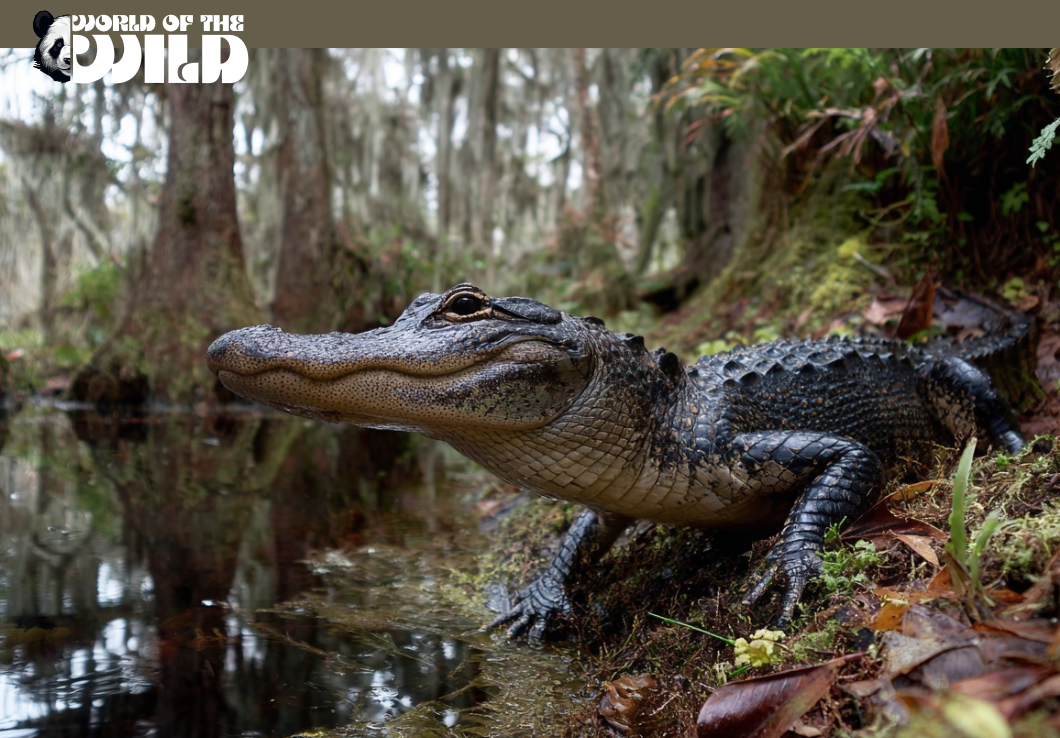
When a submerged log suddenly blinks, you know you’ve encountered one of nature’s most perfect apex predators: the alligator. For millions of years, these reptilian giants have patrolled the murky waterways of the American Southeast and parts of China, embodying a primal, untamed force. Far from being sluggish swamp dwellers, alligators are sophisticated hunters, dedicated parents, and living relics of the Dinosaur Age. Their sheer resilience and ecological importance in maintaining the health of wetland ecosystems make them a truly fascinating subject—a marvel of evolutionary design that commands respect and closer study.
2. Fast Facts
Here are a few quick, jaw-dropping facts about alligators:
- Gender Temperature Control: The sex of an alligator hatchling is determined by the temperature of the nest during incubation. Higher temperatures (around $32-34^\circ\text{C}$) produce males, while lower temperatures produce females.
- Osteoderm Armor: Alligators possess bony plates embedded in their skin called osteoderms, which act as a powerful layer of protective armor against rivals and prey.
- Not All Teeth are Visible: Unlike crocodiles, which show both their upper and lower teeth when their mouth is closed, an alligator’s wide upper jaw perfectly overlaps the lower, concealing most of the lower teeth. Only the teeth from the upper jaw are typically visible.
- The Power of the Clamp: While the muscles for closing an alligator’s jaws are incredibly strong—exerting a bite force of up to 2,900 pounds per square inch—the muscles for opening the jaws are surprisingly weak. A strong human can easily hold an alligator’s mouth shut with just duct tape.
- “Gator Holes”: In times of drought, alligators will dig out deep areas in the swamp called “gator holes.” These depressions retain water, becoming vital refuges for fish, insects, and other wildlife, essentially serving as miniature oases that sustain the entire ecosystem.
3. Species
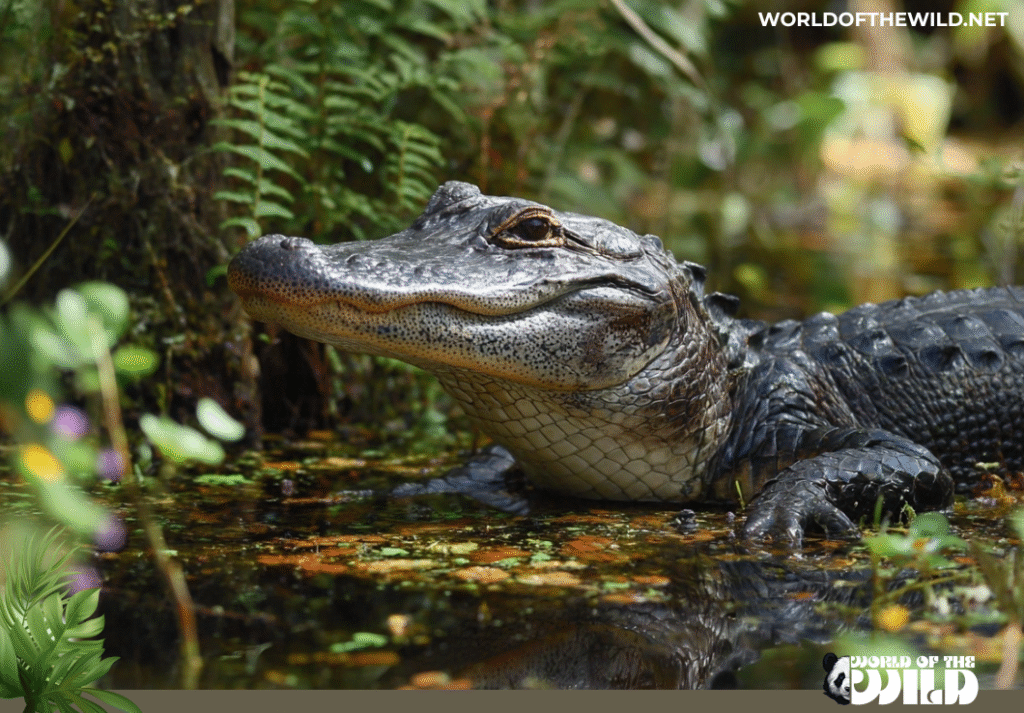
The alligator belongs to the order Crocodilia, but its distinct features place it in its own family.
- Kingdom: Animalia
- Phylum: Chordata
- Class: Reptilia
- Order: Crocodilia
- Family: Alligatoridae
- Genus: Alligator
- Species:
- Alligator mississippiensis: The American Alligator.
- Alligator sinensis: The Chinese Alligator.
The family Alligatoridae also includes the smaller caimans, which are found in Central and South America. Thus, while there are only two species of true alligator, they are part of a larger, closely related group of crocodylians.
4. Appearance
Alligators are characterized by their robust and heavily armored bodies.
- Size and Weight: The American Alligator is the larger species. Adult males typically measure 3.4 to 4.6 meters (11 to 15 feet) in length and can weigh between 227 and 454 kilograms (500 to 1,000 pounds). Females are generally smaller. The Chinese Alligator is significantly smaller, rarely exceeding 2.1 meters (7 feet).
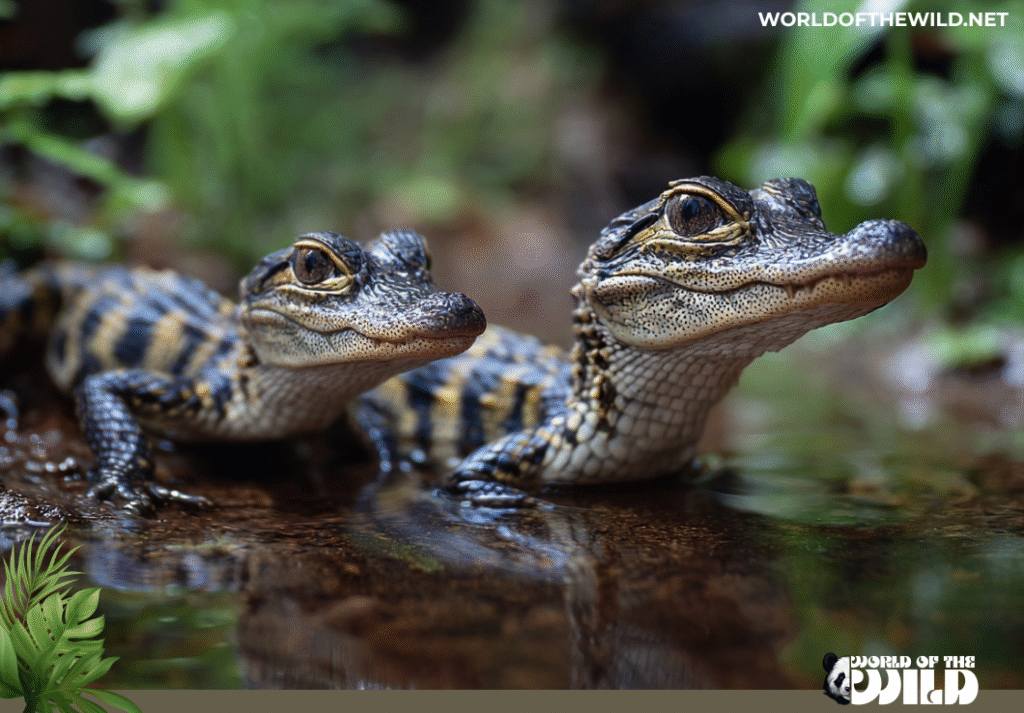
- Color: Adults are typically a dark, nearly black or olive-brown color, which aids in camouflage in murky waters. Juveniles have bright yellow or creamy stripes across their dark bodies, which fade with age.
- Distinctive Features: The most defining feature is their broad, rounded (U-shaped) snout, which distinguishes them from the pointed, V-shaped snout of true crocodiles. They have approximately 80 teeth at any given time, which are continually replaced throughout their lives. Their powerful, muscular tail makes up about half their total body length and is their primary means of propulsion in the water.
5. Behavior
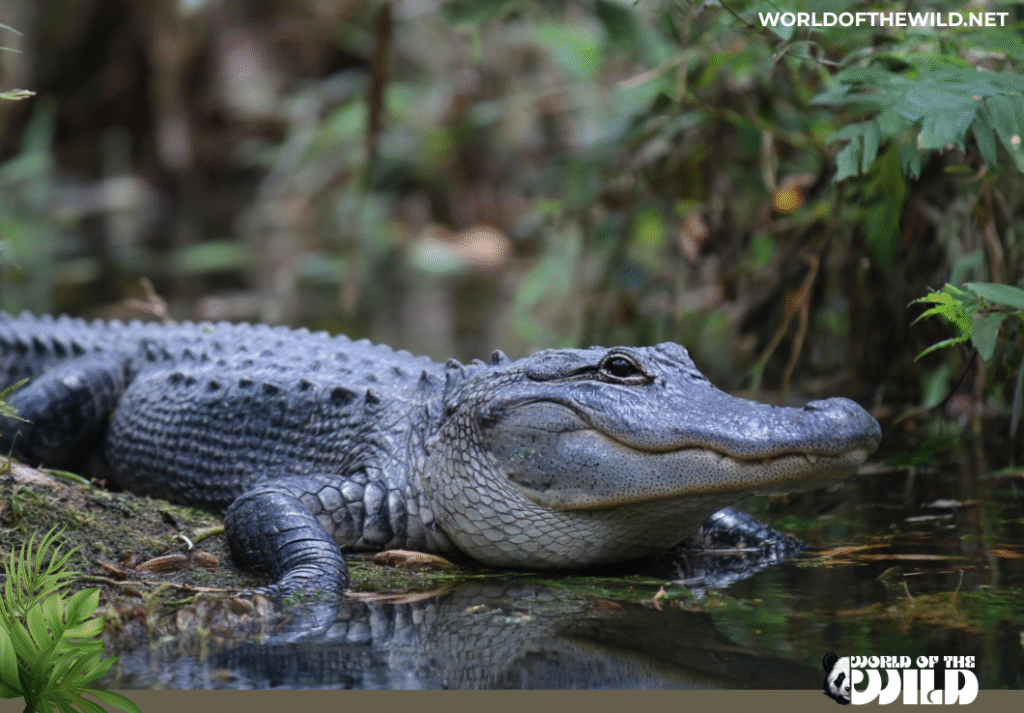
Alligators are primarily solitary animals, gathering only for courtship or to bask in particularly good sunspots.
- Daily Behavior: They are ectothermic (cold-blooded), relying on external heat sources. This makes their daily behavior centered on thermoregulation. They bask in the sun to warm up and move into the water or burrows to cool down. They are most active at night when hunting.
- Communication: Alligators communicate through an impressive range of vocalizations, most famously the deep, guttural “bellow.” This sound is produced primarily by males during mating season to attract mates and assert dominance. They also use head-slaps on the water and infrasound vibrations, which can cause the water above them to dance.
- Unique Actions: Their “death roll” is a specialized feeding tactic. After capturing large prey, the alligator secures its grip and rapidly spins its body to tear off chunks of meat. They are also capable of short, rapid bursts of speed on land.
6. Evolution
Alligators are often described as “living fossils” due to their incredible evolutionary stability.
- Ancient Lineage: The order Crocodilia dates back over 200 million years to the Late Triassic period. Alligators belong to a lineage that survived the mass extinction event that wiped out the dinosaurs.
- Key Ancestors: The genus Alligator appeared in the fossil record about 37 million years ago. Their immediate ancestors, the Eusuchians, shared many modern characteristics, proving the ancient origin of their body plan.
- Evolutionary Milestones: The key evolutionary success was the development of their powerful jaws, armored skin, and a four-chambered heart (rare for a reptile), which allows for greater endurance. Their relatively unchanged morphology over millions of years demonstrates the effectiveness of their design for an aquatic, ambush predator.
7. Habitat
The two alligator species have widely separated geographic ranges.
- American Alligator (A. mississippiensis): Found exclusively in the Southeastern United States, from Texas and Oklahoma eastward through Louisiana, Arkansas, Mississippi, Alabama, Georgia, South Carolina, and the entire state of Florida.
- Chinese Alligator (A. sinensis): Found in a critically small area along the lower Yangtze River in eastern China.
- Environment: They thrive in freshwater, slow-moving aquatic environments. Their preferred habitat includes swamps, marshes, rivers, lakes, and wetland areas. They tolerate saline (salt) environments less well than true crocodiles, though they can inhabit brackish water for short periods. The habitat is characterized by dense vegetation, abundant prey, and soft substrate for digging burrows.
8. Diet
Alligators are pure carnivores and opportunistic ambush predators.
- Primary Food Sources: Their diet changes significantly as they grow.
- Juveniles: Primarily feed on invertebrates, like insects, spiders, and small fish.
- Sub-Adults/Adults: Expand their diet to include larger prey such as fish, turtles, snakes, birds, and small mammals (raccoons, nutria, deer).
- Hunting: They are classic ambush predators. They float patiently, often with only their eyes and nostrils above the water, waiting for unsuspecting prey to come to the water’s edge. They explode into action with incredible speed, seizing the prey with their powerful jaws. Prey too large to swallow whole is either drowned or subjected to the “death roll.”
9. Predators and Threats
Few animals dare to prey on adult alligators, but both species face significant threats.
- Natural Predators:
- Juveniles: Are vulnerable to birds, fish, raccoons, and even large wading birds.
- Adults: Have almost no natural predators other than very large members of their own species.
- Anthropogenic Threats:
- Habitat Loss: The draining and development of vital wetland areas remains the most serious threat to both species.
- Historic Poaching/Overhunting: The American Alligator population was decimated by hunters for their hides in the 20th century, though conservation efforts have successfully reversed this.
- Chinese Alligator Threat: The Chinese Alligator faces near-extinction in the wild due to extreme habitat degradation from farming and human settlement.
10. Reproduction and Life Cycle
Alligator reproduction is a fascinating and delicate process.
- Mating Rituals: Courtship occurs in spring. Males perform elaborate displays involving roaring, bellowing, and head-slapping. Mating takes place in the water.
- Gestation/Incubation: The female builds a large mound nest of mud and vegetation, where the heat from the decaying plants helps incubate the eggs. She lays 20 to 50 eggs and remains close to the nest for the two-month incubation period.
- Offspring and Parental Care: Unlike most reptiles, female alligators exhibit remarkable parental care. Once the young start “peeping” inside the eggs, the mother carefully digs them out and may even carry them in her mouth to the water. She will fiercely guard her brood for up to a year.
- Life Cycle and Lifespan: Hatchlings are about 20 cm (8 inches) long. They reach sexual maturity around 10-12 years old. In the wild, alligators typically live for 30 to 50 years, though they can live longer in captivity.
11. Population
The conservation status of the two species is dramatically different.
- American Alligator (A. mississippiensis):
- Conservation Status: Least Concern (LC). This is a massive success story. After being nearly hunted to extinction, it was placed on the Endangered Species List. Protective measures were so successful that its status was downgraded in 1987.
- Population Estimate: Well over 5 million individuals. The population is stable and increasing in many areas.
- Chinese Alligator (A. sinensis):
- Conservation Status: Critically Endangered (CR).
- Population Estimate: Fewer than 100 individuals remain in the wild, though there are thousands in breeding facilities. The species is highly threatened by the destruction of its small, native habitat.
12. Conclusion
The alligator, a creature whose very silhouette whispers of primordial epochs, is more than just a formidable hunter. It is an ecological engineer, digging the vital “gator holes” that sustain life during drought, and a powerful symbol of successful conservation, at least for the American species. The dramatic contrast in the population health of the two species—the thriving American giant and the critically endangered Chinese relic—serves as a stark reminder.
While the American Alligator’s recovery is a beacon of hope, the fate of its Chinese cousin hangs in the balance. We must continue to protect the wetlands they call home, for in safeguarding the swamp, we safeguard a lineage that has spanned the ages and maintains the delicate balance of our natural world. Respect the gator, and protect the swamp—for both are treasures of a wild Earth.