
A flash of brilliant blue darts through the forest canopy, accompanied by a raucous cry that sounds almost like a rusty gate. The Blue Jay—bold, beautiful, and unapologetically loud—is one of North America’s most recognizable birds. With its striking cobalt plumage, intelligent eyes, and personality that’s anything but shy, this member of the corvid family has captivated birdwatchers and casual observers alike for generations. But beyond its eye-catching appearance lies a remarkably complex creature whose behaviors, adaptations, and ecological role make it one of the continent’s most fascinating avian residents.
Facts
- Blue Jays aren’t actually blue: Their feathers contain no blue pigment. The vibrant color is produced through light refraction caused by the internal structure of their feathers—if you crush a Blue Jay feather, it turns brown.
- They’re excellent mimics: Blue Jays can accurately imitate the calls of several hawk species, particularly Red-shouldered and Red-tailed Hawks, possibly to scare other birds away from food sources or to warn their flock of danger.
- They’re forest planters: Blue Jays cache thousands of acorns each fall, and many of these forgotten seeds germinate into oak trees, making them vital contributors to forest regeneration and expansion.
- They mate for life: Once paired, Blue Jays typically remain monogamous, with couples staying together year-round and sharing territory.
- They’ve been recorded using tools: Captive Blue Jays have been observed tearing strips of newspaper to rake food pellets closer to their cage, demonstrating problem-solving abilities similar to other corvids.
- They have a mysterious disappearance: Some Blue Jay populations migrate south in fall, while others remain year-round in the same location—scientists still don’t fully understand what triggers this variable migration pattern.
- They practice “anting”: Blue Jays will pick up ants and rub them on their feathers, or sit on anthills allowing ants to crawl through their plumage, possibly to use formic acid as an insecticide or feather conditioner.
Sounds of the Bluejay
Species
The Blue Jay belongs to the following taxonomic classification:
- Kingdom: Animalia
- Phylum: Chordata
- Class: Aves
- Order: Passeriformes
- Family: Corvidae
- Genus: Cyanocitta
- Species: Cyanocitta cristata
Historically, ornithologists recognized four subspecies of Blue Jay based on slight variations in size and coloration across their range: the Northern Blue Jay (C. c. bromia), the Coastal Blue Jay (C. c. cristata), the Interior Blue Jay (C. c. cyanotephra), and the Florida Blue Jay (C. c. semplei). However, modern genetic analysis has revealed these differences are minimal and clinal in nature, leading most authorities to treat the Blue Jay as a single, highly variable species with no distinct subspecies.
The Blue Jay’s closest relative is Steller’s Jay (Cyanocitta stelleri), found in western North America. Other members of the corvid family include crows, ravens, magpies, and nutcrackers—all known for their remarkable intelligence.
Appearance
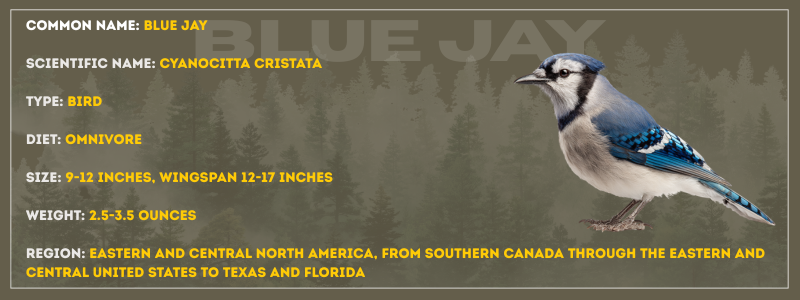
The Blue Jay is a medium-sized songbird measuring between 9 to 12 inches in length, with a wingspan of 13 to 17 inches. Adults typically weigh between 2.5 to 3.5 ounces, with males being slightly larger than females, though the difference is subtle enough that visual sex identification is unreliable.
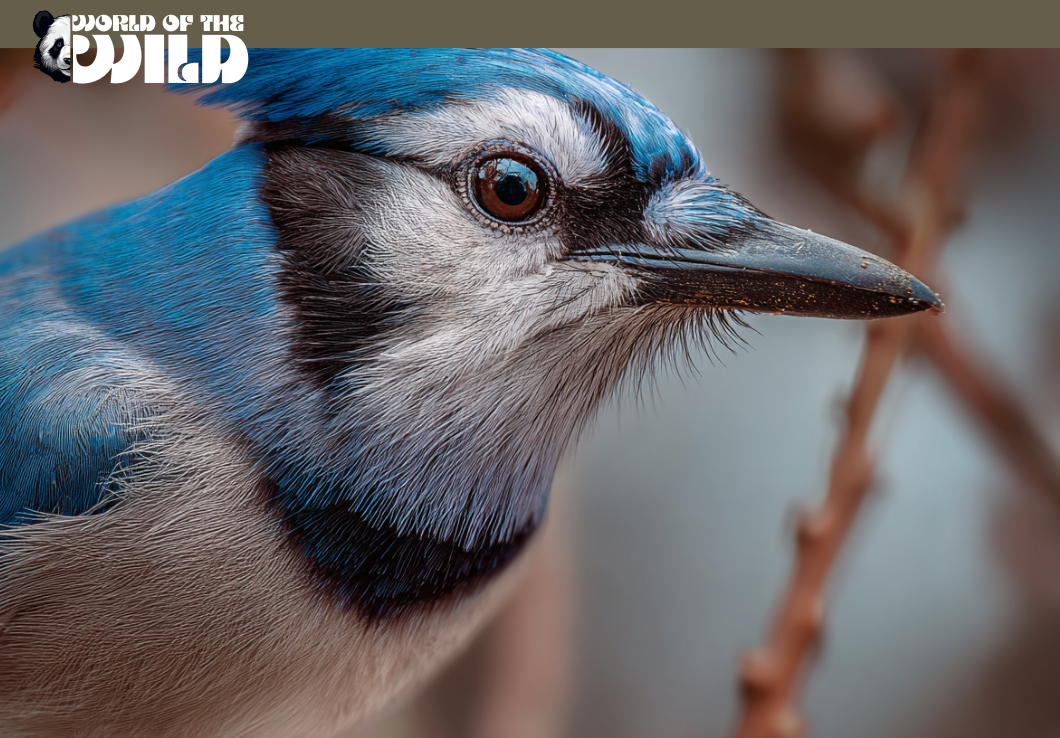
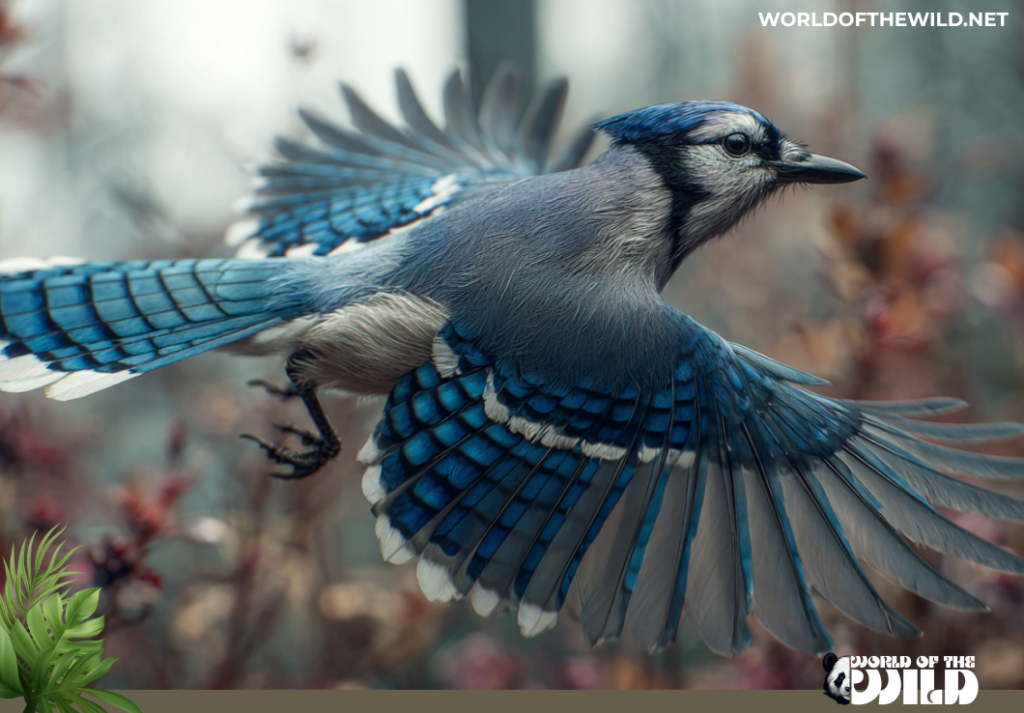
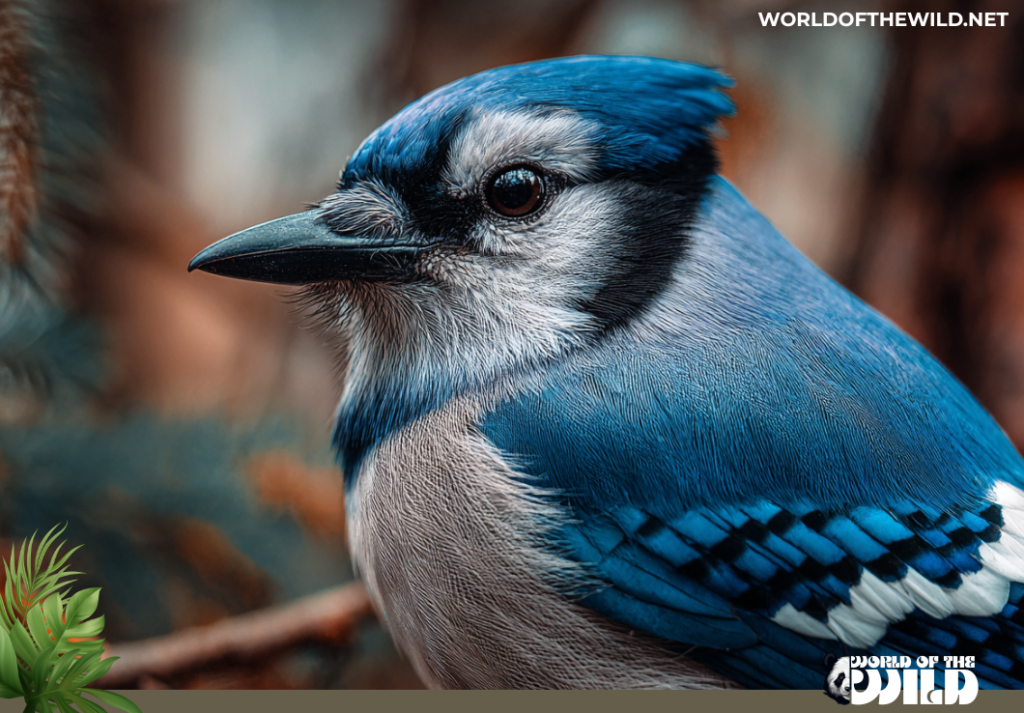
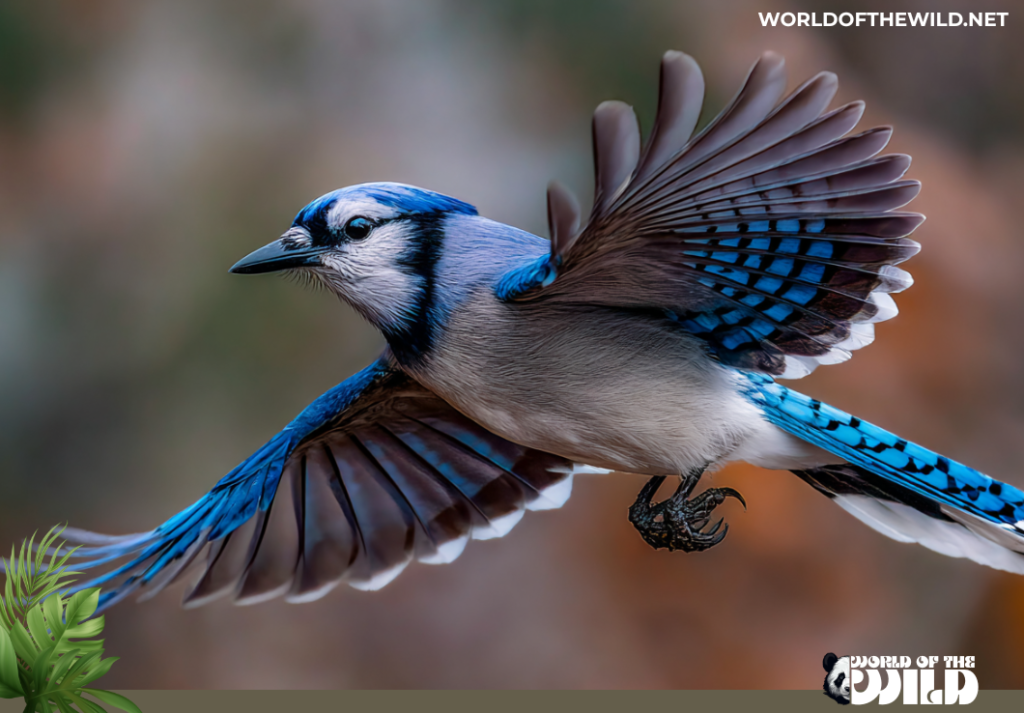
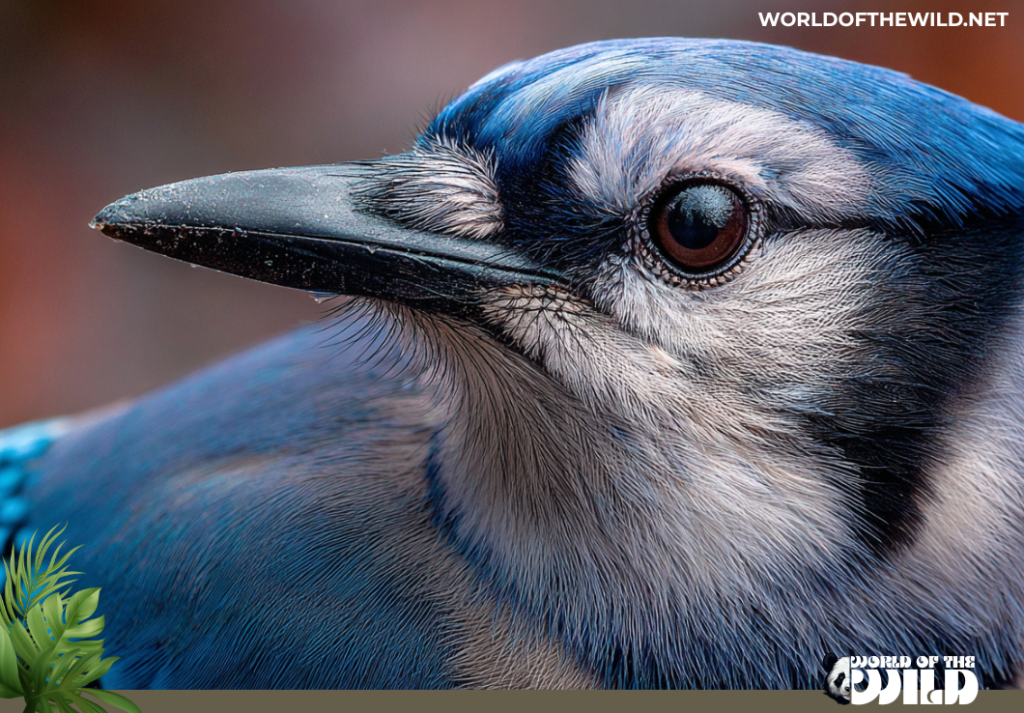
The bird’s most striking feature is its vibrant blue plumage on the crest, back, wings, and tail. The wings and tail display distinctive black barring and white patches, particularly visible in flight. The underparts are whitish or light gray, and a black necklace-like collar extends from the back of the crest around the throat. The face is white, and the eyes are surrounded by a black bridle that gives the bird an alert, intelligent expression.
The Blue Jay’s prominent crest is highly expressive and can be raised when the bird is excited or aggressive, flattened when frightened, or held at a neutral position during calm moments. The bird possesses a stout, pointed black bill perfect for cracking nuts and seeds, and strong black legs and feet equipped for perching and hopping along branches.
Juvenile Blue Jays appear similar to adults but with slightly duller plumage and a less pronounced crest. Both sexes are identical in coloration, making them sexually monomorphic.
Behavior
Blue Jays are highly social and intelligent birds with complex behavioral repertoires. They typically live in family groups or small flocks, though they can be territorial during breeding season. Their intelligence rivals that of their crow and raven cousins—they can plan ahead, deceive other species, and solve multi-step problems.
Communication is central to Blue Jay social life. Beyond their famous harsh “jay-jay” call, they produce an impressive variety of sounds including soft whistles, clicks, gurgles, and rattles. They use these vocalizations to maintain contact with flock members, signal alarm, and coordinate group activities. Their hawk mimicry serves multiple purposes: alerting other jays to predators, testing whether a hawk is present in the area, or potentially deceiving competitors into abandoning food sources.
Blue Jays are diurnal and spend much of their day foraging, both in trees and on the ground. They move through their territory in short flights between trees and are capable of swift, direct flight when traveling longer distances. They’re notably curious and bold, investigating new objects and potential food sources with enthusiasm.
During autumn, Blue Jays engage in extensive caching behavior, storing thousands of acorns and nuts in scattered locations throughout their territory. They possess remarkable spatial memory, allowing them to relocate many of these caches months later. This behavior makes them crucial seed dispersers for oak trees.
Blue Jays will mob predators—gathering in groups to harass hawks, owls, and snakes with loud calls and aggressive swooping. This cooperative behavior serves to drive threats away from nesting areas and alert other birds to danger.

Evolution
The Blue Jay belongs to the corvid family, which evolved approximately 20 million years ago during the Miocene epoch. Corvids are believed to have originated in the Australian region before dispersing across the globe, though the New World jays of the Americas represent a distinct evolutionary lineage.
The genus Cyanocitta, containing Blue Jays and Steller’s Jays, diverged from other New World jays several million years ago. The Blue Jay itself is thought to have evolved in central North America, with its range expanding and contracting with glacial cycles during the Pleistocene epoch. These climate fluctuations likely drove the subtle geographic variations once classified as subspecies.
Fossil evidence of corvids in North America dates back millions of years, though specific Blue Jay fossils are harder to distinguish from related species. The bird’s close evolutionary relationship with other intelligent corvids suggests that their cognitive abilities—tool use, planning, social learning—evolved relatively early in the corvid lineage and have been refined over millennia.
The Blue Jay’s specialized relationship with oak trees has likely shaped both species through coevolution. As Blue Jays dispersed oak seeds, oaks that produced acorns attractive to jays gained a reproductive advantage, while jays that efficiently exploited oak resources thrived.
Habitat
Blue Jays are found exclusively in North America, with a range extending from southern Canada through the eastern and central United States, reaching as far west as the Rocky Mountains and south into eastern Texas and the Florida peninsula. Small populations have also established themselves in the Pacific Northwest in recent decades.
These adaptable birds inhabit a variety of wooded environments but show a particular affinity for oak and beech forests. They thrive in mixed deciduous and coniferous woodlands, forest edges, parks, suburban neighborhoods, and even urban areas with sufficient tree cover. They require tall trees for nesting and roosting but will forage in more open areas.
Blue Jays prefer habitats with a mosaic of woodland and open space, which provides both cover from predators and access to diverse food sources. They’re particularly common in areas with mature oak trees, reflecting their dietary dependence on acorns. During winter, northern populations may move to areas with reliable food sources, though many individuals remain year-round if food is abundant.
The species has benefited from human modification of landscapes in some ways, thriving in suburban settings where bird feeders provide supplemental food and ornamental trees offer nesting sites. However, they require some degree of natural or semi-natural habitat and don’t persist in heavily developed urban cores lacking vegetation.
Diet
Blue Jays are omnivores with a diet that shifts seasonally based on food availability. Approximately 75% of their diet consists of plant material, with the remaining 25% comprising animal matter.
Acorns are the cornerstone of their diet, particularly in fall and winter. A single Blue Jay can transport up to five acorns at once—one in its bill and others in its expandable throat pouch—carrying them away to cache for later consumption. They also feed on beechnuts, hazelnuts, berries, fruits, and seeds from various plants including sunflowers, corn, and grains.
The animal component of their diet includes insects such as beetles, grasshoppers, and caterpillars, especially during breeding season when protein demands are high for growing chicks. Blue Jays will also consume small invertebrates, occasionally raid the nests of smaller birds for eggs and nestlings (though this behavior is less common than popularly believed), and scavenge carrion when available.
At bird feeders, Blue Jays prefer peanuts, sunflower seeds, and suet. They’re powerful birds capable of intimidating smaller species at feeding stations, though they’ll usually defer to larger, more aggressive birds like Common Grackles.
Blue Jays forage both arboreally and terrestrially, using their strong bills to crack open nuts and probe bark for hidden insects. They’re intelligent foragers, capable of assessing food quality and selecting the most nutritious acorns by weight.
Predators and Threats
Adult Blue Jays face predation from several raptor species, including Sharp-shinned Hawks, Cooper’s Hawks, Red-tailed Hawks, and Great Horned Owls. These aerial predators hunt jays in flight or ambush them at feeding sites. Nests, eggs, and nestlings are vulnerable to a wider range of predators including rat snakes, raccoons, opossums, crows, squirrels, and domestic cats.
Despite these natural threats, Blue Jay populations remain stable and widespread. Their loud alarm calls, vigilant behavior, and willingness to mob predators provide significant protection. Their tendency to nest in dense vegetation also offers some concealment from predators.
Anthropogenic threats to Blue Jays are relatively minimal compared to many bird species. They’ve adapted well to human-modified landscapes and in some cases have benefited from bird feeders and ornamental plantings. However, they do face some human-related challenges including collisions with windows and vehicles, which kill millions of birds annually across North America.
Habitat fragmentation can impact Blue Jays by reducing the availability of mature forests with abundant nut crops. Climate change may alter the distribution and productivity of oak forests, potentially affecting Blue Jay populations that depend on acorns. Domestic cats, particularly free-roaming outdoor cats, represent a significant predation pressure in suburban and rural areas.
West Nile virus, transmitted by mosquitoes, has caused mortality in corvid populations including Blue Jays, though it hasn’t significantly impacted overall population numbers.
Reproduction and Life Cycle
Blue Jays are monogamous and typically form long-term pair bonds. Courtship begins in late winter or early spring, with males performing courtship feeding displays where they offer food items to prospective mates. Groups of males may pursue a single female in noisy courtship flights through the forest canopy.
Once paired, both members of the couple participate in nest building, though the female does most of the actual construction. Nests are built in the crotch or outer branches of trees, typically 10 to 25 feet above ground, though sometimes much higher. The nest is a bulky cup constructed from twigs, grass, moss, and bark, lined with softer materials like rootlets and sometimes artificial materials like string or paper.
Females lay between 3 to 7 eggs (typically 4 to 5), which are pale greenish, bluish, or buff-colored with brown spots. The female incubates the eggs for 17 to 18 days while the male brings her food. Both parents feed the nestlings, which remain in the nest for approximately 17 to 21 days before fledging.
After leaving the nest, young Blue Jays stay with their parents for one to two months, learning foraging techniques and social behaviors. Juveniles from early broods occasionally help their parents feed later broods, demonstrating cooperative breeding behavior.
Blue Jays typically raise one brood per year, though some pairs in southern regions may attempt a second brood. They reach sexual maturity at one year of age.
In the wild, Blue Jays live an average of 7 years, though individuals can reach 17 years or more. The oldest known wild Blue Jay was at least 17 years and 6 months old when recaptured in 2001.
Population
The Blue Jay is currently classified as “Least Concern” by the International Union for Conservation of Nature (IUCN). The species has a large, stable population estimated at approximately 22 million individuals throughout North America.
Population trends for Blue Jays have been relatively stable over the past several decades, though some regional variations exist. Long-term monitoring data from the North American Breeding Bird Survey suggests a slight decline in certain areas, possibly linked to changes in forest composition or West Nile virus impacts in the early 2000s. However, overall continental population numbers remain robust.
The Blue Jay’s adaptability to various habitats, including human-modified landscapes, has helped buffer the species against many conservation threats facing less flexible species. Their large range and generalist diet provide resilience against localized disturbances.
Conservation efforts for Blue Jays are minimal given their stable status, though they benefit indirectly from forest conservation programs, the maintenance of oak woodlands, and regulations protecting migratory birds. The species is protected under the Migratory Bird Treaty Act, making it illegal to harm, capture, or possess Blue Jays without proper permits.
Conclusion
The Blue Jay stands as a testament to the intelligence, adaptability, and beauty of North America’s avian residents. From their structurally-colored plumage to their complex social behaviors and crucial ecological role as seed dispersers, these birds embody the intricate connections within forest ecosystems. Their raucous calls echo through woodlands from coast to coast, serving as both alarm system and celebration of wild spaces.
While Blue Jays currently face no immediate conservation crisis, their long-term prosperity depends on the health of North America’s forests, particularly oak woodlands. By supporting habitat conservation, reducing window collisions, keeping cats indoors, and maintaining bird-friendly yards, we can ensure these remarkable birds continue to flash their impossible blues through our trees for generations to come. In protecting the Blue Jay, we protect not just a single species, but the rich tapestry of life that defines North America’s forests—a legacy worth preserving with every acorn cached and every jay that takes wing.
Scientific Name: Cyanocitta cristata
Diet Type: Omnivore
Size: 9-12 inches (23-30 cm) in length; 13-17 inches (34-43 cm) wingspan
Weight: 2.5-3.5 ounces (70-100 grams)
Region Found: Eastern and central North America, from southern Canada through the eastern and central United States to Texas and Florida