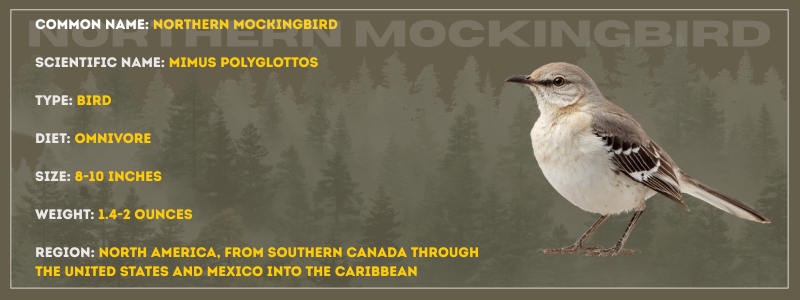

On a moonlit spring night in suburban America, a single bird fills the darkness with an extraordinary performance. Its song cascades through the air—a robin’s cheerful warble morphs seamlessly into a blue jay’s harsh call, then shifts to the mechanical beep of a car alarm, before settling into the melodious trill of a cardinal. This virtuoso performer is the Northern Mockingbird, a medium-sized gray songbird whose remarkable vocal abilities have captivated humans for centuries. Far more than just a mimic, this adaptable and intelligent species represents one of North America’s most successful and charismatic birds, thriving in both wild landscapes and urban environments. The Northern Mockingbird’s ability to learn and reproduce hundreds of different sounds throughout its lifetime makes it not only a subject of scientific fascination but also a living testament to the complexity and beauty of avian intelligence.
Facts
- A single male Northern Mockingbird can learn and perform up to 200 different song types during its lifetime, including songs from other bird species, mechanical sounds, and even musical instruments.
- Northern Mockingbirds are one of the few bird species known to sing actively throughout the night, particularly unmated males during breeding season, sometimes performing for hours in the moonlight.
- These birds have an exceptional memory for individual humans and can recognize people who have previously threatened their nests, dive-bombing those specific individuals even years later while ignoring others.
- The Northern Mockingbird is the state bird of five U.S. states—more than any other bird species—honored by Arkansas, Florida, Mississippi, Tennessee, and Texas.
- During territorial disputes, mockingbirds engage in “wing flashing,” rapidly lifting their wings to display white patches, a behavior scientists believe may startle insects from hiding or serve as a territorial warning.
- Unlike many bird species, Northern Mockingbirds continue to learn new songs throughout their adult lives, with older males typically having larger and more complex song repertoires than younger birds.
- These birds have been observed using tools in captivity and demonstrate problem-solving abilities that rival some corvid species, despite being less commonly studied for their intelligence.
Sounds of the Northern Mockingbird
Species
The Northern Mockingbird belongs to the taxonomic classification:
Kingdom: Animalia
Phylum: Chordata
Class: Aves
Order: Passeriformes
Family: Mimidae
Genus: Mimus
Species: Mimus polyglottos
The genus Mimus contains approximately ten species, all found in the Americas and commonly referred to as mockingbirds. The Northern Mockingbird is closely related to several other mimids, including the Tropical Mockingbird (Mimus gilvus) found in Central and South America, the Bahama Mockingbird (Mimus gundlachii), and the Socorro Mockingbird (Mimus graysoni), a critically endangered species endemic to Socorro Island off Mexico’s Pacific coast.
Within Mimus polyglottos, two subspecies are generally recognized. The nominate subspecies, M. p. polyglottos, ranges across most of the species’ distribution in the continental United States and northern Mexico. The second subspecies, M. p. leucopterus, is found in the Bahamas and has slightly paler plumage and more extensive white in the wings. Some taxonomists have proposed additional subspecies based on subtle variations in size and coloration across the bird’s range, but these distinctions are not universally accepted.
The family Mimidae also includes catbirds and thrashers, birds that share the mockingbird’s vocal talents and general body structure. The evolutionary relationship between these groups highlights a common adaptation toward complex vocalizations and territorial behavior.
Appearance
The Northern Mockingbird is a sleek, medium-sized songbird with a distinctive and elegant appearance. Adults typically measure 8 to 10 inches in length from bill to tail, with a wingspan ranging from 12 to 14 inches. Their weight varies seasonally but generally falls between 1.4 to 2 ounces, making them lighter than a robin but substantially larger than most sparrows.
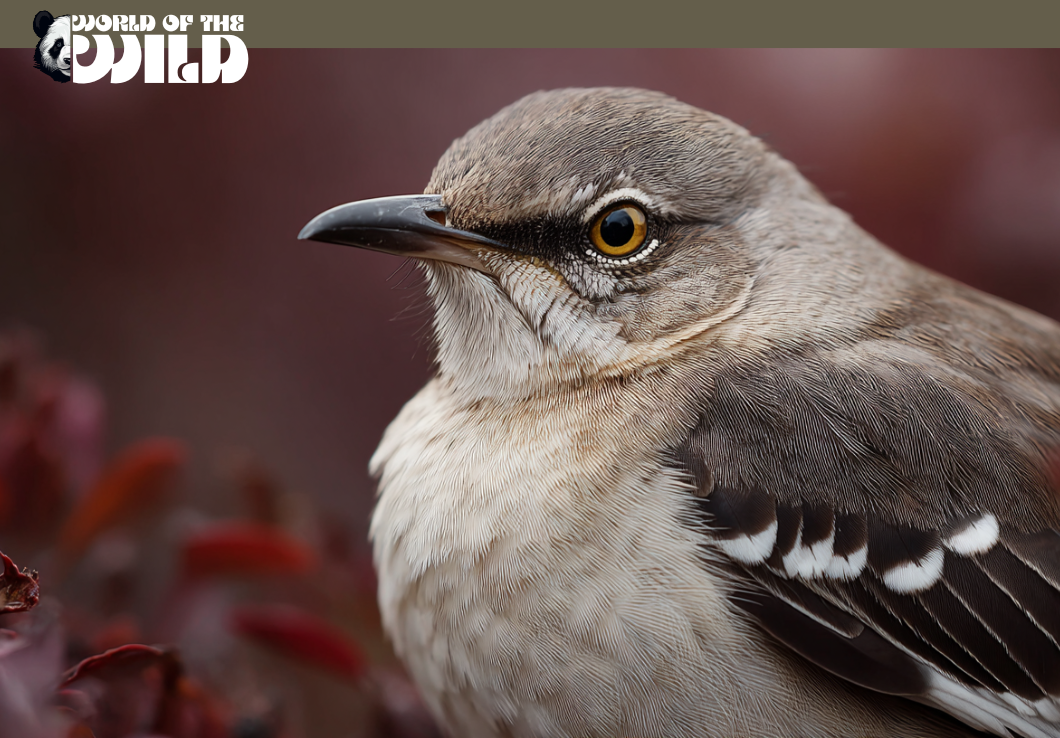
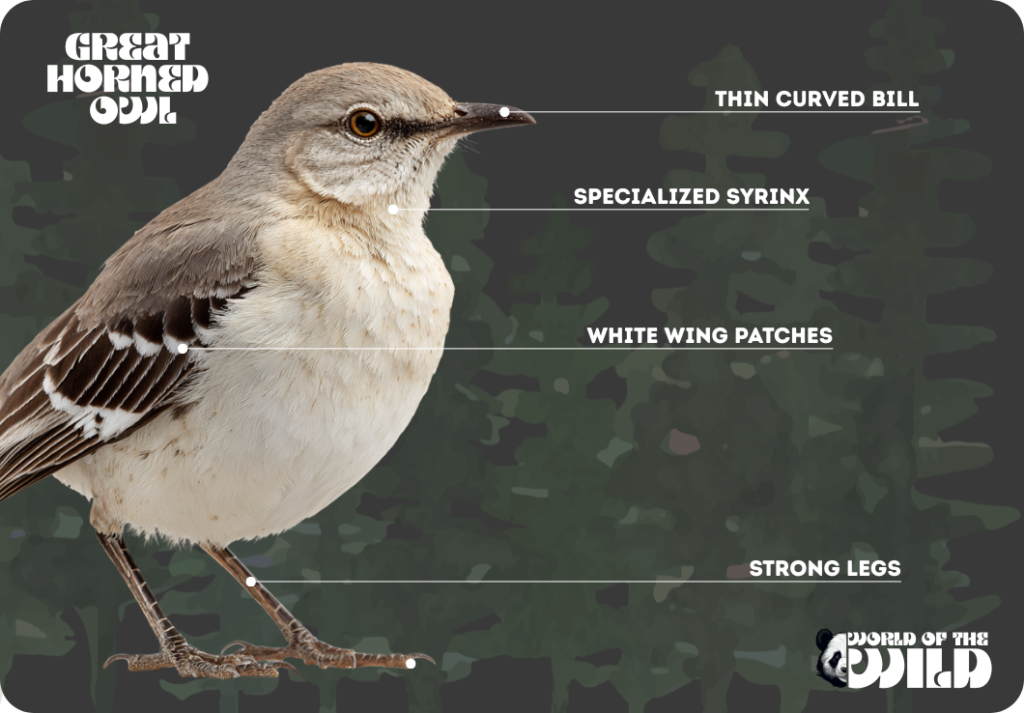
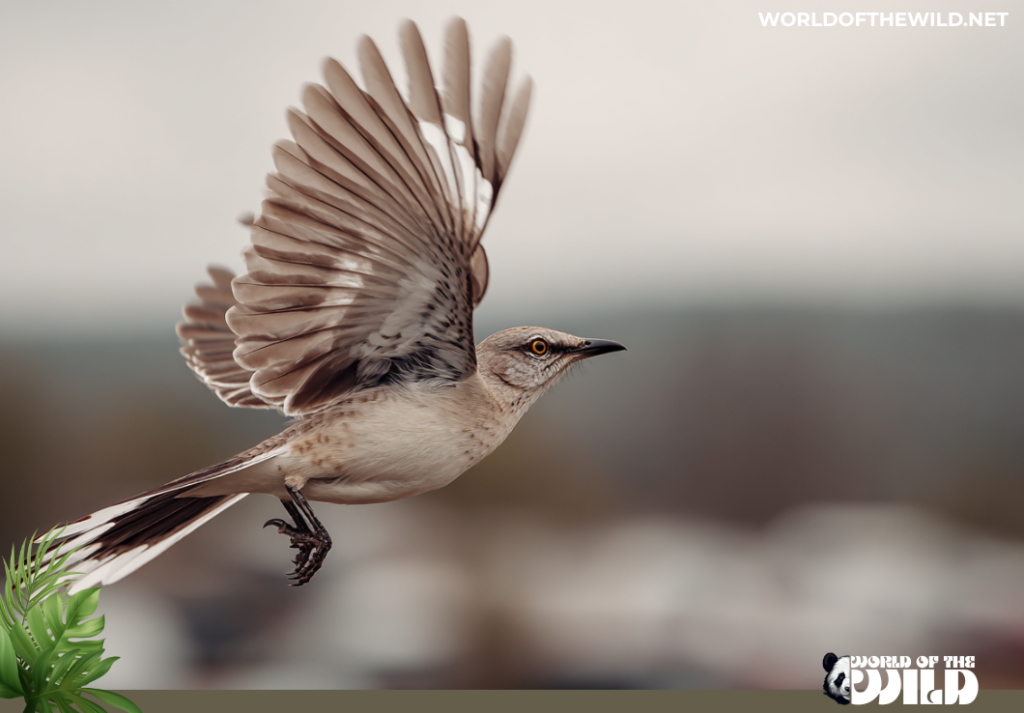
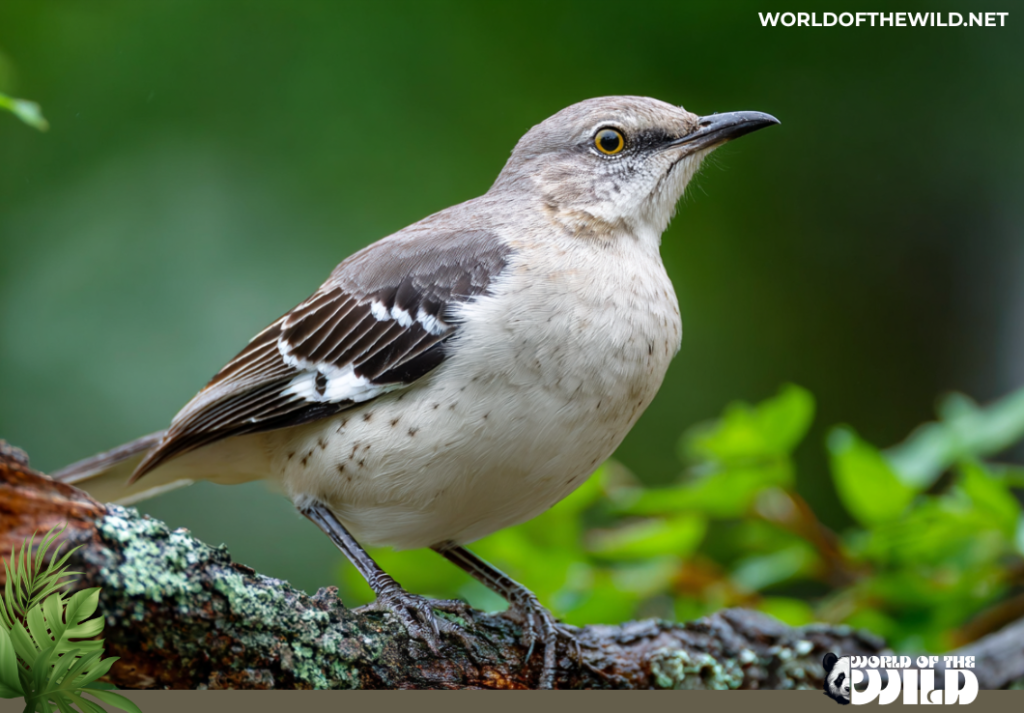
The bird’s plumage is predominantly gray, with upperparts ranging from brownish-gray to blue-gray and paler gray to white underparts. This understated coloration belies the mockingbird’s dramatic appearance in flight, when its wings reveal bold white patches on the primaries. These white wing bars create striking flashes of contrast that are visible even at considerable distances. The tail is long and expressive, measuring nearly as long as the body, and features white outer tail feathers that are prominently displayed during flight and certain behavioral displays.
The mockingbird’s head is characterized by a relatively flat crown and a long, slightly decurved bill that is dark gray to black. The eyes are striking—pale yellow to greenish-yellow in adults, giving the bird an alert and intelligent expression. A subtle pale eyebrow, or supercilium, provides a hint of facial patterning without being prominent.
Both sexes appear virtually identical in plumage, though males average slightly larger than females. Juveniles can be distinguished by their spotted breasts and darker eyes, with this spotted plumage gradually molting into adult gray during their first year. The overall impression of the Northern Mockingbird is one of streamlined efficiency—a bird built for agility, with long legs that facilitate its ground-foraging behavior and wings adapted for both swift flight and dramatic aerial displays.
Behavior
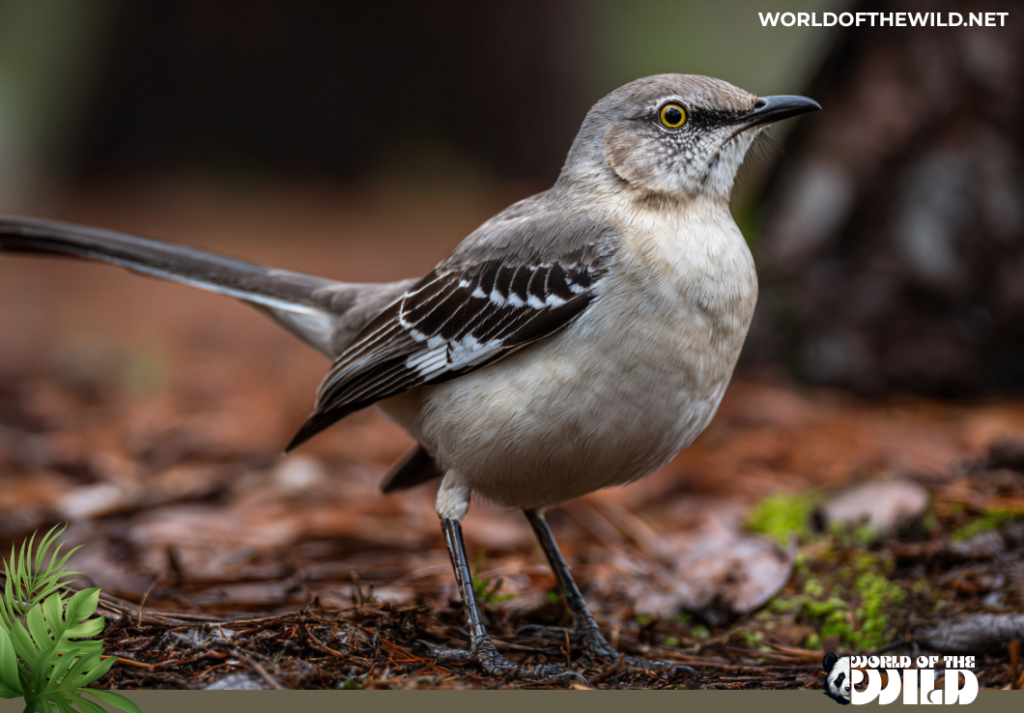
The Northern Mockingbird exhibits a complex array of behaviors that showcase its intelligence, adaptability, and territorial nature. These birds are largely solitary outside the breeding season, with individuals vigorously defending feeding territories throughout the year. Their territorial aggression is legendary; mockingbirds will fearlessly attack much larger intruders, including hawks, cats, dogs, and humans who venture too close to their nests. These attacks typically involve rapid dive-bombing flights accompanied by sharp alarm calls, and the birds have been documented drawing blood from human scalps during particularly aggressive encounters.
Communication in Northern Mockingbirds centers on their extraordinary vocal abilities. Males sing elaborate songs composed of multiple phrases, with each phrase typically repeated three to six times before switching to a new sound. This repetitive pattern is characteristic and helps distinguish mockingbird songs from those of other species. The birds incorporate sounds from their environment into their repertoires, including songs from dozens of other bird species, frog calls, cricket chirps, mechanical noises like car alarms and cell phone ringtones, and even snippets of human music. The purpose of this mimicry appears multifaceted: larger repertoires may signal male quality to females, serve to confuse or intimidate territorial rivals, and possibly help maintain territory boundaries through acoustic saturation of the environment.
Nocturnal singing is a particularly notable behavior, most commonly performed by unmated males during the breeding season. These nighttime concerts can continue for hours and often include songs rarely or never performed during daylight hours, suggesting that mockingbirds maintain separate day and night repertoires.
Foraging behavior demonstrates the mockingbird’s adaptability and intelligence. These birds employ multiple hunting strategies depending on prey type and availability. They frequently hop along the ground with periodic pauses, visually scanning for insects and other prey items. The wing-flashing behavior—a rapid, repeated lifting of the wings to display the white patches—occurs during foraging and may serve to startle insects into movement or to cast shadows that make prey easier to spot. Some researchers have proposed that the white patches may even mimic the appearance of sky breaks in foliage, tricking insects into thinking they’ve found an escape route.
Northern Mockingbirds also demonstrate remarkable cognitive abilities. They can recognize individual humans, remembering those who have threatened their nests and targeting them specifically while ignoring other people. This facial recognition ability persists across years and breeding seasons. In experimental settings, mockingbirds have shown the capacity for rapid learning, problem-solving, and even rudimentary tool use, though the latter has been observed primarily in captive individuals.
Bathing and preening are important maintenance behaviors, with mockingbirds often visiting birdbaths or shallow water multiple times daily. They also engage in anting—a behavior where birds allow ants to crawl through their feathers or actively rub ants on their plumage, possibly to control parasites or condition feathers with the formic acid ants produce.
Evolution
The evolutionary history of the Northern Mockingbird and its relatives in the family Mimidae remains an active area of research, with molecular studies continuously refining our understanding of these birds’ origins and relationships. The Mimidae family is believed to have originated in the Americas, with the group’s earliest ancestors potentially diverging from other passerine lineages during the Oligocene or early Miocene epoch, roughly 20 to 30 million years ago.
Fossil evidence for mockingbirds specifically is relatively sparse, as the delicate bones of small passerines rarely preserve well. However, fossils attributed to mimid ancestors have been found in Miocene deposits in North America, suggesting that the family has been present on the continent for millions of years. The diversification of the Mimus genus appears to have occurred more recently, likely within the last few million years, as populations became isolated across different regions of the Americas and adapted to varying environmental conditions.
The Northern Mockingbird’s remarkable vocal abilities represent a fascinating evolutionary adaptation. The development of complex vocal learning and mimicry likely evolved through sexual selection, as females may prefer males with larger song repertoires, interpreting vocal diversity as an indicator of age, experience, and genetic quality. Additionally, the ability to learn and produce diverse sounds may have provided advantages in territorial defense, allowing mockingbirds to acoustically dominate their environments and deter both conspecific rivals and potential predators.
Comparative studies with other mimid species reveal patterns of convergent evolution in vocal complexity across the family. The neural structures responsible for song learning in mockingbirds—particularly the highly developed song control nuclei in the brain—represent evolutionary innovations that parallel similar developments in other accomplished vocal learners like parrots and some corvids, despite these groups being only distantly related.
The Northern Mockingbird’s expansion across North America during the 20th century, particularly into northern regions previously too cold for year-round residence, may represent ongoing adaptation to changing environmental conditions. This range expansion has been facilitated by climate warming, the proliferation of ornamental plantings that provide winter fruit, and the birds’ behavioral flexibility in exploiting human-modified landscapes.
Habitat
The Northern Mockingbird occupies an extensive geographic range across North America, from southern Canada through the United States, Mexico, and into the Caribbean. The species’ distribution has expanded significantly northward over the past century, with breeding populations now established in regions of Canada where they were previously absent or only rare vagrants. This expansion is attributed to both climate change and the bird’s remarkable ability to adapt to human-modified environments.
The preferred habitat of Northern Mockingbirds consists of open areas with scattered shrubs and trees—a landscape structure that provides both foraging opportunities on the ground and elevated perches for singing and surveillance. In natural settings, this translates to habitat types such as forest edges, scrublands, thickets, desert scrub with scattered cacti, and riparian corridors with mixed vegetation. The birds show a particular affinity for areas with thorny shrubs and dense vegetation that provide secure nesting sites and protection from predators.
However, the Northern Mockingbird has proven extraordinarily successful in human-dominated landscapes. Suburban areas, parks, golf courses, cemeteries, and gardens often support higher mockingbird densities than many natural habitats. These environments provide the ideal combination of short grass or bare ground for foraging, ornamental shrubs and small trees for nesting and perching, and a year-round abundance of food resources from both native and introduced plant species. The birds particularly favor areas with multiflora rose, hawthorn, holly, pyracantha, and other shrubs that produce berries during fall and winter.
In urban and suburban settings, mockingbirds commonly establish territories in residential yards, shopping center landscaping, and along roadways where vegetation has been planted. They readily nest in cultivated hedges, ornamental conifers, and climbing vines on buildings. This habitat plasticity has been crucial to the species’ success and expanding range.
Geographically, the core breeding range extends from the Mid-Atlantic states and southern New England westward to California, and south throughout Mexico. Permanent populations inhabit most of this range, though birds in the northern portions may migrate short distances southward during harsh winters. The species is less common in heavily forested regions of the Pacific Northwest and the dense boreal forests of Canada, where the closed-canopy environment lacks the open structure mockingbirds prefer.
Elevational range varies across the species’ distribution but generally extends from sea level to approximately 6,000 feet, with the highest densities occurring at lower elevations. In mountainous regions of Mexico and the southwestern United States, mockingbirds inhabit valleys and foothills where suitable vegetation structure exists.
Diet
The Northern Mockingbird is an opportunistic omnivore with a diet that shifts dramatically between seasons, reflecting both changing food availability and the nutritional demands of different life stages. This dietary flexibility has proven essential to the species’ ecological success across diverse habitats and climatic conditions.
During spring and summer, Northern Mockingbirds feed primarily on animal matter, with insects and other invertebrates comprising up to 90 percent of their diet. They consume a wide variety of arthropods including beetles, grasshoppers, caterpillars, ants, wasps, and bees. Spiders represent another important prey category, as do earthworms, which mockingbirds extract from lawns and gardens with particular efficiency after rainfall. The birds also occasionally consume small vertebrates such as lizards and have been observed killing and eating small snakes, though such prey forms a minor component of their overall diet.
Foraging techniques for animal prey include ground-hopping with periodic stops to scan for movement, gleaning insects from foliage, catching flying insects in midair through short sally flights, and the characteristic wing-flashing behavior that may flush hidden prey. Mockingbirds demonstrate keen eyesight and react swiftly to the slightest movement, making them effective hunters of both active and cryptic prey.
As autumn progresses and insects become less available, mockingbirds transition increasingly to plant-based foods, particularly fruits and berries. Winter diet may consist of up to 80 percent plant material in northern portions of the range. Preferred fruits include those from sumac, holly, dogwood, Virginia creeper, pokeweed, blackberries, elderberries, and various cultivated ornamental plants. The birds show particular fondness for the berries of invasive species like multiflora rose and autumn olive, which provide abundant food resources during critical winter months.
This seasonal dietary shift is so pronounced that mockingbirds in northern regions defend berry-producing shrubs and trees as winter feeding territories with the same intensity they defend breeding territories in summer. Individual birds may claim ownership of a particularly productive holly tree or pyracantha bush and aggressively exclude all other mockingbirds and fruit-eating species from their resource.
Northern Mockingbirds rarely visit bird feeders for traditional seed offerings but will consume suet, mealworms, and fruits when these are provided. They readily eat raisins, apple slices, and other fruit offerings, particularly during winter when natural food sources become scarce.
Predators and Threats
Despite their aggressive territorial behavior and willingness to attack potential threats, Northern Mockingbirds face predation from various animals throughout their life cycle. Natural predators of adult mockingbirds include sharp-shinned hawks, Cooper’s hawks, and merlins, which can capture the birds during flight or surprise them while foraging. Great horned owls and other nocturnal raptors pose particular threats to singing males during nighttime hours when the birds are focused on vocal performance and may be less vigilant.
Eggs and nestlings face a broader array of predators. Snakes, particularly rat snakes and coachwhips, are efficient nest predators that can climb to mockingbird nests in shrubs and trees. Mammals including raccoons, opossums, domestic cats, squirrels, and blue jays readily consume mockingbird eggs and young when nests are discovered. The mockingbirds’ preference for nesting in thorny vegetation provides some protection, but determined predators can still access many nests.
Ground-based predators such as foxes, coyotes, and feral cats occasionally capture adult mockingbirds, particularly individuals focused on ground foraging or distracted during territorial disputes. However, the mockingbird’s alertness, swift flight, and aggressive defensive behavior reduce predation risk from many potential threats.
Anthropogenic threats to Northern Mockingbirds have proven complex and somewhat paradoxical. Unlike many bird species experiencing severe population declines due to human activity, mockingbirds have generally thrived alongside human development. However, certain human-caused factors do negatively impact populations in localized areas.
Pesticide use reduces the abundance of insect prey essential for feeding nestlings and can directly poison birds that consume contaminated insects. Window strikes cause mortality, particularly in areas with extensive glass architecture. Domestic cats represent perhaps the most significant human-associated threat, killing millions of songbirds annually across North America, including mockingbirds.
Climate change presents uncertain implications for the species. While warming temperatures have facilitated range expansion northward, extreme weather events including severe droughts, heat waves, and unseasonable freezes can cause localized mortality and reproductive failure. Changes in insect phenology due to shifting seasonal temperatures may create mismatches between peak food availability and the timing of breeding and chick-rearing.
Habitat loss through development affects mockingbirds less severely than many forest-dependent species, as the birds readily colonize suburban and urban environments. However, the replacement of native plant communities with sterile lawns and non-fruit-bearing ornamentals can reduce habitat quality, particularly for winter survival in northern regions.
Light pollution may impact mockingbirds in ways scientists are still working to understand. Artificial lighting extends singing activity in some urban populations and may affect migration timing in partially migratory populations. Noise pollution in urban areas can interfere with vocal communication, though mockingbirds have demonstrated some ability to adjust song frequencies and amplitude in response to ambient noise.
Reproduction and Life Cycle
The reproductive cycle of the Northern Mockingbird is characterized by intense territorial behavior, elaborate courtship displays, and dedicated parental care. The breeding season typically extends from March through August, with timing varying by latitude and local climate conditions. In southern portions of the range, breeding may begin as early as February, while northern populations generally initiate nesting in April or May.
Courtship begins with males establishing and defending territories through vigorous singing and aggressive boundary patrols. Unmated males sing persistently, often including nocturnal singing bouts that can last for hours. When a female enters a male’s territory, courtship escalates to include visual displays. The male performs a distinctive courtship dance involving vertical flights with wing and tail spreading, hopping displays on the ground with wings partially lifted, and ritualized chasing of the female through vegetation.
Once pair bonds form, both sexes participate in nest site selection, though the female makes the final choice and performs most of the construction. Nests are typically placed in dense shrubs or small trees at heights ranging from 3 to 10 feet above ground, with thorny vegetation strongly preferred for the protection it offers from predators. The nest itself is a bulky cup constructed from twigs, grass stems, leaves, and rootlets, lined with finer materials including grass, plant fibers, and occasionally human-made materials such as string or paper.
Females lay clutches of 2 to 6 eggs, with 3 to 4 being most common. The eggs are pale blue to greenish-blue, heavily marked with brown or reddish-brown spots and blotches. Incubation lasts approximately 12 to 13 days and is performed primarily by the female, though males occasionally participate in brief incubation bouts and regularly feed the incubating female.
Nestlings hatch altricial—naked, blind, and completely dependent on parental care. Both parents feed the young with insects and other protein-rich foods delivered in frequent trips throughout the day. The nestling period lasts 10 to 13 days, after which the young fledge. However, fledglings remain dependent on parental feeding for another two to three weeks while they develop flight skills and learn to forage independently.
Northern Mockingbirds are frequently double-brooded, with some pairs successfully raising three broods in a single season in southern regions. When nesting multiple times, males often assume primary care of fledglings from the first brood while females begin incubating the second clutch. This division of labor allows pairs to maximize reproductive output during the favorable breeding season.
Sexual maturity is typically reached by the end of the first year, and young birds may attempt breeding in their first spring. However, yearling males often struggle to establish territories against older, more experienced competitors and may not breed successfully until their second year.
In the wild, Northern Mockingbirds have an average lifespan of 8 to 10 years, though maximum recorded longevity exceeds 20 years based on banding records. Mortality is highest during the first year of life, with many fledglings succumbing to predation, starvation, or harsh weather before reaching sexual maturity. Adults face ongoing risks from predation, disease, collisions with human-made structures, and severe weather events.
Population
The Northern Mockingbird is currently classified as Least Concern by the International Union for Conservation of Nature (IUCN), reflecting the species’ large geographic range, substantial global population, and generally stable population trend. This conservation status places the mockingbird among North America’s most secure songbirds, in stark contrast to many other species experiencing significant declines.
Global population estimates for the Northern Mockingbird are imprecise but suggest a total population of approximately 45 million individuals, with the vast majority residing in the United States. The species has shown remarkable population resilience and even growth in many regions over the past century, bucking the trend of songbird declines documented across North America.
Long-term monitoring data from the North American Breeding Bird Survey indicates that Northern Mockingbird populations increased substantially during the mid-20th century, particularly from the 1950s through the 1980s. This growth was most pronounced in northern regions where the species expanded its range, colonizing areas of the Midwest and Northeast where mockingbirds had been previously rare or absent. The expansion has been attributed to climate warming, which has reduced winter severity in northern latitudes, and the widespread planting of ornamental berry-producing shrubs in suburban developments that provide reliable winter food sources.
More recent population trends show regional variation. In some areas, particularly portions of the Southeast, mockingbird numbers have declined modestly since the 1990s. The causes of these localized declines remain unclear but may involve factors such as changes in land management practices, increased competition with other species, or subtle shifts in insect availability during the breeding season.
Population density varies considerably across the species’ range, with the highest concentrations occurring in the southern United States, particularly in suburban and urban habitats. Densities in optimal habitat can exceed 10 pairs per square kilometer, while populations in less suitable environments may be considerably sparser.
The species faces no significant conservation concerns at present, and no major conservation initiatives specifically target Northern Mockingbirds. However, general conservation measures that benefit songbirds—including maintaining native plant communities, reducing pesticide use, controlling outdoor cat populations, and preserving hedgerow and scrubland habitats—indirectly benefit mockingbird populations.
Climate change represents the most significant potential future threat, though current models suggest uncertain impacts. Continued warming may facilitate further northward expansion but could also disrupt the seasonal phenology that synchronizes breeding with peak insect availability. Additionally, increased frequency of extreme weather events could cause periodic population setbacks.
Conclusion
The Northern Mockingbird stands as a testament to adaptability, intelligence, and the surprising benefits some species can derive from human landscape modification. From its extraordinary vocal abilities that allow a single bird to reproduce the sounds of dozens of species, to its fearless defense of territory against animals many times its size, the mockingbird embodies charisma and resilience. Its success in colonizing human-dominated landscapes while maintaining robust populations offers a hopeful counter-narrative to the widespread declines affecting many North American bird species.
Yet the mockingbird’s story also carries important lessons. The bird’s dependence on berry-producing shrubs for winter survival highlights the critical importance of thoughtful landscaping choices—the difference between a sterile lawn and a yard planted with native hollies or dogwoods can determine whether mockingbirds and other wildlife can persist through harsh winters. The species’ vulnerability to window strikes, pesticide poisoning, and cat predation reminds us that even successful species face ongoing threats from human activities.
As you listen to a mockingbird’s evening concert or watch one fearlessly defend its territory, consider how our daily choices—from the plants we cultivate to how we manage outdoor cats—shape the world these remarkable birds must navigate. The Northern Mockingbird’s current success is not guaranteed indefinitely; it depends on maintaining the mosaic of habitats and food resources that allow these vocal virtuosos to thrive. By understanding and appreciating these birds, and by making conservation-minded decisions in our own yards and communities, we can ensure that future generations will continue to marvel at the mockingbird’s song echoing through moonlit nights.
Scientific name: Mimus polyglottos
Diet type: Omnivore (insects, fruits, berries)
Size: 8-10 inches (20-25 cm)
Weight: 1.4-2 ounces (40-58 grams)
Region found: North America, from southern Canada through the United States and Mexico into the Caribbean