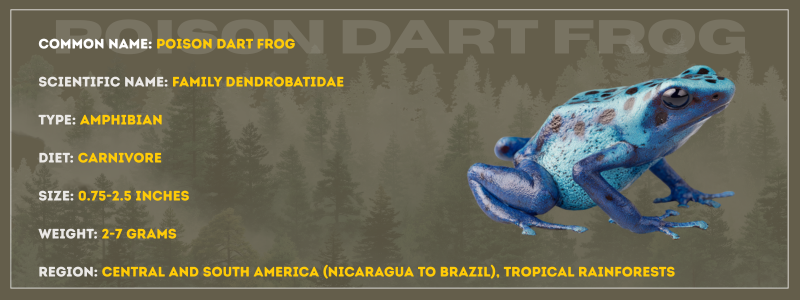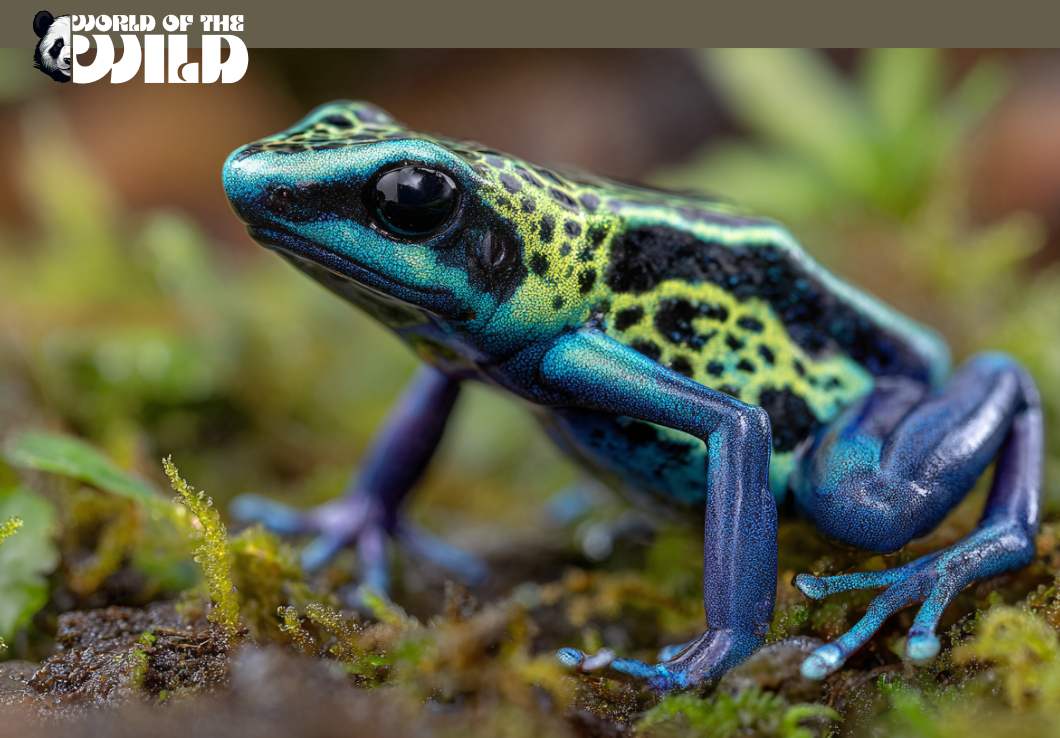

Hidden among the emerald leaves and moss-covered branches of Central and South American rainforests, a creature no larger than a paperclip commands respect from predators a hundred times its size. The poison dart frog, with its dazzling electric blues, fiery oranges, and bold yellows, seems to defy the jungle’s unwritten rule of camouflage. But this vivid display isn’t vanity—it’s a warning. These diminutive amphibians pack enough toxins in their skin to kill ten grown men, earning them a fearsome reputation that far exceeds their thumbnail-sized bodies. Beyond their deadly defenses, poison dart frogs exhibit remarkable parenting behaviors, complex social structures, and ecological importance that make them one of the rainforest’s most captivating inhabitants.
Facts
- Captivity Changes Everything: Poison dart frogs raised in captivity lose their toxicity entirely, as they derive their poison from alkaloid-containing insects in their wild diet, not from internal production.
- Devoted Fathers: Male strawberry poison dart frogs will carry tadpoles on their backs one at a time to individual water pools, then return daily to check on each offspring—sometimes caring for over a dozen tadpoles simultaneously.
- Ancient Indigenous Tool: The Emberá people of Colombia have used the golden poison dart frog’s secretions to coat blowgun darts for hunting for over a thousand years, though only three species are toxic enough for this purpose.
- Vocal Virtuosos: Despite their tiny size, male poison dart frogs produce calls that can be heard over 100 feet away, with each species having distinct trills, buzzes, and chirps for territorial and mating purposes.
- Color-Coded Geography: Individual populations of the same species can display completely different color patterns based on their specific location, with some variants found in areas less than a mile apart.
- Toxic Tolerance: Poison dart frogs are immune to their own toxins due to a single amino acid change in their sodium channels, a remarkable evolutionary adaptation that prevents self-poisoning.
- Aquatic Nurseries: Some species lay their eggs in the water-filled centers of bromeliads high in the rainforest canopy, creating miniature aquatic ecosystems 100 feet above the forest floor.
Species
Kingdom: Animalia
Phylum: Chordata
Class: Amphibia
Order: Anura
Family: Dendrobatidae
Genus: Multiple (Dendrobates, Phyllobates, Epipedobates, Ranitomeya, among others)
Species: Over 170 distinct species
The Dendrobatidae family encompasses all poison dart frogs, though the common name can be somewhat misleading—not all species are significantly toxic, and only a handful possess the potent alkaloid poisons that made them famous. The family is divided into several genera, with the most notable being Phyllobates (containing the most toxic species, including the golden poison dart frog), Dendrobates (including the popular blue poison dart frog), and Ranitomeya (smaller species with intricate patterns).
Within this diverse family, species vary dramatically in toxicity, appearance, and behavior. The golden poison dart frog (Phyllobates terribilis) stands as the most toxic vertebrate on Earth, while species like the harlequin poison frog (Oophaga histrionica) display remarkable color variation across their range. The strawberry poison dart frog (Oophaga pumilio) has become a model species for studying how geographic isolation creates color polymorphism, with over 30 distinct color morphs documented. Meanwhile, the dyeing poison dart frog (Dendrobates tinctorius) exhibits bold black and yellow or blue patterns that have made it a favorite in zoos worldwide.
Appearance
Poison dart frogs are masters of the miniature, with most species measuring between 0.75 to 1.5 inches in length, though the golden poison dart frog can reach nearly 2.5 inches. Their weight is equally modest, typically ranging from just 2 to 7 grams—roughly the weight of a few paperclips. What they lack in size, however, they compensate for in visual splendor.
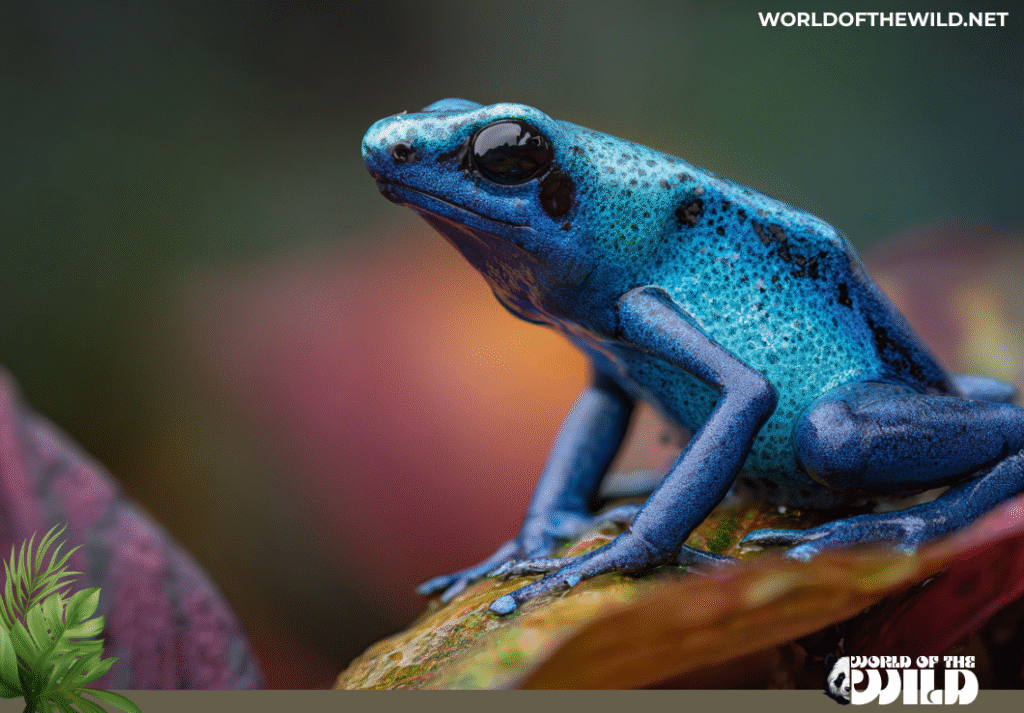
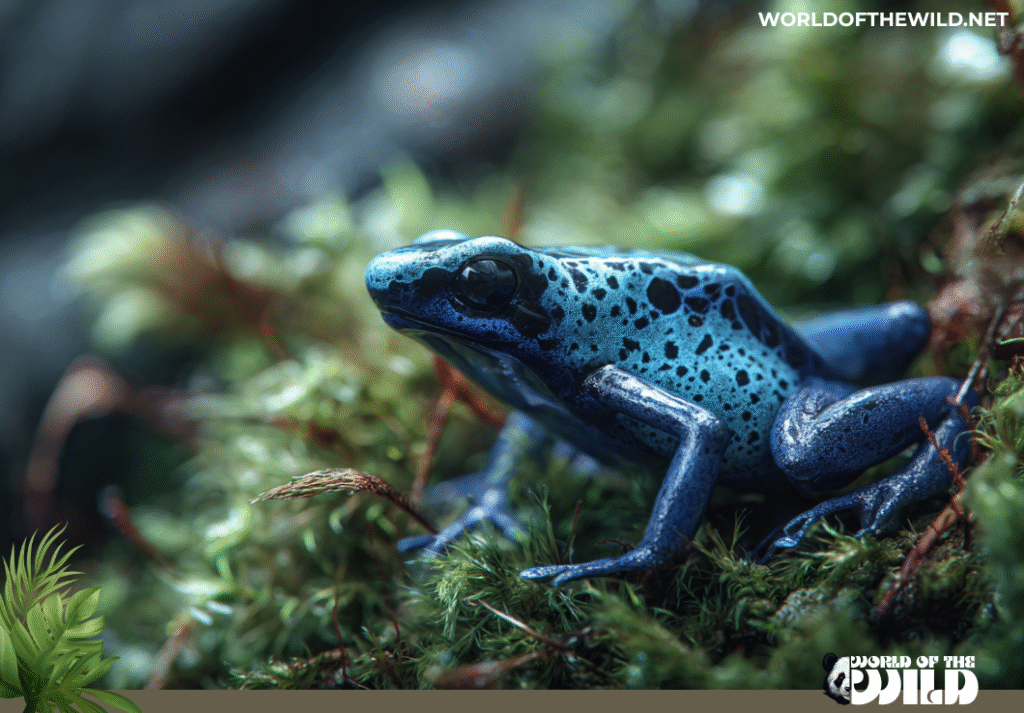
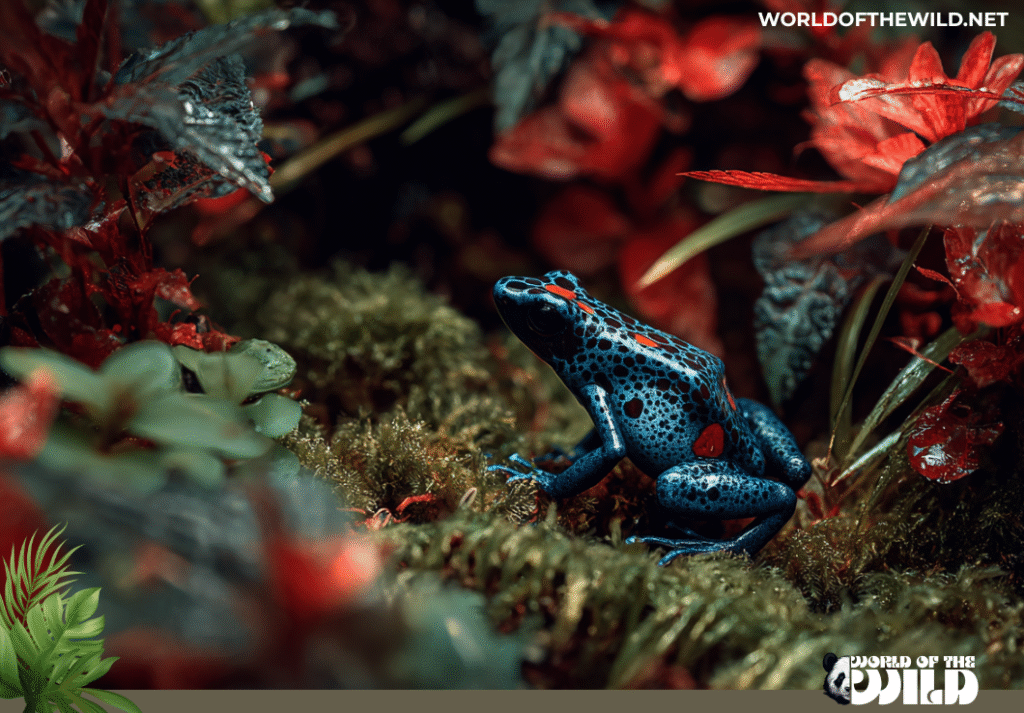
Their skin displays some of nature’s most vibrant aposematic coloration—warning colors that advertise their toxicity to potential predators. Electric blues, neon greens, blazing oranges, ruby reds, and sunshine yellows often combine in striking patterns of spots, stripes, and marbling. The blue poison dart frog sports an azure body with darker blue or black spots, while the dyeing poison dart frog pairs cobalt blue with bold black bands. The strawberry poison dart frog typically wears bright red with blue or black legs, though color morphs range from green to orange to even plain brown.
Their bodies are compact and robust, with smooth, moist skin that must remain hydrated for respiration and toxin secretion. Unlike many frogs, poison dart frogs have relatively flattened heads and prominent, dark eyes positioned on the sides. Their feet feature adhesive toe pads with small, flattened discs that enable them to climb vertical surfaces and navigate the complex three-dimensional rainforest environment. Males are generally slightly smaller and more slender than females, though sexual dimorphism is subtle in most species.
Behavior
Poison dart frogs are diurnal creatures, active during daylight hours when their brilliant colors serve as maximum deterrents to predators. This daytime activity sets them apart from most amphibians, which typically favor nocturnal lifestyles. They spend their days hopping across the forest floor, climbing tree trunks, and exploring the leaf litter in search of food, constantly alert and remarkably bold for such small creatures.
Territorial behavior defines much of their social structure, particularly among males. Male poison dart frogs establish and fiercely defend territories ranging from a few square meters to larger areas, depending on species and resource availability. They announce ownership through persistent calling, producing species-specific vocalizations that serve both to attract females and warn competing males. When calls aren’t sufficient, physical wrestling matches ensue, with males grappling, pushing, and attempting to pin rivals until one retreats.
Their intelligence and problem-solving abilities are impressive for amphibians. Poison dart frogs demonstrate spatial memory, learning the locations of water sources, good hunting grounds, and optimal calling sites within their territories. Females of tadpole-transporting species remember the locations of multiple offspring placed in different water bodies and return to each to deposit unfertilized eggs as food—a remarkable feat of parental care and memory.
Communication extends beyond simple calls. Many species use complex vocal repertoires with different calls for territorial defense, courtship, distress, and social interaction. Body language also plays a role, with head bobbing, foot trembling, and specific postures conveying aggression or submission during territorial disputes.
Some species exhibit communal behavior at certain times, with multiple individuals tolerating close proximity near rich food sources or prime breeding sites, though territoriality usually prevails during breeding season. Parent-offspring relationships show extraordinary sophistication, particularly in species where mothers feed tadpoles with unfertilized eggs, visiting each offspring’s individual pool on a regular schedule that can last weeks.
Evolution
The evolutionary story of poison dart frogs traces back approximately 50-60 million years to the diversification of the Dendrobatidae family during the Paleocene and Eocene epochs, following the extinction of the dinosaurs. Their ancestors were likely small, forest-floor-dwelling frogs in the ancient rainforests that covered much of South America following the continent’s separation from Africa.
The development of their signature toxicity represents one of evolution’s most fascinating arms races. Rather than producing toxins internally, poison dart frogs evolved the ability to sequester, concentrate, and store alkaloid compounds from their arthropod prey—primarily mites, ants, and certain beetles. This dietary specialization required sophisticated biochemical adaptations, including modified skin glands, cellular transport mechanisms, and immunity to their own stored poisons. The genetic mutation that provides self-resistance—a single amino acid substitution in their voltage-gated sodium channels—represents a critical evolutionary innovation that allowed these frogs to become walking poison repositories.
The explosive radiation of poison dart frog species likely accelerated during the Miocene epoch, roughly 15-20 million years ago, as the Andes Mountains rose and created isolated valleys and microclimates. Geographic isolation in these mountain valleys and separated forest patches drove rapid speciation, with different populations evolving distinct coloration patterns, calls, and ecological preferences. The remarkable diversity of color morphs within single species reflects ongoing evolution, with sexual selection and local adaptation to different predator communities driving continued divergence.
Their transition to diurnal activity—unusual among frogs—co-evolved with their toxic defenses and bright coloration. Once protected by toxicity, these frogs could abandon the safety of darkness and exploit daytime food resources with reduced predation risk, while their warning colors became more effective in daylight. This evolutionary shift opened new ecological niches and reduced competition with nocturnal frog species.
Recent evolutionary studies suggest that the degree of toxicity and brightness of coloration have co-evolved in a tight correlation, with the most toxic species displaying the boldest colors. This honest signaling system has been refined over millions of years of predator-prey interactions.
Habitat
Poison dart frogs inhabit the tropical rainforests of Central and South America, with their range extending from Nicaragua in the north through the Amazon Basin to southeastern Brazil and Bolivia. The greatest diversity occurs in the western Amazon Basin, particularly in Colombia, Ecuador, and Peru, where the foothills of the Andes create ideal conditions for speciation. Some species occupy narrow ranges of just a few square kilometers, while others spread across thousands of square miles.
These frogs thrive in lowland tropical rainforests, cloud forests, and montane forests at elevations from sea level to over 6,000 feet, though most prefer the humid lowlands between 500 and 3,000 feet elevation. They require high humidity levels—typically above 80%—and consistently warm temperatures ranging from 70 to 85 degrees Fahrenheit. Their permeable skin makes them exceptionally sensitive to temperature and moisture changes, restricting them to consistently humid environments.
Within these forests, poison dart frogs occupy the understory and forest floor, dwelling among leaf litter, fallen logs, moss-covered rocks, and the bases of trees. Many species particularly favor areas near streams, seeps, or seasonal pools, which provide essential breeding sites and maintain the high humidity they require. Some species climb into the lower and middle canopy, especially those that breed in bromeliad pools or tree holes, but even these species maintain connections to the ground.
The microhabitat preferences vary by species. Some favor open areas with scattered leaf litter where they can easily spot predators and prey, while others prefer dense vegetation. Certain species associate strongly with specific plant types—particularly bromeliads, which provide water-filled breeding sites and shelter. The heterogeneity of the rainforest floor, with its mix of sun-dappled clearings and shaded tangles, provides the varied microhabitats necessary to support multiple species in the same general area.
Human disturbance has fragmented their once-continuous habitat, leaving many populations isolated in forest patches surrounded by agricultural land or development. This habitat fragmentation poses significant challenges for species with limited dispersal abilities.
Diet
Poison dart frogs are strict carnivores with specialized dietary preferences that directly influence their toxicity. Their primary food consists of tiny arthropods, with ants, mites, termites, small beetles, springtails, and fruit flies comprising the bulk of their diet. The size of their prey is constrained by their small mouths—most consumed items measure less than 2-3 millimeters in length.
The critical connection between diet and toxicity cannot be overstated. Wild poison dart frogs obtain their toxic alkaloids exclusively from their prey, particularly from certain mites (Oribatid mites), ants (especially those in the genera Brachymyrmex and Paratrechina), and some beetles. These arthropods either produce the alkaloids themselves or sequester them from their own diet, and the frogs have evolved to concentrate these compounds in their skin glands. Captive-bred frogs fed on standard feeder insects like fruit flies and crickets develop no toxicity whatsoever, demonstrating that the poison is entirely diet-derived.
Hunting behavior involves a combination of sit-and-wait ambush tactics and active foraging. Poison dart frogs patrol their territories with short hops, stopping frequently to scan for movement. Their keen eyesight allows them to detect the slightest motion of tiny prey items against the leaf litter. Once prey is spotted, the frog approaches slowly, then strikes with remarkable speed, using its sticky tongue to capture the prey in a fraction of a second. The tongue extends and retracts so quickly that the motion is nearly invisible to the human eye.
Feeding occurs throughout daylight hours, with peak activity typically in the morning and late afternoon when arthropod prey is most active. An individual frog may consume dozens to hundreds of tiny prey items daily, constantly foraging to meet its metabolic needs. This high feeding rate is necessary not only for energy but also to maintain their toxin levels, which can decline if access to alkaloid-containing prey is restricted.
Young frogs, recently metamorphosed from tadpoles, begin with even tinier prey like springtails and the smallest mites, gradually incorporating larger items as they grow. The diversity of prey species consumed contributes to the cocktail of different alkaloid compounds found in their skin, with some frogs harboring over 200 different alkaloid types.
Predators and Threats
Despite their formidable chemical defenses, poison dart frogs are not entirely without natural predators. A few specialized predators have evolved resistance or behavioral strategies to overcome their toxicity. The fire-bellied snake (Leimadophis epinephelus) preys on poison dart frogs with apparent immunity to their toxins, though it may still experience some effects. Certain large spiders and scorpions occasionally capture and consume young frogs. Opportunistic predation by birds, snakes, or mammals occasionally occurs, typically resulting in the predator learning a harsh lesson and avoiding similarly colored frogs thereafter.
The eggs and tadpoles face more diverse predation pressures. Ants, spiders, beetles, and other arthropods raid egg clutches when left unguarded. Tadpoles in shared water bodies fall prey to aquatic insects, spider silk that traps them at the water’s surface, and even cannibalism from larger tadpoles. The evolution of parental care in poison dart frogs likely arose partly as a defense against these egg and tadpole predators.
Anthropogenic threats pose far greater dangers than natural predators. Habitat destruction stands as the primary threat, with deforestation for agriculture, logging, and development eliminating or fragmenting the rainforests these frogs require. The clearing of just a few acres can extirpate local populations of species with extremely limited ranges. As forest patches shrink and become isolated, populations face genetic bottlenecks and reduced resilience to environmental changes.
Climate change threatens poison dart frogs through multiple pathways. Rising temperatures can exceed their thermal tolerance, while changes in rainfall patterns may reduce the humidity levels essential for their survival. Altered precipitation also affects the ephemeral water sources they use for breeding. Their limited dispersal abilities prevent them from readily tracking suitable climate conditions as they shift geographically.
The illegal pet trade has impacted certain colorful species, with collectors removing individuals from wild populations to sell internationally. While captive breeding has reduced pressure on some species, others remain targets for smugglers seeking rare color morphs. Chytrid fungus (Batrachochytrium dendrobatidis), a devastating pathogen causing mass amphibian die-offs globally, has reached some poison dart frog populations, though these species appear more resistant than many other amphibians.
Pollution, particularly pesticide runoff and heavy metal contamination in streams, poses additional threats. Their permeable skin makes them especially vulnerable to chemical pollutants. As indicator species highly sensitive to environmental changes, declining poison dart frog populations often signal broader ecosystem degradation.
Reproduction and Life Cycle
The reproductive strategies of poison dart frogs rank among the most sophisticated and varied of all amphibians, with elaborate courtship, intense parental care, and complex life cycles that have fascinated biologists for decades.
Courtship begins with male advertisement calls, produced from favored perches within their territories. These calls vary from soft trills to loud buzzes, each species-specific and designed to attract females while deterring rival males. When a receptive female approaches, the male often leads her on an extended tour of his territory, showcasing potential egg-laying sites—typically moist leaf litter, bromeliad leaves, or under fallen logs. This courtship dance can last hours, with the male frequently calling and ensuring the female follows.
Egg-laying occurs in concealed, moist locations on land—a departure from the aquatic breeding of most frogs. Clutch sizes vary by species from just 2-3 eggs in some species to 20 or more in others, with the tiny eggs encased in protective jelly. Both parents may remain with the eggs, but males typically assume guard duty, keeping them moist by transporting water in their bladder and urinating on them, and defending against predators.
After 10-18 days, the eggs hatch into tadpoles. In most species, one parent—often the male—allows the wiggling tadpoles to climb onto their back, where they adhere with specialized sticky mucus. The parent then embarks on a remarkable journey, transporting tadpoles to water sources. Some species deposit all tadpoles together in a pool or stream, while others practice a more demanding strategy: placing each tadpole in its own separate water source—individual bromeliad pools, tree holes, or bamboo internodes.
The strawberry poison dart frog exhibits the most extreme maternal care. After the male transports tadpoles to separate bromeliads, the female assumes responsibility, returning every few days to each tadpole’s pool to deposit unfertilized “feeder eggs” that provide the tadpole’s sole food source. She maintains this demanding schedule for 6-8 weeks, remembering the locations of multiple offspring and adjusting her egg provision based on each tadpole’s size.
Tadpoles develop over 6-14 weeks depending on species, temperature, and food availability. Those raised communally are typically omnivorous, feeding on algae, detritus, and small aquatic invertebrates. When metamorphosis completes, the tiny froglets—measuring just 8-15 millimeters—emerge from the water and begin their terrestrial existence.
Sexual maturity arrives at 1-2 years of age, with females typically maturing slightly later than males. In the wild, poison dart frogs live 3-7 years on average, though many species can reach 10-15 years in captivity with proper care. Some individuals in protected settings have survived beyond 20 years, suggesting that predation and environmental stresses rather than physiological aging limit their lifespan in nature.
Population
The conservation status of poison dart frogs varies dramatically across the family’s 170+ species, ranging from Least Concern to Critically Endangered. Many species lack sufficient data for accurate assessment, particularly those with extremely limited ranges or living in poorly studied regions. As a family, Dendrobatidae faces significant conservation challenges, with approximately 25% of assessed species classified as threatened to some degree.
Several species warrant particular concern. The golden poison dart frog (Phyllobates terribilis) is classified as Endangered, with its entire global population confined to a small area of Colombia’s Pacific coast covering less than 2,000 square miles. The Lehmann’s poison frog (Oophaga lehmanni) is Critically Endangered, possibly extinct in the wild, having not been reliably observed since 1995 despite targeted searches. Conversely, some species like the dyeing poison dart frog (Dendrobates tinctorius) maintain stable populations across extensive ranges and are classified as Least Concern.
Estimating global population numbers for poison dart frogs is exceptionally challenging due to their small size, cryptic behavior, and the difficulty of accessing their rainforest habitats. Most species have never been systematically surveyed. For better-studied species, population densities can range from just a few individuals per hectare in marginal habitat to 100 or more per hectare in prime conditions. This suggests that widespread species might number in the hundreds of thousands or millions, while range-restricted species may have total populations of just a few thousand individuals.
Population trends show concerning patterns for many species. Those inhabiting lowland forests face ongoing decline as deforestation continues, with some losing 30-50% of their habitat over recent decades. Species dependent on old-growth forest or specific microhabitats have declined more rapidly than habitat generalists. However, poison dart frogs have proven more resilient than many amphibians to certain threats, particularly the chytrid fungus that has devastated other frog families.
Conservation efforts include habitat protection through national parks and reserves, though enforcement varies and many protected areas face encroachment. Ex-situ breeding programs in zoos and private collections maintain insurance populations of threatened species, with some programs achieving remarkable success. Public education initiatives in range countries aim to build local support for conservation. Ecotourism centered on observing these charismatic frogs generates income for local communities, creating economic incentives for forest protection.
Conclusion
Poison dart frogs embody nature’s principle that the smallest packages can contain the greatest surprises. These thumbnail-sized amphibians have evolved some of the animal kingdom’s most potent toxins, most vibrant warning coloration, and most devoted parental care behaviors—all while maintaining populations in an increasingly threatened environment. Their brilliant colors serve not as decoration but as honest signals in one of evolution’s most elegant defense systems, while their complex breeding behaviors reveal intelligence and dedication that rivals species many times their size.
Yet these remarkable creatures now sit at a crossroads. The rainforests they have inhabited for millions of years are disappearing at alarming rates, and climate change threatens to alter the stable temperature and humidity conditions they require. As indicator species highly sensitive to environmental degradation, declining poison dart frog populations sound an alarm for the entire rainforest ecosystem. Protecting these tiny toxic jewels means preserving not just a charismatic species but the vast web of life they represent. The next time you see a poison dart frog’s electric blue glow in a nature documentary or museum exhibit, remember that in the wild, their continued existence depends on choices we make today about forest conservation, climate action, and environmental protection. These frogs have survived for millions of years—whether they survive the Anthropocene era rests largely in our hands.