
The howl echoes across the moonlit landscape—a sound both haunting and beautiful, primal and profound. For millennia, wolves have captured human imagination like few other creatures, embodying wilderness itself in their piercing gaze and powerful stride. These magnificent predators are nature’s engineers, shaping entire ecosystems through their presence and absence. Far from being mere killing machines, wolves are intelligent, family-oriented animals with complex social structures that rival our own. Understanding wolves means understanding the delicate balance of nature itself, for where wolves thrive, entire landscapes flourish. As we delve into the world of these iconic carnivores, we’ll discover why the wolf remains one of Earth’s most misunderstood yet essential species.
Facts
- Long-distance marathon runners: Wolves can travel up to 30 miles in a single day while hunting, with their efficient trotting gait allowing them to cover ground at 5 miles per hour for hours without rest.
- Specialized stomach capacity: A hungry wolf can consume up to 20 pounds of meat in a single feeding session—roughly equivalent to eating 100 hamburgers at once—then go two weeks or more without another meal.
- Extraordinary temperature tolerance: Wolf fur is so effective at insulation that snow can land on a wolf’s back and not melt, and they can comfortably survive in temperatures as low as -40°F without seeking shelter.
- Complex vocal repertoire: While howling gets the most attention, wolves actually use a sophisticated combination of barks, growls, whines, and body language to communicate, with researchers identifying nuanced meanings in different howl patterns.
- Paw size adaptation: A wolf’s massive paws function like natural snowshoes, distributing their weight across a surface area roughly four times larger than a domestic dog of similar weight, enabling efficient travel through deep snow.
- Keystone species impact: The reintroduction of wolves to Yellowstone National Park in 1995 triggered a cascade of ecological changes, including altered river courses, increased vegetation, and the return of numerous other species—a phenomenon called “trophic cascade.”
- Exceptional jaw strength: Wolves possess a bite force of approximately 400 pounds per square inch, allowing them to crush large bones to access nutritious marrow that other predators leave behind.
Species
Kingdom: Animalia
Phylum: Chordata
Class: Mammalia
Order: Carnivora
Family: Canidae
Genus: Canis
Species: Canis lupus
The wolf family tree is more diverse than many realize. The gray wolf, or Canis lupus, serves as the umbrella species encompassing numerous subspecies distributed across the Northern Hemisphere. Among the most notable subspecies are the Arctic wolf (Canis lupus arctos), adapted to the harsh polar environment with white fur and smaller ears to minimize heat loss; the Eurasian wolf (Canis lupus lupus), ranging across Europe and Asia; the Northwestern wolf (Canis lupus occidentalis), the large wolves of Canada and Alaska; the Mexican wolf (Canis lupus baileyi), the smallest and most genetically distinct subspecies; and the extinct Japanese wolf (Canis lupus hodophilax), which disappeared in the early 20th century.
The Eastern wolf (Canis lycaon) remains taxonomically controversial, with some researchers considering it a distinct species while others classify it as a gray wolf subspecies. Similarly, the red wolf (Canis rufus) of the southeastern United States represents either a separate species or possibly a historic wolf-coyote hybrid, depending on which genetic studies you consult. The extinct dire wolf (Aenocyon dirus), despite its name and wolf-like appearance, was recently discovered to be a distant relative rather than a true wolf, having diverged from the Canis lineage millions of years ago. Domestic dogs (Canis familiaris) descended from ancient gray wolves between 15,000 and 40,000 years ago, making every dog from Chihuahuas to Great Danes a wolf descendant.
Appearance
Wolves are powerfully built carnivores designed for endurance hunting across varied terrain. Adult gray wolves typically stand 26 to 32 inches tall at the shoulder and measure 4.5 to 6.5 feet in length from nose to tail tip. Weight varies considerably by subspecies and geography, with males generally larger than females. Northern populations tend toward greater size, with Northwestern wolves weighing between 70 and 145 pounds, while smaller subspecies like the Arabian wolf may weigh only 40 to 45 pounds.
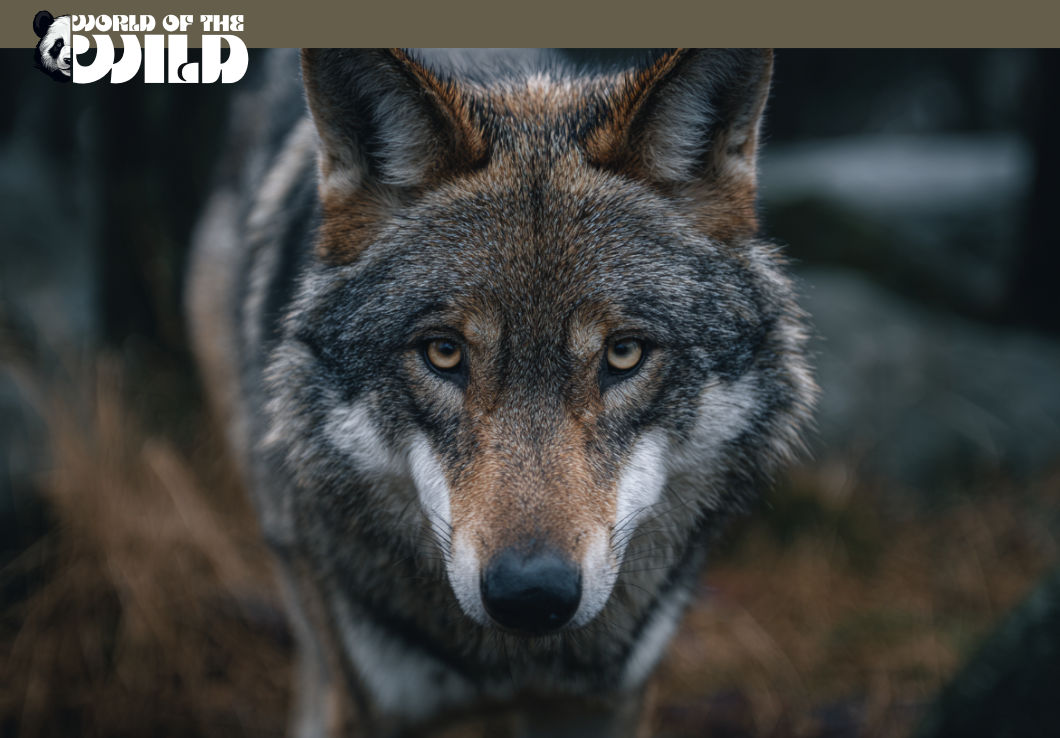
The wolf’s coat displays remarkable variation, ranging from pure white in Arctic populations to black, gray, brown, cinnamon, and cream, often with multiple colors blending across a single animal. Their double-layered fur consists of a dense undercoat for insulation and longer guard hairs that repel water and snow. Wolves possess a distinctive facial mask with lighter fur around the muzzle and darker markings around the eyes, creating an intense, focused expression.
Their physical features reflect their predatory lifestyle: powerful jaws lined with 42 teeth including four-inch canines designed for gripping and tearing; relatively small, triangular ears positioned high on a broad head; long, muscular legs built for sustained running; and large paws measuring up to 5 inches long. The bushy tail, typically 14 to 20 inches long, serves multiple purposes including communication, balance, and as a warm nose-cover during sleep. Wolves carry their tails in various positions to signal mood and social status, unlike domestic dogs whose tails curl upward. Their eyes, usually yellow or amber though occasionally brown or green, provide excellent night vision and can reflect light with an eerie golden-green glow.

Behavior
Wolves are highly social animals living in tight-knit family groups called packs, typically consisting of five to ten individuals though packs of over 30 have been documented. The pack structure centers around a breeding pair—traditionally called the “alpha” pair though biologists now prefer terms like “breeding pair” or “parents”—along with their offspring from multiple years. This family unit functions cooperatively, with each member playing a vital role in hunting, territorial defense, and pup-rearing.
Pack hierarchy is more fluid and less rigid than popularized culture suggests, with dominance based primarily on parental authority rather than constant aggressive competition. Wolves communicate their status through subtle body language: a dominant wolf carries its tail high and maintains confident posture, while subordinate wolves lower their bodies, tuck their tails, and may lick the muzzles of higher-ranking pack members in a gesture of deference and affection.
Communication among wolves is remarkably sophisticated. The famous howl serves multiple functions: assembling the pack before hunts, defending territory from rival packs, and maintaining contact across distances up to 10 miles in open terrain. Each wolf’s howl has a unique signature, allowing pack members to identify individuals by voice alone. Wolves also employ growls, barks, whines, and whimpers in different contexts, creating a nuanced vocal language. Scent marking through urine and scat communicates territorial boundaries and reproductive status, while facial expressions and ear positions convey immediate emotional states.
Wolves are primarily crepuscular, meaning they’re most active during dawn and dusk, though they’ll adjust their schedule based on prey availability and human presence. A typical day involves periods of rest, social bonding through play and grooming, territorial patrols, and coordinated hunts. Play behavior, especially among younger wolves, strengthens social bonds and hones hunting skills necessary for survival.
Their intelligence manifests in sophisticated hunting strategies that demonstrate planning, cooperation, and role differentiation. Wolves have been observed testing herds to identify vulnerable individuals, coordinating ambush positions, and even using relay teams where fresh wolves take over the chase from tired pack members. They exhibit problem-solving abilities and can adapt hunting techniques to different prey species and environments, suggesting cognitive flexibility rare among non-primate mammals.
Evolution
The evolutionary story of wolves reaches back millions of years to the late Miocene epoch. The canid family tree began diversifying around 10 million years ago, with early dog-like carnivores gradually developing the characteristics we associate with modern wolves. The genus Canis emerged approximately 6 million years ago in North America, giving rise to various wolf-like species.
The direct ancestor of modern wolves, Canis lepophagus, lived around 5 million years ago and was relatively small compared to contemporary wolves. This species evolved into Canis etruscus roughly 3 million years ago in Eurasia, which then gave rise to Canis mosbachensis approximately 1.5 million years ago. This intermediate species displayed characteristics more recognizable as wolf-like, with increased size and adaptations for hunting large prey.
The modern gray wolf, Canis lupus, appeared between 800,000 and 300,000 years ago, though the exact timing remains debated among paleontologists. These early gray wolves spread across the Holarctic—the northern continents of North America, Europe, and Asia—during the Pleistocene epoch. The Bering Land Bridge, which periodically connected Asia and North America during glacial periods, facilitated multiple migrations in both directions, creating a complex pattern of wolf evolution across two continents.
During the Ice Age, wolves diversified into numerous subspecies adapted to different environments, from frozen tundra to temperate forests to arid regions. They coexisted with now-extinct megafauna including mammoths, giant ground sloths, and cave bears, often competing with other apex predators like saber-toothed cats and short-faced bears for resources.
One of the most significant evolutionary branches occurred when some wolves began associating with human hunter-gatherer groups between 15,000 and 40,000 years ago. Through a process of self-domestication and later selective breeding, these wolves evolved into domestic dogs, arguably the most diverse species of mammal on Earth in terms of physical variation. Despite tens of thousands of years of separation, wolves and dogs remain genetically similar enough to produce fertile offspring, highlighting their recent common ancestry.

Habitat
Wolves once claimed the distinction of being the most widely distributed mammal in the world after humans, inhabiting nearly the entire Northern Hemisphere. Their historic range stretched across North America from the Arctic Ocean to central Mexico, throughout Europe from the Atlantic to the Ural Mountains, and across Asia from the Middle East to Japan. This remarkable distribution reflected the wolf’s exceptional adaptability to diverse environments.
Today, their range has contracted significantly, particularly in the contiguous United States and Western Europe, though substantial populations persist in Canada, Alaska, Russia, and parts of Eastern Europe and Asia. Wolves currently inhabit tundra, taiga forests, grasslands, deserts, and mountain regions, demonstrating ecological flexibility that few large predators can match.
In the Arctic tundra, wolves endure extreme cold and months of darkness, following caribou and musk ox across vast treeless expanses. The boreal forests of Canada and Russia support the highest wolf densities, where they hunt moose, deer, and elk among dense coniferous trees and complex terrain. Temperate deciduous forests historically harbored wolves throughout Europe and eastern North America, though human persecution eliminated them from most of these regions. Grassland and prairie wolves once followed bison herds across the Great Plains, adapting their hunting strategies to open terrain with minimal cover. Even desert-adapted subspecies like the Arabian wolf survive in harsh arid environments, hunting smaller prey and ranging over enormous territories to find sufficient food.
Wolves require territories large enough to support prey populations, with territory sizes ranging from 50 square miles in prey-rich areas to over 1,000 square miles in the harsh Arctic. They’re highly territorial, defending these ranges against neighboring packs through scent marking and occasional violent confrontations. The ideal wolf habitat provides adequate prey density, sufficient denning sites for reproduction, and minimal human persecution—requirements increasingly difficult to meet in our developed world.
Diet
Wolves are carnivores and apex predators, meaning they sit at the top of the food chain with few natural enemies. Their diet consists primarily of ungulates—hoofed mammals—though they’re opportunistic hunters willing to consume whatever prey is available. Large prey species form the core of wolf diet across most of their range: elk, moose, caribou, deer, bison, musk ox, and wild boar feature prominently on the menu depending on geographic location.
The size difference between wolf and prey is often dramatic. A 100-pound wolf regularly hunts animals weighing 500 to 1,000 pounds or more, succeeding through pack coordination and relentless pursuit rather than overwhelming power. Wolves are cursorial predators, meaning they chase down prey over distance rather than ambushing from cover. They can reach speeds of 35 to 40 miles per hour in short bursts, but their real advantage lies in stamina—wolves can maintain a tireless pace for hours, exhausting prey before moving in for the kill.
Hunting success rates are surprisingly low, typically ranging from 5 to 20 percent depending on prey species, terrain, and wolf pack size. Wolves test herds constantly, probing for vulnerable individuals: the young, elderly, sick, or injured animals that cannot maintain the pace or defend themselves effectively. A successful hunt involves complex coordination, with different pack members playing specific roles—some wolves drive prey toward ambush positions while others cut off escape routes.
Beyond large ungulates, wolves demonstrate dietary flexibility that enhances their survival. They readily consume smaller mammals including beavers, rabbits, rodents, and ground-dwelling birds. Coastal wolves in British Columbia catch salmon during spawning runs, consuming fish as a seasonal supplement. Wolves will scavenge carrion when available, clean up after their own kills over multiple days, and occasionally consume vegetation including berries and grasses, though plant matter provides minimal nutrition.
After a successful kill, wolves follow a feeding hierarchy where the breeding pair and high-ranking members eat first, though this order isn’t always strict. Food may be buried or cached for later consumption, and wolves often regurgitate meat for pups and adults that remained at the den site, demonstrating advanced food-sharing behaviors that strengthen pack bonds.
Predators and Threats
As apex predators, adult wolves face few natural threats. However, several factors cause wolf mortality in wild populations. Bears, both grizzly and black bears, occasionally kill wolves, particularly when competing over carcasses or when a bear encounters vulnerable wolf pups. Mountain lions have been documented killing wolves in territorial disputes, though such encounters are relatively rare. Other wolf packs represent perhaps the most significant natural threat—territorial conflicts between packs can turn lethal, with border skirmishes accounting for 15 to 65 percent of wolf deaths in some populations. Wolves will kill unrelated wolves that trespass into their territory, sometimes engaging in calculated attacks on neighboring packs to eliminate competition.
Pups face higher vulnerability than adults, with golden eagles, wolverines, bears, cougars, and other wolves all posing threats to young wolves before they reach maturity. Disease also takes a toll, with canine parvovirus, distemper, mange, and various parasites causing mortality, particularly in high-density populations.
Yet natural mortality pales compared to human-caused wolf deaths, which remain the primary limiting factor on wolf populations globally. Habitat loss and fragmentation rank as the foremost threat—as human development converts wilderness into agricultural land, cities, and infrastructure, wolves lose both territory and prey base. Roads fragment populations and increase vehicle strikes, which kill dozens of wolves annually even in protected areas like national parks.
Livestock depredation creates ongoing human-wolf conflict. When wolves kill cattle, sheep, or other domestic animals, ranchers often respond through legal or illegal lethal control. While wolves kill only a tiny fraction of livestock compared to disease, weather, and other causes, the political and economic dimensions of livestock predation fuel intense controversy surrounding wolf conservation.
Legal hunting and trapping of wolves occurs in many jurisdictions, sometimes as regulated wildlife management and sometimes as government-sanctioned control programs. In areas where wolves have been removed from endangered species protection, hunting seasons can result in substantial mortality. Illegal poaching adds additional deaths that are difficult to quantify but likely significant in regions with strong anti-wolf sentiment.
Hybridization with domestic dogs and coyotes threatens wolf genetic integrity in some populations, particularly where small, isolated wolf populations come into contact with abundant canids. This genetic pollution can result in loss of wild traits and reduced fitness over generations.
Climate change represents an emerging threat, altering prey distributions, increasing disease transmission, and changing habitat conditions in ways that scientists are only beginning to understand. Warmer winters may favor deer over moose in some regions, while changing vegetation patterns could affect the entire prey community that wolves depend upon.

Reproduction and Life Cycle
Wolves typically reach sexual maturity between two and three years of age, though only the breeding pair in a pack—usually the oldest male and female—reproduce in a given year. This breeding suppression isn’t absolute, and in prey-rich environments or disrupted packs, multiple females may produce litters, but the single-litter norm helps maintain pack stability and ensures adequate resources for pup survival.
Mating season occurs once annually, typically between January and March depending on latitude, with northern populations breeding later than southern ones. The courtship period involves increased physical contact, playfulness, and bonding between the breeding pair. Females enter estrus for five to seven days, during which breeding occurs multiple times.
Following successful mating, the female undergoes a gestation period of approximately 63 days. As her due date approaches, she selects or excavates a den—often an enlarged fox or badger burrow, a space under rocks, a hollow log, or a riverbank cavity. The den provides shelter and security for the vulnerable pups during their first weeks of life.
Litters typically contain four to six pups, though litter sizes can range from one to eleven. The tiny pups are born blind, deaf, and completely dependent, weighing roughly one pound. Their dark fur and folded ears give them a distinctly different appearance from adults. The mother remains with the pups almost constantly during the first three weeks, relying on other pack members to bring her food.
Pups’ eyes open around two weeks of age, and they begin hearing shortly after. By three to four weeks, they start exploring outside the den, engaging in play that develops motor skills and social bonds. The entire pack participates in pup-rearing, with non-breeding adults serving as helpers—bringing food, babysitting, and teaching hunting skills. This cooperative breeding system allows wolves to successfully raise pups in harsh environments where a single pair would struggle.
Weaning begins around five to six weeks, though pups continue nursing occasionally for several more weeks. As summer progresses, the pack may move pups to a series of above-ground rendezvous sites—open areas where pups can play and rest while adults hunt. These sites lack the protection of a den but provide more space for increasingly active pups.
By autumn, pups weigh 60 to 80 pounds and begin joining hunts, though they remain relatively unskilled and dependent on adult kills. Most wolves remain with their natal pack for two to three years before dispersing to find mates and establish their own territories, though some stay longer or even remain as non-breeding helpers for life.
Wolf mortality is high during the first year, with 40 to 60 percent of pups dying before their first birthday from starvation, disease, predation, or accidents. Those that survive to adulthood face better odds, though life remains challenging. In the wild, wolves typically live six to eight years, though some individuals reach 13 years or older in protected populations. Captive wolves can live 15 to 16 years with proper care, demonstrating that mortality in the wild stems primarily from injury, disease, starvation, and human causes rather than intrinsic aging.
Population
The conservation status and population numbers of wolves vary dramatically by region and subspecies. The gray wolf as a species is listed as “Least Concern” by the International Union for Conservation of Nature (IUCN), reflecting relatively stable populations in parts of their range, though this global assessment masks concerning regional declines and extinctions.
Global wolf numbers are difficult to pin down precisely, but current estimates suggest between 200,000 and 250,000 wolves exist worldwide. The vast majority inhabit Russia, which hosts approximately 50,000 to 60,000 wolves across its enormous territory. Canada supports another 50,000 to 60,000 wolves ranging across provinces and territories. Alaska maintains a healthy population of 7,000 to 11,000 wolves. These three regions account for the majority of living wolves.
In the contiguous United States, wolf recovery represents one of conservation’s most contentious and celebrated achievements. The Great Lakes region supports approximately 4,000 wolves across Minnesota, Wisconsin, and Michigan. The Northern Rockies population, reestablished through reintroduction efforts beginning in 1995, now numbers around 1,700 to 2,000 wolves across Idaho, Montana, Wyoming, and parts of Washington and Oregon. These success stories contrast sharply with the Mexican wolf, North America’s rarest subspecies, with fewer than 200 individuals surviving in the wild in Arizona and New Mexico despite intensive recovery efforts.
Europe presents a patchwork of wolf populations. Healthy numbers persist in Eastern Europe and the Balkans, with Romania hosting perhaps 4,000 wolves and Poland around 2,000. Western European populations were nearly exterminated by the mid-20th century but have staged remarkable recoveries in recent decades. Italy now supports over 1,000 wolves, Spain between 2,000 and 2,500, and wolves have naturally recolonized France, Germany, Switzerland, and Scandinavia, though numbers remain relatively small in these recovering populations.
Asia’s wolf populations are less thoroughly studied, but substantial numbers persist in Kazakhstan, Mongolia, and China, though precise estimates remain elusive. India supports around 2,000 to 3,000 wolves, primarily in isolated grassland patches. Arabian wolves, the smallest subspecies, exist in critically small numbers scattered across the Arabian Peninsula.
Population trends show cautious improvement in some regions and continued decline in others. Successful reintroduction and natural recolonization demonstrate that wolves can recover when given legal protection and sufficient habitat. However, ongoing conflicts over livestock, hunting pressure in areas where wolves have been delisted from endangered species protection, and habitat loss ensure that wolf populations remain below historic levels and vulnerable to setbacks.
Several subspecies face particular concern. The Ethiopian wolf, though sometimes classified separately from gray wolves, represents the rarest canid on Earth with fewer than 500 individuals. The red wolf exists almost entirely in captivity, with fewer than 25 individuals in the wild in North Carolina. The Mexican wolf’s wild population, though growing, remains precariously small and genetically limited.
Conclusion
Wolves stand as powerful symbols of wilderness and apex predator integrity, embodying ecological relationships that shape entire landscapes. From their complex family structures and sophisticated communication to their role as ecosystem engineers triggering trophic cascades, wolves remind us that nature functions as an interconnected web rather than isolated parts. Their near-extermination and ongoing recovery in some regions illustrates both humanity’s capacity for destruction and our ability to correct past mistakes when we prioritize coexistence over elimination.
The future of wolves depends on our willingness to share landscapes with predators that occasionally inconvenience us. As human populations expand and climate patterns shift, wolves need advocates who understand their ecological importance and their right to exist beyond their utility to humans. Whether wolves continue their recovery or slide back toward extinction in populated regions depends on decisions being made now in legislative chambers, courtrooms, and ranch houses across their range.
The next time you hear a wolf howl—whether in the wilderness or in a recording—remember that you’re hearing the voice of an ancient predator whose ancestors sang that same song when glaciers covered continents. Wolves have survived ice ages, megafauna extinctions, and human persecution across millennia. Ensuring they survive the next century requires not just protection but genuine commitment to preserving the wild spaces and ecological processes that allow wolves to be wolves. They’ve earned their place in the natural world. The question is whether we’ll allow them to keep it.
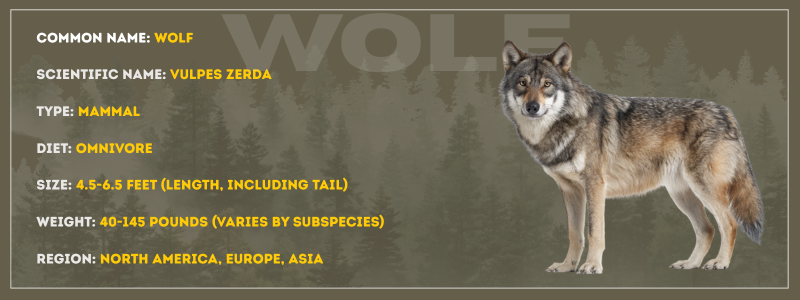
Scientific Name: Canis lupus
Diet Type: Carnivore
Size: 4.5-6.5 feet (length, including tail)
Weight: 40-145 pounds (varies by subspecies)
Region Found: North America, Europe, Asia (historic worldwide distribution, now more restricted)