
On a crisp autumn morning, a flash of iridescent green catches your eye as a duck glides across a city pond. That unmistakable emerald head belongs to one of the world’s most recognizable waterfowl—the Mallard. Found on every continent except Antarctica, this adaptable duck has conquered habitats from urban parks to remote wetlands, making it the most widespread and abundant duck species on Earth. Yet despite its familiarity, the Mallard harbors surprising secrets beneath its commonplace exterior. From its remarkable navigational abilities to its complex social dynamics, this seemingly ordinary bird represents an extraordinary evolutionary success story that continues to unfold in our rapidly changing world.
Facts
- Male Mallards undergo a dramatic “eclipse plumage” phase after breeding season, temporarily losing their iconic green heads and resembling females for several weeks while their flight feathers regrow.
- Mallard ducklings can swim and feed themselves within hours of hatching, and they’re capable of diving underwater to escape predators on their very first day of life.
- The familiar “quack” sound that most people associate with ducks comes exclusively from female Mallards—males produce a softer, raspier sound more like a wheeze.
- Mallards have been clocked flying at speeds up to 55 miles per hour during migration, with some individuals traveling over 800 miles in a single day.
- A Mallard’s feet have no blood vessels or nerves, which allows them to stand on ice and swim in frigid water without feeling cold or losing body heat.
- Mallards sleep with one eye open—literally. They can shut down half their brain while keeping the other half alert, allowing them to rest while watching for predators.
- The world record for the oldest known wild Mallard was a bird that lived to be 27 years old, though such longevity is exceptionally rare in the wild.
Sounds of the Mallard
Species
The Mallard belongs to the following taxonomic classification:
Kingdom: Animalia
Phylum: Chordata
Class: Aves
Order: Anseriformes
Family: Anatidae
Genus: Anas
Species: Anas platyrhynchos
Within the Mallard species, there are several recognized subspecies that vary slightly in size and coloration based on their geographic distribution. The nominate subspecies, Anas platyrhynchos platyrhynchos, inhabits most of Europe, Asia, and North America. The Greenland Mallard (A. p. conboschas) is slightly larger and darker, adapted to the harsh Arctic environment. The Mexican Duck (A. p. diazi), found in Mexico and the southwestern United States, was once considered a separate species but is now recognized as a Mallard subspecies, with both sexes displaying mottled brown plumage similar to female Mallards.
The Mallard is closely related to several other dabbling ducks in the Anas genus, including the American Black Duck, Mottled Duck, and Pacific Black Duck. In fact, Mallards readily hybridize with these and many other duck species, creating a complex web of genetic exchange that has made them one of the most genetically influential waterfowl species in the world.

Appearance
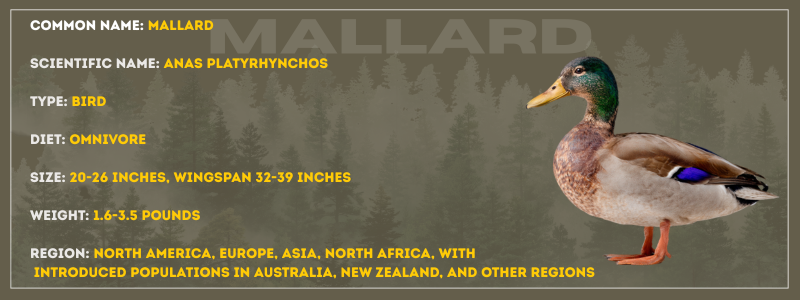
The Mallard exhibits striking sexual dimorphism, with males and females displaying dramatically different plumage. The drake (male) in breeding plumage is one of nature’s most distinctive waterfowl, sporting an iridescent green head that shimmers with blue and purple hues in sunlight. A thin white collar separates this brilliant head from a rich chestnut-brown breast. The body feathers present a delicate pattern of gray vermiculation, while the rump and undertail coverts are black. Perhaps the drake’s most distinctive feature is the set of curled central tail feathers that curl upward like a decorative flourish. The bill is a bright yellow-green color, and the legs and feet are bright orange.
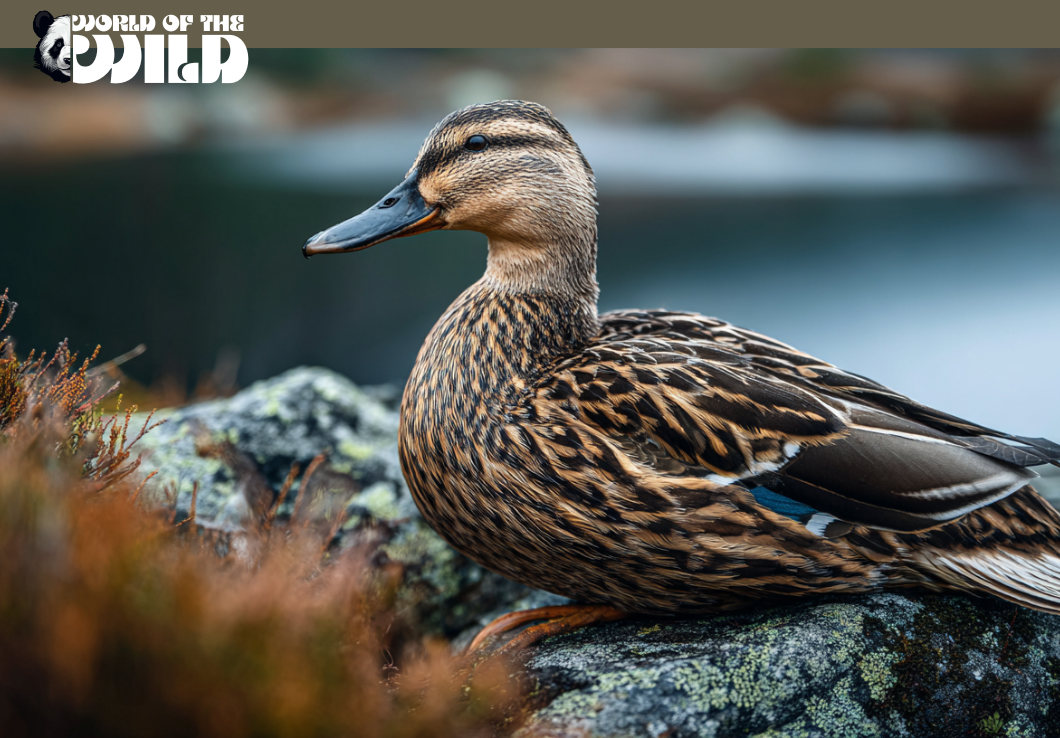
Females, by contrast, wear cryptic plumage designed for camouflage during nesting. The hen’s feathers are mottled brown and buff, creating an intricate pattern that renders her nearly invisible when sitting on a nest among reeds and grasses. Her bill is orange with dark splotching, and she shares the drake’s orange legs. Both sexes feature a distinctive blue-purple speculum (wing patch) bordered by white, which flashes brilliantly during flight.
Mallards are medium-sized ducks, measuring 20 to 26 inches in length with a wingspan of 32 to 39 inches. Drakes typically weigh between 2 and 3.5 pounds, while hens are slightly lighter at 1.6 to 3.2 pounds. Their body shape is classic dabbling duck—a relatively flat body that sits high on the water, a rounded head, and a broad, flat bill equipped with fine lamellae for filter-feeding.
Behavior
Mallards are highly social birds that exhibit complex behavioral patterns throughout their annual cycle. During the non-breeding season, they congregate in large flocks that can number in the thousands, providing safety in numbers against predators. These gatherings often occur on larger bodies of water where the ducks engage in synchronized feeding, preening, and resting behaviors.
Communication among Mallards involves a sophisticated array of vocalizations and visual displays. Females produce the iconic loud, descending series of quacks, often used to maintain contact with ducklings or signal alarm. Males employ a variety of softer calls including whistles, grunts, and raspy notes, particularly during courtship displays. These displays are elaborate performances where drakes arch their necks, bob their heads, and perform ritualized swimming patterns to attract females.
Mallards are dabbling ducks, meaning they feed primarily at the water’s surface or by tipping forward to reach submerged vegetation, rather than diving completely underwater. They often feed at dawn and dusk, spending midday hours resting and preening. Their intelligence is considerable—they can recognize individual humans, learn food availability patterns, and adapt their behavior to urban environments remarkably well.
One of the most fascinating behavioral adaptations is their migration pattern. While some Mallard populations are sedentary year-round, others undertake impressive migrations, navigating thousands of miles using a combination of magnetic field detection, celestial cues, and landmark recognition. Before migration, they undergo hyperphagia, dramatically increasing their food intake to build fat reserves for the journey.
Mallards also demonstrate remarkable adaptability to human presence. In urban environments, they’ve learned to nest in unexpected locations—from window boxes to rooftop gardens—and have adjusted their natural wariness to accept close proximity to people, especially where feeding occurs regularly.

Evolution
The evolutionary history of the Mallard traces back millions of years to the emergence of waterfowl in the early Cenozoic Era. The family Anatidae, which includes ducks, geese, and swans, diverged from other bird lineages approximately 66 million years ago, shortly after the extinction of non-avian dinosaurs. Fossil evidence suggests that duck-like birds similar to modern dabbling ducks appeared during the Oligocene Epoch, roughly 30 million years ago.
The genus Anas, to which the Mallard belongs, represents one of the most successful radiations of waterfowl, with species spreading across every continent except Antarctica. The Mallard itself evolved relatively recently in geological terms, likely originating in the Northern Hemisphere during the Pleistocene Epoch. Genetic studies suggest that the Mallard’s ancestor was a generalist species that could exploit a wide variety of wetland habitats, a trait that has been amplified in the modern Mallard.
A significant evolutionary milestone for the Mallard was the development of its exceptional adaptability and generalist lifestyle. Unlike many waterfowl species that evolved specialized feeding apparatus or habitat requirements, the Mallard maintained a flexible approach to both diet and habitat selection. This evolutionary strategy has proven extraordinarily successful, allowing the species to colonize diverse environments from Arctic tundra to subtropical wetlands.
The Mallard’s propensity for hybridization with closely related species has also played an important evolutionary role. While this trait threatens some closely related species with genetic swamping, it has also allowed Mallards to acquire genetic adaptations from local populations, potentially accelerating their ability to colonize new regions and adapt to changing environmental conditions.
Habitat
The Mallard’s geographic range is truly global, spanning North America, Europe, Asia, North Africa, and parts of the Middle East. Introduced populations have also established themselves in Australia, New Zealand, South Africa, and various oceanic islands. This makes the Mallard one of the most cosmopolitan bird species on Earth, absent only from Antarctica, much of South America, sub-Saharan Africa, and the most extreme desert regions.
Within this vast range, Mallards occupy nearly every type of freshwater wetland habitat imaginable. They thrive in shallow lakes, ponds, marshes, rivers, streams, and estuaries where water depths allow for dabbling behavior. Their ideal habitat features a combination of open water for feeding and escape from predators, emergent vegetation for nesting cover, and nearby upland areas for additional foraging opportunities.
Mallards show remarkable tolerance for human-modified landscapes. Urban and suburban parks with ponds have become important habitat, as have agricultural areas with irrigation ditches, stock ponds, and flooded fields. During winter, northern populations migrate to areas with open water, often concentrating in temperate zones where food remains accessible. Some populations have adapted to brackish coastal waters and tidal mudflats, though they generally prefer freshwater environments.
The specific features that make a habitat suitable for Mallards include shallow water (typically less than 18 inches deep) for efficient feeding, emergent vegetation such as cattails and bulrushes for nesting, and a diverse plant community that provides both food and cover. They show a preference for eutrophic (nutrient-rich) waters that support abundant invertebrate populations and aquatic plants. In urban settings, they’ve proven remarkably adaptable, nesting in planters, on building ledges, and even in abandoned vehicles near water sources.

Diet
The Mallard is an opportunistic omnivore with a diet that shifts seasonally and varies based on habitat availability. This dietary flexibility is one of the key factors in the species’ worldwide success. Approximately 90% of their diet consists of plant material, with the remaining 10% coming from animal sources, though these proportions shift during breeding season when protein demands increase.
Plant foods dominate the Mallard’s menu and include seeds of aquatic plants, grasses, sedges, and agricultural grains such as corn, wheat, and rice. Acorns and other nuts are consumed when available. Aquatic vegetation such as duckweed, pondweeds, and algae are readily consumed. In agricultural areas, Mallards have become adept at gleaning waste grain from harvested fields, a behavior that has made them increasingly common in farmland habitats.
Animal prey becomes particularly important during the breeding season and for growing ducklings, who require high protein for rapid development. Mallards consume a wide variety of aquatic invertebrates including snails, freshwater shrimp, insect larvae (especially midges and mosquitoes), beetles, and worms. They occasionally capture small fish, tadpoles, and even small frogs when the opportunity arises.
Foraging behavior involves several techniques. The characteristic dabbling behavior—tipping forward so that the tail points skyward while the head and neck submerge—allows them to reach vegetation and invertebrates in shallow water. They also feed while swimming on the surface, filtering small food particles from the water using specialized lamellae (comb-like structures) along the edges of their bills. On land, they graze on grasses and crop shoots, and probe soft soil for earthworms and other invertebrates. In urban settings, Mallards have become notorious for accepting handouts from humans, though nutritionists warn that bread and similar foods lack the nutrients these birds require and can cause health problems.
Predators and Threats
Mallards face predation pressure throughout their life cycle, though vulnerability varies by age and circumstance. Eggs and ducklings experience the highest predation rates, with nest success often below 50% in many populations. Common egg predators include raccoons, skunks, foxes, coyotes, corvids (crows and ravens), and large gulls. These opportunists actively search wetland edges for nests, and the ground-nesting habits of Mallards make them particularly vulnerable.
Ducklings face an equally daunting array of threats. In addition to the terrestrial predators that raid nests, young ducklings are vulnerable to aquatic predators including large fish such as pike and bass, snapping turtles, and bullfrogs. Aerial predators pose a constant threat—hawks, eagles, owls, and even large herons will snatch unwary ducklings. Studies suggest that duckling survival to fledging can be as low as 30-50% in some populations.
Adult Mallards are less vulnerable but still face significant predation. Raptors including red-tailed hawks, peregrine falcons, and bald eagles regularly hunt adult ducks. Mammalian predators such as foxes, coyotes, and mink capture adults, particularly during nesting when females are ground-bound. In some regions, large pike and muskellunge have been known to seize swimming adults from below.
Anthropogenic threats represent growing challenges for Mallard populations. Habitat loss through wetland drainage for agriculture and development has eliminated vast areas of prime Mallard habitat, particularly in the prairie pothole region of North America—the continent’s most productive waterfowl breeding grounds. Water pollution from agricultural runoff, particularly lead shot ingestion from spent ammunition in wetlands, causes thousands of waterfowl deaths annually, though regulations on lead shot have reduced this impact.
Climate change presents complex challenges, altering migration timing, breeding phenology, and the distribution of suitable habitat. Changes in precipitation patterns affect wetland availability in breeding areas, while warming temperatures may shift optimal habitat northward. Oil spills and other industrial contamination in aquatic environments pose localized but severe threats. Additionally, the Mallard’s success has become a threat to other species—their hybridization with rarer ducks like the American Black Duck and Hawaiian Duck threatens the genetic integrity of these species.
Disease outbreaks, particularly avian influenza and botulism, periodically cause mass mortality events. Hunting, while regulated in most countries, remains a significant source of mortality, with millions of Mallards harvested annually in North America and Europe, though sustainable harvest management prevents population-level impacts.

Reproduction and Life Cycle
The Mallard’s breeding cycle begins in late fall and winter with elaborate courtship displays. Males gather around females in competitive groups, performing synchronized head-bobbing, tail-shaking, and ritualized swimming patterns. The drake’s display includes sudden upward head-jerks followed by soft whistling calls, and aggressive chasing of rival males. Females select their mates based on these displays, typically choosing the most vigorous performers. Pair bonds form through this process, though they last only for a single breeding season.
As spring arrives, paired Mallards migrate to breeding grounds or seek out suitable nesting territories in resident populations. The female selects the nest site, typically on the ground in dense vegetation near water, though occasionally in tree cavities, abandoned nests of other birds, or even unusual urban locations. She constructs a shallow depression lined with vegetation and, as egg-laying progresses, adds down plucked from her own breast to create insulation.
The hen lays 8 to 13 eggs over a period of several days, with one egg deposited each morning. The eggs are creamy white to greenish-buff in color, and incubation begins only when the clutch is complete, ensuring synchronized hatching. The female incubates alone for 27 to 28 days, leaving the nest only briefly to feed and preen. During this vulnerable period, she relies on her cryptic plumage for camouflage. The drake abandons the female shortly after incubation begins, gathering with other males to undergo the molt into eclipse plumage.
Hatching occurs almost simultaneously across the clutch, with precocial ducklings emerging fully feathered and capable of walking, swimming, and feeding themselves within hours. Despite this independence, the ducklings remain under maternal care for 50 to 60 days until they fledge. The mother leads her brood to water within 24 hours of hatching and provides protection, brooding warmth, and guidance to food sources. Duckling mortality is extremely high during this period, with predation and harsh weather claiming many young birds.
Sexual maturity is reached at one year of age, though some females may breed in their first year if they hatched early in the season. In the wild, Mallards typically live 5 to 10 years, though many succumb to predation, disease, or hunting before reaching this age. The record for wild Mallard longevity stands at 27 years for a banded bird, while captive individuals have lived over 30 years. Annual survival rates vary by age and geography but typically range from 40-60% for adults and much lower for first-year birds.

Population
The Mallard holds the conservation status of Least Concern according to the International Union for Conservation of Nature (IUCN), reflecting its abundance and widespread distribution. Global population estimates suggest there are between 19 and 32 million Mallards worldwide, with the largest populations occurring in North America and Eurasia. The North American population alone is estimated at 11 to 12 million birds, based on annual breeding surveys conducted across the continent.
Population trends show interesting regional variation. In North America, Mallard numbers have remained relatively stable or shown modest increases over recent decades, particularly in regions where wetland conservation programs have been active. The Prairie Pothole Region, stretching across the north-central United States and south-central Canada, supports the highest breeding densities and is considered the “duck factory” of the continent. Conservation initiatives like the North American Wetlands Conservation Act and programs funded by duck stamp revenues have helped maintain and restore critical breeding habitat.
In Europe, Mallard populations have generally increased, particularly in urban and suburban areas where the birds have adapted successfully to human-modified landscapes. The European population is estimated at 3.5 to 7.5 million individuals. Some areas have seen dramatic increases as Mallards colonize city parks and adapt to year-round feeding by humans.
However, not all trends are positive. Some subspecies and isolated populations face challenges. The Mexican Duck subspecies has declined due to hybridization with introduced Mallards and habitat loss. In New Zealand, the native Grey Duck has been largely replaced through hybridization with introduced Mallards, representing a conservation concern even as Mallard numbers thrive.
The Mallard’s success has created a unique conservation paradox—while the species itself is thriving, its tendency to hybridize with rarer relatives threatens the genetic integrity of species like the American Black Duck, Mottled Duck, Hawaiian Duck, and Pacific Black Duck. Conservation geneticists consider this “genetic pollution” a serious concern for the long-term survival of these closely related species.
Climate change may alter future population dynamics by shifting the distribution of suitable breeding habitat and changing the timing of migration and breeding. Continued wetland conservation, particularly in key breeding areas, remains essential for maintaining healthy Mallard populations that support both recreational hunting and ecological functions.

Conclusion
The Mallard stands as a testament to the power of adaptability in the natural world. From pristine wilderness wetlands to urban park ponds, this remarkable duck has proven that flexibility and resilience can triumph over specialization in our rapidly changing world. Its success story offers valuable lessons about evolution, adaptation, and the complex relationships between wildlife and human-modified landscapes. Yet the Mallard also reminds us that conservation is never simple—a species’ abundance doesn’t erase our responsibility to protect the ecosystems it depends upon or the rarer relatives it threatens through its very success.
As wetlands continue to face pressure from development, agriculture, and climate change, the future of the Mallard—and the countless other species that share its habitat—depends on our commitment to conservation. Whether you encounter these ducks in a wilderness marsh or your local park, take a moment to appreciate the extraordinary biology hidden beneath that familiar appearance. Support wetland conservation efforts in your area, advocate for clean water policies, and remember that even the most common species deserves our respect and protection. The Mallard has adapted to our world; now it’s our turn to ensure that world remains worth adapting to.
Scientific Name: Anas platyrhynchos
Diet Type: Omnivore
Size: 20-26 inches (length), 32-39 inches (wingspan)
Weight: 1.6-3.5 pounds
Region Found: North America, Europe, Asia, North Africa, with introduced populations in Australia, New Zealand, and other regions