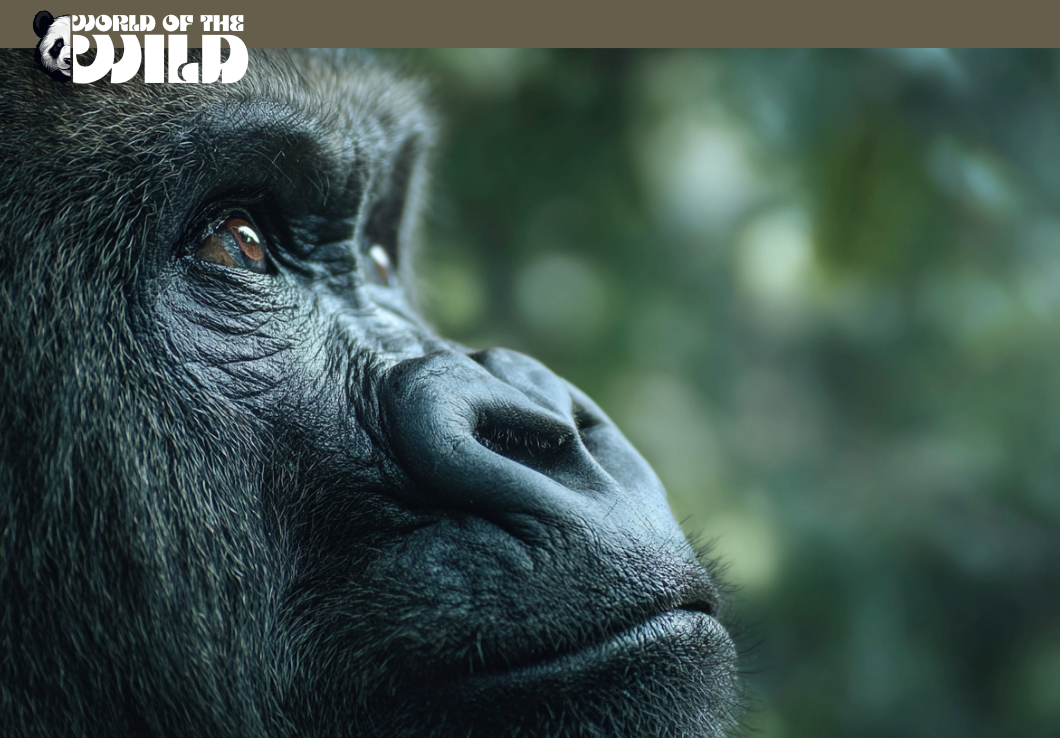

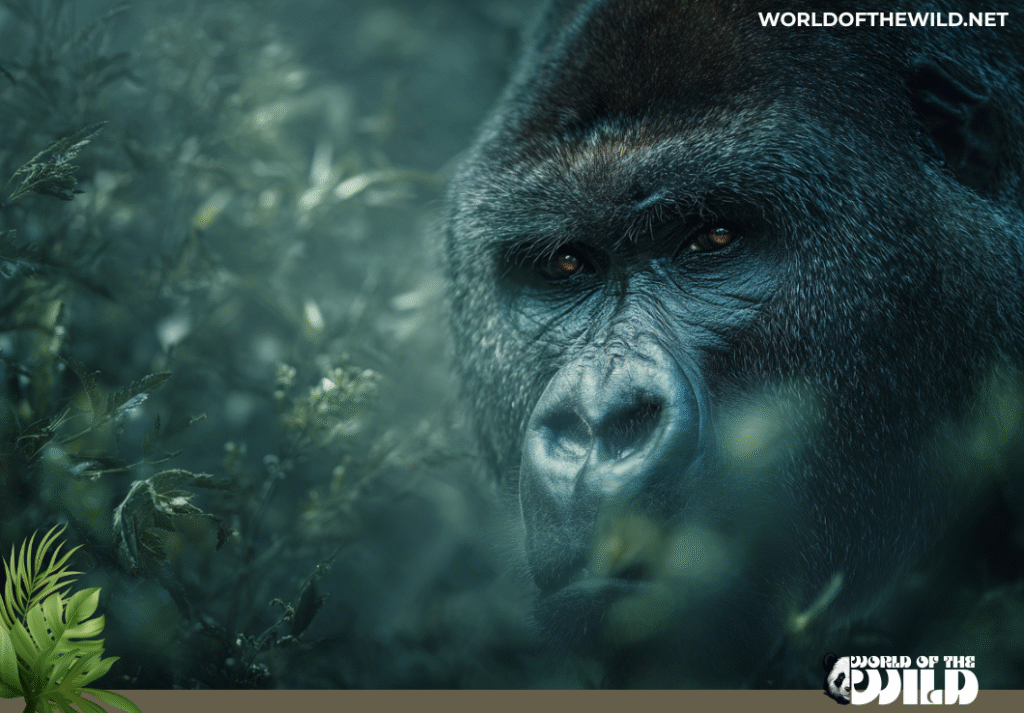
The gorilla’s eyes meet yours with an intensity that’s impossible to ignore—deep, intelligent, and unsettlingly human. In that moment, staring into the gaze of our closest living relatives after chimpanzees and bonobos, the boundary between human and animal seems to dissolve. These magnificent great apes, the largest living primates on Earth, command both our respect and our protection as they face an uncertain future in the dwindling forests of Africa.
Gorillas are fascinating not only because they share approximately 98% of their DNA with humans, but also because they demonstrate remarkable emotional complexity, family bonds, and intelligence that challenges our understanding of what separates us from other animals. Their peaceful nature, despite their imposing size and strength, reveals a gentleness that makes their critically endangered status all the more heartbreaking.
Facts
Here are some captivating insights into the world of gorillas:
- Gorillas are primarily left-handed, unlike most humans, and this handedness extends to complex tasks like grooming and tool use.
- Each gorilla has unique nose prints, similar to human fingerprints, which researchers use to identify individuals in the wild.
- Silverback males can consume up to 40 pounds of vegetation daily, requiring them to spend most of their waking hours eating to fuel their massive bodies.
- Gorillas construct new sleeping nests every night, weaving together branches and leaves to create comfortable beds both in trees and on the ground.
- They rarely drink water directly, instead obtaining most of their hydration from the succulent plants they consume, which can be up to 50% water.
- Gorillas can learn and use human sign language, with the famous Koko learning over 1,000 signs and understanding approximately 2,000 words of spoken English.
- Their arm span can reach up to 8 feet, significantly longer than their height, giving them incredible reach and climbing ability.
Species
Gorillas belong to the following taxonomic classification:
Kingdom: Animalia
Phylum: Chordata
Class: Mammalia
Order: Primates
Family: Hominidae
Genus: Gorilla
Species: Two species exist—Gorilla gorilla (western gorilla) and Gorilla beringei (eastern gorilla)
The gorilla genus is divided into two distinct species, each with two subspecies, making four recognized types of gorillas in total. The western gorilla (Gorilla gorilla) includes the western lowland gorilla (G. g. gorilla), which is the most numerous, and the critically endangered Cross River gorilla (G. g. diehli), with fewer than 300 individuals remaining. The eastern gorilla (Gorilla beringei) comprises the mountain gorilla (G. b. beringei), made famous by Dian Fossey’s research, and the eastern lowland or Grauer’s gorilla (G. b. graueri), the largest of all gorilla subspecies. These populations are geographically separated and exhibit subtle differences in appearance, behavior, and genetics.
Appearance
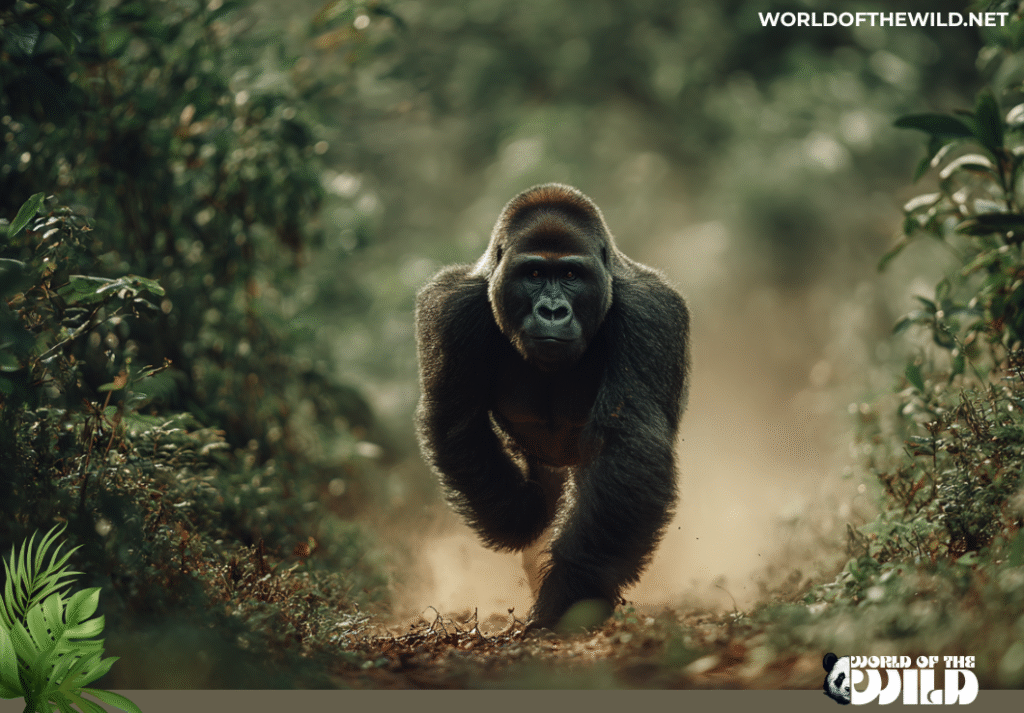
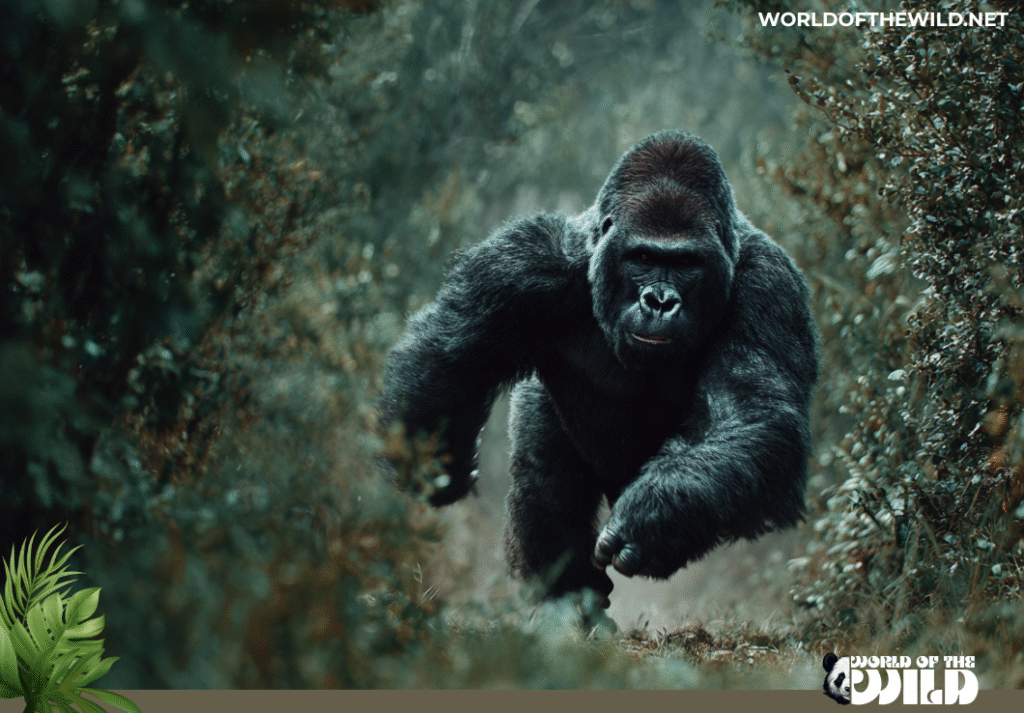
Gorillas possess a commanding physical presence that’s immediately recognizable. Adult males, called silverbacks due to the distinctive saddle of silver-gray hair that develops on their backs around age 12, can stand up to 6 feet tall when upright and weigh between 300 to 430 pounds, though some exceptional individuals have exceeded 500 pounds. Females are considerably smaller, typically weighing 150 to 250 pounds.
Their bodies are covered in coarse black or dark brown-gray hair, with the exception of their faces, hands, feet, and chests. Mountain gorillas have particularly long, thick fur that helps them survive in colder, high-altitude environments, while lowland gorillas have shorter, thinner coats suited to warmer climates. Their skulls are massive and elongated, with prominent brow ridges and a sagittal crest (a bony ridge atop the skull) in adult males that provides attachment points for powerful jaw muscles.
Gorillas have broad chests, long, powerful arms that are longer than their legs, and hand-like feet that aid in climbing. Their hands possess opposable thumbs and sensitive fingertips, enabling dexterous manipulation of objects. The face features a broad, flat nose with large nostrils, small ears, and expressive eyes that can convey a wide range of emotions. Adult males develop a pronounced sagittal crest and larger canine teeth, giving them an even more imposing appearance.
Behavior
Gorillas are highly social creatures that live in stable family groups called troops or bands, typically consisting of one dominant silverback male, several adult females, and their offspring. Group sizes usually range from 5 to 30 individuals, though the average is around 10. The silverback serves as the group’s leader, making decisions about when and where the troop travels, mediating conflicts, and protecting the group from threats.
These gentle giants are predominantly peaceful, spending their days foraging, resting, and engaging in social activities like grooming, playing, and caring for young. Despite their strength—a silverback is estimated to be 10 to 15 times stronger than an adult human—gorillas are generally non-aggressive and will only display or attack when threatened. Warning displays include standing upright, chest beating (a hollow sound produced by cupped hands striking the chest), hooting, throwing vegetation, and charging.
Communication among gorillas is sophisticated and multifaceted. They use at least 25 different vocalizations, including grunts, roars, hoots, and barks, each conveying specific meanings. Body language, facial expressions, and postures also play crucial roles in their social interactions. Gorillas demonstrate remarkable intelligence, including the ability to use tools (such as using sticks to gauge water depth), problem-solving capabilities, and the capacity for complex thought and emotion. They’ve been observed displaying empathy, grief, laughter, and even a sense of humor.
Evolution
Gorillas share a common ancestor with humans, chimpanzees, and bonobos, with the evolutionary lineage diverging approximately 8 to 9 million years ago. The fossil record for great apes is relatively sparse, but scientists believe that early hominids split from the lineage leading to gorillas during the late Miocene epoch in Africa.
The genus Gorilla itself is thought to have emerged around 7 million years ago, though definitive gorilla fossils are rare due to the acidic forest soils that prevent preservation. The eastern and western gorilla species likely diverged from each other around 1 to 2 million years ago, possibly due to geographic isolation caused by the formation of the Congo River basin and subsequent environmental changes.
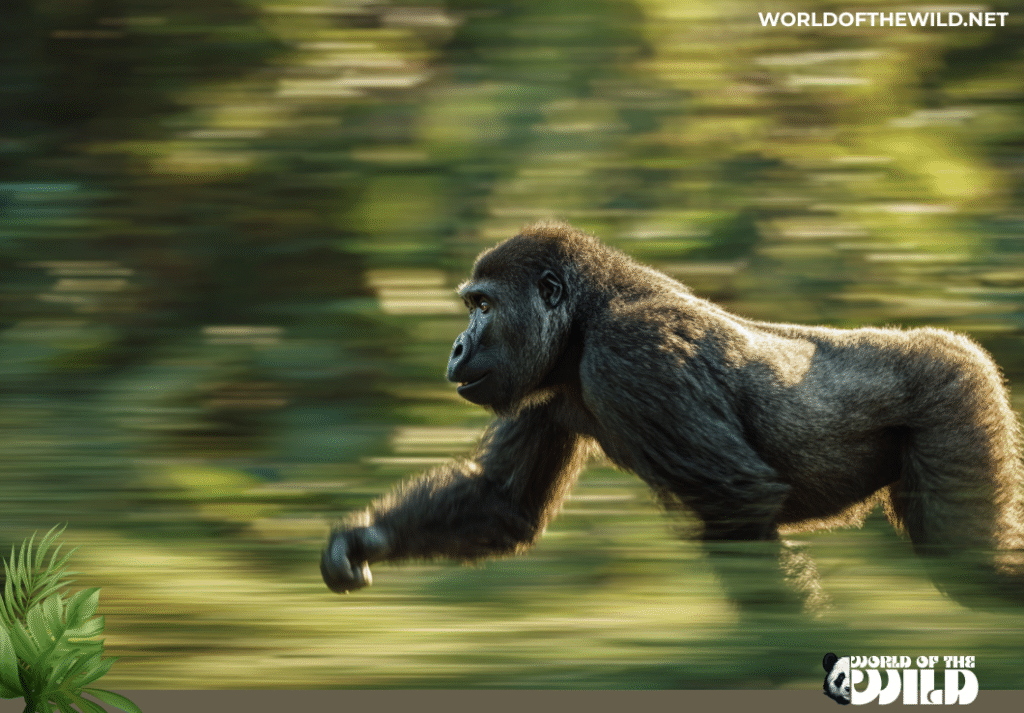
Evolutionary adaptations in gorillas include their massive size and strength, which provide protection from predators, and their specialized digestive systems capable of breaking down fibrous plant material. Their knuckle-walking locomotion—walking on the knuckles of their hands rather than palms—evolved as an efficient way to move their heavy bodies through dense forest terrain. The development of complex social structures and intelligence has been crucial to their survival, enabling cooperative care of young and efficient foraging strategies.
Habitat
Gorillas are found exclusively in equatorial Africa, with their range spanning several countries across the continent’s central region. Western lowland gorillas inhabit the lowland tropical forests of Cameroon, Central African Republic, Equatorial Guinea, Gabon, Republic of Congo, Democratic Republic of Congo, and Angola. Cross River gorillas occupy a small, fragmented area along the Nigeria-Cameroon border.
Eastern lowland gorillas live in the lowland and mountainous forests of the eastern Democratic Republic of Congo, while mountain gorillas inhabit two isolated regions: the Virunga Massif (spanning Rwanda, Uganda, and DRC) and Uganda’s Bwindi Impenetrable National Park.
Gorilla habitats are characterized by dense, tropical rainforests with abundant vegetation, though mountain gorillas also thrive in bamboo forests and mountainous terrain at elevations up to 13,000 feet. These environments provide the diverse plant foods gorillas need and offer the thick vegetation cover that’s essential for nesting and protection. The forests experience high rainfall, moderate to warm temperatures (though mountain regions are cooler), and high humidity—conditions that support the lush plant growth gorillas depend upon. They prefer areas with a mix of mature forest and secondary growth, as disturbed areas often produce the herbaceous vegetation that forms a significant part of their diet.
Diet
Gorillas are primarily herbivorous, with vegetation comprising approximately 95% or more of their diet. They’re folivorous-frugivorous, meaning they consume both leaves and fruit, though the proportion varies by species and seasonal availability. Western lowland gorillas consume more fruit when available, while mountain gorillas, living in regions with less fruit, eat more leaves, stems, and shoots.
Their menu includes leaves, stems, bamboo shoots, bark, roots, flowers, and various plant pith. They favor plants from families such as wild celery, thistles, nettles, and bedstraw. Fruit consumption includes figs, berries, and seasonal fruits when abundant. Occasionally, gorillas supplement their plant-based diet with small amounts of invertebrates like ants, termites, and grubs, providing additional protein.
Gorillas are selective feeders, often traveling significant distances to find preferred foods and using their knowledge of the forest to locate fruiting trees and seasonal vegetation. They’ll peel bark to access nutritious inner layers, strip leaves from branches efficiently, and use their powerful jaws and teeth to process tough, fibrous plant material. Their large bodies and relatively simple stomachs mean they must consume vast quantities of low-calorie vegetation, which is why feeding occupies most of their active hours.
Predators and Threats
Adult gorillas have few natural predators due to their size and the protection afforded by living in cohesive social groups led by powerful silverbacks. Leopards are the primary natural predator and will occasionally attack young, weak, or solitary gorillas, though such predation is relatively rare. In some areas, crocodiles may pose a threat near water sources.
The far greater threats to gorillas come from human activities. Habitat loss due to agricultural expansion, logging, and human settlement has dramatically reduced and fragmented gorilla populations, isolating groups and limiting genetic diversity. Poaching remains a significant problem—gorillas are hunted for bushmeat, and infants are captured for illegal wildlife trade after their families are killed. Even when not directly targeted, gorillas die in snares set for other animals.
Disease poses an increasingly serious threat, as gorillas are susceptible to human illnesses including respiratory diseases, Ebola, and other infections. Close genetic similarity means human diseases can devastate gorilla populations, and tourism, while important for conservation funding, must be carefully managed to prevent disease transmission. Political instability and armed conflict in gorilla range countries have also disrupted conservation efforts and led to increased poaching.
Climate change threatens to alter gorilla habitats by affecting forest composition, reducing food availability, and potentially forcing gorillas into smaller, less suitable areas. Mining operations for minerals like coltan have destroyed habitat and brought increased human presence into formerly remote gorilla territories.
Reproduction and Life Cycle
Gorillas have a slow reproductive rate, which makes population recovery challenging. Females reach sexual maturity around 7 to 8 years of age, though they typically don’t give birth until they’re 10 years old. Males mature sexually around the same age but usually don’t breed until they’ve established dominance, often in their teens or early twenties.
Mating can occur year-round, though there may be seasonal peaks in some populations. The dominant silverback mates with the receptive females in his group, and females initiate courtship through specific behaviors and vocalizations. The gestation period lasts approximately 8.5 months, remarkably similar to humans.
Mothers typically give birth to a single infant, though twins occur rarely. Newborns weigh about 4 pounds and are entirely dependent on their mothers. For the first few months, infants cling to their mother’s chest, later riding on her back. They begin eating solid food around 6 months but continue nursing for 3 to 4 years. The extended nursing period and intense maternal care mean females usually give birth only once every 4 to 6 years, resulting in only 2 to 6 offspring over a female’s lifetime.
Young gorillas are playful and curious, learning essential skills through observation and play. Juveniles and young adults often remain with their natal group until maturity, at which point females typically transfer to another group, while males may leave to form their own groups or live as solitary silverbacks until they can attract females.
The average lifespan of gorillas in the wild is 35 to 40 years, though individuals can live into their 50s. In captivity, with regular veterinary care and consistent nutrition, gorillas have lived into their 60s.
Population
All gorilla species and subspecies face serious conservation challenges. The International Union for Conservation of Nature (IUCN) classifies both the eastern gorilla and western gorilla as Critically Endangered, meaning they face an extremely high risk of extinction in the wild.
Population estimates vary by subspecies. Western lowland gorillas are the most numerous, with an estimated 100,000 to 200,000 individuals remaining, though numbers are uncertain and likely declining. Cross River gorillas number fewer than 300 individuals, making them one of the world’s most endangered primates. Eastern lowland gorillas have experienced catastrophic declines, from an estimated 17,000 in the 1990s to potentially fewer than 5,000 today. Mountain gorillas represent a rare conservation success story—their population has grown from approximately 620 individuals in 1989 to over 1,000 today, thanks to intensive conservation efforts.
Overall population trends are concerning, with most gorilla populations declining due to the threats outlined earlier. The rate of decline has been estimated at 2-5% annually for some populations, which, if continued, could lead to extinction within decades. However, targeted conservation programs including anti-poaching patrols, habitat protection, community engagement, veterinary interventions, and ecotourism have shown that gorilla populations can stabilize and even recover with sufficient support and resources.
Conclusion
Gorillas stand as magnificent testaments to the diversity and wonder of life on Earth, embodying strength, intelligence, and a complex social nature that mirrors our own humanity in humbling ways. These gentle giants face unprecedented threats in the modern world, their survival dependent on our willingness to protect the forests they call home and address the human activities driving them toward extinction.
The story of the gorilla is not yet finished. While the challenges are immense, conservation successes with mountain gorillas prove that dedicated efforts can turn the tide. Every individual who learns about gorillas, supports conservation organizations, or makes choices that reduce environmental impact becomes part of the solution. The question is not whether we can save gorillas, but whether we will choose to do so—and in protecting them, we protect the rich biodiversity of African forests and honor our responsibility as the only species capable of both causing and preventing their extinction. The future of gorillas rests in human hands, and their continued existence will reflect the kind of world we choose to create.
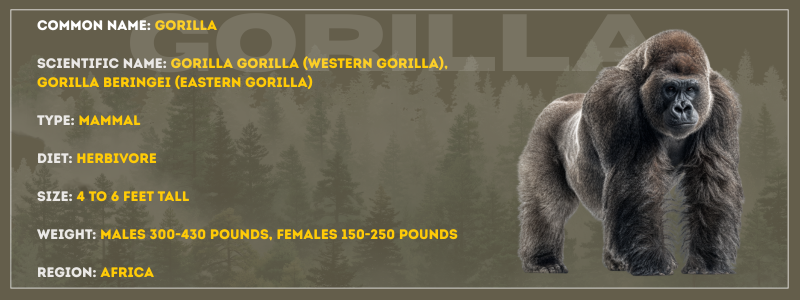
Scientific name: Gorilla gorilla (western gorilla), Gorilla beringei (eastern gorilla)
Diet type: Herbivorous (primarily folivorous-frugivorous)
Size: 4 to 6 feet tall (standing upright)
Weight: Males: 300-430 pounds; Females: 150-250 pounds
Region found: Equatorial Africa (Central and East Africa, including Cameroon, Central African Republic, Equatorial Guinea, Gabon, Republic of Congo, Democratic Republic of Congo, Angola, Rwanda, Uganda)