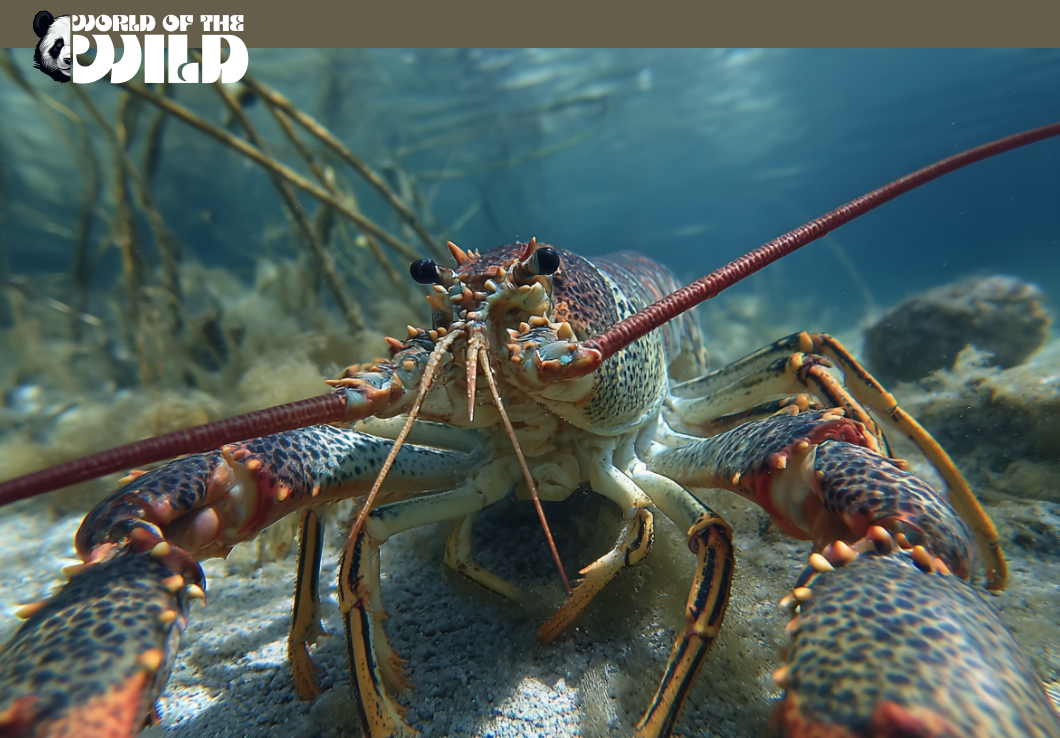

The deep blue waters surrounding Florida are home to some of the world’s most charismatic marine life. While the Northern Atlantic is famous for its massive, clawed cousins, the sunny, coral-dotted reefs of the Sunshine State harbor a different kind of crustacean royalty: the Florida Spiny Lobster, also known as the Caribbean Spiny Lobster (Panulirus argus). Forget the giant crusher claws—this lobster uses its impressive antennae and spiky shell to reign supreme. It’s a creature of nocturnal habits and intricate social behavior, and a vital link in the delicate marine ecosystem. This fascinating animal isn’t just a delicacy; it’s a charismatic indicator of reef health and a testament to the diverse life thriving just offshore.
💡 Facts
Here are a few quick, compelling, and less commonly known facts about this reef-dwelling arthropod:
- The Squeaky Sound: Florida Spiny Lobsters can produce a startling, rasping sound by rubbing the base of their antennae against a specialized structure near their eyes. This noise, described as a “stridulatory sound,” is used to warn off predators.
- Mass Migrations: Every autumn, often triggered by cooling water temperatures, large groups of spiny lobsters in the Bahamas perform “queuing” behavior, lining up in single file—sometimes dozens deep—to march across the seafloor.
- Anti-Claw Defense: Unlike the Maine or American lobster, the spiny lobster possesses no large, crushing claws. Its defense strategy relies entirely on its formidable, forward-pointing spines that cover its entire body.
- Clear Blood: The blood of the spiny lobster is not red like human blood. Instead, it is clear or pale blue due to the presence of hemocyanin, a copper-based protein used for oxygen transport, rather than the iron-based hemoglobin.
- The “Puerulus” Stage: The larval stage of the spiny lobster, called the puerulus, is a transparent, flat, and leaf-like creature that drifts in ocean currents for up to a year before settling on the seafloor.
🔬 Species
The Florida Spiny Lobster’s classification is a journey through the grand scheme of life:
| Category | Classification |
| Kingdom | Animalia (Animals) |
| Phylum | Arthropoda (Segmented body, jointed legs, exoskeleton) |
| Class | Malacostraca (Crabs, shrimp, lobsters) |
| Order | Decapoda (Ten-footed crustaceans) |
| Family | Palinuridae (Spiny Lobsters) |
| Genus | Panulirus |
| Species | Panulirus argus (Caribbean/Florida Spiny Lobster) |
The family Palinuridae contains dozens of species known as spiny lobsters or rock lobsters, all lacking the large claws of their distant cousins. The genus Panulirus itself contains about 20 species. The Caribbean Spiny Lobster (P. argus) is the most commercially important in the Western Atlantic, but its relatives include the California Spiny Lobster (P. interruptus) and the Ornate Spiny Lobster (P. ornatus) found in the Indo-Pacific.
🎨 Appearance
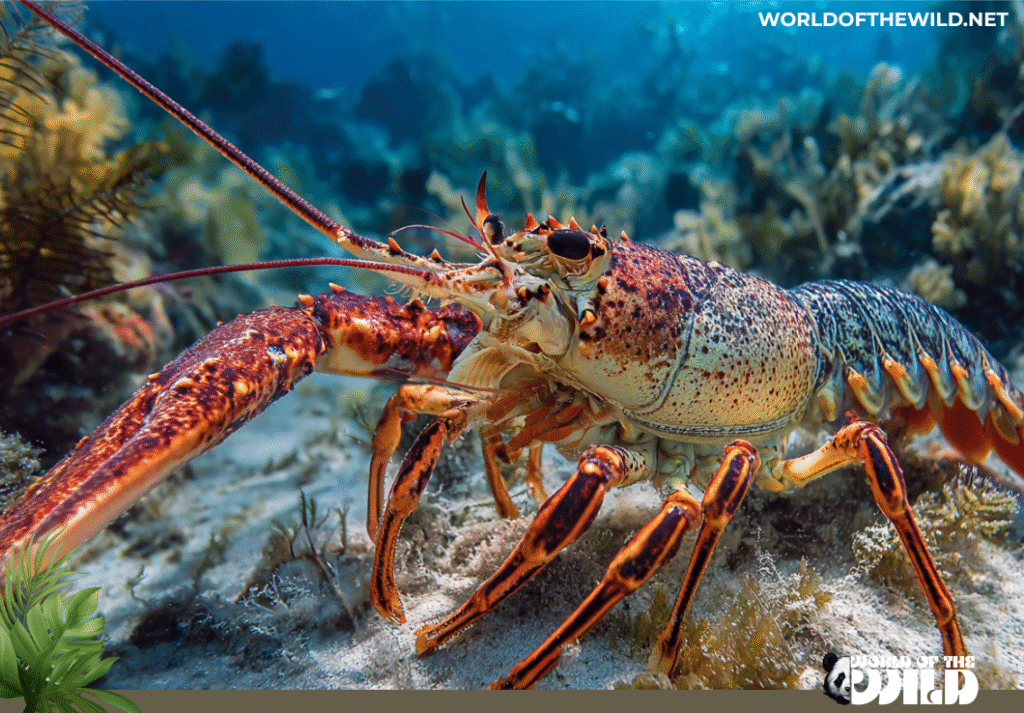
The Florida Spiny Lobster is instantly recognizable for its lack of claws and its heavily armored, spiky carapace.
- Size and Weight: Adults commonly reach body lengths (carapace plus tail) of 6 to 8 inches, though they can grow up to 2 feet in total length. They rarely exceed 5 pounds.
- Color: Their coloration is a beautiful, mottled pattern of olive green, brown, and tan, often marked with striking yellow or orange spots that cover the tail (abdomen) and walking legs. This pattern provides excellent camouflage against the complex backdrop of coral and rock.
- Distinctive Features: The most notable features are the two large, thickened antennae which are usually longer than the lobster’s body. They use these like whips for defense and sensory exploration. Behind these are two smaller, antennules that detect chemicals in the water. Their eyes are prominent and sit on stalks. The body is covered in a dense layer of sharp, forward-pointing spines, designed to deter any fish trying to swallow them.
🔄 Behavior
Spiny lobsters are primarily nocturnal creatures. They spend the daylight hours hiding in crevices, under ledges, or within the protective branches of coral.
- Social Behavior: They are generally social and are often found huddled together in dens, a behavior that provides collective defense against predators. They have a complex social structure and use their unique stridulation sound for communication, particularly for warning and aggregating.
- Moulting: Like all arthropods, they must shed their rigid exoskeleton to grow, a process called molting or ecdysis. During this vulnerable time, they hide intensely until their new shell hardens.
- Adaptations: Their long, whip-like antennae are their primary sensory organs, allowing them to detect movement, taste, and odor in the water. Their powerful tails are used for rapid escape; when threatened, they quickly contract their abdominal muscles to propel themselves backward through the water, a maneuver known as the “lobstering kick.”
🕰️ Evolution
The lineage of the spiny lobster is an ancient one, rooted deep in the history of arthropods.
- Early Ancestry: Decapods (the order that includes lobsters and crabs) first appeared in the fossil record around 450 million years ago. The family Palinuridae (spiny lobsters) is considered to be one of the more primitive groups within the Decapoda, diverging from the clawed lobsters (Homaridae) early on.
- Significant Milestones: Fossil evidence suggests that the main characteristics of spiny lobsters, including the lack of massive claws and the heavily spined carapace, were established early in their evolution. They have successfully adapted to a variety of warm, shallow marine environments over millions of years. Their unique, long-lasting planktonic larval stage is an evolutionary strategy that allows for wide dispersal across ocean basins.
🗺️ Habitat
The Florida Spiny Lobster is found across a wide geographic and environmental range.
- Geographic Range: Its domain is the tropical and subtropical waters of the Western Atlantic Ocean, stretching from Bermuda and the coast of North Carolina down through the Gulf of Mexico, the Caribbean Sea, and extending south to Brazil.
- Specific Environment: They are intrinsically linked to shallow, coastal reef and hard-bottom environments. During their adult phase, they prefer areas with plenty of shelter, such as coral reefs, rocky outcrops, seagrass beds, and sponge flats, typically at depths less than 300 feet. Juveniles are often found in very shallow, protective nursery habitats like mangroves and seagrasses, which provide shelter from predators.
🍽️ Diet
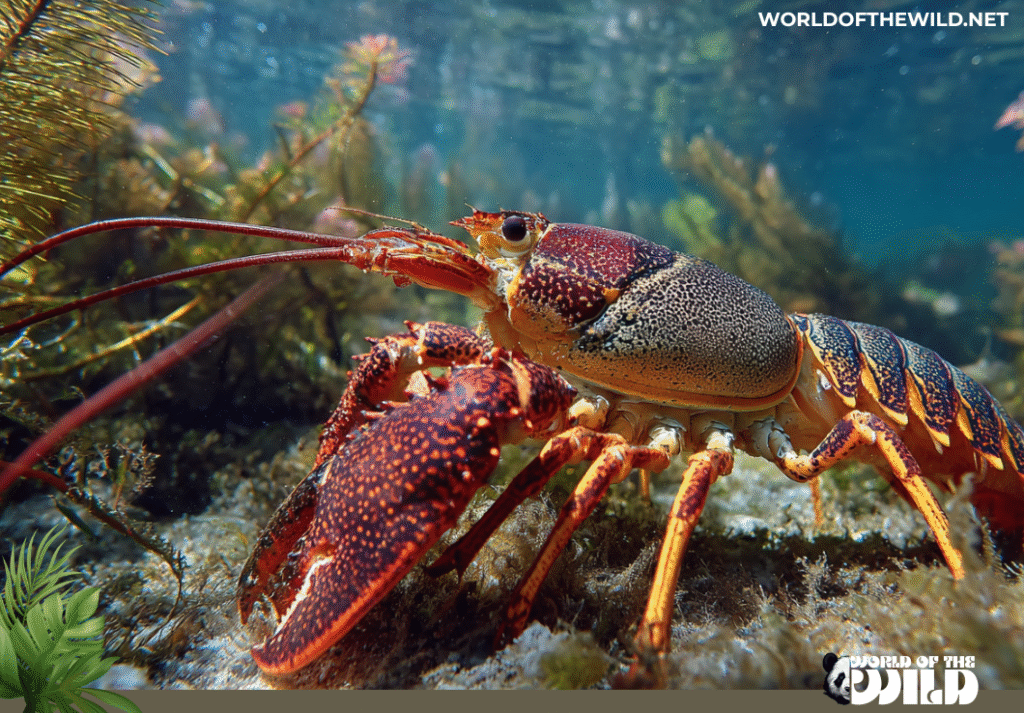
The Florida Spiny Lobster is an opportunistic omnivore and a tireless scavenger.
- Primary Food Sources: Since they are active at night, their diet consists primarily of organisms they can root out from the substrate or catch while they are dormant. This includes:
- Mollusks: Snails and small clams.
- Crustaceans: Smaller crabs and shrimp.
- Worms and Sea Urchins.
- Detritus: Decomposing organic matter.
- Foraging: They use their sensitive antennules to sniff out food hidden in the sand or under rocks. Once a food source is located, they use their strong, spiny legs to tear apart their prey. Their foraging activity makes them important contributors to the health of the reef by helping to control populations of sea urchins and keeping the bottom clean.
🚨 Predators and Threats
Despite their spiky armor, the Florida Spiny Lobster faces a variety of natural and human-caused dangers.
- Natural Predators:
- Triggerfish and Grunts: These bony fish prey on juveniles.
- Nurse Sharks and other Reef Sharks: They are capable of overpowering and consuming adult lobsters.
- Large Groupers and Octopuses: Octopuses are particularly skilled at extracting lobsters from their dens.
- Anthropogenic Threats:
- Overfishing: This is the most significant threat, as the spiny lobster is highly prized for commercial and recreational fishing throughout its range, leading to intense fishing pressure.
- Habitat Degradation: Coastal development, pollution, and dredging destroy vital nursery habitats like mangroves and seagrass beds, impacting juvenile survival.
- Climate Change: Ocean warming and acidification threaten the health of coral reefs, which are critical adult habitats. Changes in current patterns can also disrupt the long planktonic journey of their larvae.
🧬 Reproduction and Life Cycle
The life cycle of the spiny lobster is one of the most complex in the marine world.
- Mating Rituals: Mating typically occurs between March and October. The male deposits a dark, tar-like packet of sperm called a spermatophore on the underside of the female’s thorax.
- Gestation and Eggs: The female scratches the spermatophore to release the sperm and fertilize the eggs, which are carried externally on her pleopods (swimmerets) under her tail. She can carry up to half a million tiny, dark eggs, which she “saturates” with seawater. They take several weeks to hatch.
- Offspring and Life Cycle:
- Naupliosoma/Phyllosoma Larva: The eggs hatch into a microscopic larva that quickly develops into the phyllosoma, a transparent, flat, leaf-like stage that drifts in the plankton for an incredibly long period, sometimes up to 12 months.
- Puerulus: The phyllosoma then transforms into the non-feeding puerulus, which is a transparent, miniature lobster that actively seeks out coastal habitat to settle.
- Juvenile/Adult: Once settled, it molts into the familiar, bottom-dwelling juvenile form and continues to grow into an adult, reaching reproductive maturity after about 2-3 years.
- Lifespan: The average lifespan in the wild is estimated to be around 5 to 15 years, though some individuals may live longer.
📈 Population
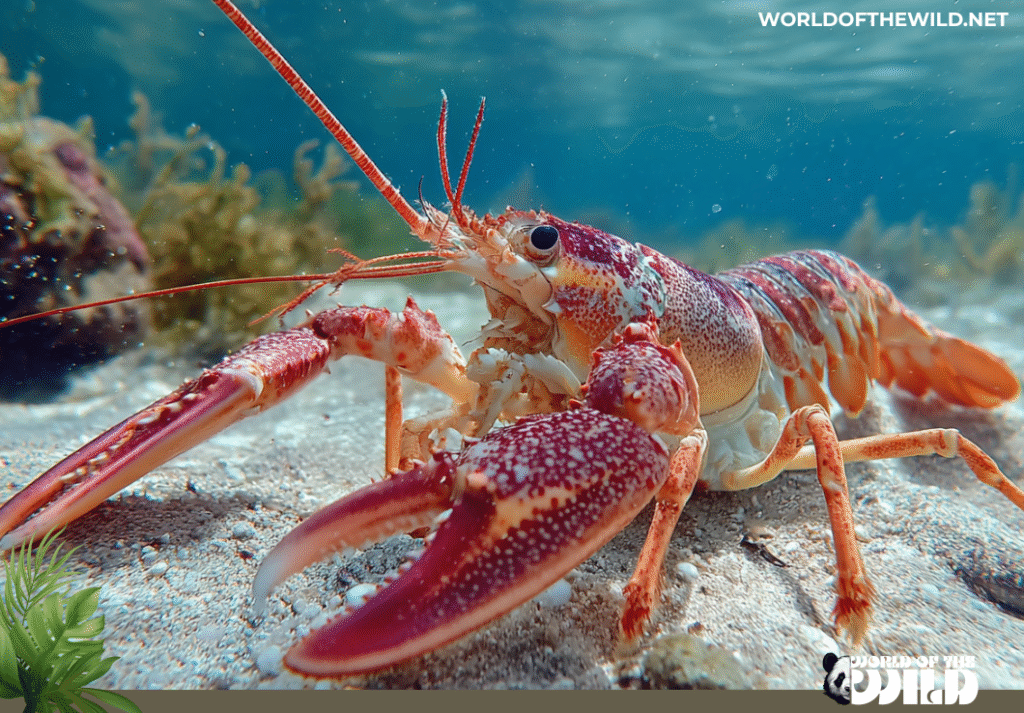
The conservation status of the Florida Spiny Lobster reflects its high commercial value and widespread distribution.
- Conservation Status: The species is currently classified as Least Concern (LC) by the International Union for Conservation of Nature (IUCN).
- Global Population: Due to its vast range and complex larval dispersal, a precise global population estimate is not available. However, regional populations, particularly those subject to intense fishing like the Florida Keys, have experienced significant declines in localized abundance.
- Population Trends: While the overall species is not globally threatened, local populations show declining trends, necessitating strict fishing regulations (size limits, closed seasons, and gear restrictions) to maintain sustainable harvests and prevent regional collapse. Management efforts often focus on protecting the juveniles in their coastal nursery habitats.
🌊 Conclusion: A Call to Protect the Spiny King
The Florida Spiny Lobster, with its formidable spines, mysterious nighttime wanderings, and incredible year-long larval journey, is a marvel of marine evolution. It is a creature inextricably linked to the health of the coral reefs—a spiky ambassador of the Caribbean’s biodiversity. While the species is not currently classified as endangered, the pressures of habitat destruction, a changing climate, and relentless fishing threaten the stability of regional populations.
Our final thought must be a call for vigilance: Protecting the spiny lobster means protecting the entire reef system—from the seagrass beds where its young hide to the deep corals where the adults roam. When you choose to consume this delicacy, remember the complex life that went into it, and support sustainable fishing practices that ensure the Spiny King continues to grace our ocean waters for generations to come.