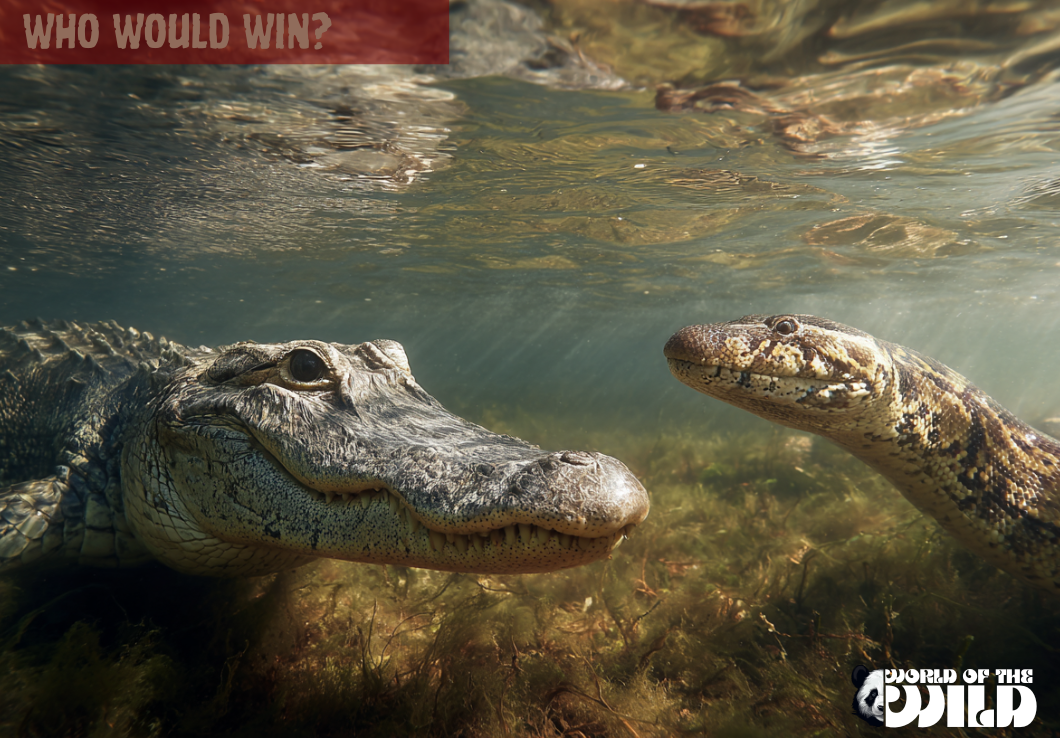

The Contenders
In the steamy swamps of the Florida Everglades, an ancient battle is raging between two cold-blooded titans. In one corner, we have the American Alligator (Alligator mississippiensis) – the armored apex predator that’s ruled North American waterways for millions of years, armed with the most powerful bite force in the reptile kingdom. In the opposite corner, slithering in as the invasive challenger, the Burmese Python (Python bivittatus) – a muscular constrictor from Southeast Asia that can squeeze with over 400 pounds of pressure and has proven it can take down gators in their own backyard!
This isn’t just hypothetical—these two prehistoric powerhouses are actually clashing in the wild right now, and scientists have documented jaw-dropping encounters where each has emerged victorious. So who REALLY has the edge when teeth meet coils? Let’s break it down!
Tale of the Tape
| Category | American Alligator 🐊 | Burmese Python 🐍 |
|---|---|---|
| Size/Weight | 10-15 feet / 400-800 lbs | 12-19 feet / 90-200 lbs |
| Speed | 11 mph on land / 20 mph in water bursts | 1 mph crawl / 5 mph strike |
| Bite Force/Weaponry | 2,125 PSI crushing bite / 80 teeth | No venom / Constriction force of 400+ lbs per coil |
| Special Abilities | Armored osteoderms, death roll, ambush tactics | Heat-sensing pits, elastic jaw, oxygen efficiency during constriction |
Physical Advantages
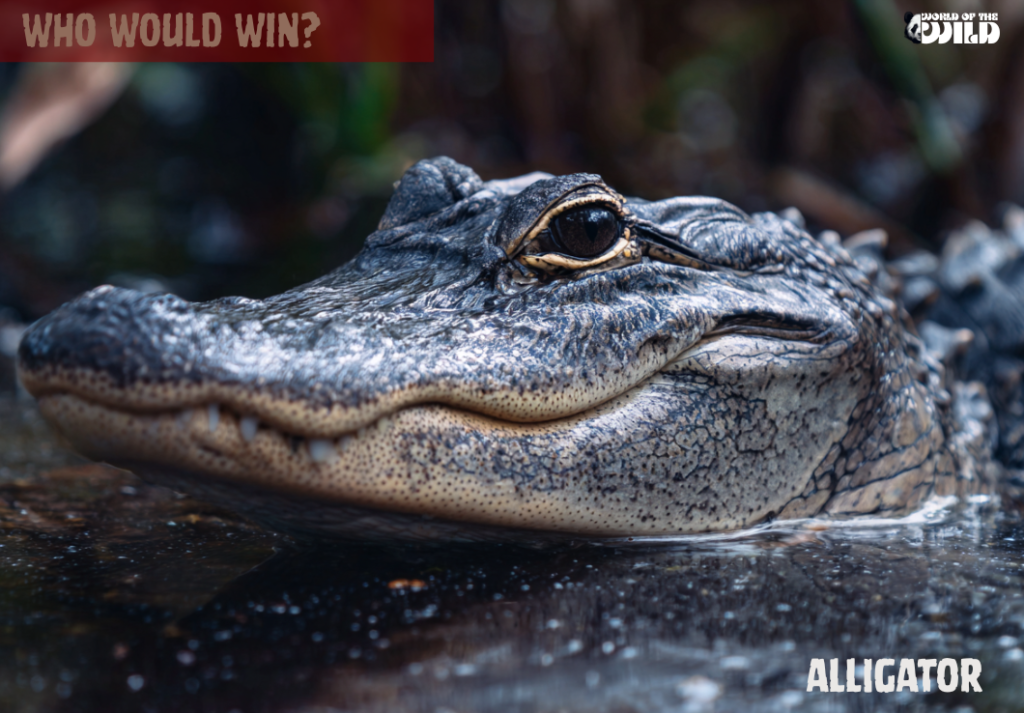
The Alligator’s Arsenal: The gator brings devastating weaponry to this fight. That 2,125 PSI bite force isn’t just impressive—it’s apocalyptic, capable of crushing turtle shells, snapping femur bones, and turning prey into pulp. Those 80 cone-shaped teeth aren’t for chewing; they’re designed to grip and never let go. The alligator’s thick, bony osteoderms (armor plates embedded in its skin) create a near-impenetrable fortress along its back and tail, making it extremely difficult for a python to get a proper grip. And let’s not forget the infamous death roll—a 360-degree barrel roll that can rip limbs from bodies and disorient any predator foolish enough to engage.
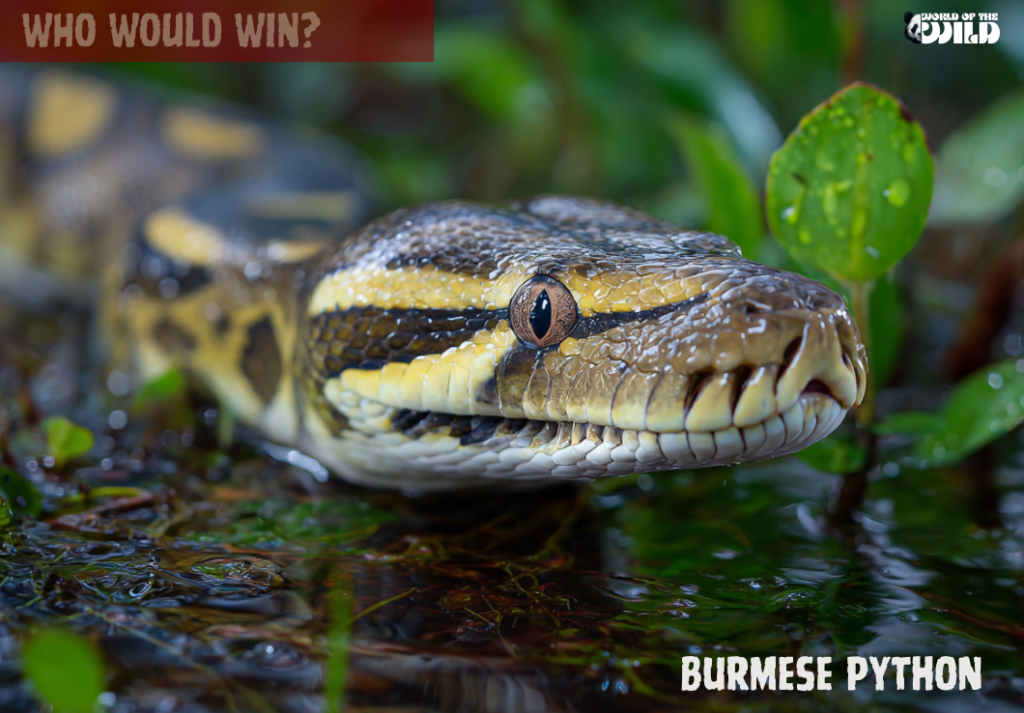
The Python’s Power: Don’t underestimate the squeeze! The Burmese python’s muscular body is essentially one massive constricting weapon, with over 300 vertebrae providing incredible flexibility. Those heat-sensing labial pits along its jaw can detect temperature changes as small as 0.003°C, meaning it can hunt in total darkness and target vital organs. The python’s elastic ligaments allow its jaw to unhinge and stretch around prey much larger than its head—including young alligators. Most impressively, pythons can maintain constriction pressure while barely breathing, monitoring their victim’s heartbeat through vibration sensors and adjusting their grip with each exhale until cardiac arrest occurs.
The Battle Scenario
The confrontation begins at twilight along a cypress-lined bank. A 14-foot female Burmese python, hungry after weeks without food, detects the heat signature of a 10-foot alligator resting partially submerged. The python makes its move, lunging from the shadows and attempting to wrap around the gator’s midsection. But the alligator’s reflexes are lightning-quick—it whips around with explosive force, jaws agape, and CRUNCH! Those massive teeth sink into the python’s body about three feet from its head.
The python, now in survival mode, does what evolution designed it to do: it coils. Thick muscular loops begin wrapping around the alligator’s torso, squeezing with tremendous pressure. The gator thrashes violently, executing a partial death roll that slams both animals against the muddy bottom. Water erupts in a boiling chaos of scales and fury. The python tightens its grip further, cutting off the alligator’s ability to fully inflate its lungs. But there’s a critical problem—the alligator’s armored back prevents the python from achieving full compression, and those osteoderms are doing their job, distributing pressure across the gator’s body rather than concentrating it on vital organs.
With its jaws still clamped on the python’s body, the alligator executes another savage death roll. The rotational forces are tremendous, and the python’s vertebrae—though numerous—begin to suffer. The gator’s teeth have already pierced vital organs, and each roll compounds the internal damage. After nearly five minutes of struggle, the python’s coils begin to slacken. The alligator maintains its grip, pulling its mortally wounded opponent underwater. In this domain, the gator is unmatched—it can hold its breath for over an hour. The python, designed for the land and trees of Southeast Asia, drowns within minutes.
The Verdict: ALLIGATOR WINS (70% of encounters)
While documented cases exist of large Burmese pythons successfully killing and consuming alligators—particularly juveniles and smaller adults—the science clearly favors the gator in most matchups.
Here’s why: Bite force superiority is the deciding factor. The alligator can deliver catastrophic damage in a single strike, puncturing organs and causing massive trauma instantly. Pythons, by contrast, need time to properly position their coils and gradually suffocate their prey. That time is a luxury the python often won’t have. The alligator’s armored defenses severely limit the python’s ability to effectively constrict vital areas, while the gator has no such impediments when attacking.
Aquatic advantage also plays a crucial role. If the battle reaches the water—and it almost always does—the alligator can simply drown the python while maintaining its bite. Gators evolved as ambush predators in exactly this environment. Field studies from the Everglades show that when pythons DO successfully kill alligators, it’s typically specimens under 6 feet, or ambush situations where the python achieves a perfect coil before the gator can retaliate.
In a straight-up encounter between adult specimens? That prehistoric bite force, armor plating, and home-field advantage make the American alligator the king of the swamp. The python is an incredible predator—just not incredible enough to dethrone a perfectly evolved aquatic assassin that’s been perfecting its craft for 37 million years.
Winner: American Alligator 🐊👑
What do you think? Have you seen any incredible wildlife showdowns? Drop your thoughts in the comments below, and don’t forget to subscribe for more wild battle breakdowns!