
Somewhere in the warm, blue expanse of a tropical sea, a massive shape rises slowly from the depths — a sleek, dark body longer than a school bus breaks the surface with a low, rolling breath, then vanishes again into the shimmering water. No dramatic leap, no splashing fin wave. Just a quiet, ghost-like presence and then nothing. This is Bryde’s whale (pronounced “Broo-dess”), one of the most enigmatic and least understood of all the great whales.
Named after Norwegian consul Johan Bryde, who helped establish the first whale processing factories in South Africa in the early 20th century, this species has spent decades slipping beneath the radar of scientists and whale-watchers alike. Unlike the iconic humpback with its acrobatic breaches or the blue whale with its record-breaking size, Bryde’s whale plays things close to the chest — inhabiting warm, productive waters year-round, rarely venturing far from home, and living a life that remains frustratingly mysterious to researchers.
Yet the more science learns about Bryde’s whale, the more remarkable it becomes. It is one of the few baleen whales that stays in tropical and subtropical waters all year long. It is a dynamic, fast-moving predator that has been filmed performing daring lunges through bait balls of fish. And it may not be a single species at all — taxonomists are still working out just how many distinct forms this whale actually encompasses. For anyone who loves the ocean’s deep mysteries, Bryde’s whale is impossible to ignore.
Facts
- A name with pronunciation baggage. Bryde’s whale is routinely mispronounced. The correct pronunciation honors Johan Bryde with a two-syllable “Broo-dess” — not “Bryde’s” as it looks in English.
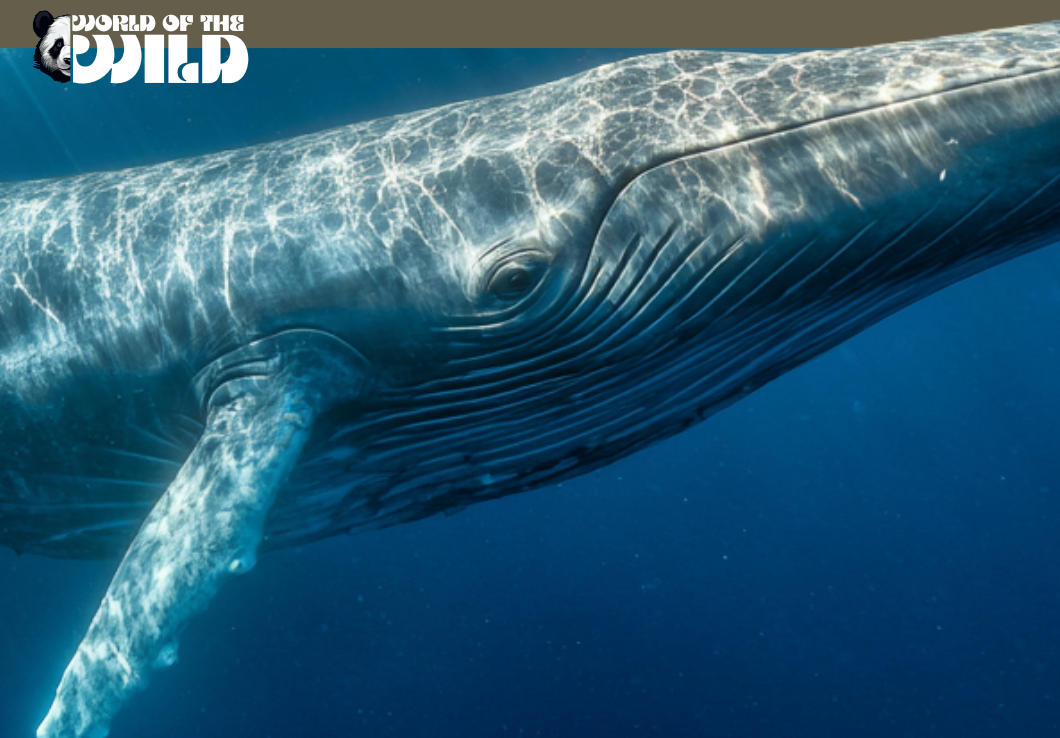
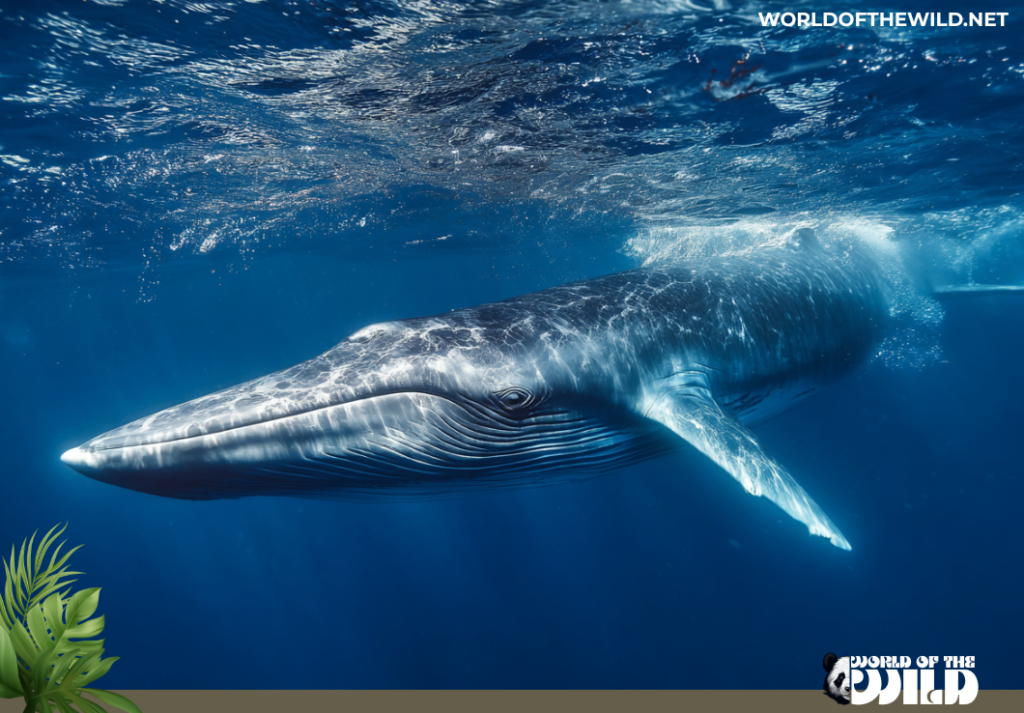
- Three ridges tell the story. Unlike almost every other baleen whale, Bryde’s whale has three prominent ridges running along the top of its rostrum (upper jaw). All other rorqual whales have just one. This triple-ridge feature is one of the most reliable ways to identify the species at sea.
- No migration necessary. Most baleen whales undertake epic seasonal migrations between polar feeding grounds and tropical breeding grounds. Bryde’s whale largely skips this routine, living year-round in warm tropical and subtropical waters where food is available throughout the year.
- It may be multiple species in disguise. For much of history, Bryde’s whale was treated as a single species. Scientists now recognize at least two — and possibly more — distinct species within what was once considered one group. In 2021, the Rice’s whale (Balaenoptera ricei) was formally described as a new species, split from Bryde’s whale, and it is critically endangered with fewer than 100 individuals.
- Lightning-fast lunge feeders. Footage from the Gulf of Thailand and elsewhere has captured Bryde’s whales executing dramatic, high-speed lunges directly through tightly packed schools of fish, sometimes launching partially out of the water in pursuit of a meal.
- The deep-water cousin. The Omura’s whale, long confused with a pygmy form of Bryde’s whale, was only confirmed as a separate species in 2003 and wasn’t photographed alive in the wild until 2015 — making it one of the most recently documented large whale species on Earth.
- Vocal but mysterious. Bryde’s whales produce a variety of low-frequency sounds, including downsweep calls and moans, but their communication system remains poorly understood compared to well-studied species like humpbacks and blue whales.
Species
Full Taxonomic Classification:
| Rank | Classification |
|---|---|
| Kingdom | Animalia |
| Phylum | Chordata |
| Class | Mammalia |
| Order | Artiodactyla (formerly Cetacea) |
| Family | Balaenopteridae |
| Genus | Balaenoptera |
| Species | Balaenoptera brydei |
Bryde’s whale belongs to the family Balaenopteridae — the rorqual whales — a group that includes some of the largest animals ever to have lived, including the blue whale, fin whale, humpback whale, and sei whale. The rorquals are defined by the ventral pleats (expandable throat grooves) they use to engulf enormous quantities of water and prey during lunge feeding.
The taxonomy of Bryde’s whale has long been contentious. For decades, scientists recognized a single species (Balaenoptera brydei) along with a possible smaller, inshore form. Today, the picture is more complex:
Bryde’s whale (Balaenoptera brydei) — The “true” Bryde’s whale, occurring across tropical and warm temperate oceans globally. Some researchers distinguish between coastal and offshore populations that differ in size and feeding ecology.
Eden’s whale (Balaenoptera edeni) — A smaller, inshore form found mainly in the Indo-Pacific, sometimes called the “pygmy Bryde’s whale.” It was originally described as a separate species in the 19th century before being lumped with Bryde’s whale, and there is ongoing debate about whether it deserves full species status again.
Rice’s whale (Balaenoptera ricei) — Formally described as a new species in 2021, this whale inhabits the Gulf of Mexico and is critically endangered. Genetic and morphological evidence clearly separates it from the broader Bryde’s whale complex.
Omura’s whale (Balaenoptera omurai) — Once thought to be a dwarf form of Bryde’s whale, Omura’s whale was formally described as a distinct species in 2003 based on specimens collected by Japanese research vessels. It is now considered a separate lineage within the rorqual family.
This taxonomic complexity means that conservation assessments for “Bryde’s whale” are not straightforward — different populations may face very different threats and require tailored protection strategies.
Appearance
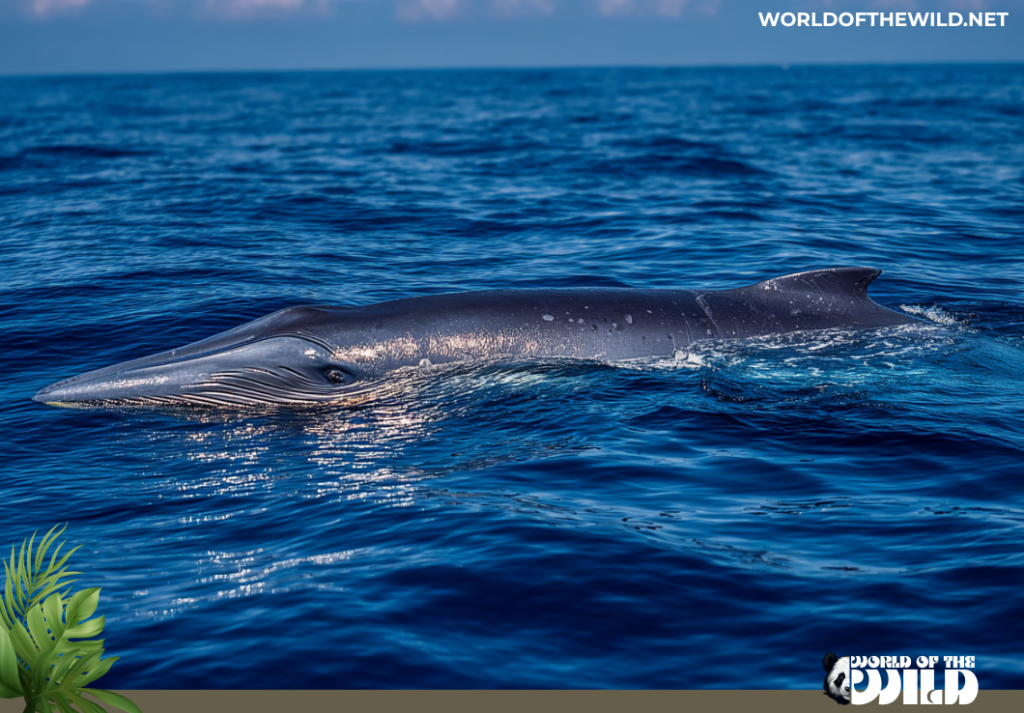
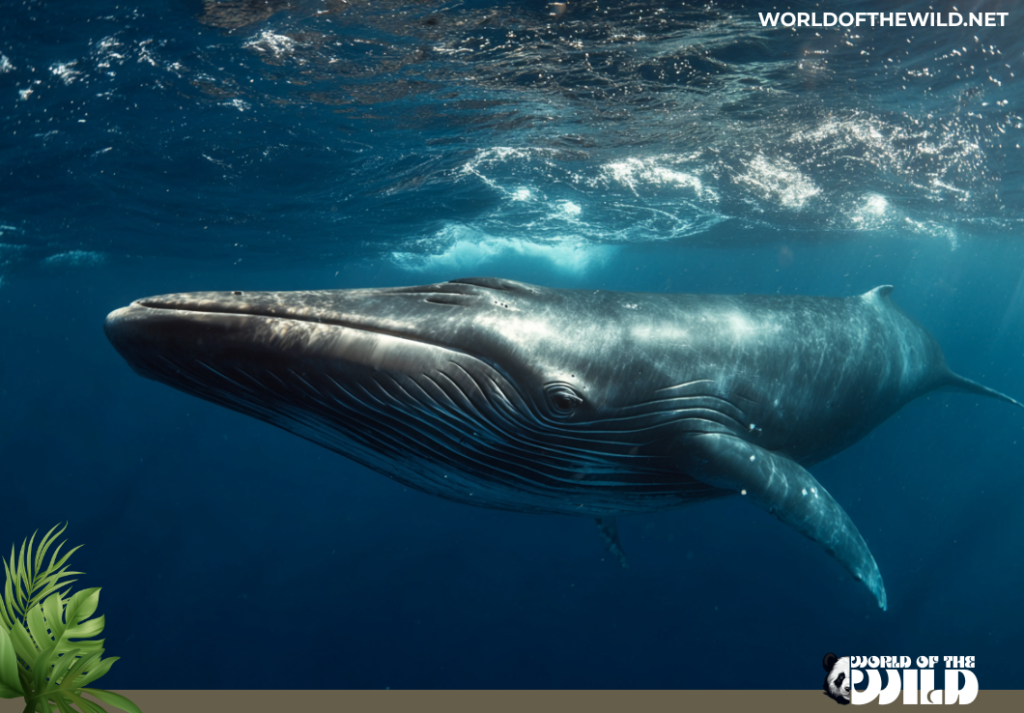
Bryde’s whale is a large, streamlined rorqual with the classic torpedo-shaped body plan of its family. It is built for speed and efficiency in the water rather than the dramatic bulk of a sperm whale or right whale.
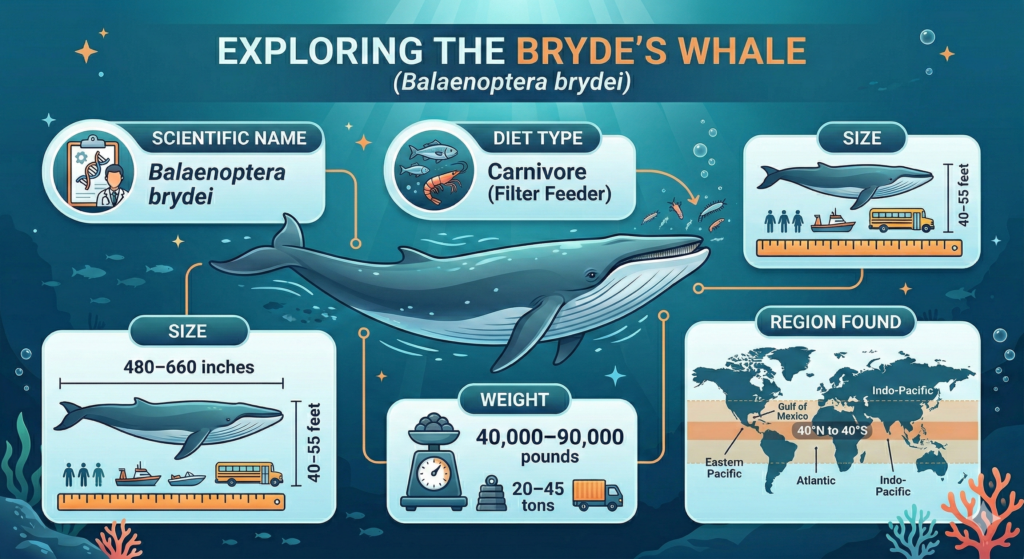
Size and Weight: Adult Bryde’s whales typically reach lengths of 40 to 55 feet (12 to 16.5 meters), though some individuals may exceed this range. Females tend to be slightly larger than males — a pattern seen across baleen whale species. Adults generally weigh between 40,000 and 90,000 pounds (18,000 to 41,000 kilograms), though the upper end of this range corresponds to the largest offshore individuals.
Coloration: The body is predominantly dark gray to bluish-gray on the dorsal (upper) surface, transitioning to a lighter gray or white on the ventral (belly) surface. The colouration is not dramatically patterned, which can make identification challenging at sea. Some individuals display irregular pale blotches or mottling, and the belly and throat region is often white or yellowish-white.
Distinctive Features: The most diagnostic characteristic of Bryde’s whale — and the one that separates it visually from the very similar sei whale — is its three rostral ridges. Running from the tip of the snout toward the blowholes, these parallel ridges are a reliable field mark. The sei whale, by contrast, has only the single central ridge typical of other rorquals.
Like all rorquals, Bryde’s whale has a series of ventral pleats running from the chin to the navel — approximately 40 to 70 of them — which expand dramatically when the whale engulfs prey-laden water. The dorsal fin is tall, falcate (curved), and positioned roughly two-thirds of the way back along the body. The baleen plates, which hang from the upper jaw and filter prey from seawater, are dark gray to black and relatively coarse compared to the finer plates of the sei whale.
The blow (exhalation) of a Bryde’s whale is a column-shaped spout reaching up to 13 feet (4 meters) in height — tall enough to spot from a distance, though not as spectacular as the blue whale’s towering geyser.
Behavior
Bryde’s whales are generally considered solitary animals, though loose aggregations of two to three individuals are occasionally observed in productive feeding areas. They do not form the large breeding or feeding groups seen in humpback or gray whales, and sustained social bonds between adults appear to be rare or non-existent outside of mother-calf pairs.
Movement and Activity: These whales are known for being erratic and unpredictable in their surface behavior — a trait that has frustrated whalers and researchers alike. Unlike sei whales, which tend to maintain consistent surface patterns, Bryde’s whales frequently change direction, dive suddenly, and re-surface in unexpected locations. They are capable of swift bursts of speed when feeding, reaching up to 15 miles per hour (24 km/h) during a lunge.
Lunge Feeding: Perhaps the most spectacular behavior Bryde’s whales display is lunge feeding. When a school of prey is detected, the whale accelerates upward or laterally through the aggregation with its mouth wide open, the throat pleats ballooning outward as thousands of gallons of water and fish pour in. The whale then filters the water out through its baleen plates and swallows the trapped prey. In some documented cases, whales have launched partially out of the water during particularly aggressive lunges, an almost surreal sight for such a massive animal.
Diving: Bryde’s whales are not particularly deep divers compared to sperm whales or beaked whales. Typical dives last between 5 and 15 minutes, though dives up to 20 minutes have been recorded. They generally feed in the upper water column where prey concentrations are highest.
Communication: Vocalizations include low-frequency moans, downsweeps, and patterned calls recorded at frequencies between 100 and 900 Hz. The function of these calls — whether for mate attraction, group coordination, or individual recognition — remains an active area of study. Bryde’s whales are not known for the complex, evolving songs that characterize humpback whales.
Interactions with Other Species: Bryde’s whales frequently feed in association with seabirds, dolphins, and sharks that are attracted to the same bait balls of fish. These multi-species feeding events can be chaotic and spectacular, with the whale as the largest and most powerful participant. There are no well-documented cooperative feeding relationships, however — each species is essentially exploiting the same prey independently.
Evolution
The evolutionary story of Bryde’s whale is intertwined with the broader history of baleen whales, one of nature’s most extraordinary adaptive transformations.
All cetaceans — whales, dolphins, and porpoises — descended from terrestrial artiodactyl (even-toed ungulate) ancestors. Molecular and fossil evidence points to a close relationship with the ancient pakicetids, wolf-sized, semi-aquatic mammals that lived approximately 50 to 55 million years ago in what is now South Asia. Over millions of years, these ancestors became increasingly aquatic, losing their hind limbs (retained vestigially as pelvic remnants in modern whales), developing flippers, and adopting fully aquatic lifestyles.
The split between toothed whales (odontocetes) and baleen whales (mysticetes) occurred roughly 34 to 35 million years ago. Early mysticetes still had functional teeth; the evolution of baleen — keratin plates that allow filter feeding — was a gradual process that opened up vast new ecological niches, particularly the exploitation of small, schooling prey at scales impossible for a toothed predator.
The family Balaenopteridae (rorquals) diversified significantly during the Miocene epoch (roughly 23 to 5 million years ago), a period of major ocean reorganization as the Antarctic ice sheets grew and ocean circulation patterns changed. The development of lunge feeding — the kinematically demanding, high-energy prey-capture strategy rorquals use — is considered one of the most significant functional innovations in vertebrate history. Fossil evidence suggests the extreme expandability of the rorqual throat evolved relatively recently, possibly within the last 3 to 5 million years.
Within the rorquals, Bryde’s whale is considered part of a species complex that also includes the sei whale (Balaenoptera borealis), its closest relative. The two species are remarkably similar in appearance — the triple rostral ridges of Bryde’s whale are the most reliable distinguishing feature — and they likely diverged from a common ancestor within the last few million years. The recent formal recognition of Rice’s whale as a distinct Gulf of Mexico endemic suggests that geographic isolation has continued to drive speciation within this group in recent geological time.
Habitat
Bryde’s whale is one of the few baleen whale species that can be described as truly tropical. While most of its giant relatives make long-distance seasonal migrations between high-latitude feeding grounds and low-latitude breeding grounds, Bryde’s whale remains in warm waters throughout the year.
Geographic Range: The species has a wide distribution across tropical and warm temperate oceans worldwide, generally within the band between approximately 40°N and 40°S latitude. Key areas of occurrence include the Indo-Pacific (particularly the waters around Southeast Asia, Japan, Australia, and the Indian Ocean), the eastern and western tropical Atlantic, the eastern Pacific off Central America and Mexico, and the Gulf of Mexico (home to the distinct Rice’s whale population). In South Africa, Bryde’s whales are commonly seen in inshore coastal waters, a population that has been among the most intensively studied.
Habitat Preferences: Bryde’s whales show a preference for productive coastal and offshore waters where upwelling or oceanographic features concentrate prey. They are frequently associated with continental shelf edges, seamounts, and areas of thermal fronts where cold, nutrient-rich water meets warmer surface waters — conditions that support blooms of small fish and crustaceans.
Unlike blue whales and humpback whales that seek out the frigid, krill-rich waters of polar regions during summer, Bryde’s whales thrive in warmer seas where prey takes the form of small schooling fish, anchovies, sardines, mackerel, and euphausiids (krill-like crustaceans). Sea surface temperatures of 15°C to 30°C (59°F to 86°F) represent the core of their thermal range.
Depth: Bryde’s whales are most commonly observed in relatively shallow coastal and shelf waters, though offshore populations range over deep oceanic areas. They are generally considered to be upper-water-column feeders, targeting prey aggregations from the surface down to a few hundred meters.
Diet
Bryde’s whale is a carnivore — specifically, a filter-feeding carnivore that consumes enormous quantities of small prey by engulfing water and filtering it through its baleen plates.
Primary Food Sources: The diet of Bryde’s whale is notably more varied than that of some other baleen whales and varies by region:
- Small schooling fish: Anchovies, sardines, herring, mackerel, and saury make up a significant portion of the diet in many areas, particularly for inshore populations. Off South Africa, Bryde’s whales are closely associated with the annual sardine run, one of the greatest wildlife spectacles on Earth.
- Euphausiids (krill): In some regions and seasons, krill and similar crustaceans are important prey items.
- Squid: Squid are consumed opportunistically in areas where they are abundant.
- Copepods: In certain seasons, dense aggregations of these tiny crustaceans may be targeted.
Feeding Strategy: Bryde’s whales employ lunge feeding as their primary prey capture method. When prey is near the surface, the whale accelerates directly through the school with its mouth agape, the throat pleats distending to create a massive volume that balloons outward as it fills with water and prey. The mouth then closes, the whale uses its massive tongue to push water out through the baleen plates, and the retained prey is swallowed. A single lunge can capture thousands of individual fish. In productive areas, Bryde’s whales may execute dozens of lunges per day to meet their energetic needs.
Daily food consumption for an adult Bryde’s whale is estimated at several hundred kilograms of prey per day during active feeding periods, though precise figures vary with body size and prey availability.
Predators and Threats
Natural Predators: Adult Bryde’s whales have few natural predators owing to their large size, speed, and open-ocean habitat. The primary natural threat comes from killer whales (orcas), which are known to cooperatively hunt large baleen whales. Although attacks on Bryde’s whales are rarely documented compared to attacks on humpbacks or gray whales, they almost certainly occur. Large sharks may occasionally target calves or weakened individuals, but they pose minimal risk to healthy adults.
Human-Caused Threats:
Commercial Whaling: Bryde’s whales were targeted by commercial whalers throughout the 20th century, particularly after stocks of blue and fin whales were depleted. Tens of thousands of individuals were killed across the global range, significantly reducing populations in many areas. While the International Whaling Commission (IWC) moratorium on commercial whaling (effective 1986) brought most large-scale hunting to an end, Japan has continued to take small numbers of Bryde’s whales under its scientific research permit programs and, since 2019, under its resumed commercial whaling operations in its territorial waters and exclusive economic zone.
Ship Strikes: Vessel collisions are a significant and growing threat, particularly for populations like the Rice’s whale in the Gulf of Mexico’s shipping lanes and for inshore populations worldwide. Bryde’s whales do not always respond to approaching vessels by diving, making them vulnerable to fast-moving ships.
Entanglement in Fishing Gear: Bycatch in fishing nets, particularly gillnets and longlines, poses a risk in areas where Bryde’s whales overlap with commercial fisheries.
Climate Change: Rising ocean temperatures, changing prey distribution, and ocean acidification all threaten the productive marine ecosystems on which Bryde’s whales depend. Shifts in the availability and distribution of small schooling fish — driven by changing oceanographic conditions — may force whales to travel farther for less food.
Ocean Noise Pollution: The increasingly loud underwater soundscape — from shipping traffic, military sonar, seismic surveys, and industrial activity — interferes with the low-frequency vocalizations that Bryde’s whales use to navigate and communicate. This sensory disruption can affect foraging efficiency, breeding behavior, and stress physiology.
Plastic Pollution and Contaminants: Ingestion of marine plastic debris and accumulation of persistent organic pollutants (PCBs, DDT derivatives) in prey pose long-term health risks.
Reproduction and Life Cycle
Mating: Very little is known about the mating behavior of Bryde’s whales. Unlike humpback whales, which engage in elaborate competitive mating displays, Bryde’s whales are not known for conspicuous courtship behaviors. Males presumably locate receptive females through vocalizations and chemical cues. Whether males compete directly with each other for mating access is unknown.
Breeding Season: Unlike most baleen whales that have highly seasonal reproduction tied to migration cycles, Bryde’s whales may breed throughout the year in their tropical habitats, with possible regional peaks. This reflects their non-migratory lifestyle — without a defined “breeding season” anchored to warm-water arrival, the timing of reproduction is more flexible.
Gestation and Birth: The gestation period is approximately 11 to 12 months. Calves are born tail-first into the water (as with all cetaceans) and are immediately able to swim alongside their mothers. Newborn calves measure roughly 11 to 13 feet (3.4 to 4 meters) in length and weigh approximately 2,000 pounds (900 kilograms).
Nursing and Maternal Care: Calves are nursed on their mother’s extraordinarily rich milk — which is far higher in fat content than any terrestrial mammal’s milk — for approximately 6 to 12 months. During this period, calves grow rapidly, gaining hundreds of kilograms in mass over a matter of weeks. Mother-calf pairs appear to maintain close proximity, and calves are thought to remain with their mothers beyond weaning as they learn the fundamentals of feeding and navigating their ocean environment.
Sexual Maturity and Reproduction Rate: Bryde’s whales reach sexual maturity at approximately 8 to 13 years of age. Females typically give birth to a single calf every 2 to 3 years. Twin births are extremely rare in baleen whales.
Lifespan: The maximum lifespan of Bryde’s whale is estimated at approximately 50 to 70 years, though precise longevity data is scarce compared to well-studied species like bowhead whales. Age is estimated using ear plug laminations and other skeletal markers.
Population
IUCN Conservation Status: The IUCN Red List currently lists Bryde’s whale (Balaenoptera brydei / the broader complex) as Least Concern at the global level, reflecting the wide geographic range and the absence of evidence of dramatic population collapse across all populations considered together. However, this broad designation can be misleading, as it masks highly variable and sometimes critical situations for specific subpopulations.
The newly recognized Rice’s whale (Balaenoptera ricei) of the Gulf of Mexico carries a starkly different status — it is listed as Critically Endangered, with a total population estimated at fewer than 100 individuals. The Gulf of Mexico population faces extreme pressure from ship strikes, fishing gear entanglement, and the legacy of deepwater oil spill contamination.
Global Population Estimate: Firm global population estimates for Bryde’s whales are difficult to establish given the taxonomic complexity and the challenges of surveying a wide-ranging, deep-water species. Estimates for the broader Bryde’s whale complex range from the low tens of thousands to potentially higher, but these figures carry large uncertainty. Regional assessments suggest:
- The eastern North Pacific population is estimated in the hundreds to low thousands.
- The South African inshore population numbers in the hundreds.
- Western North Pacific and Indo-Pacific populations are poorly quantified.
Population Trends: Commercial whaling removed large numbers of Bryde’s whales across their range during the 20th century, and recovery has been uneven. Where protection has been in place for several decades, some populations appear stable or slowly recovering. However, ongoing threats from ship strikes, entanglement, and habitat degradation mean that recovery is not guaranteed, and localized subpopulations remain vulnerable even where the species as a whole is not classified as threatened.
Conclusion
Bryde’s whale occupies a peculiar and poignant position in our awareness of the natural world — it is large enough to be awe-inspiring, widespread enough to be ecologically significant, and yet elusive enough that basic questions about its taxonomy, behavior, and population status remain unanswered. In an era when we can sequence entire genomes in a matter of hours and track satellites to the centimeter, a 50-foot whale swimming in shallow coastal waters can still hold profound secrets.
The story of the Rice’s whale — formally recognized as a new species only in 2021 and already teetering on the edge of extinction with fewer than 100 individuals — is a sobering reminder of how little we know and how much is at stake. Species can disappear before we even fully understand that they exist.
Protecting Bryde’s whale and its close relatives requires action on multiple fronts: reducing ship speeds in critical habitats, minimizing fishing gear entanglement, limiting ocean noise pollution, and addressing the broader crises of climate change and ocean degradation that undermine the productivity of the seas these whales depend on. It requires continued scientific investment in understanding a species that has, for too long, been treated as a taxonomic afterthought.
The next time an unmistakable triple-ridged rostrum breaks the surface of a warm, blue sea, there is an entire universe of biology and wonder surfacing with it. Bryde’s whale deserves our full attention — before the ocean goes quiet.
Quick Reference
| Field | Details |
|---|---|
| Scientific Name | Balaenoptera brydei |
| Diet Type | Carnivore (filter feeder) |
| Size | 480–660 inches (40–55 feet) |
| Weight | 40,000–90,000 pounds (20–45 tons) |
| Region Found | Tropical and warm temperate oceans worldwide (roughly 40°N–40°S); Indo-Pacific, Atlantic, eastern Pacific, Gulf of Mexico |