
Physical Dimensions
Height: 18-25 inches (46-63 cm) Wingspan: 40-57 inches (101-145 cm) Weight:
- Males: 2.5-3.5 lbs (1.1-1.6 kg)
- Females: 3-5.5 lbs (1.4-2.5 kg)
Sexual Dimorphism: Females approximately 15-25% larger than males
Visual Identification
Plumage Coloration: Mottled gray-brown to reddish-brown upperparts with heavily barred underparts; regional color variations exist
Distinctive Features:
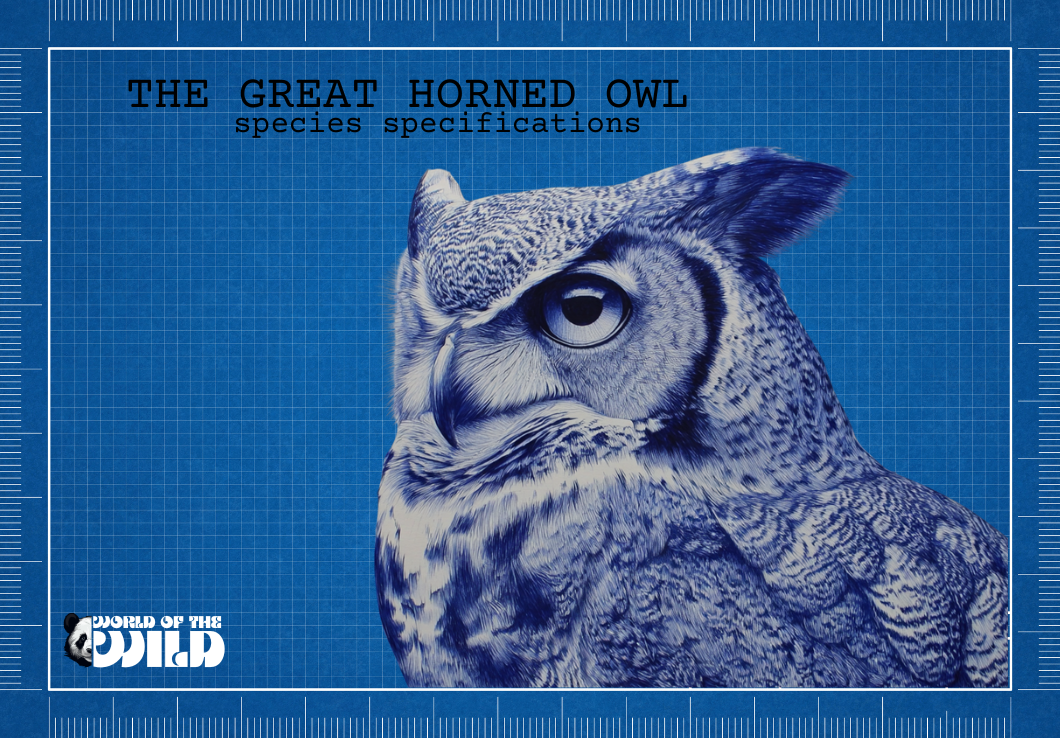
- Large, widely-spaced ear tufts (horn-like feather projections)
- Prominent facial disk with rusty-brown coloring
- Bright yellow to golden-orange eyes
- White throat patch (often visible during vocalizations)
- Dark brown to black beak
Juvenile Appearance: Fluffy gray-white down, gradually develops adult plumage over several months
Performance Specifications
Flight Speed:
- Cruising: 30-40 mph (48-64 km/h)
- Silent flight capability via specialized feather structures
Talon Grip Strength: Approximately 500 psi (pounds per square inch); capable of crushing prey skulls
Rotational Head Capability: 270 degrees
Visual Acuity:
- 100x more sensitive to light than human eyes
- Binocular vision covering 70 degrees
- Cannot move eyes within sockets; compensated by neck rotation
Auditory Range: Asymmetrical ear placement enables precise sound localization for hunting in complete darkness
Geographic Range
Distribution: Throughout North and South America, from Arctic tundra to tropical rainforests
Habitat Compatibility:
- Deciduous, coniferous, and mixed forests
- Open grasslands and agricultural areas
- Desert regions
- Urban and suburban environments
- Mountain ranges (up to 14,000 ft elevation)
Territory Size: 1.5-2.5 square miles per breeding pair
Operational Parameters
Activity Period: Primarily nocturnal and crepuscular (most active at dawn and dusk)
Hunting Method: Sit-and-wait predation; perch hunting from elevated positions
Prey Specifications:
- Primary targets: Rabbits, hares, rodents (rats, mice, voles, squirrels)
- Secondary targets: Skunks, birds (up to heron-size), snakes, amphibians
- Maximum prey size: Up to 4x owl’s body weight
- Documented prey species: 250+ vertebrate species
Daily Consumption: Approximately 2-3 mice equivalent (or proportional larger prey)
Acoustic Output
Primary Vocalization: Classic five-syllable hoot pattern
- Male: “hoo-hoo hoooo hoo-hoo” (deeper pitch)
- Female: Similar pattern, higher pitch
Decibel Range: Audible up to 5 miles in optimal conditions
Additional Vocalizations: Shrieks, hisses, screams, barks (especially when threatened)
Reproductive Specifications
Sexual Maturity: 2 years
Breeding Season: January-February (varies by latitude)
Nesting Behavior: Does not build own nests; commandeers existing structures
- Abandoned raptor nests
- Tree cavities
- Rocky ledges
- Artificial platforms
Clutch Size: 1-4 eggs (typically 2-3)
Egg Dimensions: 2.2 inches long, nearly spherical
Incubation Period: 30-37 days (performed primarily by female)
Fledging Time: 9-10 weeks
Parental Care Duration: 4-5 months post-fledging
Reproductive Output: One brood per year
Lifespan & Longevity
Wild Lifespan: 13-15 years average; up to 28 years documented
Captive Lifespan: 30-38+ years recorded
Primary Mortality Factors: Vehicle collisions, electrocution, human persecution, territorial conflicts
Behavioral Characteristics
Territorial Behavior: Highly aggressive defense of nesting and hunting territories; will attack intruders including humans, dogs, and other raptors
Predator Status: Apex predator; minimal natural predators
Social Structure: Monogamous pairs; lifelong pair bonds common
Competition: Dominant over other owl species; will prey on smaller owls
Weather Tolerance: Operates effectively in temperatures from -40°F to 100°F+
Conservation Status
IUCN Classification: Least Concern
Population Trend: Stable to increasing in most regions
Population Estimate: 5.3-6 million individuals (global)
Legal Protection: Protected under the Migratory Bird Treaty Act (North America)
Special Adaptations
- Asymmetrical ear placement for 3D sound localization
- Fringed feather edges for silent flight
- Nictitating membrane (third eyelid) for eye protection
- Reversible outer toe for enhanced grip
- Specialized neck vertebrae enabling extreme rotation
- Exceptional low-light vision via high rod density in retinas