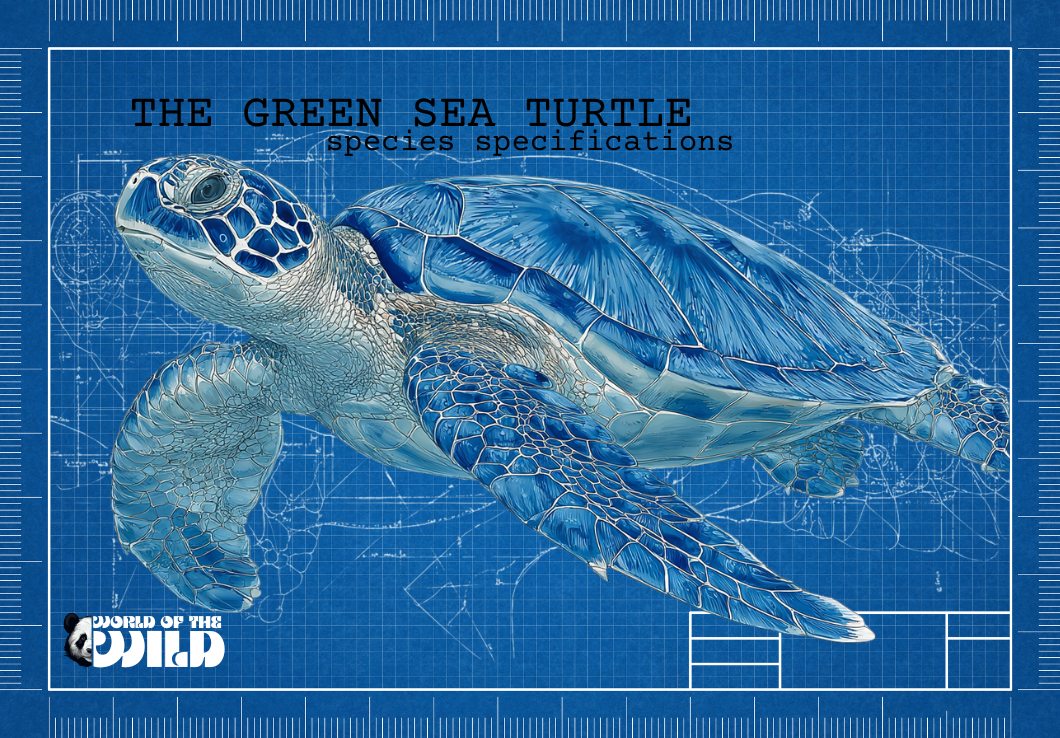

TAXONOMIC CLASSIFICATION
Scientific Name: Chelonia mydas
Common Names: Green Sea Turtle, Green Turtle
Order: Testudines
Family: Cheloniidae
Genus: Chelonia
PHYSICAL SPECIFICATIONS
Carapace Length: 80-120 cm (31-47 inches) in adults
Weight Range: 110-190 kg (240-420 lbs); exceptional individuals may exceed 230 kg (500 lbs)
Shell Composition: Bony carapace covered with non-overlapping scutes
Carapace Pattern: Olive to brown coloration with radiating and irregular markings; heart-shaped when viewed from above
Plastron Color: Pale yellow to white
Head: Single pair of prefrontal scales; serrated jaw adapted for herbivorous diet
Flippers: Large, paddle-shaped; single claw on each flipper
Name Origin: Named for the greenish color of their fat tissue, not their shell
PERFORMANCE CHARACTERISTICS
Swimming Speed: Cruising speed of 1.5-2.3 km/h (0.9-1.4 mph); burst speeds up to 35 km/h (22 mph)
Dive Depth: Typically 20-40 meters; capable of diving to 150+ meters
Dive Duration: Can remain submerged for 4-5 hours when resting; typical foraging dives last 5-10 minutes
Migration Range: Up to 2,600 km (1,600 miles) between feeding and nesting grounds
HABITAT SPECIFICATIONS
Geographic Distribution: Tropical and subtropical waters of Atlantic, Pacific, and Indian Oceans
Temperature Range: Prefers waters between 20-30°C (68-86°F)
Depth Zones: Coastal shallow waters, bays, lagoons, and inshore reefs
Substrate Preference: Seagrass beds and algae-rich areas
Key Populations: Caribbean Sea, Mediterranean Sea (nesting), Hawaiian Islands, Great Barrier Reef, Galápagos Islands
DIETARY REQUIREMENTS
Trophic Level: Herbivore (adults); omnivore (juveniles)
Primary Food Sources: Seagrasses (Thalassia, Zostera, Syringodium), marine algae
Juvenile Diet: Jellyfish, mollusks, sponges, crustaceans, and fish eggs
Feeding Frequency: Daily grazing; may consume 2 kg of seagrass per day
Jaw Structure: Finely serrated, beak-like mouth optimized for shearing vegetation
LIFE CYCLE SPECIFICATIONS
Sexual Maturity: 25-50 years (varies by population)
Maximum Lifespan: 70-80+ years in wild
Reproductive Cycle: Females return to nest every 2-4 years
Nesting Season: Varies by location; typically May-September in Northern Hemisphere
Clutch Size: 100-200 eggs per nest
Clutches per Season: 3-5 nests, laid 12-14 days apart
Incubation Period: 45-75 days (temperature-dependent)
Hatchling Success Rate: Less than 1% survive to adulthood
Sex Determination: Temperature-dependent; warmer sand produces females, cooler produces males
CONSERVATION STATUS
IUCN Red List: Endangered (as of 2004 assessment)
Population Trend: Increasing in some regions, declining in others
Primary Threats: Fisheries bycatch, coastal development, plastic pollution, climate change, illegal harvesting, artificial lighting on nesting beaches
Protected Status: Listed under CITES Appendix I; protected in most range countries
Estimated Global Population: Difficult to quantify; approximately 85,000-90,000 nesting females annually worldwide
BEHAVIORAL CHARACTERISTICS
Social Structure: Generally solitary except during mating season
Activity Pattern: Diurnal (active during day)
Territorial Behavior: Non-territorial; may share feeding grounds
Homing Ability: Remarkable natal beach fidelity; return to birth beach for nesting
Navigation Method: Magnetic field detection, visual cues, and possibly chemical cues
UNIQUE ADAPTATIONS
Salt Excretion: Specialized glands near eyes eliminate excess salt, producing “tears”
Thermoregulation: Limited ability; relies on behavioral thermoregulation through migration
Oxygen Conservation: Reduced heart rate during dives (bradycardia); can switch to anaerobic metabolism
Shell Function: Provides protection but reduces flexibility; cannot retract head or limbs
ECOLOGICAL ROLE
Ecosystem Function: Maintain seagrass bed health through grazing, promote nutrient cycling, provide habitat for barnacles and algae
Trophic Impact: Transfer nutrients from oceanic to coastal systems
Symbiotic Relationships: Host to various commensal organisms including barnacles, algae, and remoras
Conservation Note: All sea turtle species are protected under various international and national laws. Direct interaction with wild sea turtles should only occur under authorized research or conservation programs.