
CLASSIFICATION
Kingdom: Animalia
Phylum: Chordata
Class: Mammalia
Order: Carnivora
Family: Felidae
Genus: Panthera
Species: P. leo
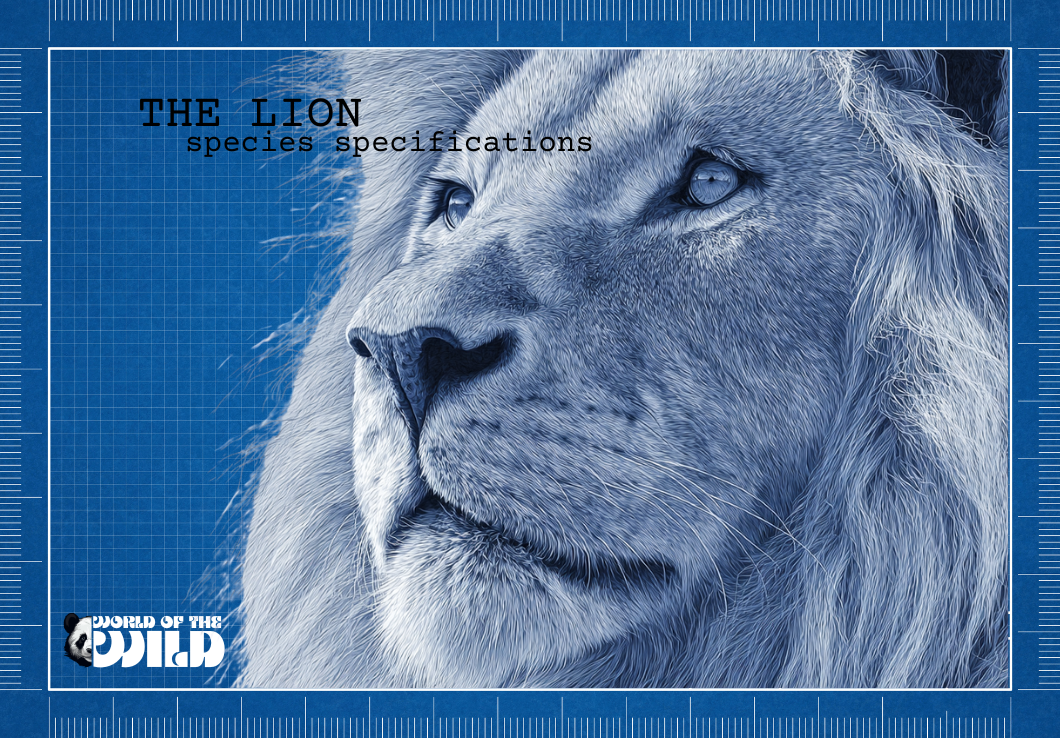
Common Name: Lion (Male)
PHYSICAL SPECIFICATIONS
Average Weight: 190 kg (420 lbs)
Weight Range: 150-250 kg (330-550 lbs)
Length (excluding tail): 1.7-2.5 meters (5.6-8.2 feet)
Tail Length: 90-105 cm (35-41 inches)
Shoulder Height: 1.2 meters (3.9 feet)
Bite Force: Approximately 650 PSI (pounds per square inch)
DISTINGUISHING FEATURES
Primary Characteristic: Prominent mane covering head, neck, and shoulders. Mane color ranges from blonde to black, darkening with age and testosterone levels. Serves as protection during fights and visual signal of fitness to potential mates.
Body Structure: Muscular build with broad chest, powerful forelimbs, and retractable claws measuring up to 38 mm (1.5 inches). Dentition includes large canines up to 8 cm (3 inches) long designed for gripping prey.
Coloration: Tawny yellow to reddish-brown coat with lighter underparts. Cubs born with rosette markings that fade by maturity.
PERFORMANCE CAPABILITIES
Top Speed: 80 km/h (50 mph) in short bursts
Effective Range: Approximately 300 meters for pursuit
Jump Height: Up to 3.6 meters (12 feet) vertically
Jump Distance: Up to 11 meters (36 feet) horizontally
Roar Specifications:
- Volume: Up to 114 decibels
- Audible Range: 8 kilometers (5 miles) under optimal conditions
- Primary Function: Territory advertisement and pride coordination
SENSORY SYSTEMS
Vision: Excellent night vision, approximately six times more sensitive than human vision in low light. Binocular vision with moderate color perception.
Hearing: Frequency range capable of detecting prey movement and pride member vocalizations up to 1.6 kilometers away.
Olfaction: Highly developed sense of smell used for territory marking, reproductive status detection, and prey location.
OPERATIONAL PARAMETERS
Active Hours: Primarily crepuscular and nocturnal, with 20-21 hours per day spent resting.
Territory Size: 20-400 square kilometers depending on prey density and habitat quality.
Home Range: Males typically defend territories containing multiple prides, overlapping with 2-4 female groups.
Life Expectancy:
- Wild: 10-14 years
- Captivity: Up to 20 years
- Prime Age: 5-9 years
SOCIAL STRUCTURE
Group Composition: Males form coalitions of 1-4 individuals, typically brothers or unrelated partners. Coalitions control pride territories for 2-4 years on average before being displaced by younger males.
Hierarchy: Dominant coalition members secure primary breeding rights. Larger coalitions maintain longer tenure over territories.
REPRODUCTIVE SPECIFICATIONS
Sexual Maturity: 3-4 years
Peak Breeding Age: 5-10 years
Mating Frequency: Every 15-20 minutes during estrus periods, lasting 2-3 days
Gestation Period: 110 days (performed by females)
Offspring Survival Rate: Approximately 50% mortality in first year under natural conditions
Reproductive Strategy: Males typically kill cubs sired by previous coalition upon taking over a pride, bringing females into estrus within 2-3 weeks.
DIETARY REQUIREMENTS
Classification: Obligate carnivore
Daily Intake: 7-8 kg (15-18 lbs) of meat
Feeding Frequency: Every 3-4 days after successful hunt
Maximum Consumption: Up to 30 kg (66 lbs) in single feeding
Primary Prey Species: Wildebeest, zebra, buffalo, and various antelope species ranging from 50-300 kg body weight.
Hunting Participation: Males hunt approximately 10-15% as frequently as females, typically targeting larger or more dangerous prey such as buffalo or giraffe.
HABITAT SPECIFICATIONS
Optimal Terrain: Savanna grasslands, open woodlands, and scrub habitat
Distribution: Sub-Saharan Africa, with isolated population in Gir Forest, India
Current Range: Approximately 8% of historical range
Altitude Range: Sea level to 4,000 meters (rare at high elevations)
CONSERVATION STATUS
IUCN Classification: Vulnerable
Population Estimate: Approximately 20,000-25,000 individuals in wild (total species)
Population Trend: Decreasing
Primary Threats: Habitat loss, human-wildlife conflict, prey depletion, trophy hunting
NOTES
Male lions represent the only felid species with prominent sexual dimorphism displayed through mane development. Individual mane characteristics vary based on genetics, environmental conditions, and injury history. Males with darker, fuller manes demonstrate higher fitness and testosterone levels, correlating with improved reproductive success and coalition stability.