
Taxonomic Classification
- Kingdom: Animalia
- Phylum: Chordata
- Class: Mammalia
- Order: Carnivora
- Family: Herpestidae
- Genus: Suricata
- Species: S. suricatta
Physical Specifications
Body Dimensions:
- Total length: 42-60 cm (16.5-23.6 inches) including tail
- Tail length: 19-24 cm (7.5-9.4 inches)
- Standing height: Approximately 25-35 cm (10-14 inches)
- Weight range: 620-970 grams (1.4-2.1 pounds)
- Sexual dimorphism: Minimal; males slightly larger than females
Structural Features:
- Body type: Slender, elongated torso with short, powerful limbs
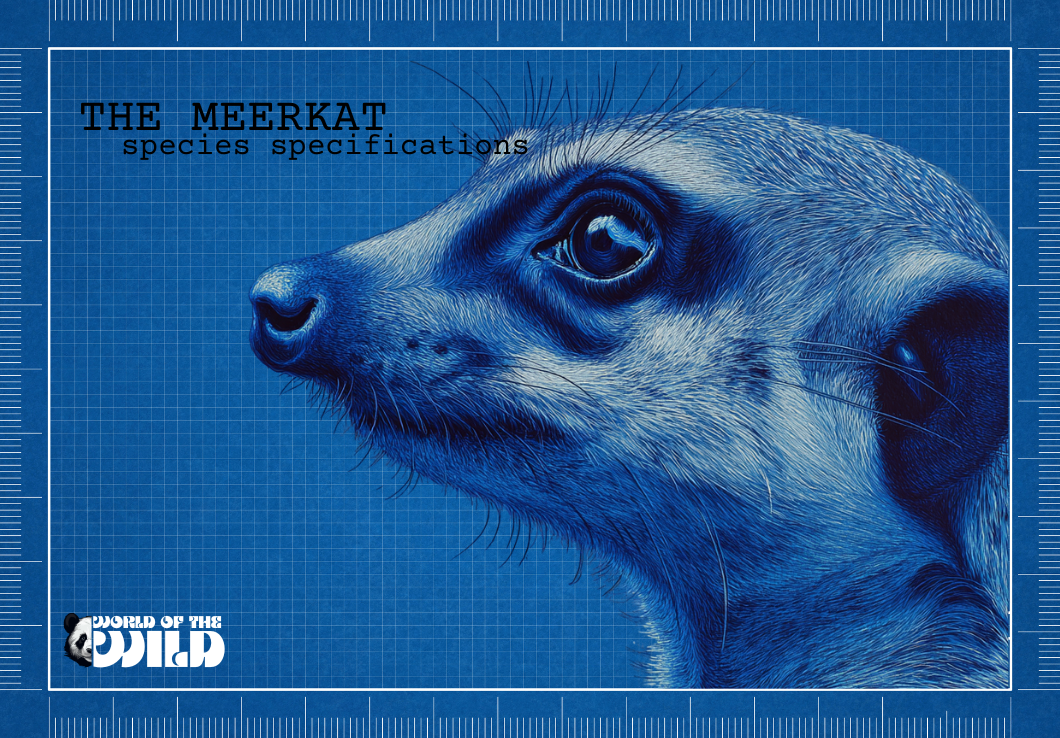
- Head: Small, pointed with a tapered snout
- Eyes: Forward-facing, dark with binocular vision; possess nictitating membrane for dust protection
- Ears: Small, crescent-shaped, capable of closing to prevent sand entry during digging
- Claws: Non-retractable, elongated on forelimbs (2 cm length) for excavation
- Coat: Short, dense fur with coloration ranging from light tan to gray-brown
- Markings: Dark lateral stripes across back; dark patches around eyes; dark tail tip
- Tail function: Balance during upright stance; communication signaling
Habitat Parameters
Geographic Distribution:
- Primary range: Southern Africa (Botswana, Namibia, South Africa, Angola)
- Biome: Arid savanna, grasslands, and desert regions
- Altitude range: Sea level to 1,500 meters
Environmental Requirements:
- Terrain: Open, flat areas with hard or compacted soil
- Temperature tolerance: -10°C to 40°C (14°F to 104°F)
- Precipitation range: 100-400 mm annually
- Burrow requirement: Essential for shelter; multi-entrance tunnel systems extending 1.5-2 meters deep
Dietary Specifications
Feeding Classification: Insectivorous carnivore
Primary Food Sources:
- Insects: Beetles, crickets, grasshoppers, termites, spiders (80-90% of diet)
- Small vertebrates: Lizards, snakes, small rodents, birds, eggs
- Plant matter: Occasional roots, tubers for moisture
Nutritional Requirements:
- Daily food intake: Approximately 10-15% of body weight
- Water dependency: Low; obtains most moisture from prey
- Foraging method: Active digging and surface hunting
- Feeding duration: 5-8 hours per day
Behavioral Specifications
Activity Pattern: Diurnal (active during daylight hours)
Social Structure:
- Group formation: Colonies of 20-50 individuals (range: 5-80)
- Hierarchy: Matriarchal dominance structure
- Cooperative behavior: Sentinel duty rotation, communal pup-rearing, cooperative foraging
Sentinel Behavior:
- Duration: 1-hour shifts
- Frequency: Continuous during foraging periods
- Position: Elevated vantage points (rocks, termite mounds, trees)
- Alert calls: Distinct vocalizations for aerial versus terrestrial predators
Territorial Range: 2-5 square kilometers per colony
Reproductive Specifications
Sexual Maturity: 12-18 months
Breeding Parameters:
- Breeding season: Year-round, peaks in warmer months (October-April in Southern Hemisphere)
- Estrous cycle: Approximately 33 days
- Gestation period: 60-70 days (average 63 days)
- Litter size: 2-5 pups (average 3)
- Birth weight: 25-36 grams
- Weaning age: 49-63 days
Developmental Timeline:
- Eyes open: 10-14 days
- First surface emergence: 2-3 weeks
- Foraging independence: 9-12 weeks
- Full adult size: 12 months
Lifespan Parameters
- Wild lifespan: 7-10 years (average 6.5 years)
- Captive lifespan: 12-14 years (maximum recorded: 20.6 years)
- Infant mortality rate: 30-50% in first year
Physiological Adaptations
- Immunity: Resistant to certain snake and scorpion venoms
- Thermoregulation: Dark skin patches on belly for solar heat absorption
- Vision: Horizontal pupils for wide-angle horizon scanning; dark eye patches reduce glare
- Olfactory capability: Highly developed sense of smell for prey detection
Predator Threat Assessment
Primary predators: Martial eagles, jackals, snakes (particularly cobras and cape cobras), caracals
Defense mechanisms: Group mobbing behavior, alarm call systems, rapid retreat to burrows
Conservation Status
IUCN Classification: Least Concern
Population Status: Stable across range
Primary threats: Habitat modification, human-wildlife conflict in agricultural areas, climate change affecting prey availability
Vocalization Specifications
Vocal repertoire: Approximately 10-15 distinct call types including contact calls, alarm calls, defensive sounds, and pup begging calls
Communication range: Audible up to 100-200 meters depending on terrain
Note: All measurements represent typical ranges for wild populations. Individual variation exists based on geographic location, environmental conditions, and genetic factors.