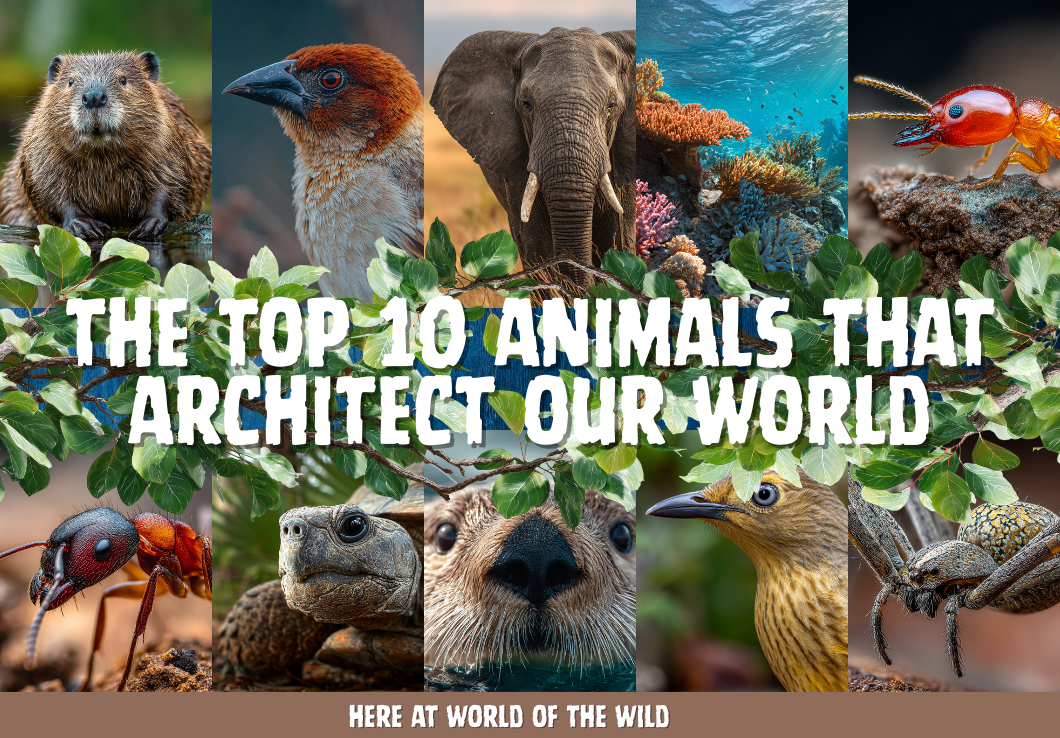

We tend to think of wildlife as simply living in nature — adapting to it, surviving within it, moving through it like quiet guests. But some species are doing something far more extraordinary. They are reshaping the planet, one dam, one burrow, one silken thread at a time. Scientists call them “ecosystem engineers,” but we prefer a simpler title: the world’s greatest architects.
These are the animals that don’t just occupy a habitat — they build one. And in doing so, they create homes, shelter, food, and survival for thousands of other species that couldn’t exist without them. Remove these builders from the equation, and entire ecosystems don’t just struggle — they collapse.
From the frozen boreal forests of Canada to the sun-scorched Kalahari Desert, here are the ten most remarkable animal architects on Earth. Spoiler: none of them went to design school.
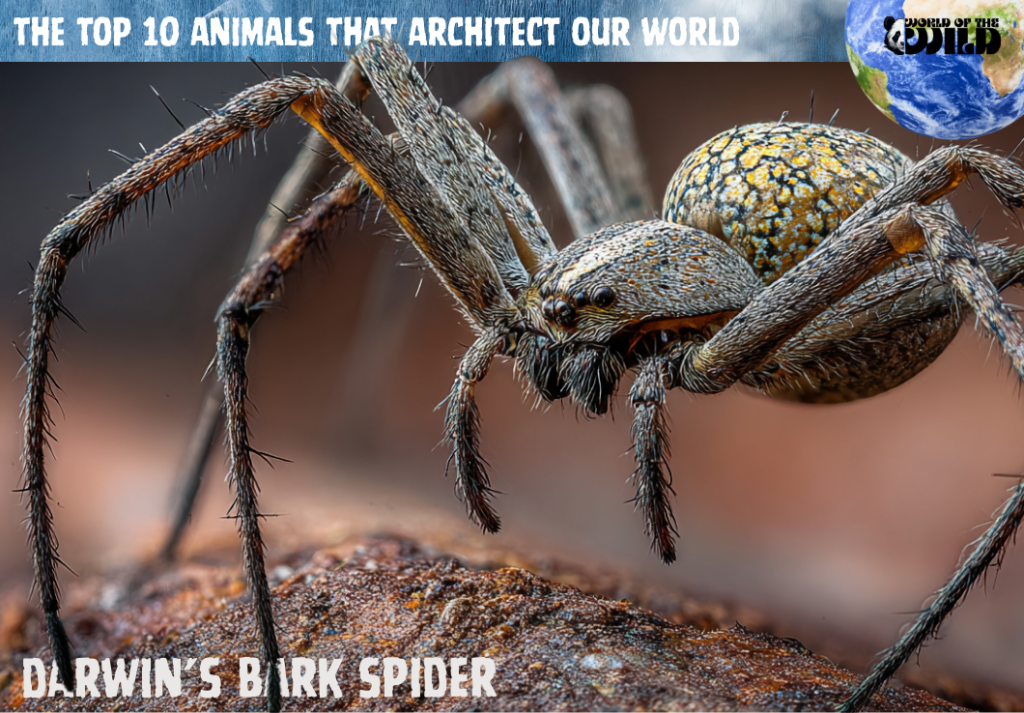
10. Darwin’s Bark Spider — The Silk Bridge Builder (Global)
Let’s start with something almost impossibly small delivering something almost impossibly large. The Darwin’s Bark Spider, discovered in Madagascar in 2009, spins webs across entire rivers — some spanning over 25 meters, anchored to trees on opposite banks. These aren’t just impressive for their scale. The silk itself has been measured as the toughest biological material ever recorded, ten times stronger than Kevlar by weight.
Why does this matter architecturally? Because these webs represent nature’s most sophisticated suspension bridge design, combining tensile strength with extraordinary elasticity. Engineers and materials scientists are actively studying bark spider silk for applications in body armor, surgical sutures, and aerospace materials. One tiny spider. One very big future.
Learn more about Darwin’s Bark Spider here at World of the Wild
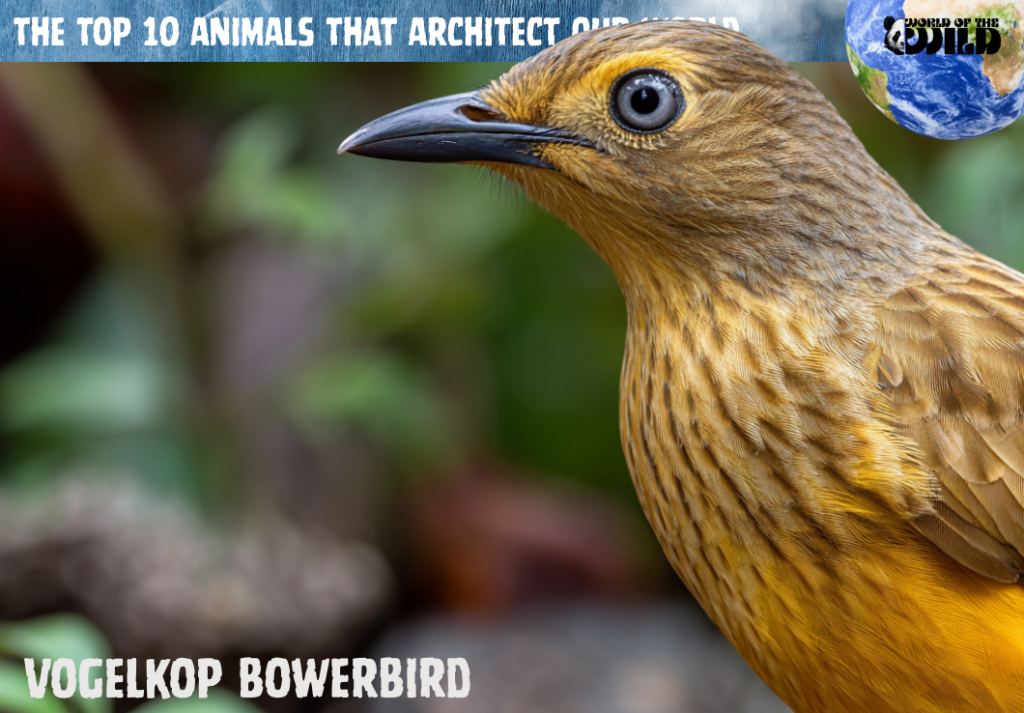
9. The Vogelkop Bowerbird — The Interior Designer (New Guinea)
Most animals build for survival. The Vogelkop Bowerbird builds for beauty — or at least, for the appearance of it. Found in the remote highlands of New Guinea, the male of this species constructs an elaborate hut-like structure called a bower, roughly the size of a small tent, complete with a carefully manicured front lawn of moss.
But the construction is just the beginning. He then spends weeks — sometimes months — decorating his bower with color-coded collections of objects: blue berries grouped with blue feathers, red fruits arranged beside red beetles, bright beetles organized by size. He’ll remove items that don’t fit his aesthetic vision and rearrange others obsessively until the display is just right. Females visit multiple bowers before choosing a mate, suggesting they genuinely judge design quality.
The Vogelkop isn’t engineering an ecosystem in the traditional sense, but he is engineering perception — and doing it with a sophistication that has left evolutionary biologists genuinely stunned.
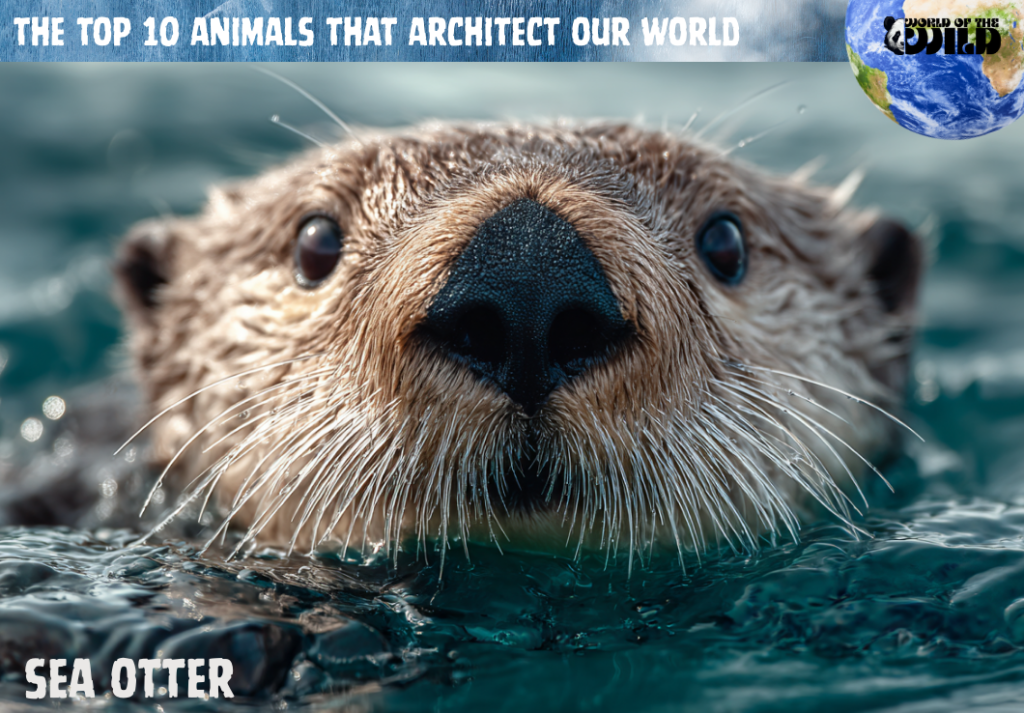
8. The Sea Otter — Guardian of the Kelp Forest (Pacific Coast)
The sea otter doesn’t build anything you can see. No mounds, no dens, no woven structures. Its architectural genius lies in what it prevents from being destroyed.
Kelp forests — the towering underwater jungles of the Pacific Coast — are among the most biodiverse ecosystems on Earth, supporting rockfish, sea lions, harbor seals, and hundreds of invertebrate species. But they have a mortal enemy: the sea urchin. Left unchecked, urchin populations devour kelp holdfasts at the base, turning lush underwater forests into barren “urchin barrens” almost overnight.
Sea otters are the natural urchin predators that keep this in check. Studies of coastlines where otters were hunted to near-extinction in the 18th and 19th centuries showed catastrophic kelp collapse within years. Where otters were reintroduced, the forests recovered. One species, floating on its back cracking urchins open for lunch, is quite literally maintaining the structural integrity of an entire marine jungle.
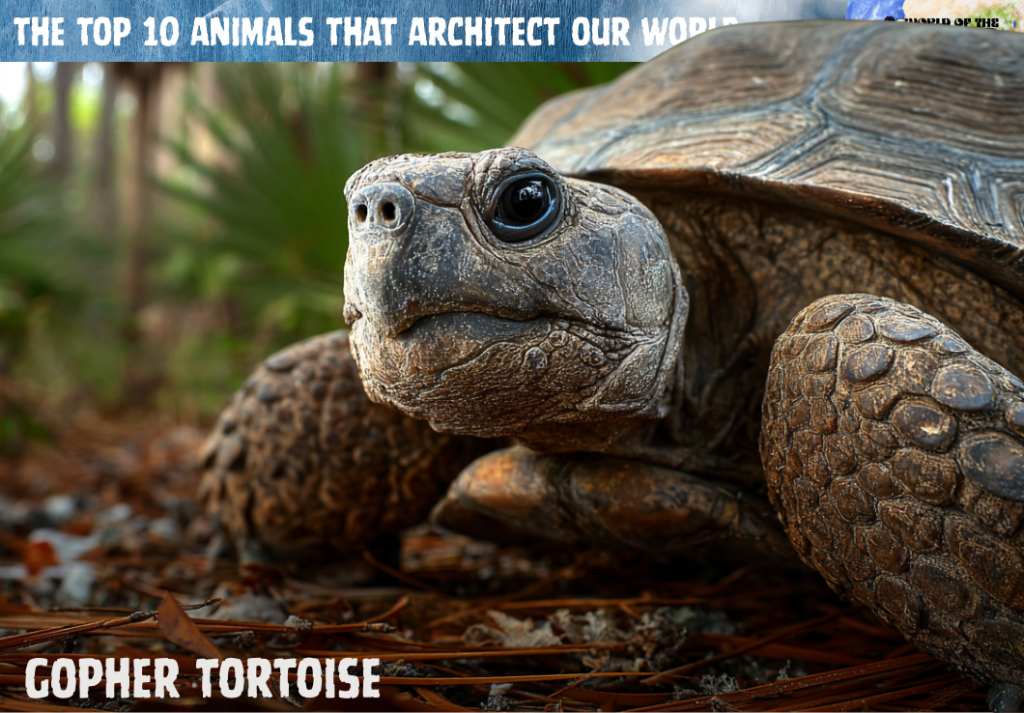
7. The Gopher Tortoise — Bunker Builder of the Southeast (Southeastern USA)
In the longleaf pine ecosystems of the American Southeast — including the greater Everglades region — the gopher tortoise is doing something remarkable with its front legs and a lot of patience. It digs. And digs. And digs. The burrows these tortoises excavate can stretch up to 15 feet deep and 40 feet long, carefully angled to maintain a stable temperature and humidity year-round.
What makes the gopher tortoise extraordinary isn’t just the engineering — it’s the generosity. Over 350 other species have been documented using gopher tortoise burrows as shelter, including indigo snakes, gopher frogs, Florida mice, burrowing owls, and hundreds of invertebrate species. During wildfires — which are frequent and ecologically important in longleaf pine habitats — the burrow functions as a fireproof bunker, providing refuge for species that would otherwise perish in the flames.
The gopher tortoise is what ecologists call a “keystone species” — remove it, and a cascade of extinctions follows. It is classified as threatened, which makes conservation of this slow, unassuming builder one of the most urgent wildlife priorities in North America.
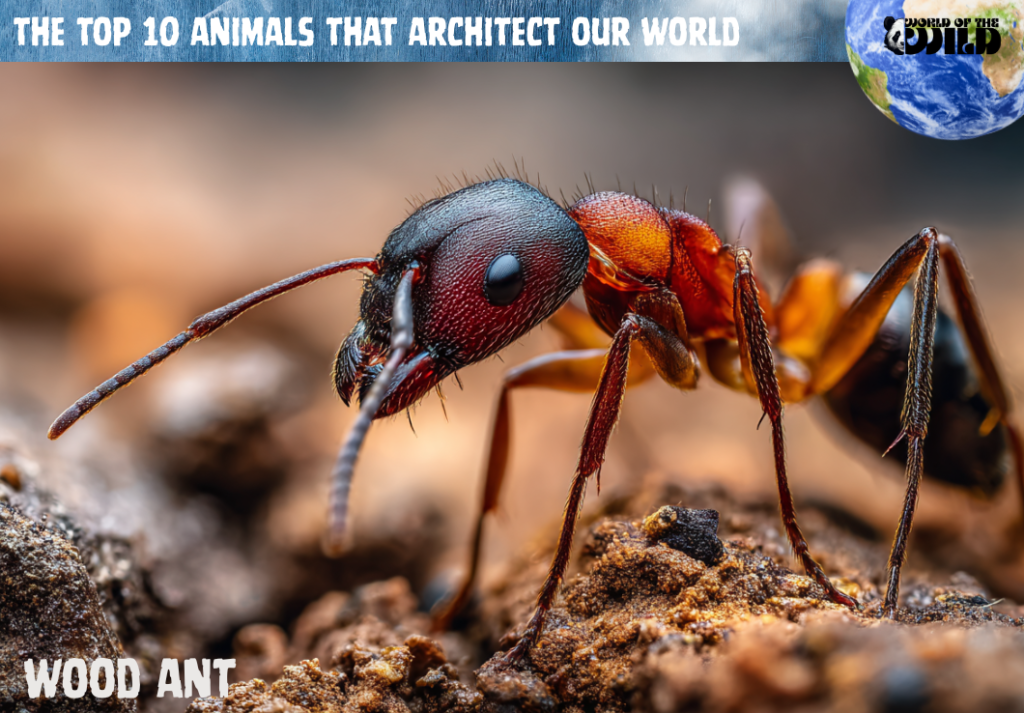
6. The Wood Ant — Thermal Engineers of the Forest (European Forests)
You might walk past a wood ant mound in a European forest and think nothing of it — just a pile of pine needles, twigs, and leaf litter, roughly the shape and size of a small haystack. Look closer, and you’re standing next to one of the most sophisticated climate-controlled structures in the natural world.
Wood ant colonies — which can number in the hundreds of thousands — construct thatched mounds that regularly exceed a meter in height and can be several meters in diameter. The external thatch layer acts as both insulation and a solar collector, absorbing warmth during the day and releasing it slowly at night. Interior chambers are positioned at precisely calculated depths to maintain optimal temperature and humidity for egg development — the ants physically move larvae up and down between chambers as conditions change throughout the day.
The mounds also play an important role in forest ecology. They accelerate decomposition of organic material, aerate the soil, and provide nesting sites for birds. Some mounds have been occupied and continuously expanded by successive ant generations for over a century.
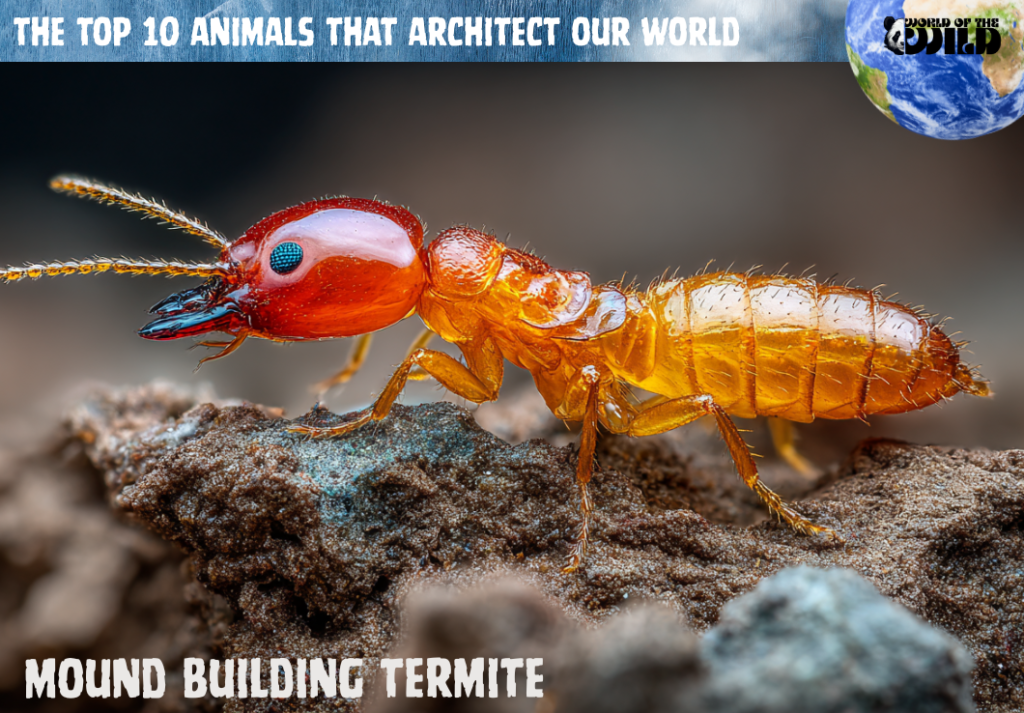
5. The Mound-Building Termite — Climate Controllers of the Savanna (Africa & Australia)
If the wood ant builds impressive climate-controlled structures, the mound-building termite builds extraordinary ones. Termite mounds in Africa and Australia regularly reach heights of six to nine meters — the equivalent, scaled to body size, of a human building a skyscraper over a mile tall. But height is the least interesting thing about them.
The internal architecture of a termite mound is a masterclass in passive ventilation engineering. The outer walls contain a network of channels that act as a lung, drawing stale air out and fresh air in through a system of temperature differentials. The interior colony maintains a near-constant 30-31°C regardless of whether the outside temperature swings from desert cold nights to 40°C afternoons. This wasn’t figured out by engineers — it was evolved over millions of years.
Termite mounds also dramatically enrich the soil around them, drawing nutrients and water from deep underground. Studies have shown that vegetation near termite mounds remains greener during droughts than the surrounding landscape, making mound sites refugia — islands of life during hard times — for dozens of other species.
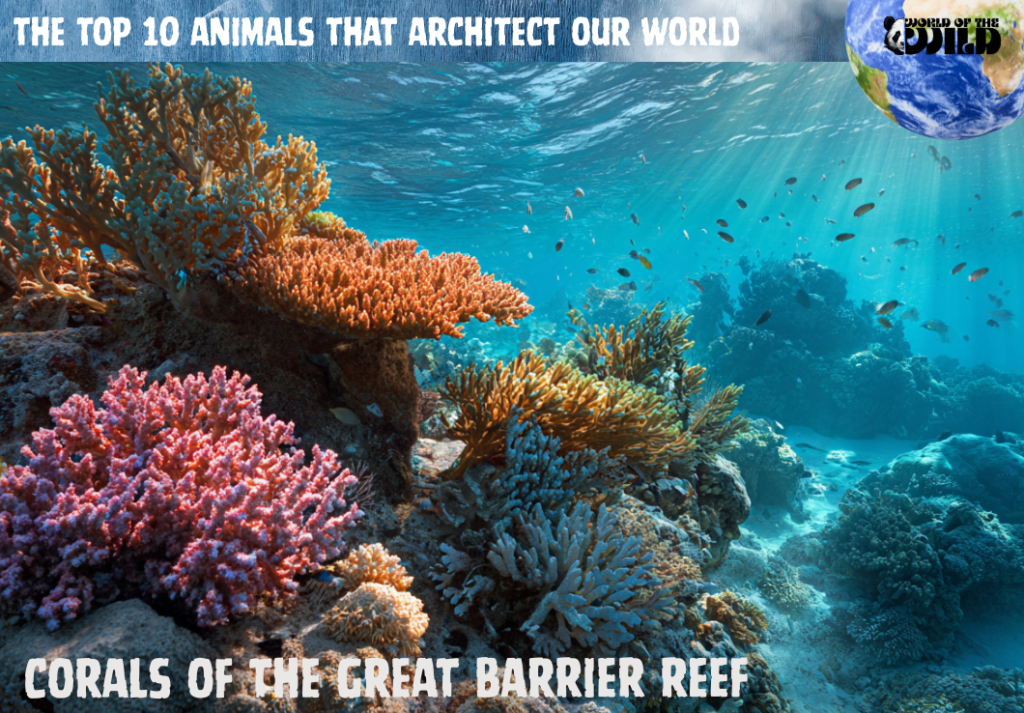
4. The Great Barrier Reef Corals — Visible From Space (Australia)
They are animals. This fact alone stops people short. Coral looks like rock, grows like a plant, and seems about as architecturally active as a pebble. But each coral polyp is a tiny living creature, and collectively, they have built the largest biological structure on Earth — the only one visible from space with the naked eye.
The Great Barrier Reef stretches over 2,300 kilometers along the Queensland coast, covering an area larger than Italy. It supports approximately 25% of all marine species despite covering less than 1% of the ocean floor, including over 1,500 species of fish, 4,000 types of mollusk, and 30 species of whales and dolphins. The architectural complexity of the reef — its caves, crevices, overhangs, and channels — is what makes this biodiversity possible, providing habitat niches for species with wildly different needs.
It took 20 million years to build. It is currently under severe threat from ocean warming and acidification, with mass bleaching events stripping sections of the reef of the living tissue that maintains its structure. The architectural collapse of the reef would represent one of the greatest ecological catastrophes in human history.
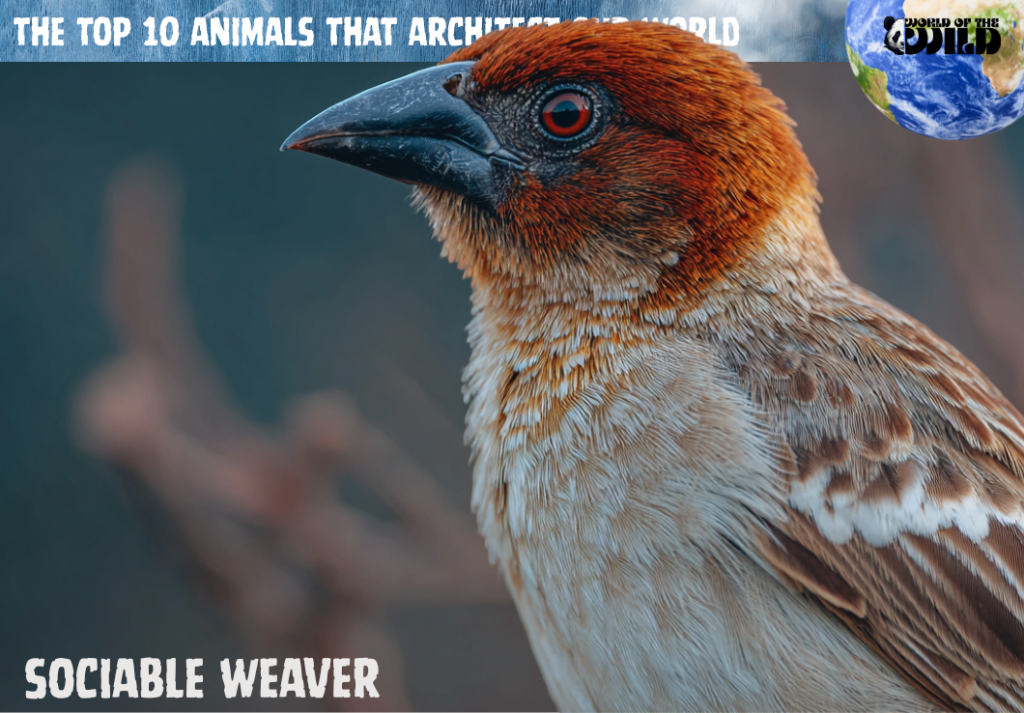
3. The Sociable Weaver — Apartment Complex Architects of the Kalahari (Southern Africa)
Somewhere in the dry thornveld of the Kalahari Desert, there’s a tree that looks like it’s wearing an enormous haystack as a hat. Look again — that’s a sociable weaver nest, and it may be the most extraordinary communal structure built by any bird on the planet.
These small, sparrow-like birds build massive permanent nests from grass stalks, creating what is essentially a multi-generational apartment complex that can house up to 500 individual birds across more than 100 nesting chambers. The nests can weigh over a ton, occasionally bringing down the trees or telephone poles they’re built upon. Each individual pair has their own private chamber, but the outer structure is maintained communally — birds work together to repair and expand the nest continuously throughout the year.
The genius doesn’t stop with the weaver birds themselves. The deep interior chambers maintain a stable temperature — cool during scorching Kalahari summers, warm during cold winter nights. Pygmy falcons, a tiny raptor that builds no nest of its own, frequently moves into unused chambers, becoming a co-tenant (and possibly an unintentional security guard, deterring predators). The nest is also used by barbets, finches, and various other species. One bird’s building project becomes an entire neighborhood.
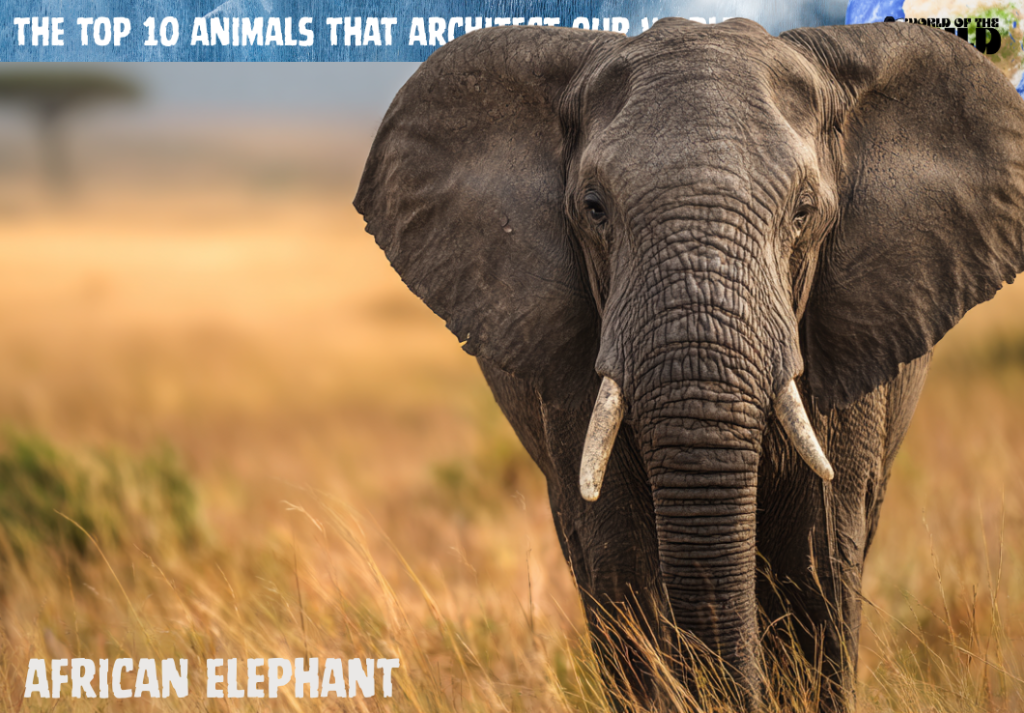
2. The African Elephant — Landscape Architects of the Savanna (Sub-Saharan Africa)
The African elephant doesn’t build anything in the traditional sense. It does something more powerful: it reshapes entire landscapes simply by going about its daily life, and in doing so, it creates habitat that would be impossible without it.
Elephants knock down trees — not randomly, but in ways that open up dense woodland to grass, creating the mosaic of habitats that makes savannas some of the most biodiverse places on Earth. They dig for water in dry riverbeds during droughts, creating waterholes that sustain hundreds of other species who have no capacity to excavate for themselves. Their footprints, wide and deep, collect rainwater and become micro-habitats for amphibians and insects. Their dung distributes seeds across vast distances while simultaneously fertilizing the soil.
The trails elephants carve through landscapes — used for generations, following ancient knowledge of water sources and mineral licks — become the roads that all other animals use. Remove elephants from a savanna, and the landscape literally closes in. Woodland reclaims open areas, waterholes dry up, the trails disappear. Dozens of species that depended on elephant engineering simply have nowhere left to go.
Learn more about the African Elephant here at World of the Wild
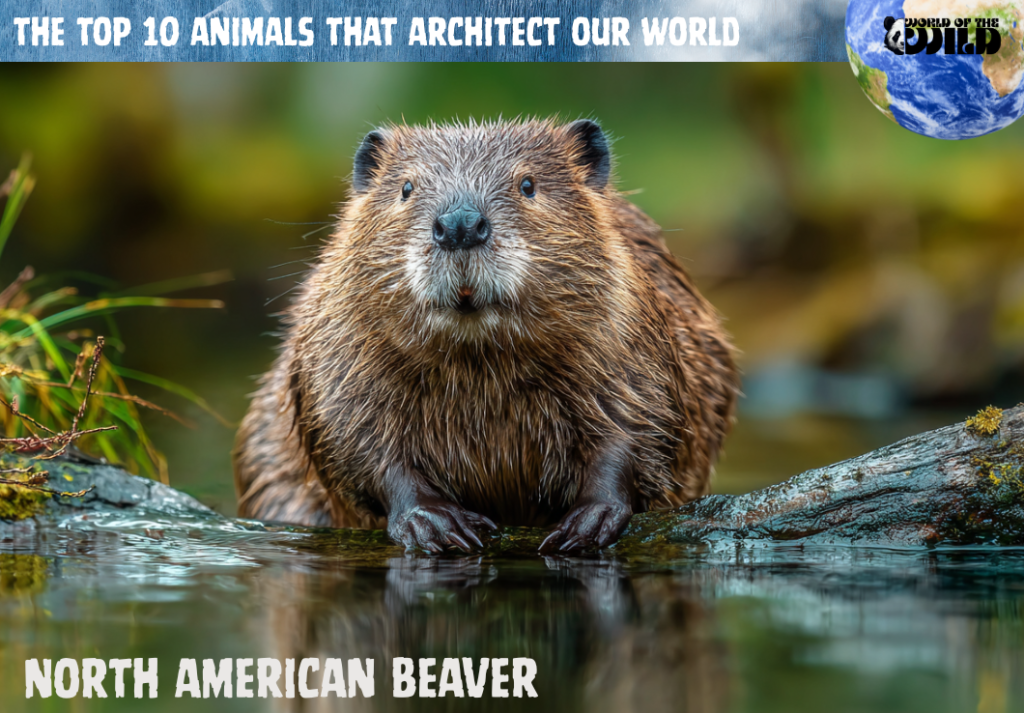
1. The North American Beaver — The Ultimate Hydraulic Engineers (Boreal Forests)
No animal on Earth — with the exception of humans — has transformed more landscape than the North American beaver. Before European colonization, beavers were estimated to number 60 to 400 million across North America, and the continent they shaped was almost unrecognizable compared to what we see today. The vast wetland systems that once covered much of the interior of the continent — teeming with waterfowl, fish, amphibians, and aquatic mammals — were largely beaver-made.
The beaver’s engineering toolkit is devastatingly effective. Using only its teeth, its forepaws, and an apparently inexhaustible work ethic, a single beaver pair can fell hundreds of trees per year, construct dams that withstand significant flooding, and excavate canal systems to float building materials to the worksite. Their dams back up water, creating ponds that flood surrounding forest, and over time those ponds become wetlands — among the most biologically productive ecosystems on the planet.
A single beaver wetland supports an almost absurd range of life: moose wade in the shallows eating aquatic plants, ospreys and herons fish the clear waters, wood ducks nest in flooded snags, mink patrol the banks, and hundreds of dragonfly species breed in the still water. The dam itself slows water flow through the watershed, reducing downstream flooding, filtering sediment, and recharging groundwater — a service that human engineers spend billions of dollars trying to replicate with concrete and steel.
When beavers were trapped to near-extinction across North America in the 18th and 19th centuries, streams ran faster, cut deeper, and dried up in summer. Wetlands disappeared. Species vanished. The restoration of beaver populations has become one of the most cost-effective tools in conservation, with wildlife managers now actively reintroducing beavers to degraded river systems to rewild landscapes at a fraction of the cost of mechanical intervention.
The beaver doesn’t just build a dam. It builds a world.
Why This Matters
These ten species are not curiosities. They are the load-bearing walls of the ecosystems they inhabit. Their disappearance — whether through habitat loss, hunting, climate change, or the slow erosion of wild spaces — doesn’t just remove one species from a list. It removes the architect from the building, and everything built around their work begins to fall.
Understanding them is the first step. Protecting them is the next.
Stay curious. Stay wild. WorldOfTheWorld.net
Did we miss your favorite animal architect? Tell us in the comments — and share this article to spread the word about the builders keeping our planet standing.