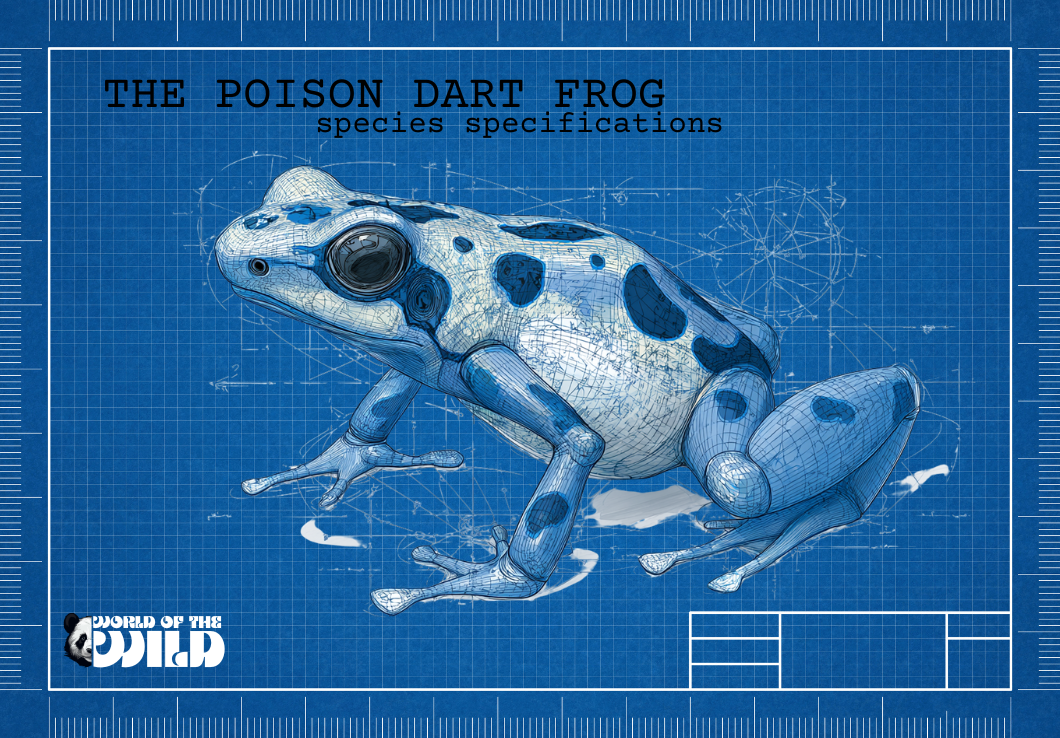

Common Name: Poison Dart Frog (also Poison Arrow Frog)
Family: Dendrobatidae
Native Range: Central and South America (tropical rainforests)
Conservation Status: Varies by species (some Least Concern, others Critically Endangered)
Physical Specifications
Size Range: 0.5–2.5 inches (1.5–6 cm) in length, depending on species
Weight: 0.07–0.2 ounces (2–7 grams)
Coloration: Highly variable and species-dependent. Common patterns include brilliant blues, reds, oranges, yellows, greens, and blacks, often in striking combinations. The vibrant coloration serves as aposematic warning to potential predators.
Skin Texture: Smooth, moist, and permeable. Contains granular glands that secrete alkaloid toxins in wild specimens.
Sexual Dimorphism: Females are typically slightly larger than males. Males often have enlarged toe pads and more prominent vocal sacs.
Toxicity Profile
Toxin Type: Lipophilic alkaloid compounds (batrachotoxins, pumiliotoxins, allopumiliotoxins, and others)
Toxin Source: Sequestered from dietary arthropods in the wild, primarily mites, ants, and beetles. Captive-bred specimens fed standard diets are non-toxic.
Toxicity Level: Varies dramatically by species. The golden poison frog (Phyllobates terribilis) contains enough batrachotoxin to potentially kill 10–20 humans, making it one of Earth’s most toxic animals. Most species are considerably less toxic.
Mechanism of Action: Alkaloids interfere with sodium channel function in nerve and muscle cells, potentially causing paralysis, cardiac failure, and death.
Medical Significance: Indigenous peoples of Colombia have historically used secretions from Phyllobates species to poison blowgun darts for hunting.
Habitat Requirements
Climate Zone: Tropical and subtropical
Temperature Range: 70–80°F (21–27°C) preferred
Humidity: 80–100% relative humidity required
Elevation: Sea level to 4,200 feet (1,280 meters), species-dependent
Microhabitat: Leaf litter, understory vegetation, near streams and water sources. Require high moisture and dense canopy cover.
Behavioral Characteristics
Activity Period: Diurnal (active during daylight hours)
Territoriality: Males are highly territorial, defending areas of 4–12 square meters through vocalizations and physical combat
Vocalization: Males produce species-specific calls for territorial defense and mate attraction, typically consisting of trills, buzzes, and chirps at frequencies of 2–6 kHz
Social Structure: Generally solitary except during breeding season
Lifespan: 3–15 years in the wild; up to 20+ years in captivity with proper care
Reproductive Specifications
Sexual Maturity: 12–18 months
Breeding Season: Year-round in stable tropical climates, though often peaks during rainy periods
Courtship: Males call from prominent positions. Females approach males and initiate amplexus.
Clutch Size: 2–12 eggs per clutch, depending on species
Egg Development Time: 10–18 days until hatching
Parental Care: Extensive. One or both parents transport tadpoles on their backs to water-filled bromeliads, tree holes, or small pools. Some species exhibit maternal feeding, where females deposit unfertilized eggs for tadpoles to consume.
Tadpole Development: 60–90 days from hatching to metamorphosis
Dietary Requirements
Classification: Carnivorous (insectivorous)
Primary Diet Components: Ants, termites, mites, springtails, small beetles, and other arthropods under 5mm in length
Feeding Frequency: Multiple times daily; active foragers
Feeding Method: Visual hunters that use their sticky tongues to capture prey
Water Requirements: No drinking required; water absorbed through permeable skin
Sensory Systems
Vision: Well-developed color vision; motion-sensitive for detecting small prey
Hearing: Tympanic membrane present; sensitive to conspecific calls and environmental sounds
Chemoreception: Moderate; uses olfaction and taste for environmental assessment
Tactile Sensitivity: High sensitivity through permeable skin
Conservation Notes
Primary Threats: Habitat destruction, climate change, chytridiomycosis (fungal disease), illegal collection for pet trade
Protected Status: Many species listed under CITES (Convention on International Trade in Endangered Species)
Captive Breeding Programs: Extensively bred in captivity; most specimens in the pet trade are captive-bred and non-toxic
Notable Species
Strawberry Poison Dart Frog (Oophaga pumilio): Red with blue legs; extensive color variation across populations
Blue Poison Dart Frog (Dendrobates tinctorius azureus): Brilliant blue with black spots; popular in captivity
Golden Poison Frog (Phyllobates terribilis): Solid yellow-orange; most toxic vertebrate known
Green and Black Poison Dart Frog (Dendrobates auratus): Green or blue with black banding; highly adaptable
Discover the secrets behind nature’s most colorful warning system. Explore our complete Poison Dart Frog guide to learn about their stunning varieties, unique behaviors.