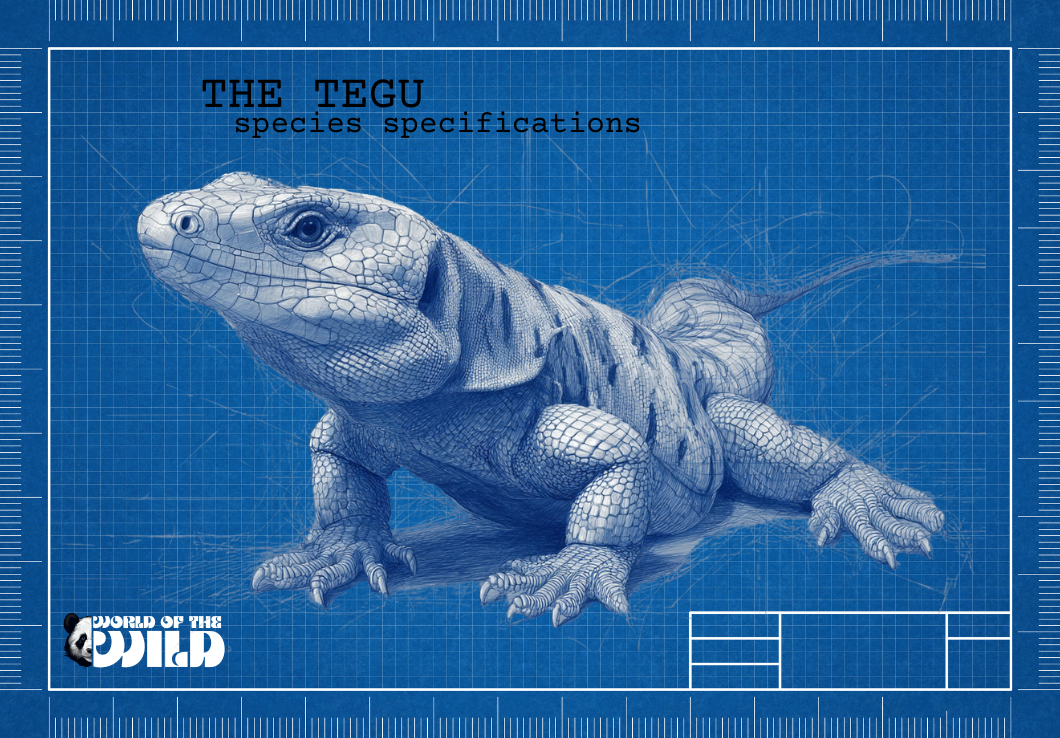

Scientific Classification
Common Name: Tegu (Argentine Black and White Tegu)
Scientific Name: Salvator merianae (formerly Tupinambis merianae)
Family: Teiidae
Order: Squamata
Native Range: South America (Argentina, Brazil, Paraguay, Uruguay)
Physical Specifications
Adult Size: 3 to 4.5 feet (0.9 to 1.4 meters) in total length, with some males reaching up to 5 feet (1.5 meters)
Weight: 7 to 12 pounds (3.2 to 5.4 kg) for adults, with males typically larger than females
Body Structure: Robust, muscular build with powerful limbs, strong jaws, and a long, whip-like tail that comprises roughly half of total body length
Coloration: Juveniles display bright green heads with black bodies marked with white bands. Adults transition to black base color with white or cream-colored banding patterns across the body. Color intensity varies by individual and increases during breeding season.
Scales: Beaded appearance with small, granular scales on the body and larger, keeled scales on the tail
Sexual Dimorphism: Males develop larger jowls (jowl hypertrophy), broader heads, and heavier bodies than females. Males also display more pronounced coloration during breeding season.
Physiological Characteristics
Lifespan: 15 to 20 years in captivity with proper care, potentially longer
Temperature Regulation: Ectothermic (cold-blooded), requiring external heat sources. Capable of limited endothermy during reproductive season when females can elevate body temperature to incubate eggs.
Activity Pattern: Diurnal (active during daylight hours)
Brumation: Undergoes winter dormancy period (brumation) in cooler months, typically 2 to 4 months depending on climate
Habitat Requirements
Climate: Tropical and subtropical regions with distinct wet and dry seasons
Terrain: Terrestrial, preferring areas with dense vegetation, forest edges, and savannas. Semi-fossorial, often utilizing burrows for shelter and thermoregulation.
Captive Housing Minimum: 8 feet long × 4 feet wide × 4 feet tall (2.4 × 1.2 × 1.2 meters) for a single adult, though larger is preferable
Temperature Gradient (Captive):
- Basking spot: 100-110°F (38-43°C)
- Warm side: 85-95°F (29-35°C)
- Cool side: 75-80°F (24-27°C)
- Night temperature: 70-75°F (21-24°C)
Humidity Requirements: 60-80% relative humidity, with higher levels during shedding
Dietary Specifications
Classification: Omnivorous with seasonal variation
Protein Sources: Whole prey items (rodents, chicks, fish), insects (crickets, dubia roaches, superworms), eggs, and high-quality dog or cat food
Plant Matter: Dark leafy greens, fruits (mango, banana, berries), vegetables, and flowers. Plant consumption increases in warmer months.
Feeding Ratio: Juveniles require 70-80% protein, 20-30% plant matter. Adults shift to approximately 60% protein, 40% plant matter, with increased plant consumption in spring and summer.
Feeding Frequency: Juveniles require daily feeding, adults typically eat every 2-3 days
Behavioral Characteristics
Temperament: Highly intelligent with individual personality variation. Can become docile and handleable with consistent, positive interaction from a young age. Wild-caught or improperly socialized individuals may display defensive aggression.
Intelligence Level: Among the most intelligent lizards, capable of problem-solving, recognizing individual humans, and learning routines
Social Structure: Solitary in the wild except during breeding season
Defense Mechanisms: Tail whipping, biting, defecation, and hissing when threatened. Tail can be shed (autotomy) but does not regenerate as completely as in some other lizards.
Reproductive Specifications
Sexual Maturity: 2 to 3 years of age
Breeding Season: Spring (September-October in Southern Hemisphere, March-April in Northern Hemisphere)
Clutch Size: 10 to 70 eggs per clutch, typically 20-35
Incubation Period: 45 to 65 days at temperatures of 84-88°F (29-31°C)
Nesting Behavior: Females create nests in burrows or leaf litter and may guard eggs for a portion of the incubation period
Conservation Status
IUCN Status: Not evaluated, though considered common in native range
Threats: Habitat loss, collection for pet trade, hunting for meat and leather in some regions
Invasive Populations: Established breeding populations exist in central and southern Florida (USA), where they are considered an invasive species and pose threats to native wildlife
Legal Status
Regulation: Varies by location. Banned or restricted in some U.S. states and municipalities. May require permits in certain jurisdictions. Classified as a conditional species in Florida, where ownership of new animals is prohibited as of 2021.
Maintenance Requirements (Captive)
Experience Level: Intermediate to advanced reptile keeper
Daily Time Commitment: 30-60 minutes for feeding, cleaning, interaction, and monitoring
Veterinary Care: Annual wellness examinations recommended. Access to experienced reptile veterinarian essential.
Special Considerations: Large space requirements, high food costs, powerful jaws capable of inflicting serious bites, long-term commitment due to lifespan, and need for brumation period in captive care for optimal health.