
Standing beneath the scorching African sun, ears spread wide like enormous sails, the African elephant commands the landscape with a presence that has inspired awe for millennia. These magnificent creatures are not merely the largest land animals on Earth—they are ecosystem engineers, cultural icons, and some of the most intelligent beings to walk our planet. With their intricate social structures, remarkable memories, and crucial role in shaping the African wilderness, elephants represent one of nature’s most extraordinary evolutionary achievements. Yet despite their size and strength, these gentle giants face an uncertain future that demands our immediate attention and action.
Facts
- Elephant “handedness” is real: Just as humans favor one hand, elephants prefer one tusk over the other, which becomes more worn down from regular use for digging, stripping bark, and fighting.
- They can “hear” through their feet: African elephants detect seismic vibrations through specialized cells in their feet and trunks, allowing them to communicate with other elephants up to 20 miles away through low-frequency rumbles that travel through the ground.
- Self-medication experts: Elephants have been observed seeking out specific plants to induce labor, treat parasites, and alleviate various ailments, demonstrating a sophisticated understanding of their environment’s medicinal properties.
- Skin requires constant care: Despite appearing thick and tough, elephant skin is extremely sensitive and can get sunburned. This is why elephants regularly coat themselves in mud and dust—it acts as natural sunscreen and insect repellent.
- They have a sixth toe: African elephants possess a structure called the “prepollex”—a sixth, cartilaginous toe-like projection that helps support their enormous weight, discovered only through modern imaging techniques.
- Mourning rituals are complex: Elephants return to the bones of deceased family members years after death, gently touching and examining the remains, particularly the skulls and tusks, in what appears to be a form of remembrance.
- Trunk mastery takes years: Baby elephants lack full control of their trunks for the first year of life, often stepping on them or swinging them aimlessly as they learn to master this 40,000-muscle appendage.
Sounds of the African Elephant
Species
Kingdom: Animalia
Phylum: Chordata
Class: Mammalia
Order: Proboscidea
Family: Elephantidae
Genus: Loxodonta
Species: Loxodonta africana (African bush elephant) and Loxodonta cyclotis (African forest elephant)
For over a century, African elephants were considered a single species with two subspecies. However, genetic research has revealed that African elephants actually comprise two distinct species that diverged between 2 and 7 million years ago. The African bush elephant (also called the savanna elephant) is the larger and more widely distributed species, roaming the grasslands, woodlands, and semi-desert regions across sub-Saharan Africa. The African forest elephant, once thought merely a smaller variant, inhabits the dense rainforests of West and Central Africa and possesses straighter, downward-pointing tusks, rounder ears, and a different number of toenails.
These two species are as genetically distinct from each other as Asian elephants are from mammoths. A third potential species, the West African elephant, has been proposed based on genetic studies, but this classification remains under scientific debate. This distinction is crucial for conservation efforts, as each species faces unique challenges and requires tailored protection strategies.
Appearance
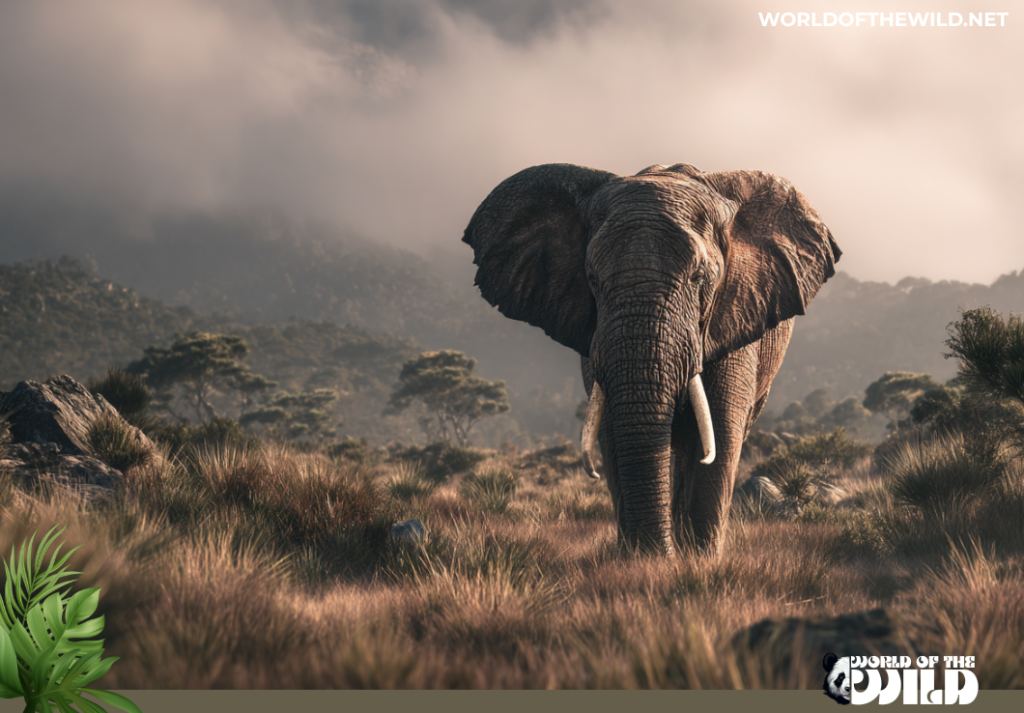
The African bush elephant holds the title of Earth’s largest terrestrial animal, with males (bulls) reaching heights of 10 to 13 feet at the shoulder and weighing between 10,000 and 13,000 pounds, though exceptional individuals can exceed 24,000 pounds. Females (cows) are notably smaller, typically standing 8 to 9 feet tall and weighing 6,000 to 8,000 pounds. African forest elephants are considerably smaller, with bulls rarely exceeding 8 feet in height and 13,000 pounds in weight.
Their most distinctive feature is undoubtedly the trunk, a fusion of the nose and upper lip containing approximately 40,000 individual muscles arranged in intricate patterns that provide extraordinary dexterity. This remarkable appendage can lift over 600 pounds yet is sensitive enough to pluck a single blade of grass or manipulate small objects with precision. At the trunk’s tip, African elephants possess two finger-like projections, unlike their Asian cousins who have only one.
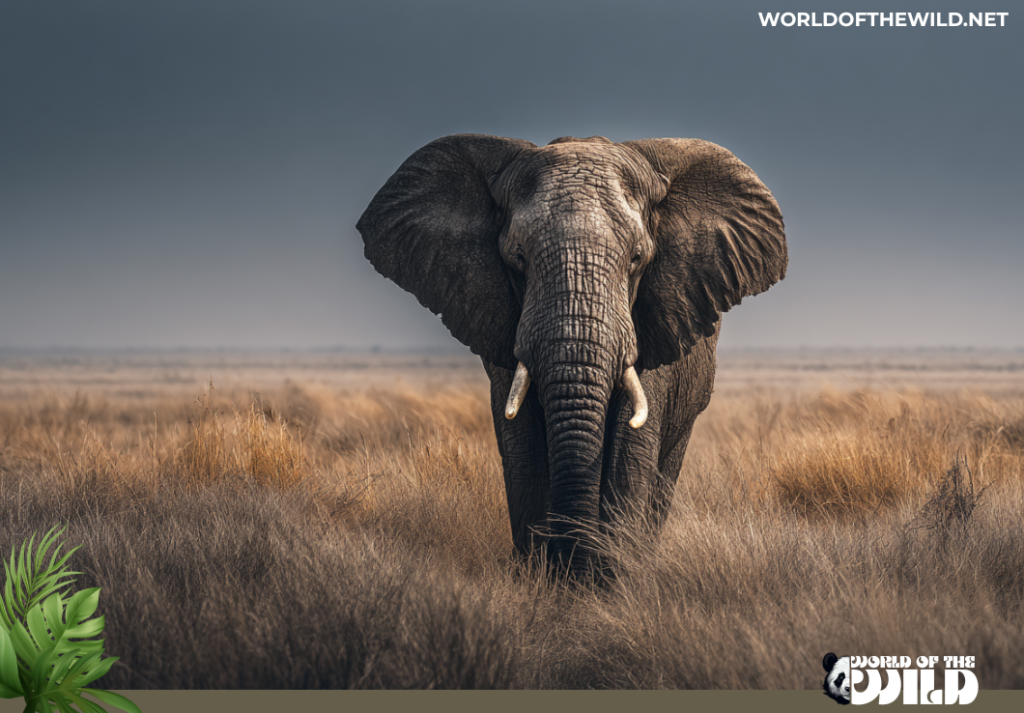
The ears of African elephants are dramatically larger than those of Asian elephants, shaped remarkably like the African continent itself. These massive appendages, measuring up to 6 feet in length, serve as natural air conditioners; the thin skin is laced with an extensive network of blood vessels that release heat as blood circulates through them. Elephants flap their ears to cool this blood before it returns to the body, potentially lowering their body temperature by several degrees.
Both male and female African elephants typically possess tusks, which are actually elongated incisor teeth composed of dentin. These impressive weapons and tools can grow throughout an elephant’s lifetime, with the largest recorded tusk weighing 214 pounds and measuring 11 feet in length. However, increasing poaching pressure has led to a troubling evolutionary trend—populations with higher rates of naturally tuskless females, particularly in areas with intense ivory hunting.
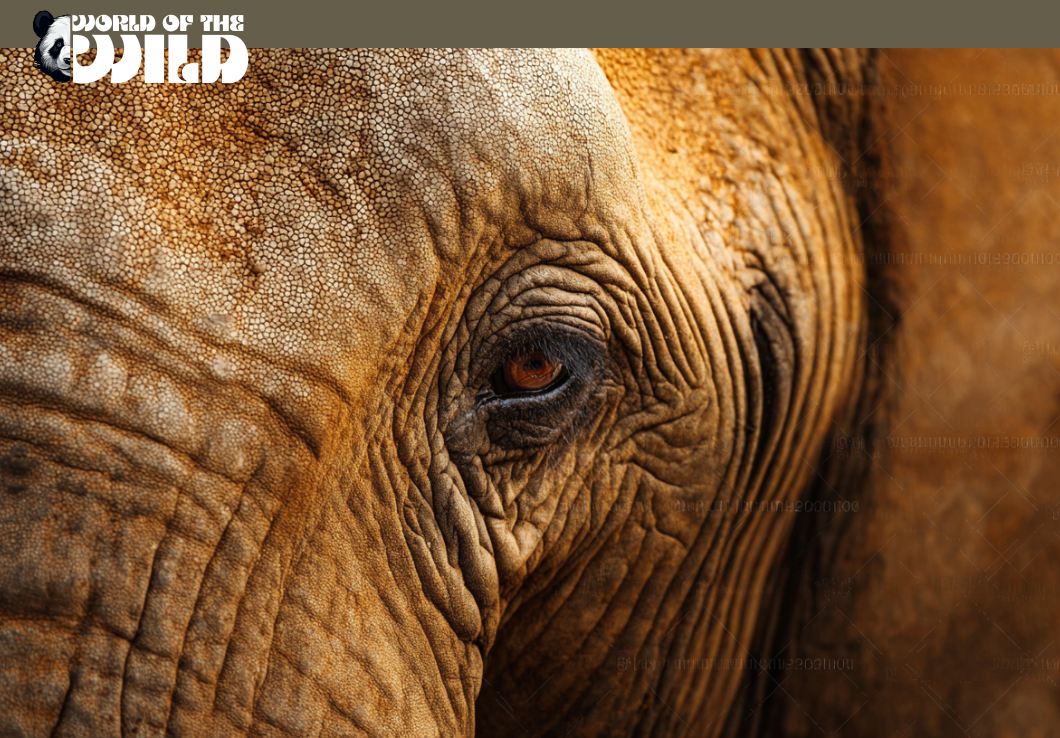
Their wrinkled, gray skin, which can be up to 1.5 inches thick in some areas, serves multiple purposes beyond protection. The deep folds and crevices increase surface area, helping retain moisture and keep the skin cool. Young elephants are often more brownish or reddish in appearance, with their color influenced by the soil in which they regularly dust-bathe.
Behavior
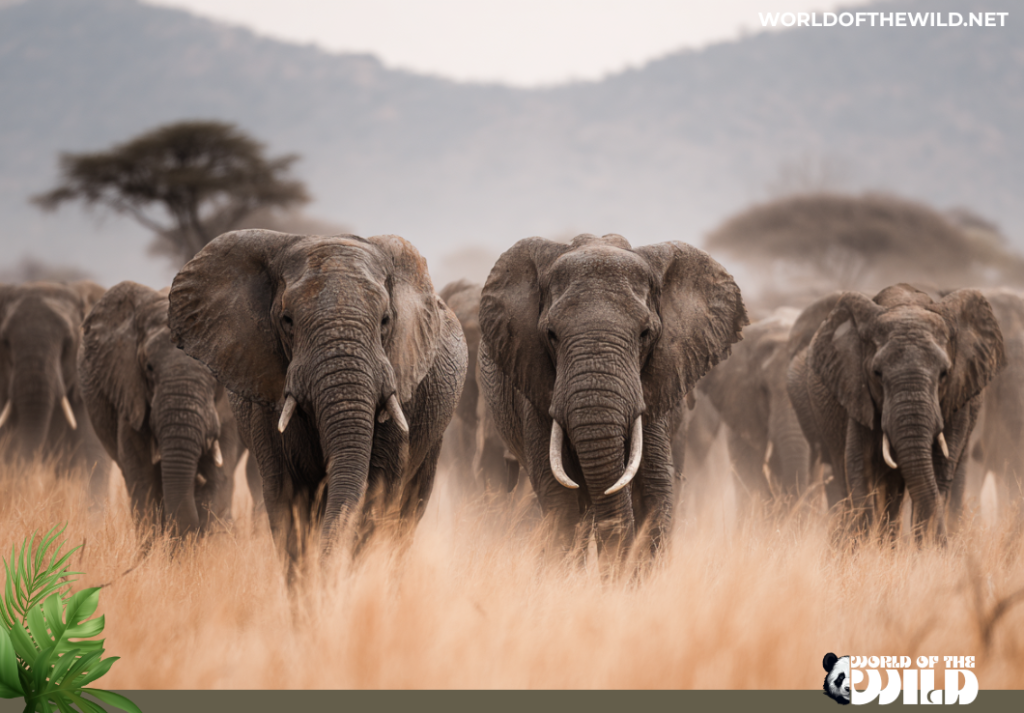
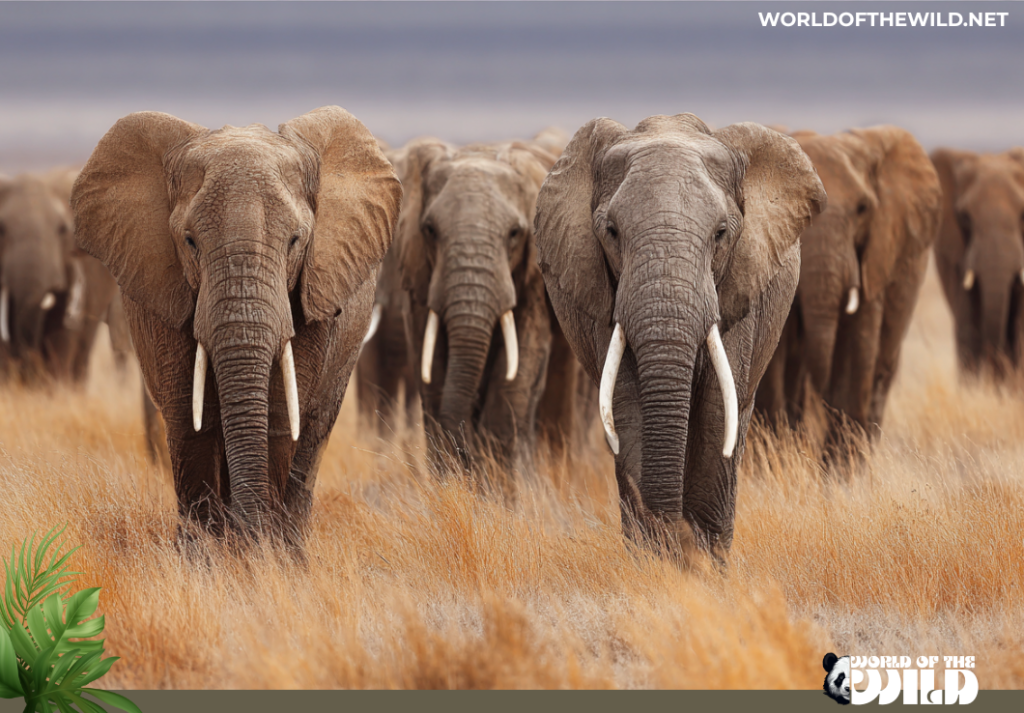
African elephants live in complex, multi-tiered matriarchal societies that rival primates in their sophistication. The core social unit is the family group, typically consisting of related females and their offspring led by the oldest and often largest female, known as the matriarch. Her experience and knowledge of resources, migration routes, and survival strategies are literally matters of life and death for her family. Research has shown that groups led by older matriarchs have significantly higher survival rates during droughts and other crises.
These family units may join with other related families to form larger kinship groups called bond groups, and multiple bond groups occasionally gather into massive clans that can number in the hundreds. Male elephants leave their family groups upon reaching adolescence (around 12-15 years old) and either live solitary lives or form loose bachelor groups. Older bulls, known as “askaris,” sometimes mentor younger males, teaching them essential survival and social skills.
Communication among elephants is extraordinarily sophisticated, utilizing vocalizations, body language, chemical signals, and seismic vibrations. They produce sounds across a remarkable range of frequencies, from high-pitched trumpets and screams to infrasonic rumbles below the threshold of human hearing (as low as 14 Hz). These low-frequency calls can travel for miles, allowing elephants to coordinate movements, warn of danger, and maintain social bonds across vast distances.
Touch is fundamental to elephant society. Family members regularly interact through trunk-to-mouth greetings, trunk intertwining, and gentle touching—behaviors that reinforce social bonds and provide comfort. Elephants demonstrate empathy, helping injured or distressed individuals, whether family members or strangers. They’ve been observed trying to lift fallen companions, standing vigil over the dying, and showing signs of grief that can last for days or even years.
Their intelligence manifests in numerous ways, from using tools (such as branches as flyswatters or to scratch hard-to-reach places) to demonstrating self-awareness in mirror tests—a cognitive milestone achieved by only a handful of species. Elephants remember the locations of water sources over decades and can navigate to them across hundreds of miles. They recognize individual humans, distinguishing between those who pose threats and those who don’t, and can even differentiate between different human languages and age groups based on voice alone.
Evolution
The story of elephant evolution spans 60 million years and begins with small, pig-sized creatures that bore little resemblance to their modern descendants. The first proboscideans emerged in Africa during the Paleocene epoch, with Eritherium being among the earliest known ancestors. These primitive relatives lacked trunks and tusks, possessing instead slightly elongated snouts and enlarged second incisors.
The true evolutionary diversification of elephants began during the Oligocene epoch, approximately 35 million years ago. Moeritherium, often depicted as an early elephant ancestor, was semi-aquatic and stood only about 2 feet tall, though recent analyses suggest it may have been more of an evolutionary side branch than a direct ancestor.
The Miocene epoch witnessed an explosion of proboscidean diversity, with over 40 genera roaming across Africa, Eurasia, and eventually the Americas. This period produced spectacular varieties, including the four-tusked Gomphotheres, the massive Deinotheres with their downward-curving lower tusks, and the long-jawed Platybelodon, sometimes called the “shovel-tusker.”
True elephants (family Elephantidae) emerged around 7 million years ago during the Pliocene. The genus Loxodonta (African elephants) split from the lineage leading to Asian elephants approximately 7.6 million years ago. As mentioned earlier, the African bush and forest elephants themselves diverged between 2 and 7 million years ago, making them distinct species despite their morphological similarities.
The Pleistocene epoch saw the rise of the famous woolly mammoths and straight-tusked elephants, some of which grew even larger than modern elephants. The Colombian mammoth, which inhabited North America, could weigh up to 22,000 pounds. The extinction of these magnificent creatures around 10,000-4,000 years ago coincided with climate changes at the end of the last ice age and increasing human hunting pressure—a grim foreshadowing of the challenges modern elephants face today.
Habitat
African bush elephants occupy one of the most extensive ranges of any large land mammal, found across 37 countries in sub-Saharan Africa from the southern edge of the Sahara Desert to the Cape of Good Hope. Their distribution, however, has become increasingly fragmented due to human activities. They inhabit an impressive diversity of environments, including savannas, woodlands, marshes, semi-desert regions, and even montane forests at elevations up to 13,000 feet.
The classic image of elephants roaming the African savanna is accurate for bush elephants, which thrive in these open grasslands dotted with acacia trees. These ecosystems provide the abundant vegetation elephants require while offering the space necessary for their wide-ranging movements. Seasonal migration patterns can see herds traveling hundreds of miles following rainfall and the subsequent greening of vegetation, relying on traditional knowledge passed down through generations.
African forest elephants, by contrast, inhabit the dense tropical rainforests of Central and West Africa, particularly the Congo Basin—the world’s second-largest rainforest. These elephants have adapted to life beneath the canopy, creating and maintaining networks of trails through otherwise impenetrable jungle. They play a crucial role as “megagardeners,” dispersing seeds of large-fruited trees that no other animal can process, thereby shaping the very structure of the forest.
Regardless of specific habitat type, all elephants require access to substantial water sources. An adult elephant can drink up to 50 gallons of water per day and needs to drink daily during most of the year. During dry seasons, elephants dig wells in dry riverbeds, accessing underground water reserves that other animals then utilize, demonstrating their role as ecosystem engineers who create resources for entire communities of species.
Diet
African elephants are herbivores with appetites befitting their enormous size. An adult can consume between 300 and 600 pounds of vegetation daily—roughly 4 to 6 percent of their body weight—spending 12 to 18 hours each day feeding. This constant need to eat drives much of their daily behavior and movement patterns.
Their diet is remarkably diverse, consisting of grasses, leaves, bark, roots, fruits, and flowers. Bush elephants primarily feed on grasses during the wet season when vegetation is lush, transitioning to browsing on trees, shrubs, and bark during drier periods. They show surprising selectivity, preferring certain plant species and even specific parts of plants based on nutritional content and seasonal availability. Their trunk allows them to be remarkably precise feeders, carefully selecting the most nutritious leaves or the ripest fruits.
Forest elephants consume higher proportions of fruit than their savanna cousins, playing an irreplaceable role in seed dispersal. They can consume and disperse seeds from over 100 different tree species, many of which rely exclusively on elephants for propagation. The seeds pass through the elephant’s digestive system over 24 to 96 hours, often emerging scarified and deposited in a nutrient-rich pile of dung far from the parent tree—perfect conditions for germination.
Elephants are also creative problem-solvers when it comes to feeding. They use their tusks to strip bark from trees, dig for roots and minerals, and knock down entire trees to access otherwise unreachable foliage. While this behavior is essential for elephant survival and actually benefits savanna ecosystems by preventing tree encroachment into grasslands, it can cause conflicts in areas where elephants and humans compete for resources.
Their digestive system is relatively inefficient, processing only about 40 percent of what they consume. This inefficiency is offset by the sheer volume they eat, but it also means that elephant dung remains rich in nutrients and plays a crucial ecological role, supporting countless insects, birds, and plants while cycling nutrients back into the soil.
Predators and Threats
Adult African elephants have no natural predators, their size and strength rendering them virtually invincible to even the most formidable carnivores. However, elephant calves face dangers from lions, hyenas, and occasionally crocodiles, particularly when separated from the protective circle of their family. Mother elephants and other family members vigilantly guard young calves, and entire herds will mob or charge predators that venture too close to vulnerable infants.
The true threat to African elephants comes overwhelmingly from humans. Poaching for ivory remains the single greatest direct threat, driven by demand primarily from Asian markets where ivory is carved into ornaments, jewelry, and traditional medicines. The scale of this slaughter is staggering—during peak poaching years in the 2000s and early 2010s, an estimated 20,000 to 30,000 elephants were killed annually for their tusks. While international efforts have reduced these numbers, poaching continues to devastate populations, particularly in Central Africa.
Habitat loss and fragmentation pose an equally insidious threat. Africa’s human population is expected to double by 2050, placing enormous pressure on remaining wild spaces. Agricultural expansion, infrastructure development, and human settlement have confined elephants to increasingly isolated patches of habitat. This fragmentation disrupts traditional migration routes, reduces genetic diversity, and intensifies human-elephant conflict.
As elephants and humans compete for space and resources, conflicts escalate. Elephants raid crops, causing significant economic damage to subsistence farmers who can ill afford such losses. In retaliation, elephants are sometimes poisoned, shot, or injured in snares meant for other animals. These conflicts kill hundreds of elephants and humans each year, creating a tragic cycle of violence that threatens both species.
Climate change adds another layer of complexity. Increasing droughts, shifting rainfall patterns, and habitat degradation stress elephant populations already struggling with other threats. Water sources dry up earlier, forcing elephants into closer contact with human settlements. Food scarcity during extended dry periods leads to increased calf mortality and reduced reproductive success.
Reproduction and Life Cycle
African elephants have one of the longest reproductive cycles of any mammal, reflecting their size, intelligence, and social complexity. Females typically reach sexual maturity between 10 and 12 years of age, though they may not breed successfully until several years later. Males mature later, around 15 to 20 years old, but rarely get the opportunity to mate until they’re in their 30s or 40s and large enough to compete with other males.
Female elephants experience estrus (reproductive receptivity) for just a few days every four months or so. During this time, they emit powerful pheromones and distinctive vocalizations that attract males from considerable distances. Dominant bulls in musth—a period of dramatically elevated testosterone levels associated with heightened aggression and sexual activity—compete for mating opportunities. Musth bulls can be dangerous, even to humans, and their temporal glands secrete a pungent, tar-like substance while they dribble urine continuously.
Mating pairs may stay together for a few days, mating multiple times. The gestation period is approximately 22 months—the longest of any land mammal—resulting in the birth of a single calf weighing between 200 and 250 pounds. Twins occur in less than 1 percent of births. The extended pregnancy allows for substantial fetal development, and calves can stand and walk within hours of birth, though they remain highly dependent on their mothers.
Newborn elephants are the center of attention in the herd. All females participate in caring for and protecting calves, a behavior known as allomothering. This communal care provides young elephants with multiple caregivers and teachers, crucial for learning the complex behaviors necessary for survival. Calves nurse for 2 to 3 years or longer, though they begin experimenting with vegetation within the first few months.
The mother-calf bond is profound and enduring. Female elephants often remain with their mothers for life, while males maintain connections even after leaving the family group. The learning period for elephants is extensive—they don’t reach full maturity until their late teens or early twenties, and they continue learning throughout their lives from the experience of older individuals.
In the wild, African elephants can live 60 to 70 years, with females typically outliving males. The oldest recorded elephant was believed to be 86 years old. Their teeth are replaced six times throughout their lives, and when the final set wears down in old age, elephants can no longer process food adequately, leading to starvation—the primary natural cause of death for elderly elephants.
Population
The conservation status of African elephants is complex and has recently been revised to reflect the recognition of two distinct species. The African bush elephant is classified as Endangered on the IUCN Red List, while the African forest elephant is listed as Critically Endangered—a stark acknowledgment of the dire situation facing forest elephants in particular.
Population estimates for African elephants have varied considerably due to the difficulties of surveying these wide-ranging animals across vast and sometimes inaccessible terrain. The most comprehensive recent assessment, completed in 2016 by the Great Elephant Census and updated with more recent data, estimates the total African elephant population at approximately 415,000 individuals. However, some estimates range from 350,000 to 470,000 when accounting for survey limitations and elephants in areas not covered by systematic counts.
This represents a catastrophic decline from historical numbers. At the beginning of the 20th century, an estimated 3 to 5 million elephants roamed across Africa. Even as recently as the 1970s, populations numbered around 1.3 million. The species has lost approximately 90 percent of its historic range, and populations have declined by roughly 30 percent between 2007 and 2014 alone, primarily due to poaching.
The distribution of populations is highly uneven. Southern African countries, particularly Botswana, Zimbabwe, and South Africa, hold the majority of Africa’s elephants, with relatively stable or even growing populations in some areas thanks to strong conservation efforts and management. In contrast, Central and West African populations have been devastated, with many countries experiencing declines exceeding 80 percent over the past few decades.
Forest elephant populations are particularly precarious, with estimates suggesting fewer than 100,000 individuals remain. Their habitat in Central Africa has seen some of the most intense poaching pressure, and the remoteness of these regions makes protection efforts challenging.
There are, however, reasons for cautious optimism. Some populations are stable or recovering thanks to intensive anti-poaching efforts, community-based conservation programs, and international cooperation. Countries like Kenya have seen remarkable success in reducing poaching through investment in ranger forces, intelligence networks, and harsh penalties for wildlife crime. The international ban on ivory trade, though imperfectly enforced, has reduced demand in some markets.
Conclusion
African elephants stand as both a triumph of evolution and a testament to nature’s majesty, yet they find themselves at a critical juncture. These intelligent, emotionally complex creatures who mourn their dead, demonstrate empathy, and shape entire ecosystems through their daily activities deserve our protection not merely for their sake, but for the health of the African wilderness itself. The distinction between bush and forest elephants underscores that we’re not protecting one species but rather a diverse group of magnificent animals, each facing unique challenges.
The fate of African elephants ultimately rests in human hands. While the threats they face—poaching, habitat loss, human-elephant conflict, and climate change—are severe and multifaceted, they are not insurmountable. Success stories from Southern and East Africa demonstrate that with adequate resources, political will, and community engagement, elephant populations can stabilize and even recover. Supporting conservation organizations, advocating for stronger wildlife protection laws, making informed choices about ivory and wildlife products, and raising awareness about the elephants’ plight are all meaningful actions anyone can take.
These giants have walked the Earth for millions of years, surviving ice ages and dramatic climatic shifts. It would be an unforgivable tragedy if, in the span of just a few human generations, we allowed them to disappear. The rumble of elephants across the African landscape is not just a sound—it’s a voice from the deep past and a potential gift to the future, if only we choose to listen and act before it falls silent forever.
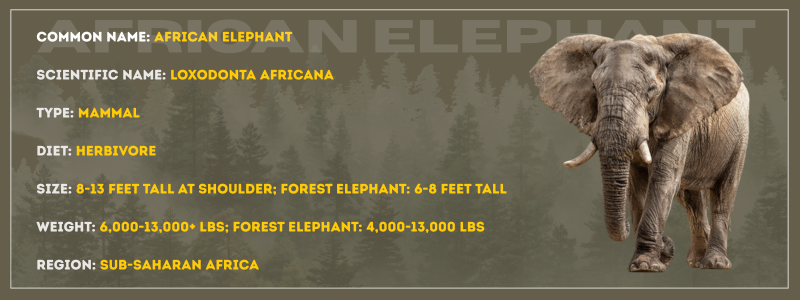
Scientific Name: Loxodonta africana (African bush elephant), Loxodonta cyclotis (African forest elephant)
Diet Type: Herbivore
Size: Bush elephant: 8-13 feet tall at shoulder; Forest elephant: 6-8 feet tall
Weight: Bush elephant: 6,000-13,000+ lbs; Forest elephant: 4,000-13,000 lbs
Region Found: Sub-Saharan Africa (bush elephants: savannas and woodlands across eastern and southern Africa; forest elephants: rainforests of Central and West Africa)