
On a humid summer evening near a pond or lake, you might hear one of nature’s most distinctive sounds: a deep, resonant “jug-o-rum” that carries across the water like the plucking of a bass string. This is the call of the American Bullfrog, the largest true frog native to North America and one of the continent’s most successful amphibians. With their massive size, voracious appetite, and remarkable adaptability, bullfrogs are both ecological marvels and cautionary tales about the impact invasive species can have when introduced beyond their native range. These impressive amphibians have become icons of wetland habitats while simultaneously demonstrating the complex balance of nature when that balance is disrupted.
Facts
- Incredible Jumpers: Despite their hefty size, American Bullfrogs can leap distances of up to six feet in a single bound, approximately ten times their body length.
- Cannibalistic Tendencies: Bullfrog tadpoles are known to eat smaller tadpoles of their own species, and adult bullfrogs will readily consume smaller adult bullfrogs when the opportunity arises.
- Explosive Breeders: A single female bullfrog can lay between 10,000 and 20,000 eggs in one breeding season, creating massive floating egg masses that can measure up to five feet across.
- Temperature-Dependent Sex: The sex of bullfrog tadpoles can be influenced by water temperature during development, with warmer temperatures producing more males in some populations.
- Wintertime Hibernators: Bullfrogs survive freezing winters by burrowing into mud at the bottom of ponds and entering a state of brumation, where their metabolism slows dramatically and they breathe through their skin.
- Vocal Sac Amplifiers: Male bullfrogs possess paired vocal sacs that inflate like balloons when calling, acting as resonating chambers that can amplify their calls to be heard over half a mile away.
- Longevity Champions: In the wild, American Bullfrogs can live 8-10 years, but in captivity with ideal conditions, they have been known to survive for 16 years or more.
Sounds of the American Bullfrog
Species
The American Bullfrog belongs to the following taxonomic classification:
- Kingdom: Animalia
- Phylum: Chordata
- Class: Amphibia
- Order: Anura
- Family: Ranidae (true frogs)
- Genus: Lithobates (formerly Rana)
- Species: Lithobates catesbeianus
The American Bullfrog is part of the diverse Ranidae family, which includes over 400 species of true frogs worldwide. Within North America, the bullfrog’s closest relatives include the Green Frog (Lithobates clamitans), which is often confused with juvenile bullfrogs, the Pig Frog (Lithobates grylio) of the southeastern United States, and the River Frog (Lithobates heckscheri). While there are no recognized subspecies of the American Bullfrog, some regional variation in size and coloration exists across its range. The species was originally described scientifically in 1802 and was named in honor of the English naturalist Mark Catesby.
Appearance
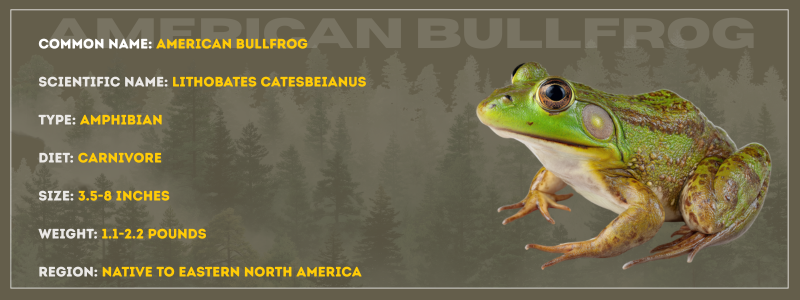
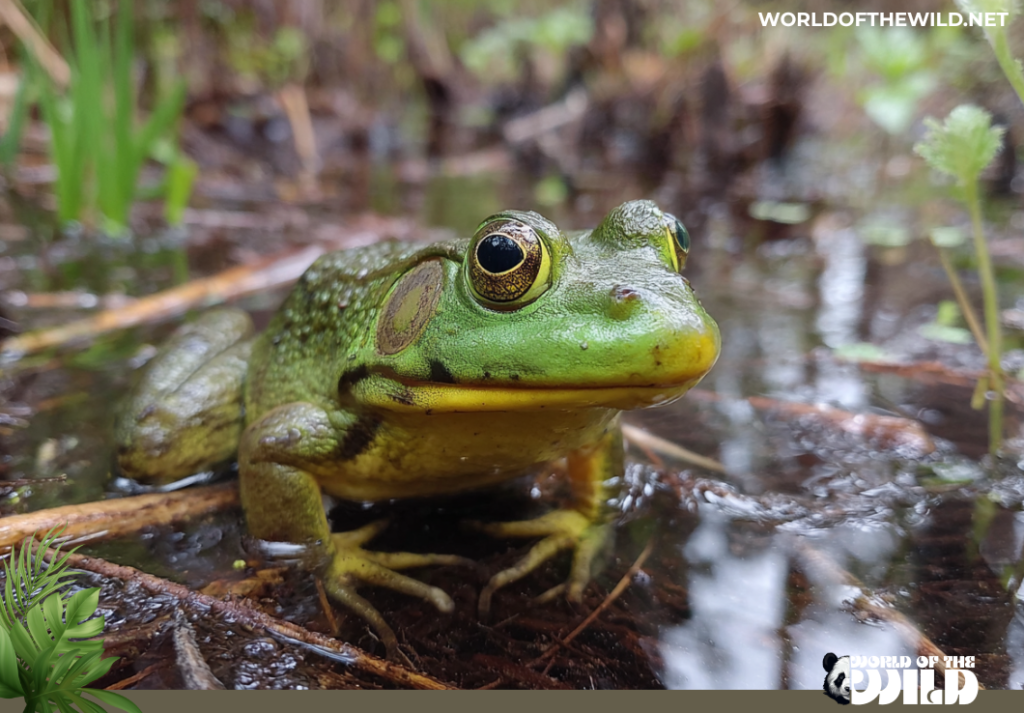
The American Bullfrog is an imposing amphibian and the largest true frog in North America. Adult bullfrogs typically measure between 3.5 to 6 inches in body length from snout to vent, though exceptional individuals can reach up to 8 inches. They are sexually dimorphic, with females generally larger than males. Males typically weigh between 1.1 to 1.8 pounds, while females can reach weights of up to 2.2 pounds, making them remarkably hefty for a frog.
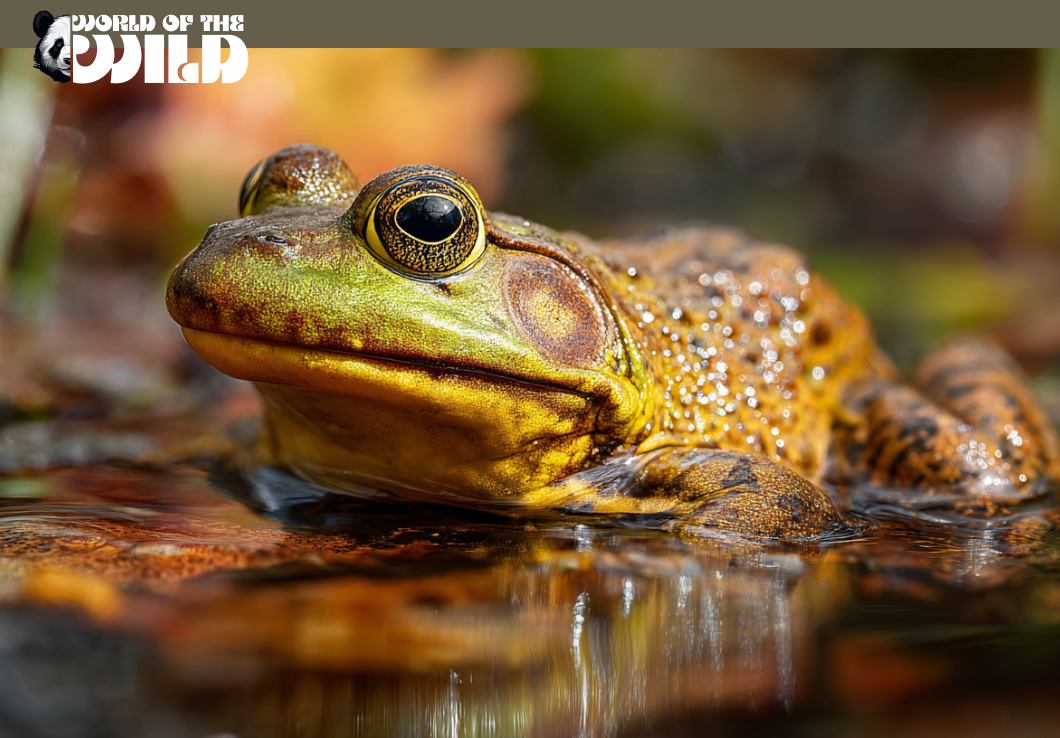
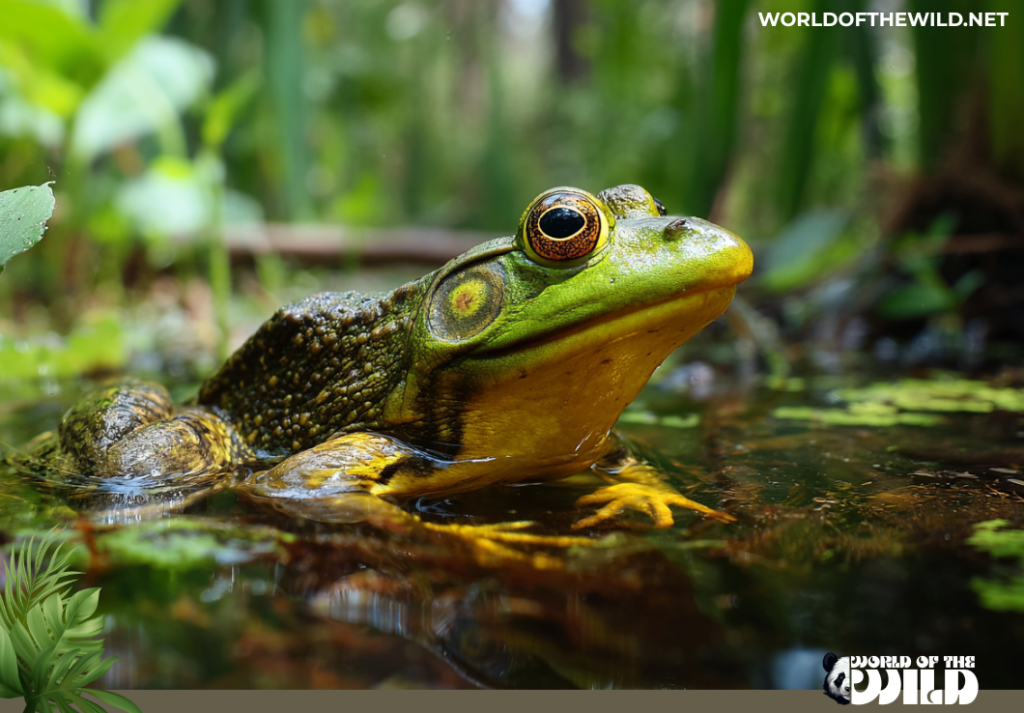
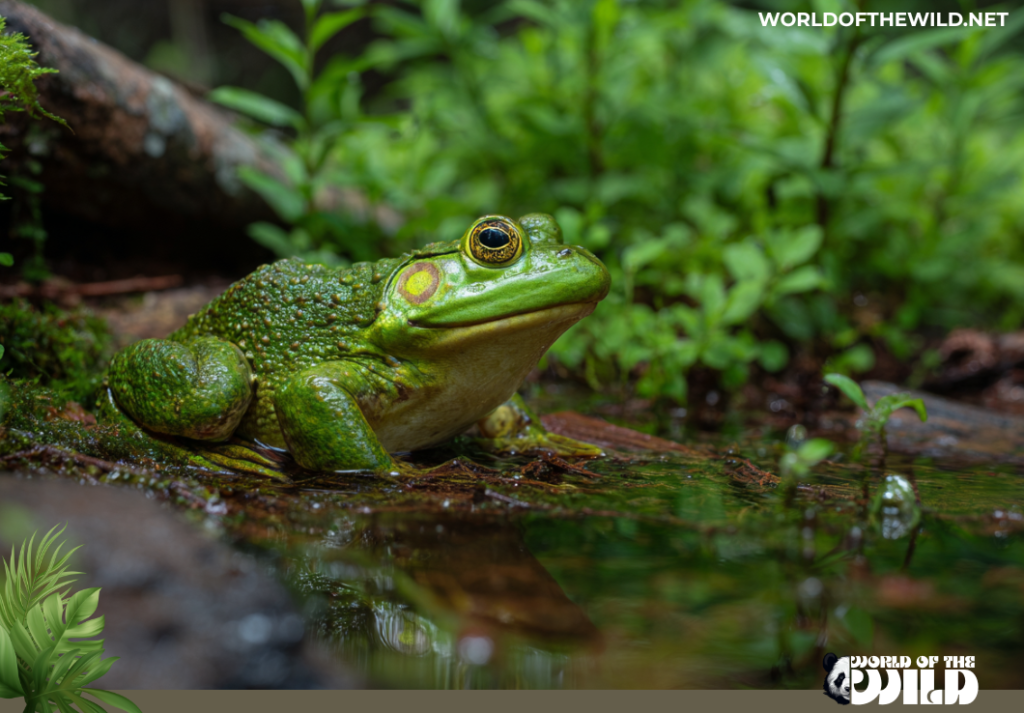
Their coloration varies considerably depending on their environment and age, ranging from olive green to brown on their dorsal surface. The back and sides may display dark mottling or irregular dark blotches that provide excellent camouflage among aquatic vegetation. The ventral surface is typically cream or white with gray mottling, particularly on the throat. One of the most distinctive features is the large, prominent tympanum (external eardrum) located behind each eye—in males, this tympanum is significantly larger than the eye itself, while in females it’s roughly the same size as the eye.
Bullfrogs possess powerful, muscular hind legs with fully webbed toes that make them exceptional swimmers. Their eyes are positioned on top of their head with horizontal pupils, allowing them to see above the water while their body remains submerged. They lack the dorsolateral ridges (raised folds of skin running down the back) that characterize many other ranid frogs, giving them a smoother appearance. The skin is relatively smooth when wet but becomes slightly bumpy when dry.
Behavior
American Bullfrogs are primarily nocturnal creatures, though they can often be observed during the day basking on logs, rocks, or along the shoreline of their aquatic habitats. They are highly territorial, particularly during breeding season when males establish and defend prime calling sites. These territories are defended through aggressive displays, including body inflation, lunging, and physical wrestling matches that can last several minutes.
The species is generally solitary outside of breeding season, with individuals spacing themselves along the water’s edge or among vegetation. They are ambush predators, remaining motionless for extended periods while waiting for prey to come within striking distance. When hunting, bullfrogs use their excellent binocular vision to track movement, then explosively lunge forward to capture prey with their wide, sticky tongue.
Communication is sophisticated among bullfrogs, particularly during breeding season. Males produce the iconic deep “jug-o-rum” call to attract females and warn rival males. They also emit a distinct alarm call when threatened—a high-pitched squeak or chirp—which alerts other frogs to danger. When grabbed by a predator, they may produce a loud distress scream.
Bullfrogs demonstrate remarkable adaptability to human-altered environments, thriving in farm ponds, reservoirs, and even urban water features. They are powerful swimmers but prefer to remain in shallow water near the shore where vegetation provides cover. When threatened, they leap into the water with a distinctive splash and swim to the bottom or into dense vegetation. Their intelligence is moderate for amphibians, showing learned behavior in avoiding repeated threats and recognizing regular food sources.
Evolution
The American Bullfrog’s evolutionary lineage traces back through the ancient history of amphibians, with the order Anura (frogs and toads) first appearing in the fossil record during the Early Jurassic period, approximately 200 million years ago. However, modern ranid frogs, the family to which the bullfrog belongs, are believed to have originated much more recently, during the Eocene epoch around 50 million years ago.
The genus Lithobates underwent significant diversification in North America during the Miocene epoch (23-5 million years ago), a period marked by significant climate changes and the formation of diverse freshwater habitats. The American Bullfrog as a distinct species likely emerged during the Pliocene or Pleistocene epochs (5-2.5 million years ago), evolving in the freshwater systems of eastern North America.
Molecular phylogenetic studies have revealed that the American Bullfrog is most closely related to other large aquatic ranids of North and Central America. The evolution of its large size is thought to be an adaptation to permanent water bodies, where size provides advantages in competition, predation, and the ability to exploit larger prey items. The species’ remarkable ability to tolerate a wide range of environmental conditions likely contributed to its evolutionary success.
During the Ice Ages of the Pleistocene, bullfrog populations were likely restricted to refugia in the southern United States, then expanded northward as glaciers retreated. This relatively recent range expansion may explain the lack of significant genetic differentiation across the species’ native range. The bullfrog’s evolutionary trajectory has been characterized by increasing adaptation to aquatic life, with features like fully webbed feet, aquatic breeding behavior, and an extended larval period representing key evolutionary innovations.
Habitat
The American Bullfrog’s native range extends across much of eastern North America, from Nova Scotia and southern Quebec in Canada, south through the eastern United States to central Florida, and west to the Great Plains, reaching eastern Colorado, eastern New Mexico, and into northeastern Mexico. Within this range, they occupy a variety of freshwater habitats but show a strong preference for permanent bodies of water.
Bullfrogs are quintessentially aquatic amphibians, requiring water year-round for survival. They inhabit lakes, ponds, slow-moving streams, rivers, reservoirs, and marshes. The ideal bullfrog habitat features warm, shallow water with abundant aquatic and emergent vegetation such as cattails, water lilies, and algae. They prefer water bodies with muddy or silty bottoms where they can burrow during winter dormancy, and they require areas with gradual slopes and shoreline vegetation for basking and hunting.
The species shows remarkable tolerance for human-modified habitats, thriving in farm ponds, irrigation ditches, golf course water features, and urban retention ponds. They can tolerate slightly brackish water and are found in coastal marshes where freshwater and saltwater mix. Water temperature is a critical factor, with bullfrogs preferring warmer waters and showing greatest activity when water temperatures exceed 60°F (15°C).
Beyond their native range, American Bullfrogs have been introduced to every continent except Antarctica and Australia, establishing invasive populations across western North America, Central and South America, the Caribbean, Europe, and Asia. In these non-native ranges, they occupy similar freshwater habitats but often have devastating effects on local amphibian populations.
Diet
The American Bullfrog is a voracious carnivore with an appetite that matches its impressive size. The species follows the ecological principle “if it fits in the mouth, it’s food,” consuming virtually any animal small enough to swallow. Their diet is remarkably diverse and changes with the seasons and available prey.
Primary food sources include insects such as beetles, dragonflies, moths, and grasshoppers, which may constitute the bulk of their diet during warmer months. However, bullfrogs are opportunistic predators that readily consume crayfish, small fish, smaller frogs (including their own species), tadpoles, newts, salamanders, small snakes, baby turtles, small birds, bats, small rodents like mice and young rats, and even small ducklings. They have been documented eating scorpions, spiders, snails, and worms.
Bullfrogs are ambush predators that employ a sit-and-wait hunting strategy. They position themselves partially submerged at the water’s edge or among vegetation, remaining motionless for extended periods. Their eyes, positioned on top of their head, allow them to scan for movement while the rest of their body remains hidden. When prey ventures within range—typically within one to two body lengths—the bullfrog lunges forward with remarkable speed, opening its wide mouth and using its sticky, muscular tongue to capture the prey and draw it into the mouth.
Larger prey items are often grabbed with the jaws and pushed into the mouth using the front legs, a behavior unique among frogs. Bullfrogs lack teeth capable of chewing, so all food is swallowed whole. The eyes are actually retracted into the head during swallowing, helping to push food down the throat. Young bullfrogs and tadpoles feed on algae, aquatic plants, small invertebrates, and detritus, becoming increasingly carnivorous as they grow.
Predators and Threats
Despite their size and aggressive nature, American Bullfrogs face predation from various animals throughout their life cycle. Natural predators of adult bullfrogs include larger snakes such as water snakes, herons and egrets, large fish like bass and pike, snapping turtles, river otters, mink, raccoons, opossums, foxes, and wading birds. Eggs and tadpoles are particularly vulnerable and are consumed by fish, diving beetles, dragonfly nymphs, newts, and other aquatic predators.
The most significant threats to bullfrogs in their native range are anthropogenic. Habitat loss and degradation from wetland drainage, agriculture, and urban development have reduced suitable habitat across portions of their range. Water pollution from agricultural runoff, industrial discharge, and urban stormwater affects water quality and can reduce bullfrog populations, particularly by impacting the sensitive larval stage.
Climate change poses emerging threats through altered precipitation patterns that may dry up breeding ponds, temperature changes that affect reproduction and development, and shifts in the timing of seasonal events. Bullfrogs, like all amphibians, are susceptible to chytridiomycosis, a deadly fungal disease caused by Batrachochytrium dendrobatidis (Bd), though they appear more resistant than many other amphibian species and may actually serve as carriers, spreading the disease to more vulnerable species.
Harvesting for the frog leg trade continues in some areas, with millions of bullfrogs collected annually for human consumption. Interestingly, in areas where bullfrogs have been introduced as invasive species, they become threats themselves, devastating native amphibian, fish, and invertebrate populations through predation and competition. Control efforts in these regions, including trapping and removal programs, are ongoing but challenging.
Reproduction and Life Cycle
American Bullfrogs have a fascinating and complex reproductive cycle that begins in late spring and extends through the summer months, with peak breeding typically occurring between May and July, depending on latitude and water temperature. Males arrive at breeding sites first, establishing territories in shallow water areas with vegetation. They produce their characteristic deep “jug-o-rum” calls to attract females and warn competing males, often calling throughout the night in choruses that can be heard from great distances.
Mating rituals involve the male grasping the female from behind in a position called amplexus. The female then swims to a suitable location where she deposits her eggs on the water’s surface while the male simultaneously releases sperm to fertilize them externally. A single female can lay between 10,000 and 20,000 eggs in one massive floating film that spreads across the water’s surface, often covering several square feet. These egg masses are usually anchored to aquatic vegetation.
The eggs are encased in a protective jelly-like substance and hatch in three to five days, depending on water temperature. The resulting tadpoles are among the longest-lived of any North American frog, requiring one to three years to complete metamorphosis, with northern populations generally taking longer than southern ones. Bullfrog tadpoles are large, reaching lengths of up to 6-7 inches before transformation, making them among the largest tadpoles in North America.
During the larval stage, tadpoles undergo dramatic physiological changes. They begin as herbivorous, algae-grazing creatures with long, coiled intestines, then gradually develop hind legs, then front legs, and finally absorb their tail while transforming their digestive system to accommodate a carnivorous diet. Metamorphosis typically occurs in mid to late summer of the second or third year.
Newly metamorphosed bullfrogs are vulnerable and small, measuring only about 1-2 inches. They grow rapidly during their first few years, reaching sexual maturity at 2-4 years of age for males and 3-5 years for females. In the wild, American Bullfrogs typically live 8-10 years, though individuals in protected environments or captivity have been documented living up to 16 years.
Population
The American Bullfrog is currently listed as “Least Concern” on the IUCN Red List of Threatened Species, reflecting its widespread distribution, large population, and adaptability to human-modified environments within its native range. The species shows no significant overall population decline and remains abundant across most of its original territory in eastern North America.
Estimating the global population of American Bullfrogs is challenging due to their widespread distribution and the difficulty of surveying aquatic amphibians. However, populations within the native range are considered stable to increasing in many areas, particularly where wetland conservation efforts have been successful. In some regions, populations have actually benefited from human activities that create permanent water bodies, such as farm ponds and reservoirs.
Population trends vary significantly by region. In parts of the northeastern United States and southeastern Canada, populations appear stable. In some midwestern and southern states, populations may be expanding due to the creation of artificial wetlands. However, localized declines have been noted in areas experiencing severe habitat loss, water pollution, or repeated droughts.
The species’ role as an invasive species complicates its global conservation picture. While thriving and expanding in non-native ranges across western North America, Europe, Asia, and South America, these invasive populations are targets of expensive and often unsuccessful eradication programs. The bullfrog’s success as an invasive species stems from its adaptability, high reproductive output, broad diet, and few natural predators in new environments.
Threats from disease, particularly chytridiomycosis, are monitored but have not caused catastrophic declines in bullfrog populations as they have in more susceptible species. This resistance, combined with the bullfrog’s ability to carry and spread the pathogen, has raised concerns about their role in amphibian disease dynamics.
Conclusion
The American Bullfrog stands as a testament to both the resilience and complexity of nature. This remarkable amphibian, with its powerful build, voracious appetite, and adaptable nature, has thrived for millions of years in the freshwater ecosystems of North America. From its impressive jumping ability to its thunderous nighttime calls that echo across ponds and lakes, the bullfrog represents an iconic piece of the North American natural heritage.
Yet the bullfrog’s story also serves as a profound lesson in ecological balance. While thriving in its native range, this species has become one of the world’s most problematic invasive species when introduced elsewhere, demonstrating how even a single species can cascade through an ecosystem with devastating effects. The bullfrog reminds us that every organism occupies a specific niche, and disrupting these relationships can have far-reaching consequences.
As we move forward in an era of rapid environmental change, the American Bullfrog will likely continue adapting and surviving. However, we must commit ourselves to preserving the wetland habitats these creatures depend upon, preventing further introductions outside their native range, and maintaining the delicate balance of ecosystems where bullfrogs have evolved to belong. By protecting these remarkable amphibians and their habitats, we preserve not just a species, but the intricate web of life that makes our world so extraordinarily diverse. Listen for their deep calls on a summer night—they are nature’s reminder of the wild places we must safeguard for future generations.
Scientific Name: Lithobates catesbeianus
Diet Type: Carnivore
Size: 3.5-8 inches (body length)
Weight: 1.1-2.2 pounds
Region Found: Native to eastern North America (Nova Scotia to Florida, west to the Great Plains); introduced worldwide