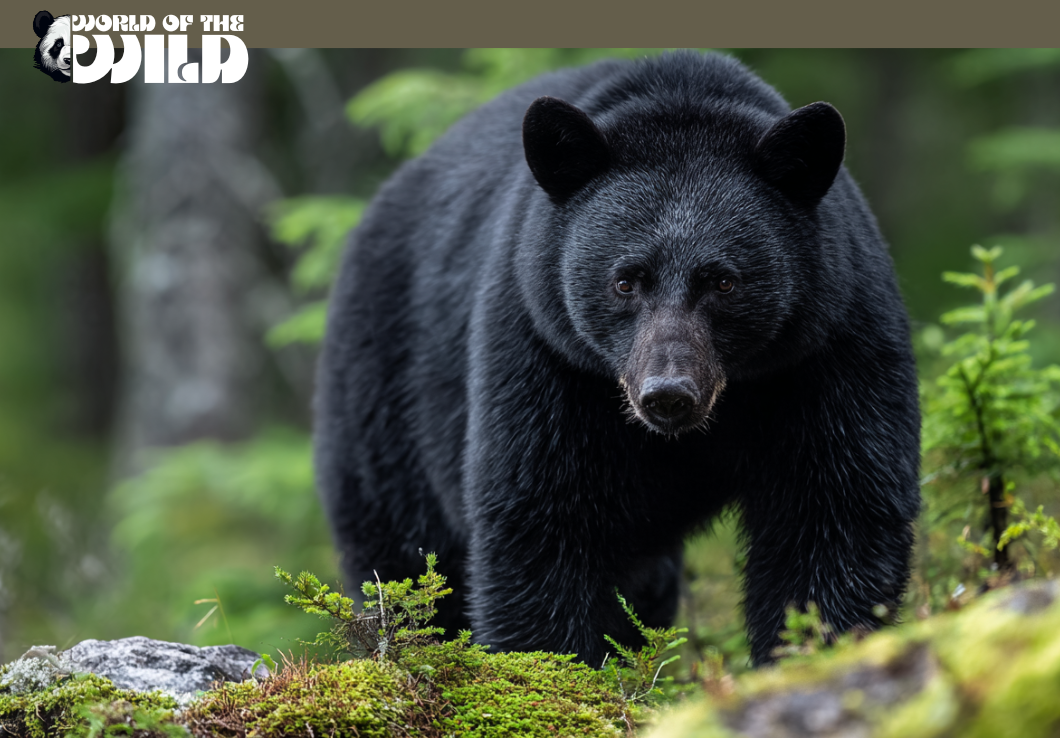

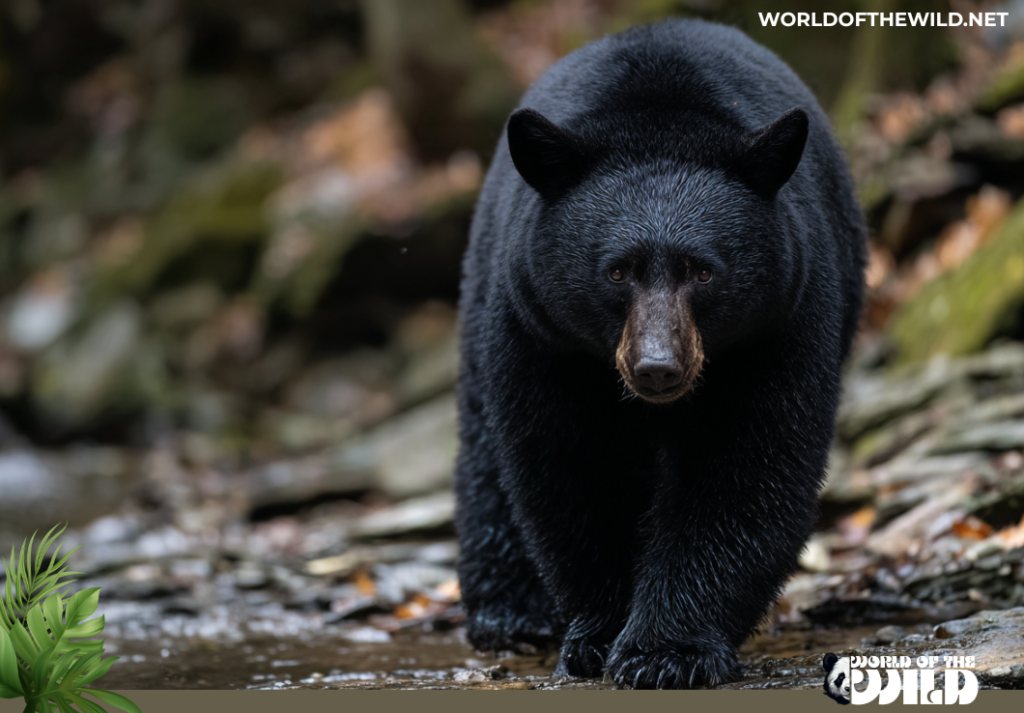
In the dappled shadows of a forest clearing, a massive shape emerges from the undergrowth. Its jet-black coat gleams in the filtered sunlight as it methodically overturns logs and stones, searching for insects and grubs beneath. This is the black bear—North America’s most common and adaptable bear species, a creature that has mastered the art of survival in an ever-changing world. Far from being the dangerous predator of folklore, the black bear is an intelligent, mostly solitary omnivore whose ability to thrive in diverse environments, from the swamps of Louisiana to the mountains of Alaska, makes it one of the continent’s most successful large mammals. Understanding these remarkable animals reveals not only the complexity of their behavior and ecology but also the delicate balance between wildlife and human expansion in modern North America.
| Feature | Details |
|---|---|
| Scientific Name | Ursus americanus |
| Size | 4–7 ft (1.2–2.1 m) in length; shoulder height 2–3.5 ft (0.6–1.1 m) |
| Weight | 125–600 lbs (57–272 kg); males significantly larger than females |
| Coat Color | Variable — black, brown, cinnamon, blonde, or even bluish-gray (rare) |
| Lifespan | 10–15 years in the wild; up to 30 years in captivity |
| Diet | Omnivore — berries, nuts, insects, honey, fish, small mammals, carrion |
| Habitat | Forests, swamps, mountain regions across North America |
| Range | Canada, USA (40+ states), northern Mexico |
| Speed | Up to 35 mph (56 km/h) in short bursts |
| Claws | Short, curved, non-retractable — ideal for climbing trees |
| Senses | Exceptional sense of smell (7× stronger than a bloodhound); moderate hearing and eyesight |
| Hibernation | October–April (varies by region); enter torpor, not true hibernation |
| Reproduction | Mating June–July; 1–6 cubs born January–February; cubs stay 1.5–2 years |
| Swimming | Strong swimmers |
| Tree Climbing | Excellent climbers, especially when young |
| Conservation Status | Least Concern (IUCN); estimated 600,000–900,000 in North America |
| Communication | Vocalizations (huffs, moans, jaw-popping), body posture, scent marking |
Facts
- Color Confusion: Despite their name, black bears can be brown, cinnamon, blonde, gray-blue, or even white (the rare Kermode or “spirit” bear of British Columbia), with only about 75% being truly black.
- Speed Demons: Black bears can run up to 35 miles per hour—fast enough to catch a racehorse over short distances and much faster than any human.
- Tree Experts: Unlike their larger cousins the grizzly bears, black bears are exceptional climbers throughout their entire lives, using their curved claws to scale trees for safety, food, and even sleeping.
- Memory Masters: Black bears possess remarkable spatial memory and can remember food sources, including berry patches and nut trees, for years, returning to productive locations at exactly the right time each season.
- Fake Hibernation: Black bears don’t truly hibernate; instead, they enter a state called torpor, where their heart rate and metabolism drop significantly but they can wake up relatively quickly if disturbed.
- Powerful Noses: A black bear’s sense of smell is approximately 2,100 times better than a human’s, allowing them to detect food sources from over a mile away.
- Silent Communicators: Black bears use a complex system of scent marking through rubbing trees and leaving claw marks, creating “bear trees” that serve as bulletin boards for the local bear community.
Sounds of the Black Bear
Species
Classification:
- Kingdom: Animalia
- Phylum: Chordata
- Class: Mammalia
- Order: Carnivora
- Family: Ursidae
- Genus: Ursus
- Species: Ursus americanus
The American black bear is the most common bear species in the world, but within this species exists remarkable diversity. Scientists recognize approximately 16 subspecies of black bears, each adapted to their specific regions. The most widespread is the American black bear (U. a. americanus) found throughout much of the eastern United States and Canada. The cinnamon bear (U. a. cinnamomum) inhabits the western United States and displays the characteristic reddish-brown coloration. The glacier bear (U. a. emmonsii) of southeastern Alaska sports a unique silver-blue coat. Perhaps most striking is the Kermode bear (U. a. kermodei), found only in British Columbia’s coastal rainforest, where roughly 10% of the population has white or cream-colored fur due to a recessive gene—earning them the name “spirit bears.” The Florida black bear (U. a. floridanus) represents the southernmost subspecies, adapted to subtropical swamps and forests. Each subspecies has evolved subtle differences in size, coloration, and behavior based on their local environment, demonstrating the species’ remarkable adaptability.
Appearance
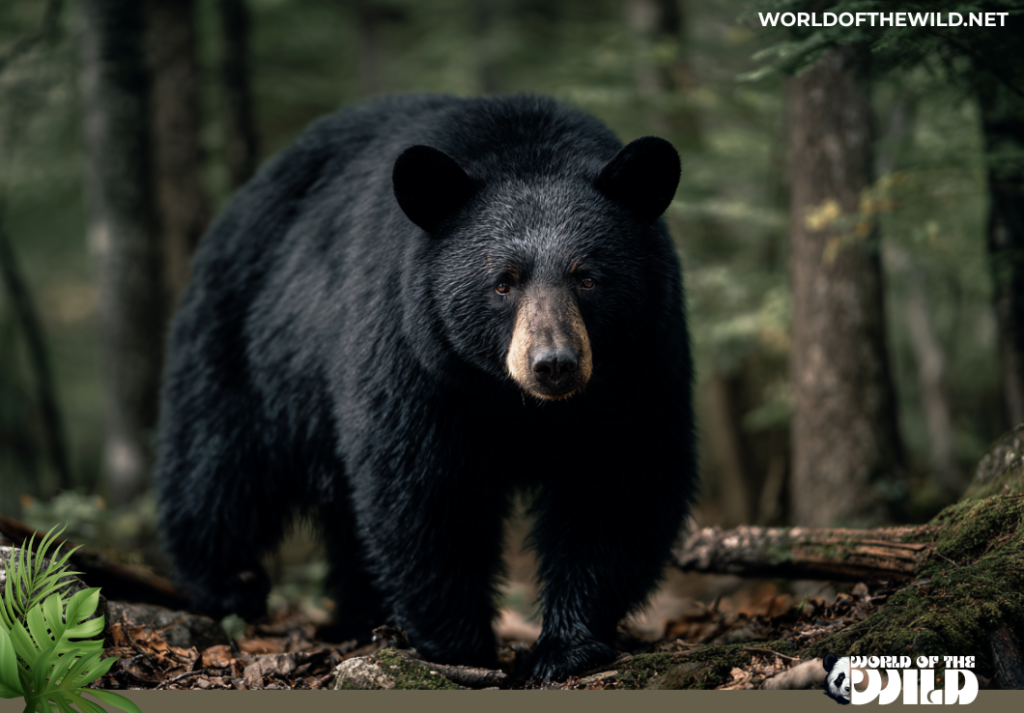
Black bears are medium-sized bears with a stocky, powerful build that belies their surprising agility. Adult males typically weigh between 200-600 pounds, with exceptional individuals reaching 800 pounds or more, while females are noticeably smaller at 100-400 pounds. Their body length ranges from 4 to 7 feet, with a shoulder height of 2.5 to 3 feet when on all fours. Standing upright on their hind legs, they can reach heights of 5 to 7 feet.
The black bear’s coat is typically dense and shaggy, providing excellent insulation against cold weather, though it can appear sleeker in warmer climates. Contrary to their name, coat color is highly variable and not a reliable identifier. The fur may be jet black, brown, cinnamon, blonde, or even blue-gray depending on geographic location and individual genetics. Many bears display a distinctive white or cream-colored chest patch, sometimes called a “blaze.”
Their heads are relatively small with a straight facial profile, distinguishing them from grizzly bears which have a dished face. The ears are rounded and prominent, set well apart on the head. Their eyes are small and dark, providing adequate vision though not their primary sense. Perhaps most distinctive are their claws—short, curved, and dark, perfectly designed for climbing trees. Unlike grizzly bears with their long, straighter claws built for digging, black bear claws rarely exceed two inches and curve sharply, acting like climbing hooks. Their short, well-furred tail is barely visible, typically only 3-7 inches long. The overall appearance is one of compact power wrapped in a deceptively cuddly package.
Behavior
Black bears are predominantly solitary creatures, coming together only during mating season or when multiple bears are attracted to abundant food sources like salmon runs or berry patches. Despite their solitary nature, they are not territorial in the traditional sense; instead, they maintain overlapping home ranges with a complex social hierarchy based primarily on size and age. Adult males, called boars, have the largest home ranges—anywhere from 20 to 100 square miles—while females, or sows, occupy smaller areas of 5 to 40 square miles.
These bears are primarily crepuscular, meaning they’re most active during dawn and dusk, though they adjust their activity patterns based on human presence, food availability, and seasonal changes. In areas with high human activity, black bears often become nocturnal to avoid encounters. They spend much of their active time foraging, dedicating 85% or more of their waking hours to finding and consuming food.
Communication among black bears is sophisticated and multi-modal. They use vocalizations ranging from huffing and jaw-popping when threatened to contentment sounds like purring when relaxed, and distress calls from cubs. Scent marking is crucial—bears rub against trees, often reaching as high as possible on their hind legs, leaving both scent and claw marks that communicate their presence, size, and status to other bears. These “bear trees” become community signposts visited repeatedly by multiple bears.
Black bears demonstrate remarkable intelligence and problem-solving abilities. They can open latched doors, unscrew jar lids, and remember complex solutions to obstacles for years. Their cognitive abilities include learning by observation, tool use in captivity, and an exceptional memory for locations and seasonal food sources. Mothers teach cubs important survival skills through direct instruction and modeling behavior.
One of their most notable adaptations is their winter dormancy. As autumn approaches and food becomes scarce, black bears enter a den—often a hollow tree, cave, or excavated space under fallen logs—where they enter torpor from November through March in northern regions (shorter or absent in southern areas). During this period, their heart rate drops from 40-50 beats per minute to 8-10, and their metabolism decreases by 50-60%. Unlike true hibernators, they don’t eat, drink, urinate, or defecate during this time, and remarkably, pregnant females give birth and nurse cubs while in this state.
Evolution
The evolutionary story of black bears traces back approximately 4-5 million years to the late Miocene and early Pliocene epochs. The family Ursidae, which includes all bears, first appeared in Eurasia around 20 million years ago, with the earliest bears resembling large dogs more than modern bears. The lineage that would eventually lead to black bears diverged from other bear species relatively early in ursine evolution.
The direct ancestor of the American black bear is believed to be Ursus abstrusus, a bear that lived in North America during the Pliocene epoch, roughly 3-5 million years ago. Fossil evidence suggests these early bears were smaller than modern black bears but shared similar anatomical features. As the Pleistocene epoch began around 2.5 million years ago, these ancestral bears evolved and adapted to the changing climates and environments of North America.
During the ice ages of the Pleistocene, black bears’ ancestors faced competition from larger bear species, including the massive short-faced bear (Arctodus simus) and the giant cave bear (Ursus spelaeus) in Eurasia. This competitive pressure may have driven black bears’ evolution toward smaller size, climbing ability, and omnivorous flexibility—traits that ultimately ensured their survival when these larger competitors went extinct roughly 11,000 years ago.
The modern American black bear, Ursus americanus, emerged in its current form approximately 500,000 to 1 million years ago. During the last glacial maximum, black bear populations were isolated into separate refugia—areas south of the ice sheets where they survived. As the glaciers retreated, these populations expanded and diversified, leading to the various subspecies we see today. Genetic studies suggest that eastern and western black bear populations were separated for tens of thousands of years, allowing distinct genetic lineages to develop.
Interestingly, black bears are more closely related to Asian black bears (Ursus thibetanus) than to brown bears (Ursus arctos), despite living alongside brown bears throughout much of their range. This relationship reflects their shared ancestry before the continents separated and bears diversified across different regions. The black bear’s evolutionary success lies in its adaptability—it never became overly specialized, allowing it to thrive in diverse habitats and survive when more specialized species disappeared.
Habitat
Black bears are the most widely distributed bear species in the world, ranging across much of North America from northern Alaska and Canada south to central Mexico. They inhabit every Canadian province and territory except Prince Edward Island, 41 U.S. states (with occasional sightings in several others), and parts of northern Mexico. This expansive range reflects their remarkable habitat flexibility.
These adaptable bears thrive in forested environments of almost any type. In the eastern United States, they inhabit deciduous and mixed hardwood forests dominated by oak, maple, and beech trees. The Appalachian Mountains provide ideal habitat with their rugged terrain and abundant mast-producing trees. Moving westward, black bears occupy coniferous forests of pine, spruce, and fir in the Rocky Mountains and Sierra Nevada. The Pacific Northwest’s temperate rainforests, with their massive old-growth trees and abundant salmon runs, support some of the largest black bear populations.
In northern regions, black bears venture into boreal forests—vast expanses of coniferous trees, wetlands, and tundra edge habitats. Here, the growing season is short but intense, providing concentrated food sources during summer months. Conversely, the southernmost populations in Louisiana, Florida, and Mexico inhabit subtropical swamps, cypress forests, and even semi-arid chaparral.
Key habitat requirements include adequate food sources that change seasonally, denning sites for winter dormancy, and areas that provide security from threats. Black bears prefer areas with some topographic diversity—hills, valleys, or swamps—that offer both foraging opportunities and escape cover. They’re often found near water sources, though they don’t require them as constantly as some other mammals.
Importantly, black bears need “soft mast” (berries, fruits) in summer, “hard mast” (nuts, particularly acorns) in fall, and sufficient privacy for denning in winter. Ideal habitat includes a mosaic of forest types at different successional stages, providing diverse food sources throughout the active season. While they can adapt to human-modified landscapes, they require contiguous forest patches and wildlife corridors to maintain healthy populations.
Elevation matters little to these adaptable animals—they’re found from sea level in coastal areas to over 10,000 feet in mountain ranges, moving seasonally to follow food availability. This elevational migration sees bears ascending to higher elevations in summer for berries and descending in fall for lower-elevation nut crops.
Diet
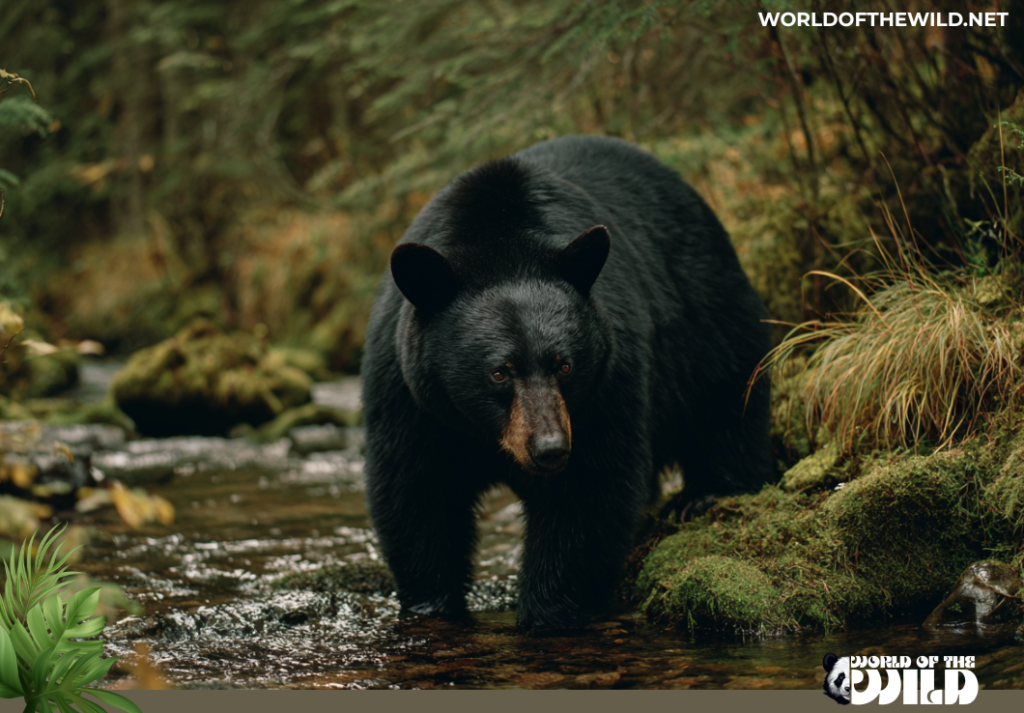
Black bears are opportunistic omnivores with a diet that shifts dramatically by season, location, and availability. Despite belonging to the order Carnivora, vegetation comprises approximately 75-90% of their diet, with the remaining portion consisting of insects, fish, small mammals, and carrion.
In spring, emerging from dens with depleted fat reserves, black bears focus on fresh vegetation—grasses, sedges, forbs, and the cambium layer of trees. This protein-rich plant matter helps them rebuild muscle mass lost during winter dormancy. Spring is also when they scavenge winter-killed animals and raid ant colonies and bee nests, using their powerful claws to tear apart logs and their long tongues to lap up insects. Newly born ungulates like deer fawns occasionally supplement their diet, though predation is relatively uncommon.
Summer brings an explosion of berry production, and black bears become frugivores, consuming vast quantities of blueberries, raspberries, serviceberries, and other soft mast. They may eat 20,000 berries in a single day, their digestive system processing the fruit quickly and spreading seeds across their range in their droppings. Coastal populations gorge on spawning salmon, developing fishing techniques passed down from mother to cub. In these areas, salmon can comprise 30-50% of summer diet, providing crucial protein and fat.
Autumn is the critical hyperphagia period—a biological imperative to consume as many calories as possible before winter. During this time, black bears may spend 20 hours per day eating, consuming up to 20,000 calories daily. Hard mast becomes paramount: acorns, hickory nuts, beechnuts, and hazelnuts. A single oak tree producing a large acorn crop can sustain multiple bears for weeks. They also feed heavily on fall berries, apples, and any remaining high-calorie foods.
Their foraging techniques are varied and intelligent. They climb trees to reach fruits and nuts, flip over rocks and logs for insects, dig for roots and rodents, and use their sense of smell to locate food from remarkable distances. Black bears have learned to associate human development with food, leading to conflicts when they access garbage, birdseed, pet food, and agricultural crops like corn and honey.
Interestingly, their digestive system is relatively simple for an omnivore, more closely resembling a carnivore’s than an herbivore’s. They cannot digest cellulose efficiently, so they focus on the most nutritious and digestible plant parts—fruits, nuts, new growth, and insects rather than mature grasses. This selective feeding allows them to extract maximum nutrition from a varied diet while maintaining the energy needed for their large body size.
Predators and Threats
Adult black bears have few natural predators due to their size and strength, but they are not entirely without threats. Grizzly bears and brown bears dominate black bears where their ranges overlap, occasionally killing and eating them, particularly cubs and smaller individuals. Adult male black bears sometimes commit infanticide, killing cubs to bring females back into breeding condition, making adult boars a primary threat to cubs. Mountain lions will opportunistically attack black bears, especially juveniles, though such predation is relatively rare. Wolves pose a threat in northern regions where large packs can coordinate attacks on bears, particularly during spring when bears are weak from winter dormancy. American alligators in the Southeast occasionally prey on black bears in aquatic environments.
However, the greatest threat to black bear survival is overwhelmingly human-related. Historically, black bears were nearly extirpated from much of their range through unregulated hunting and widespread habitat destruction. While populations have recovered significantly in many areas, modern threats remain substantial.
Habitat loss and fragmentation rank as the primary long-term threat. Urban sprawl, agricultural expansion, and logging operations reduce available habitat and create isolated bear populations susceptible to genetic problems. Roads fragment habitat and cause significant mortality—vehicle strikes kill hundreds of bears annually across North America, with some populations losing 10-15% of their numbers each year to road mortality.
Human-bear conflict presents an ongoing challenge. As development encroaches on bear habitat, encounters increase. Bears that become habituated to human food sources often must be relocated or euthanized, a phenomenon known as “a fed bear is a dead bear.” Unsecured garbage, bird feeders, pet food, and intentional feeding create problem bears that lose their natural wariness of humans.
Legal and illegal hunting affects populations differently by region. Regulated sport hunting in many states and provinces follows scientific management principles and generally maintains sustainable populations. However, poaching remains a problem, particularly for the illegal trade in bear parts—gallbladders, paws, and bile—which are valued in traditional Asian medicine markets. This black market can fetch thousands of dollars per bear and drives illegal killing even in protected areas.
Climate change presents emerging threats through multiple pathways. Changing precipitation patterns affect mast production—the acorn and nut crops bears depend on for winter fat reserves. Earlier spring warmth disrupts the timing between emergence from dens and food availability. Extreme weather events, including droughts and floods, impact berry production and habitat quality. Warmer winters may reduce denning periods, forcing bears to expend more energy during traditionally dormant months.
Disease and parasites, while not major population threats historically, are being monitored as potential concerns. Bears can contract rabies, distemper, and various parasites. As climate warms, parasites previously limited by cold temperatures may expand their range, potentially impacting bear health.
Reproduction and Life Cycle
Black bear reproduction follows a fascinating and unusual pattern designed to maximize cub survival. The breeding season, or rut, occurs from late May through July, with peak activity in June and early July. During this time, male bears abandon their normal solitary habits and actively search for receptive females, sometimes traveling far outside their normal home ranges. Males may mate with multiple females, and females may mate with multiple males—genetic studies have shown that cubs in a single litter can have different fathers.
The reproductive process itself is remarkable. After mating, black bears experience delayed implantation—the fertilized eggs develop to the blastocyst stage and then float freely in the uterus for several months without attaching or growing. Only in late November or December, after the female enters her den and her body condition is assessed, do the embryos implant in the uterine wall and begin true development. This biological mechanism ensures that only females with sufficient fat reserves will carry pregnancies to term, preventing wasted reproductive effort in poor conditions.
Cubs are born in the den in January or February after a true gestation period of just 60-70 days, though 6-8 months have passed since mating. Litter sizes range from 1 to 6 cubs, with 2 or 3 being most common. The newborns are extraordinarily underdeveloped—weighing only 8-12 ounces, blind, hairless, and entirely helpless. They measure just 6-8 inches long and look more like rat pups than bears. This tiny size relative to the mother (who may weigh 400 times more than her cubs) is the smallest birth-weight-to-mother-weight ratio of any placental mammal except marsupials.
The cubs nurse frequently during their first months in the den, growing on their mother’s rich milk (20-25% fat, compared to 3-4% in cow’s milk). By the time the family emerges from the den in March or April, the cubs weigh 4-8 pounds and are covered in fuzzy black fur. They remain entirely dependent on their mother for protection, food, and learning.
The mother-cub bond is strong and intensive. Cubs stay with their mother for 16-18 months, learning essential survival skills: which foods to eat and when, how to recognize danger, where to find good denning sites, and how to navigate their territory. During this time, the mother is extraordinarily protective, willing to confront even much larger bears or other predators to defend her cubs. The family group dens together the first winter, with cubs nursing periodically even during torpor.
Weaning occurs gradually during the cubs’ second summer, and the family finally breaks up in late spring or early summer when the cubs are 16-18 months old and their mother is ready to breed again. Newly independent cubs, called yearlings, often stay together for several additional months before dispersing to establish their own ranges. Young females typically settle near their mother’s range, while young males disperse much farther, reducing inbreeding.
Sexual maturity arrives at different ages for males and females. Females typically first breed at 3-5 years of age, sometimes earlier in populations with excellent food resources. Males reach sexual maturity around the same age but rarely have the opportunity to breed until they’re larger and more competitive at 5-7 years old. Females typically breed every two years, though this interval can extend to three years in harsher environments or increase to annual breeding where food is exceptionally abundant.
The life expectancy of wild black bears averages 18-20 years, though many die much younger due to human-related causes, starvation, or predation. Bears in their prime (8-15 years) are most successful at reproduction and survival. The oldest recorded wild black bear lived to 39 years in Minnesota, while captive bears have reached 44 years, demonstrating their potential longevity when mortality factors are removed.
Female reproductive success varies dramatically based on habitat quality. In prime habitat with abundant food, females may successfully raise 12-15 cubs to independence over their lifetime. In marginal habitat, reproductive output can be less than half that number. This reproductive flexibility allows black bear populations to respond to environmental conditions while maintaining population stability.
Population
The American black bear stands as one of the great conservation success stories of modern wildlife management. Their current conservation status is listed as “Least Concern” by the International Union for Conservation of Nature (IUCN), reflecting stable and, in many areas, increasing populations. This status represents a remarkable recovery from historic lows in the early 20th century when unregulated hunting and habitat loss had decimated populations across much of their range.
Today, the total North American black bear population is estimated at 800,000 to 900,000 individuals, though exact numbers are difficult to determine given the species’ secretive nature and vast range. The United States harbors approximately 300,000 to 400,000 bears, with Canada home to roughly 450,000 to 500,000. Mexico’s small population in the northern states numbers only a few hundred individuals.
Population distribution varies dramatically by region. States like Alaska, Washington, Minnesota, Wisconsin, Michigan, and Pennsylvania support robust populations, each with tens of thousands of bears. Eastern states have seen remarkable recoveries—black bears have recolonized much of their historical range in states like Kentucky, Arkansas, and Louisiana, where they had been extirpated for decades. The Appalachian Mountains serve as a stronghold, providing a population corridor connecting southern and northern bear ranges.
Not all subspecies fare equally well. While most populations are stable or increasing, some face significant challenges. The Louisiana black bear was listed as threatened under the Endangered Species Act in 1992 due to habitat loss and fragmentation, though recovery efforts have been successful enough that it was delisted in 2016. The Florida black bear, while no longer listed as threatened, remains vulnerable due to its isolated populations and ongoing habitat loss to development. The Kermode bear’s small population of white-phase individuals in British Columbia is carefully monitored due to its restricted range and cultural significance.
Population trends overall are positive. Many states have expanded or established hunting seasons as bear numbers have grown, using regulated harvest as a management tool to maintain populations at levels compatible with human activities. Bear-human conflicts have increased in some areas, not necessarily because bear numbers are higher than historical levels, but because human development has expanded into bear habitat, increasing overlap and encounters.
Several factors have contributed to black bear population recovery. Legal protection through endangered species laws and hunting regulations provided time for populations to rebound. Improved habitat management, including the recovery of eastern forests and establishment of protected areas, has expanded available bear habitat. Modern wildlife management employs scientific principles to set sustainable harvest levels. Public education about living with bears and securing attractants has reduced human-bear conflicts and unnecessary bear mortality.
Monitoring continues through various methods: mark-recapture studies, DNA analysis from hair samples, camera traps, radio telemetry, and harvest data analysis. These techniques provide wildlife managers with the information needed to maintain healthy populations while addressing human-wildlife conflicts.
The future outlook for black bears is cautiously optimistic. Their adaptability gives them resilience in the face of environmental change. However, ongoing challenges remain: continued habitat loss, increasing human-bear conflicts in developing areas, climate change impacts on food resources, and the need for landscape-level conservation planning to maintain habitat connectivity. The success of black bear conservation demonstrates that with proper management, public support, and adequate habitat protection, large carnivore recovery is possible even in human-dominated landscapes.
Conclusion
The black bear embodies the resilience and adaptability that allows wildlife to persist in our modern world. From their remarkable omnivorous diet and exceptional climbing abilities to their sophisticated social communication and flexible habitat use, black bears demonstrate nature’s capacity for innovation and survival. Their successful recovery from near-extirpation in many regions stands as testimony to the power of science-based wildlife management, legal protection, and public commitment to conservation.
Yet this success story remains a work in progress. As human development continues expanding into bear habitat and climate change alters the fundamental ecology of forests across North America, black bears will face new challenges that test their considerable adaptability. Their future depends not on leaving them alone in pristine wilderness—such places are increasingly rare—but on our willingness to share landscapes with these magnificent animals, to secure our attractants, to drive carefully through bear habitat, to support science-based management, and to recognize that a world with wild bears is immeasurably richer than one without them.
The black bear asks us to make room, to be mindful of our impacts, and to remember that we are not the only intelligent, family-oriented beings that call North America home. In protecting black bears and the forests they need to survive, we protect something essential—not just for them, but for ourselves and the wild heritage we leave to future generations. The rustling in the underbrush, the claw marks on a tree, the black shape disappearing into the forest—these reminders of wildness are gifts worth preserving.
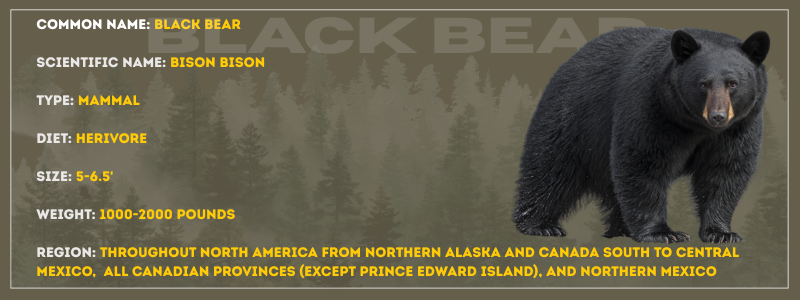
Scientific Name: Ursus americanus
Diet Type: Omnivore (primarily herbivorous—approximately 75-90% vegetation, with insects, fish, and occasionally meat)
Size: 4-7 feet in length; 2.5-3 feet tall at shoulder; 5-7 feet when standing upright
Weight: Males: 200-600 pounds (up to 800+ pounds); Females: 100-400 pounds
Region Found: Throughout North America from northern Alaska and Canada south to central Mexico, inhabiting forested areas across 41 U.S. states, all Canadian provinces (except Prince Edward Island), and northern Mexico