
Imagine walking through the shadowy understory of a Central American rainforest when suddenly a flash of electric blue catches your eye—brilliant, iridescent, and almost impossibly vivid against the green backdrop. This is the Blue Morpho butterfly, one of nature’s most spectacular displays of color and optical engineering. With wings that shimmer like pieces of sky captured in living form, these butterflies have captivated scientists, artists, and nature enthusiasts for centuries. The Blue Morpho isn’t just beautiful; it’s a masterclass in evolutionary adaptation, chemical defense, and the physics of light itself. This remarkable insect represents both the breathtaking diversity of tropical ecosystems and the delicate balance required to sustain them.
Facts
- The brilliant blue color of Morpho wings isn’t created by pigment but by microscopic scales that refract and reflect light through a phenomenon called structural coloration—the same principle that makes soap bubbles shimmer.
- Blue Morpho butterflies can be seen from nearly a quarter-mile away by pilots flying over the rainforest canopy, with their wings flashing blue when open and brown when closed, creating a flickering effect that confuses predators.
- Despite their dazzling appearance, Blue Morphos spend most of their time on the forest floor feeding on rotting fruit, fermenting sap, and even animal feces rather than visiting flowers.
- The caterpillars of Blue Morpho butterflies are social creatures that live together in groups and feed nocturnally, a rare behavior among butterfly larvae that helps them avoid predators.
- Male Blue Morphos are highly territorial and will chase away any other males that enter their domain, engaging in spiraling aerial battles that can last several minutes.
- Blue Morpho wings have inspired technological innovations, including anti-counterfeiting measures for currency and improved display screens that require less power because they use reflected rather than emitted light.
- When threatened, Blue Morpho caterpillars release a foul-smelling chemical defense and their body hairs can cause skin irritation in potential predators, making them decidedly unappetizing despite their herbivorous diet.
Species
Kingdom: Animalia
Phylum: Arthropoda
Class: Insecta
Order: Lepidoptera
Family: Nymphalidae
Genus: Morpho
Species: The genus contains approximately 29 recognized species, with Morpho menelaus and Morpho peleides being among the most iconic
The genus Morpho contains numerous species, though not all display the characteristic blue coloration. The most commonly recognized Blue Morphos include Morpho menelaus, found primarily in the Amazon Basin and known for its deep sapphire wings; Morpho peleides, which ranges from Mexico through Central America and displays a lighter, sky-blue coloration; and Morpho rhetenor, native to South American rainforests and possessing some of the most intense metallic blue wings in the entire genus.
Other notable species include Morpho didius, which features brilliant blue with distinctive orange borders; Morpho cypris, found in Central America with particularly large wingspan; and Morpho helenor, which displays significant variation across its range. Some Morpho species, such as Morpho polyphemus, are actually white or pale yellow rather than blue, demonstrating the diversity within this genus. Subspecies exist within several of these species, adapted to specific geographic regions and ecological niches throughout their range.
Appearance
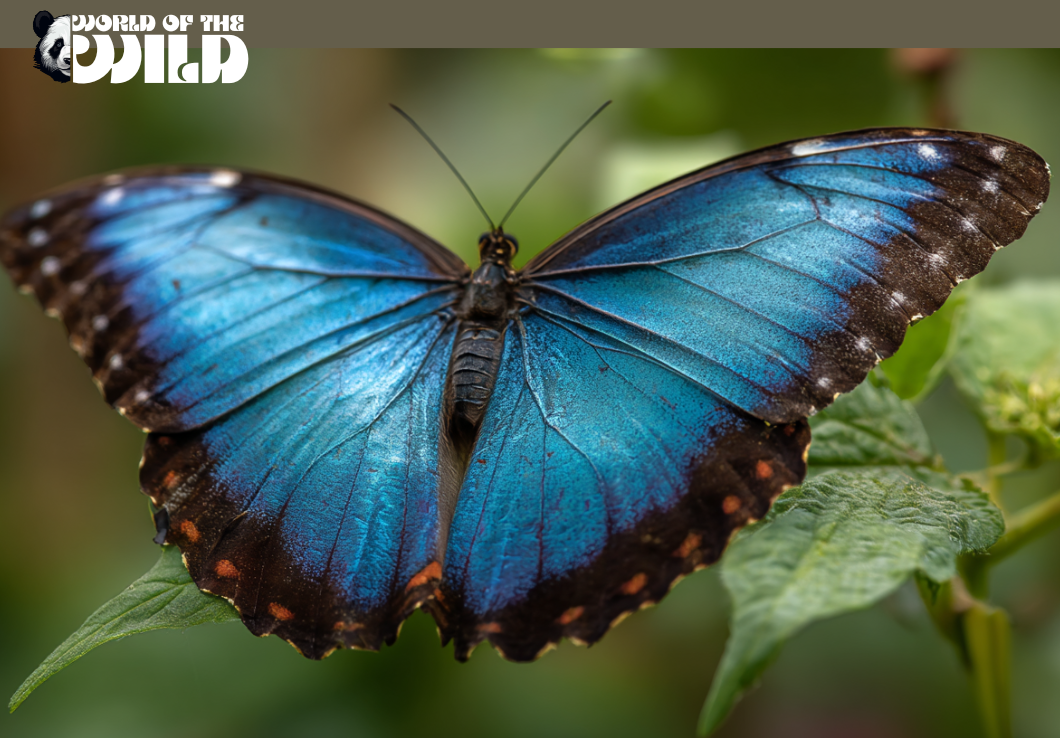
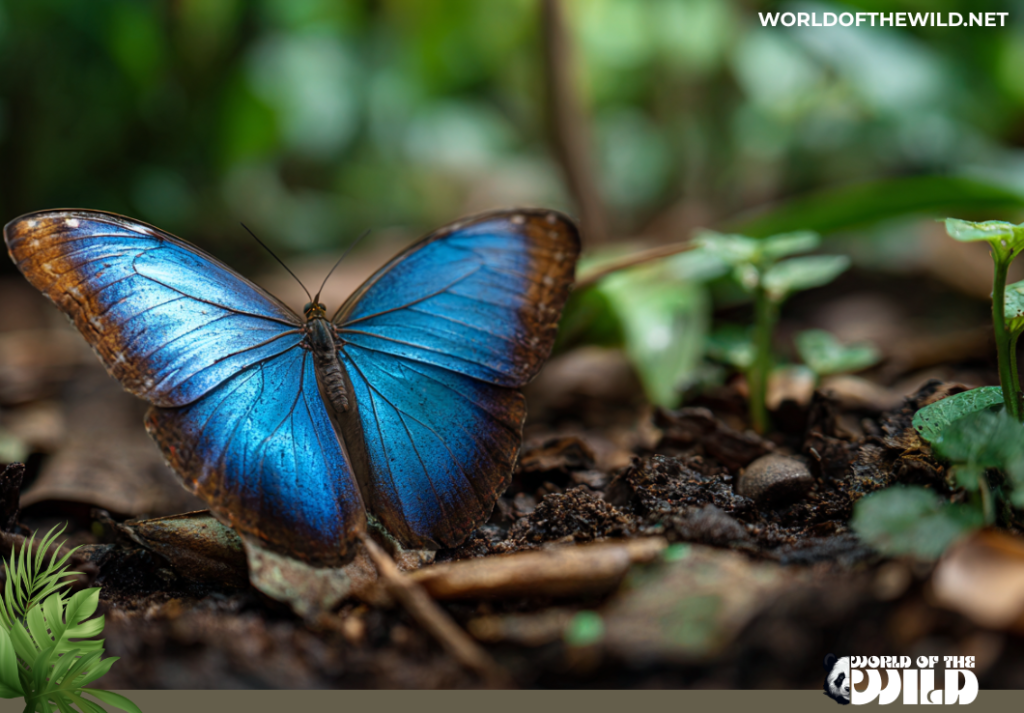
The Blue Morpho butterfly is one of the largest butterflies in the world, with a wingspan ranging from 5 to 8 inches (12 to 20 centimeters), roughly the size of a human hand when fully spread. The most striking feature is undoubtedly the dorsal (upper) surface of the wings, which displays an intense, iridescent blue that seems to glow with its own internal light. This coloration is entirely due to the microscopic structure of the wing scales—millions of tiny scales arranged in patterns that reflect and scatter blue wavelengths of light while absorbing others, creating a color that changes intensity depending on the viewing angle.
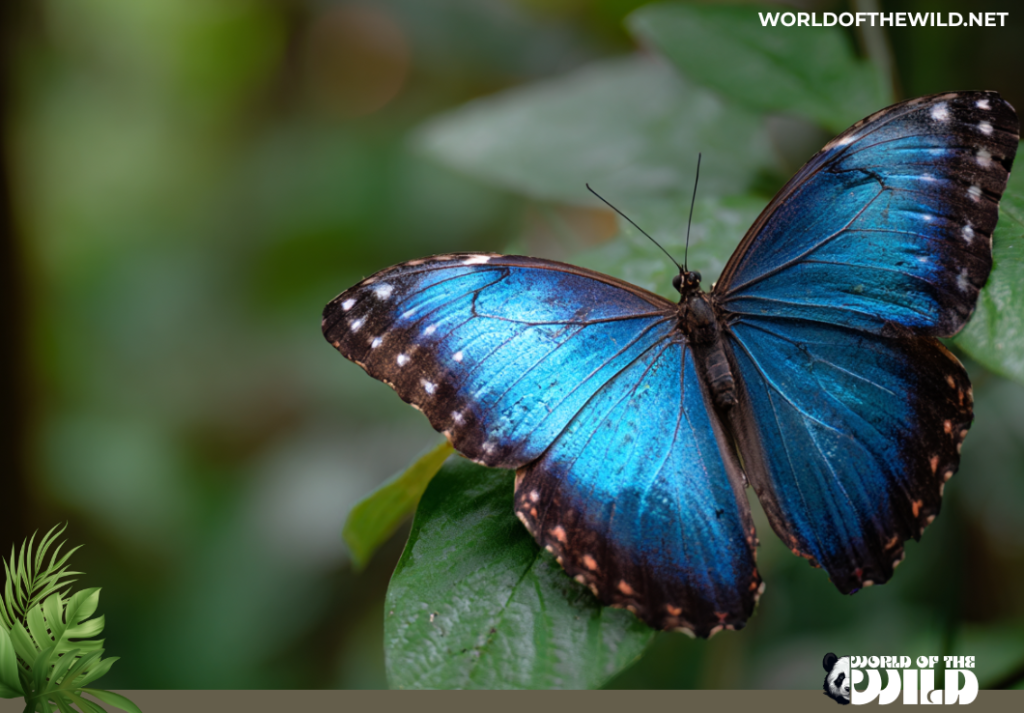
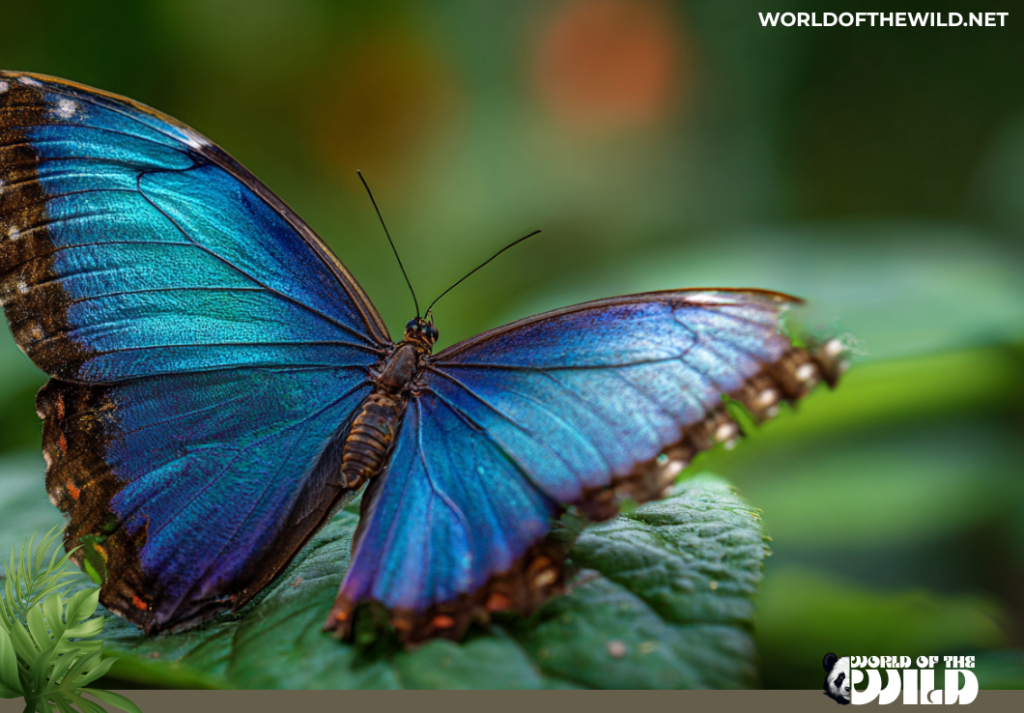
Males typically display more vibrant blue coloration than females, whose blue may be more subdued or limited to smaller portions of the wings. The wing edges are outlined in black with small white spots along the margins. In stark contrast to the dazzling upper surface, the ventral (lower) surface of the wings is brown or tan with prominent eyespots—circular patterns that resemble eyes—arranged in rows. These eyespots serve as camouflage when the butterfly rests with wings closed, making it nearly invisible against tree bark and leaf litter.
The body of the Blue Morpho is relatively robust and hairy, typically brown or dark in color. The antennae are long and club-shaped, typical of butterflies, and covered in sensory receptors. The proboscis, when uncoiled, is long enough to reach deep into fermenting fruit. Adult Blue Morphos weigh almost nothing—typically between 0.5 to 1 gram—despite their impressive size, as their bodies are designed for efficient flight.
The sexual dimorphism in Blue Morphos extends beyond just color intensity. Males often have slightly larger forewings relative to their body size, which aids in their territorial patrol flights. Females may have broader abdomens to accommodate egg production. Both sexes have relatively short legs compared to other butterfly families, with the forelegs particularly reduced—a characteristic feature of the Nymphalidae family.
Behavior
Blue Morpho butterflies are primarily solitary insects, though multiple individuals may congregate at particularly rich food sources such as large fallen fruits. They are crepuscular fliers, most active during the early morning and late afternoon hours when the forest light is softer and temperatures are moderate. During the heat of midday, they rest with wings closed, becoming virtually invisible thanks to their cryptic underwing patterns.
Male Blue Morphos are territorial creatures that patrol regular routes through their chosen areas of the forest, flying between 10 to 30 feet above the ground. These patrol flights can cover areas of several hundred square meters, and males will aggressively defend these territories from rival males through elaborate aerial chases. When a male encounters an intruder, both butterflies engage in a spiraling pursuit, rising upward through the canopy in a dazzling display of flashing blue wings. These encounters are usually resolved without physical contact—the subordinate male eventually breaks off and retreats.
Communication in Blue Morphos relies heavily on visual signals. The flashing blue wings serve multiple purposes: attracting mates, signaling to rivals, and confusing predators. When a female enters a male’s territory, he performs a courtship display involving slow, deliberate wing beats that maximize the reflective flash of his wings. The wings beat at a frequency of about 5 to 12 beats per second—slow enough that the blue flash is distinct and not blurred.
Blue Morphos demonstrate surprising intelligence for insects, particularly in their ability to learn and remember the locations of food sources. They can return to the same fruiting trees day after day and show preferences for certain types of fermenting fruit over others. They also exhibit what appears to be play behavior, occasionally chasing leaves or other non-threatening objects, though whether this represents true play or simply an extension of their territorial instincts remains debated.
One of the most remarkable behavioral adaptations of Blue Morphos is their defensive flying pattern. When threatened, they don’t simply flee in a straight line. Instead, they employ erratic, zig-zagging flight paths punctuated by sudden stops, making them extremely difficult for predators to track and catch. The alternating flash of brilliant blue and camouflaged brown as they fly creates a strobe effect that further disorients pursuers—predators literally lose track of the butterfly mid-flight.
Blue Morphos also exhibit specific roosting behaviors. At night, they rest on the undersides of leaves with wings tightly closed, often selecting positions near the forest canopy where they’re protected from ground-dwelling predators but still somewhat exposed to breezes that help keep them cool and dry.
Evolution
The evolutionary history of the Blue Morpho butterfly traces back to the diversification of the Nymphalidae family, which began approximately 90 million years ago during the Late Cretaceous period. The family Nymphalidae is one of the most successful butterfly families, containing over 6,000 species worldwide, and its evolution is intimately tied to the rise of flowering plants (angiosperms).
The genus Morpho itself is believed to have originated in South America during the Oligocene epoch, roughly 30 to 35 million years ago. During this period, the South American continent was isolated, functioning as a massive island continent where unique flora and fauna evolved in relative isolation. The rainforests were expanding and diversifying, providing new ecological niches that butterflies could exploit.
The evolution of the characteristic blue coloration in Morpho butterflies represents a remarkable example of convergent evolution of structural coloration across multiple species. Rather than evolving blue pigments—which would be metabolically expensive to produce and maintain—Morpho butterflies evolved microscopic scale structures that manipulate light. This adaptation likely provided significant advantages in sexual selection, as the bright, visible signals could communicate health and genetic fitness to potential mates from long distances.
Fossil evidence for butterflies is notoriously scarce due to their fragile bodies, but molecular clock studies and phylogenetic analyses suggest that the modern Blue Morpho species diverged from their common ancestors relatively recently, perhaps within the last 5 to 10 million years during the Miocene and Pliocene epochs. This diversification corresponds with geological events that created barriers between populations, such as the uplift of the Andes Mountains and fluctuations in rainforest extent during glacial and interglacial periods.
The evolution of the eyespot patterns on the underwings represents a separate but equally important evolutionary innovation. These false eyes evolved as an anti-predator adaptation, startling potential predators or deflecting attacks away from vital body parts toward less vulnerable wing edges. The genetic mechanisms controlling eyespot development have been intensively studied, revealing complex developmental pathways that have been conserved across hundreds of millions of years of butterfly evolution.
Recent genetic studies have revealed that despite their visual similarities, different blue Morpho species achieved their coloration through slightly different structural arrangements of their wing scales, suggesting parallel evolution—multiple independent evolutionary paths to the same functional solution. This underscores how strong selective pressures, such as the need for effective mate signaling in dim rainforest environments, can drive similar adaptations in related species.
Habitat
Blue Morpho butterflies are creatures of the Neotropics, inhabiting the lowland rainforests of Central and South America. Their range extends from Mexico in the north, through all of Central America, and into South America as far south as Bolivia and the Amazon Basin. They are most abundant in countries including Costa Rica, Panama, Colombia, Venezuela, Guyana, Suriname, French Guiana, Brazil, Ecuador, and Peru.
These butterflies are exclusively found in tropical rainforests, showing a strong preference for primary and mature secondary forests with dense canopy cover. They typically inhabit elevations from sea level up to approximately 1,400 meters (4,600 feet), though they are most common below 800 meters. The microhabitat preferences of Blue Morphos are quite specific: they favor areas with high humidity, consistent warmth (temperatures between 25-30°C or 77-86°F), and reduced direct sunlight.
Within the rainforest, Blue Morphos occupy multiple vertical strata. Adults are frequently found in the understory and lower canopy layers, usually flying at heights between 3 to 15 meters above the ground. They prefer areas along forest edges, near streams and rivers, along light gaps created by fallen trees, and in forest clearings where sunlight penetrates to the ground. These environments provide both the resources they need—fallen fruit and tree sap—and the dappled light conditions that make their wing flashes most effective.
The specific features that make an ideal Blue Morpho habitat include a complex canopy structure that provides shade and maintains humidity, an abundance of host plants for caterpillars (primarily leguminous plants in the family Fabaceae), a steady supply of rotting fruit on the forest floor, and minimal human disturbance. They are also found near riverbanks and stream edges, where they may gather to drink or extract minerals from mud—a behavior called “puddling.”
Blue Morphos are sensitive to habitat fragmentation and require relatively large, continuous tracts of forest to maintain viable populations. They rarely venture into open areas or severely degraded habitats, making them excellent indicator species for forest health and integrity. Their presence in an area generally indicates a well-preserved rainforest ecosystem.
Diet
Adult Blue Morpho butterflies are primarily frugivorous, meaning they feed almost exclusively on fruit—specifically overripe, rotting, and fermenting fruit. Unlike many butterflies that visit flowers for nectar, Blue Morphos have evolved to exploit a food source that’s abundant on the rainforest floor but underutilized by many other species. Their preferred food sources include fallen fruits from various tropical trees such as figs, palms, mangoes, and other soft, pulpy fruits that have fallen to the ground and begun to decompose.
The attraction to fermenting fruit is not coincidental—the fermentation process breaks down complex sugars into simpler compounds that are easier for butterflies to absorb. The slight alcoholic content of fermented fruit may also provide additional energy benefits. Blue Morphos use their long proboscis to probe into soft fruit flesh and suck up the juices and liquefied pulp. They can often be observed at the same fruit day after day until it’s completely desiccated.
Beyond fruit, Blue Morphos also feed on tree sap, particularly from wounded or damaged trees where sap seeps out and begins to ferment. They will visit these sap flows regularly, sometimes competing with beetles, wasps, and other insects for access. They’ve also been observed feeding on fungus growing on rotting logs, animal feces (coprophagy), and occasionally dead animal carcasses, extracting minerals and nutrients that are otherwise scarce in their environment. This diverse diet helps them obtain essential salts, amino acids, and other nutrients not found in fruit alone.
Male Blue Morphos engage in puddling behavior, gathering at muddy spots along riverbanks or on damp soil to extract dissolved minerals, particularly sodium and amino acids, which they need for reproductive success. Groups of males may congregate at especially rich mud puddles, creating a spectacular display of flashing blue wings.
The caterpillar stage has entirely different dietary requirements. Blue Morpho larvae are herbivorous, feeding primarily on the leaves of plants in the legume family (Fabaceae), including various species of Inga, Machaerium, Lonchocarpus, and Pterocarpus. The caterpillars are somewhat selective, often preferring younger, more tender leaves that are easier to digest and contain higher protein content. They feed primarily at night to avoid predators and can consume impressive quantities of foliage during their growth period, which lasts several weeks.
Predators and Threats
Despite their large size and chemical defenses, Blue Morpho butterflies face predation throughout their life cycle. Adult butterflies are hunted by a variety of predators including birds—particularly flycatchers, jacamars, and puffbirds that have learned to overcome the butterflies’ erratic flight patterns. Some birds have even developed techniques to rub off the distasteful scales before consuming the butterfly body. Other predators include lizards, especially anole species that ambush resting butterflies, and arboreal mammals like marmosets and tamarins.
Spiders pose a significant threat, with orb-weaver spiders often capturing Blue Morphos in their large webs stretched across forest clearings. Praying mantises are also successful predators, using their camouflage and lightning-fast reflexes to snatch butterflies from the air. During their vulnerable egg and caterpillar stages, Blue Morphos face additional predators including parasitic wasps that lay eggs inside caterpillars, ants that raid caterpillar colonies, and various beetles and bugs that feed on eggs and larvae.
The greatest threats to Blue Morpho butterflies, however, are anthropogenic. Habitat loss due to deforestation represents the most severe and immediate threat to their populations. The Amazon Basin loses thousands of square kilometers of forest annually to logging, agricultural expansion (particularly cattle ranching and soy cultivation), and development projects. Blue Morphos cannot survive in cleared or severely fragmented habitats, making deforestation particularly devastating for their populations.
Climate change poses an emerging threat by altering rainfall patterns, increasing temperatures, and intensifying droughts and floods in tropical regions. These changes can affect the availability of host plants for caterpillars, reduce fruit availability for adults, and alter the delicate humidity and temperature conditions that Blue Morphos require. As specialist species adapted to specific environmental conditions, they have limited ability to adapt quickly to rapid climate shifts.
The exotic pet and butterfly collection trade, while less impactful than habitat loss, still poses problems in some regions. Blue Morphos are captured for display in butterfly exhibits worldwide and are sometimes collected by enthusiasts, though many countries have implemented protections against commercial collection. More problematically, demand for butterfly wings in jewelry and decorative art has created markets that can put pressure on wild populations, though many such products now use sustainably farmed specimens.
Agricultural pesticides and chemicals that drift or runoff into forest habitats can poison both caterpillars and adults. Edge effects from agricultural development—where conditions at forest borders become hotter, drier, and more exposed to wind—reduce suitable habitat and can fragment populations.
Finally, the introduction of invasive species, both plants and animals, can disrupt the ecological relationships that Blue Morphos depend on, potentially displacing host plants or introducing new predators and competitors.
Reproduction and Life Cycle
The reproductive cycle of Blue Morpho butterflies begins with elaborate courtship rituals. Males patrol their territories searching for receptive females, and when they encounter one, they perform a courtship dance involving slow, deliberate wing movements designed to showcase their brilliant blue coloration. The male may also release pheromones from specialized scales on his wings to make himself more attractive. If the female is receptive, she’ll allow the male to approach and copulation occurs, sometimes lasting for several hours. During this time, the male transfers a spermatophore—a packet containing both sperm and nutritious proteins that will nourish the female and improve her egg production.
After mating, females seek out appropriate host plants for egg-laying, showing remarkable selectivity in choosing the healthiest plants and often inspecting multiple candidates before making a choice. She deposits her eggs individually or in small clusters on the undersides of leaves, typically choosing young, tender leaves of leguminous plants. The pale green or whitish eggs are dome-shaped and sculpted with fine ridges. A female may lay 100 to 200 eggs over her lifetime, distributing them across multiple plants to reduce competition among offspring and minimize the risk of total loss to predators.
The eggs hatch after approximately 7 to 10 days, and tiny caterpillars emerge. Blue Morpho caterpillars are quite distinctive—reddish-brown or yellowish-brown with bright patches of yellow, green, or red, and covered in numerous tufts of urticating (irritating) hairs. These hairs provide defense against predators and can cause skin irritation in humans who handle them. The caterpillars feed voraciously, passing through five larval instars (growth stages) over a period of about 6 to 8 weeks. During this time, they can grow from a few millimeters to about 5-6 centimeters in length.
When the caterpillar reaches full size, it enters the pupal stage. The chrysalis of the Blue Morpho is jade green with golden or silvery metallic spots, providing excellent camouflage among leaves and stems. The pupa is suspended from a silk pad by a structure called the cremaster and hangs head-down for the duration of pupation. This stage lasts approximately 2 to 3 weeks, though environmental conditions like temperature can affect the timing.
Inside the chrysalis, one of nature’s most remarkable transformations occurs as the caterpillar’s body essentially liquefies and reorganizes into the adult butterfly form—a process called histolysis and histogenesis. When development is complete, the adult butterfly emerges, initially with soft, crumpled wings. It must pump fluids into the wing veins to expand them to full size and then wait several hours for them to harden and dry before it can fly.
The complete life cycle from egg to adult takes approximately 3 to 4 months under favorable conditions, though this can vary considerably. Adult Blue Morpho butterflies have a relatively short lifespan of only 2 to 4 weeks, though some individuals may survive up to 6 weeks under optimal conditions. Males typically live slightly shorter lives than females due to the energetic demands of territorial defense and mating. In captivity, where predation is absent and conditions are carefully controlled, adults may survive longer, but rarely exceed 2 months.
The Blue Morpho completes multiple generations per year in the wild, with no specific breeding season since tropical rainforests maintain relatively stable conditions year-round. However, populations may show slight seasonal fluctuations corresponding to periods of peak fruit availability or rainfall patterns.
Population
The Blue Morpho butterfly is currently listed as “Not Evaluated” or “Least Concern” by the IUCN Red List, depending on the specific species, meaning they are not considered immediately threatened with extinction. However, this status should be interpreted carefully, as comprehensive population studies for most butterfly species are lacking, and assessments may not fully capture localized declines or emerging threats.
Estimating the total global population of Blue Morpho butterflies is exceptionally difficult due to their wide geographic range, the inaccessibility of much of their habitat, and their relatively short adult lifespan which means population numbers fluctuate considerably throughout the year. However, scientists estimate that total populations across all species likely number in the millions, possibly tens of millions of individuals at any given time when considering all life stages.
Population trends vary significantly by region and species. In areas with intact, protected rainforest, Blue Morpho populations appear stable and relatively abundant. Countries with strong conservation programs and extensive protected forest areas, such as Costa Rica, maintain healthy populations. However, in regions experiencing rapid deforestation, particularly in parts of the Amazon Basin, local populations are almost certainly declining, though the exact rate of decline is poorly documented.
Some species of Blue Morpho, particularly Morpho peleides, have been successfully bred in captivity for butterfly exhibits and are considered relatively common. Others, with more restricted ranges or specialized habitat requirements, may be more vulnerable. Population density varies considerably—in optimal habitat, researchers have recorded densities of 20-50 individuals per hectare, while in marginal or degraded habitat, densities drop to just a few individuals per hectare or the species may be absent entirely.
The lack of comprehensive, long-term population monitoring represents a significant knowledge gap. Most population data comes from anecdotal observations by researchers, ecotourism guides, and butterfly enthusiasts rather than systematic surveys. This makes it difficult to detect gradual population declines until they become severe. Additionally, because Blue Morphos are mobile and wide-ranging, they may temporarily recolonize areas even as overall regional populations decline, masking longer-term trends.
Climate change modeling suggests that Blue Morpho suitable habitat may contract significantly over the coming decades if deforestation continues and temperatures rise beyond their thermal tolerance. Some projections indicate potential range shifts toward higher elevations or poleward, though the fragmented nature of remaining forests may prevent successful migration to new suitable habitats.
Conclusion
The Blue Morpho butterfly stands as one of nature’s most spectacular achievements—a living testament to millions of years of evolution, physics, and adaptation. From the microscopic architecture of their wings that bends light into brilliant blues, to their complex behaviors and ecological relationships, these butterflies represent far more than just beauty. They are indicators of forest health, pollinators, prey, and predators woven into the intricate tapestry of rainforest life.
Yet for all their wonder, Blue Morphos face an uncertain future. The forests they depend on are disappearing at alarming rates, and with them, countless species—known and unknown—face extinction. The story of the Blue Morpho is ultimately the story of tropical rainforests themselves: magnificent, diverse, complex beyond measure, yet terrifyingly fragile in the face of human activities.
The good news is that conservation works. Protected areas, sustainable forest management, ecotourism that values living butterflies more than collected specimens, and restoration efforts can all help ensure these flying jewels continue to flash through tropical forests for generations to come. When we protect Blue Morphos, we protect entire ecosystems—the towering trees, the fungi, the frogs, the jaguars, and thousands of other species that share their habitat.
Every time a Blue Morpho takes flight, flashing its impossible blues against the green cathedral of the rainforest, it reminds us what we stand to lose—and what we can still save. The question is not whether these butterflies can survive, but whether we will make the choices necessary to ensure they do. Their future is quite literally in our hands.
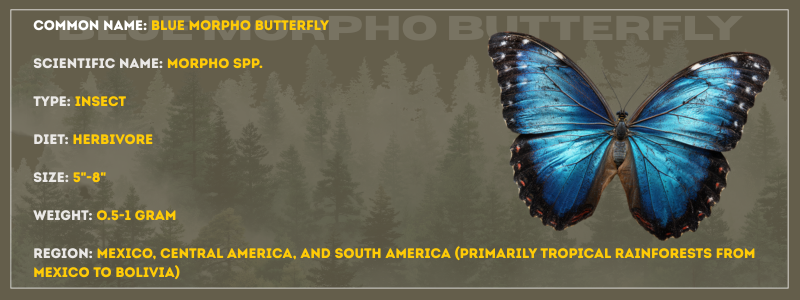
Scientific Name: Morpho spp. (multiple species in genus)
Diet Type: Frugivore (adults), Herbivore (caterpillars)
Size: Wingspan 5-8 inches (12-20 cm)
Weight: 0.5-1 gram
Region Found: Mexico, Central America, and South America (primarily tropical rainforests from Mexico to Bolivia)