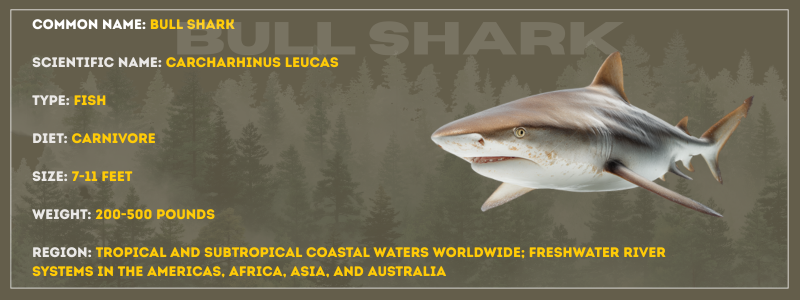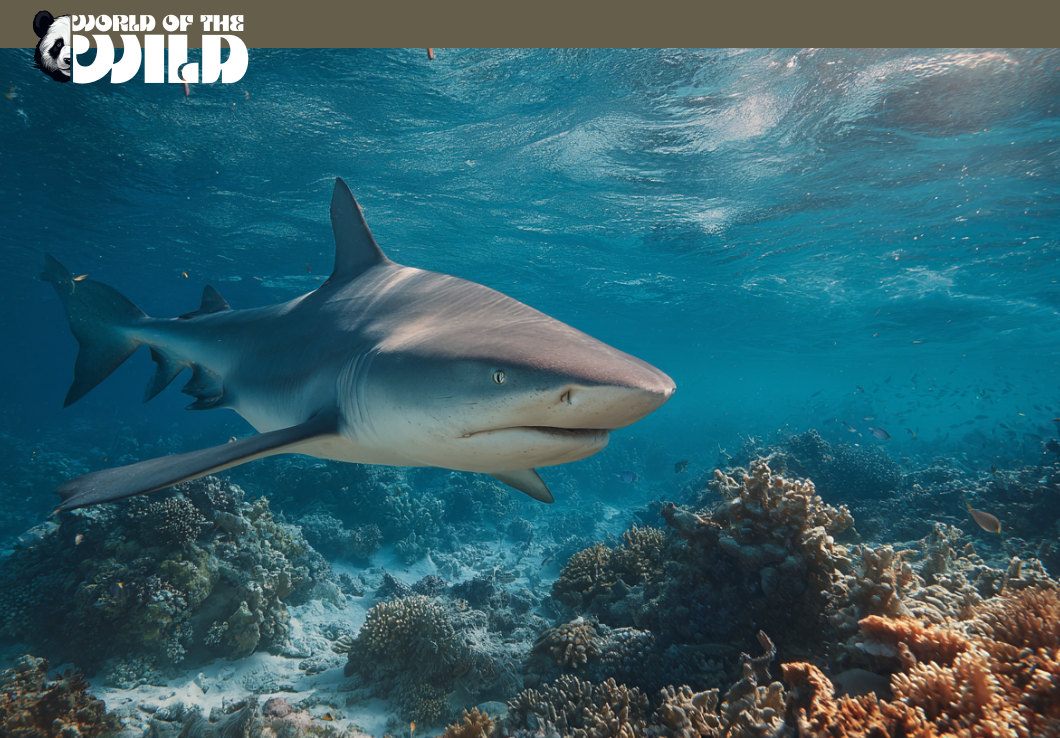

Imagine a shark that defies the rules, a predator so adaptable it can swim thousands of miles up rivers, hunting in murky freshwater while most of its cousins remain confined to the ocean. The bull shark is precisely this creature—a living testament to evolutionary innovation and survival prowess. Unlike the more famous great white or the sleek hammerhead, the bull shark has mastered something truly extraordinary: the ability to transition seamlessly between saltwater and freshwater environments. This remarkable adaptation, combined with its robust build and bold temperament, makes the bull shark one of the most fascinating and formidable predators in our waters. Understanding this species matters not just for appreciating nature’s ingenuity, but because bull sharks frequently inhabit the same coastal and river systems where humans live, work, and play.
Facts
Here are some captivating facts about bull sharks that showcase their unique nature:
The bull shark possesses the highest testosterone levels of any animal on Earth, which may contribute to its notably aggressive temperament and territorial behavior.
These sharks can regulate their internal salt concentration through specialized kidneys and rectal glands, allowing them to survive in freshwater for extended periods—a trait almost unheard of among sharks.
Bull sharks have been found nearly 2,500 miles up the Amazon River and over 2,000 miles up the Mississippi River, with some individuals spending months or even years in completely freshwater environments.
Their bite force is proportionally stronger than that of a great white shark, with estimates suggesting they can exert up to 1,300 pounds of pressure per square inch.
Female bull sharks are significantly larger than males, sometimes outweighing them by 50 pounds or more—a pronounced example of sexual dimorphism in the shark world.
Young bull sharks have been observed performing “practice” hunting behaviors on small prey, suggesting a degree of learned hunting skill rather than purely instinctive behavior.
The name “bull shark” comes not from any bovine features, but from their stocky shape, flat snout, and aggressive, unpredictable behavior—traits reminiscent of a charging bull.
Species
The bull shark belongs to the Kingdom Animalia, Phylum Chordata, Class Chondrichthyes (cartilaginous fishes), Order Carcharhiniformes (ground sharks), Family Carcharhinidae (requiem sharks), Genus Carcharhinus, and Species Carcharhinus leucas. The scientific designation “leucas” derives from the Greek word for “white,” referring to the pale coloration of the shark’s underside.
Within the genus Carcharhinus, the bull shark shares kinship with over 30 other species of requiem sharks, forming one of the most diverse and successful shark families. Close relatives include the blacktip shark, the spinner shark, the silky shark, and the copper shark. These cousins all share certain characteristics like a streamlined body, two dorsal fins, and five gill slits, but none possess the bull shark’s remarkable freshwater adaptability. The requiem sharks as a family are distinguished by their nictitating membrane (a protective third eyelid), their live birth reproductive strategy, and their generally active, predatory lifestyle. Some taxonomists have debated whether certain regional populations of bull sharks might represent distinct subspecies, particularly those in Lake Nicaragua and other isolated freshwater systems, but current consensus treats all bull sharks as a single species with remarkable geographic variation in habitat use.
Appearance
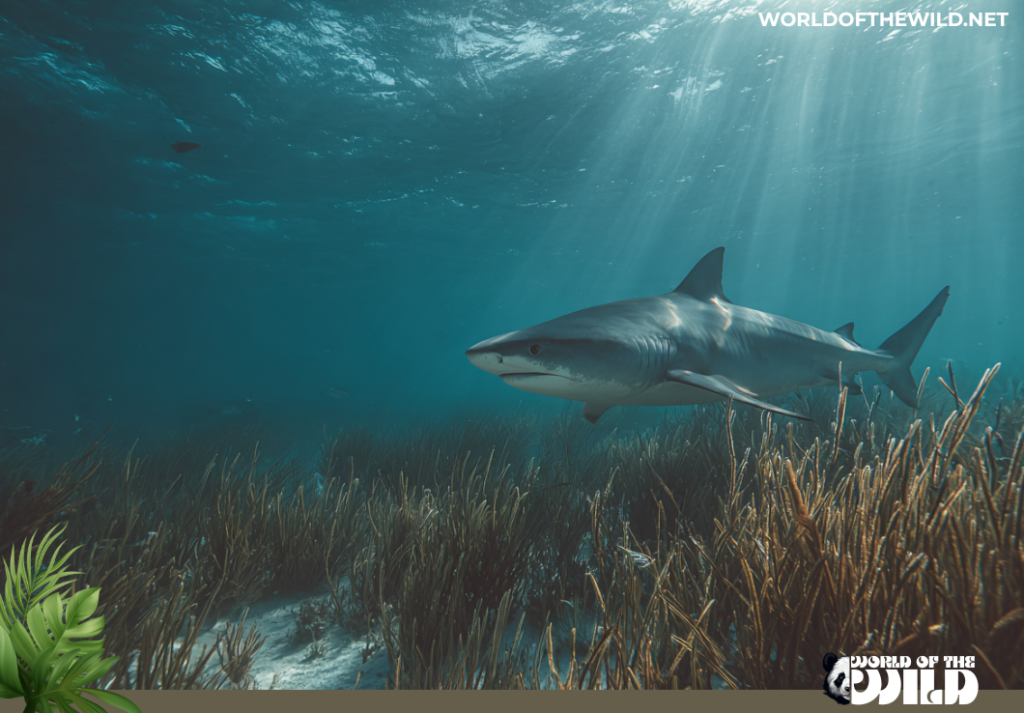
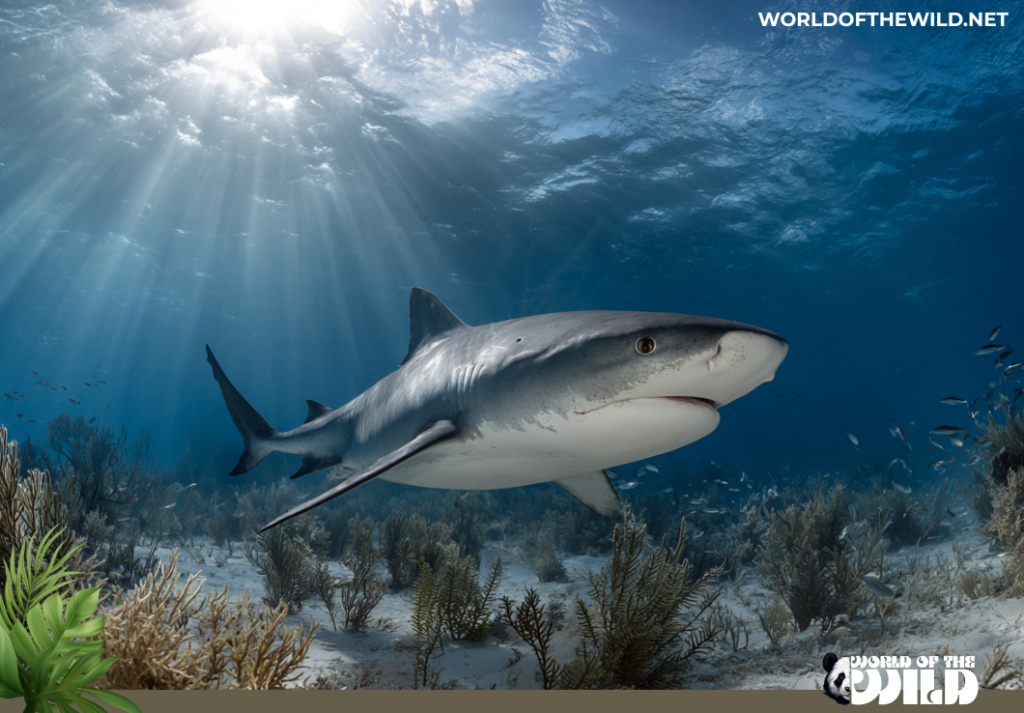
The bull shark cuts a powerful, unmistakable figure in the water. Adults typically measure between seven and eleven feet in length, though females—the larger sex—can occasionally reach nearly twelve feet. Their weight ranges impressively from 200 to 500 pounds, with the largest females tipping the scales even higher. The body is stout and robust, far more heavily built than many of their sleeker shark relatives, giving them a somewhat compact, muscular appearance that befits their common name.
Their coloration follows a classic shark pattern: the dorsal surface ranges from dark gray to brown or even olive, providing excellent camouflage when viewed from above against the murky waters they often inhabit. The ventral surface is white or pale cream, a counter-shading pattern that makes them difficult to spot from below against the bright surface waters. This color scheme lacks the dramatic markings or patterns seen in some shark species, instead offering functional, effective concealment.
The head of a bull shark is broad and flat, with a short, blunt snout that gives them their characteristic profile. Their eyes are small and round, proportionally smaller than those of many shark species, adapted for hunting in the turbid waters where visibility is often limited. The mouth is wide and curves downward, lined with serrated, triangular teeth in the upper jaw and narrower, pointed teeth in the lower jaw—a perfect combination for gripping and tearing flesh. Two dorsal fins rise from the back, with the first being large and triangular while the second is much smaller. The pectoral fins are broad and pointed, providing excellent maneuverability in shallow waters and tight river channels.
Behavior
Orchestrated comprehensive bull shark article structure covering behavior, adaptations, ecology.
I need to write about bull shark behavior in an engaging way, covering their daily patterns, social behavior, intelligence, and unique adaptations. They’re generally solitary but can aggregate, they’re aggressive, they hunt in murky water using various senses, and they show some territorial behavior.
Bull sharks lead predominantly solitary lives, patrolling their territories with the confidence of apex predators. Unlike some shark species that form schools or maintain complex social hierarchies, bull sharks typically hunt and travel alone, though they occasionally gather in loose aggregations in areas with abundant food or during mating season. These are not cooperative groupings in any meaningful sense—rather, multiple sharks tolerating each other’s presence while pursuing individual interests.
Their daily behavior patterns shift with tidal movements and prey availability. Bull sharks are most active during dawn and dusk, the liminal hours when many prey species are vulnerable. However, they remain opportunistic feeders and will hunt whenever circumstances present themselves. In river systems, they often position themselves near confluences, drop-offs, or areas of current where prey naturally concentrates. Their hunting strategy relies heavily on surprise and power rather than speed, bursting from murky water to strike prey before it can react.
Communication among bull sharks appears limited compared to more social marine mammals, relying primarily on body language and posture displays. When two bull sharks encounter each other, they may engage in sizing-up behaviors, swimming parallel to each other or performing exaggerated movements to establish dominance without actual combat. Aggressive encounters, when they occur, involve jaw gaping, hunching of the back, and rapid directional changes.
Intelligence in bull sharks manifests in their remarkable adaptability and problem-solving abilities. They demonstrate spatial memory, returning to productive hunting grounds and navigating complex river systems with apparent ease. Captive observations suggest they can learn to associate certain sounds or visual cues with feeding times. Their ability to regulate their internal chemistry to move between freshwater and saltwater represents a sophisticated physiological “behavior” requiring coordination of multiple organ systems—something their nervous system manages automatically but impressively.
One of their most notable behavioral adaptations involves their head-shaking feeding technique. When a bull shark bites large prey, it often thrashes its head violently from side to side, using its serrated teeth like a saw to tear away chunks of flesh. This behavior proves particularly effective given their powerful jaw muscles and tooth structure. Additionally, bull sharks employ their electrical sense, using specialized organs called ampullae of Lorenzini scattered across their snouts to detect the electrical fields generated by other organisms, a crucial advantage in the murky, low-visibility waters they frequent.
Evolution
The evolutionary story of bull sharks reaches back approximately 70 to 80 million years, to the late Cretaceous period when the first true sharks resembling modern forms were emerging in Earth’s ancient seas. The order Carcharhiniformes, to which bull sharks belong, represents one of the most successful evolutionary radiations in shark history, diversifying into the dominant predatory sharks we see today.
The bull shark’s most remarkable evolutionary achievement—its ability to survive in freshwater—likely developed relatively recently in evolutionary terms, perhaps within the last few million years. This adaptation required significant modifications to their osmoregulatory system. While most sharks maintain internal salt concentrations higher than seawater and would die in freshwater as water flooded their cells, bull sharks evolved specialized kidneys that can recycle salt and rectal glands that can either excrete excess salt in the ocean or retain it in rivers. This physiological innovation opened an entirely new ecological niche, allowing them to exploit food resources unavailable to their strictly marine cousins.
Fossil evidence suggests that the ancestors of modern Carcharhinus sharks were established by the Miocene epoch, roughly 23 to 5 million years ago. During this period, global sea levels fluctuated dramatically, creating and destroying coastal environments and river deltas. The evolutionary pressures of these changing landscapes likely favored sharks that could tolerate varying salinities, eventually producing the bull shark’s exceptional adaptability.
Interestingly, bull sharks may share a more recent common ancestor with other large requiem sharks than previously thought, with genetic studies suggesting the various Carcharhinus species diverged from each other within the last 10 to 15 million years. This relatively recent diversification explains why many requiem sharks share similar body plans and hunting strategies while differing in their specific ecological niches and physiological tolerances.
Habitat
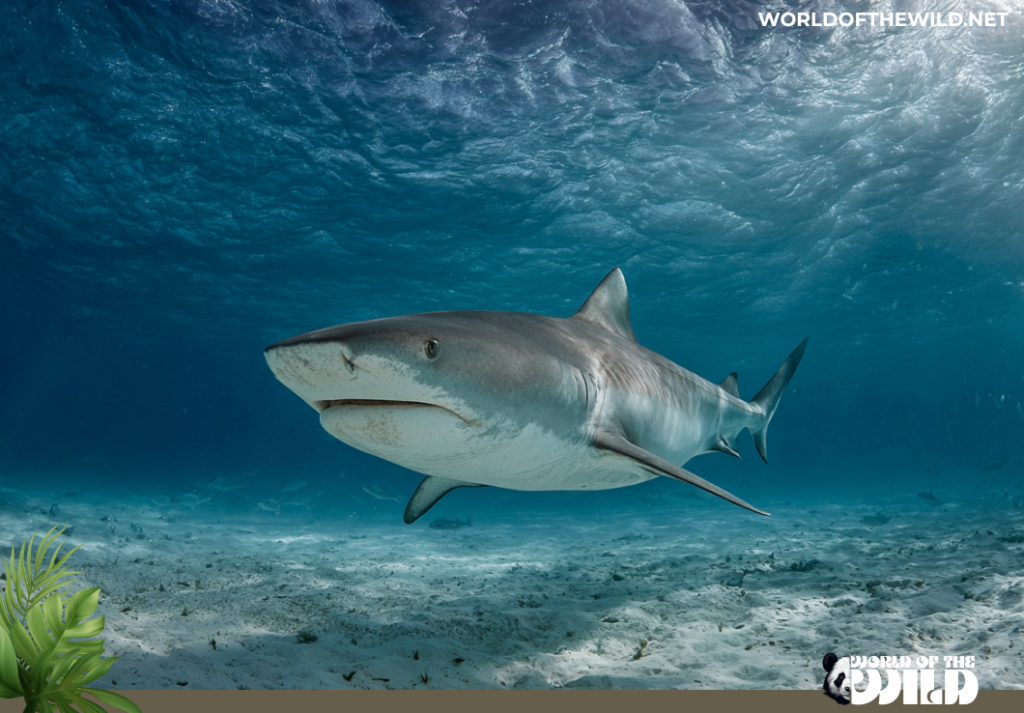
Bull sharks inhabit a remarkable geographic range that spans tropical and subtropical waters across the globe, making them one of the most widely distributed large shark species. They thrive in coastal waters of the Atlantic, Pacific, and Indian Oceans, with populations documented along the coastlines of the Americas from Massachusetts to southern Brazil, throughout the Gulf of Mexico and Caribbean, along the west coast of Africa, around India and Southeast Asia, and along the northern coast of Australia. This cosmopolitan distribution reflects their extraordinary adaptability.
What truly distinguishes bull shark habitat use is their affinity for shallow, coastal environments and their legendary freshwater incursions. They commonly inhabit waters less than 100 feet deep, frequenting river mouths, estuaries, lagoons, and bays—exactly the environments where humans also concentrate. They show a particular preference for murky, turbid waters where visibility is limited, an environment that disadvantages prey while allowing the bull shark’s superior senses to function optimally.
Their freshwater journeys are the stuff of scientific fascination. Bull sharks regularly swim up river systems around the world, with documented populations in the Mississippi River system, the Amazon and its tributaries, the Ganges River in India, the Zambezi River in Africa (which gives them their alternate name, the Zambezi shark), and numerous rivers in Central America and Australia. Lake Nicaragua, a massive freshwater lake in Central America, hosts a permanent population of bull sharks that enter through the San Juan River. Similarly, the Brisbane River in Australia sees regular bull shark presence. Young bull sharks, in particular, often spend their early years in freshwater or low-salinity estuarine environments, using these areas as nurseries where they face fewer predators than in the open ocean.
The specific features of preferred bull shark habitat include adequate prey density, appropriate water temperature (typically above 68 degrees Fahrenheit), and areas offering some form of structure or cover despite the species’ boldness. River mouths and estuarine systems provide the perfect combination: nutrient-rich waters supporting abundant prey, connection to both fresh and salt water, and varied depths and structures for ambush hunting.
Diet
Bull sharks are aggressive carnivores positioned near the apex of their food webs, both in marine and freshwater environments. Their diet reflects their opportunistic, powerful hunting style and includes an astonishing variety of prey species. The phrase “garbage disposal of the sea” has been applied to bull sharks, though this somewhat unfairly characterizes what is actually an efficient, adaptable predator making use of available food sources.
In marine environments, bull sharks feed heavily on bony fishes including mullet, tarpon, catfish, and various reef fishes. They also consume other sharks and rays, including smaller members of their own species, demonstrating the cannibalistic tendencies not uncommon among large sharks. Stingrays feature prominently in their diet, and bull sharks seem undeterred by the defensive barbs these prey possess—deceased bull sharks have been found with dozens of stingray spines embedded in their mouths and throats. Sea turtles, dolphins, and seabirds also fall victim to bull shark predation, particularly in coastal areas.
When hunting in freshwater systems, their prey shifts to whatever the river provides. Freshwater fish species, including various catfish, become primary targets. In rivers, they’ve been documented eating terrestrial mammals that enter the water, whether swimming intentionally or swept in by currents. Their diet in rivers might include anything from fish and crustaceans to carrion and even terrestrial animals.
The hunting strategy of bull sharks combines patience with explosive power. They often cruise slowly through murky water, using their electrical sense to detect prey hidden from view. Once prey is located, they accelerate rapidly, using their powerful tail to generate impressive speed over short distances. The strike itself is violent and efficient—a bull shark’s serrated teeth and powerful jaws can shear through flesh, bone, and shell with devastating effectiveness. Their head-shaking behavior helps them tear large chunks from prey too big to swallow whole. Unlike some sharks that must keep moving to breathe, bull sharks can pump water over their gills while stationary, allowing them to wait in ambush or feed on the bottom for extended periods. This buccal pumping ability, combined with their tolerance for low oxygen levels, gives them advantages in sluggish river environments where many other large predators cannot operate effectively.
Predators and Threats
Adult bull sharks, as apex predators, face few natural enemies in their aquatic domains. Their size, power, and aggressive nature deter most potential predators. However, larger sharks, particularly great white sharks and tiger sharks, will prey on bull sharks when opportunities arise, especially targeting juveniles and smaller adults. In some regions, large saltwater crocodiles and American crocodiles compete with bull sharks for prey and may occasionally attack them, particularly in estuarine environments where their ranges overlap. Orcas, though rare in bull shark habitat, are theoretically capable of preying on them. Young bull sharks face more diverse threats, with larger fish, other shark species, and even adult bull sharks themselves posing dangers during their vulnerable early life stages.
The more significant threats to bull sharks come from human activities. Commercial and recreational fishing operations catch bull sharks both as targeted species and as bycatch. Their coastal and estuarine habitat preferences place them directly in areas of intense fishing pressure. In some regions, they are sought for their meat, which is consumed fresh or dried, and their fins, which enter the international shark fin trade despite growing restrictions. Their liver oil has been used in vitamin production, and their skin can be processed into leather.
Habitat degradation poses an insidious threat to bull shark populations. Coastal development destroys the estuarine nursery areas where young bull sharks spend their crucial early years. River damming blocks their traditional freshwater migration routes, cutting off entire populations from historic habitat. Pollution in both coastal and freshwater systems affects bull sharks through direct toxicity and by contaminating their prey. Agricultural runoff, industrial discharge, and urban pollution all degrade the water quality in exactly the environments bull sharks rely upon. The accumulation of heavy metals and persistent organic pollutants in their tissues reflects this contamination.
Climate change introduces additional concerns. Rising water temperatures may shift the distribution of bull sharks, potentially expanding their range poleward while making some tropical areas less suitable. Changes in river flow patterns, increasing frequency of extreme weather events, and sea-level rise all threaten the delicate balance of estuarine and coastal ecosystems bull sharks depend upon. Ocean acidification, while less directly impactful on sharks than on shellfish and corals, may disrupt the broader food webs supporting bull shark prey populations.
Human-shark interactions represent another dimension of the threat landscape, though one that cuts both ways. Bull sharks are responsible for a significant percentage of shark attacks on humans, likely more than any other species when considering their preference for shallow, murky coastal waters where humans swim and wade. However, each such incident, while tragic, often results in retaliatory killing of sharks and reinforces negative perceptions that harm conservation efforts.
Reproduction and Life Cycle
Bull sharks reach sexual maturity relatively slowly, with males maturing between 14 and 15 years of age when they reach approximately seven feet in length, while females mature slightly later, between 18 and 20 years, at lengths approaching eight feet. This extended juvenile period makes bull shark populations particularly vulnerable to overfishing, as many individuals are caught before ever reproducing.
Mating behavior in bull sharks remains poorly documented in the wild, primarily because these events occur in murky coastal waters where observation proves difficult. What we do know suggests that mating involves the male biting the female’s pectoral fins or body to maintain position during copulation—a somewhat violent-appearing ritual common among sharks. Females bear the scars of these encounters, with many adult females showing distinctive bite marks on their fins and flanks. The thicker skin of female sharks is thought to be an evolutionary adaptation to this rough mating process.
Bull sharks are viviparous, meaning they give birth to live young rather than laying eggs. The embryos develop within the mother’s uterus, initially nourished by a yolk sac, but later sustained through a placental connection to the mother—a sophisticated reproductive strategy among fish. The gestation period lasts approximately 10 to 11 months, with females giving birth in late spring or early summer in most populations, timing that coincides with optimal conditions for pup survival.
Litters typically consist of one to thirteen pups, with an average of four to ten, depending on the size and condition of the mother. The newborn sharks measure between 20 and 30 inches long and are immediately independent, receiving no parental care after birth. This lack of post-birth investment is typical of sharks, with survival depending entirely on the pup’s own abilities.
Females give birth in shallow estuarine and river environments that serve as nursery areas. These brackish or freshwater habitats offer several advantages for young sharks: abundant prey in the form of small fish and crustaceans, protection from larger marine predators that cannot tolerate the lower salinity, and shallow waters where the pups can hunt effectively. Young bull sharks may spend their first several years in these nursery areas before gradually moving into more marine environments as they grow.
The growth rate of bull sharks varies with environmental conditions and food availability, but generally, juveniles grow several inches per year. As they mature, their tolerance for different salinities fully develops, and they begin to exhibit the wide-ranging movements characteristic of adults. Bull sharks can live approximately 25 to 30 years in the wild, though some individuals may survive longer. This lifespan, combined with their late maturity and relatively low reproductive rate, means that bull shark populations cannot quickly recover from overfishing or other population pressures.
Population
The International Union for Conservation of Nature (IUCN) currently lists the bull shark as Vulnerable on its Red List of Threatened Species, a designation indicating the species faces a high risk of extinction in the wild in the medium-term future. This status reflects documented population declines in several regions and the numerous threats the species faces across its range.
Estimating the global population of bull sharks presents significant challenges. Their wide distribution, coastal and freshwater habitat use, and frequent movement between environments make comprehensive population surveys extraordinarily difficult. Unlike some marine species that aggregate in predictable locations, bull sharks spread across thousands of miles of coastline and river systems, often in turbid waters where visual surveys prove ineffective. Most population estimates derive from fishing catch data, tagging studies, and localized surveys rather than direct census attempts.
What evidence exists suggests concerning trends. In the Gulf of Mexico, some studies indicate bull shark populations have declined by as much as 80 percent over recent decades, primarily due to commercial fishing pressure. Similar declines have been documented along parts of the Australian coast and in several other regions where historical data exists for comparison. However, in areas with strong fisheries management and marine protected areas, bull shark populations appear more stable.
The lack of precise population data makes conservation challenging. Some researchers estimate there may be tens of thousands of adult bull sharks globally, while others suggest the true number might be significantly lower. The uncertainty itself is telling—it reflects how little we truly know about the abundance of this widespread but elusive species. Regional variations are substantial, with some river systems and coastal areas supporting robust populations while others have seen bull sharks disappear entirely.
Several factors complicate conservation efforts. Bull sharks’ reputation for aggression and their involvement in shark attacks on humans can undermine public support for protection measures. Additionally, their preference for coastal areas places them in waters heavily used for fishing, shipping, and recreation, increasing conflict between conservation and economic interests. The fact that bull sharks cross international boundaries during their movements means effective conservation requires coordination between multiple nations—a difficult proposition given varying priorities and resources.
Some positive developments offer hope. Shark sanctuaries established in various countries provide protected habitat for bull sharks and other species. Fishing regulations, including bans on finning and restrictions on commercial shark fishing, help reduce direct mortality. Growing awareness of sharks’ ecological importance and the economic value of shark ecotourism creates incentives for conservation. Research continues to expand our understanding of bull shark ecology, movement patterns, and population dynamics, providing the scientific foundation needed for evidence-based management.
Conclusion
The bull shark stands as a testament to evolutionary innovation and the remarkable adaptability of life on Earth. From the saltwater depths of the ocean to the freshwater reaches of major river systems, this powerful predator has carved out an ecological role unlike any other shark species. Their ability to transition between marine and freshwater environments, their robust physiology, their powerful predatory capabilities, and their remarkable distribution across tropical and subtropical waters worldwide make them among the most fascinating sharks in our seas.
Yet fascination must be tempered with concern. Bull sharks face mounting pressures from overfishing, habitat destruction, pollution, and climate change. Their slow maturation, low reproductive rate, and preference for exactly those coastal and estuarine habitats humans also utilize make them particularly vulnerable. The challenges they face mirror those confronting shark species globally—apex predators caught in the crosshairs of human expansion and exploitation.
Understanding and appreciating bull sharks requires moving beyond fear and sensationalism. Yes, they are powerful predators that occasionally come into conflict with humans, but they are also essential components of healthy aquatic ecosystems, controlling prey populations and maintaining the delicate balance of marine and freshwater communities. Their presence in a river or coastal area indicates a relatively intact ecosystem—their absence suggests something has gone terribly wrong.
The future of bull sharks rests in our hands. Supporting sustainable fishing practices, protecting critical estuarine and river habitats, reducing pollution, and backing science-based conservation policies all contribute to their survival. Each of us can play a role, whether through supporting marine conservation organizations, making sustainable seafood choices, or simply learning about and appreciating these remarkable animals. The bull shark’s story is still being written, and we have the power to determine whether future generations will know the thrill of sharing the planet with these extraordinary predators or will know them only as another species lost to human indifference.
Scientific Name: Carcharhinus leucas
Diet Type: Carnivore
Size: 7-11.5 feet (2-3.5 meters)
Weight: 200-500 pounds (90-230 kg)
Regions Found: Tropical and subtropical coastal waters worldwide; freshwater river systems in the Americas, Africa, Asia, and Australia