
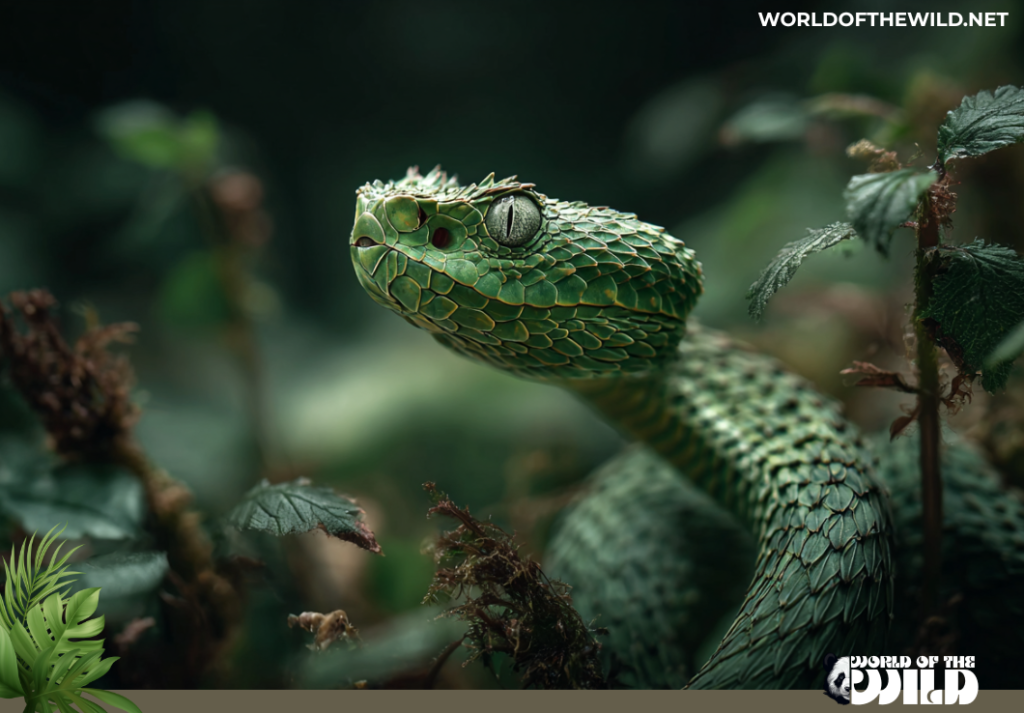
Draped along a flowering branch in the heart of an African rainforest, a creature that looks more like a living piece of art than a deadly predator waits motionless. With scales that spike outward like tiny leaves and colors that shimmer from emerald green to electric blue, the bush viper seems almost mythical. This remarkable serpent has mastered the art of blending into its leafy domain while wielding one of nature’s most sophisticated hunting weapons—venom potent enough to cause severe hemorrhaging in humans, yet currently without a specific antivenom.
The bush viper stands out as one of Africa’s most visually stunning and ecologically important predators. Found exclusively in the tropical forests of sub-Saharan Africa, these vipers represent a fascinating example of how evolution shapes creatures to perfectly match their environment. Their arboreal lifestyle, combined with their ambush hunting strategy and remarkable ability to change colors throughout their lifetime, makes them a subject of endless fascination for herpetologists and nature enthusiasts alike. As the only tree-dwelling vipers native to Africa, they occupy a unique ecological niche that sets them apart from their terrestrial cousins.
Facts
- Color Metamorphosis: Bush vipers can dramatically change color throughout their lifetime. A snake born with uniform green scales may transform into a vibrant blue, yellow, red, or even orange adult—a phenomenon that varies by individual and population.
- No Antivenom Available: Despite their potent venom, there is no species-specific antivenom for bush viper bites. Although antivenom for other viper species like Echis has shown partial effectiveness, treatment remains largely supportive and symptom-based.
- Millisecond Strikes: When prey wanders within range, bush vipers can strike with lightning speed measured in milliseconds, making them among the fastest-striking snakes despite spending hours in complete motionless waiting.
- Prehensile Power: Their tail functions as a fifth limb, allowing them to wrap around branches and suspend themselves upside-down while hunting—a trait shared with very few snake species.
- Live Birth Specialists: Unlike most reptiles, bush vipers don’t lay eggs. They’re ovoviviparous, meaning females carry fertilized eggs internally and give birth to fully-formed, venomous young that are independent from their first breath.
- Caudal Luring: Juvenile bush vipers use their distinctive ivory or cream-colored tail tips to lure prey, wiggling them like a worm to attract curious frogs and lizards within striking distance.
- Fungal Vulnerability: Snake fungal disease represents one of the most significant health threats to both wild and captive bush vipers, causing higher mortality rates than many other factors including predation.
Species
Scientific Classification:
- Kingdom: Animalia
- Phylum: Chordata
- Class: Reptilia
- Order: Squamata
- Family: Viperidae
- Genus: Atheris
- Species: Multiple (approximately 17 recognized species)
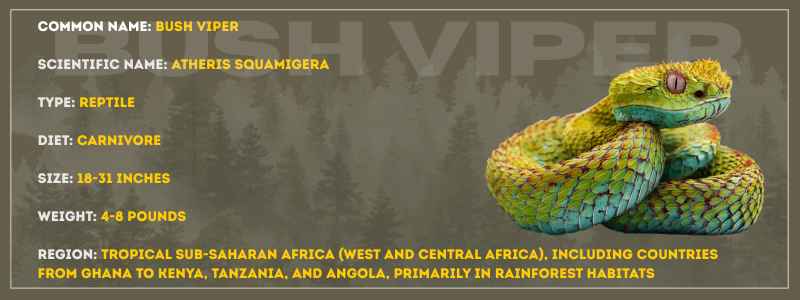
The bush viper genus Atheris encompasses approximately 17 currently recognized species, all endemic to tropical sub-Saharan Africa. The most widespread and well-studied is Atheris squamigera, commonly known as the variable bush viper, green bush viper, or rough-scaled bush viper. This species extends from Ghana eastward through western Kenya and Tanzania, south to northern Angola, and includes populations on Bioko Island.
Other notable species include:
Atheris hispida (Spiny Bush Viper or Hairy Bush Viper): Distinguished by extremely elongated, strongly keeled scales that create a bristly, dragon-like appearance. Found in isolated populations across the Democratic Republic of Congo, southwestern Uganda, western Kenya, and northwestern Tanzania.
Atheris nitschei (Great Lakes Bush Viper): Recognizable by a distinctive black arrowhead marking on the head and connected black blotches along the back, with many scales tipped in black.
Atheris chlorechis (Western Bush Viper): Found in West African forests, known for causing similar envenomation symptoms to A. squamigera.
Atheris ceratophora (Horned Bush Viper): Notable for horn-like scales above the eyes and the unique ability to rasp scales together to produce a hissing sound.
Atheris desaixi (Mount Kenya Bush Viper): A montane species restricted to higher elevations.
Atheris broadleyi (Cameroon Bush Viper): Known for spectacular coloration variations.
Many species have fragmented, isolated distributions confined to specific rainforest patches—a pattern influenced by historical climatic events, geological activity, and millions of years of continental shifting.
Appearance
Bush vipers are relatively small to medium-sized snakes that pack tremendous visual impact into compact bodies. The variable bush viper (A. squamigera) typically measures 18 to 24 inches in total length, with exceptional individuals occasionally exceeding 31 inches. Females generally grow larger than males, a common pattern in many snake species.
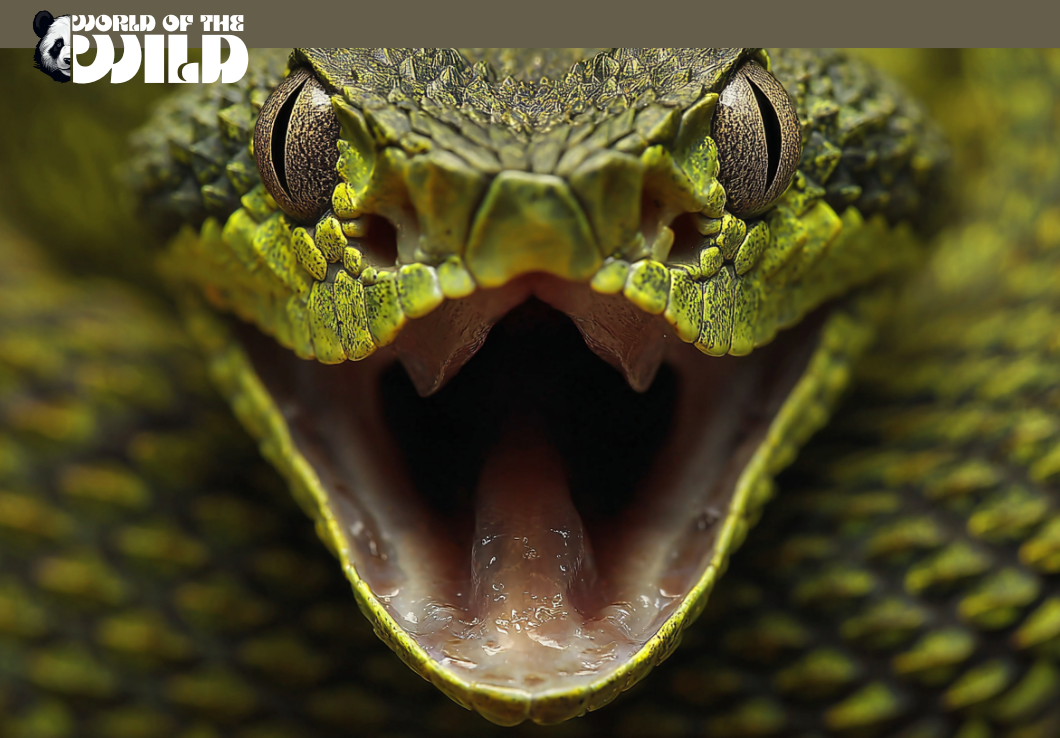
The head is broad, flat, and distinctly triangular, clearly set apart from the narrow neck. This shape accommodates the large venom glands connected to the retractable, hypodermic needle-like fangs. The eyes are relatively large with vertical, elliptical pupils that open wide in darkness—perfect for their nocturnal lifestyle. The snout is broad and rounded, with males of some species like A. hispida having stubbier snouts than females.
What truly sets bush vipers apart is their extraordinary scalation. The body is covered with heavily keeled, imbricate scales—each scale has a raised central ridge and pointed edges that create a rough, almost spiky texture. In the spiny bush viper (A. hispida), these scales are dramatically elongated and stick out from the body, creating a shaggy, bristly appearance most pronounced around the head and neck, gradually smoothing toward the tail. This gives them their dragon-like appearance that has captivated reptile enthusiasts worldwide.
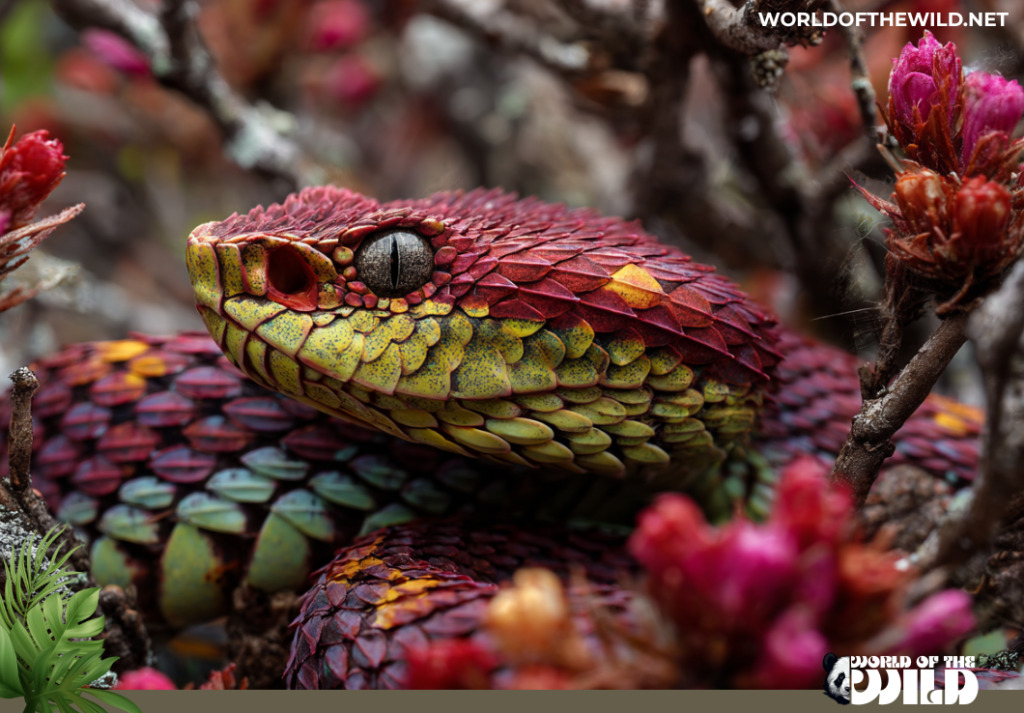
The coloration is nothing short of spectacular and highly variable. The dorsal color ranges from sage green, light green, and emerald to dark green, bluish, olive, and dark olive-brown. Rare specimens display yellow, reddish, orange, slate gray, or even black coloring. Some individuals show uniform coloration while others display elaborate patterns. The scales often have light-colored keels and sometimes yellow tips forming a series of 30 or more light crossbands or chevrons. The tail typically features 10 to 19 chevrons and a conspicuous ivory or cream-white tip extending 7 to 12 millimeters.
The belly is usually yellow or pale olive, either uniform or heavily mottled with blackish spots. An interstitial black color becomes visible only when the skin stretches. This color variability isn’t just between individuals—the same snake can change dramatically from birth to adulthood, with green juveniles potentially becoming vibrant blue, yellow, or orange adults.
Weight varies but typically ranges from 4 to 8 pounds for mature adults, though the spiny bush viper tends to be lighter, with males reaching up to approximately 2 pounds.
Behavior
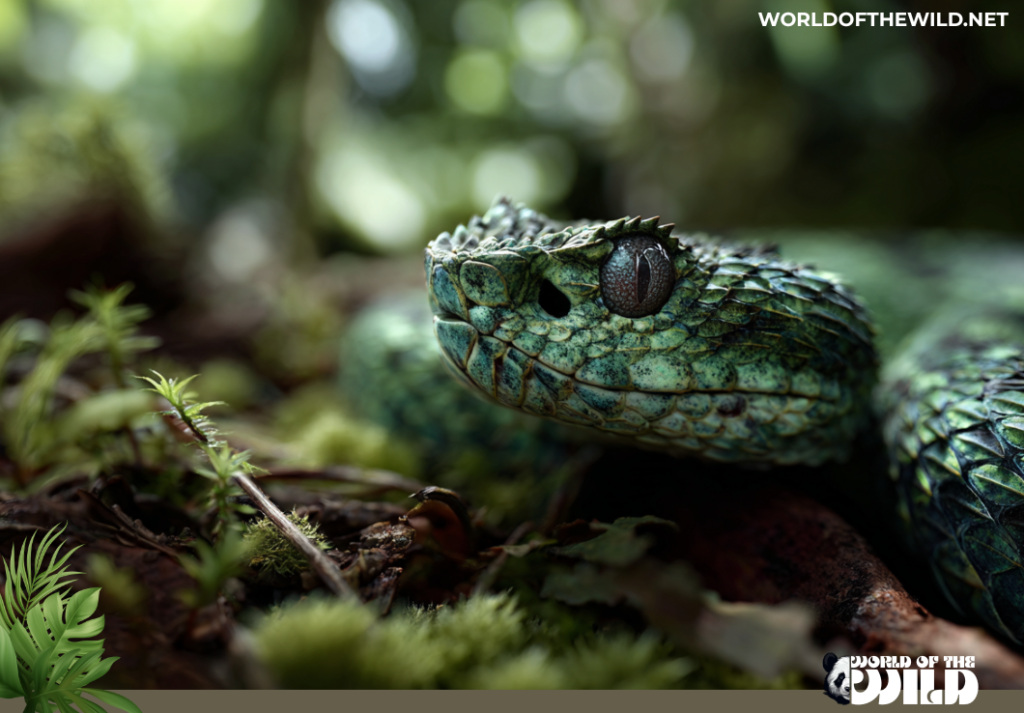
Bush vipers are quintessentially nocturnal hunters, transforming from motionless statues during daylight hours into active predators after sunset. They are primarily arboreal, spending the vast majority of their lives in trees and bushes, though they occasionally descend to the ground, particularly when hunting larger mammalian prey. Their common name refers to their preferred habitat of low, thick flowering bushes where they rest during the day, often basking on top of flowers and terminal leaves.
These serpents are solitary creatures, coming together only during mating season. They demonstrate extreme territoriality and can show aggressive tendencies when threatened, though they’re not typically aggressive toward humans unless provoked or accidentally encountered. In captivity, they’ve even been observed engaging in cannibalism, and adults in the wild sometimes prey on juvenile conspecifics.
As ambush predators, bush vipers employ a sit-and-wait strategy that requires extraordinary patience. They can remain completely motionless for hours or even days, coiled around a branch with their prehensile tail providing anchor support. Unlike New World pit vipers, bush vipers lack heat-sensing pits and instead rely on their excellent vision, sense of smell, and sensitivity to vibrations to detect approaching prey.
When prey enters their strike zone, bush vipers attack with astonishing speed—strike times measured in milliseconds. They grab the prey with their fangs, inject venom through hollow front fangs, and typically hold on until the venom takes effect. The hemotoxic venom causes rapid incapacitation through blood clotting problems, tissue damage, and hemorrhaging. Once the prey succumbs, the viper swallows it whole.
Communication relies primarily on vision, with tactile and olfactory senses playing secondary roles. During courtship, males engage in elaborate displays, swaying their heads side to side while facing potential mates—a mesmerizing dance that can last for extended periods. Mating typically occurs at night, between 6 PM and 2 AM.
Their camouflage serves dual purposes: concealing them from prey and hiding them from potential predators. When threatened, they may rely on their cryptic coloration and remain still, or they may defend themselves aggressively with lightning-fast strikes. Some species can climb reeds and stalks with remarkable agility, demonstrating impressive muscular control and balance.
Evolution
The evolutionary story of bush vipers is intimately tied to the broader history of snakes and the ancient supercontinent Gondwana. Like all snakes, bush vipers descended from legged lizard-like ancestors that roamed the Earth millions of years ago. Fossil evidence suggests that early snake ancestors possessed functional limbs, but as they adapted to different ecological niches—burrowing, swimming, or navigating dense vegetation—these limbs became increasingly unnecessary and eventually reduced to vestiges or disappeared entirely.
The viper family (Viperidae) represents one of the more recent evolutionary branches of advanced snakes, likely originating in the Miocene epoch approximately 20-25 million years ago. Bush vipers belong to the subfamily Viperinae, the “true vipers” or “Old World vipers,” distinguishing them from the pit vipers of the Americas and Asia.
Within Africa, the Atheris genus shows fascinating patterns of divergence and speciation driven by the continent’s dramatic climatic and geological changes. Scientists believe the current fragmented distribution of bush viper species results from a combination of ancient climatic events, tectonic plate movements, and periodic expansions and contractions of rainforest habitats. During ice ages and periods of aridity, rainforests shrank into isolated refugia, splitting bush viper populations. When wetter periods returned, forests expanded but populations remained genetically distinct, eventually evolving into separate species.
Bush vipers demonstrate remarkable convergent evolution with the arboreal pit vipers of Asia and South America. Despite evolving on different continents and lacking any recent common ancestor, these groups independently developed similar body forms, prehensile tails, triangular heads, and arboreal hunting strategies. This convergence highlights how similar environmental pressures—life in the forest canopy, ambush hunting small prey—can shape unrelated species into similar forms.
The evolution of their distinctive keeled scales likely provided survival advantages in their rainforest habitat. These scales enhance camouflage by breaking up the body outline and creating texture that mimics foliage. The scales also may provide better grip on smooth bark and leaves, improving climbing ability.
Their venom evolved as a sophisticated biochemical weapon optimized for subduing small, warm-blooded prey. The hemotoxic compounds in bush viper venom—including disintegrins and snake venom metalloproteinases (SVMPs)—inhibit blood clotting and cause tissue damage, rapidly incapacitating prey while minimizing the energy expenditure and injury risk associated with constriction or prolonged struggles.
Habitat
Bush vipers inhabit a relatively narrow but ecologically rich band of tropical sub-Saharan Africa, specifically avoiding the drier southern regions of the continent. Their distribution is fragmented and often isolated, reflecting their strict dependence on rainforest habitats. The variable bush viper (A. squamigera) has the widest range, stretching from Ivory Coast and Ghana eastward through southern Nigeria, Cameroon, southern Central African Republic, Gabon, both Congos, northern Angola, Uganda, western Kenya, Tanzania’s Rumanika Game Reserve, and Bioko Island.
The spiny bush viper (A. hispida) occupies more restricted and isolated territories in northern and eastern Democratic Republic of Congo, southwestern Uganda’s Ruwenzori region, western Kenya’s Kakamega Forest, and northwestern Tanzania. Other species show even more limited distributions, sometimes confined to single mountain ranges or forest patches.
These snakes are creatures of the rainforest, showing strong preferences for specific microhabitats within these lush environments. They favor areas of dense vegetation, particularly low and thick flowering bushes where they can conceal themselves among blossoms and leaves. Primary and secondary tropical rainforests both support populations, and they’ve been observed in cultivated shrubland, demonstrating some habitat flexibility.
Elevation preferences vary by species and location, though most occur at low to mid elevations. The variable bush viper typically inhabits elevations from 100 to 400 meters above sea level, thriving in the dense vegetation found at lower elevations where prey abundance is highest. The spiny bush viper ranges higher, commonly found between 900 and 2,500 meters elevation in montane forests.
The climate throughout their range is characterized by high humidity and substantial rainfall. In Cameroon’s Takamanda Forest Reserve—a bush viper hotspot—rainfall varies dramatically from 1,500 to 10,000 millimeters annually, with distinct rainy seasons (April through November) and dry seasons. This seasonal pattern influences their reproductive cycles and behavior.
These snakes occupy the lower and middle canopy layers, rarely ascending to the highest branches. They’re often found perched on or hanging from small bushes, reeds, stalks, and tree branches, positioned perfectly for ambushing prey traveling through the understory. Their habitat choice reflects their hunting strategy—they need positions that offer both concealment and access to prey corridors used by small mammals, birds, and amphibians.
The specific features they require include abundant flowering plants (providing both cover and prey attraction), sufficient humidity for skin health and reproduction, and complex three-dimensional structure offering numerous perching points at varying heights.
Diet
Bush vipers are strict carnivores, employing their sophisticated venom delivery system to subdue a diverse menu of small vertebrates. Their diet varies somewhat by age, location, and individual preference, but centers on warm-blooded and cold-blooded prey small enough to swallow whole.
Primary prey items include small nocturnal mammals such as shrews, mice, and other rodents. These warm-blooded creatures provide substantial nutrition and are abundant in the dense vegetation bush vipers inhabit. The snakes’ nocturnal activity pattern perfectly overlaps with peak rodent activity, making encounters frequent.
Amphibians, particularly frogs and toads, form another major dietary component, especially for younger bush vipers. Some populations or individuals may specialize in frog consumption, though most are opportunistic feeders. The abundance of frogs in tropical rainforests makes them readily available prey, and their movements through the same vegetation layers where bush vipers hunt ensure regular encounters.
Birds, especially small perching species, occasionally fall victim to bush vipers. The snakes can strike at roosting birds or ambush them as they forage among flowers and foliage. Lizards and other small reptiles also feature in their diet, with juveniles consuming proportionally more reptilian prey than adults.
Intriguingly, bush vipers sometimes engage in cannibalism, with larger adults preying on juveniles of their own species. This behavior, documented both in the wild and in captivity, likely occurs when bush vipers encounter smaller conspecifics in their hunting territories.
Their hunting strategy revolves around patience and precision. After selecting an advantageous perch—often near a prey corridor or beside flowering plants that attract prey—the viper becomes virtually motionless, sometimes remaining in the same position for days. When prey approaches within striking range, the snake explodes into action, covering the distance in milliseconds. The hollow fangs inject hemotoxic venom that rapidly causes internal hemorrhaging, tissue damage, and shock. The viper typically holds onto the prey, feeling it weaken, then swallows it headfirst once it stops struggling.
Juvenile bush vipers employ an additional hunting trick: caudal luring. They wiggle their distinctively colored tail tips—cream or ivory white—to mimic a worm or insect, attracting curious prey within striking range. This behavior decreases as they mature and develop more refined hunting skills.
In captivity, bush vipers readily accept a diet of exclusively rodents, demonstrating remarkable adaptability. However, their enthusiastic feeding response can lead to obesity if not carefully managed, as they’ll eagerly consume prey even when satiated.
Predators and Threats
Despite their potent venom, bush vipers face various natural predators, though their arboreal lifestyle, excellent camouflage, and defensive capabilities provide substantial protection. The most commonly documented predators are other snakes, including conspecifics (adults eating juveniles) and other predatory snake species that share their rainforest habitat. Large birds of prey capable of hunting in the forest canopy may occasionally take bush vipers, though documentation of such predation is limited.
Humans represent a complex threat. In some regions, local communities capture bush vipers that wander near agricultural areas or fishing activities, occasionally consuming them as food. However, this is not systematic hunting but rather opportunistic removal of snakes perceived as threatening. More significantly, humans indirectly threaten bush vipers through venom extraction or “milking” operations that collect venom for antivenom production and medical research, though this impacts only captive populations.
The most severe threat facing bush vipers is habitat destruction. As tropical rainforests across sub-Saharan Africa face clearing for agriculture, logging, and development, bush viper habitat fragments and disappears. Many species already occupy isolated forest patches, remnants of once-continuous rainforest. Further habitat loss could isolate populations beyond their ability to maintain genetic diversity, potentially driving some species toward extinction.
Climate change poses an emerging threat by altering the precise temperature and humidity conditions these snakes require. Rainforest ecosystems are particularly sensitive to changing rainfall patterns and temperature shifts, which could modify the distribution of suitable habitat and prey availability.
Snake fungal disease (SFD) represents one of the most significant direct health threats to bush vipers. This emerging infectious disease affects both wild and captive populations, causing high mortality rates. The fungus thrives in humid environments and can spread rapidly through populations, making it particularly dangerous for species dependent on high-humidity rainforest habitats.
Agricultural expansion brings additional indirect threats by increasing human-snake conflicts. Bush vipers sometimes venture into cultivated areas adjacent to forests, leading to encounters with people working in fields. Their excellent camouflage means workers may inadvertently approach too closely, triggering defensive strikes.
The venomous nature of bush vipers, combined with the lack of specific antivenom, means that bites occasionally result in severe medical complications or death. This unfortunately creates negative perceptions that can lead to persecution, even though bush vipers generally avoid human contact and strike only when threatened.
Reproduction and Life Cycle
Bush vipers possess a fascinating reproductive strategy that sets them apart from most reptiles. Unlike the majority of snakes that lay eggs, bush vipers are ovoviviparous—the female carries fertilized eggs internally throughout their development, ultimately giving birth to fully-formed, live young. This reproductive mode offers significant advantages in the humid, unpredictable rainforest environment where ground-level egg clutches might be vulnerable to flooding, fungal infections, or temperature fluctuations.
The reproductive cycle is closely tied to seasonal rainfall patterns in their rainforest habitat. Mating typically occurs during the wet season, which varies by location but generally spans May through August, with some sources indicating October and November as peak mating times. The wet season onset triggers hormonal changes influenced by atmospheric pressure changes, temperature drops, and rising humidity.
Courtship behaviors are elaborate and captivating. Males actively seek out females, using chemical cues to locate receptive mates. Upon encountering a potential partner, the male performs a ritualized dance—facing the female while swaying his head rhythmically from side to side. This mesmerizing display can continue for extended periods as the male attempts to engage the female. If receptive, the female responds with her own movements, and the pair may intertwine before copulation.
Mating occurs predominantly during the night cycle, with activity peaking between 6 PM and 2 AM. This nocturnal timing aligns with their overall activity patterns and may reduce exposure to daytime predators during this vulnerable period.
Following successful mating, the female enters a two-month gestation period during which the embryos develop inside her body, nourished by yolk reserves within their eggs. Females often feed voraciously before and during early pregnancy, building up energy reserves needed for the demanding process of pregnancy.
Birth occurs approximately two months after fertilization, typically during March and April, though timing varies by location. The female gives birth to an average of 7 to 9 live young, though clutch sizes can range from as few as 6 to as many as 12 offspring depending on the species and the mother’s size and condition.
Newborns are miniature replicas of adults, measuring approximately 15 centimeters (6 inches) in total length. They emerge fully formed and immediately venomous, capable of delivering dangerous bites from their first moments of life. The mother provides no parental care—the moment the young are born, they’re completely independent, dispersing to find their own territories and begin hunting.
Juvenile bush vipers face high mortality rates from predation, disease, and the challenges of finding suitable habitat and prey. Those that survive grow relatively slowly, with sexual maturity arriving at different ages for males and females. Males reach reproductive maturity earlier, typically around 24 months (2 years) of age. Females mature later, generally not breeding until they’re approximately 42 months (3.5 years) old. This extended maturation period means populations cannot recover quickly from losses.
The lifespan of bush vipers in the wild is not well documented but is estimated at 10 to 20 years based on observations of related viper species. Captive specimens may live longer due to protection from predation, disease, and food scarcity, potentially reaching 12-15 years or more under optimal conditions.
Bush vipers breed once annually, making their reproductive rate relatively slow compared to some other snake species. This low reproductive output, combined with habitat fragmentation, makes populations vulnerable to decline if mortality rates increase.
Population
Assessing the population status of bush vipers presents significant challenges due to their remote, fragmented habitats, nocturnal activity patterns, and cryptic behavior. The elusive nature of these snakes and the difficulty of conducting comprehensive surveys in dense rainforest terrain means that accurate population estimates remain largely unavailable.
Conservation status varies considerably among the different Atheris species. The variable bush viper (Atheris squamigera), the most widespread species, is currently classified as Least Concern on the IUCN Red List. This designation reflects its relatively broad distribution across West and Central Africa and observations suggesting it remains locally common throughout much of its range. However, even for this species, no comprehensive global population estimate exists.
The spiny bush viper (Atheris hispida), despite its limited and fragmented distribution, is also classified as Least Concern by the IUCN SSC Viper Specialist Group. This classification is based on its overall commonness within the areas where it occurs, though populations appear to experience natural fluctuations, with some years showing abundance and others showing rarity, particularly in Kenya.
Many other Atheris species have not been evaluated by the IUCN and lack conservation status assessments entirely. Species like Atheris broadleyi, Atheris desaixi, and several others inhabit such restricted ranges and are so poorly studied that scientists cannot confidently assess their population status or trends.
The fragmented nature of bush viper distributions is particularly concerning for conservation. Many species exist in isolated forest patches separated by unsuitable habitat. Some countries may host only a single population in a specific isolated area, as seen with certain spiny bush viper populations in Kenya and Tanzania. Uganda hosts two documented populations of spiny bush vipers in the central portion of the country and several in the southwest, but these are not known to have genetic exchange.
Population trends, where they can be determined, appear stable for the most common species, though this stability should not inspire complacency. The primary threat—rainforest habitat loss—continues across sub-Saharan Africa, and while bush vipers may currently be holding steady, the trajectory of their habitat is decidedly negative.
Some species may be declining due to habitat destruction, though the isolated nature of many populations makes it difficult to detect or quantify these declines. The combination of naturally small population sizes, restricted ranges, and ongoing habitat loss places several species at potential risk, even if they haven’t yet been formally assessed.
The remote locations where bush vipers thrive—deep in rainforests far from human settlements—provide some protection from direct persecution but also make monitoring difficult. Scientists have very limited data on the natural history, population dynamics, and ecological requirements of many species, hampering conservation planning efforts.
Conclusion
The bush viper stands as one of Africa’s most extraordinary evolutionary achievements—a serpent that has mastered life in the rainforest canopy with stunning coloration, remarkable hunting adaptations, and venom potent enough to demand respect yet subtle enough to remain understudied. These dragons of the African forest embody the incredible biodiversity that tropical rainforests harbor, from their color-changing abilities to their prehensile tails and their unique position as the continent’s only arboreal vipers.
Yet beneath their captivating beauty lies a more sobering reality. The fragmented distributions of many species, coupled with the relentless pressure on rainforest habitats, suggest that these remarkable snakes face an uncertain future. The lack of comprehensive population data for most species means we may be losing ground in protecting them before we even fully understand what we stand to lose.
What makes bush vipers particularly worth preserving extends beyond their aesthetic appeal. As ambush predators of small mammals, they play crucial roles in controlling rodent populations that might otherwise damage forest ecosystems or spread disease. Their venom, while dangerous, holds potential medical applications that remain largely unexplored. And their presence serves as an indicator of healthy, intact rainforest ecosystems—where bush vipers thrive, the forest remains.
The path forward requires a multifaceted approach: expanding protected areas to encompass more rainforest habitat, conducting thorough population surveys to better understand which species need urgent intervention, studying their venom for potential medical applications, and raising awareness about their ecological importance. Most critically, we must address the broader challenge of tropical deforestation, recognizing that saving the bush viper means saving the rainforests they call home.
For those fortunate enough to glimpse a bush viper in its natural habitat—coiled among flowers, scales gleaming in dappled light—the encounter offers a profound reminder of nature’s artistry. But appreciation must transform into action. The future of these magnificent serpents depends on our willingness to protect not just the snakes themselves but the entire rainforest ecosystems that have shaped them over millions of years of evolution. In preserving their world, we preserve a piece of our planet’s irreplaceable natural heritage.
Scientific name: Atheris (genus, approximately 17 species); most common: Atheris squamigera
Diet type: Carnivore
Size: 18-31 inches (45-78 cm) in total length
Weight: 4-8 pounds (1.8-3.6 kg); spiny bush viper: up to 2+ pounds (0.9+ kg)
Region found: Tropical sub-Saharan Africa (West and Central Africa), including countries from Ghana to Kenya, Tanzania, and Angola, primarily in rainforest habitats