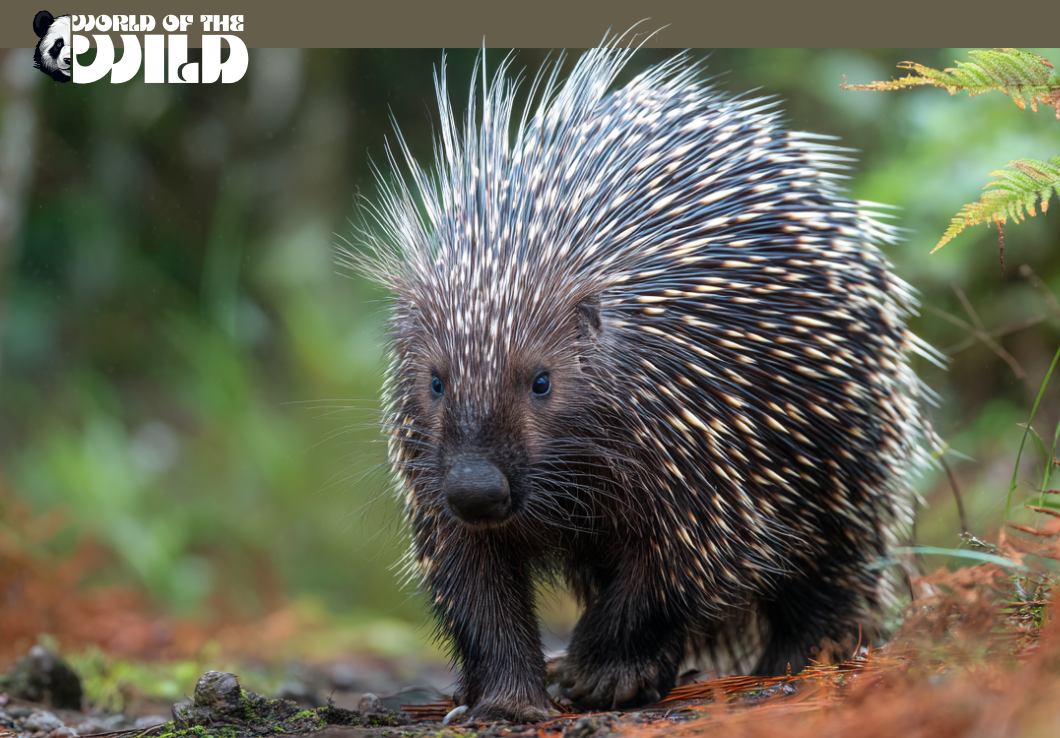

Imagine walking through the scrublands of sub-Saharan Africa at night and hearing a rhythmic rattling sound rising from the darkness — something between a maraca and a warning. Before you can locate the source, a pair of glinting eyes catches the moonlight, and then you see it: a creature armored from neck to tail in a spectacular arrangement of black-and-white quills, each one a needle-sharp lance up to 20 inches long. This is the Cape Porcupine (Hystrix africaeaustralis), and it is no animal to trifle with.
The Cape Porcupine is Africa’s largest rodent and the world’s largest porcupine, a living fortress that has roamed the continent for millions of years. Despite its fearsome appearance, this remarkable creature is a gentle herbivore — unless cornered. It is a symbol of resilience, adaptability, and the quietly spectacular nature of Africa’s nocturnal wildlife. Far more than just a pin cushion on legs, the Cape Porcupine is a fascinating animal with a rich evolutionary history, complex social life, and an outsized role in its ecosystem.
Facts
- The world’s biggest porcupine. The Cape Porcupine is the largest porcupine species on Earth and the largest rodent native to Africa, sometimes weighing over 66 pounds.
- Quills are modified hairs. Each quill is a hollow, keratinized hair shaft — the same protein that makes up human fingernails — that has been hardened and sharpened over millions of years of evolution.
- They cannot shoot their quills. Contrary to popular folklore, porcupines cannot launch their quills like projectiles. However, the quills detach very easily on contact, leaving a predator with a mouthful of painful, barbed spines.
- They’re monogamous diggers. Cape Porcupines typically form lifelong pair bonds and dig elaborate burrow systems that can be used by the same family group for generations.
- Calcium recyclers. Cape Porcupines gnaw on bones and shed antlers to supplement their diet with calcium and phosphorus — a habit called osteophagy that is rare among rodents.
- They communicate by rattling. When threatened, a Cape Porcupine will erect its quills, stamp its feet, and shake a cluster of hollow, open-ended rattling quills at the base of its tail to produce a loud, percussive warning sound.
- Young are born quilled. Porcupette (baby porcupines) are born with soft quills that harden within hours of birth — a critical adaptation that protects both mother and offspring during delivery.
Species
The Cape Porcupine belongs to the Old World porcupine family, a lineage entirely separate from the New World porcupines of the Americas.
| Rank | Classification |
|---|---|
| Kingdom | Animalia |
| Phylum | Chordata |
| Class | Mammalia |
| Order | Rodentia |
| Family | Hystricidae |
| Genus | Hystrix |
| Species | H. africaeaustralis |
The genus Hystrix contains 11 species of Old World porcupines distributed across Africa, southern Europe, and Asia. The Cape Porcupine’s closest relatives include:
- Crested Porcupine (Hystrix cristata) — Found across North and sub-Saharan Africa and introduced to Italy, it closely resembles the Cape Porcupine and the two were long considered a single species. The Crested Porcupine tends to have a more prominent crest of long, white bristles on its head and neck.
- Indian Crested Porcupine (Hystrix indica) — Ranging from the Middle East to South Asia, this species is slightly smaller and occupies an overlapping ecological niche in its own territory.
- Malayan Porcupine (Hystrix brachyura) — A Southeast Asian species with shorter quills and a more compact body.
The Cape Porcupine itself has no recognized subspecies, though populations from different regions may show slight variation in size and quill patterning.
Appearance
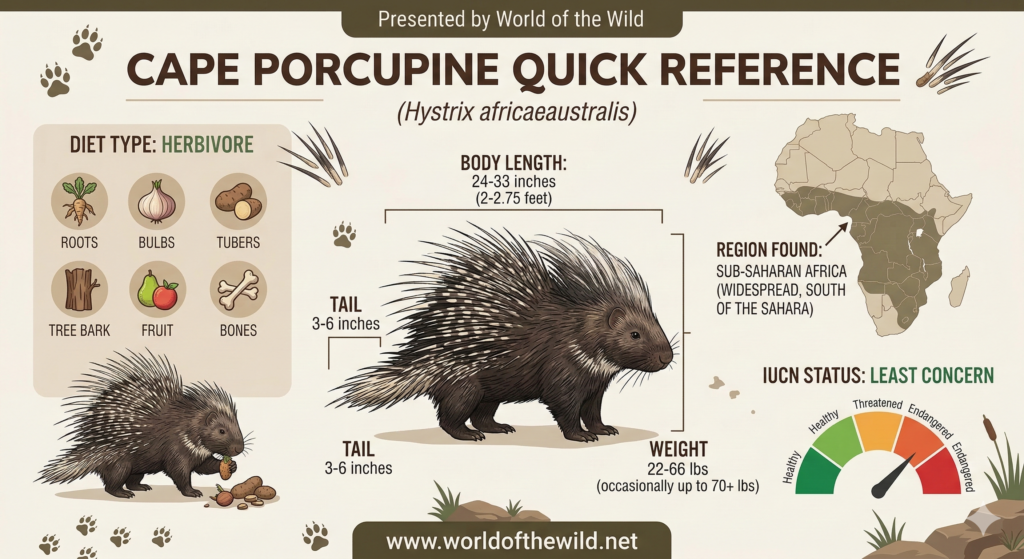
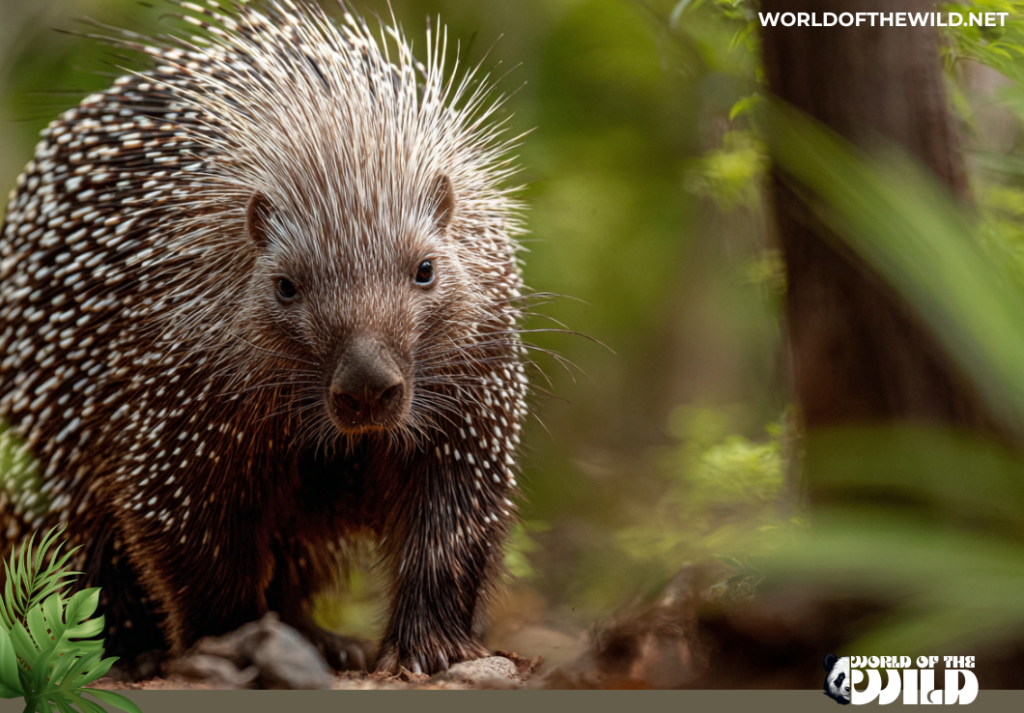
The Cape Porcupine is an unmistakable animal. Adults typically measure 24 to 33 inches (2 to 2.75 feet) in body length, with a short tail adding another 3 to 6 inches. They stand roughly 12 inches tall at the shoulder and weigh between 22 and 66 pounds, with some exceptionally large individuals recorded at over 70 pounds — making them genuinely imposing rodents.
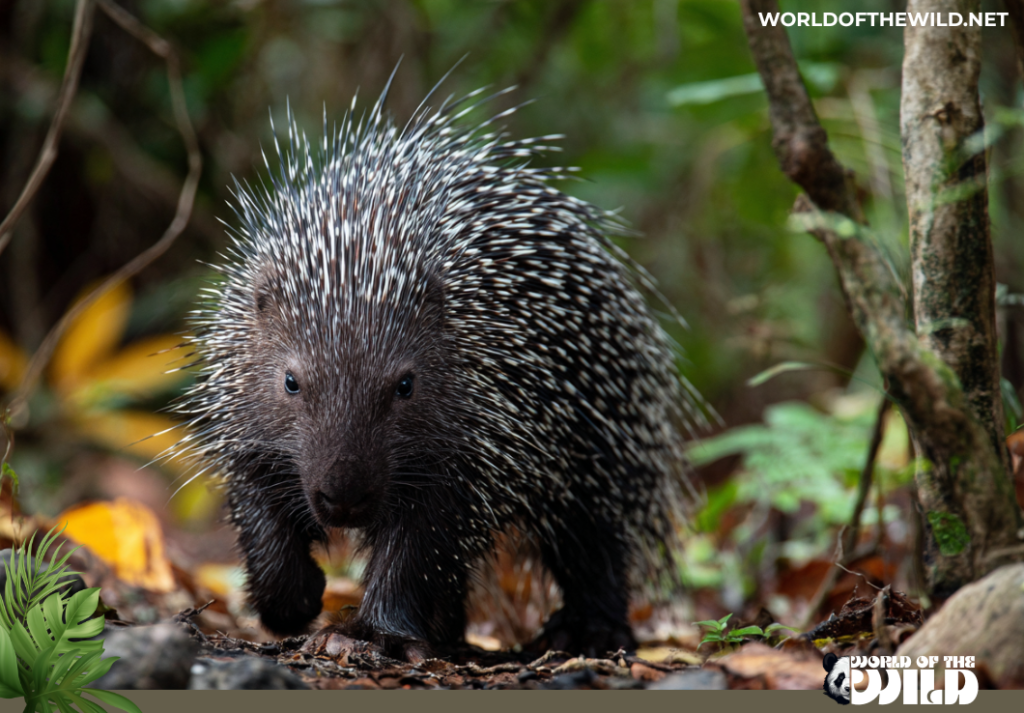
The body is stout and muscular, tapering to a relatively small, blunt head with small eyes and rounded ears. The front half of the body — the head, neck, and shoulders — is covered in coarse, dark brown or black bristles and a crest of long, flattened white-and-black spines that the animal can raise into a dramatic fan display when alarmed.
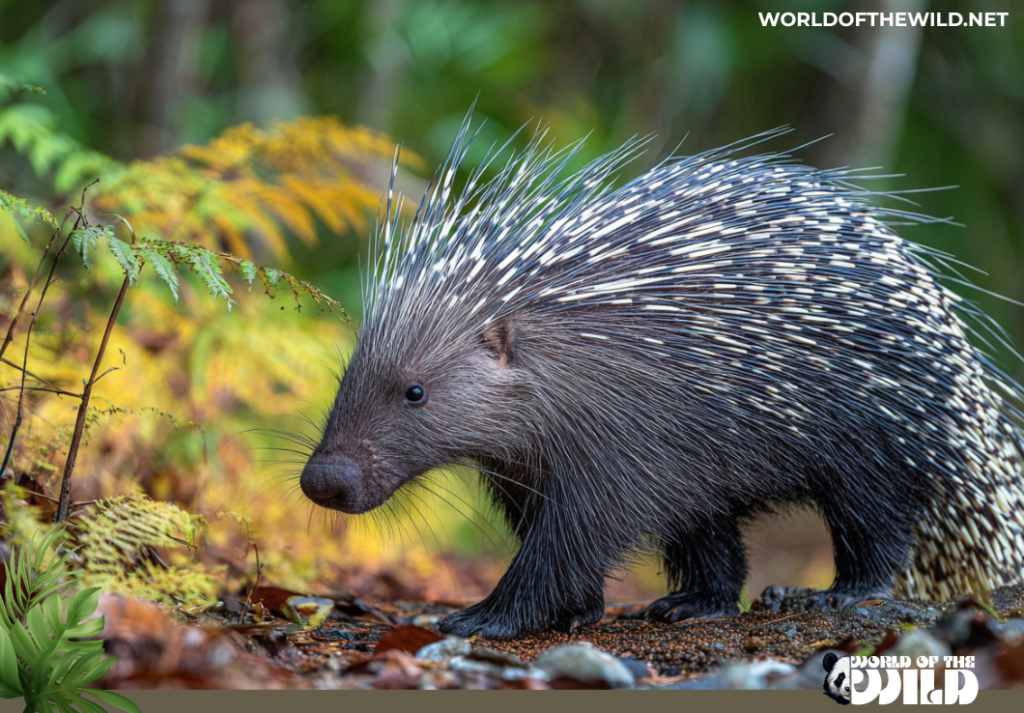
The rear two-thirds of the body bear the iconic quills: stiff, sharply pointed structures that can reach 12 to 20 inches in length, banded in alternating rings of black and white. Shorter, thicker defensive quills sit alongside longer display quills. At the very base of the tail is a cluster of hollow, cup-shaped rattling quills that serve as the animal’s alarm system.
The feet are broad and powerful, equipped with strong claws well adapted for digging. The soles are naked and padded. Males and females are virtually identical in appearance — there is little sexual dimorphism beyond a very slight difference in average body weight.
Behavior
The Cape Porcupine is a nocturnal and largely terrestrial animal, spending its days sheltered in burrows, rock crevices, or dense vegetation, and venturing out after dark to forage. It is not a particularly fast or agile creature — it relies on its armor rather than flight for protection.
Socially, Cape Porcupines are surprisingly family-oriented. They live in small family groups of two to eight individuals, typically a dominant breeding pair and their offspring from one or two previous litters. The young often remain with their parents well past weaning, helping to defend the burrow territory and, in some cases, assisting with raising younger siblings — a behavior known as cooperative rearing.
Communication is multifaceted. Beyond the famous quill-rattling alarm display, porcupines use scent marking extensively, rubbing glands on their cheeks and feet on rocks, logs, and vegetation to define territory. They also vocalize with a range of grunts, whines, and tooth-chattering.
When threatened, the Cape Porcupine’s defense sequence is highly ritualized: it first freezes, then erects all quills to appear larger, then rattles its tail quills, then turns its back to the predator and charges backward. Contact with the backward-charging porcupine drives quills — which have microscopic barbs near the tip — deep into a predator’s flesh. Lions, leopards, and hyenas have all been found with quills lodged in their faces, paws, and throats, sometimes fatally.
Despite this fearsome arsenal, Cape Porcupines are not aggressive by nature. In captivity and among familiar humans, they can be remarkably docile and even affectionate animals.
Evolution
The family Hystricidae — the Old World porcupines — diverged from other rodents approximately 30 million years ago during the Oligocene epoch. Fossil evidence places early hystricid ancestors in Asia, from where they dispersed westward into Africa and Europe.
The genus Hystrix itself appears in the fossil record around 6 to 7 million years ago in the late Miocene, a period of significant climatic change in Africa when forests retreated and open grasslands and scrublands expanded — the very type of habitat that porcupines exploit so well today.
Interestingly, despite living on the same continents, Old World porcupines (Hystricidae) and New World porcupines (Erethizontidae) are not closely related. Their spiny armor evolved completely independently — a remarkable example of convergent evolution, where two distantly related lineages arrived at the same solution (defensive quills) through entirely separate evolutionary paths.
The quill itself represents one of the most elegant evolutionary innovations in the mammalian world: a simple modification of the ordinary hair follicle, refined over millions of years into a precision defensive instrument.
Habitat
The Cape Porcupine has one of the widest distributions of any large African mammal, occurring across virtually the entirety of sub-Saharan Africa — from South Africa and Namibia in the south, through East Africa, and northward into Uganda, Kenya, and Tanzania. It is found in nearly every country south of the Sahara.
This extraordinary range is a testament to the species’ remarkable adaptability. Cape Porcupines inhabit an astonishing variety of environments, including:
- Savanna and open woodland — their most typical habitat
- Karoo scrubland and semi-desert in southern Africa
- Rocky hillsides and kopjes (isolated rocky outcrops), which offer ideal burrow sites
- Montane grasslands at elevations up to 12,000 feet
- Farmland margins and human-modified landscapes, where they sometimes become agricultural pests
The key requirements are availability of food, the presence of suitable shelter (burrows, rock crevices, or dense bush), and a lack of intense persecution. They are absent from true desert and dense equatorial rainforest. Burrows are typically dug in well-drained sandy or loamy soils and can extend 6 to 20 feet underground, with multiple chambers and entrance/exit tunnels.
Diet
The Cape Porcupine is a strict herbivore, with a diet that is opportunistic and highly varied depending on season and location. It is primarily a root and bulb specialist — using its powerful forefeet and sharp claws to excavate underground storage organs that other animals cannot easily access. Its strong, self-sharpening incisors can gnaw through incredibly tough material.
Primary food sources include:
- Roots, rhizomes, and bulbs — the dietary staple year-round
- Tubers (such as wild yam and various African species)
- Bark and woody stems — especially in dry seasons when other food is scarce
- Fallen fruits and berries
- Agricultural crops including sweet potatoes, cassava, groundnuts, and maize — bringing them into frequent conflict with farmers
- Bones and shed antlers — gnawed for calcium and minerals (osteophagy)
Foraging takes place almost entirely at night. A Cape Porcupine may travel up to 9 miles in a single night in search of food, following well-worn trails through the bush that are used repeatedly over months or years. It relies heavily on its acute sense of smell to locate underground food sources, and its hearing is also highly developed.
Predators and Threats
Natural Predators
Despite their formidable quill defense, Cape Porcupines are not invincible. Large, experienced predators that have learned to flip the porcupine onto its soft, unprotected belly can make a meal of one. Known predators include:
- Leopards — the most consistent natural predator; some individuals specialize in hunting porcupines
- Lions
- Spotted Hyenas
- African Wild Dogs
- Large raptors (occasionally take juveniles)
- Pythons (occasionally)
Young porcupines are most vulnerable, and many predator deaths and injuries are attributed to encounters with porcupines gone wrong — a significant evolutionary pressure that keeps porcupine hunting a relatively rare specialty.
Human-Caused Threats
- Persecution by farmers — Cape Porcupines cause real damage to root crops and are killed in large numbers, both through trapping and poisoning.
- Bushmeat hunting — Porcupine meat is considered a delicacy in many parts of Africa and is widely hunted for local consumption and commercial trade.
- Habitat loss — Agricultural expansion and urban development reduce available habitat and food resources.
- Road mortality — Nocturnal animals foraging on road verges are frequently killed by vehicles.
- Traditional medicine — Quills and other body parts are used in some traditional medicine practices.
Reproduction and Life Cycle
Cape Porcupines are notably monogamous, a relatively uncommon trait among rodents, and bonded pairs typically remain together for life. Breeding can occur year-round in warmer parts of their range, though there is often a peak in births during the rainy season when food is abundant.
Gestation lasts approximately 94 days — unusually long for a rodent of this size — and reflects the high investment the species makes in each offspring. Litters are small, typically 1 to 3 porcupettes, with single births and twins being most common.
Porcupettes are born in a specially prepared birth chamber within the burrow, lined with grass and leaves. They are born with eyes open and with soft, pliable quills that begin to harden within hours of birth. Within a few days, the young can move around the burrow confidently, and their quills harden fully within the first week.
Weaning occurs at approximately 3 to 4 months, but young porcupines typically remain with the family group for 12 to 24 months or longer, sometimes helping to guard the burrow and younger siblings. Sexual maturity is reached at around 9 to 12 months, though animals rarely breed before their second year.
In the wild, Cape Porcupines typically live 12 to 15 years. In captivity, with regular food and veterinary care, individuals have reached 20 years or more.
Population
The Cape Porcupine is currently classified as Least Concern on the IUCN Red List of Threatened Species — a reflection of its wide distribution, habitat flexibility, and relatively stable overall numbers. It is considered one of the most successful large mammals in Africa in terms of adaptability to human-modified landscapes.
No precise global population estimate exists, but Cape Porcupines are described as common to abundant across most of their range. Local declines have been documented in areas of intensive farming, heavy hunting pressure, and dense human settlement, but the species as a whole is not considered at risk.
There is growing concern, however, about sustained hunting pressure in parts of West and Central Africa where porcupine bushmeat is heavily traded. In some regions, local populations have been significantly reduced. Climate change poses a longer-term concern, particularly in semi-arid regions like the Karoo, where shifts in rainfall patterns could affect vegetation and food availability.
The species is legally protected in some countries and not others; enforcement of hunting regulations is often limited, particularly in rural areas.
Conclusion
The Cape Porcupine is one of Africa’s most underappreciated large mammals — overshadowed in the public imagination by lions, elephants, and leopards, yet no less remarkable in its own right. It is a creature of quiet resilience: a devoted family member, a tireless nocturnal engineer, and a walking fortress that has outlasted countless predators and survived millions of years of environmental change.
Its role in the ecosystem is more significant than many people realize. By excavating burrows, the Cape Porcupine aerates soil and creates shelter that dozens of other species — from warthogs to mongooses to reptiles — depend on. By gnawing on bones, it recycles nutrients back into the soil. By dispersing seeds in its dung, it plants the next generation of the vegetation it feeds on.
For now, the Cape Porcupine persists and thrives. But “Least Concern” is not the same as “safe,” and the pressures of bushmeat hunting, habitat loss, and agricultural persecution deserve continued attention. The best thing we can do for this extraordinary animal is to learn more about it, appreciate it, and advocate for the wild spaces and sustainable practices that allow it — and the entire web of life it supports — to endure.
Quick Reference
| Scientific Name | Hystrix africaeaustralis |
| Diet Type | Herbivore (roots, bulbs, tubers, bark, fruit, bones for minerals) |
| Body Length | 24–33 inches (2–2.75 feet), plus 3–6 inch tail |
| Height at Shoulder | ~12 inches (~1 foot) |
| Weight | 22–66 lbs (occasionally up to 70+ lbs) |
| Region Found | Sub-Saharan Africa (widespread, south of the Sahara) |
| IUCN Status | Least Concern |