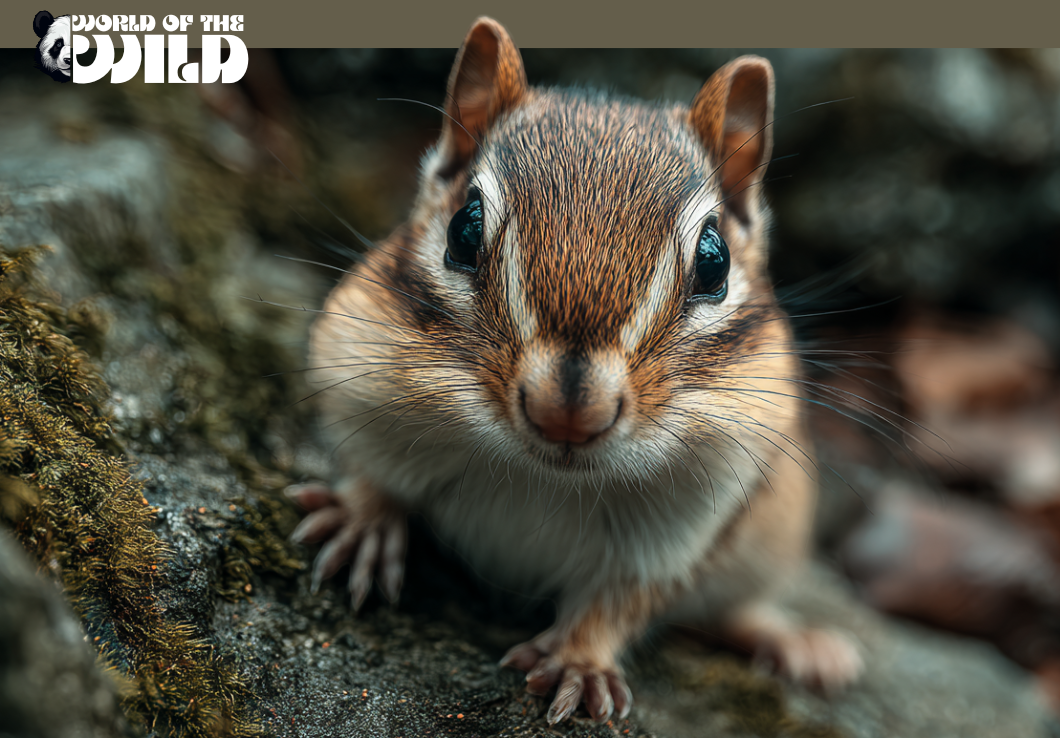

There is something almost impossibly charming about the chipmunk. One moment it’s a blur of russet fur streaking across a forest path, cheeks comically stuffed with seeds; the next, it has vanished into the underbrush as if it were never there at all. These small, striped members of the squirrel family have enchanted hikers, backyard birdwatchers, and naturalists for centuries — and yet, beneath their undeniable cuteness lies a creature of remarkable complexity. Chipmunks are sophisticated survivalists, precision navigators, and industrious food engineers whose behaviors reveal just how ingenious small mammals can be. Far more than the cartoon characters that bear their name, real chipmunks lead lives that are equal parts drama, strategy, and endurance.
Facts
- A single eastern chipmunk can gather and store up to 165 acorns in a single day, and its underground larder may contain well over a pound of food by the time winter arrives.
- Chipmunks do not truly hibernate in the deepest sense — they enter a state called torpor, periodically waking during winter months to snack from their stored food caches rather than relying entirely on body fat as true hibernators do.
- Their famous striped pattern is not just decorative; the bold contrasting lines running down the spine and face help break up the animal’s outline in dappled light, providing effective camouflage against aerial and ground predators.
- Chipmunks communicate with a surprisingly sophisticated vocabulary of chirps, chucks, and trills. Researchers have identified distinct alarm calls for aerial threats like hawks versus ground-based threats like snakes, with nearby animals responding differently depending on which call is heard.
- The pouches in a chipmunk’s cheeks are not extensions of the stomach — they are loose folds of skin that can stretch to roughly three times the size of the animal’s head, essentially turning the chipmunk’s face into a reusable grocery bag.
- Chipmunks are solitary animals that fiercely defend their individual territories, yet they share an elaborate underground tunnel system design that can stretch up to eleven feet in length and include separate chambers for sleeping, food storage, and waste.
- Some chipmunk species have been observed practicing scatter-hoarding — hiding food in many small caches rather than one large one — a behavior that reduces the risk of losing the entire food supply to a competitor or flood.
Species
Chipmunks belong to the following classification:
Kingdom: Animalia Phylum: Chordata Class: Mammalia Order: Rodentia Family: Sciuridae Genus: Tamias (though sometimes divided into Tamias, Eutamias, and Neotamias) Species: Multiple (approximately 25 recognized species)
The vast majority of chipmunk species are found in North America, with only one species — the Siberian chipmunk (Eutamias sibiricus) — native to Asia. Among the North American species, the eastern chipmunk (Tamias striatus) is the most widely recognized and studied, ranging across the forests of the eastern United States and Canada. The least chipmunk (Neotamias minimus) holds the distinction of being the smallest and most widespread western species, adapted to a staggering range of environments from sagebrush flats to alpine meadows. Other notable species include the Townsend’s chipmunk (Neotamias townsendii) of the Pacific Northwest, the yellow-pine chipmunk (Neotamias amoenus) of the Rocky Mountains and Great Basin, and the alpine chipmunk (Neotamias alpinus) found at high elevations in the Sierra Nevada. Many western species are geographically isolated from one another due to mountain ranges and valleys, which has driven significant genetic divergence over time and makes chipmunk taxonomy an ongoing and sometimes contentious area of study.
Appearance
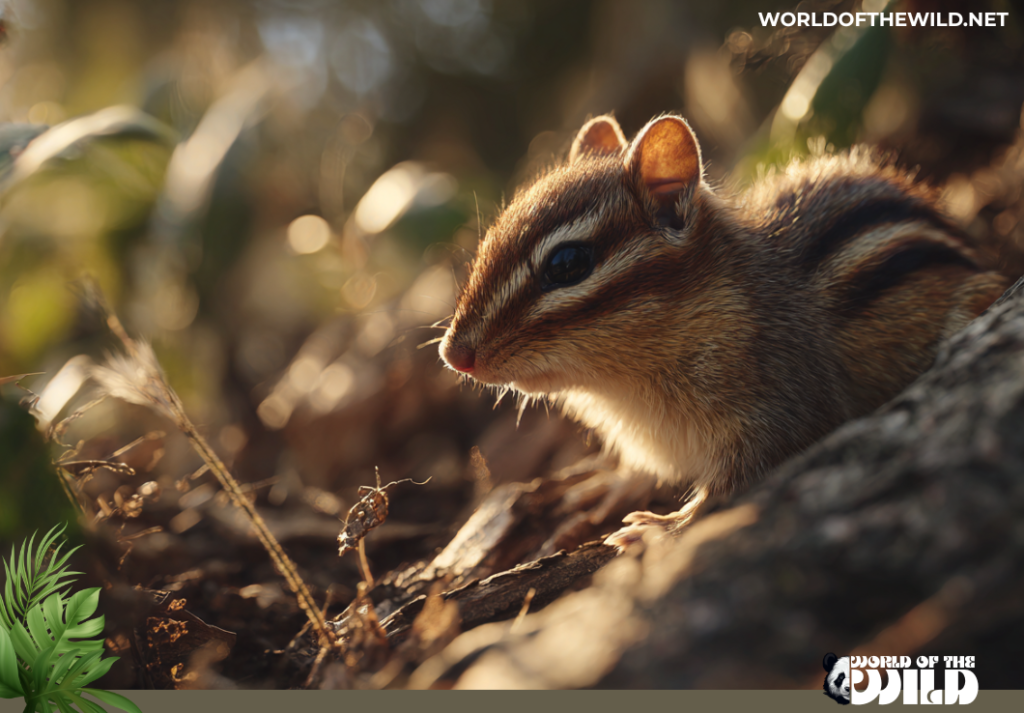
Chipmunks are small, compact rodents with a body plan perfectly suited to darting through underbrush and squeezing into narrow burrow entrances. Most species measure between 8 and 11 inches in total length, including their lightly furred, semi-bushy tail, which typically accounts for roughly a third to half of that length. Their weight ranges from about 1 to 5 ounces depending on the species and season, with animals fattening noticeably in late summer and autumn as they prepare for winter.
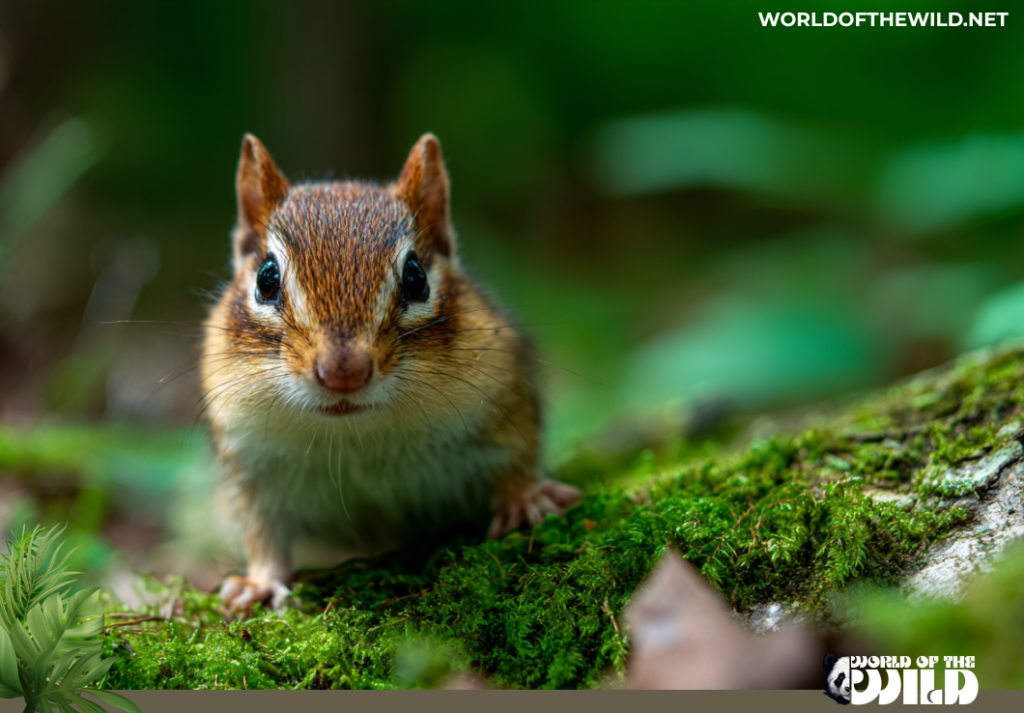
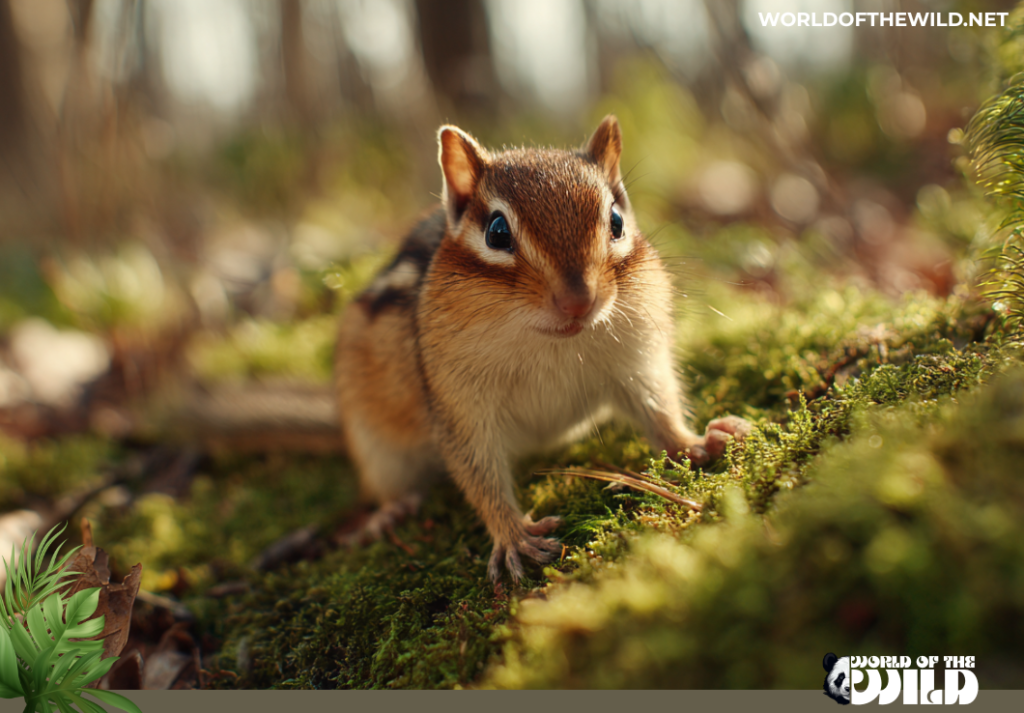
The most immediately recognizable feature of any chipmunk is its striped coat. All species bear at least one dark dorsal stripe running down the center of the back, flanked by lighter stripes of tan or cream, with the pattern typically extending onto the face as well — a detail that sets chipmunks apart visually from other small striped rodents like ground squirrels. The eastern chipmunk displays a rich reddish-brown base coat with five dark and four light stripes along the back, while many western species tend toward slightly more muted, grayish-brown tones. The underbelly is uniformly pale or white across virtually all species.
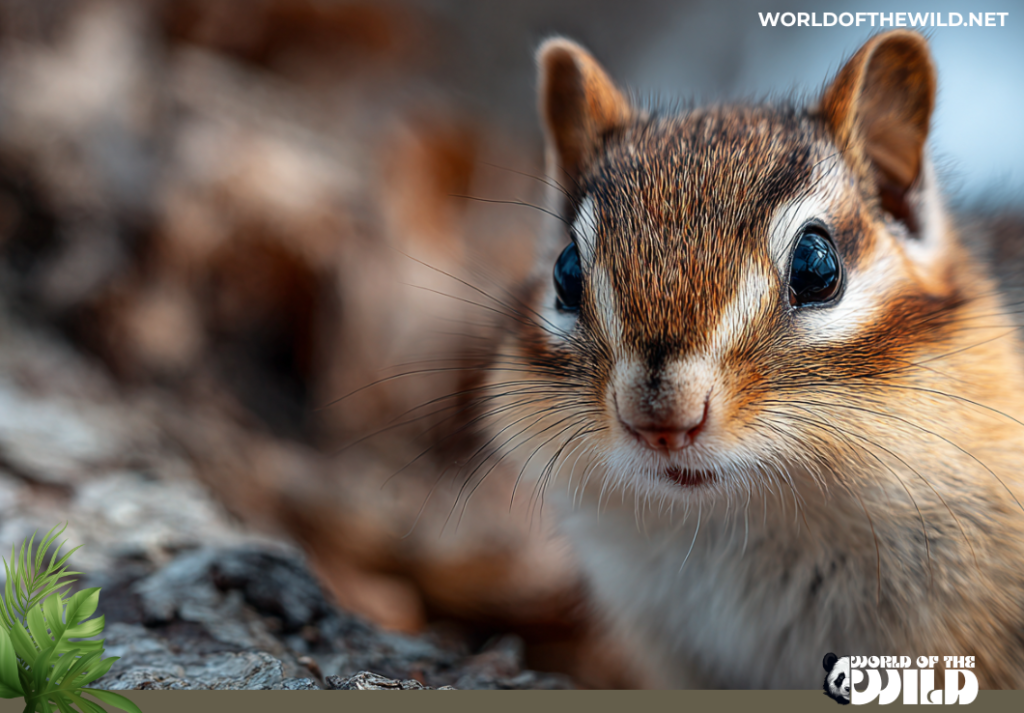
Their faces are animated and expressive, featuring large, dark, forward-facing eyes that provide excellent daytime vision, small rounded ears, and those legendary expandable cheek pouches that give them their signature “stuffed” appearance when foraging. Their forefeet are dexterous, allowing them to manipulate and inspect food items with surprising precision, while their hind legs are notably strong, enabling quick bursts of speed and the ability to leap over obstacles with ease.
Behavior
Chipmunks are primarily diurnal, meaning they are active during daylight hours, with peak activity typically occurring in the morning and again in the late afternoon. The midday heat in summer often drives them underground to rest, giving their day a naturally punctuated rhythm. They are fundamentally solitary animals, and outside of the brief mating season, adults have little tolerance for one another in their territories, which they defend with vocalizations, chasing, and occasional direct confrontation.
Communication is one of the more underappreciated aspects of chipmunk behavior. Their alarm calls — often rendered as a rapid “chip-chip-chip” sound (from which their common name is derived) — carry specific information about the nature and location of threats. High-pitched chip calls typically signal aerial predators, prompting other animals to freeze or seek cover overhead, while deeper, repetitive chucks tend to indicate ground-based danger. This level of acoustic specificity points to a cognitive sophistication that belies their tiny size.
Underground, chipmunks are master engineers. Their burrow systems are meticulously constructed, with a hidden entrance often concealed beneath leaf litter or a rock, leading to tunnels that branch into dedicated chambers for sleeping, food storage, and even latrine areas. The food storage chamber — the “granary” — is the heart of the operation, stocked methodically throughout autumn in preparation for winter torpor. During torpor, the chipmunk’s body temperature drops significantly, its heart rate slows dramatically, and it dips in and out of sleep, rousing periodically to feed from its stores before falling dormant again.
Evolution
Chipmunks belong to the family Sciuridae, which also includes squirrels, marmots, and prairie dogs — a family with fossil roots stretching back approximately 36 million years to the late Eocene epoch. The earliest squirrel-like ancestors were likely arboreal and spread widely across the ancient supercontinent before the configurations of land and sea shifted to their modern arrangements.
The chipmunk lineage as a distinct group appears to have diverged from other squirrels during the Oligocene and Miocene epochs, a period of significant climatic cooling and the spread of open woodland and grassland environments across North America. The emergence of the genus Tamias (in its broad sense) roughly coincides with these environmental shifts, suggesting that the chipmunk’s ground-foraging, food-hoarding lifestyle evolved in response to seasonal environments where food availability was unpredictable.
The remarkable species diversity of North American chipmunks — particularly in the western mountain ranges — is largely a product of geographic isolation driven by the complex topography of the American West. As mountain ranges rose and valleys deepened over millions of years, populations became separated, accumulated genetic differences, and eventually diverged into distinct species. This pattern of allopatric speciation explains why so many chipmunk species have relatively small, defined geographic ranges clustered around specific mountain systems or ecological zones.
Habitat
The eastern chipmunk occupies the deciduous and mixed forests of eastern North America, from the Atlantic seaboard west to the Great Plains and from southern Canada down through the Appalachian Mountains into the southeastern United States. It thrives in mature hardwood forests with abundant ground cover, rocky outcroppings, stone walls, and log piles — features that provide both foraging opportunities and burrow-concealment options.
Western chipmunk species collectively span an enormous range of habitats, from the coniferous forests of the Pacific Coast to the sagebrush steppes of the Great Basin, the alpine meadows of the Rockies and Sierra Nevada, and the oak woodlands of the intermountain West. Each species tends to occupy a relatively specific elevation band or vegetation type within this broader landscape, with sharp boundaries between species ranges often corresponding to shifts in plant communities or mountain ridgelines.
The Siberian chipmunk ranges from central Russia east through Siberia, Korea, and northern China, inhabiting boreal forests and mixed woodland similar in character to the North American habitats its relatives prefer. In all cases, chipmunks favor environments with a combination of seed-producing plants, adequate ground cover for burrowing, and loose, well-drained soil. Dense, closed-canopy forests without understory shrubs tend to support fewer chipmunks than forest edges, open woodlands, and areas with varied structural complexity.
Diet
Chipmunks are omnivores with a strong preference for plant material, particularly seeds and nuts. Their diet shifts throughout the year in response to seasonal availability, but the backbone of their nutritional life consists of tree seeds — acorns, beechnuts, hickory nuts, and conifer seeds — along with the seeds of grasses, wildflowers, and shrubs. Berries, mushrooms, fleshy fruits, and green plant material round out the plant-based portion of their diet during spring and summer.
The animal component of their diet is often overlooked but is ecologically important. Chipmunks readily consume insects, earthworms, small snails, and occasionally bird eggs or nestlings when the opportunity presents itself. In spring, when stored food supplies are running low and new vegetation has not yet matured, animal protein can be a critical nutritional bridge. There are even documented cases of chipmunks consuming small vertebrates such as mice, though this appears to be opportunistic rather than systematic.
Foraging behavior is a carefully calibrated activity. Chipmunks use their sharp senses of smell and vision to locate food, assess it with their forepaws, and make rapid decisions about whether to eat it on the spot or transport it back to storage. Items destined for the cache are packed tightly into the cheek pouches, and the chipmunk makes repeated trips between foraging sites and its burrow throughout the day — a behavior that can cover remarkable distances and demonstrate impressive spatial memory.
Predators and Threats
The list of animals that prey on chipmunks is long and diverse, reflecting the chipmunk’s position as a small, abundant, and energetically valuable prey item throughout its range. Raptors — particularly red-tailed hawks, sharp-shinned hawks, Cooper’s hawks, and American kestrels — are among the most significant aerial predators, hunting chipmunks in open areas and forest edges. On the ground, weasels, minks, foxes, coyotes, bobcats, and domestic cats all take chipmunks regularly. Rat snakes, black racers, and various other medium-sized serpents are persistent predators as well, capable of following chipmunks directly into their burrow entrances.
Despite this gauntlet of predators, natural predation is not the primary conservation concern for most chipmunk species. Habitat loss represents the most significant human-caused threat, particularly for the many geographically restricted western species whose ranges are entirely contained within specific mountain ecosystems. Logging, residential development, and the suppression of natural fire cycles that maintain open woodland habitats all reduce the quality and extent of chipmunk habitat.
Climate change poses an increasingly serious threat to high-elevation species like the alpine chipmunk, which has already been documented shifting its range upslope in the Sierra Nevada in response to warming temperatures. As warming pushes the chipmunk’s suitable habitat higher, the total area of available habitat shrinks — a phenomenon sometimes called “summit trap” — and small, isolated populations face greater extinction risk. Road networks fragment habitat and increase mortality from vehicle strikes, while invasive plant species can alter the composition of seed-producing plant communities in ways that reduce food availability.
Reproduction and Life Cycle
Most chipmunk species breed twice annually — once in early spring, shortly after emergence from winter torpor (typically February through April depending on latitude and elevation), and again in midsummer (June through July). The mating system is promiscuous; females are receptive for only a few hours during each estrous cycle, and both males and females may mate with multiple partners during a single breeding season. Males locate receptive females primarily through scent, and competition between males can be intense, with chasing and vocalizations common during peak breeding periods.
Gestation lasts approximately 30 to 35 days in the eastern chipmunk, with litter sizes typically ranging from 2 to 8 young, averaging around 4 to 5. The young are born blind, hairless, and entirely dependent on their mother. They develop rapidly: eyes open at around 4 weeks of age, the characteristic striped pattern becomes visible as fur grows in, and weaning occurs at approximately 6 to 8 weeks. Young chipmunks begin appearing above ground and foraging independently at around 6 weeks of age, and by late summer they are largely self-sufficient.
Juvenile chipmunks must accomplish an enormous amount in a short time — establishing their own territory, constructing or locating a suitable burrow, and accumulating sufficient food stores to survive their first winter — all before cold weather sets in. This compressed timeline means that early-summer litters have a significant survival advantage over late-summer litters in northern populations. Most chipmunks in the wild live between 2 and 3 years, though individuals have been documented surviving up to 8 years in captivity, where the pressures of predation and food scarcity are removed.
Population
The majority of chipmunk species are currently listed as Least Concern on the IUCN Red List, reflecting their broad distributions, adaptability, and relatively stable population trends. The eastern chipmunk in particular remains abundant across its range and is one of the most commonly encountered wild mammals in eastern North American forests and suburbs. Global population estimates for individual chipmunk species are difficult to pinpoint given the challenges of surveying small, secretive burrowing mammals across vast areas, but the eastern chipmunk population alone is estimated in the tens of millions.
However, the picture is more complicated for several geographically restricted western species. The Lodgepole chipmunk, Panamint chipmunk, and alpine chipmunk, among others, have ranges small enough that ongoing habitat degradation and climate-driven shifts could pose serious long-term risks. The Buller’s chipmunk of Mexico and the Hopi chipmunk of the Colorado Plateau are among the species with particularly limited distributions that warrant closer monitoring. While none of the currently recognized chipmunk species are listed as Endangered or Critically Endangered at the global level, regional population declines in sensitive habitats are a documented concern, and several species are classified as Vulnerable or Near Threatened at state or regional levels within the United States.
Conclusion
The chipmunk is, in many ways, a microcosm of the natural world’s ingenuity. In a body that fits comfortably in the palm of a hand, evolution has packed extraordinary capabilities: the spatial memory of a navigator, the engineering instincts of a builder, the communication sophistication of a social animal, and the metabolic flexibility of a creature that can slow its own biology almost to a standstill to survive winter. They scatter seeds across the forest floor, unwittingly replanting the trees that define their habitat. They feed the hawks, the foxes, and the weasels that keep ecosystems in balance. They are, quietly and efficiently, essential.
The next time you spot a chipmunk racing along a stone wall with its cheeks improbably full, take a moment to appreciate what you are actually seeing — not a cartoon, not a pest, but a sophisticated wild animal living out a life of constant urgency and remarkable competence. Protecting the forests, woodlands, and mountain habitats these animals depend on is not simply an act of charity toward something cute. It is the maintenance of ecological systems that ultimately sustain us all.
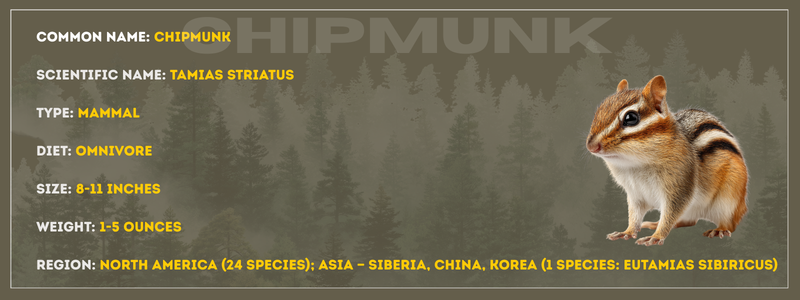
Scientific Name: Tamias striatus (Eastern Chipmunk); approximately 25 species across genera Tamias, Eutamias, and Neotamias
Diet Type: Omnivore
Size: 8–11 inches (including tail)
Weight: 1–5 ounces (0.06–0.31 lbs)
Region Found: North America (24 species); Asia — Siberia, China, Korea (1 species: Eutamias sibiricus)