
In the misty rainforests of New Caledonia, a small reptilian phantom haunts the canopy at night. The Crested Gecko, with its prehistoric appearance and delicate eyelash-like crests, was once believed to have vanished forever from our planet. For decades, scientists thought this species had gone extinct, relegated to dusty museum specimens and forgotten field notes. Then, in 1994, a tremendous tropical storm swept across the remote South Pacific archipelago, and in its aftermath, something remarkable happened: the Crested Gecko was rediscovered, clinging to life in the treetops where it had been hiding all along. This “Lazarus species” has since become one of the most beloved reptiles in the world, captivating herpetologists and hobbyists alike with its gentle nature, striking appearance, and remarkable survival story.
Facts
Here are some fascinating facts about the Crested Gecko that showcase just how unusual this creature truly is:
- They fire and forget their tails. Unlike most geckos, Crested Geckos can drop their tails when threatened, but the tail never grows back. This makes the decision to autotomize a true last resort, and wild specimens with intact tails are surprisingly rare.
- They’re masters of vertical sleeping. These geckos have specialized toe pads covered in millions of microscopic hair-like structures called setae, allowing them to sleep while clinging upside-down to leaves and branches without any effort.
- Their eyes need regular cleaning. Lacking eyelids, Crested Geckos use their tongues to lick their eyes clean, keeping their large corneas moist and free of debris in a behavior that’s both practical and oddly endearing.
- They spent 25 years in limbo. Between 1866, when they were first described scientifically, and 1994, when they were rediscovered, not a single living specimen was documented, leading the scientific community to presume their extinction.
- They can change color like mood rings. While not as dramatic as chameleons, Crested Geckos can lighten or darken their coloration in response to temperature, stress levels, and time of day, appearing much paler during their inactive daytime hours.
- They’re surprisingly vocal for geckos. These lizards produce a range of sounds including chirps, squeaks, and barks, using vocalizations to communicate during mating season and to establish territory.
- Their population exploded in captivity while declining in the wild. Today, there are likely hundreds of thousands of Crested Geckos living in terrariums worldwide, yet their wild population remains small and vulnerable.
Species
The Crested Gecko belongs to the following taxonomic classification: Kingdom Animalia (animals), Phylum Chordata (possessing a spinal cord), Class Reptilia (reptiles), Order Squamata (scaled reptiles including lizards and snakes), Family Diplodactylidae (a family of geckos found primarily in Australia and New Caledonia), Genus Correlophus (New Caledonian geckos), and Species ciliatus (the specific epithet meaning “fringed” or “having small hairs,” referring to the distinctive crests).
The genus Correlophus was formerly classified as Rhabdopherus, a taxonomic change that occurred in 2012 after genetic analysis revealed important distinctions. Within this genus, the Crested Gecko shares its classification with two close relatives also endemic to New Caledonia: Correlophus sarasinorum (Sarasin’s Gecko) and Correlophus belepensis (the Belepe Gecko). While these species share similar body plans and ecological niches, the Crested Gecko is distinguished by its more prominent cranial crests and larger overall size.
No subspecies of Crested Gecko are currently recognized, as the entire wild population is restricted to a relatively small geographic area, limiting the opportunity for significant genetic divergence. However, decades of selective breeding in captivity have produced numerous color morphs and pattern variations, from flame patterns to harlequins, though these represent aesthetic variations rather than taxonomic distinctions.
Appearance
The Crested Gecko is a study in delicate contradictions: robust yet appearing fragile, prehistoric yet somehow charming. Adults typically measure between six and ten inches in total length, with males generally reaching the larger end of this spectrum. When they possess their original tails, these appendages account for roughly half of their total length, serving as both counterbalance and fat storage. Weight varies considerably depending on age, sex, and overall health, but adults generally range from 35 to 55 grams, with well-fed females sometimes exceeding this range during breeding season.
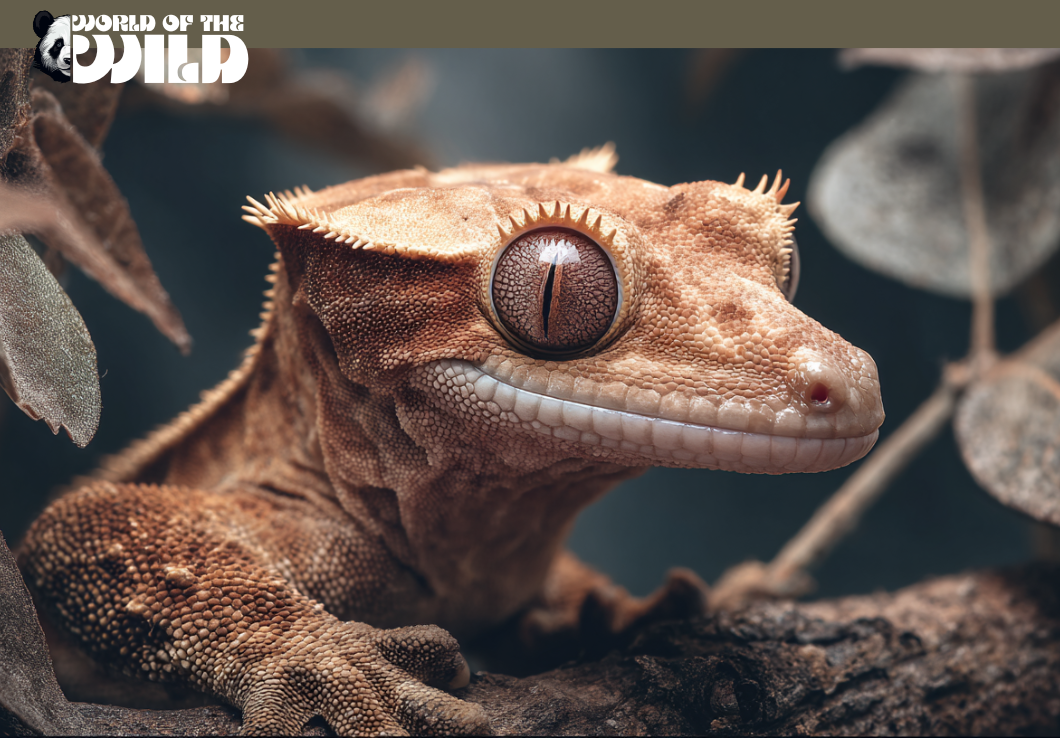
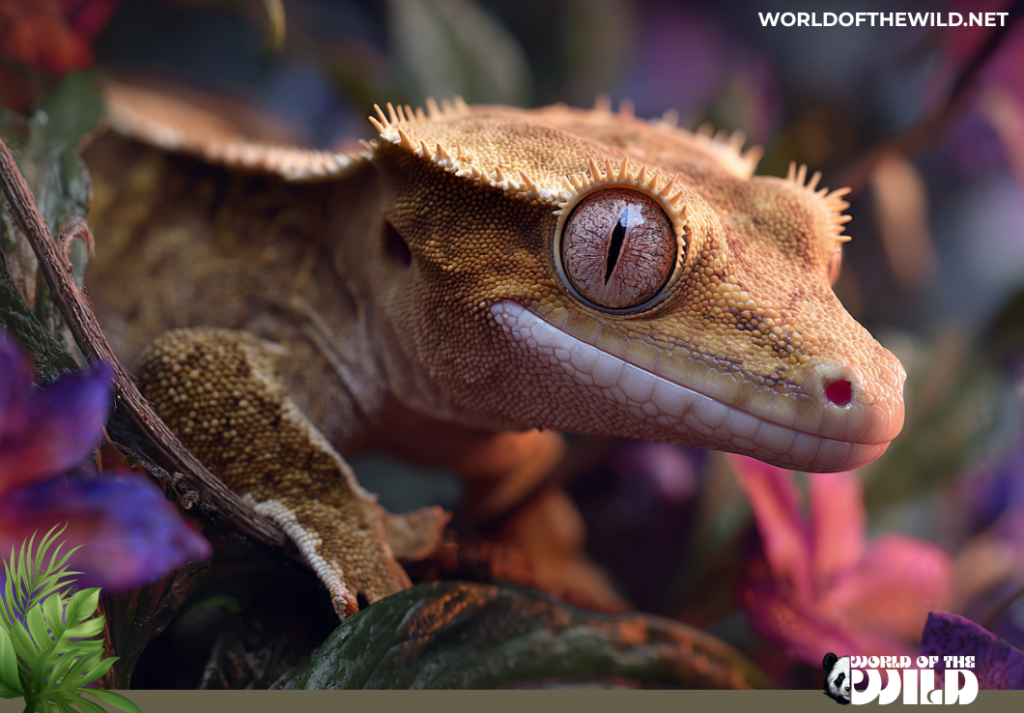
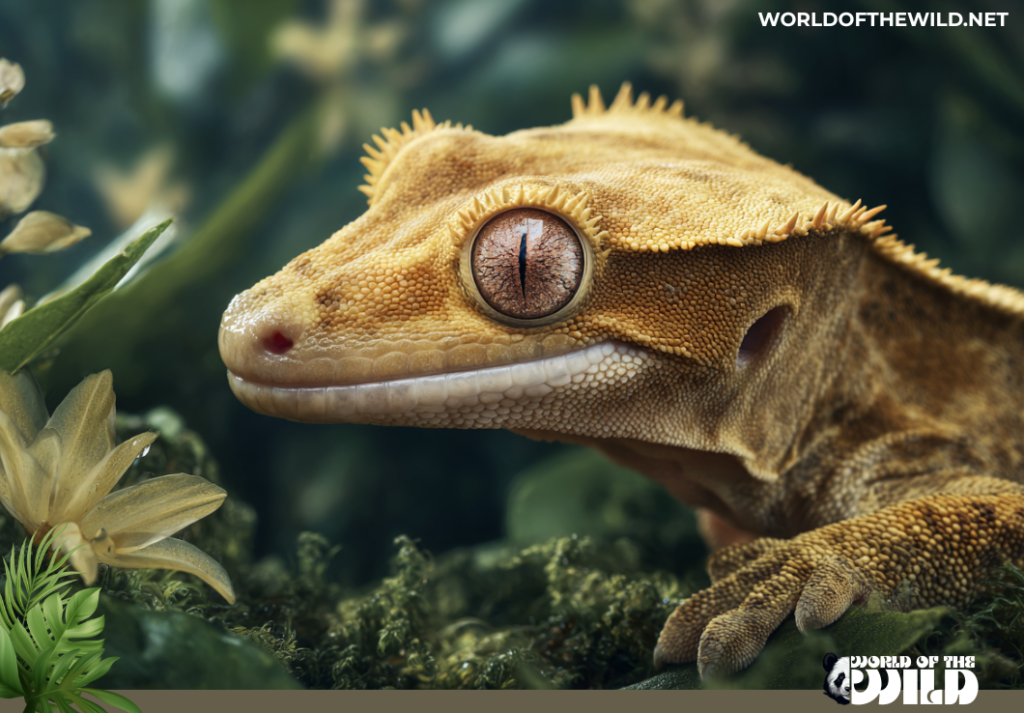
The most distinctive feature, from which the species derives its common name, is the pronounced crest of spike-like projections that runs from each eye down along the lateral edges of the body. These crests give the gecko an almost dragon-like appearance, and their prominence varies among individuals. The skin itself is semi-prehensile and slightly velvety to the touch, covered in small, granular scales that create a texture markedly different from the smooth scales of many other gecko species.
Coloration in wild-type Crested Geckos typically ranges from various shades of brown, grey, olive, and orange, often with darker or lighter banding patterns that provide excellent camouflage against tree bark and lichen. Their large, lidless eyes are particularly striking, featuring vertically elliptical pupils that can dilate widely in darkness. The iris coloration varies from gold to silver to deep red-orange, adding to their otherworldly appearance.
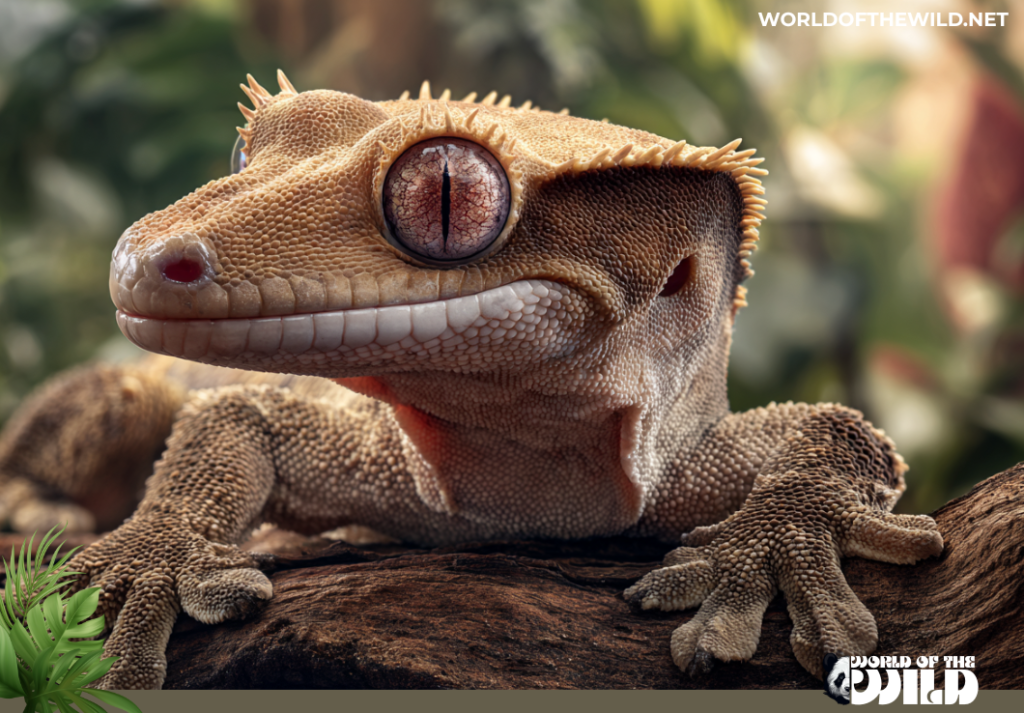
The toe pads deserve special mention, as they represent one of nature’s most impressive adhesive systems. Each digit terminates in a broad, flattened pad covered in thousands of microscopic setae that create a powerful molecular attraction to surfaces. At the end of each toe sits a small claw, which provides additional grip on rough surfaces, though the gecko relies primarily on its adhesive pads for climbing smooth leaves and branches.
Behavior
Orchestrated comprehensive article structure covering gecko biology and behavior.
I need to write about the Crested Gecko’s behavior, including daily activities, social behavior, communication, and unique adaptations.
The Crested Gecko is fundamentally a creature of the night, a strictly nocturnal hunter that spends the daylight hours motionless, pressed against branches or hidden among dense foliage. As twilight descends over the rainforest canopy, these geckos emerge from their resting spots with deliberate, methodical movements. Unlike the frenetic energy of diurnal lizards, Crested Geckos move with a measured grace, carefully testing each foothold with their sensitive toe pads before committing their weight.
In terms of social structure, Crested Geckos are essentially solitary animals outside of breeding season. Males are particularly territorial and will engage in elaborate threat displays when encountering rivals, including tail waving, body arching, and aggressive vocalizations. Physical combat is relatively rare, as most territorial disputes are resolved through these ritualized displays. Females are generally more tolerant of one another, though they still prefer to maintain individual territories with minimal overlap.
Communication among Crested Geckos is more sophisticated than many reptiles, incorporating both vocal and visual elements. Their vocal repertoire includes various chirps and squeaks, with males producing distinctive barking calls during the breeding season that can carry surprising distances through the forest. These vocalizations serve both to attract females and warn competing males. Body language also plays a crucial role, with tail position, head bobbing, and posture all conveying information about the gecko’s intentions and emotional state.
One of the most remarkable behavioral adaptations is their ability to make controlled leaps between branches. While not true gliders like some other gecko species, Crested Geckos can splay their bodies and use their tails to stabilize flight, allowing them to jump considerable distances relative to their size. This behavior, combined with their exceptional climbing ability, makes them supremely adapted to three-dimensional navigation in the forest canopy.
The species also displays relatively high intelligence for a gecko. They can recognize individual keepers, learn simple patterns, and even demonstrate problem-solving abilities when seeking food. Their memory appears robust, as they can remember the locations of productive feeding sites and return to them regularly during their nightly foraging expeditions.
Evolution
The evolutionary history of the Crested Gecko is intimately tied to the unique geological story of New Caledonia itself. This archipelago represents a fragment of the ancient supercontinent Gondwana, which broke away from Australia approximately 66 million years ago during the late Cretaceous period. This isolation created an evolutionary laboratory where species diverged in remarkable ways, freed from competition and predation pressures found on larger landmasses.
The family Diplodactylidae, to which Crested Geckos belong, likely originated in Gondwana before its fragmentation. Fossil evidence of related geckos suggests that this family has existed for at least 50 million years, though direct ancestors of the Crested Gecko remain elusive in the fossil record. The genus Correlophus appears to have evolved specifically on New Caledonia, radiating into several distinct species that each occupied slightly different ecological niches across the islands.
Genetic studies have revealed that New Caledonian geckos, including the Crested Gecko, have remarkably low genetic diversity compared to their Australian cousins, suggesting they descended from a relatively small founding population that somehow reached the isolated archipelago. This founder effect has implications for the species’ vulnerability to environmental changes and diseases, as reduced genetic diversity typically correlates with reduced adaptive potential.
The distinctive cranial crests that define the species may have evolved through sexual selection, serving as indicators of fitness and health during mate selection. Alternatively, or additionally, they may provide some protective function for the eyes in the dense vegetation of their arboreal habitat. The loss of tail regeneration capability, unusual among geckos, represents an evolutionary trade-off whose precise selective pressure remains debated among researchers.
The relatively recent rediscovery of the species means that many questions about their evolutionary ecology remain unanswered, but ongoing genetic research continues to shed light on how these remarkable creatures came to be clinging to their remote island home.
Habitat
The Crested Gecko is endemic exclusively to New Caledonia, a French territory consisting of a main island (Grande Terre) and several smaller surrounding islands in the southwest Pacific Ocean, located approximately 750 miles east of Australia. Within this archipelago, Crested Geckos have been documented on Grande Terre and several smaller islands including the Isle of Pines, though their exact historical distribution remains incompletely understood due to their long period of presumed extinction.
Their preferred habitat consists of humid tropical and subtropical rainforests, particularly in coastal and low-to-mid elevation zones, though they have been found at elevations ranging from sea level to approximately 1,400 meters. These geckos are obligate arborealists, meaning they spend virtually their entire lives in trees and shrubs, rarely if ever descending to the ground. Within the forest canopy, they show a particular affinity for areas with dense vegetation coverage, which provides both protection from predators and ample hunting opportunities.
The rainforests of New Caledonia experience a wet season from November through April, during which the Crested Gecko’s habitat receives heavy rainfall and maintains high humidity levels often exceeding 80 percent. These conditions are crucial for the species, as they rely on environmental moisture both for hydration and for maintaining healthy skin during shedding cycles. Temperatures in their habitat typically range from 20 to 27 degrees Celsius, with cooler conditions at higher elevations and during the dry season from May to October.
The specific microhabitats favored by Crested Geckos include areas with numerous vertical and horizontal branches, abundant epiphytic plants, and a closed canopy that maintains stable humidity and temperature conditions. They often shelter during the day in crevices beneath loose bark, in tree hollows, or among dense clusters of leaves and epiphytes. The prevalence of fruiting trees and flowering plants in these forests provides essential food resources beyond their insect prey.
Unfortunately, significant portions of suitable Crested Gecko habitat have been modified or destroyed by human activities, including nickel mining, agriculture, and the introduction of invasive species, making the remaining intact forest patches increasingly vital for the species’ survival.
Diet
The Crested Gecko is an omnivore with a dietary flexibility that has likely contributed to its survival in the wild and thriving success in captivity. Unlike many gecko species that feed exclusively on insects and other arthropods, Crested Geckos supplement their protein intake with substantial amounts of fruit and nectar, making them one of the few truly omnivorous gecko species.
In their natural rainforest habitat, the diet consists primarily of a rotating menu based on seasonal availability. Insects and other invertebrates form the protein foundation of their nutrition, with crickets, roaches, beetles, moths, and various larvae all featuring prominently. They are particularly adept at catching sleeping insects during their nocturnal foraging expeditions, using their keen eyesight to spot prey against the dark forest background. The hunting technique is deliberate rather than explosive, with the gecko slowly stalking its prey before making a final quick strike with its jaws.
The frugivorous component of their diet is equally important, especially during seasons when certain fruits are abundant. They consume soft, overripe fruits, using their specialized tongue to lap up the sweet pulp. Figs, guavas, and various native fruits provide essential sugars, vitamins, and moisture. They also actively seek out nectar from flowering plants and will consume tree sap when they encounter it, licking these energy-rich substances with their sticky tongues.
This dietary flexibility provides significant survival advantages, allowing Crested Geckos to maintain nutritional intake even when insect populations fluctuate seasonally. The ability to digest plant matter efficiently requires specialized gut flora, which these geckos likely acquire partially through consuming small amounts of substrate material or by consuming the feces of other herbivorous or omnivorous animals.
Interestingly, Crested Geckos have been observed engaging in unusual feeding behaviors such as consuming shed skin from themselves and occasionally from other geckos, which helps recycle valuable nutrients, particularly calcium and proteins. They also obtain calcium by licking mineral deposits and calcium-rich substrates, crucial for maintaining bone health and, in females, for egg production.
Predators and Threats
In their native New Caledonian habitat, Crested Geckos face predation from several sources, though their nocturnal lifestyle and excellent camouflage provide substantial protection. Natural predators include several species of birds, particularly owls and large honeyeaters that hunt in the forest canopy. Various snake species native to New Caledonia, though not particularly diverse or abundant compared to other tropical regions, will opportunistically consume Crested Geckos when encountered. Large invertebrates, including certain species of giant centipedes and hunting spiders, may prey upon smaller, juvenile geckos, though adults are generally too large for most invertebrate predators.
However, the most severe threat to wild Crested Gecko populations comes not from natural predation but from anthropogenic factors. The introduction of invasive species to New Caledonia has proven particularly devastating. Rats, which arrived with human colonization, are voracious predators of gecko eggs and juveniles, and can even take adult geckos. Feral cats roam the forests and have adapted to climbing trees, where they hunt geckos with concerning efficiency. The introduced Little Fire Ant has also been identified as a significant threat, as these aggressive insects can overwhelm and kill geckos of all sizes.
Habitat destruction represents perhaps the most existential threat to the species’ wild survival. New Caledonia possesses some of the world’s richest nickel deposits, and open-pit mining operations have devastated large swaths of rainforest habitat. The mining process doesn’t merely remove trees but fundamentally alters the landscape, making regeneration extremely difficult or impossible. Agricultural expansion, particularly for cattle ranching and crop production, has claimed additional forest land, fragmenting the remaining suitable habitat into increasingly isolated patches.
Climate change poses an emerging threat that may become more severe in coming decades. Rising temperatures could push conditions beyond the species’ thermal tolerance in some areas, while altered rainfall patterns might disrupt the humid conditions Crested Geckos require. More frequent and severe cyclones, which are predicted to increase with climate change, can cause massive habitat destruction and directly kill exposed individuals.
The illegal pet trade, while less severe now than in the past, still represents a concern. Although captive-bred specimens are widely available, some collectors seek wild-caught animals, placing additional pressure on already stressed populations. New Caledonia has implemented strict regulations on the collection and export of native species, but enforcement in remote areas remains challenging.
Fire, both natural and human-caused, represents another significant threat. While Crested Geckos evolved with occasional natural fires, the frequency and intensity of fires have increased due to human activities and climate change, destroying habitat faster than it can recover.
Reproduction and Life Cycle
The reproductive biology of the Crested Gecko showcases fascinating adaptations to their arboreal lifestyle and island ecology. Sexual maturity is reached relatively early, with most individuals becoming reproductively active between 15 and 24 months of age, though this varies based on growth rates and nutritional status. Males typically mature slightly earlier than females and can be distinguished by the presence of hemipenal bulges at the base of the tail and a more robust head structure.
The breeding season in the wild typically corresponds with the warmer, wetter months from November through March, when food availability peaks and environmental conditions are most favorable for egg development and hatchling survival. Males become particularly territorial during this period, patrolling their domains and calling frequently to advertise their presence to potential mates and warn off rivals. When a receptive female enters a male’s territory, courtship begins with the male approaching cautiously, often vibrating his tail and producing soft vocalizations. If the female is receptive, she will remain stationary, allowing the male to position himself for mating, which typically occurs at night and lasts only a few minutes.
Following successful mating, female Crested Geckos develop eggs internally over a period of approximately 30 to 45 days. Unlike many reptiles that lay large clutches, Crested Geckos produce only two eggs per clutch, though females may produce multiple clutches throughout a breeding season, typically spacing them about 30 to 45 days apart. This reproductive strategy represents a trade-off between offspring number and offspring quality, with the limited clutch size allowing the female to invest more resources in each egg.
The eggs themselves are relatively large for the gecko’s size, with a leathery shell that hardens after laying. Females select egg-laying sites with great care, typically choosing locations with stable humidity and temperature, such as in moist soil, under bark, in tree hollows, or among dense vegetation. Once laid, the eggs are abandoned, receiving no parental care. The incubation period ranges from 60 to 120 days, with temperature playing a crucial role in determining both incubation duration and, potentially, aspects of hatchling development.
Hatchlings emerge at approximately two to three inches in length, already possessing the distinctive crests and general body plan of adults, though their coloration may differ. These miniature geckos are immediately independent and must fend for themselves from the moment they leave the egg. Their first few weeks are particularly vulnerable, as they face the full array of predators while lacking the size and experience of adults. Those that survive grow relatively quickly, reaching half their adult size within six months under optimal conditions.
In the wild, Crested Geckos are believed to live 15 to 20 years, though definitive data remains limited due to the difficulty of long-term field studies. In captivity, where they are protected from predators and provided optimal nutrition and healthcare, individuals have been documented living beyond 20 years, with some reports suggesting potential lifespans approaching 25 years. This longevity is remarkable for a small gecko species and likely reflects the relatively benign environment of their island home, where extreme predation pressure has historically been absent.
Population
The conservation status of the Crested Gecko presents a study in contrasts that perfectly illustrates the complexities of modern conservation. The International Union for Conservation of Nature (IUCN) currently classifies the species as Vulnerable on the Red List of Threatened Species, reflecting legitimate concerns about the wild population’s trajectory and the multiple threats facing the species in its native habitat.
Estimating the global wild population of Crested Geckos remains exceptionally challenging due to their nocturnal habits, cryptic coloration, and the dense, often inaccessible nature of their rainforest habitat. Scientific surveys conducted since the species’ rediscovery have been limited in scope, but data suggests that wild populations are small, fragmented, and declining. Conservative estimates place the wild population in the low thousands to perhaps tens of thousands of individuals, distributed across several isolated forest patches on Grande Terre and smaller islands. The true figure remains uncertain, but there is broad consensus among researchers that the wild population is a mere fraction of its historical abundance.
Population trends are concerning, with evidence suggesting continued decline driven by ongoing habitat loss, invasive species predation, and habitat degradation. Forest clearance for mining and agriculture continues, albeit at varying rates depending on economic conditions and regulatory enforcement. The spread of invasive species into remaining forest fragments represents an accelerating threat that could drive further population reductions.
The situation in captivity, however, tells a radically different story. Since the species’ rediscovery and subsequent introduction to the pet trade in the 1990s, Crested Geckos have become one of the most popular and widely kept reptile species globally. Tens of thousands, possibly hundreds of thousands, of individuals now exist in captivity worldwide, maintained by hobbyists, breeders, and zoological institutions. This captive population is genetically diverse, healthy, and reproductively robust, representing an important safeguard against total extinction.
This paradox raises important questions about conservation priorities and strategies. While the species is not at immediate risk of global extinction thanks to its captive populations, the wild population faces genuine threats that could lead to extinction in nature. Conservation efforts in New Caledonia focus on habitat protection, invasive species control, and research to better understand wild population dynamics. Several protected areas now include known Crested Gecko habitat, though enforcement and effective management of these areas remains variable.
The French and New Caledonian governments have implemented regulations prohibiting the collection of wild specimens for the pet trade, ensuring that commercial demand is met entirely through captive breeding. This approach has successfully reduced pressure on wild populations while maintaining the economic benefits of the pet trade. However, some conservationists argue that more aggressive habitat restoration and invasive species eradication programs are necessary to secure the species’ long-term survival in the wild.
Conclusion
The story of the Crested Gecko is ultimately a narrative about resilience, rediscovery, and the complex relationship between humans and the natural world. This remarkable gecko survived decades presumed extinct, clinging to life in the canopy of New Caledonia’s rainforests while the world below changed dramatically. Its dramatic rediscovery in 1994 offered scientists a second chance to understand and protect a species they thought had been lost forever, revealing an animal of unexpected charm, adaptability, and evolutionary significance.
From their distinctive eyelash-like crests to their inability to regenerate lost tails, from their omnivorous diet to their surprisingly complex social behaviors, Crested Geckos embody the wonderful strangeness that evolution produces in isolated island environments. They represent a living connection to the ancient supercontinent Gondwana, a lineage that has persisted through countless environmental changes and geological upheavals.
Yet the species’ future remains uncertain. While thriving in terrariums across the globe, wild populations face mounting pressures from habitat destruction, invasive species, and climate change. The contrast between abundant captive populations and threatened wild populations raises profound questions about what conservation truly means in the modern era. Is a species truly saved if it exists only in captivity, divorced from the ecosystem that shaped it over millions of years?
The Crested Gecko’s survival in the wild will depend on our collective commitment to preserving New Caledonia’s unique ecosystems, controlling invasive species, and mitigating the impacts of climate change. Every patch of protected rainforest, every eradicated rat population, every mining operation that chooses a less destructive path represents a victory for this species and the countless other endemic organisms that share its island home. The Crested Gecko has already survived one brush with extinction. Whether it survives the next depends entirely on the choices we make today.
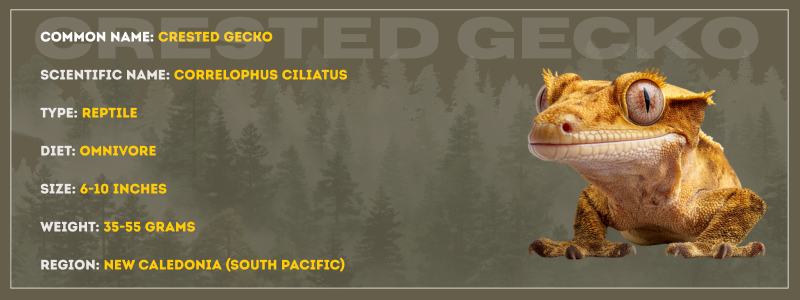
Scientific Name: Correlophus ciliatus
Diet Type: Omnivore
Size: 6-10 inches (15-25 cm) in total length
Weight: 35-55 grams
Region Found: New Caledonia (South Pacific)