
Standing sentinel above the African savanna, the giraffe cuts an unforgettable silhouette against the sunset sky. With their impossibly long necks reaching toward the canopy and their elegant spotted coats catching the golden light, these gentle giants seem almost too fantastical to be real. Yet giraffes are very much a part of our world, and they represent one of evolution’s most remarkable experiments in vertical living.
Beyond their obvious visual appeal, giraffes are fascinating creatures that challenge our understanding of mammalian physiology, social behavior, and adaptation. From their powerful hearts that pump blood up those legendary necks to their surprisingly complex social networks, giraffes continue to surprise researchers and captivate nature enthusiasts. As Africa’s tallest mammal and one of the continent’s most iconic species, the giraffe serves as both a symbol of wild Africa and a reminder of the delicate balance required to preserve our planet’s biodiversity.
Facts
Here are some captivating facts that showcase just how extraordinary giraffes truly are:
- Silent but deadly kicks: While giraffes are generally peaceful, a single kick from an adult giraffe can decapitate a lion or shatter its skull. Their kicks can generate over 2,000 pounds of force.
- No two giraffes are alike: Like human fingerprints, each giraffe’s spot pattern is completely unique and remains unchanged throughout their lifetime, allowing researchers to identify individuals.
- Minimal sleep champions: Giraffes sleep only about 30 minutes to two hours per day, often in short bursts of just a few minutes at a time. They can even sleep standing up.
- Cleaning their own ears: A giraffe’s tongue can be up to 20 inches long and is prehensile enough that they can use it to clean their own ears and nostrils.
- Lightning-fast birth: Baby giraffes enter the world with a dramatic six-foot drop, as mother giraffes give birth standing up. The newborns can stand and run within an hour of being born.
- Blue-black tongues: Giraffes have darkly pigmented tongues, believed to protect them from sunburn as they spend up to 12 hours a day feeding with their tongues extended.
- Humming in the dark: Recent research has discovered that giraffes communicate at night through low-frequency humming sounds, challenging the long-held belief that they were almost entirely silent animals.
Species
Classification:
- Kingdom: Animalia
- Phylum: Chordata
- Class: Mammalia
- Order: Artiodactyla
- Family: Giraffidae
- Genus: Giraffa
- Species: Giraffa camelopardalis (though recent genetic studies suggest there may be up to four distinct species)
Subspecies and Related Species:
The taxonomy of giraffes has been debated for decades, with recent genetic research revolutionizing our understanding of giraffe diversity. Traditionally, all giraffes were considered a single species with nine subspecies. However, groundbreaking genetic studies have suggested that there may actually be four distinct species of giraffe:
- Northern giraffe (Giraffa camelopardalis) – Including the Nubian, West African, and Kordofan subspecies
- Southern giraffe (Giraffa giraffa) – Including the Angolan and South African subspecies
- Reticulated giraffe (Giraffa reticulata) – Distinguished by their striking geometric pattern
- Masai giraffe (Giraffa tippelskirchi) – The largest population, with irregular, star-like spots
The only other living member of the Giraffidae family is the okapi, a much smaller, forest-dwelling relative found in the Democratic Republic of Congo. While okapis look more like zebra-horse hybrids, they share key anatomical features with giraffes, including ossicones and specialized tongues.
Appearance
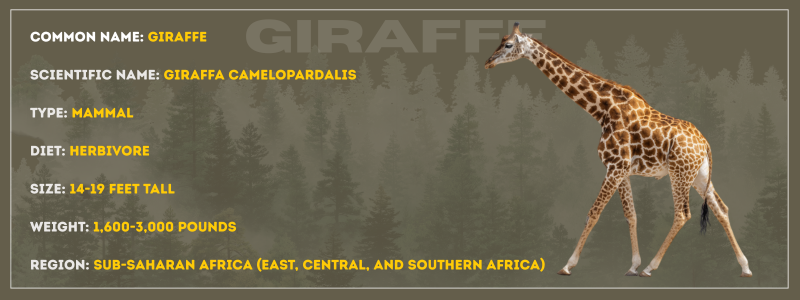
Giraffes are unmistakable creatures, holding the distinction of being the world’s tallest living terrestrial animal. Adult males, known as bulls, typically stand between 16 and 18 feet tall and weigh between 2,400 and 3,000 pounds. Females, or cows, are somewhat smaller, standing 14 to 16 feet tall and weighing 1,600 to 2,600 pounds. The tallest recorded giraffe stood an astounding 19.3 feet.
The giraffe’s most striking feature is, of course, its extraordinarily long neck, which can measure up to six feet in length. Remarkably, despite this impressive elongation, giraffes have the same number of neck vertebrae as humans and most other mammals: just seven. Each vertebra, however, is greatly elongated, measuring up to 10 inches long.
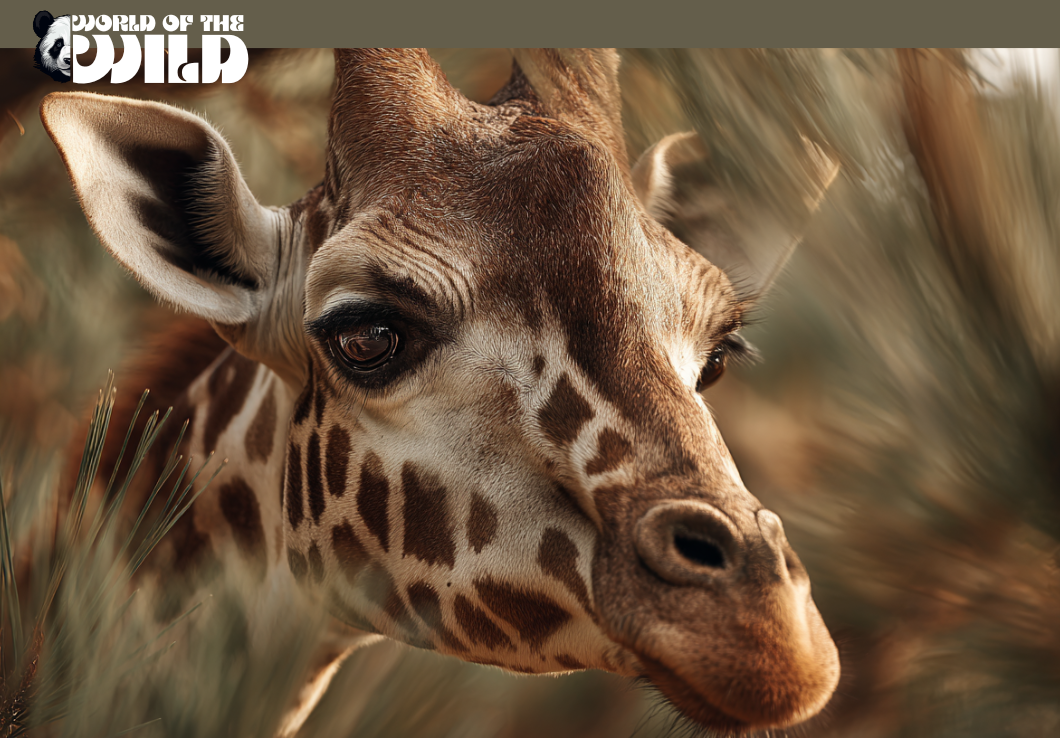
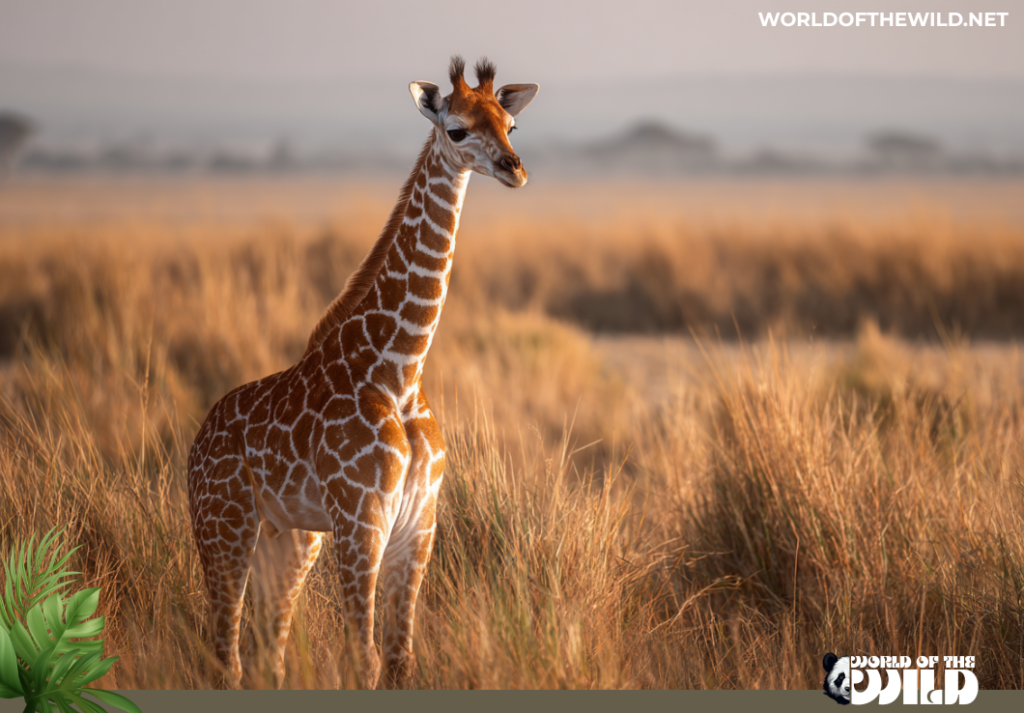
Their coat is a canvas of polygonal spots ranging from orange to nearly black, set against a background of lighter tan or cream. These patterns are not merely decorative; they provide excellent camouflage in the dappled light beneath acacia trees and help with thermoregulation. The spacing and shade of these spots vary by subspecies, with reticulated giraffes displaying particularly sharp, liver-colored polygons separated by bright white lines.
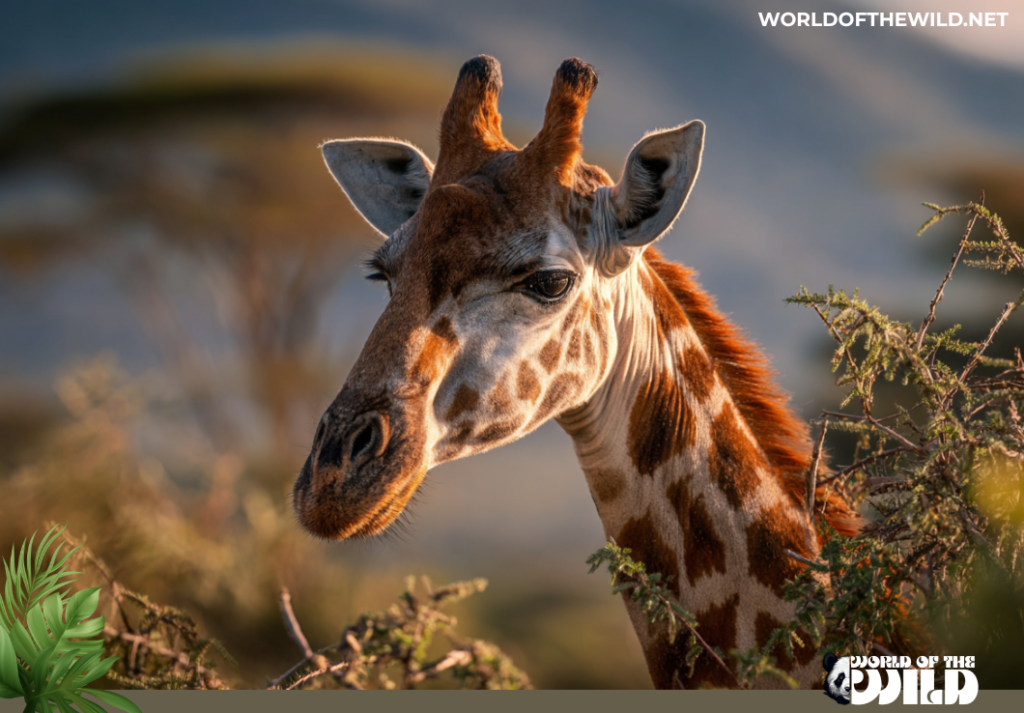
Giraffes possess a pair of hair-covered horns called ossicones, which are made of ossified cartilage and covered in skin and hair. Males often have a third, smaller ossicone in the center of their forehead and may develop additional bony protuberances as they age. Bulls’ ossicones typically become bald on top due to their necking battles.
Their eyes are large and protuberant, providing nearly 360-degree vision, and they have thick, luxurious eyelashes that protect against thorns and the harsh African sun. The legs are surprisingly slender for such a massive animal, ending in hooves the size of dinner plates. Their front legs are slightly longer than their hind legs, giving them their distinctive sloping back.
Behavior
Giraffes are highly social animals that live in loose, ever-changing groups called towers. Unlike many herd animals with rigid hierarchies and stable membership, giraffe social structure is remarkably fluid. A tower can range from just a few individuals to over 50 animals, with members frequently joining and leaving different groups throughout the day. Despite this apparent casualness, giraffes maintain complex social networks and demonstrate clear recognition of individuals and long-term associations.
Adult females form the core of giraffe society, often maintaining bonds with other females for years. Males, particularly young bachelors, form their own coalitions until they reach sexual maturity. Mature bulls typically lead more solitary lives, only joining female groups during mating opportunities.
Communication among giraffes is more sophisticated than previously understood. While they can produce various sounds including grunts, snorts, hisses, and bleats when stressed, much of their communication is visual and chemical. They use body language extensively, with different postures and movements conveying information about mood and intent. Recent discoveries of their nighttime humming suggest acoustic communication is more important than once believed.
One of the most fascinating giraffe behaviors is “necking,” a ritual combat between males. During these contests, bulls swing their heavy heads like medieval maces, striking their opponent’s neck and body with their hardened ossicones. These battles can last over 30 minutes and occasionally result in serious injury, though they usually end with one male simply walking away. Necking also serves a social bonding function, as young males engage in gentle necking as a form of play.
Giraffes are both browsers and highly selective eaters, spending most of their waking hours feeding. They can consume up to 75 pounds of foliage daily, using their long necks to reach vegetation other herbivores cannot access. Their feeding pattern involves browsing for about 16-20 hours a day, broken up by brief rest periods.
When drinking water, giraffes must perform an awkward and vulnerable maneuver, splaying their front legs wide apart or bending their knees to lower their heads to water level. This position leaves them exposed to predators, which is why giraffes can go days without drinking, obtaining most of their moisture from their food.
Evolution
The evolutionary story of giraffes is a tale of vertical ambition spanning millions of years. Giraffes belong to the family Giraffidae, which emerged around 25 million years ago during the Miocene epoch. The earliest giraffe ancestors were much smaller, deer-like creatures without elongated necks.
One of the most important early giraffids was Climacoceras, which lived approximately 20 million years ago and stood no taller than modern deer. These early relatives had short necks and small ossicones, bearing little resemblance to today’s giraffes.
Around 15 million years ago, the lineage began to diversify. Palaeotragus, which lived 12 to 8 million years ago, showed the first signs of neck elongation and stood about 6 feet tall. This genus is considered a transitional form, displaying some characteristics of modern giraffes while retaining others from earlier ancestors.
The genus Giraffa, which includes all modern giraffes, emerged roughly 7 million years ago. The immediate ancestor of today’s giraffe is believed to be Giraffa jumae, which lived in Africa during the Pliocene epoch, about 2-4 million years ago.
The famous question of why giraffes evolved such long necks has been debated since Darwin’s time. The traditional explanation, often called the “competing browsers hypothesis,” suggests that giraffes evolved long necks to access food sources unavailable to other herbivores, particularly during times of food scarcity. However, alternative theories propose that sexual selection played a major role, as males with longer, more powerful necks would have had advantages in combat and thus greater mating success.
Modern research suggests both factors likely contributed. The fossil record shows that neck elongation occurred in stages over millions of years, with different selective pressures possibly dominating at different times. Additionally, the entire giraffe body plan evolved in concert, including modifications to the cardiovascular system, legs, and tongue.
Interestingly, the giraffe family was once much more diverse. During the Pliocene and Pleistocene epochs, numerous giraffe species roamed Africa, Europe, and Asia, including the massive Sivatherium, which had a moose-like build and weighed up to 2,800 pounds. Today, only giraffes and okapis remain from this once-flourishing family.
Habitat
Giraffes are exclusively found in Africa, inhabiting the savannas, grasslands, and open woodlands of the sub-Saharan region. Their range once extended across much of the continent, but habitat loss and hunting have dramatically reduced their distribution. Today, giraffes are found in fragmented populations across East, Central, and Southern Africa.
Major giraffe populations exist in countries including Kenya, Tanzania, Botswana, Zimbabwe, Namibia, South Africa, Niger, and Uganda. Smaller, isolated populations persist in several other nations. Each subspecies has adapted to specific regional conditions, with some preferring drier, more open savannas while others inhabit areas with denser tree coverage.
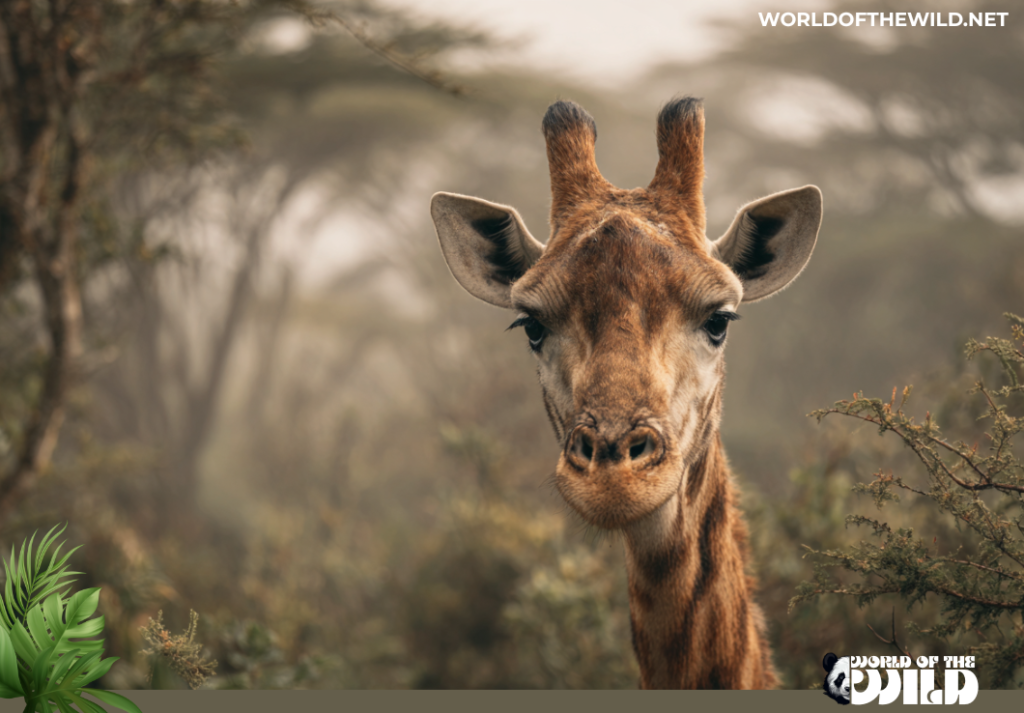
The ideal giraffe habitat features scattered acacia trees and open spaces that allow these tall animals to move freely and spot predators from a distance. They prefer areas with a mix of woodland and grassland, avoiding both dense forests where their height becomes a liability and completely open plains where shade and browse are scarce.
Acacia woodland savannas provide the perfect environment, offering both their preferred food source and the open visibility they need for predator detection. These habitats are characterized by seasonal rainfall, with distinct wet and dry seasons that influence giraffe movements and behavior.
Water sources are important but not critical, as giraffes can survive for weeks without drinking by obtaining moisture from their food. However, they prefer to stay within reasonable distance of water when possible and will gather at water holes during dry seasons.
Temperature doesn’t severely limit giraffes, as they inhabit regions ranging from the relatively cool highlands of East Africa to the scorching lowlands of Southern Africa. Their spotted coats actually help regulate body temperature by creating different thermal zones that promote air circulation.
Elevation-wise, giraffes are found from sea level up to approximately 4,600 feet, though most populations live at elevations below 2,600 feet. Their ability to adapt to various habitat types within the savanna biome has been key to their historical success, though this flexibility has limits in the face of modern habitat fragmentation.
Diet
Giraffes are strict herbivores, specifically categorized as browsers rather than grazers. This means they feed primarily on leaves, shoots, fruits, and flowers from trees and shrubs rather than grass. Their feeding strategy is highly selective, and they demonstrate clear preferences for certain plant species and even individual trees.
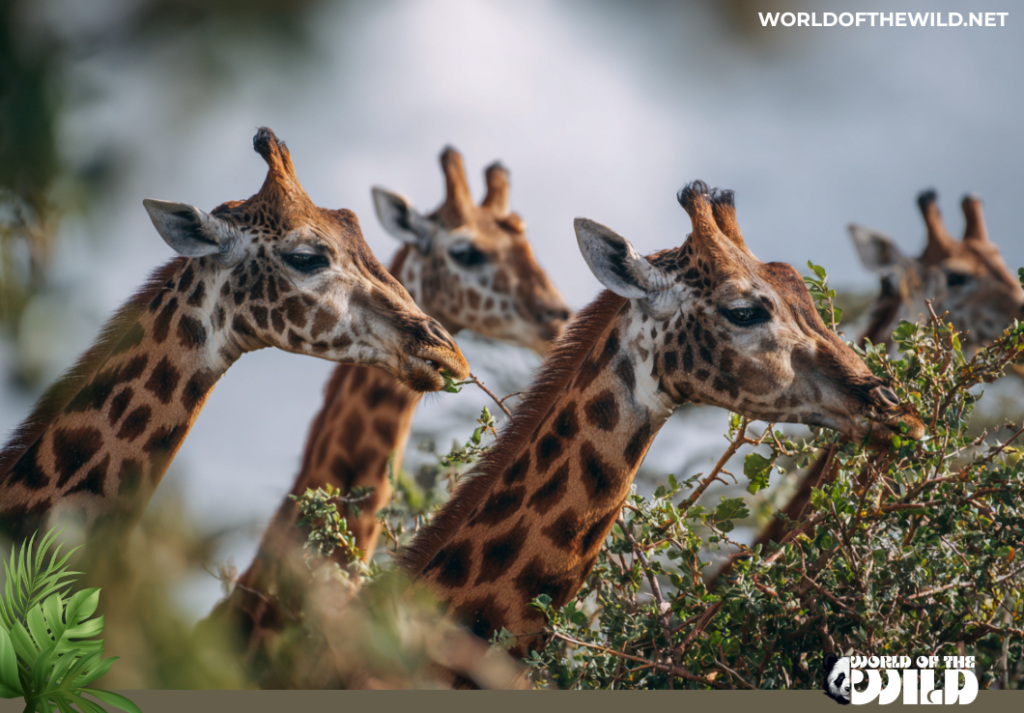
The acacia tree is the giraffe’s favorite food source, despite the plant’s formidable defenses. Acacias are armed with long, sharp thorns and produce toxic chemicals to deter herbivores. Giraffes have evolved remarkable adaptations to overcome these defenses. Their thick, sticky saliva coats the thorns and protects their mouths and digestive tract from injury and chemical irritation. Their tough lips and specialized tongues can carefully pluck leaves from between thorns with precision.
A giraffe’s extraordinarily long, prehensile tongue, measuring up to 20 inches, is perfectly designed for selective browsing. The tongue is also darkly pigmented, likely to prevent sunburn during extended feeding sessions. Giraffes can wrap their tongues around branches and strip away leaves with surgical precision, avoiding thorns and selecting the most nutritious growth.
Beyond acacias, giraffes consume a wide variety of plant species including mimosa, wild apricot, and various other trees and shrubs. They show seasonal preferences, targeting different plants as they come into leaf or flower. In total, giraffes may feed on over 100 different plant species, though they typically have favorites within their range.
Male and female giraffes have slightly different feeding strategies. Males, being taller, feed at higher levels and can browse the crowns of trees. Females typically feed at lower levels, around 8-13 feet high, where foliage is often more abundant. This sexual dimorphism in feeding behavior may reduce competition between sexes and allow them to coexist more peacefully.
Giraffes are also known to practice osteophagia, occasionally chewing on bones to obtain minerals and calcium, particularly during pregnancy or when soil minerals are deficient. They may also lick mineral deposits or consume mineral-rich soil.
The giraffe’s digestive system is specialized for processing tough, fibrous plant material. Like cattle, they are ruminants with a four-chambered stomach. They regurgitate their food and chew it as cud, breaking down the cellulose in plant cells through fermentation. A giraffe may chew the same mouthful for up to an hour.
Their feeding pattern is continuous throughout the day and night, with giraffes spending anywhere from 13 to 20 hours daily browsing. They are most active during the early morning and late afternoon, resting during the hottest parts of the day when possible.
Predators and Threats
Despite their impressive size, giraffes face threats from both natural predators and human activities. Adult giraffes have relatively few natural enemies, but calves and juveniles are much more vulnerable.
Natural Predators:
Lions are the primary predators of giraffes, though they typically target young, sick, or isolated individuals. Taking down a healthy adult giraffe is an extremely dangerous undertaking for a pride, as a single well-placed kick can be fatal. Lions are most successful when attacking at night or when giraffes are in vulnerable positions, such as while drinking.
Spotted hyenas, leopards, and wild dogs occasionally prey on giraffe calves, particularly during the first few weeks of life when they are most vulnerable. Crocodiles may also attack giraffes at water sources, though this is relatively rare.
Adult giraffes have evolved several defensive strategies. Their excellent vision allows them to spot predators from great distances, and they can run at speeds up to 35 miles per hour in short bursts. Their powerful legs deliver devastating kicks in all directions, making them formidable opponents even for large predators.
Human-Caused Threats:
The greatest threats to giraffes today are anthropogenic. Habitat loss and fragmentation represent the most significant challenge, as expanding human populations convert giraffe habitats into agricultural land, settlements, and infrastructure. This not only reduces available space but also isolates populations, preventing genetic exchange and making local extinctions more likely.
Civil unrest and warfare in several African nations have devastated giraffe populations. During conflicts, giraffes are often hunted for food by armed groups, and conservation efforts collapse. Countries like Somalia and Democratic Republic of Congo have lost most of their giraffes due to prolonged instability.
Poaching for meat, hide, and tail hair continues in some regions. Giraffe tails are particularly prized in some cultures for ceremonial fly whisks and bracelets. While not as severe as the elephant or rhino poaching crisis, illegal hunting still impacts vulnerable populations.
Climate change poses an emerging threat by altering rainfall patterns and vegetation distribution. Extended droughts reduce food availability and force giraffes into conflict with livestock herders over resources.
Disease outbreaks, exacerbated by population stress and proximity to domestic animals, have caused mortality events in some populations. Rinderpest historically devastated giraffe numbers, and though it’s now eradicated, other diseases remain concerns.
Human-giraffe conflict arises when giraffes raid crops or when communities perceive them as competing with livestock. Infrastructure development, including roads and fences, fragments habitats and creates barriers that can be deadly. Giraffes have been killed in collisions with vehicles, and fences can trap or injure them.
Reproduction and Life Cycle
Giraffes have a fascinating reproductive biology adapted to their unique anatomy and social structure. Understanding their breeding and development provides insight into the challenges these extraordinary animals face in maintaining their populations.
Mating System:
Giraffes do not have a fixed breeding season, though births often peak during or shortly after the rainy season when food is most abundant. Males compete for access to females through dominance displays and necking contests. Dominant males may maintain control over a region and the females within it, though female groups are fluid enough that enforcing exclusive access is challenging.
Females reach sexual maturity around 4-5 years of age, while males mature physically around 3-4 years but typically don’t successfully mate until they’re 7-8 years old, when they’ve achieved sufficient size and dominance. Males determine female reproductive status through a behavior called the “flehmen response,” in which they taste the female’s urine to detect chemical signals of estrus.
Gestation and Birth:
The gestation period for giraffes is remarkably long, lasting 14-15 months, one of the longest among mammals. This extended pregnancy allows calves to develop to a relatively advanced state before birth, which is crucial given the dangerous environment they enter.
Birth is a dramatic event. Females give birth standing up, meaning the newborn calf drops approximately six feet to the ground. This violent entrance to the world actually serves a purpose: the fall breaks the umbilical cord and amniotic sac and stimulates the calf to take its first breath. Within 15 minutes of birth, most calves attempt to stand, and within an hour, they’re usually on their feet and nursing.
Offspring and Parental Care:
Giraffe mothers typically give birth to a single calf, though twins occur in less than 1% of pregnancies. Newborns are already impressively large, standing about 6 feet tall and weighing 100-150 pounds.
The first weeks of life are the most dangerous for giraffe calves, with mortality rates as high as 50-60% in some populations. Mothers are intensely protective, keeping calves close and defending them vigorously against predators. However, they must also feed extensively to maintain milk production, creating a dilemma between vigilance and nutrition.
Giraffes practice a unique childcare system sometimes called “crèches” or “nurseries.” After the first few weeks, mothers may leave their calves in groups while they forage, returning periodically to nurse. Other adult females, often related, may watch over these nursery groups, though the level of care-giving varies.
Calves begin sampling solid food at about 4 months but continue nursing for 9-12 months or longer. During this period, they learn critical survival skills including which plants to eat, how to recognize predators, and social behaviors through observation and play.
Life Cycle and Lifespan:
Young males typically leave their mother’s group around 1-3 years of age to join bachelor herds, while females may remain in their natal area. Bulls go through a progression of social stages, moving from bachelor groups to establishing dominance and eventually becoming solitary wanderers.
In the wild, giraffes live approximately 20-25 years, though many don’t reach this age due to predation, disease, and environmental challenges. In captivity, where threats are minimized and healthcare is provided, giraffes can live 28-32 years, with some individuals reaching their mid-30s.
Adult giraffes continue to grow slowly throughout their lives, particularly bulls, whose necks become increasingly thick and heavy with age. This continued growth contributes to their dominance prospects and breeding success.
Population
The conservation status of giraffes has become increasingly concerning over recent decades, leading to what some conservationists call a “silent extinction.” The situation varies significantly depending on which taxonomic view and which population one examines.
Conservation Status:
As of recent assessments, giraffes overall are listed as “Vulnerable” on the IUCN Red List, an upgrade from “Least Concern” just a few years ago that reflects growing recognition of their decline. However, this overall status masks significant variation among subspecies:
- The Kordofan and Nubian giraffes are listed as “Critically Endangered”
- The reticulated giraffe is listed as “Endangered”
- The West African giraffe, once down to just 50 individuals, has recovered to around 600-800 but remains “Endangered”
- The Masai giraffe is listed as “Endangered”
- Southern giraffes (including Angolan and South African subspecies) are more stable and listed as “Vulnerable” to “Least Concern”
Population Estimates:
Current estimates place the total global giraffe population at approximately 117,000 individuals, though this number is uncertain and likely represents a range between 95,000 and 140,000. This might seem substantial, but it represents a dramatic decline from historical numbers.
Over the past three decades, giraffe populations have declined by approximately 30-40% overall. In some regions, the decline has been even more severe. Consider these sobering statistics: in 1985, there were an estimated 150,000-165,000 giraffes across Africa. The species has lost nearly 40% of its population in just one generation.
Population Trends:
The trend is not uniformly negative, demonstrating that conservation efforts can make a difference. Some populations are stable or even increasing:
- Southern giraffe populations in South Africa, Namibia, and Botswana have remained relatively stable or increased slightly due to effective wildlife management and private conservation efforts
- The West African giraffe has shown remarkable recovery in Niger, increasing from a low of about 50 individuals in the mid-1990s to current estimates of 600-800
- Some East African populations have stabilized in well-protected areas
However, many other populations continue to decline:
- Central African populations have been decimated by civil conflict and poaching
- Some East African populations are under severe pressure from habitat loss and human-giraffe conflict
- Range fragmentation continues to isolate populations, reducing genetic diversity and long-term viability
Geographic Distribution:
Giraffes have disappeared entirely from seven African countries and have been reduced to tiny, isolated populations in several others. Their current range is estimated to be less than 50% of their historical distribution. This fragmentation is as concerning as the overall population decline, as isolated populations face inbreeding depression and cannot recover from local disasters.
Conclusion
The giraffe stands as one of nature’s most magnificent achievements, a testament to the power of evolution to create solutions to ecological challenges. From their towering height and distinctive spotted coats to their complex social structures and remarkable physiological adaptations, giraffes capture our imagination and remind us of the incredible diversity of life on Earth.
Yet despite their iconic status, giraffes are facing a quiet crisis. Their populations have declined dramatically over recent decades, with some subspecies teetering on the brink of extinction. Habitat loss, human conflict, poaching, and climate change threaten to erase these gentle giants from the African landscape where they have lived for millions of years.
The fate of giraffes is ultimately in our hands. Conservation efforts have shown that recovery is possible—the West African giraffe’s comeback from near extinction proves that dedicated action can reverse even dire situations. But sustained commitment is needed. This means protecting and connecting habitats, addressing human-wildlife conflict, supporting communities that share space with giraffes, and maintaining political stability in regions where giraffes live.
As individuals, we can contribute by supporting conservation organizations working to protect giraffes and their habitats, spreading awareness about their plight, and making informed choices about how our actions affect wildlife across the globe. The giraffe’s story is not yet finished, but whether it ends in triumph or tragedy depends on the choices we make today. These remarkable animals have evolved over millions of years to reach for the sky—we owe it to them to ensure they have a future worth reaching for.
Scientific Name: Giraffa camelopardalis (traditional classification; possibly multiple species)
Diet Type: Herbivore (Browser)
Size: 14-19 feet tall
Weight: 1,600-3,000 pounds
Region Found: Sub-Saharan Africa (East, Central, and Southern Africa)