
Introduction
In the misty rainforests of Madagascar, small jewels hop across the forest floor, their brilliant colors flashing warnings to any would-be predator. These are the Mantella frogs, tiny amphibians no larger than your thumb, yet possessing a toxic secret that has kept them alive for millions of years. Though they bear a striking resemblance to South America’s famous poison dart frogs, Mantella frogs evolved their dazzling colors and deadly defenses independently on an island separated from the rest of the world by 250 miles of ocean. Their story is one of convergent evolution, ecological specialization, and increasingly, urgent conservation concern. These diminutive frogs represent not only Madagascar’s extraordinary biodiversity but also serve as crucial indicators of environmental health in one of the world’s most threatened ecosystems.
Facts
Seven Fascinating Facts About Mantella Frogs:
- Masters of Convergent Evolution: Mantella frogs evolved to look and behave almost identically to South American poison dart frogs despite being separated by thousands of miles and belonging to completely different families. Early scientists were so convinced by their appearance that they initially classified them in the same genus as poison dart frogs.
- Toxicity Requires the Right Diet: Mantella frogs aren’t born toxic. They sequester alkaloid toxins from the ants, mites, and other arthropods they consume, storing these chemicals in their skin for years, even in captivity. Frogs living in polluted or degraded habitats are measurably less toxic because their prey diversity has declined.
- A Collective Called an Army: A group of Mantella frogs is officially termed an “army,” a fitting name for these small but formidable defenders of Madagascar’s forests.
- They Can Live Nearly a Decade: Despite their tiny size, some Mantella species can live up to nine years or more in the wild, with captive individuals documented living even longer.
- Males Outnumber Females: In wild Mantella populations, males typically outnumber females two to one, creating intense competition for mates during breeding season.
- No Webbed Feet Needed: Unlike most frogs, Mantella species have little to no webbing between their toes because they spend their lives on land rather than in water, making webbed feet unnecessary.
- Silent Guardians: Male Golden Mantellas are unusually reluctant to call compared to other frog species, a behavior that may help them conserve energy or avoid attracting predators to their location.
Sounds of the Mantella Frog
Species
Scientific Classification:
- Kingdom: Animalia
- Phylum: Chordata
- Class: Amphibia
- Order: Anura
- Family: Mantellidae
- Genus: Mantella
- Species: Approximately 16 recognized species
The genus Mantella belongs to the family Mantellidae, a diverse group of approximately 287 species found exclusively on Madagascar and the nearby islands of Mayotte and Comoros. Within the genus Mantella, scientists recognize roughly 16 distinct species, though DNA barcoding suggests that more than 100 genetic lineages within the broader Mantellidae family remain undescribed.
Notable Species Include:
- Golden Mantella (Mantella aurantiaca): The most famous and critically endangered species, displaying uniform yellow, orange, or red coloration
- Painted Mantella (Mantella madagascariensis): Variable black and yellow streaked patterns with distinctive sky-blue throat markings
- Baron’s Mantella (Mantella baroni): One of the largest species, featuring yellow-green flanks contrasting with black dorsum and orange-black legs
- Cowan’s Mantella (Mantella cowanii): Also called the harlequin mantella, known for its adaptability to various habitats
- Black-eared Mantella (Mantella milotympanum): Distinguished by dark ear patches
- Climbing Mantella (Mantella laevigata): Unique for its semi-arboreal lifestyle and enlarged toe discs
- Brown Mantella (Mantella betsileo): One of the first species described, featuring cryptic brown coloration
- Green Mantella (Mantella viridis): The largest species in the genus
Based on molecular phylogenetic studies, the genus can be divided into five major species groups, with some groups showing remarkably low genetic divergence despite dramatic differences in color patterns.
Appearance
Mantella frogs are among nature’s smallest yet most visually spectacular amphibians. These diminutive creatures measure between 18 and 31 millimeters in length, with most species averaging around 20-26 millimeters from snout to vent. To put this in perspective, an adult Mantella frog could comfortably sit on a quarter with room to spare.
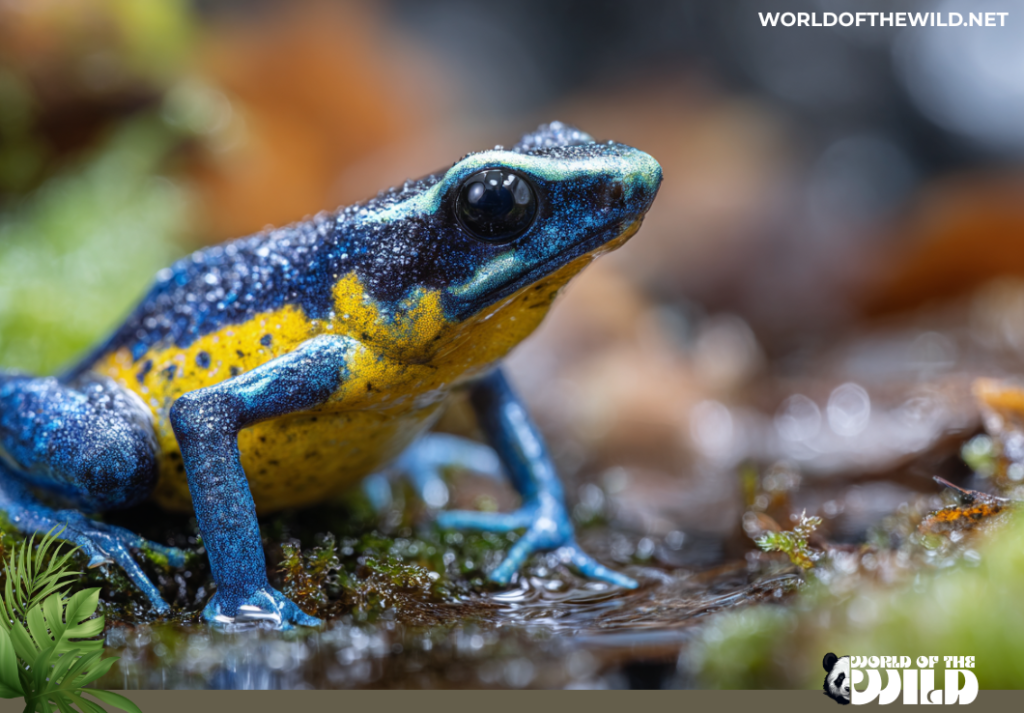
Their bodies range from streamlined to plump and rounded, covered in skin that varies from smooth to granular depending on the species. They possess small, angular heads equipped with proportionally large eyes that are typically entirely black, though some individuals show lighter coloration around the iris edge. A distinctive feature visible in all species is the well-defined tympanum, the external ear membrane.
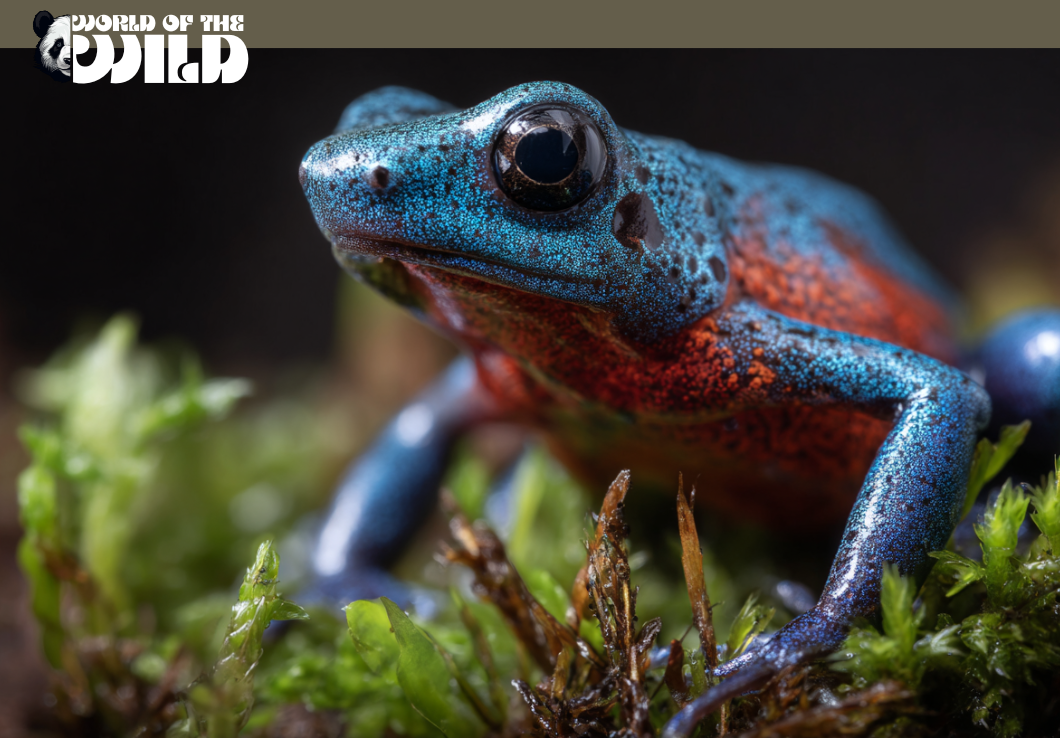
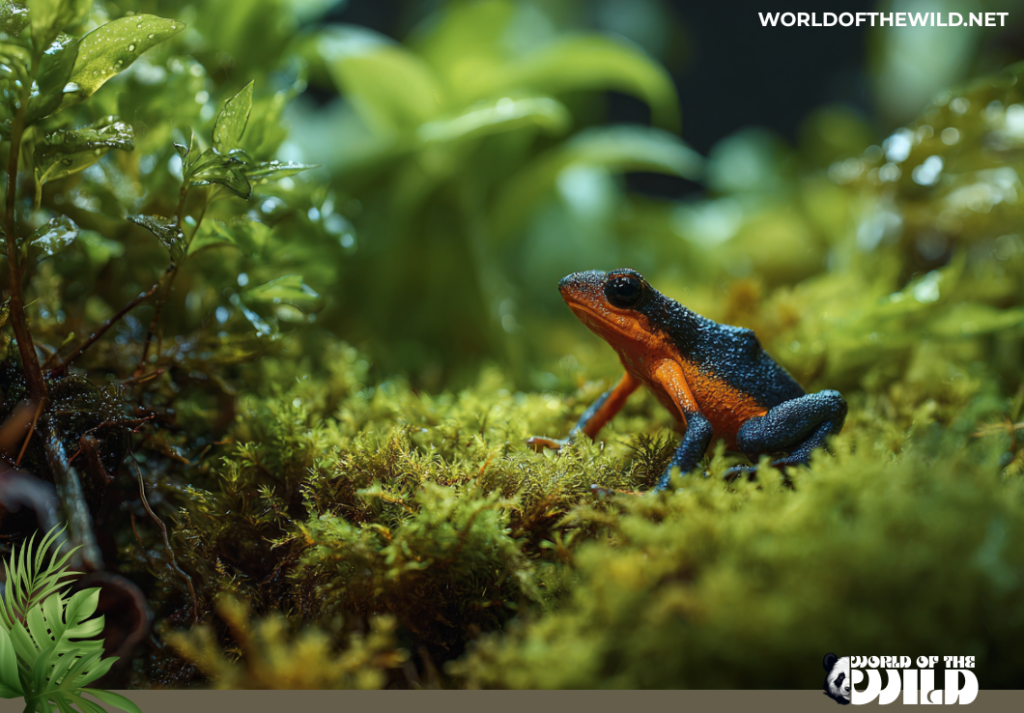
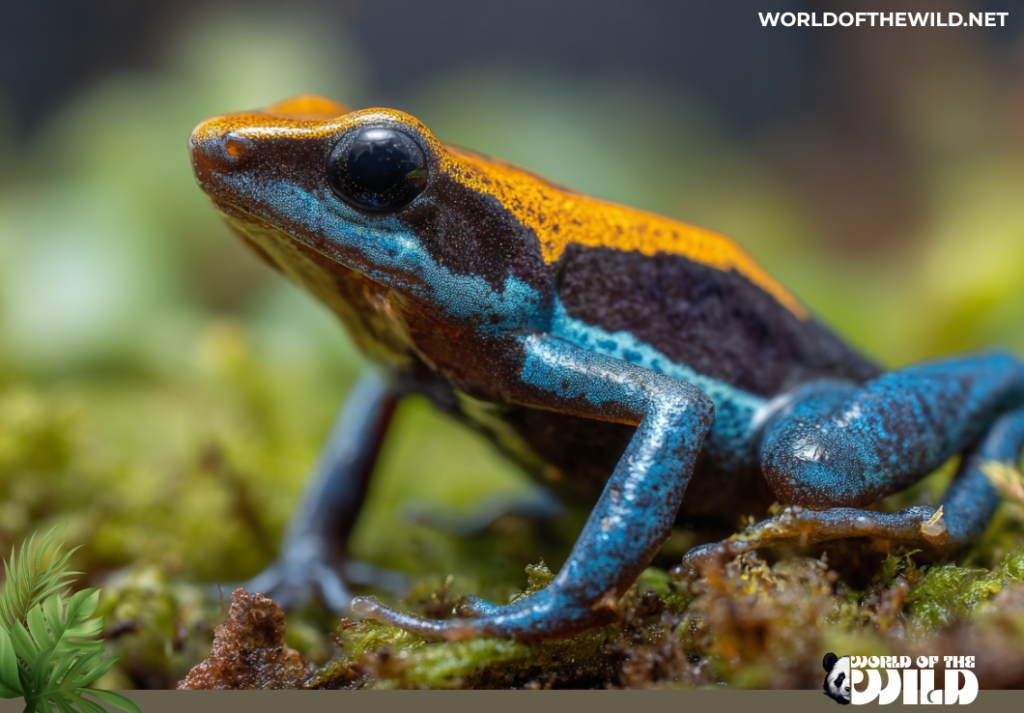
The true glory of Mantella frogs lies in their spectacular coloration. These tiny amphibians display some of the most vibrant color combinations found in the animal kingdom: brilliant oranges, yellows, reds, emerald greens, electric blues, and deep blacks, often in striking contrasts. The Golden Mantella, for instance, displays uniform bright orange, yellow, or red coloration across its entire dorsal surface, sometimes with red flash marks on the inner legs. The Painted Mantella features irregular black and yellow streaks, while Baron’s Mantella shows yellow-green flanks that contrast dramatically with its black back and orange-and-black banded legs.
Most species exhibit aposematic coloration on their undersides as well, with black, dark grey, or brown venters marked with bluish or white spots, flecks, or blotches. Many species also display distinctive markings on their vocal sacs in the form of spots or horseshoe-shaped patterns, characteristics useful for distinguishing between similar-looking species.
Sexual dimorphism is evident in most species, with females typically larger and more robustly built than males. Males tend to be slimmer and more angular, with lighter-colored bellies that make their seminiferous ducts visible as narrow pale lines running along the abdomen.
Their limbs are notably short and adapted for terrestrial life rather than swimming. The fingers and toes bear slightly enlarged discs or pads, most prominently in the Climbing Mantella, which has distinctly larger toe pads for its semi-arboreal lifestyle. These frogs have four fingers on each forefoot and five toes on each hind foot, with varying degrees of webbing depending on species and lifestyle.
Behavior
Mantella frogs are exceptional among amphibians for being strictly diurnal, active during daylight hours when their brilliant warning colors can be readily seen by potential predators. This behavior represents a complete reversal of the nocturnal habits typical of most frog species and is directly linked to their aposematic defense strategy—after all, warning colors serve no purpose in darkness.
These frogs are primarily terrestrial, spending their lives crawling and hopping across the forest floor among leaf litter, fallen logs, and low vegetation. Some species, like the Climbing Mantella, venture into trees and spend considerable time in arboreal environments, but even these species maintain strong connections to the ground. Their short legs are optimized for climbing and short hops rather than the long leaps characteristic of many other frog species.
Socially, Mantella frogs live in groups or colonies, with populations typically consisting of twice as many males as females. This skewed sex ratio creates intense competition among males during breeding season. Males establish and defend territories, using vocalizations to attract mates and warn off rivals. Their calls consist of short, rapid clicks—though interestingly, male Golden Mantellas are particularly reluctant callers compared to other Mantella species, a behavior that remains somewhat mysterious to researchers.
When territorial disputes arise, Mantella frogs engage in physical confrontations. Intruding males may be grabbed around the upper body or head and pushed away from defended areas. Females also show territorial aggression during breeding season, though less intensely than males.
Communication involves multiple sensory channels. Males use acoustic signals for mate attraction and territorial defense, though these calls are relatively quiet compared to many other frog species. Visual cues play a role in prey detection and likely in social interactions. Chemical communication may occur through skin secretions, though this aspect of their behavior requires further study.
One remarkable defensive behavior observed in Golden Mantellas is thanatosis, or death-feigning. When threatened, some individuals will play dead, remaining motionless until the danger passes. Research has shown that both wild and captive frogs exhibit similar death-feigning durations, suggesting this behavior is innate rather than learned.
Mantella frogs are active foragers, constantly searching for prey throughout the day. They use visual hunting strategies, employing the classic amphibian “see it, snap at it” technique. When feeding, their bulging eyes close and sink into their heads, applying pressure that helps push food down their throats.
Unlike many amphibians that become dormant during dry seasons, Mantella frogs show seasonal activity patterns. The Golden Mantella, for instance, remains largely inactive during the cooler, drier months of May through October, emerging with the arrival of warmer temperatures and the first substantial rains.
Evolution
The evolutionary story of Mantella frogs begins approximately 76 to 87 million years ago when the Mantellidae family first colonized the island of Madagascar. This colonization likely occurred through a dispersal event from Asia, as molecular phylogenetic studies have revealed that Mantellidae frogs are more closely related to Asian frog lineages than to African ones, despite Madagascar’s proximity to Africa.
When Madagascar separated from the African continent around 165 million years ago, and later from India approximately 90 million years ago, it became an isolated laboratory for evolution. The ancestors of modern Mantella frogs were among the lucky few lineages that managed to reach this island, either as original inhabitants when the island broke away or as later arrivals that rafted across the Mozambique Channel on floating vegetation.
Once established on Madagascar, the Mantellidae family underwent spectacular adaptive radiation, diversifying into more than 287 described species across three distinct subfamilies: the terrestrial Mantellinae (which includes the genus Mantella), the robust terrestrial Laliostominae, and the arboreal Boophinae. This remarkable diversification was driven by Madagascar’s diverse habitats and ecological niches, from coastal lowlands to montane cloud forests.
The genus Mantella itself represents a more recent evolutionary radiation, with molecular studies suggesting the 16 recognized species can be divided into five major clades or species groups. Interestingly, genetic analysis has revealed that some species with dramatically different color patterns are very closely related, showing only 1.2 to 2.8 percent genetic sequence divergence. Conversely, species like Baron’s Mantella and the Painted Mantella, which appear nearly identical in coloration, belong to completely different evolutionary lineages.
The most fascinating aspect of Mantella evolution is their development of characteristics nearly identical to South American poison dart frogs of the family Dendrobatidae—a textbook example of convergent evolution. Both groups independently evolved small body sizes, brilliant aposematic coloration, diurnal activity patterns, terrestrial lifestyles, and the ability to sequester toxic alkaloids from their prey. This convergence is so striking that when Alfred Grandidier first described Mantella species between 1866 and 1872, he classified them within the genus Dendrobates alongside their South American counterparts.
The similarity was so convincing that the genus Mantella wasn’t formally established until 1882, when George Albert Boulenger recognized key anatomical differences, particularly in tongue structure—Mantella species have notched tongues while Dendrobatid frogs have entire tongues. Even after this recognition, the genus remained classified within Dendrobatidae until the late 19th century, when further anatomical and later molecular evidence confirmed they represented a completely separate evolutionary lineage.
The evolution of toxicity in Mantella frogs represents an elegant example of chemical ecology. Rather than producing their own toxins, these frogs evolved the ability to sequester, concentrate, and store alkaloid compounds obtained from their arthropod prey, particularly ants and mites. This co-evolutionary relationship has driven both the frogs’ dietary specialization and their predators’ avoidance behaviors.
Research has shown that the body size of Mantellidae frogs is negatively correlated with species diversity, likely because smaller body sizes reduce dispersal potential, leading to greater geographic isolation and speciation. This pattern helps explain why the tiny Mantella species have diversified into so many distinct forms across Madagascar’s fragmented habitats.
Habitat
Mantella frogs are endemic exclusively to the island of Madagascar and its smaller satellite islands, collectively known as “Nosy” in Malagasy. They are not found naturally anywhere else on Earth, making them one of Madagascar’s many precious endemic treasures.
Within Madagascar, different Mantella species occupy diverse habitats across the island, though most are concentrated in the eastern and central regions. Their distribution ranges from coastal areas near sea level to montane regions reaching elevations of 1,200 meters above sea level, with many species showing strong preferences for mid-elevation forests between 600 and 1,050 meters.
The Golden Mantella, Madagascar’s most iconic species, demonstrates perhaps the most restricted distribution of any Mantella, living in an extremely limited area of less than 10 square kilometers in three distinct locations centered around the town of Moramanga in east-central Madagascar. These populations are found at elevations exceeding 900 meters in specialized pandanus forests surrounding swampy wetlands.
Mantella frogs inhabit an impressive variety of microhabitats within Madagascar’s ecosystems. Their preferred environments include primary rainforests with dense canopy cover, secondary rainforests in various stages of regeneration, seasonal and perennial swamps, bamboo forests, slow-moving forest streams, seasonal streams, semi-arid streambeds, wet canyons, and montane grassland savannahs. Some species, like Cowan’s Mantella, the Brown Mantella, and Ebenau’s Mantella, are remarkably adaptable, thriving across multiple habitat types.
These frogs show strong associations with particular microhabitat features. They are typically found among mossy or grassy mounds of forest debris, under decaying logs and bark, in damp leaf litter, along stream banks, and in areas with abundant ground-level vegetation. The climate in their habitats is characteristically moist, humid, and temperate, with seasonal rainfall patterns that trigger breeding behaviors.
The Golden Mantella specifically prefers sunny areas within pandanus palm forests near swampy sites, where they occupy vegetation in and around shallow wetlands. During the dry season, some species like the Variegated Mantella burrow underground to avoid desiccation, emerging only when the rains return.
The forests where Mantella frogs live are characterized by high humidity, stable temperatures, abundant leaf litter providing both shelter and hunting grounds, proximity to water sources for tadpole development, and rich invertebrate communities that serve as prey. The forest canopy creates a dappled light environment on the forest floor, while fallen logs and thick vegetation provide numerous hiding spots and hunting territories.
Tragically, these specialized habitats are under severe threat. Madagascar has lost more than 90 percent of its original forest cover, leaving Mantella populations isolated in increasingly fragmented patches of suitable habitat. Some species now exist in areas so small and disconnected that local extinction events could eliminate entire populations with a single catastrophic event.
Diet
Mantella frogs are strict carnivores, specifically insectivores, with their entire diet consisting of small invertebrate prey. These tiny predators play important ecological roles as both predator and prey in Madagascar’s forest food webs.
The primary food sources for most Mantella species include ants, termites, fruit flies, mites, collembolans (springtails), small beetles, spiders, and other minute arthropods that inhabit the leaf litter and ground vegetation of Madagascar’s forests. Baron’s Mantella, one of the larger species in the genus, is noted as a particularly active and voracious forager capable of consuming a greater number and variety of arthropods than other Mantella species.
Their hunting strategy is straightforward but effective. As diurnal predators, Mantella frogs actively forage throughout daylight hours, using their excellent vision to locate prey. When they spot a potential meal, they employ the classic frog feeding technique: a rapid strike with their sticky tongue to capture the prey item. During swallowing, their large eyes close and sink into their heads, creating pressure that helps push food down their throats—a behavior common to many frog species.
The most critical aspect of the Mantella diet extends beyond simple nutrition—these frogs are what they eat in the most literal sense. The toxic alkaloids that make Mantella frogs poisonous to predators are not produced by the frogs themselves but are sequestered from their prey. Ants and mites, in particular, contain high concentrations of pharmacologically active alkaloid compounds, which the frogs absorb, concentrate, and store in their skin.
The specific alkaloids found in Mantella skin secretions include pumiliotoxins, allopumiliotoxins, homopumiliotoxins, pyrrolizidines, indolizidines, and quinolizidines—the same types of compounds found in South American poison dart frogs, though obtained from different prey species. Research has demonstrated that these same alkaloids are present in certain insects found in Madagascar’s forests, confirming the dietary origin of Mantella toxicity.
Remarkably, Mantella frogs retain these alkaloids in their skin for years, even when kept in captivity and fed non-toxic prey. This long-term storage ability ensures that adults maintain their chemical defenses even during periods when toxic prey may be scarce.
The relationship between diet and toxicity reveals a troubling conservation concern: Mantella frogs living in pristine, undisturbed forests have significantly higher levels of toxic alkaloids in their skin compared to individuals living in degraded or polluted habitats. This difference occurs because habitat degradation reduces the diversity and abundance of invertebrate prey, limiting the frogs’ access to the specific insects that contain alkaloid compounds. Consequently, frogs in disturbed habitats are not only fewer in number but also less toxic, making them more vulnerable to predation and potentially less viable as populations.
In captivity, Mantella frogs adapt well to a diet of commercially available feeder insects. Zoos and breeding programs typically provide them with varied diets including springtails, pinhead crickets, fruit flies, and other small invertebrates to ensure proper nutrition, though captive frogs gradually lose their wild toxicity without access to alkaloid-containing prey.
Predators and Threats
Despite their toxic defenses, Mantella frogs are not entirely immune to predation. Their bright warning colors effectively deter most potential predators, but a few specialized hunters have evolved resistance to their toxins or strategies to avoid them.
Natural Predators:
The snake Thamnosophis lateralis and skinks from the genus Zonosaurus have been documented preying on Golden Mantellas at Torotorofotsy Wetland, suggesting these predators have evolved some degree of tolerance to Mantella toxins. However, natural predation appears to be a relatively minor threat compared to the catastrophic human-caused pressures these frogs face.
Anthropogenic Threats:
The survival of Mantella frogs is threatened by a devastating combination of human activities that have accelerated dramatically over recent decades:
Habitat Destruction and Fragmentation: This represents the single greatest threat to Mantella survival. Madagascar has lost more than 90 percent of its original forest cover to slash-and-burn agriculture, logging operations, timber extraction, mining activities, and expanding human settlements. For species like the Golden Mantella, which exists in less than 10 square kilometers of suitable habitat, even small-scale deforestation can be catastrophic. Forest fragmentation isolates populations, preventing gene flow and increasing vulnerability to local extinction events.
Collection for the International Pet Trade: The striking beauty of Mantella frogs makes them highly desirable in the exotic pet trade. Illegal collection, particularly of rare species like the Golden Mantella, has historically placed significant pressure on wild populations. While international regulations through CITES (Convention on International Trade in Endangered Species) have been implemented, with species like the Golden Mantella listed on Appendix II with annual export quotas, illegal collection continues. Some studies suggest that species with extremely restricted ranges are particularly sensitive to overcollection.
Environmental Contamination: Pollution and environmental contaminants pose a dual threat. First, as amphibians with permeable skin, Mantella frogs are highly sensitive to water and air pollution, absorbing toxins directly through their skin. Second, pollution reduces prey diversity and abundance, limiting access to the specific insects that provide alkaloid toxins. This makes surviving frogs not only fewer but also less toxic and more vulnerable to predation.
Climate Change: Global climate change threatens Mantella habitats through altered rainfall patterns, increased frequency and intensity of droughts, changes in forest composition, and shifts in the distribution of prey species. Species adapted to specific elevational ranges or moisture levels may find their suitable habitat shrinking or disappearing entirely.
Introduced Species: Non-native predators, competitors, and pathogens introduced to Madagascar threaten native frog populations. Of particular concern is the potential arrival of chytrid fungus (Batrachochytrium dendrobatidis), which has devastated amphibian populations worldwide. While Madagascar has so far remained relatively free of this pathogen, its introduction could be catastrophic for Mantella populations.
Fire: Intentional burning for agriculture and accidental wildfires destroy and degrade Mantella habitat, particularly threatening during dry seasons when frogs are less mobile and cannot easily escape.
The cumulative effect of these threats is evident in population trends. Recent studies on Cowan’s Mantella revealed population declines exceeding 80 percent at some sites between 2015 and 2023, with three historic populations potentially extirpated entirely. Other species face similar or worse trajectories.
The small, isolated nature of most Mantella populations compounds these threats. Small populations are inherently more vulnerable to stochastic events, inbreeding depression, and the inability to recover from losses. When populations number in the dozens or low hundreds rather than thousands, a single bad year can mean local extinction.
Reproduction and Life Cycle
The reproductive biology of Mantella frogs reflects both their terrestrial lifestyle and their seasonal tropical environment, with breeding triggered by specific environmental conditions and involving unique adaptations for their forest floor existence.
Breeding Season and Triggers:
Mantella breeding is highly seasonal, typically beginning with the arrival of the first heavy rains after the dry season, usually coinciding with warmer temperatures and abundant food availability. For many species, this occurs as Madagascar transitions from the cooler, drier months into the warmer, wetter season. The combination of rainfall, temperature increase, and prey abundance signals to the frogs that conditions are optimal for reproduction.
Courtship and Mating:
Breeding season intensifies territorial behavior in both sexes, but particularly among males. Males establish territories near potential breeding sites—typically areas with suitable egg-laying substrate near water sources. They defend these territories vigorously, engaging in wrestling matches and pushing contests with intruding rivals.
To attract females, males produce species-specific calls consisting of series of short, rapid clicks. Male Mantella calls are generally quieter and less elaborate than those of many other frog species, though the reasons for this relative reticence remain unclear. Some researchers suggest it may help conserve energy or reduce the risk of attracting predators.
The courtship process itself is often secretive, taking place under bark, logs, or rocks. When a receptive female approaches a calling male, courtship proceeds rapidly. Interestingly, Mantella frogs do not engage in typical amplexus—the tight embrace characteristic of most frog mating. Instead, males quickly position themselves on the female’s back in what’s called “virtual amplexus” without the tight grip, facilitating sperm transfer.
If a non-receptive female is approached, she signals her lack of interest by flicking her legs and performing back flips until the male releases her and retreats.
Egg Laying:
Unlike most frogs that lay eggs directly in water, Mantella females deposit their eggs on land in moist, protected locations. Females seek out damp leaf litter, moss, crevices under bark or rocks, depressions in sponge-like materials, or shallow tunnels they dig themselves. The Climbing Mantella takes this adaptation further, depositing eggs in water-filled tree holes.
Clutch sizes vary by species and the age and condition of the female, but generally range from a few dozen to over 100 eggs. The eggs are fertilized by one or more males either immediately upon deposition or up to two days afterward. This unusual delayed fertilization allows multiple males to fertilize a single clutch, increasing genetic diversity.
Egg Development and Hatching:
The eggs undergo rapid terrestrial development, hatching in just 2 to 6 days depending on temperature and humidity. When the tadpoles emerge, they face an immediate challenge: reaching water. Some tadpoles actively wriggle toward nearby water sources, but most depend on rainfall to wash them from their terrestrial nests into the pools, streams, or swamps where they will complete their development. This risky transport strategy results in high mortality but allows the frogs to breed away from permanent water bodies that might harbor aquatic predators.
Tadpole Stage:
Mantella tadpoles develop in small pools, streams, or swampy areas. Unlike adult Mantellas, tadpoles are primarily herbivorous, feeding on algae and organic detritus, though they may incorporate some animal matter opportunistically. They lack external gills, and their eyes are positioned on top of their heads—adaptations for life in shallow waters.
The tadpole stage varies dramatically by species, lasting anywhere from 45 to 360 days depending on environmental conditions, food availability, and species-specific factors. Generally, tadpoles metamorphose in 6 to 8 weeks under optimal conditions, though some species require much longer development periods.
Metamorphosis and Juvenile Stage:
When tadpoles metamorphose into froglets, they measure approximately 10 to 14 millimeters in snout-vent length—roughly the size of a dime. Newly metamorphosed froglets differ dramatically from adults in appearance. Young Golden Mantellas, for instance, are olive green with dark markings on the back and dark bands on the hind limbs, providing camouflage in the leaf litter that their parents’ bright colors cannot offer.
These juvenile frogs begin feeding immediately on tiny invertebrates like springtails and small aphids. Over the following several months, they gradually develop adult coloration as they grow and mature. Sexual maturity is typically reached at 12 to 14 months of age, though this varies by species.
Parental Care:
While most Mantella species provide no parental care after fertilization, males of some species tend to the eggs until hatching, remaining near the clutch and possibly protecting it from predation or desiccation, though the extent and nature of this care require further study.
Lifespan:
Mantella frogs are remarkably long-lived for such small amphibians. The average lifespan for Golden Mantellas is approximately eight years, though individuals have been documented living nine years or more in the wild. In captivity, with protection from predators and consistent care, some individuals may live even longer. Annual adult survival rates for wild populations range from approximately 53 to 62 percent, indicating that many individuals successfully survive year to year once they reach adulthood.
Population
The conservation status of Mantella frogs varies dramatically across species, ranging from relatively stable to critically endangered, but the overall trend is deeply concerning, with most species facing significant population declines and extinction risk.
Conservation Status:
Of the approximately 16 recognized Mantella species:
- Critically Endangered: The Golden Mantella (Mantella aurantiaca) holds this most precarious status, with population estimates suggesting fewer than 1,000 breeding adults remain in the wild across its entire 10-square-kilometer range.
- Endangered: Several species, including potentially Cowan’s Mantella (Mantella cowanii), though recent studies suggest it may warrant reclassification to Critically Endangered based on severe population declines.
- Vulnerable: Multiple species fall into this category due to habitat loss and restricted ranges.
- Least Concern: Baron’s Mantella (Mantella baroni) maintains this status due to its relatively wide distribution, though population trends remain technically unknown.
- Near Threatened: At least one species occupies this intermediate category.
According to conservation assessments, at least 10 Mantella species are classified as either critically endangered, endangered, or vulnerable, with only one species not considered threatened.
Population Estimates:
Precise population numbers for most Mantella species remain unknown due to their secretive nature, small size, and the inaccessibility of many habitats. However, available data paints a troubling picture:
The Golden Mantella, the most studied species, has an estimated global population of fewer than 1,000 breeding adults distributed across three highly fragmented locations. The entire species occupies less than 10 square kilometers of suitable habitat, making it one of the world’s most range-restricted amphibians.
For Cowan’s Mantella, recent comprehensive surveys at three sites revealed population sizes ranging from just 13 to 137 adults over periods of 3 to 8 years. At the most intensively monitored site, populations crashed by more than 80 percent between 2015 and 2023. Of 13 historically known localities for this species, surveys detected frogs at only eight, with three populations potentially extirpated, though two previously unknown populations were also discovered.
Most other Mantella species exist in similarly small, fragmented populations scattered across Madagascar’s remaining forest patches. Because these frogs are endemic to specific habitat types and often show limited dispersal ability, individual populations may number in the hundreds or low thousands at best.
Population Trends:
The overwhelming trend across Mantella species is decline. Habitat loss continues to fragment and destroy populations at alarming rates. Madagascar loses thousands of hectares of forest annually to agriculture, logging, and development. As forests shrink, Mantella populations become increasingly isolated, unable to maintain gene flow between populations and increasingly vulnerable to local extinction.
The combination of small population sizes, restricted ranges, ongoing habitat degradation, and climate change creates a perfect storm threatening multiple species with extinction within the coming decades. Recent studies emphasize that without immediate and sustained conservation intervention, several Mantella species may disappear entirely.
Conservation Efforts:
Recognition of the crisis facing Mantella frogs has spurred various conservation initiatives:
Multiple zoos worldwide, including the San Diego Zoo and Smithsonian’s National Zoo, maintain captive breeding programs for several Mantella species. Currently, Golden Mantellas are present in approximately 35 zoological institutions where they breed successfully in captivity. In 2012, Madagascar’s first in-country captive breeding facility was established at Mitsinjo, creating assurance populations within the species’ native country.
Protected areas including Torotorofotsy Wetland (designated as a Ramsar site), Mantadia National Park, and the Analamay-Ambatovy Forest Corridor provide some habitat protection for remaining populations. However, enforcement and management resources remain limited.
Species-specific action plans have been developed for some of the most threatened species. The Golden Mantella Conservation Strategy (updated in 2017) and the Mantella cowanii Action Plan (launched in 2021) outline comprehensive conservation approaches including habitat protection, scientific research, community development, environmental education, and sustainable management strategies.
CITES regulations control international trade, with species like the Golden Mantella listed on Appendix II with strict export quotas (280 individuals annually for the Golden Mantella as of 2015). These regulations have significantly reduced commercial collection pressure, though illegal trade continues.
Monitoring programs track population trends at key sites, providing early warning of declines and measuring conservation effectiveness. Translocation efforts have moved individuals from threatened mining sites to protected receptor sites, though the long-term success of these initiatives requires ongoing evaluation.
Conclusion
The Mantella frogs of Madagascar represent one of evolution’s most remarkable achievements—tiny jewels of the forest floor that independently evolved the same brilliant colors, toxic defenses, and ecological strategies as their South American counterparts, separated by oceans and millions of years. These diminutive amphibians, no larger than your thumb, serve as both indicators of environmental health and emblems of Madagascar’s extraordinary endemic biodiversity.
Yet their story is increasingly one of loss and urgent need. With species like the Golden Mantella clinging to existence in less than 10 square kilometers of remaining habitat, and populations of other species declining by 80 percent or more in less than a decade, these remarkable frogs stand at the precipice of extinction. The threats they face—habitat destruction, climate change, pollution, and exploitation—are all products of human activity, but so too must be their salvation.
The fight to save Mantella frogs is ultimately a fight to preserve Madagascar’s vanishing forests and the countless other species that depend on them. Every hectare of forest protected, every captive breeding program established, every community empowered to value their natural heritage represents hope for these toxic jewels. Their survival demands immediate action: expanded protected areas, sustained funding for conservation programs, support for local communities seeking alternatives to forest destruction, and continued research to understand and address the threats they face.
If we fail, we lose not only these spectacular frogs but also irreplaceable pieces of evolutionary history and the unique ecosystems they represent. If we succeed, future generations will still glimpse flashes of orange and yellow hopping across Madagascar’s forest floors—living proof that even the smallest creatures, armed with the right defenses and our committed protection, can survive in a changing world.
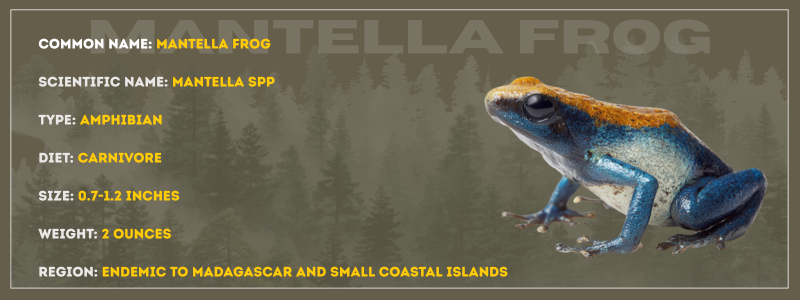
Scientific Name: Mantella spp. (approximately 16 species)
Diet Type: Carnivore (Insectivore)
Size: 18-31 mm (0.7-1.2 inches) snout-vent length
Weight: Up to 2 ounces (56 grams) for larger species, though most are significantly lighter
Region Found: Endemic to Madagascar and small coastal islands (Nosy Bé, Nosy Komba, Mayotte)