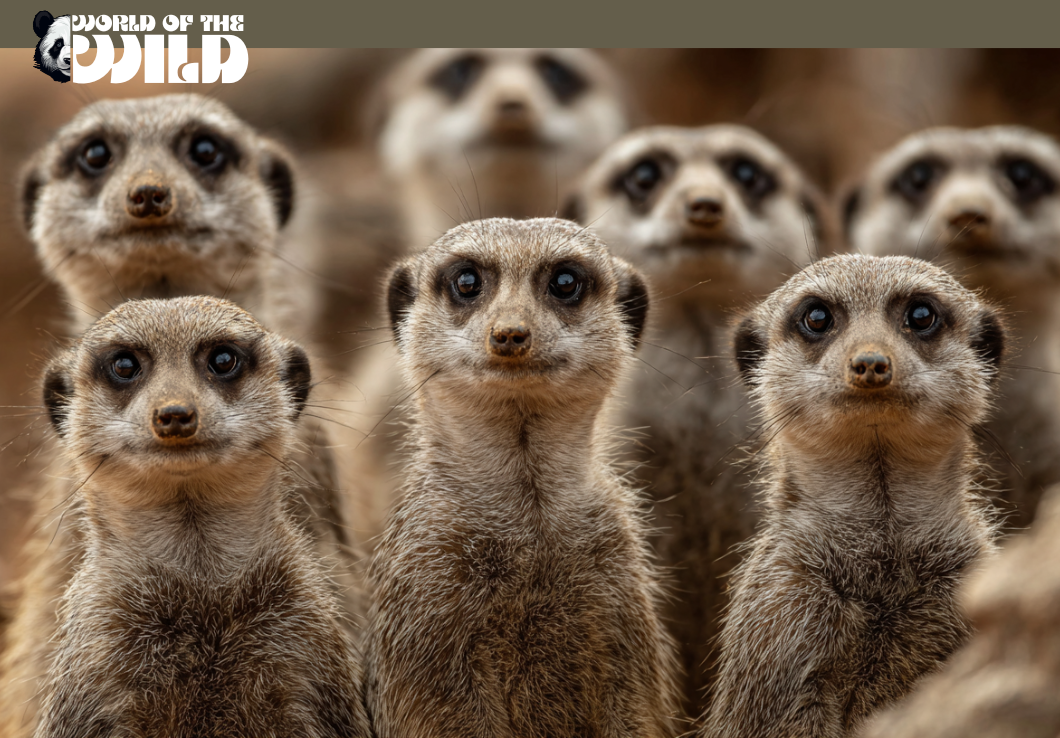

Standing upright on their hind legs like miniature sentinels, scanning the horizon with intense focus, meerkats have captured the hearts and imaginations of people worldwide. These charismatic members of the mongoose family are far more than just adorable faces peering from the African savanna—they represent one of nature’s most sophisticated examples of cooperative living and survival strategy. In a landscape where danger lurks from both sky and ground, meerkats have evolved an intricate social system that would put many human communities to shame. Their complex communication networks, selfless sentinel behavior, and tight-knit family bonds make them one of the most fascinating creatures to study in the wild, offering profound insights into the evolution of cooperation and altruism in the animal kingdom.
Facts
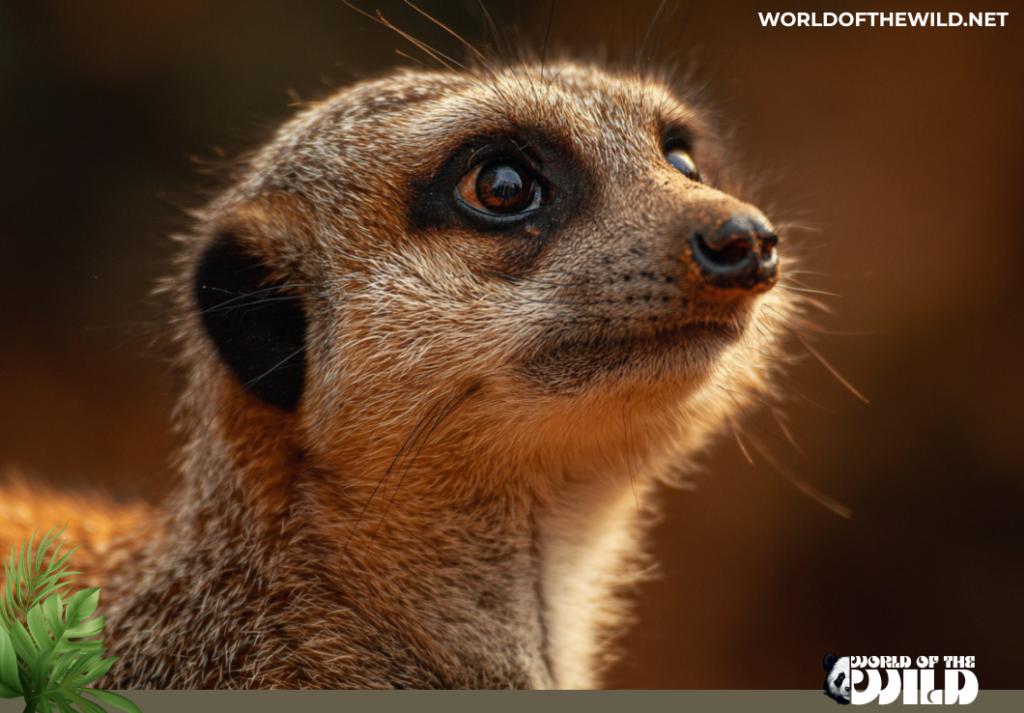
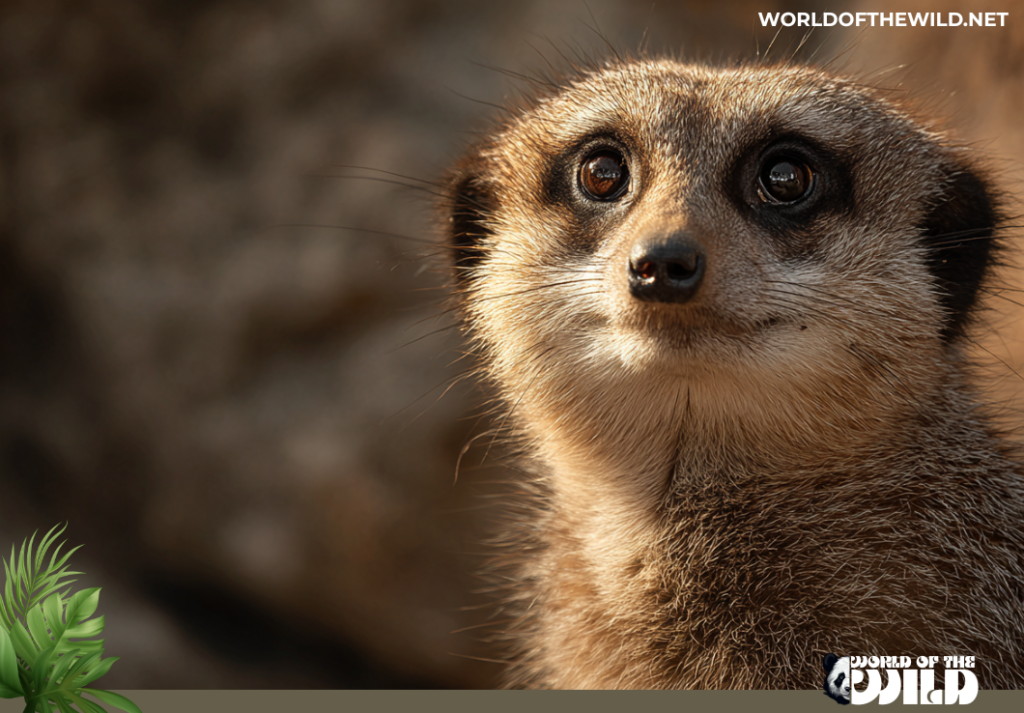
- Meerkats have dark patches around their eyes that function like built-in sunglasses, reducing glare from the intense African sun and helping them spot predators against bright skies.
- Despite their name, meerkats are not cats at all—the name likely derives from the Dutch word “meerkat,” meaning “lake cat,” though they live in dry regions far from lakes.
- A single meerkat mob can dig and maintain up to 5 miles of underground tunnels with multiple entrance holes, creating an elaborate subterranean city.
- Meerkats are immune to certain types of venom, including that of scorpions and some snakes found in their habitat, allowing them to hunt prey that would be deadly to most other animals of their size.
- Young meerkats attend what researchers call “foraging school,” where adult members gradually teach pups how to handle dangerous prey by bringing them progressively more challenging food items.
- Meerkats can close their ears to keep sand out while digging, a unique adaptation among mammals.
- The entire meerkat mob takes turns babysitting the pups, with some individuals forgoing their own foraging to ensure the young are protected and fed.
Species
Kingdom: Animalia
Phylum: Chordata
Class: Mammalia
Order: Carnivora
Family: Herpestidae (mongoose family)
Genus: Suricata
Species: Suricata suricatta
The meerkat is the only species in its genus, Suricata, making it taxonomically unique within the mongoose family. While there are no recognized subspecies of meerkats, they are closely related to other members of the Herpestidae family, which includes the yellow mongoose, the slender mongoose, and the banded mongoose. Among their mongoose cousins, meerkats are distinguished by their highly social nature—while many mongoose species live in smaller family groups or are solitary, meerkats form some of the largest and most complex social structures in their family. The genus name Suricata is thought to derive from an indigenous African language, though its exact etymology remains debated among zoologists.
Appearance
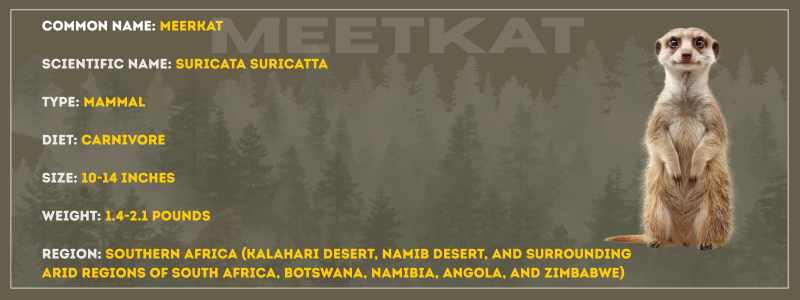
Meerkats are small, slender carnivores with a distinctive appearance perfectly adapted to their desert environment. Adults typically measure 10 to 14 inches in length, with a tail adding another 7 to 10 inches to their total body length. Their weight ranges from 1.4 to 2.1 pounds, with males being slightly larger than females. Their fur is a tawny gray or light brown color, marked with darker brown or black bands across their backs that run from the base of the tail to the shoulders. These stripes are unique to each individual, much like human fingerprints, allowing researchers to identify specific meerkats in the wild.
One of their most striking features is their large, forward-facing eyes surrounded by dark patches of fur that reduce sun glare. Their small, rounded ears can close completely to keep out sand during digging sessions. Meerkats have long, non-retractable claws on their forepaws, perfectly designed for excavating burrows in hard-packed soil. Their hind legs are longer than their forelegs, enabling them to stand upright in their characteristic sentinel pose. The underside of their body has only a thin layer of fur, revealing dark skin beneath—this sparsely furred belly serves as a solar panel, allowing meerkats to warm themselves quickly by standing upright and facing the morning sun.
Behavior
Meerkats are among the most socially complex animals on Earth, living in groups called “mobs” or “gangs” that typically contain 20 to 30 individuals, though some groups can grow to 50 members. Their social structure is matriarchal, with a dominant female and male leading the group. The hierarchy is strictly enforced, with the dominant pair monopolizing most breeding opportunities.
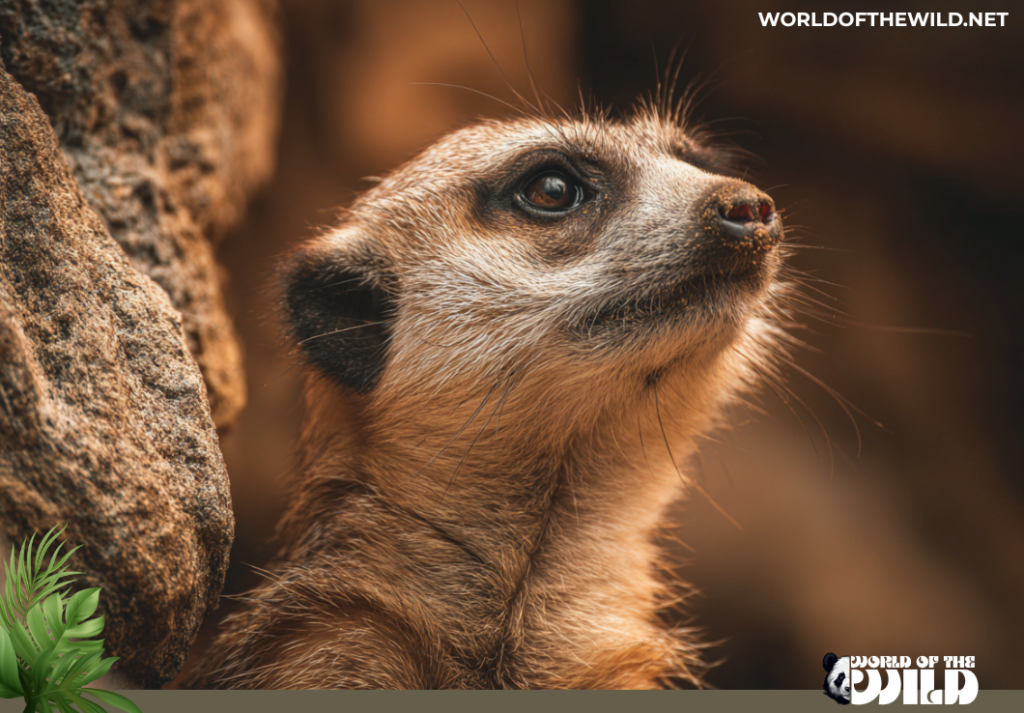
The most iconic meerkat behavior is their sentinel duty. While the mob forages, one or more individuals take turns standing guard on elevated positions—termite mounds, rocks, or bushes—scanning the environment for predators. These sentinels emit specific alarm calls that vary depending on the type of threat (aerial or terrestrial) and its level of danger. Research has revealed that meerkats have one of the most sophisticated communication systems in the animal kingdom, with distinct vocalizations for different predators and situations. When a sentinel spots a martial eagle, their primary aerial threat, they emit a high-pitched alarm that sends the entire mob scrambling for the nearest bolt hole.
Meerkats are diurnal, emerging from their burrows shortly after sunrise to warm themselves in the sun before beginning their foraging activities. They spend most of their day searching for food, digging in the sand with remarkable speed and efficiency. Despite their small size, they are fierce and coordinated hunters. When confronting snakes or other predators, the mob will work together, mobbing the threat with coordinated attacks.
Their intelligence is remarkable. Meerkats demonstrate teaching behavior rarely seen in non-human animals, actively instructing young members in essential survival skills. Adult meerkats bring increasingly dangerous prey to pups, first killing it, then disabling it, and eventually bringing it alive so youngsters can practice their own killing techniques.
Evolution
The evolutionary history of meerkats traces back millions of years to the broader mongoose family, which originated in Africa during the early Miocene epoch, approximately 20 million years ago. The Herpestidae family likely evolved from viverrid ancestors (civets and genets), developing specialized adaptations for hunting small prey in diverse African ecosystems.
Meerkats themselves evolved relatively recently in geological terms, with fossil evidence suggesting the genus Suricata emerged during the Pliocene epoch, around 5 million years ago, as African climates became increasingly arid. This shift toward drier conditions in southern Africa drove the evolution of many of the meerkat’s distinctive adaptations. Their highly social behavior likely evolved as a response to the intense predation pressure in open habitats, where cooperative vigilance provides a significant survival advantage.
The meerkat’s unique morphological features—including their upright posture, specialized digging claws, and venom resistance—represent evolutionary responses to life in harsh, semi-arid environments. Their ability to consume venomous prey without ill effects is thought to have evolved through gradual exposure and natural selection, similar to the development of venom resistance in other mongoose species. The elaborate tunnel systems they construct reflect evolutionary adaptations to extreme temperature fluctuations in desert environments, where underground burrows provide essential thermal regulation.
Habitat
Meerkats are endemic to the arid regions of southern Africa, with their range extending across parts of South Africa, Botswana, Namibia, and small portions of Angola and Zimbabwe. Their distribution closely follows the boundaries of the Kalahari Desert and surrounding semi-arid scrublands, though they can also be found in the drier regions of the Namib Desert and the harsh terrain of the Karoo.
These remarkable creatures thrive in harsh environments that would challenge most mammals. They prefer open, arid habitats with hard, compacted soil suitable for burrow construction, including savannas, grasslands, and scrubby desert regions. The landscape is typically characterized by sparse vegetation, scattered acacia trees, and low shrubs. Annual rainfall in their habitat ranges from 4 to 15 inches, and temperatures can fluctuate dramatically—from below freezing at night to over 100°F during the day.
Meerkats are never found far from suitable burrow sites, which are essential for their survival. These underground networks provide protection from predators, shelter from extreme temperatures, and safe nurseries for raising young. A single mob may maintain several burrow systems within their territory, moving between them as food resources fluctuate or to escape parasites that build up in heavily used burrows. Their territories can range from 2 to 4 square miles, depending on food availability and mob size.
Diet
Meerkats are carnivorous, though more precisely they can be classified as insectivores with opportunistic carnivorous tendencies. Their diet consists primarily of invertebrates, with beetles, caterpillars, spiders, and termites forming the bulk of their daily meals. They are particularly fond of scorpions, which they hunt with impressive skill, using their quick reflexes to bite off the venomous stinger before consuming the rest of the body. Their partial immunity to scorpion venom provides a significant advantage in an environment where these arachnids are abundant.
Beyond invertebrates, meerkats supplement their diet with small vertebrates including lizards, snakes, birds, eggs, and occasionally small rodents. They consume roots, tubers, and the rare desert melon when available, which provides both nutrition and precious moisture. In the arid environment they inhabit, meerkats obtain most of their water from the food they eat, rarely needing to drink directly.
Foraging is a group activity, with meerkats spreading out across their territory while remaining in vocal contact. They use their keen sense of smell to locate prey buried beneath the sand, then dig frantically with their powerful claws to unearth their meal. A foraging meerkat can dig through its own body weight in sand in just seconds. They consume food rapidly, often eating while still digging for the next meal. Larger prey items, like geckos or bird eggs, may be shared with young pups or eaten more deliberately, but most meals are quickly gulped down to avoid theft by opportunistic mob members.
Predators and Threats
Despite their vigilant nature and cooperative defense strategies, meerkats face predation from numerous species. Their primary aerial predators include martial eagles, tawny eagles, and black-backed jackals that hunt from above. The martial eagle is particularly deadly, capable of snatching an adult meerkat in mid-run. Terrestrial threats include jackals, caracals, and various snake species. Young pups are especially vulnerable to predation from yellow mongooses and monitor lizards that may raid burrows when adults are away foraging.
The meerkat’s sophisticated alarm system and sentinel behavior evolved specifically to combat this intense predation pressure. When a predator is spotted, the speed and precision of their response—diving into the nearest bolt hole or mobbing a ground predator as a coordinated group—often means the difference between life and death.
Human-induced threats pose increasing challenges to meerkat populations. Habitat loss due to agricultural expansion and livestock overgrazing degrades the quality of their environment and reduces prey availability. Climate change presents a growing concern, as increasing temperatures and shifting rainfall patterns affect the invertebrate populations meerkats depend on for food. More intense and frequent droughts can lead to starvation, particularly affecting young pups who are less resilient to food scarcity.
Road mortality has become an increasing problem in areas where human development intersects with meerkat habitat. Additionally, while meerkats are not hunted for commercial purposes, they are sometimes persecuted by farmers who mistakenly believe they pose a threat to poultry, though actual incidents of meerkats raiding chicken coops are rare. Disease is another emerging concern, with rabies outbreaks occasionally decimating local populations, and tuberculosis has been documented in some meerkat groups, particularly those living near human settlements.
Reproduction and Life Cycle
Meerkats have a complex reproductive system dominated by the alpha female, who typically produces three to four litters per year during the warmer months when food is most abundant. The dominant pair monopolizes the majority of breeding, though subordinate females may occasionally breed. When subordinate females do become pregnant, they often face aggression from the dominant female and may be temporarily expelled from the group.
Mating involves little ceremony, though the dominant pair maintains their bond throughout the year. After a gestation period of approximately 11 weeks, the female gives birth to a litter of two to five pups (average of three) in the safety of an underground burrow chamber. The pups are born blind, deaf, and hairless, weighing barely 1 ounce each. They remain underground for the first two to three weeks of life, during which time they are completely dependent on their mother and other group members.
What makes meerkat reproduction particularly fascinating is the extensive cooperative care provided by the entire mob. Non-breeding individuals, called “helpers,” assist in raising the pups through a system known as cooperative breeding. These helpers babysit the young while parents forage, feed the pups regurgitated food, and later teach them essential survival skills. Some adult meerkats will forgo eating for an entire day while babysitting, even lactating to feed pups that aren’t their own biological offspring.
Pups begin emerging from the burrow at about three weeks old and start accompanying foraging adults at four weeks. The education period is extensive, with young meerkats learning foraging techniques, predator recognition, and appropriate alarm responses over several months. They reach sexual maturity at around one year of age but typically don’t breed until they achieve dominant status or disperse to join another mob.
In the wild, meerkats live an average of 5 to 10 years, though many don’t survive their first year due to predation and harsh environmental conditions. In captivity, with protection from predators and consistent food supply, they can live up to 12 to 14 years.
Population
The meerkat is currently classified as “Least Concern” by the International Union for Conservation of Nature (IUCN), indicating that the species is not facing immediate extinction risk. Global population estimates are difficult to determine precisely due to the species’ wide distribution and the remote nature of much of their habitat, but populations are believed to be stable across most of their range, with an estimated hundreds of thousands of individuals across southern Africa.
However, population trends vary regionally. In protected areas like the Kalahari Gemsbok National Park and other reserves, meerkat populations remain healthy and stable. These protected zones provide ideal habitat with minimal human disturbance and abundant prey. In contrast, areas experiencing heavy agricultural development or climate-related droughts have seen localized population declines.
Long-term field studies, particularly those conducted in the Kuruman River Reserve in South Africa, have provided invaluable data on meerkat population dynamics. These studies reveal that meerkat populations can fluctuate significantly based on rainfall patterns, which directly affect insect availability. Severe drought years can reduce local populations by 50% or more, though populations typically rebound when conditions improve.
While meerkats are not currently endangered, conservationists monitor several concerning trends. Climate change models predict increasingly frequent and severe droughts in southern Africa, which could impact long-term population stability. Additionally, as human populations expand into previously wild areas, habitat fragmentation may isolate meerkat groups and reduce genetic diversity.
Conclusion
The meerkat stands as a testament to the power of cooperation and social bonds in the natural world. From their intricate communication systems and selfless sentinel behavior to their remarkable teaching abilities and complex social hierarchies, these small carnivores demonstrate that size is no barrier to evolutionary sophistication. Their success in one of Earth’s harshest environments speaks to the effectiveness of their cooperative strategy—proof that working together can overcome even the most formidable challenges.
As we face our own global challenges, there is much we can learn from these desert sentinels. Their ability to thrive through teamwork, their investment in educating the next generation, and their adaptability to harsh conditions offer powerful lessons about resilience and community. While meerkats currently maintain stable populations, they serve as important indicators of ecosystem health in southern Africa’s arid regions. Protecting their habitat means preserving not just one charismatic species, but entire desert ecosystems and the intricate web of life they support. In watching over meerkats, we watch over the wild spaces that sustain us all.
Scientific Name: Suricata suricatta
Diet Type: Carnivore (primarily insectivorous)
Size: 10-14 inches (body length), plus 7-10 inch tail
Weight: 1.4-2.1 pounds
Region Found: Southern Africa (Kalahari Desert, Namib Desert, and surrounding arid regions of South Africa, Botswana, Namibia, Angola, and Zimbabwe)