
In the fading twilight of a Colorado canyon, a tawny shadow moves with liquid grace across the rocky outcrop. For a heartbeat, golden eyes lock onto yours before the phantom vanishes into the scrub oak as silently as it appeared. You’ve just encountered North America’s greatest stalker—the mountain lion, a predator so adaptable it thrives from the frozen Yukon to the tropical jungles of Brazil.
The mountain lion holds a unique place in the wild kingdom as the mammal with the most names in the English language and the widest distribution of any large terrestrial mammal in the Western Hemisphere. This magnificent cat embodies the untamed spirit of wilderness, serving as both apex predator and indicator species for the health of diverse ecosystems across two continents. Yet despite its prominence in the landscape, the mountain lion remains one of nature’s most elusive creatures, a master of invisibility that has walked alongside humans for millennia while rarely being seen.
Facts
Seven Fascinating Mountain Lion Facts:
- The Cat of Many Names: Mountain lions hold the Guinness World Record for the animal with the most names—over 40 in English alone, including cougar, puma, panther, catamount, and painter, reflecting their vast range and the many cultures that have encountered them.
- No Roar Zone: Unlike lions, tigers, and leopards, mountain lions cannot roar. Instead, they purr like housecats, and also produce chirps, whistles, screams, and growls. Their infamous scream sounds eerily human and has terrified countless wilderness campers.
- Leaping Legends: Mountain lions possess extraordinary jumping abilities, capable of leaping 40 feet horizontally and 15 feet vertically from a standstill—equivalent to jumping from the ground to a second-story window.
- Solitary Wanderers: Young males, called transients, may travel up to 600 miles in search of their own territory, with one documented individual journeying from South Dakota to Connecticut—nearly 1,800 miles—before being struck by a vehicle.
- Extreme Adaptability: Mountain lions inhabit more diverse habitats than any other wild terrestrial mammal in the Western Hemisphere, from sea level to 14,800 feet in elevation, and from deserts to rainforests.
- Silent Stalkers: Their large, padded paws act as natural silencers, allowing them to approach prey with virtually no sound. They also retract their claws while walking to keep them razor-sharp.
- Tail Multitool: Their remarkably long tail—often 2-3 feet in length—serves multiple purposes: balance during high-speed pursuits and leaps, communication through various positions, and as a warm wrap for their face and paws when resting in cold weather.
Species
Taxonomic Classification:
- Kingdom: Animalia
- Phylum: Chordata
- Class: Mammalia
- Order: Carnivora
- Family: Felidae
- Genus: Puma
- Species: Puma concolor
The mountain lion belongs to the subfamily Felinae, making it technically a “small cat” despite its large size—a classification based on throat structure rather than overall body dimensions. This places mountain lions more closely related to domestic cats, lynxes, and cheetahs than to the “big cats” like lions and tigers.
Subspecies and Geographic Variation:
Historically, taxonomists recognized up to 32 subspecies of mountain lion based on geographic distribution and subtle morphological differences. However, modern genetic analysis has dramatically simplified this classification. Today, most scientists recognize only two subspecies:
North American Mountain Lion (Puma concolor couguar): Found throughout North America, from the Canadian Yukon to Central America. This subspecies shows considerable size variation, with northern populations generally larger than southern ones.
South American Mountain Lion (Puma concolor concolor): Distributed throughout South America, from the Amazon Basin to Patagonia. These cats tend to be slightly smaller on average than their northern counterparts.
Notably, the Florida panther (Puma concolor coryi) was once considered a separate subspecies but is now recognized as a distinct population of the North American subspecies. This critically endangered population represents a unique genetic lineage that has been isolated in southern Florida.
The Eastern cougar, once thought to be a distinct subspecies inhabiting eastern North America, was declared extinct in 2018, though occasional sightings suggest possible recolonization from western populations.
Appearance
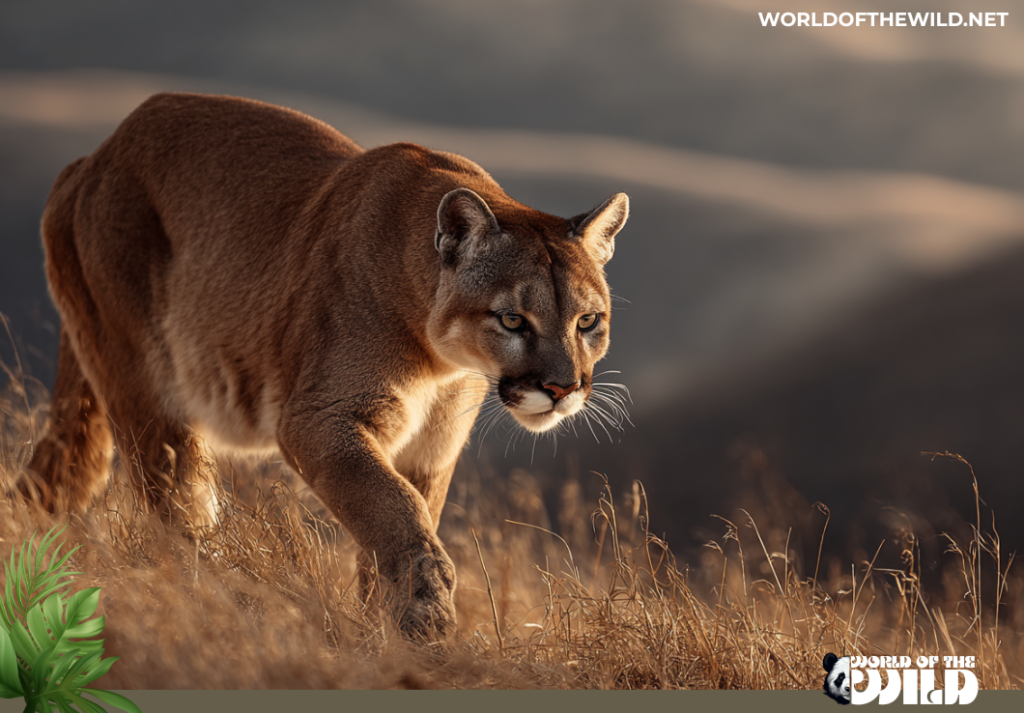
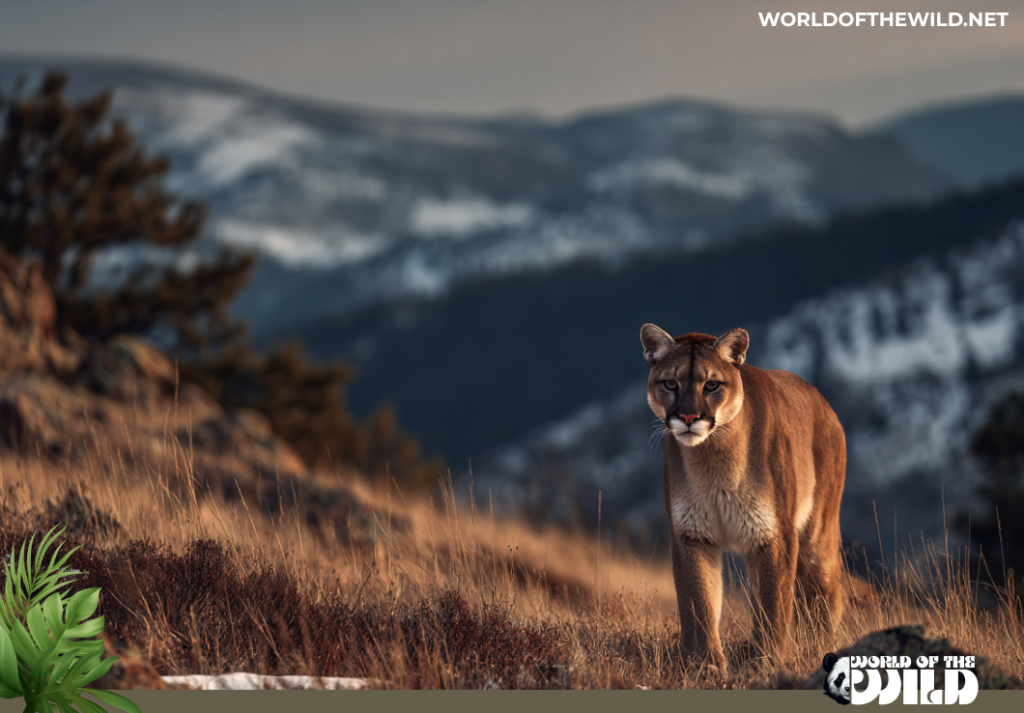
The mountain lion possesses a sleek, powerful build perfectly engineered for ambush hunting. Adult males typically measure 6 to 8 feet from nose to tail tip and stand 24 to 30 inches at the shoulder, weighing between 115 and 220 pounds, with exceptional individuals reaching 265 pounds. Females are considerably smaller, ranging from 75 to 140 pounds and measuring 5 to 7 feet in total length. The size varies significantly by latitude, following Bergmann’s Rule—northern cats grow substantially larger than their southern relatives, with some Patagonian mountain lions weighing as little as 75 pounds.
Their coat displays a remarkably uniform tawny-brown to grayish coloration across the body, providing excellent camouflage in diverse habitats from rocky cliffs to forest understory. The fur is short and dense, slightly longer in winter. While the back and sides wear this signature tan, the underside lightens to cream or white, and distinctive white patches mark the muzzle, chin, and throat. Dark markings accent the face, with black rimming the ears and a dark spot at the base of the whiskers. The backs of the ears show black patches that may serve as visual signals to cubs following their mother.
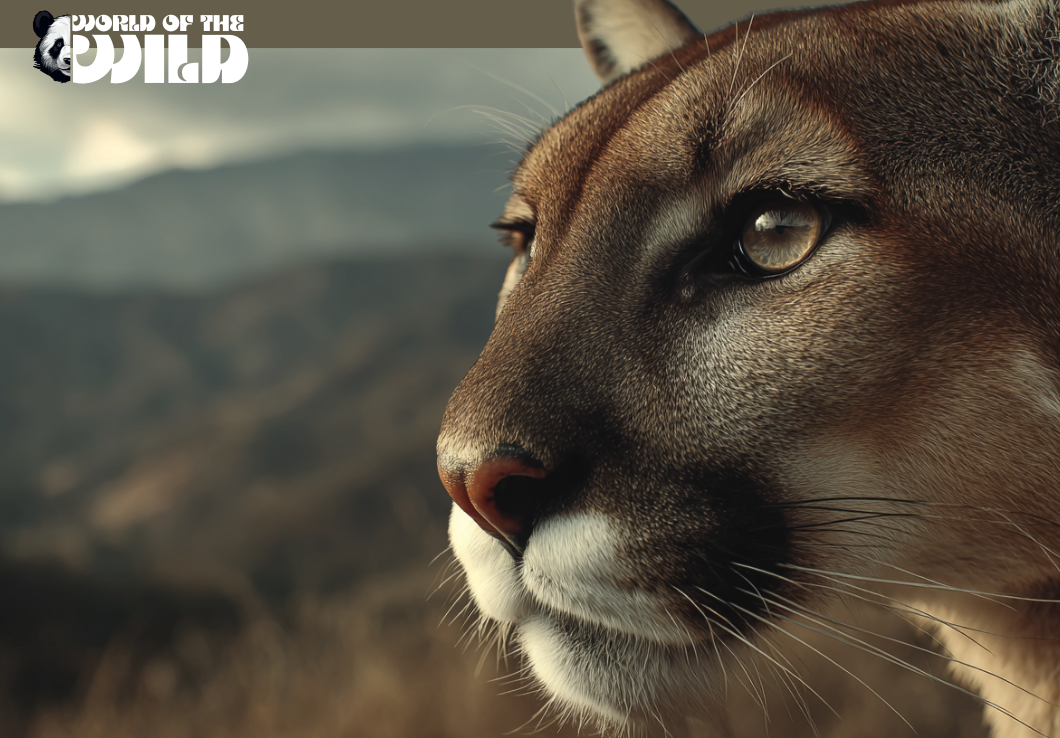
The mountain lion’s face is relatively small compared to its muscular body, with a rounded skull and short, rounded ears. Their large, golden-brown to greenish-brown eyes provide exceptional vision, particularly in low light conditions. Long, white whiskers extend prominently from the muzzle, serving as sensitive tactile sensors for navigating dense vegetation and gauging spaces in darkness.
Perhaps most distinctive is their extraordinarily long tail, measuring 25 to 37 inches—often one-third of their total length. Unlike most cats, the tail is thick and relatively uniform in diameter, ending in a black tip. This magnificent appendage functions as a counterbalance during high-speed chases and sharp turns, and as a rudder during their spectacular leaps.
Their paws are disproportionately large for their body, measuring up to 4 inches across in adult males. Four toes on each foot feature large, retractable, curved claws that remain hidden during normal walking but extend for climbing, gripping prey, and fighting. The hind legs are noticeably longer and more powerful than the forelegs, providing the explosive power necessary for their legendary jumping ability.
Melanistic (all-black) mountain lions are theoretically possible but have never been reliably documented, despite persistent folklore. What are often reported as “black panthers” in North America are typically misidentifications of other animals or normal mountain lions seen in poor lighting.
Behavior
Mountain lions are quintessentially solitary creatures, epitomizing the independent lifestyle of a supreme predator. Adults actively avoid one another except during the brief mating period, maintaining exclusive territories through a combination of scent marking, scrapes, and occasional vocalizations. This solitary nature is so pronounced that even when prey is abundant, mountain lions will not tolerate others of the same sex within their range.
Territory and Space Use:
Adult males establish territories ranging from 50 to 150 square miles, though sizes vary dramatically based on prey density and terrain—some territories in areas with sparse prey can exceed 370 square miles. Females maintain smaller home ranges, typically 25 to 75 square miles, which may overlap with those of other females but are defended against strangers. Males’ territories usually encompass those of several females, ensuring access to potential mates while minimizing direct competition.
Mountain lions mark their territories through “scrapes”—deliberate scratches in the ground covered with urine and sometimes feces. These territorial signposts are strategically placed along travel routes, on ridgelines, and at territory boundaries. They also leave claw marks on trees as visual and scent markers, standing on their hind legs to scratch as high as possible to advertise their size.
Daily Activity Patterns:
These cats are predominantly crepuscular, meaning most active during twilight hours of dawn and dusk when their primary prey is also active. However, they demonstrate remarkable behavioral flexibility, adjusting their activity patterns based on prey behavior, human disturbance, and weather conditions. In areas with significant human activity, they often become more nocturnal. Their exceptional night vision, six times more acute than humans’, makes them formidable hunters in darkness.
Hunting and Movement:
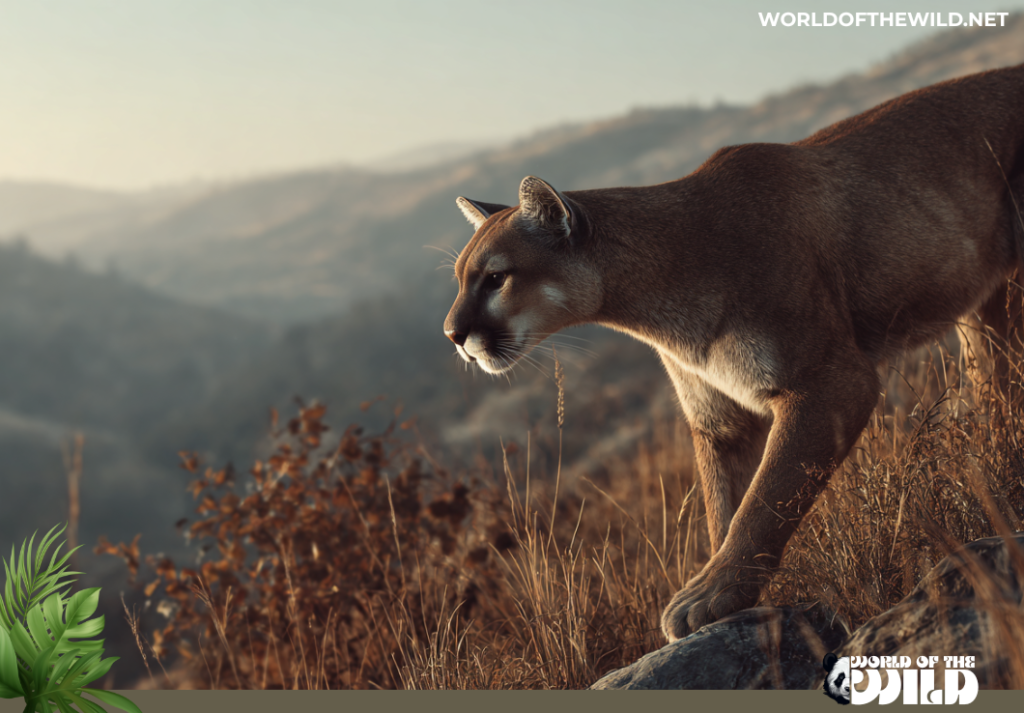
Mountain lions are ambush predators par excellence, relying on stealth and explosive power rather than endurance. They spend considerable time observing prey from concealed positions, sometimes watching the same game trail for hours or even days. When hunting, they slink low to the ground, using every available cover to approach within 30 to 50 feet of their target before launching their attack.
Their hunting strategy culminates in a sudden, powerful rush covering the final distance in several explosive bounds. They typically attack from behind or the side, using their momentum to knock prey off balance while delivering a suffocating bite to the throat or a killing bite to the back of the neck that severs the spinal cord. Success rates vary widely, with estimates suggesting they successfully kill prey in only 10 to 50 percent of attempts.
After a kill, mountain lions demonstrate characteristic caching behavior, dragging their prey—sometimes animals weighing more than themselves—to a secluded spot where they cover the carcass with leaves, grass, dirt, and debris. They return to feed over several days, a behavior that distinguishes them from many other predators and helps identify mountain lion kills in the wild.
Communication:
Despite their solitary nature, mountain lions possess a sophisticated communication repertoire. They purr contentedly when relaxed, just like domestic cats—a distinctive trait among large felids. Mothers and cubs communicate through chirps and whistles, gentle sounds that maintain contact without attracting attention. The infamous “scream,” often described as sounding like a woman in distress, serves multiple functions including advertising reproductive status and deterring rivals, though its exact purpose remains debated among researchers.
Intelligence and Adaptability:
Mountain lions display remarkable problem-solving abilities and learning capacity. They quickly adapt to changing conditions, alter their hunting strategies based on experience, and learn to avoid areas of danger. Their ability to thrive in suburban interface areas demonstrates their cognitive flexibility, though this adaptability sometimes brings them into dangerous proximity with humans. They have been documented learning to cross highways at underpasses, adjusting their movement patterns to avoid human activity peaks, and even distinguishing between armed and unarmed humans in hunted populations.
Evolution
The evolutionary history of the mountain lion traces back approximately 8.5 million years to the late Miocene epoch, when the ancestral lineage of modern felids began diversifying. The Puma lineage, which includes the mountain lion, jaguarundi, and cheetah, represents one of the eight main evolutionary branches of the cat family, diverging from other felids around 6.7 million years ago.
The most immediate ancestor of modern mountain lions emerged in North America during the Pliocene epoch, roughly 3 to 4 million years ago. Fossil evidence suggests that early Puma-like cats first appeared in the grasslands and mixed habitats of what is now the western United States. These ancestral populations spread throughout North America as the climate fluctuated between ice ages and interglacial periods.
During the late Pleistocene epoch (around 300,000 to 10,000 years ago), mountain lions shared the landscape with now-extinct megafauna including saber-toothed cats (Smilodon), American lions (Panthera atrox), and American cheetahs (Miracinonyx). Unlike these larger competitors, mountain lions occupied a mid-sized predator niche that ultimately proved more sustainable. When the Pleistocene megafauna extinctions decimated large predators around 10,000 to 12,000 years ago—likely due to climate change and the arrival of human hunters—mountain lions survived and expanded.
Genetic studies reveal a fascinating migration pattern in mountain lion evolution. Around 200,000 years ago, mountain lions crossed the Bering land bridge into Asia but later became extinct there, leaving no descendants. More successfully, they migrated southward through Central America into South America approximately 200,000 to 300,000 years ago, after the formation of the Isthmus of Panama created a land bridge. This Great American Biotic Interchange allowed mountain lions to colonize South America’s diverse habitats, eventually reaching Patagonia.
Intriguingly, modern genetic analysis reveals remarkably low genetic diversity among mountain lions compared to other large felids, suggesting the entire species passed through a severe population bottleneck around 10,000 to 12,000 years ago during the late Pleistocene. This genetic uniformity across their vast range indicates rapid expansion from a small founding population following this near-extinction event.
The mountain lion’s closest living relative is the jaguarundi, a smaller, more weasel-like cat of Central and South America. More surprisingly, genetic evidence places the cheetah as another close cousin, despite the cheetah’s radically different appearance and lifestyle—a testament to the power of adaptation in shaping different solutions from common ancestry.
Habitat
Mountain lions claim the distinction of having the most extensive range of any large wild terrestrial mammal in the Western Hemisphere, spanning 110 degrees of latitude from the Canadian Yukon at 60°N to the southern tip of Chile at 50°S. This remarkable distribution encompasses an extraordinary variety of ecosystems, demonstrating the species’ exceptional ecological adaptability.
North American Range:
In North America, mountain lions historically occupied every region from the Atlantic to the Pacific. Today, viable breeding populations exist primarily west of the 100th meridian, throughout the Rocky Mountains, Pacific Coast ranges, the Southwest deserts, and western Canada. They inhabit British Columbia, Alberta, Saskatchewan, and have recently been documented recolonizing Manitoba. In the United States, they maintain established populations in 14 western states, with small, isolated populations in Texas and the critically endangered Florida panther population representing the only known breeding population east of the Mississippi River.
Central and South American Range:
From Mexico through Central America, mountain lions occupy virtually every available habitat. In South America, their range extends through every country except for some Caribbean islands, from the tropical Amazon rainforest to the windswept grasslands of Patagonia and the Andean highlands.
Habitat Diversity:
The hallmark of mountain lion ecology is their extreme habitat versatility. They thrive in:
Mountainous Terrain: Perhaps their namesake habitat, mountain lions excel in rugged, rocky landscapes from the Sierra Nevada to the Andes. They navigate steep cliffs with remarkable agility and have been documented at elevations exceeding 14,800 feet in the Andes, making them one of the highest-dwelling large predators on Earth.
Forests: Dense coniferous forests of the Pacific Northwest, the mixed deciduous forests of the Appalachians (historically), and the tropical rainforests of the Amazon Basin all support mountain lion populations. The forest structure provides ideal ambush cover and abundant prey.
Deserts: The Sonoran, Mojave, and Chihuahuan deserts host healthy mountain lion populations. Here they rely on rugged terrain features for cover and concentrate their activities around water sources and areas where desert bighorn sheep and mule deer congregate.
Grasslands and Shrublands: From the Great Plains to the Pampas of Argentina, mountain lions hunt in open grasslands, relying on topographical features, tall grasses, and river corridors for stalking cover.
Swamps and Wetlands: The Florida panther has specialized in the cypress swamps, hardwood hammocks, and pine flatwoods of southern Florida, demonstrating the species’ ability to adapt to waterlogged environments.
Subtropical and Tropical Environments: Central American and northern South American populations inhabit humid tropical forests and cloud forests, where they coexist with jaguars by specializing in different prey and microhabitats.
Critical Habitat Features:
Regardless of biome, mountain lions require certain habitat features: adequate cover for stalking and resting (rocky outcrops, dense vegetation, or broken terrain), sufficient populations of medium to large prey animals, and large tracts of relatively undisturbed land to maintain viable territories. They prefer areas with topographical variation—canyons, ridgelines, and broken terrain that facilitate their ambush hunting strategy.
Increasingly, mountain lions demonstrate remarkable ability to persist in fragmented landscapes and even suburban interface areas, provided connectivity corridors exist. Wildlife underpasses and overpasses have proven critical in maintaining genetic flow between populations separated by highways and development, particularly in California where urban sprawl fragments prime habitat.
Diet
Mountain lions are obligate carnivores, requiring meat as the exclusive component of their diet. As apex predators, they sit atop the food chain across their range, though their specific prey varies dramatically based on geographic location and local prey availability.
Primary Prey:
Deer species constitute the foundation of mountain lion diet throughout most of their range. In North America, mule deer and white-tailed deer typically comprise 60 to 80 percent of their diet. A single adult mountain lion kills approximately one deer-sized animal every seven to ten days, though females with cubs may kill more frequently. The predator-prey ratio typically stabilizes at roughly one mountain lion per 200 to 300 deer.
In South America, their primary prey includes various deer species such as huemul, marsh deer, pampas deer, and the Andean taruca. In some regions, they heavily prey on guanaco and vicuña, the wild relatives of llamas.
Prey Spectrum:
While deer dominate their diet, mountain lions are opportunistic hunters with an exceptionally broad prey spectrum spanning from insects to animals several times their own weight. Documented prey species number over 100, including:
Large Prey: Elk, bighorn sheep, moose calves, pronghorn antelope, mountain goats, wild pigs, and even young black bears have fallen to mountain lion attacks. In South America, they occasionally take capybaras, tapirs, and domestic livestock including cattle and horses.
Medium Prey: Peccaries, coyotes, bobcats, raccoons, armadillos, porcupines, skunks, opossums, and beavers provide important dietary diversity.
Small Prey: When larger prey is scarce, mountain lions readily hunt rabbits, hares, ground squirrels, mice, and other rodents. They also catch birds, including wild turkeys, quail, and ground-nesting species.
Dietary Variation:
In Florida’s subtropical environment, the Florida panther demonstrates dietary flexibility by preying heavily on wild hogs, white-tailed deer, raccoons, and armadillos. In the arid Southwest, desert bighorn sheep and mule deer dominate the diet. In the Pacific Northwest, Roosevelt elk calves and black-tailed deer are preferred prey.
Hunting Strategy and Consumption:
Mountain lions typically kill prey with a suffocating bite to the throat or by breaking the neck with their powerful jaws and specialized carnassial teeth. After the kill, they drag the carcass to a secluded location—sometimes up to 500 yards away and occasionally into trees, though this is less common than among leopards.
A mountain lion will typically consume 8 to 10 pounds of meat in a single feeding session. They open the carcass at the ribs or hindquarters, preferentially eating the heart, liver, lungs, and large muscle groups. The characteristic caching behavior—covering the carcass with debris—reduces detection by scavengers and allows the cat to return for multiple meals. They may guard a kill for three to seven days, depending on its size.
Mountain lions must obtain all their water needs from prey or by drinking from natural water sources. In desert environments, this makes them dependent on areas near water, though they can survive extended periods on moisture from prey alone.
Competition and Kleptoparasitism:
Mountain lions occasionally lose kills to bears, which can detect cached carcasses and either drive the cat away or scavenge after the mountain lion has abandoned the site. Wolf packs, where they coexist, will also displace mountain lions from kills. Conversely, mountain lions occasionally kill and eat smaller predators like coyotes and bobcats, both eliminating competition and providing nutrition.
Predators and Threats
Despite their status as apex predators, mountain lions face both natural predation risks and significant anthropogenic threats that vary across their life stages and geographic range.
Natural Predators:
Adult mountain lions have few natural predators due to their size, power, and secretive behavior. However, several species pose threats, particularly to cubs and juveniles:
Wolves: In areas where gray wolves have been reintroduced or maintain populations, they represent the most significant natural threat to mountain lions. Wolf packs will kill mountain lions when encountered, particularly targeting cubs and subadults. Wolves also competitively exclude mountain lions from prime habitat through intimidation and interference competition, forcing them into more marginal areas.
Bears: Both black bears and grizzly bears occasionally kill mountain lion cubs when they discover dens, and grizzlies will aggressively displace mountain lions from kills. Adult bears and adult mountain lions generally avoid each other, though documented cases exist of bears killing mountain lions in confrontations over cached prey.
Other Mountain Lions: Infanticide by adult males represents a significant mortality factor for cubs. Males entering new territories or encountering unrelated young may kill them, bringing the female back into estrus and ensuring their own genetic legacy. Territorial disputes between adult mountain lions occasionally result in fatal injuries, particularly when young males attempt to establish territories.
Jaguars: In areas of overlap in Central and South America, the larger, more powerful jaguar dominates, occasionally killing mountain lions in territorial encounters.
Cubs face additional predation from coyotes, golden eagles, and occasionally bobcats when they are very young and separated from their mother.
Anthropogenic Threats:
Human activities represent far more significant threats to mountain lion populations than natural predation:
Habitat Loss and Fragmentation: Urban development, agricultural expansion, and resource extraction continue to fragment mountain lion habitat, particularly in California, Florida, and rapidly developing areas of the western United States. Fragmentation isolates populations, restricts gene flow, and forces mountain lions into smaller, less viable territories. The Florida panther population faces critical threats from continued habitat destruction in southwest Florida, one of the fastest-growing regions in the United States.
Vehicle Collisions: Roads and highways represent lethal barriers that fragment habitat and directly kill mountain lions. Vehicle strikes are the leading cause of death for Florida panthers and a significant mortality factor for western populations, particularly along major highways that bisect habitat. High-traffic corridors can become demographic sinks, where mortality exceeds local reproduction.
Hunting and Persecution: Sport hunting of mountain lions is legal in many western states and Canadian provinces, with regulated seasons and quotas. While sustainable hunting generally doesn’t threaten overall populations, localized overharvesting can destabilize populations by removing resident adult males and triggering social chaos as young transients flood into vacant territories. Illegal killing still occurs, particularly when mountain lions prey on livestock or are perceived as threats to human safety.
Human-Wildlife Conflict: As human development expands into mountain lion habitat, conflicts inevitably increase. Mountain lions occasionally prey on livestock (cattle, sheep, goats, horses) and pets, leading to retaliatory killings by ranchers and homeowners. Depredation permits allow targeted removal of problem individuals, though evidence suggests removing one individual often results in others moving into the vacant territory.
Prey Depletion: Overhunting of deer and other ungulates by humans directly impacts mountain lion populations by reducing their food base. Conversely, deer overpopulation in areas without mountain lions demonstrates the important regulatory role these predators play in ecosystem health.
Rodenticides and Toxins: Secondary poisoning from anticoagulant rodenticides poses an emerging threat, particularly in California. Mountain lions that consume poisoned prey accumulate toxins that cause fatal internal bleeding. Studies have found rodenticides in over 90 percent of tested mountain lions in some areas of Southern California.
Disease: Feline immunodeficiency virus (FIV), plague, rabies, and canine distemper occasionally cause mortality. The Florida panther population faces particular disease vulnerability due to extreme genetic bottlenecking.
Genetic Isolation: Small, isolated populations face inbreeding depression, reduced genetic diversity, and increased susceptibility to disease and environmental change. The Florida panther nearly went extinct due to these factors before genetic rescue efforts introduced Texas mountain lions to restore genetic health.
Climate Change: Shifting climate patterns alter prey distributions, water availability, and habitat quality. Mountain lions must adapt their ranges and behaviors, though their demonstrated flexibility suggests greater resilience than many specialist species.
Reproduction and Life Cycle
Mountain lions follow a polygynous mating system where successful males mate with multiple females whose territories overlap with their own. Unlike many large cats, mountain lions lack a defined breeding season and can reproduce year-round, though births often peak in late winter to early summer in temperate regions.
Sexual Maturity and Mating:
Females reach sexual maturity between 18 months and 3 years of age, though most don’t successfully reproduce until establishing their own territory around 2.5 years old. Males mature slightly later, around 2 to 3 years, but typically don’t successfully breed until they establish territories, usually between 3 and 5 years of age.
When a female enters estrus (heat), which lasts approximately 8 to 9 days, she advertises her reproductive status through increased vocalizations, scent marking, and more conspicuous behavior. The famous mountain lion “scream”—a hair-raising, caterwauling vocalization—likely serves to attract males. Resident territorial males detect these signals and seek out receptive females.
Courtship and Copulation:
Once a male locates an estrous female, the pair engages in a brief courtship period of one to six days. Initial encounters may involve aggressive displays and cautious circling as they assess each other. The pair eventually becomes more tolerant, resting near each other and engaging in increased vocalization and scent marking.
Copulation is frequent during the receptive period, occurring multiple times per day. As with most felids, the male mounts the female from behind, grasping her neck in his jaws—a behavior that stimulates ovulation. Females are induced ovulators, meaning the physical act of mating triggers egg release. After copulation, pairs typically separate, and the male resumes his solitary life with no role in rearing offspring.
Gestation and Birth:
The gestation period lasts approximately 90 to 96 days (about three months). As parturition approaches, the pregnant female selects a secure, sheltered den site in a cave, rocky crevice, dense thicket, or beneath an overhanging boulder—locations offering protection from weather and predators.
Litter sizes range from one to six cubs, though two to three is most common. Larger litters are more frequent in areas with abundant prey. Cubs are born blind and helpless, weighing only about one pound. They display spotted coats—dark brown or black rosettes against a buff background—providing camouflage in the dappled light of the den. These juvenile spots gradually fade over the first two years of life.
Cub Development:
Newborn cubs open their eyes at 8 to 10 days old and begin moving around the den by two weeks. The mother remains close during the first weeks, leaving only briefly to hunt and returning frequently to nurse. Cubs nurse exclusively for the first 40 to 50 days before beginning to eat meat regurgitated or brought by their mother.
At approximately 6 to 8 weeks, cubs become mobile enough to accompany their mother outside the den to cached kills. By three months, they’re actively following her on hunting forays, though they remain completely dependent on her kills. This extended apprenticeship teaches essential survival skills: stalking techniques, prey selection, kill methods, and caching behavior.
Cubs continue nursing until 2 to 3 months old but remain with their mother for 12 to 24 months—an extended dependency period critical for survival skill development. During this time, the female fiercely defends her cubs from all threats, including other mountain lions and bears. She must kill more frequently to feed her growing family, sometimes taking prey every three to five days rather than weekly.
Dispersal and Independence:
Between 10 and 24 months of age, subadults begin separating from their mother, usually when she enters estrus again. Young males typically disperse farther than females, traveling 30 to 150 miles or more to find vacant territories, while young females often establish territories near or overlapping their mother’s range.
This dispersal period represents the most dangerous time in a mountain lion’s life. Transient subadults lack established territories, must navigate through occupied ranges, face aggressive territorial adults, cross dangerous highways, and often struggle to hunt efficiently. Mortality during dispersal can exceed 50 percent.
Lifespan:
In the wild, mountain lions that survive to adulthood typically live 8 to 13 years, though some reach 18 to 20 years in exceptionally favorable conditions. Males generally have shorter lifespans than females due to the stresses of maintaining large territories and occasional combat with rivals. Females may produce cubs every two to three years throughout their adult life, potentially rearing five to six litters if they survive to old age.
Captive mountain lions regularly live 18 to 25 years with proper care, demonstrating the toll that wild existence takes on longevity.
Mortality Factors:
Cub mortality is substantial, with 40 to 60 percent dying before independence. Causes include starvation if the mother is killed, infanticide by males, predation by bears or wolves, abandonment if cubs become separated, and disease. Adults face mortality from hunting, vehicle collisions, territorial combat, starvation during injury or old age, and disease.
Population
The mountain lion’s conservation status varies dramatically across its range, from robust and stable in some regions to critically endangered in others. Understanding their population dynamics requires examining both range-wide trends and the status of distinct populations.
Global Conservation Status:
The International Union for Conservation of Nature (IUCN) classifies the mountain lion as Least Concern on the Red List of Threatened Species, a designation based on the species’ wide distribution, relatively large total population, and stable numbers across much of its range. However, this global status masks significant regional variation and ongoing population declines in portions of the range.
Population Estimates:
Estimating mountain lion numbers proves challenging due to their secretive nature, low density, and vast territories. Current estimates suggest approximately 50,000 to 80,000 mountain lions exist across North and South America, though this figure carries considerable uncertainty. Some researchers estimate the number could be as high as 100,000.
North American Populations:
The western United States and western Canada maintain the healthiest mountain lion populations, estimated at 30,000 to 40,000 individuals. California alone supports approximately 4,000 to 6,000 mountain lions. Colorado, Montana, Idaho, Wyoming, Arizona, and New Mexico all host substantial populations in the thousands.
Notably absent from most of the eastern United States, mountain lions were extirpated from this region by the early 1900s through systematic persecution and habitat loss. The Eastern cougar was officially declared extinct in 2018. However, occasional confirmed sightings in eastern states—including Michigan, Wisconsin, Missouri, Arkansas, and Tennessee—document dispersing individuals from western populations, raising questions about potential natural recolonization.
The Florida Panther:
The Florida panther represents the only known breeding population of mountain lions east of the Mississippi River and stands as one of North America’s most endangered mammals. By 1970, fewer than 20 individuals remained, pushed into the swamps and forests of southern Florida. Intensive conservation efforts, including genetic rescue through the introduction of Texas mountain lions in 1995 to counteract severe inbreeding, have increased numbers to an estimated 120 to 230 individuals as of recent surveys.
While this represents remarkable recovery, the Florida panther remains Critically Endangered and faces ongoing threats from habitat loss, vehicle strikes (the leading cause of death), and limited genetic diversity. The population occupies less than 5 percent of its historic range and requires continued intensive management to persist.
Central and South American Populations:
Population data for Central and South American mountain lions is more limited. These cats maintain widespread distribution throughout the region, from Mexico through every South American country. Population density appears lower than in optimal North American habitat, and threats from habitat destruction, prey depletion, and persecution are more severe in some areas. Specific population estimates are unavailable for most regions.
Population Trends:
Range-wide, mountain lion populations show mixed trends. Western North American populations generally remain stable or increasing, particularly in states with regulated hunting that prevents overharvest. Some populations have expanded their range, recolonizing portions of the Great Plains states.
Conversely, populations face pressure in rapidly developing areas where habitat fragmentation intensifies. Southern California populations show concerning genetic isolation. Some Central and South American populations likely face declines due to deforestation, prey depletion, and retaliatory killing, though data remains insufficient for definitive trends.
Legal Protection:
Mountain lions receive varying levels of legal protection across their range. In the United States, California provides full protection with no sport hunting allowed. Florida panthers are protected under the Endangered Species Act. Other western states allow regulated sport hunting with quotas designed to maintain sustainable populations. In Canada, hunting is permitted in British Columbia and Alberta with limited seasons.
Latin American countries offer varying protections, with some providing full legal protection while others allow killing in defense of livestock or human safety.
Conservation Initiatives:
Successful mountain lion conservation requires maintaining habitat connectivity, securing wildlife corridors, managing human-wildlife conflict, and protecting prey populations. Notable successes include wildlife crossing structures (underpasses and overpasses) that reduce vehicle mortality and maintain genetic flow between populations, particularly in California’s Highway 101 corridor.
The Florida panther recovery program demonstrates that intensive conservation can rescue even critically endangered populations through habitat protection, genetic management, public education, and mitigation of key threats.
Conclusion
The mountain lion stands as a testament to the power of adaptability in the natural world. From the frozen expanses of the Canadian Yukon to the windswept plains of Patagonia, across rainforests and deserts, mountains and swamps, this magnificent predator has carved out an existence more geographically diverse than any other large land mammal in the Western Hemisphere. Its success story is written in silent paw prints across two continents, in the careful balance of predator and prey, in the ecological health of countless ecosystems where its presence regulates deer populations and shapes the very structure of wild communities.
Yet for all their adaptability and resilience, mountain lions face an uncertain future in many regions. The ghost cats that once roamed freely across North America now navigate an increasingly fragmented landscape of highways, housing developments, and human expansion. The Florida panther’s precarious existence reminds us how quickly apex predators can slide toward extinction when habitat disappears and populations become isolated. Each mountain lion struck by a vehicle, each territory lost to development, each genetic pathway severed by impassable barriers diminishes not just a species but the wild character of the landscapes they inhabit.
The story of the mountain lion, however, is not one of inevitable decline but rather of possibility. Where humans have chosen to coexist with these predators—through wildlife corridors, protected habitats, educated communities, and thoughtful management—mountain lion populations thrive. These cats ask relatively little: space to roam, prey to hunt, and tolerance from the humans with whom they increasingly share the landscape.
As we move forward into an era of unprecedented environmental change, the mountain lion serves as both indicator and inspiration. Their presence signals healthy, functioning ecosystems. Their persistence despite challenges demonstrates nature’s resilience when given the chance. Whether future generations will know the thrill of glimpsing golden eyes in the wilderness depends entirely on the choices we make today about how we share our world with the wild creatures that inhabited it long before us.
The ghost cat deserves to remain more than a ghost—more than a fading memory or a rare track in the dust. It deserves to endure as a living symbol of wilderness, a reminder that even in our modern world, untamed nature still stalks the shadows, still claims its ancient territories, still embodies everything wild and free that makes this continent worth protecting.
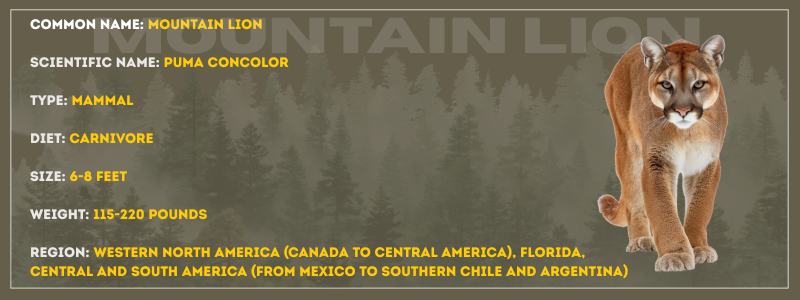
Scientific Name: Puma concolor
Diet Type: Carnivore (obligate)
Size: Males: 6-8 feet (total length); Females: 5-7 feet (total length)
Weight: Males: 115-220 pounds; Females: 75-140 pounds
Region Found: Western North America (Canada to Central America), Florida, Central and South America (from Mexico to southern Chile and Argentina)