
Beneath the surface of the world’s oceans glides one of nature’s most formidable hunters—a black-and-white torpedo of muscle, intelligence, and social sophistication that has captivated human imagination for millennia. The orca, often misnamed the “killer whale,” is neither a mindless killing machine nor actually a whale in the strictest sense. Instead, this remarkable marine mammal represents the pinnacle of oceanic predation, combining physical prowess with cognitive abilities that rival our closest primate relatives. From the icy waters of Antarctica to the tropical seas near the equator, orcas have conquered nearly every marine environment on Earth, developing cultures so distinct that populations living mere miles apart might as well inhabit different worlds. Understanding these magnificent creatures offers us a window into the complexity of ocean ecosystems and reminds us that intelligence and emotion are not exclusively human domains.
Facts
Here are some fascinating facts about orcas that might surprise even marine enthusiasts:
- Orcas have distinct dialects – Different pods and ecotypes communicate using unique vocal patterns passed down through generations, making their calls as regionally specific as human languages.
- Their dorsal fin contains no bones – The iconic tall dorsal fin is made entirely of dense connective tissue and collagen, which is why it sometimes collapses in captive individuals.
- They’re the ocean’s fastest marine mammals – Orcas can reach swimming speeds of up to 34 miles per hour in short bursts, making them faster than dolphins and most shark species.
- Female orcas experience menopause – They’re one of only three known species (along with humans and short-finned pilot whales) where females live decades beyond their reproductive years, allowing them to serve as repositories of ecological knowledge for their pods.
- They can hunt in complete darkness – Using echolocation so sophisticated it can distinguish between different species of fish, orcas can hunt effectively in pitch-black conditions or murky waters.
- Orcas have been observed teaching complex hunting techniques – Mothers have been documented spending years teaching their calves specialized hunting methods, such as how to safely beach themselves to catch seals.
- Their brain has a highly developed limbic system – The part of the brain associated with emotion is more elaborate in orcas than in humans, suggesting they may experience complex emotional lives we’re only beginning to understand.
Species
The orca belongs to the Kingdom Animalia, Phylum Chordata, Class Mammalia, Order Cetartiodactyla, Family Delphinidae, Genus Orcinus, and Species Orcinus orca. Despite their common name “killer whale,” orcas are actually the largest members of the dolphin family.
The classification of orca subspecies remains an active area of scientific debate and research. Currently, scientists recognize at least ten distinct ecotypes worldwide, though these may eventually be classified as separate subspecies or even species. In the Antarctic and sub-Antarctic waters, there are at least five recognized ecotypes: Type A (Antarctic), Type B (large) and Type B (small) also called Gerlache orcas, Type C (Ross Sea), and Type D (subantarctic). These types differ in physical appearance, prey preferences, and behavior.
In the North Pacific, researchers identify several ecotypes including Residents (fish-eaters that live in stable family groups), Transients or Bigg’s killer whales (marine mammal hunters with smaller pod sizes), and Offshores (suspected to primarily hunt sharks and rays). The North Atlantic hosts its own distinct populations, though they are less studied than their Pacific counterparts.
Each ecotype has evolved different physical characteristics, social structures, and vocalizations, and they typically do not interbreed even when their ranges overlap. This reproductive isolation has led some scientists to propose that orcas may actually comprise multiple species, though this classification has not yet been formally adopted.
Appearance
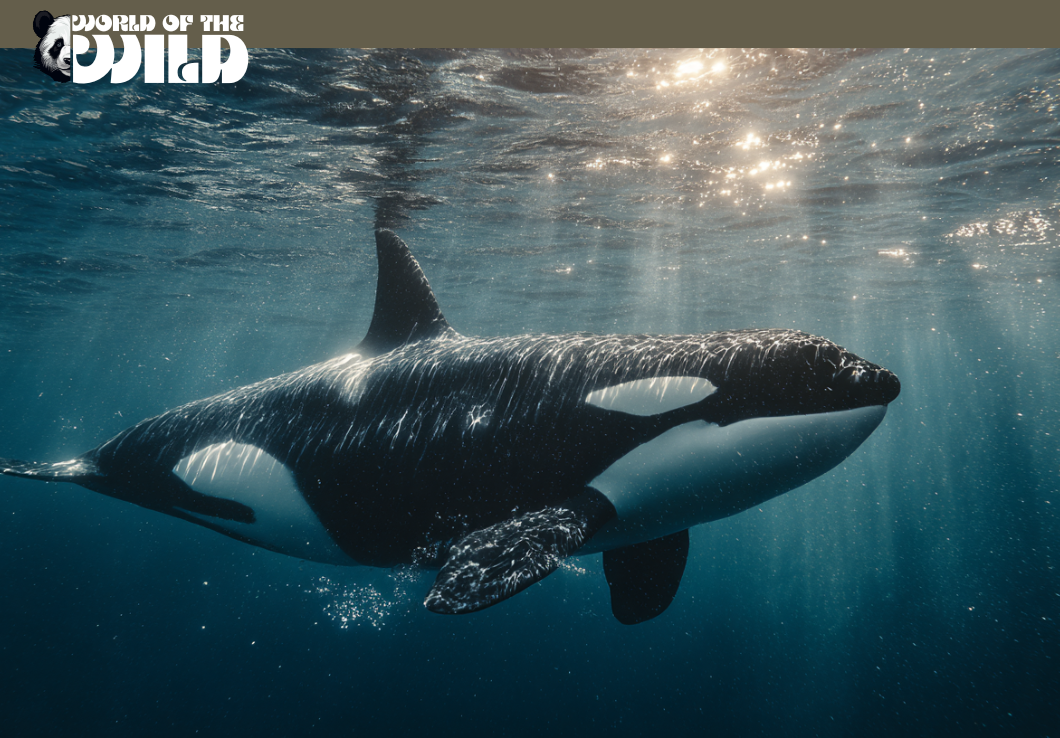
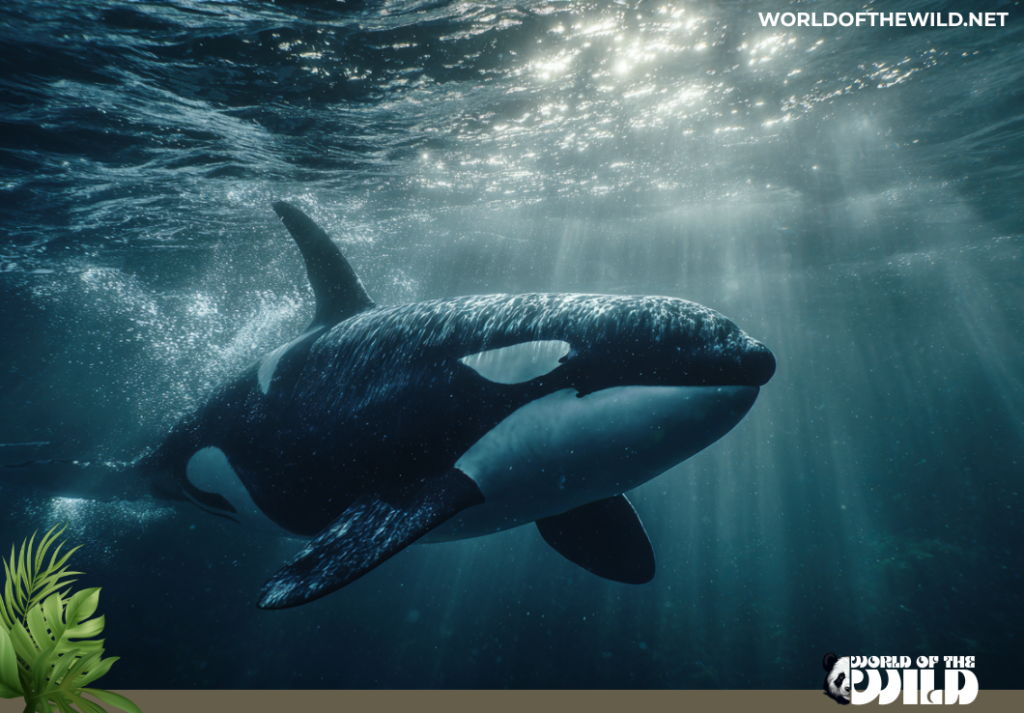
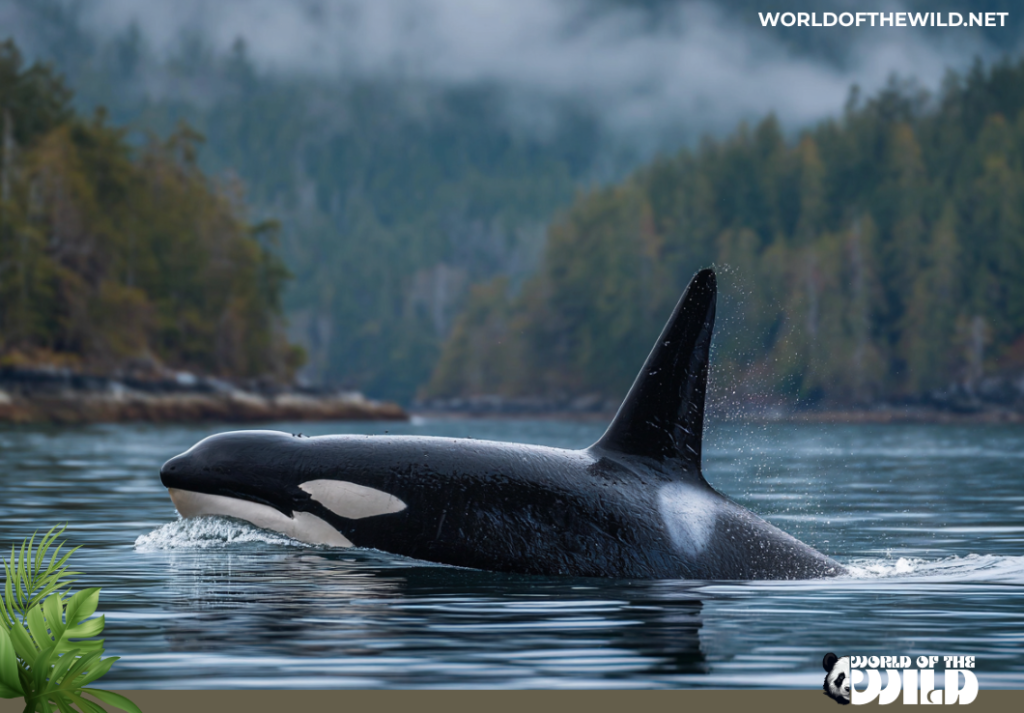
Orcas are immediately recognizable by their striking black-and-white coloration, which serves as camouflage in the ocean—the dark dorsal surface blends with the dark depths when viewed from above, while the white underside matches the bright surface when viewed from below. Each orca has a unique pattern of white and gray patches behind the dorsal fin called a saddle patch, which researchers use like fingerprints to identify individuals.
Adult male orcas are substantially larger than females, exhibiting one of the most pronounced sexual dimorphisms among cetaceans. Males can reach lengths of 20 to 26 feet and weigh between 8,000 and 12,000 pounds, with exceptional individuals exceeding 13,000 pounds. Their most distinctive feature is their enormous dorsal fin, which can grow up to six feet tall—roughly the height of a grown human. Females are more modest in size, typically measuring 16 to 23 feet in length and weighing between 3,000 and 8,000 pounds, with dorsal fins that curve backward and reach heights of about three feet.
The orca’s body is powerfully built and streamlined, designed for both speed and strength. They possess large, paddle-shaped pectoral flippers that can measure up to six feet long in adult males. Their flukes, or tail fins, are horizontally oriented like all cetaceans and can span up to eight feet across, providing tremendous thrust through the water.
The head is distinctly rounded with no pronounced beak, and the mouth contains 40 to 56 large, conical teeth designed for gripping rather than chewing prey. Behind each eye sits an elliptical white patch called an eye patch, while another white patch extends from the lower jaw up behind the eye. Some populations, particularly Type D orcas, have smaller eye patches and more rounded heads, demonstrating the physical diversity within the species.
Behavior
Orcas are among the most social and intelligent creatures in the ocean, living in tight-knit family groups called pods that can range from a few individuals to over 50 members. The fundamental social unit is the matriline—a female and all her descendants—and in some populations, particularly fish-eating Residents, males stay with their mothers for their entire lives, a phenomenon rarely seen in mammals.
Communication is central to orca society. They produce three categories of sounds: clicks for echolocation and navigation, whistles for close-range communication, and pulsed calls that serve as the primary mode of social interaction. Each pod develops its own dialect of calls, and members can identify their family members by voice alone even across great distances. Researchers have documented that orcas adjust their call volume based on background noise, much like humans raise their voices in loud environments.
Intelligence manifests in remarkable ways throughout orca behavior. They engage in cooperative hunting strategies that require planning, role assignment, and flawless execution. Different populations have developed unique hunting techniques passed down through cultural transmission. Antarctic Type B orcas create waves to wash seals off ice floes. Patagonian orcas intentionally beach themselves to snatch sea lion pups from the shore, a dangerous technique that mothers teach to their young over several years. Some populations have learned to flip sharks upside down to induce tonic immobility, rendering these predators helpless.
Play behavior is common among orcas of all ages. They’ve been observed tossing seals and sea lions into the air, not for food but apparently for entertainment. They play with kelp, carry objects on their heads, and engage in acrobatic displays including breaching, tail-slapping, and spy-hopping (raising their heads vertically out of water to look around).
Orcas also demonstrate self-awareness and complex emotions. They’ve passed the mirror self-recognition test, indicating they possess a sense of self. Pod members maintain close physical contact, and they’ve been observed supporting sick or injured companions at the surface to breathe. When a pod member dies, others sometimes carry the body for days, suggesting they may grieve their dead.
Their daily activity patterns vary by population and prey availability, but most orcas are most active during daylight hours. They alternate between traveling, foraging, resting, and socializing. During rest periods, pods often form tight groups and move slowly in coordinated formations, with all members surfacing and diving in synchrony.
Evolution
The evolutionary journey of the orca stretches back millions of years, with the family Delphinidae (oceanic dolphins) first appearing in the fossil record approximately 11 million years ago during the Miocene epoch. The genus Orcinus itself has a more recent origin, with the earliest recognized fossil species, Orcinus citoniensis, dating to the Pliocene epoch roughly 5 million years ago.
Orcas evolved from ancient terrestrial mammals that returned to the sea. Their distant ancestors were small, deer-like creatures called Indohyus that lived near water about 50 million years ago. Over millions of years, these land-dwelling mammals underwent dramatic adaptations for aquatic life: their front limbs became flippers, they developed horizontal tail flukes, their nostrils migrated to the top of their heads to become blowholes, and they lost their hind limbs entirely.
The specific lineage leading to modern orcas diverged from other oceanic dolphins relatively recently in evolutionary terms. Genetic evidence suggests that orcas and other dolphin species underwent rapid diversification during the late Miocene and Pliocene, likely driven by changes in ocean temperatures, sea levels, and the distribution of prey species.
One significant evolutionary milestone was the development of the orca’s remarkable brain. The expansion and elaboration of the neocortex, particularly regions associated with complex social processing and acoustic communication, occurred as these animals became increasingly dependent on cooperative hunting and tight social bonds for survival. The evolution of their sophisticated echolocation system allowed them to exploit oceanic environments in complete darkness and to detect prey hidden beneath sand or within deep water.
Recent genetic studies have revealed that the various orca ecotypes may have begun diverging from one another between 150,000 and 700,000 years ago, with reproductive isolation maintained through cultural differences in vocalizations and prey preferences. This ongoing speciation process makes orcas a fascinating subject for studying evolution in real-time, as these populations are currently at various stages of becoming distinct species.
The fossil record also reveals extinct relatives of modern orcas that were even larger. Species like Orcinus orca citoniensis and other ancient members of the genus were formidable predators in ancient seas, suggesting that large body size and apex predator status have been hallmarks of this lineage for millions of years.
Habitat
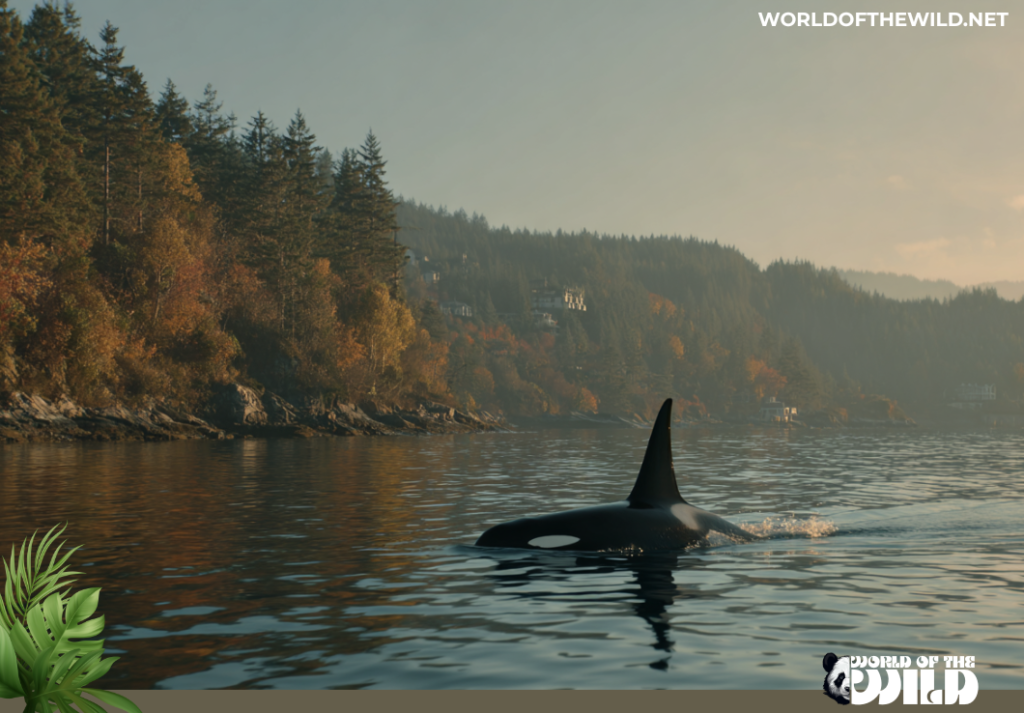
Orcas boast one of the most extensive geographic ranges of any mammal on Earth, inhabiting every ocean from the Arctic to the Antarctic and from coastal shallows to the open sea. They are particularly abundant in cooler, temperate waters and reach their highest densities in regions of high marine productivity, though they also occur in tropical and subtropical seas.
In the North Pacific, substantial populations reside along the coasts of Alaska, British Columbia, Washington State, and northern Japan. The North Atlantic hosts orcas around Norway, Iceland, Scotland, and the eastern coast of North America. In the Southern Hemisphere, they’re found off the coasts of Argentina, Chile, South Africa, southern Australia, New Zealand, and throughout the Southern Ocean surrounding Antarctica.
The specific habitat preferences vary dramatically among ecotypes. Resident orcas in the Pacific Northwest prefer coastal waters less than 800 feet deep, often traveling through narrow channels and staying close to river mouths where salmon congregate. In contrast, Transient orcas favor areas frequented by marine mammals, including both nearshore seal rookeries and deeper offshore waters where whales travel. Offshore orcas venture into deep oceanic waters, sometimes hundreds of miles from land, following schools of sharks and other prey.
Antarctic orcas inhabit one of the planet’s most extreme environments, navigating through pack ice and enduring water temperatures that would quickly kill most mammals. They’ve adapted to hunt in the perpetual darkness of Antarctic winter and the constant daylight of summer, following the seasonal movements of seals, penguins, and other prey.
The habitats orcas occupy feature diverse characteristics, from shallow kelp forests and rocky reefs to the edges of continental shelves and the open ocean. They’re equally comfortable in waters less than 20 feet deep and in trenches exceeding 10,000 feet, though they rarely dive deeper than about 1,000 feet. Water temperature appears less important than prey availability—they tolerate a temperature range from just below freezing to over 80 degrees Fahrenheit.
One remarkable aspect of orca habitat use is their fidelity to traditional hunting grounds and migration routes. Matrilines return to the same locations year after year, following prey migrations with astonishing precision. This cultural knowledge of where and when to find food is passed from mothers to offspring and represents a form of ecological inheritance separate from genetic information.
Diet
Orcas are apex predators and obligate carnivores, sitting at the very top of the marine food chain with a diet as diverse as any predator on Earth. The phrase “killer whale” derives from their original Spanish name “asesina-ballenas,” meaning “whale killer,” a reference to their ability to hunt even the largest whales.
What makes orcas unique among predators is that different populations have completely different dietary specializations, each requiring distinct hunting techniques. Fish-eating Resident orcas in the Pacific Northwest feed almost exclusively on salmon, with Chinook salmon making up over 80% of their diet during summer months. They use echolocation to locate fish schools and coordinate to concentrate prey before feeding. These orcas have never been observed eating marine mammals despite sharing waters with abundant seals and sea lions.
Transient orcas are marine mammal specialists, hunting harbor seals, sea lions, porpoises, dolphins, and even great whales including blue, gray, humpback, and sperm whales. When hunting large whales, they work in coordinated groups, focusing on calves or weak individuals. They bite at the whale’s flukes and fins to slow it down, cover its blowhole to prevent breathing, and may drag it underwater until it drowns. A single large whale can feed a pod for days.
Other populations have developed specialized tastes. Some Antarctic orcas feed primarily on Weddell seals, emperor penguins, and Antarctic toothfish. Pacific Offshore orcas are believed to hunt sharks and rays, evidenced by their worn-down teeth (from shark skin) and occasional shark bites. In New Zealand waters, orcas have been observed hunting stingrays by flipping them upside down and removing only the nutritious liver. Some populations even hunt sea turtles, removing the turtle from its shell with surgical precision.
The hunting strategies employed vary by prey type. For fish, they may use their tail flukes to stun entire schools. For seals on ice, they create waves to wash them off. For sharks, they flip them to induce paralysis. For swift dolphins, they chase them to exhaustion over many miles.
An adult orca requires approximately 300 to 500 pounds of food per day, though this varies by body size and activity level. Nursing females need even more to support milk production. They don’t chew their food but swallow it whole or in large chunks, with their multi-chambered stomach breaking it down for digestion.
Predators and Threats
Adult orcas have no natural predators, truly earning their status as apex predators. Even great white sharks, often considered the ocean’s premier hunter, flee when orcas arrive. In fact, orcas occasionally hunt great whites, targeting them for their livers, and the presence of orcas in an area can cause white sharks to abandon their hunting grounds for months.
However, orca calves are more vulnerable. There are rare documented cases of large sharks attacking young orcas that have become separated from their pods, though successful predation is extremely uncommon. The protective nature of orca pods, where adults surround and defend vulnerable young, makes predation on even young orcas exceptionally rare.
The greatest threats to orcas come from human activities. Pollution ranks among the most serious concerns, particularly the accumulation of persistent organic pollutants like PCBs and flame retardants in their blubber. As apex predators, orcas bioaccumulate toxins from every animal they consume, resulting in some of the highest contaminant loads ever measured in marine mammals. These chemicals suppress immune function, reduce reproductive success, and can be passed from mothers to calves through milk.
Prey depletion represents another critical threat. Salmon-eating orcas in the Pacific Northwest face declining salmon populations due to overfishing, habitat destruction, dam construction, and climate change. The Southern Resident population, numbering fewer than 75 individuals, is starving because their primary food source has become scarce.
Noise pollution from shipping, military sonar, and recreational vessels interferes with echolocation and communication, making it harder for orcas to find food and coordinate with pod members. The constant din can cause chronic stress and may contribute to strandings.
Oil spills pose both immediate and long-term dangers. The Exxon Valdez disaster in 1989 killed approximately 40% of one Alaska orca pod, and the population has never recovered. Oil damages their insulation, can be toxic when inhaled or ingested, and contaminates their prey.
Climate change affects orcas indirectly by altering prey distribution, reducing sea ice (important habitat for some ecotypes), and changing ocean temperature and chemistry. Warming waters force prey species to migrate, potentially disrupting the traditional hunting grounds that orcas have relied upon for generations.
Live capture for marine parks decimated some populations in the 1960s and 1970s, removing dozens of individuals, particularly young animals. While most countries have now banned this practice, the social and demographic damage from past captures still affects some populations.
Boat strikes, entanglement in fishing gear, and disturbance from whale watching also threaten individual orcas. The cumulative effect of these anthropogenic stressors has pushed some populations to the brink of extinction.
Reproduction and Life Cycle
Orcas have one of the slowest reproductive rates of any marine mammal, which makes population recovery from threats particularly difficult. Females reach sexual maturity between ages 10 and 15, while males mature slightly later, around ages 15 to 20, though they may not successfully breed until their mid-twenties when they’re large enough to compete for mating opportunities.
Mating occurs year-round, though there are seasonal peaks in some populations. The specific mating rituals remain poorly understood because they typically occur away from observation, but courtship involves increased socializing, physical contact, and vocal activity between individuals from different matrilines. Mating is promiscuous, with both males and females having multiple partners.
The gestation period lasts approximately 17 to 18 months, one of the longest of any cetacean. Females give birth to a single calf, very rarely twins, and births can occur in any month though spring and autumn peaks have been noted in some populations. Newborn calves measure about 7 to 8 feet in length and weigh approximately 400 pounds. They’re born tail-first to prevent drowning and can swim immediately, though they stay very close to their mothers.
The bond between mother and calf is among the strongest in the animal kingdom. Calves nurse for at least one year, often up to two years, drinking milk that is extremely rich in fat to support their rapid growth. Even after weaning, young orcas remain dependent on their mothers for several more years as they learn essential survival skills including hunting techniques, migration routes, and social protocols.
Females have calves every five years on average, though this interval increases with age. A female’s reproductive years typically span from ages 10 to 40, during which she might produce four to six offspring. What makes orcas extraordinary is that females commonly live 30 to 50 years beyond their reproductive years, with maximum lifespans estimated at 80 to 90 years. This extended post-reproductive lifespan appears to be an evolutionary adaptation that allows experienced older females to lead their families, share ecological knowledge, and help raise grandchildren.
Males have shorter lifespans than females, typically living 50 to 60 years, though some individuals have been documented living into their 70s. Male mortality increases sharply after their mothers die, suggesting that maternal care and guidance benefit even fully adult males.
Juvenile mortality is highest in the first year of life, when approximately 40% to 50% of calves die. Those that survive their first year have a good chance of reaching adulthood. Throughout their lives, orcas continue to learn and develop, with some skills like complex hunting techniques taking decades to master.
Population
The global population of orcas is estimated at approximately 50,000 individuals, though this number is uncertain due to the difficulty of surveying populations across all the world’s oceans. The International Union for Conservation of Nature (IUCN) currently lists orcas as “Data Deficient” overall, meaning there isn’t sufficient information to make a comprehensive assessment of their global conservation status.
However, this global designation obscures the critical situation facing many regional populations. Some distinct populations are listed as endangered or critically endangered. The Southern Resident orcas of the Pacific Northwest, perhaps the most studied orca population in the world, numbered just 73 individuals as of recent counts and are listed as endangered in both the United States and Canada. This population has declined from 98 individuals in 1995 and faces an uncertain future due to salmon depletion, pollution, and vessel traffic.
The AT1 Transient population in Alaska suffered devastating losses after the Exxon Valdez oil spill and has not produced a calf since the disaster, making it effectively extinct with only seven non-reproducing individuals remaining. In contrast, some populations appear stable or even increasing. The Northeast Pacific Resident population numbers around 300 individuals and has shown modest growth in recent decades.
Population trends vary significantly by region and ecotype. Antarctic orcas are numerous but difficult to count due to the vast and inaccessible nature of their habitat. Estimates for the Southern Ocean range from 25,000 to 70,000 individuals, though these figures are highly speculative. North Atlantic populations are smaller and more fragmented, with perhaps a few thousand individuals total.
One concerning trend is the lack of calves in several populations that face high contaminant loads. PCB levels in some European orca pods are so high that they may be preventing successful reproduction, potentially leading to population collapse in coming decades.
The highly specialized nature of orca ecotypes creates additional conservation concerns. Because different populations don’t interbreed and possess unique cultural knowledge, the loss of a single population represents an irreplaceable loss of genetic diversity and learned behavior. A fish-eating population cannot simply be replaced by transients from a nearby area—their dietary specializations, vocal dialects, and hunting techniques are fundamentally different.
Monitoring efforts continue worldwide, with researchers using photo-identification of dorsal fins and saddle patches to track individuals over their lifetimes. These long-term studies have revealed the complex demographic patterns and social structures that make orca conservation both challenging and critically important.
Conclusion
The orca stands as a testament to the ocean’s capacity for creating intelligent, socially complex, and culturally sophisticated life. These magnificent predators, with their distinctive black-and-white markings and towering dorsal fins, represent far more than skilled hunters—they are sentient beings with languages, traditions, and family bonds that rival our own. From the salmon specialists of the Pacific Northwest to the ice-edge hunters of Antarctica, each orca population has developed unique ways of surviving in their environment, knowledge that has been refined and passed down through countless generations.
Yet despite their position as apex predators feared by everything from seals to great white sharks, orcas face an uncertain future. The threats they confront—pollution, prey depletion, noise, and climate change—are entirely of human origin. Some populations teeter on the edge of extinction, their numbers so low that each individual matters to the survival of their unique culture and genetics.
The story of the orca challenges us to expand our circle of moral consideration and to recognize that intelligence, emotion, and culture are not uniquely human traits. These animals have complex inner lives, strong family bonds, and traditions that stretch back thousands of years. Protecting them requires not just preventing their extinction but preserving the ocean ecosystems they depend upon and the prey species that sustain them. As we look to the future, the fate of orcas will serve as a measure of our willingness to share the planet with other intelligent beings and our commitment to maintaining the health of our oceans. The choice of whether these remarkable creatures continue to grace our seas for millennia to come rests entirely with us.
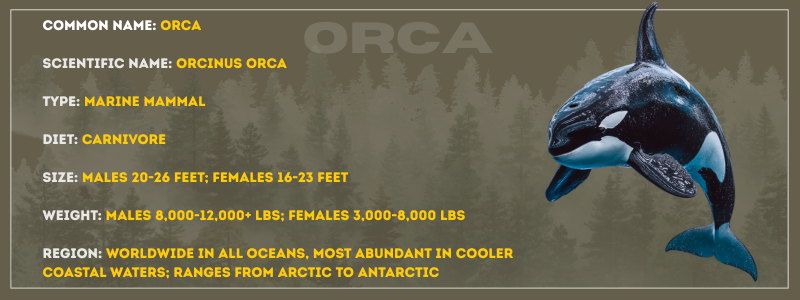
Scientific name: Orcinus orca
Diet type: Carnivore (varies by population: fish, marine mammals, sharks, rays, sea turtles, penguins)
Size: Males 20-26 feet; Females 16-23 feet
Weight: Males 8,000-12,000+ lbs; Females 3,000-8,000 lbs
Region found: Worldwide in all oceans, most abundant in cooler coastal waters; ranges from Arctic to Antarctic