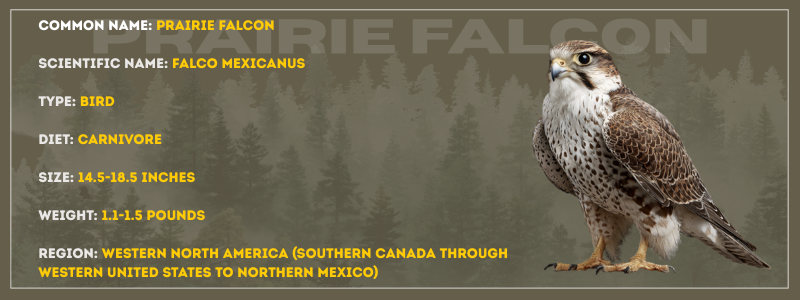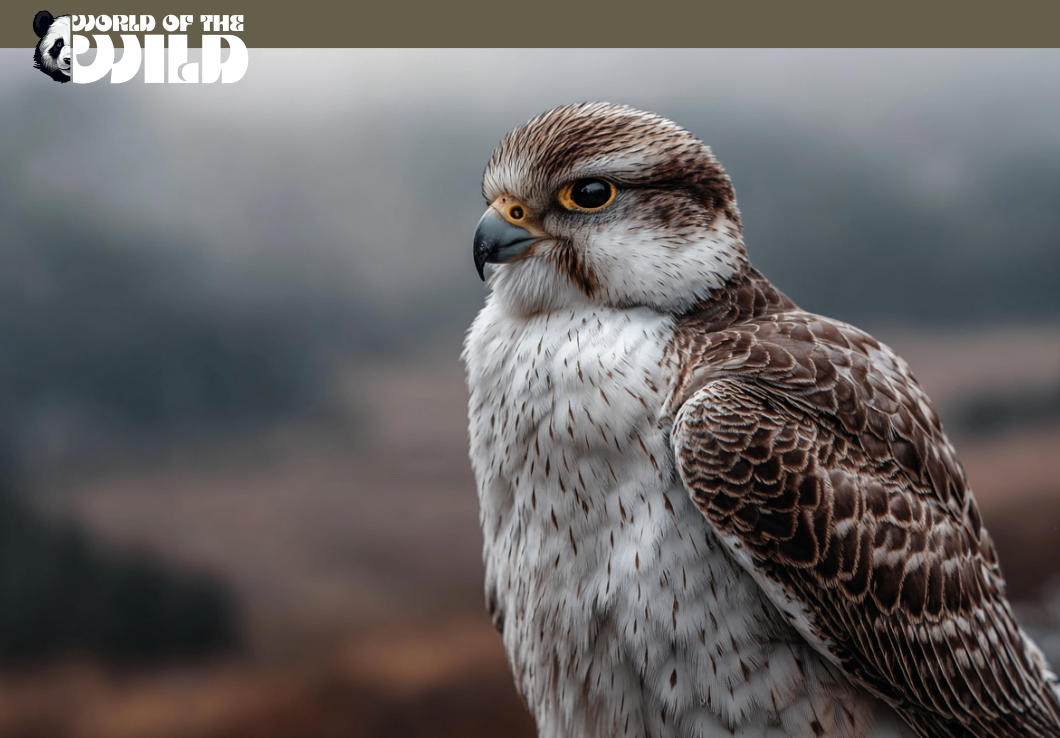

Streaking across the vast expanse of the American West at speeds exceeding 200 miles per hour, the Prairie Falcon is a study in aerodynamic perfection and predatory precision. While its more famous cousin, the Peregrine Falcon, often steals the spotlight, this formidable raptor has carved out its own impressive niche in some of North America’s most unforgiving landscapes. With piercing dark eyes, powerful talons, and an unwavering focus that would make any hunter envious, the Prairie Falcon represents the raw, untamed spirit of the open plains and desert canyons it calls home. This remarkable bird of prey is not just a survivor of harsh environments—it’s a master of them, combining speed, intelligence, and adaptability in ways that continue to fascinate ornithologists and nature enthusiasts alike.
Facts
- Horizontal Hunters: Unlike Peregrine Falcons that primarily hunt by diving from great heights, Prairie Falcons often pursue prey in rapid horizontal chases close to the ground, showcasing exceptional maneuverability.
- Desert Specialists: Prairie Falcons can thrive in environments where temperatures regularly exceed 100°F, demonstrating remarkable physiological adaptations to heat stress that other falcon species cannot match.
- Vocal Communicators: During breeding season, Prairie Falcons produce a distinctive “kree-kree-kree” call that can echo across canyon walls for miles, serving as both territorial warning and pair bonding communication.
- Cliff Loyalty: Some Prairie Falcon nest sites have been used continuously for over 100 years, with generation after generation returning to the same cliff ledges to raise their young.
- Feathered Legs: Unlike many falcons with bare legs, Prairie Falcons have feathering that extends down their legs, likely an adaptation to the temperature extremes of their habitat.
- Opportunistic Pirates: Prairie Falcons occasionally engage in kleptoparasitism, stealing prey from other raptors like Red-tailed Hawks or even harassing larger birds until they drop their catch.
- Year-Round Residents: Many Prairie Falcons remain in their territories year-round, making them one of the few falcon species that don’t engage in long-distance migration.
Sounds of the Prairie Falcon
Species
Kingdom: Animalia
Phylum: Chordata
Class: Aves
Order: Falconiformes
Family: Falconidae
Genus: Falco
Species: Falco mexicanus
The Prairie Falcon belongs to the diverse genus Falco, which includes approximately 40 species of falcons found worldwide. Within North America, its closest relatives include the Peregrine Falcon (Falco peregrinus), the smaller American Kestrel (Falco sparverius), and the Arctic-dwelling Gyrfalcon (Falco rusticolus).
Currently, no distinct subspecies of Prairie Falcon are recognized, though there is some geographical variation in size, with northern populations tending to be slightly larger than their southern counterparts—a pattern consistent with Bergmann’s Rule, which states that animals in cooler climates tend to be larger than those in warmer regions.
The Prairie Falcon is most closely related to other large, open-country falcons, particularly the Saker Falcon of Eurasia and the Lanner Falcon of Africa and southern Europe. These species share similar hunting strategies and ecological niches in their respective ranges, suggesting convergent evolution to similar environmental pressures.
Appearance
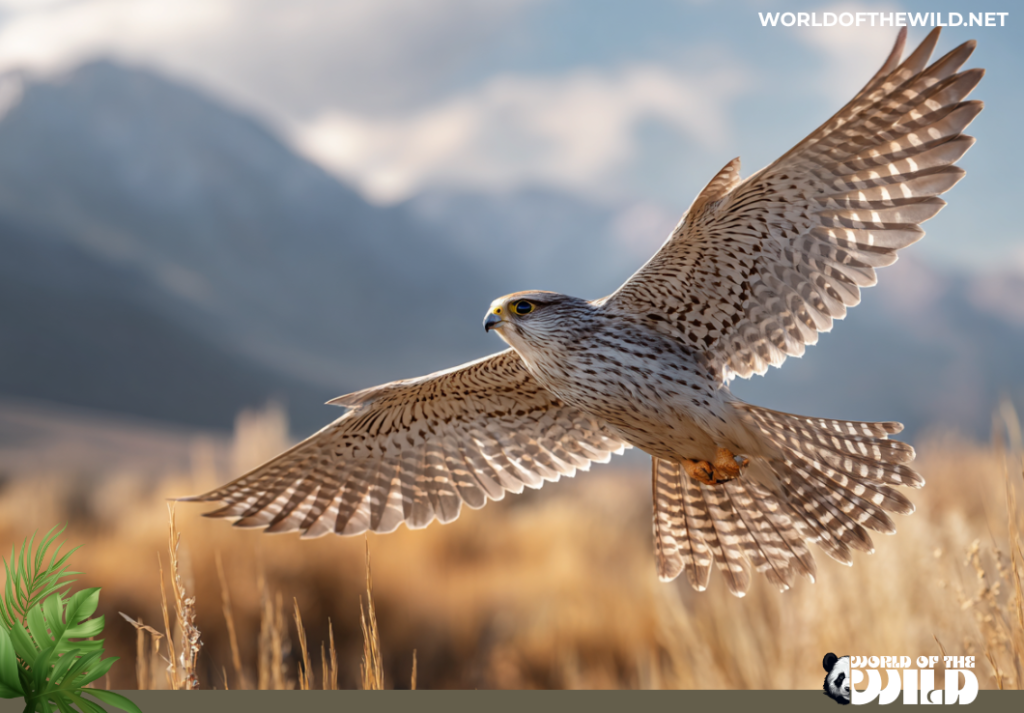
The Prairie Falcon is a medium to large falcon with a lean, athletic build designed for speed and agility. Adults typically measure 14.5 to 18.5 inches in length, with females noticeably larger than males—a characteristic called reverse sexual dimorphism common among raptors. Their wingspan ranges from 35 to 43 inches, providing the surface area needed for both soaring and rapid pursuit flight.
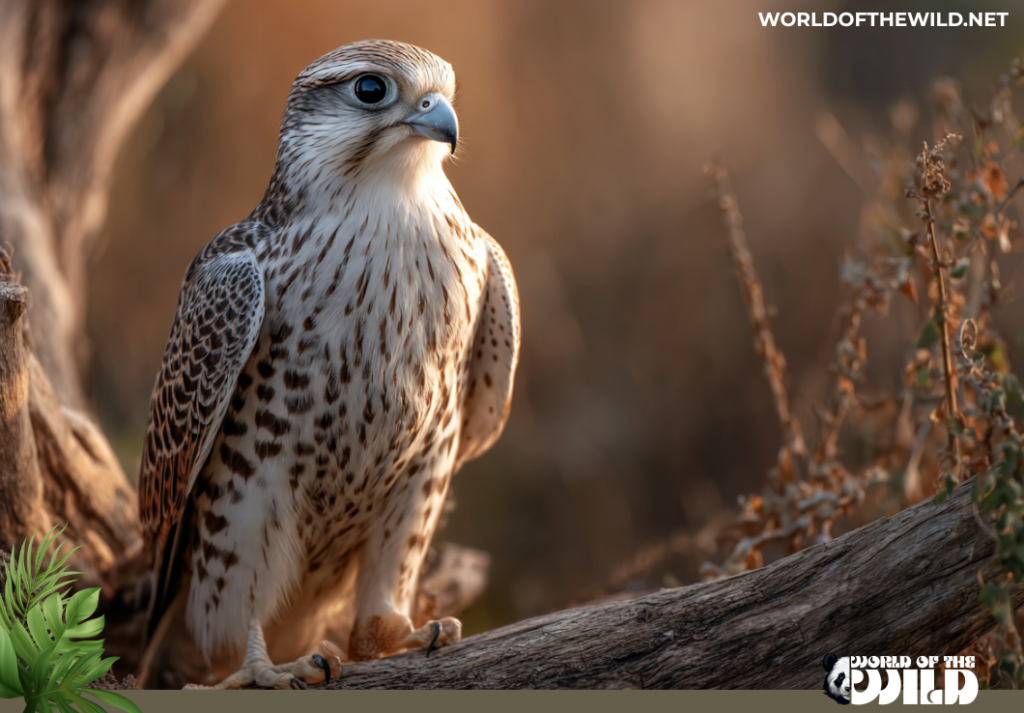
Adult Prairie Falcons display predominantly sandy-brown or pale grayish-brown upperparts, creating excellent camouflage against the desert rocks and grasslands they inhabit. The underparts are cream to white, marked with dark brown spots and streaks concentrated on the flanks and belly. This pattern provides disruptive coloration that breaks up the bird’s outline when viewed from below.
One of the Prairie Falcon’s most distinctive features is the dark “mustache” mark extending from below the eye down the side of the throat, though this marking is generally less pronounced than in Peregrine Falcons. The head appears relatively pale, with a light cream-colored crown and nape. The eyes are dark brown, surrounded by yellow orbital rings and yellow cere (the fleshy area at the base of the bill).
Perhaps the most diagnostic field mark is visible in flight: dark brown patches in the “armpits” or axillaries, where the wing meets the body. These dark axillary patches are clearly visible from below and distinguish Prairie Falcons from similar species.
The tail is relatively long and banded with alternating light and dark bars, aiding in aerial maneuvering. The feet and talons are yellow and powerfully built, designed to grasp and kill prey with devastating efficiency. Juveniles resemble adults but show heavier streaking on the underparts and slightly darker overall coloration.
Behavior
Prairie Falcons are predominantly solitary hunters outside the breeding season, establishing and defending large hunting territories in open country. These birds are highly visual predators, spending considerable time perched on prominent lookouts—cliff edges, rock outcrops, or utility poles—scanning the landscape for potential prey with their exceptional eyesight, which is estimated to be eight times sharper than human vision.
Their hunting strategy sets them apart from many other falcons. While capable of the spectacular high-altitude stoops that make falcons famous, Prairie Falcons more commonly employ low, fast pursuit flights, chasing prey across open ground with remarkable agility and persistence. They can execute tight turns and rapid altitude changes, following every evasive maneuver of fleeing ground squirrels or birds. This hunting style requires tremendous stamina and split-second decision-making.
Communication among Prairie Falcons intensifies during breeding season. Both sexes engage in elaborate aerial displays, including spectacular dive-bombing flights, sky-dancing with undulating flight patterns, and dramatic passes near the nest site. These displays serve to establish pair bonds, advertise territory ownership, and ward off intruders.
Prairie Falcons demonstrate considerable intelligence and adaptability. They’ve been observed learning the schedules of their prey, timing hunts to coincide with periods when ground squirrels are most active. Some individuals have adapted to urban environments, hunting pigeons in cities or waterfowl near agricultural areas, though they remain far less urbanized than Peregrine Falcons.
These falcons are also remarkably territorial and aggressive, fearlessly attacking much larger birds that venture too close to their nest sites. Golden Eagles, Great Horned Owls, and even human climbers have been subjected to intense defensive attacks, with the falcons making repeated diving strikes accompanied by harsh alarm calls.
Evolution
The evolutionary history of falcons has been dramatically revised in recent decades through molecular genetic studies, which revealed that falcons are not closely related to hawks and eagles as previously thought. Instead, Falconidae represents an ancient lineage more closely related to parrots and songbirds than to other birds of prey—a stunning example of convergent evolution producing similar forms from different ancestral stocks.
The genus Falco likely originated in the late Miocene or early Pliocene, roughly 5-8 million years ago. Prairie Falcons appear to be part of a radiation of large, desert-adapted falcons that evolved in response to the expansion of arid grasslands and semi-desert environments across North America during the Pliocene epoch.
Fossil evidence for Prairie Falcons specifically is limited, but remains attributed to Falco mexicanus or its immediate ancestors have been found in Pleistocene deposits across the western United States, suggesting the species has occupied similar habitats for at least several hundred thousand years. The bird’s current distribution likely reflects post-glacial expansion as suitable habitat became available following the retreat of continental ice sheets approximately 10,000-12,000 years ago.
The Prairie Falcon’s evolutionary adaptations reflect the challenges of hunting in open environments. Their relatively longer wings and tail compared to forest-dwelling raptors provide the agility needed for pursuit hunting in open spaces. Their pale coloration likely evolved through natural selection favoring camouflage against desert rocks and pale soils, while their physiological adaptations to heat and aridity represent fine-tuning to harsh environmental conditions.
The species’ relationship with other large falcons suggests a pattern of geographic speciation, with different lineages adapting to open habitats across different continents—Prairie Falcons in North America, Saker Falcons across Eurasia, and Lanner Falcons in Africa and southern Europe.
Habitat
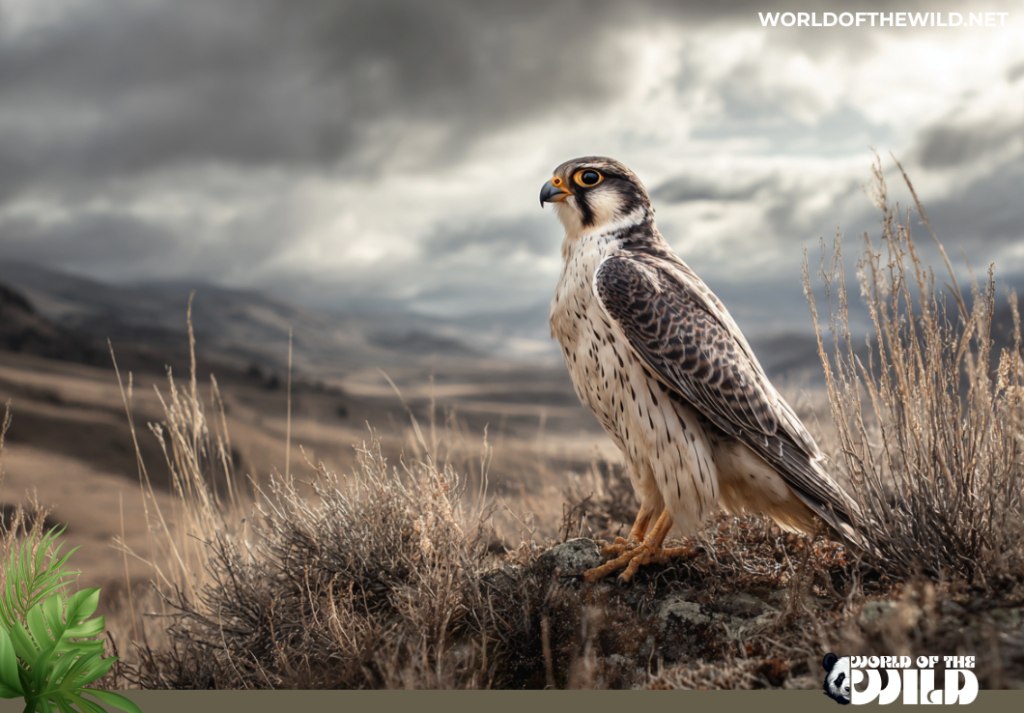
Prairie Falcons inhabit the arid and semi-arid regions of western North America, with their range extending from southern Canada through the western United States into northern Mexico. Their core distribution includes the Great Basin, the Columbia Plateau, the shortgrass and mixed-grass prairies of the Great Plains, and the Chihuahuan and Sonoran deserts.
These falcons show a strong preference for open landscapes with rugged terrain. Ideal Prairie Falcon habitat combines three essential elements: cliffs or bluffs for nesting, expansive open country for hunting, and abundant prey populations. They’re most commonly found in areas featuring canyon walls, rimrock escarpments, river bluffs, badlands, and rocky outcrops rising from surrounding flatlands or rolling terrain.
Unlike many raptors that require trees for nesting, Prairie Falcons are obligate cliff-nesters, selecting ledges, cavities, or potholes in vertical or near-vertical rock faces. Nest sites are typically located 50 to 300 feet above the ground, offering commanding views and protection from terrestrial predators. The same cliffs often host other nesting raptors, including Golden Eagles, Red-tailed Hawks, and Common Ravens, though Prairie Falcons maintain strict territorial boundaries.
The hunting territories surrounding these nests encompass diverse open habitats: sagebrush steppe, desert scrubland, grasslands, agricultural fields, and even playas and salt flats. Prairie Falcons require large territories—breeding pairs may defend hunting areas of 5 to 15 square miles, depending on prey availability.
During winter, some northern populations move to lower elevations or slightly southward, though many individuals remain resident year-round. Winter habitat use expands to include riparian areas, agricultural regions with abundant prey, and occasionally urban fringe areas where rock doves (pigeons) provide easy hunting opportunities.
Elevation tolerance is impressive, with Prairie Falcons nesting from below sea level in desert valleys to over 12,000 feet in mountain ranges. However, they show a distinct preference for intermediate elevations between 2,000 and 7,000 feet where prey populations are most abundant.
Diet
Prairie Falcons are carnivorous specialists, primarily hunting small to medium-sized mammals and birds. Their diet composition varies seasonally and geographically, but studies consistently show that ground squirrels, particularly the various species of Urocitellus (formerly Spermophilus), constitute the single most important prey category in most regions, often comprising 40-60% of biomass consumed during the breeding season.
Beyond ground squirrels, Prairie Falcons take a diverse array of prey. Mammals hunted include prairie dogs, kangaroo rats, pocket gophers, voles, mice, young rabbits, and bats. Avian prey is equally varied: Horned Larks, Western Meadowlarks, blackbirds, sparrows, doves, quail, and even waterfowl like ducks when available. During migration seasons, Prairie Falcons can be devastating predators at songbird concentration points.
The hunting techniques employed depend on prey type and environmental conditions. For ground squirrels and other terrestrial mammals, Prairie Falcons typically launch from elevated perches or from cruising flight, executing rapid, low-level attacks with impressive acceleration. These hunts may involve extended chases across the ground, with the falcon pursuing prey through brush and around obstacles with remarkable agility.
For avian prey, hunting strategies range from direct aerial pursuit to surprise attacks from concealment. Prairie Falcons can overtake most songbirds in level flight and have been clocked at speeds exceeding 200 miles per hour in diving attacks, though they don’t dive from the extreme altitudes characteristic of Peregrine Falcon hunts.
Interestingly, Prairie Falcons exhibit considerable individual variation in hunting preferences and techniques. Some individuals specialize in ground squirrels, while others focus primarily on birds. This behavioral flexibility allows Prairie Falcons to adapt to local prey availability and reduces intraspecific competition in areas where multiple pairs nest in proximity.
Kill rates vary with prey type and environmental conditions, but successful Prairie Falcons typically hunt for 1-3 hours daily to meet their energy requirements, with increased effort during the breeding season when adults must provision nestlings.
Predators and Threats
Adult Prairie Falcons face relatively few natural predators due to their size, speed, and aerial prowess. However, eggs and nestlings are vulnerable to several species. Great Horned Owls are perhaps the most significant nest predator, capable of killing incubating adults and consuming eggs or young. Golden Eagles occasionally prey on Prairie Falcon fledglings and may usurp nest sites. Common Ravens probe nest ledges opportunistically, eating eggs or small chicks when adults are away.
Ground predators including bobcats, coyotes, and rattlesnakes can access some cliff nest sites, particularly those with nearby ledges or slopes, though the typically sheer nature of chosen nest sites provides good protection. Mammalian predators occasionally take adults at roosts or drinking sites.
Anthropogenic threats pose far greater challenges to Prairie Falcon populations. Historically, widespread shooting and poisoning campaigns targeting raptors during the mid-20th century severely impacted populations. Though legal protection has eliminated this direct persecution, indirect threats remain significant.
Habitat loss and degradation continue as expanding agriculture, urban development, and energy extraction fragment and reduce suitable prairie and desert habitats. The conversion of native grasslands to cropland eliminates prey populations and hunting habitat, while urban sprawl encroaches on traditional nesting territories.
Pesticides and environmental contaminants present ongoing concerns. Though Prairie Falcons were less severely affected by DDT than Peregrine Falcons due to their different prey base, bioaccumulation of agricultural pesticides, particularly rodenticides used in ground squirrel control programs, poses continuing risks. Secondary poisoning from consuming contaminated prey can cause reproductive failure or direct mortality.
Climate change threatens Prairie Falcons through multiple pathways: altered precipitation patterns affecting prey populations, increased frequency of extreme heat events, and shifting vegetation communities that may favor habitats unsuitable for the species’ preferred prey.
Human recreation increasingly impacts Prairie Falcon breeding success. Rock climbing has surged in popularity across western cliffs, and climber disturbance during the critical incubation and early nestling periods can cause nest abandonment. Many climbing areas now implement seasonal closures to protect nesting raptors.
Wind energy development presents collision risks, and tall structures including power lines and communication towers cause mortality through collisions and electrocution, though Prairie Falcons are somewhat less vulnerable than many raptors due to their hunting style and perch preferences.
Reproduction and Life Cycle
Prairie Falcons are monogamous, with pair bonds typically maintained across multiple breeding seasons, possibly for life in many cases. Courtship begins in late winter, with pairs engaging in spectacular aerial displays over their nesting territories. Males perform elaborate sky-dancing flights with exaggerated wing beats, steep dives, and roller-coaster undulations. Prey transfers occur mid-air, with the male passing captured prey to the female—a behavior that both strengthens pair bonds and demonstrates the male’s hunting prowess.
Egg laying typically occurs between late March and early May, varying with latitude and elevation. The female selects a nest site on a cliff ledge, often using a simple scrape in accumulated dirt or gravel, sometimes appropriating old stick nests built by ravens or other raptors. Prairie Falcons don’t construct nests themselves, instead relying on natural depressions or existing structures.
Clutch size ranges from 3 to 6 eggs, with 4 to 5 being most common. The eggs are creamy white to pale buff, heavily marked with reddish-brown speckles and blotches. Incubation lasts approximately 29 to 33 days and is performed primarily by the female, though males occasionally take brief incubation shifts. During this period, the male assumes all hunting duties, delivering prey to his mate.
Nestlings hatch asynchronously over several days, covered in white down. Both parents participate in brooding and feeding, though the female provides most of the direct care during the first two weeks while the male continues as primary hunter. Young Prairie Falcons grow rapidly on their protein-rich diet, reaching adult size within 5 to 6 weeks.
Fledging occurs at approximately 36 to 41 days of age, but young remain dependent on their parents for an additional 4 to 6 weeks as they develop hunting skills. During this critical period, adults teach juveniles hunting techniques through demonstration and by providing progressively more challenging prey-capture opportunities.
First-year mortality is high, with estimates suggesting only 40-50% of fledglings survive to their first birthday. Those that do typically reach sexual maturity at 2 to 3 years of age, though most don’t successfully breed until their third or fourth year.
In the wild, Prairie Falcons that survive the vulnerable juvenile period can live 15 to 20 years, with exceptional individuals possibly reaching their mid-20s. Captive birds have lived over 20 years. Annual adult survival rates are estimated at 75-85%, substantially higher than juvenile survival.
Population
The Prairie Falcon is currently classified as Least Concern by the International Union for Conservation of Nature (IUCN), indicating the species is not facing immediate extinction risk. However, this classification masks regional variations and ongoing population pressures.
Global population estimates for Prairie Falcons suggest approximately 5,000 to 10,000 breeding pairs across their North American range, translating to roughly 20,000 to 40,000 individual birds when including juveniles and non-breeding adults. The United States hosts the majority of the population, with smaller numbers in Canada and Mexico.
Long-term population trends are complex and vary regionally. Following severe declines during the mid-20th century due to persecution and pesticide impacts, populations recovered substantially after receiving legal protection. However, recent decades have shown more variable patterns. Some populations, particularly in the Great Basin and intermountain West, appear stable or slightly increasing. Conversely, populations in prairie regions show concerning declines, likely related to habitat conversion and prey reduction.
Christmas Bird Count data and Breeding Bird Survey results indicate possible range contractions at the eastern periphery of the species’ distribution, with fewer birds reported from the Great Plains states compared to historical levels. Conversely, winter range may be expanding slightly in some areas as birds adapt to urban prey populations.
Breeding success varies annually with prey availability, weather conditions, and disturbance levels. In optimal years with abundant ground squirrel populations and minimal disturbance, productivity can exceed 3 fledglings per successful nest. Poor prey years or high disturbance can result in widespread nest failures.
The species’ future depends on maintaining extensive areas of suitable habitat with robust prey populations. Conservation efforts focus on protecting cliff nesting sites from excessive human disturbance, managing climbing access during breeding season, maintaining healthy grassland and shrubland ecosystems that support prey species, and monitoring impacts from wind energy development and other infrastructure.
Unlike Peregrine Falcons, Prairie Falcons have not been successfully maintained in substantial captive breeding programs, making wild population conservation paramount. The species’ requirement for large territories and specific habitat features makes it an effective umbrella species—conservation measures that protect Prairie Falcon populations also benefit numerous other species inhabiting western arid ecosystems.
Conclusion
The Prairie Falcon stands as an emblem of the American West—resilient, fierce, and exquisitely adapted to landscapes that challenge most creatures. From canyon country to shortgrass prairies, these remarkable predators demonstrate that success doesn’t always require rainforests or coral reefs; sometimes the most compelling dramas play out against backdrops of sagebrush and stone. Their ability to thrive in environments ranging from scorching deserts to windswept plateaus speaks to an evolutionary refinement honed over millions of years.
Yet even these adaptable hunters face an uncertain future. As grasslands vanish beneath the plow, cliffs echo with the sounds of recreational pursuits rather than falcon calls, and climate shifts alter the delicate balance between predator and prey, the Prairie Falcon reminds us that adaptation has its limits. Conservation of this species isn’t simply about preserving a single predator—it’s about protecting the vast, open landscapes that define the character of western North America. Every time you venture into desert canyons or prairie expanses, look skyward. That distant speck might just be a Prairie Falcon, carrying forward an ancient lineage of desert hunters. The question is: will future generations have the same opportunity to witness these magnificent birds mastering the western skies?
Scientific Name: Falco mexicanus
Diet Type: Carnivore
Size: 14.5-18.5 inches (37-47 cm) in length
Weight: Males 1.1-1.5 lbs (500-680 g); Females 1.5-2.4 lbs (680-1,100 g)
Region Found: Western North America (southern Canada through western United States to northern Mexico)