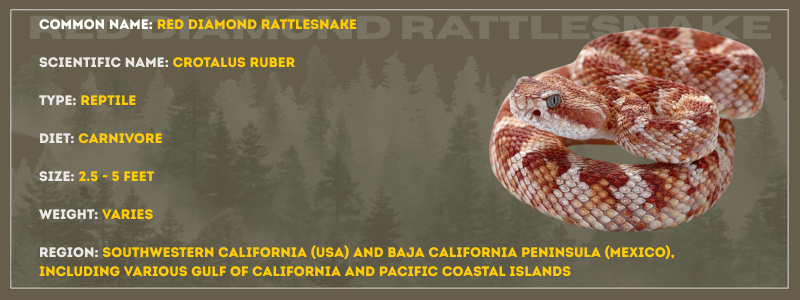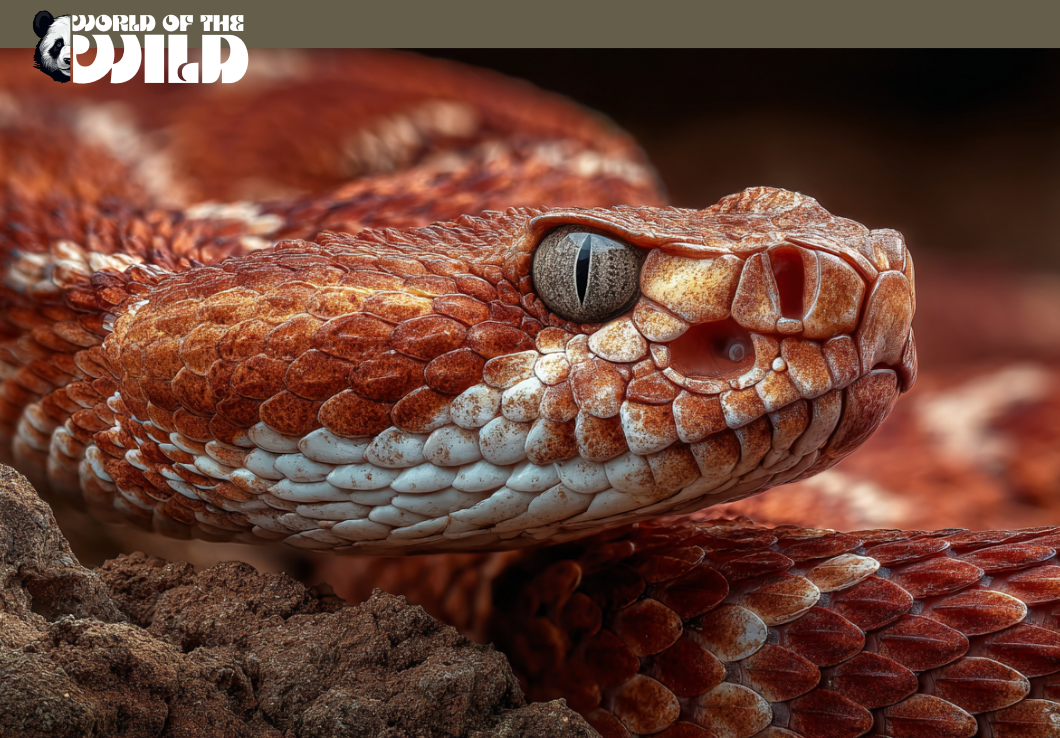

Imagine hiking through the sun-baked chaparral of Southern California when a distinctive buzzing sound freezes you mid-step. Coiled among the rust-colored rocks lies a snake whose scales shimmer like burnished copper in the desert light—the Red Diamond Rattlesnake. With its distinctive brick-red coloration and surprisingly docile temperament, this venomous viper represents one of nature’s most fascinating contradictions: a dangerous predator that would rather retreat than strike, a desert dweller that occasionally swims the Pacific Ocean, and a species so well-adapted to its rocky habitat that individuals may spend their entire lives within just a few miles of where they were born.
The Red Diamond Rattlesnake stands as one of the most visually striking members of the rattlesnake family, and its restricted range along the Pacific coast makes every encounter with this species a rare privilege. Beyond its aesthetic appeal, this snake plays a crucial role in controlling rodent populations throughout its range, making it an invaluable—if misunderstood—component of southwestern ecosystems.
Facts
1. Masters of Temperature Regulation
Red Diamond Rattlesnakes are expert thermoregulators, shifting their activity patterns throughout the year. During spring’s moderate temperatures, they hunt during daylight hours, but as summer heat intensifies, they become strictly nocturnal, emerging only when the desert cools.
2. Homebodies Extraordinaire
Research has revealed that these snakes rarely travel more than a couple of miles throughout their entire lifetime. They create detailed mental maps of their territories, returning to the exact same rocks, bushes, and hibernation sites year after year.
3. Unexpected Swimmers
Despite being desert dwellers, Red Diamond Rattlesnakes have been observed swimming in freshwater lakes, reservoirs, and even the Pacific Ocean—though scientists believe they’re typically washed into water by heavy rainfall rather than entering voluntarily.
4. Combat Dancers
Male Red Diamond Rattlesnakes engage in ritualized combat “dances” that can last over 15 minutes. These shoving matches involve males raising the front portions of their bodies and twisting around each other, with victory going to whoever pins his opponent to the ground.
5. Rattle Speed Champions
When threatened, these snakes can shake their rattles at incredible speeds—between 20 and 100 times per second—creating their characteristic buzzing warning sound.
6. Venom Maturation
The venom of adult Red Diamond Rattlesnakes can be six to fifteen times more toxic than that of juveniles, with venom composition changing significantly as the snake matures.
7. Island Dwellers
Beyond the mainland, these snakes inhabit numerous islands in the Gulf of California and off Baja’s Pacific coast, with island populations often exhibiting smaller body sizes due to island dwarfism.
Sounds of the Red Diamond Rattlesnake
Species
Taxonomic Classification:
- Kingdom: Animalia
- Phylum: Chordata
- Class: Reptilia
- Order: Squamata
- Family: Viperidae
- Genus: Crotalus
- Species: Crotalus ruber
Subspecies:
The Red Diamond Rattlesnake comprises three currently recognized subspecies, each adapted to specific geographic regions:
Crotalus ruber ruber – The nominate subspecies, representing the most common and widespread form. Found throughout southwestern California and the Baja California peninsula, this is the classic “Red Diamond” most people encounter.
Crotalus ruber exsul – The Cedros Island Red Diamond Rattlesnake, an insular subspecies confined exclusively to Isla de Cedros off Baja California’s Pacific coast. This population shows characteristics of island dwarfism.
Crotalus ruber lucasensis – The San Lucan Red Diamond Rattlesnake, found in the southern portions of the Baja California peninsula.
Some authorities recognize a fourth subspecies, Crotalus ruber lorenzoensis (San Lorenzo Island Red Diamond Rattlesnake), confined to San Lorenzo Island in the Gulf of California, though this classification remains debated among herpetologists.
The Red Diamond Rattlesnake belongs to the larger genus Crotalus, which contains approximately 44 to 53 recognized species of rattlesnakes distributed throughout the Americas. It is closely related to other diamondback species, particularly the Western Diamondback (Crotalus atrox), though it can be distinguished by its distinctive reddish coloration and slightly less aggressive temperament.
Appearance
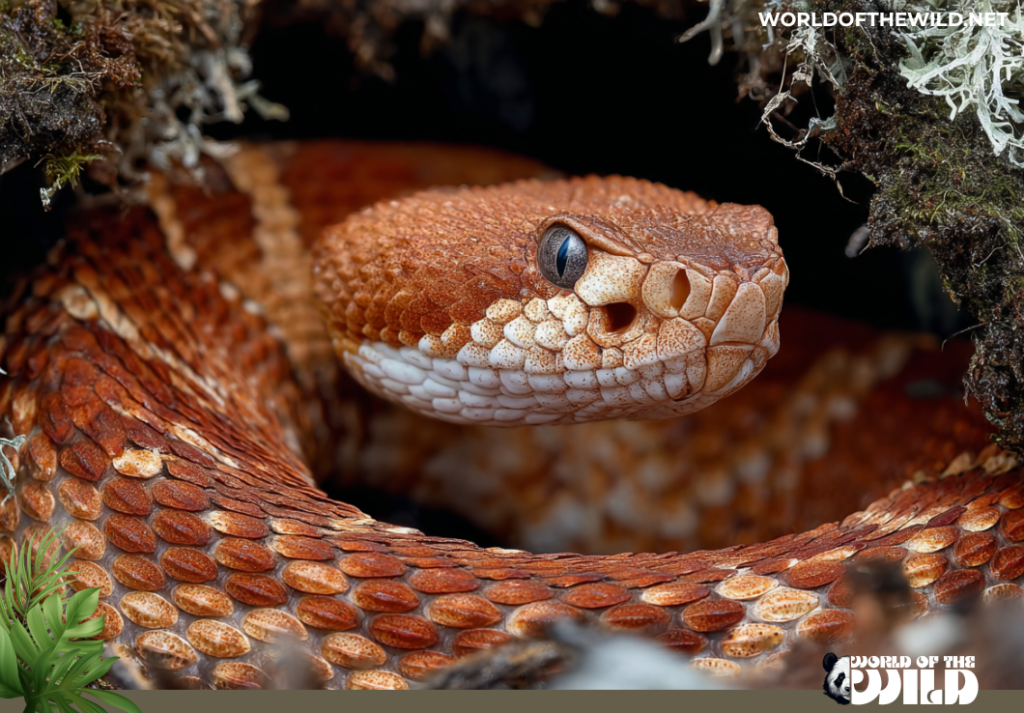
The Red Diamond Rattlesnake is a heavy-bodied serpent that commands attention through both size and coloration. Adults typically measure between 2.5 and 3.5 feet in length, though exceptional specimens can reach up to 5 feet. The largest verified specimen on record measured an impressive 64 inches (162 cm). Males tend to be slightly larger than females, with noticeably thicker tails.
Coloration and Pattern:
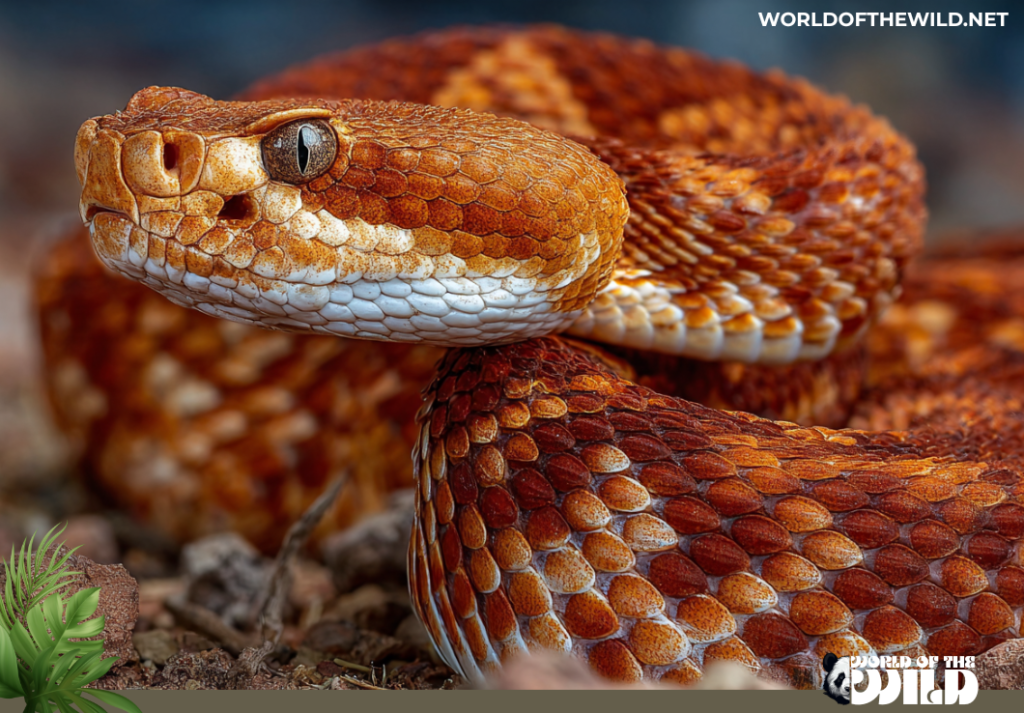
True to its name, this snake displays a remarkable reddish hue that ranges from brick-red and reddish-brown to pinkish-tan, depending on geographic location and individual variation. Northern populations tend toward brick-red and reddish-gray, while some individuals show pinkish-brown or tan coloration. Interestingly, neonates are born with a grayish coloration that gradually transforms to the characteristic red as they mature.
The dorsal surface bears approximately 35 diamond-shaped blotches running down the length of the back. These diamonds are typically edged with lighter scales that create a distinct framing effect, though in some specimens, the light borders may be indistinct. The pattern bears strong resemblance to the Western Diamondback Rattlesnake, but with a more faded, washed-out appearance.
Distinctive Features:
The tail displays alternating black and white (or gray) bands of similar width, culminating in the iconic rattle. This tail pattern is a key identifying feature shared with other diamondback species.
The head is distinctly triangular, spanning approximately twice the width of the thin neck—a characteristic feature of pit vipers. Two light-colored diagonal stripes extend from the eyes down the sides of the face, creating a striking facial pattern. The eyes possess vertical, elliptically-shaped pupils.
As a member of the pit viper subfamily, the Red Diamond Rattlesnake possesses specialized heat-sensing organs—loreal pits located in a depression between each eye and nostril. These remarkable organs detect infrared radiation, effectively giving the snake a “sixth sense” that allows it to locate warm-blooded prey in complete darkness.
The scales are keeled (ridged) and typically arranged in 29 rows, though this can vary from 25 to 31 rows. The ventral scales number between 185 and 206. A unique identifying feature is the first lower labial scale on each side, which is transversely divided to form a pair of anterior chin shields.
Geographic Variation:
Coastal populations average larger body sizes than desert populations, likely due to differences in prey availability and environmental conditions. Island populations typically exhibit smaller sizes due to island dwarfism, with island specimens rarely exceeding 90 cm compared to mainland individuals that commonly exceed 100 cm.
Behavior
The Red Diamond Rattlesnake exhibits a fascinating array of behaviors that reflect its adaptation to the harsh desert and coastal environments it inhabits.
Activity Patterns:
These serpents are masters of behavioral thermoregulation, dramatically shifting their daily routines to avoid temperature extremes. From late spring through summer, when daytime temperatures soar, they become strictly nocturnal, emerging only during cooler evening and nighttime hours. During spring and fall, when temperatures moderate, they become diurnal, actively moving and hunting during daylight. Coastal populations tend to maintain more diurnal habits year-round compared to their desert-dwelling cousins, which face more extreme temperature fluctuations.
Peak above-ground activity occurs from April through June, with most individuals retreating to hibernacula (winter dens) from October or November through February or March.
Social Behavior:
Red Diamond Rattlesnakes are predominantly solitary creatures, coming together only for mating or when sharing communal hibernation sites. During breeding season, males actively search for receptive females, significantly expanding their home ranges during this period. When males encounter each other, they may engage in spectacular combat rituals—ritualized “dances” that involve raising the anterior portions of their bodies and twisting around one another in a shoving match. These contests can last over 15 minutes, with victory going to the male who successfully pins his opponent to the ground. Originally thought to be courtship displays, researchers now understand these as dominance establishment behaviors.
Defensive Behavior:
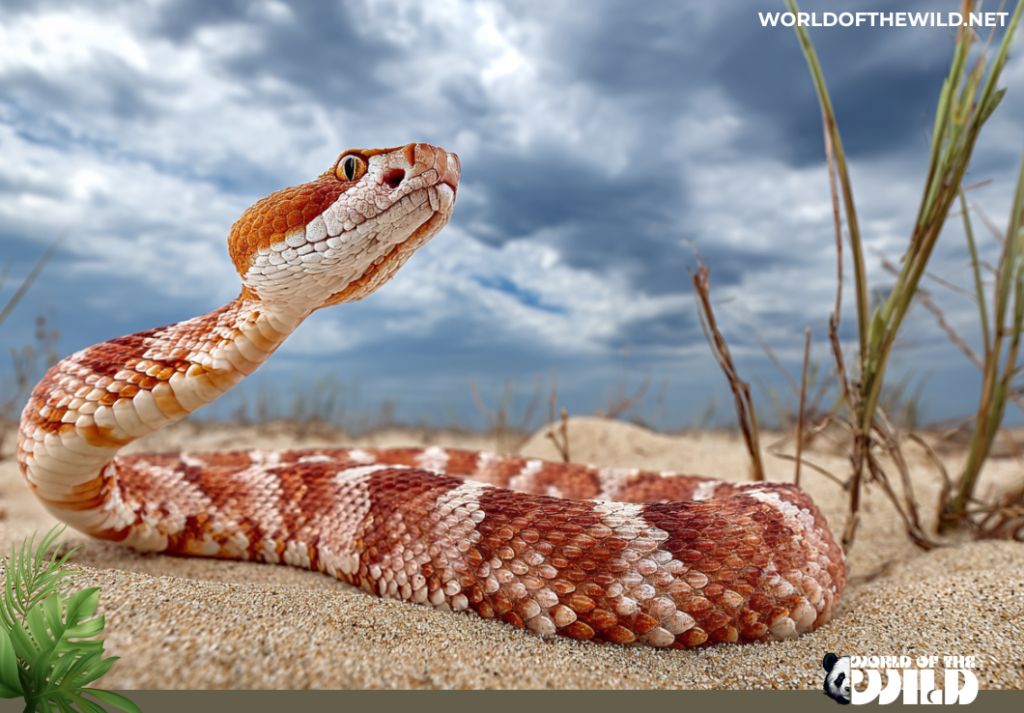
Despite its venomous capabilities, the Red Diamond Rattlesnake possesses what researchers describe as a “mild disposition,” making it one of the least aggressive rattlesnake species. When threatened, their first instinct is to retreat to safety—typically into rodent burrows, rock crevices, or beneath surface cover. If escape isn’t possible, they employ their famous warning system: coiling into a defensive posture while rapidly vibrating their tail to produce the iconic rattling sound that can reach speeds of 20 to 100 vibrations per second.
Unique Adaptations:
These snakes demonstrate remarkable climbing abilities for such heavy-bodied serpents, ascending into low bushes, cacti, and trees in pursuit of arboreal prey like birds and small mammals. Perhaps most surprisingly, they’ve been observed swimming in both freshwater and marine environments, though evidence suggests this is usually involuntary—the result of being washed into water bodies during heavy rainfall rather than deliberate aquatic excursions.
Intelligence and Navigation:
Research reveals sophisticated spatial memory in Red Diamond Rattlesnakes. They create detailed mental maps of their territories, allowing individuals to return to the same specific locations—particular bushes, rocks, or den sites—year after year. This site fidelity is so pronounced that most individuals never travel more than a couple of miles from their birthplace throughout their entire lives.
Communication:
Beyond the famous tail rattle, these snakes communicate through various means. Males track females during breeding season using chemical cues (pheromones) detected by their forked tongues and Jacobson’s organ. They may also produce hissing sounds when alarmed.
Evolution
The evolutionary story of the Red Diamond Rattlesnake is intrinsically tied to the remarkable radiation of rattlesnakes across the Americas and the dramatic geological history of the Baja California peninsula.
Ancient Origins:
Rattlesnakes belong to the family Viperidae, a lineage that molecular phylogenies trace back to the early Eocene Epoch, approximately 56 to 48 million years ago. Vipers originated in Africa, Asia, and Europe before dispersing into the Americas. The pit viper subfamily Crotalinae, to which rattlesnakes belong, represents a New World radiation.
The Rattlesnake Radiation:
The defining feature of rattlesnakes—their segmented rattle—represents one of evolution’s most intriguing innovations. Researchers believe that an ancestral proto-rattlesnake existed approximately 22 million years ago during the Miocene Epoch. The actual diversification of modern rattlesnake species occurred predominantly during the Miocene and Pliocene epochs, with only limited speciation occurring during the Pleistocene.
Biogeographic analyses reveal that the high-elevation pine-oak forests of western Mexico served as a major “speciation pump” for rattlesnake evolution, with the desert biomes of western North America colonized independently at least twice. This rapid diversification followed by a more recent speciation rate decline is characteristic of diversity-dependent cladogenesis.
Specialized Adaptations:
The evolution of the characteristic rattle involved significant anatomical modifications. The bony “style” at the end of the tail—a club-like structure formed from coalesced vertebral elements—evolved relatively early in the rattlesnake radiation. The iconic rattle segments are actually modified scales that become nested and interlocked, with each skin shedding adding a new segment to the structure.
The heat-sensing pit organs represent another remarkable evolutionary innovation, providing rattlesnakes with infrared vision that allows them to hunt warm-blooded prey in complete darkness—a crucial adaptation for nocturnal desert predators.
Species-Specific Evolution:
The Red Diamond Rattlesnake’s evolutionary history has been shaped significantly by the unique geology of its range. During the Pleistocene, climatic fluctuations created patterns of restricted gene flow and population bottlenecks. The northward displacement of the Baja California peninsula from mainland Mexico, followed by vicariant separation, helped establish distinct subclades within the species.
Molecular evidence suggests that Crotalus ruber shows relatively shallow genetic diversity compared to some other desert rattlesnake species, indicating that much of its diversification resulted from Pleistocene climatic events rather than more ancient divisions. The island populations (particularly C. r. exsul on Cedros Island) evolved in isolation, developing characteristics like smaller body size through island dwarfism.
Venom Evolution:
The venom system of rattlesnakes, including C. ruber, represents an ongoing evolutionary arms race with prey species. The venom has evolved through gene duplication and gene loss events, with duplicated genes undergoing neofunctionalization to create novel toxin types. This process has produced tremendous variation in venom composition across rattlesnake species and even among populations within species.
Habitat
The Red Diamond Rattlesnake occupies a relatively restricted geographic range that encompasses some of the most distinctive landscapes of the Pacific Southwest.
Geographic Range:
This species is found exclusively in southwestern California in the United States and throughout the Baja California peninsula in Mexico. In California, its range includes portions of San Bernardino, Los Angeles, Orange, Riverside, Imperial, and San Diego counties, extending from the Morongo Valley west to the coast and southward along the peninsular ranges.
The range continues throughout most of the Baja California peninsula, though notably absent from the desert regions east of the Sierra de Juárez in northeastern Baja California. The species has also successfully colonized numerous islands, including several in the Gulf of California (Angel de la Guarda, Pond, San Lorenzo del Sur, San Marcos, Danzante, Monserrate, and San José) and Pacific islands off Baja’s west coast (Isla de Santa Margarita and Isla de Cedros).
Habitat Types:
The Red Diamond Rattlesnake demonstrates remarkable habitat versatility, though it shows clear preferences for certain environments:
Coastal Sage Scrub and Chaparral: The species’ primary habitat consists of dense chaparral vegetation and coastal sage scrub communities. These brush-covered hillsides provide ideal hunting grounds and thermal refuges. The snake shows particular affinity for areas with heavy brush coverage and rocky outcroppings.
Rocky Terrain: Throughout its range, this species shows strong association with rocky habitats. The favored habitat includes small caves and clefts in reddish sandstone mesas, granite boulder fields, and rocky hillsides. These rocky areas provide crucial hibernation sites (hibernacula) and thermal regulation opportunities.
Elevation and Climate: Red Diamond Rattlesnakes occupy habitats from sea level up to approximately 5,000 feet (1,500 meters), though they typically avoid both the lowest desert flats and the highest elevations. They’re most commonly found in areas characterized by low elevation and high winter precipitation—the cooler coastal zone and foothill regions.
Diverse Ecosystems: Beyond their primary chaparral habitat, these adaptable snakes inhabit pine-oak woodlands, tropical deciduous forests, desert slopes, rocky grasslands, and occasionally cultivated agricultural areas. However, studies indicate they strongly prefer to avoid heavily developed areas and are reluctant to cross roads, making habitat fragmentation a significant concern.
Microhabitat Preferences: Within these broader habitat types, Red Diamond Rattlesnakes seek out specific features. There’s a documented strong association between these snakes, Opuntia cacti, and granite boulders—the boulders providing hibernacula while the cacti offer protection from predators and attract prey species. They also utilize woodrat (Neotoma) nests not only as hunting grounds but sometimes as hibernation sites.
Habitat Associations: The species’ range often overlaps with that of the Southern Pacific Rattlesnake, though the two species occupy slightly different ecological niches within the same general area. Coastal populations tend to experience more moderate temperature regimes compared to desert populations, resulting in observable differences in behavior, body size, and activity patterns.
Diet
The Red Diamond Rattlesnake is a carnivorous predator specializing in warm-blooded prey, though it occasionally supplements its diet with cold-blooded vertebrates.
Primary Prey:
Small mammals constitute the cornerstone of this snake’s diet. Their menu includes:
- Rodents: Wood rats (Neotoma species), ground squirrels, pocket mice, kangaroo rats, and various other small rodents form the bulk of their diet
- Rabbits: Both young and adult cottontails and jackrabbits when they can catch them
- Other small mammals: Occasionally taking mice and other small mammalian prey
Secondary Prey:
While mammals dominate their diet, Red Diamond Rattlesnakes are opportunistic feeders that will consume:
- Birds: Including ground-nesting species and those roosting in low vegetation
- Lizards: Various species of desert and chaparral lizards
- Other snakes: Occasionally engaging in ophiophagy (snake-eating)
- Amphibians: Though less commonly than other prey types
Hunting Strategies:
Red Diamond Rattlesnakes employ two primary hunting techniques:
Ambush Predation: The most common strategy involves lying in wait near known prey trails or burrows. The snake coils in a concealed position and remains motionless—sometimes for days—until suitable prey approaches within striking distance. Once prey is detected via their heat-sensing pit organs, the snake delivers a rapid strike, injecting venom through its hollow, hinged fangs.
Active Hunting: These snakes also engage in active foraging, particularly when pursuing arboreal prey. They’re capable of climbing into low bushes, cacti, and trees to reach nesting birds or roosting prey.
Venom and Feeding:
The snake’s venom serves dual purposes: immobilizing prey and beginning the digestive process. After striking, the rattlesnake typically releases its prey and uses its tongue and heat-sensing pits to track the envenomated animal. Once the prey succumbs to the venom, the snake locates it and swallows it whole, head-first.
The venom contains powerful proteolytic enzymes that begin breaking down tissue immediately, facilitating digestion. Adult Red Diamond Rattlesnakes can deliver substantial venom quantities—an average of 364 mg of dried venom, which is more than three times the potentially lethal dose for humans, though this venom is directed at immobilizing their much smaller prey.
Feeding Frequency:
Like most snakes, Red Diamond Rattlesnakes are infrequent feeders. After consuming a substantial meal, they may not need to eat again for weeks or even months, depending on the size of the prey and environmental conditions. Younger, growing snakes feed more frequently than adults.
Ecological Role:
As predators of small mammals, Red Diamond Rattlesnakes play a vital role in controlling rodent populations. This ecological service benefits agriculture by reducing crop damage and helps limit the spread of rodent-borne diseases. Their presence in an ecosystem indicates a healthy predator-prey balance.
Predators and Threats
Despite being formidable predators themselves, Red Diamond Rattlesnakes face numerous threats from both natural predators and human activities.
Natural Predators:
Avian Predators:
- Red-tailed hawks (Buteo jamaicensis) – Perhaps the most significant avian predator, capable of swooping down and snatching adult rattlesnakes
- Roadrunners (Geococcyx californianus) – Particularly effective at hunting juvenile and smaller rattlesnakes
- Ravens, owls, and eagles – Opportunistic predators that will take rattlesnakes when encountered
Mammalian Predators:
- Coyotes (Canis latrans) – Will kill and consume rattlesnakes despite the risk of envenomation
- Badgers (Taxidea taxus) – Powerful diggers that can excavate snakes from burrows
- Foxes and wildcats – Opportunistic predators
- Domestic cats (Felis catus) and dogs (Canis familiaris) – Pose increasing threats in areas of human-wildlife interface
- Skunks and weasels – Smaller mammalian predators that particularly target juveniles
Reptilian Predators:
- California kingsnakes (Lampropeltis californiae) – Immune to rattlesnake venom and active snake predators
- Coachwhips (Masticophis), indigo snakes (Drymarchon), and racers (Coluber) – Other snake species that occasionally prey on rattlesnakes
Juvenile Red Diamond Rattlesnakes face significantly higher predation pressure, with numerous species actively hunting them. This high juvenile mortality is one reason why females produce relatively large litters.
Anthropogenic Threats:
Habitat Loss and Fragmentation: The most significant threat facing Red Diamond Rattlesnakes is the dramatic reduction of their preferred coastal sage scrub and chaparral habitat. Residential and commercial development in Southern California has severely fragmented their range. Studies show these snakes actively avoid developed areas and are reluctant to cross roads, making habitat connectivity crucial. The California Department of Fish and Game lists them as a Species of Special Concern primarily due to habitat loss in coastal regions.
Direct Persecution: Despite their docile nature, Red Diamond Rattlesnakes are frequently killed by humans out of fear or misunderstanding. Many people destroy these snakes on sight, even though they pose minimal threat when left undisturbed and provide valuable rodent control services.
Road Mortality: Roads fragment habitat and cause direct mortality. These snakes are reluctant to cross roadways but occasionally must do so, making them vulnerable to vehicle strikes. Roads also create barriers to genetic exchange between populations.
Climate Change: Shifting climate patterns may alter the distribution and availability of suitable habitat. Changes in precipitation patterns (particularly important given this species’ preference for areas with high winter precipitation) and temperature extremes could impact population viability.
Collection and Trade: While not as heavily collected as some rattlesnake species, illegal collection for the pet trade or snake products poses an ongoing threat.
Urban-Wildlife Conflict: Expanding development into traditional rattlesnake habitat increases human-snake encounters in areas like Loma Linda, California. Even when snakes are translocated rather than killed, the effectiveness of such interventions remains uncertain, and conflict continues as development encroaches further into wild spaces.
Secondary Threats: Habitat destruction can lead to changes in prey availability, which indirectly impacts rattlesnake populations. Additionally, increasing populations of urban-adapted predators (like domestic cats and dogs) create novel predation pressures in areas where wild and human-dominated landscapes overlap.
The combination of these natural and anthropogenic threats contributes to the species’ declining population trend, despite its current “Least Concern” conservation status.
Reproduction and Life Cycle
The Red Diamond Rattlesnake exhibits a fascinating reproductive strategy that combines extended gestation, live birth, and complete lack of parental care—a pattern characteristic of many pit vipers.
Mating Season and Courtship:
The breeding season occurs from March through May in wild populations, though captive specimens may mate year-round. Male Red Diamond Rattlesnakes become notably active during this period, actively searching for receptive females. This mate-seeking behavior significantly expands their typically restricted home ranges.
Courtship is a prolonged affair, with mating lasting anywhere from less than one hour to over 22 hours, though six to twelve hours is typical. Males locate females using chemical cues (pheromones) detected through their sophisticated vomeronasal system. During mating, males accomplish fertilization through insertion of one of their two hemipenes. Unlike some snake species, researchers believe sperm storage does not occur in this species, though further research may revise this understanding.
Gestation:
Red Diamond Rattlesnakes are ovoviviparous, meaning females retain eggs within their bodies until they’re ready to hatch. The developing young are nourished by their yolk sacs rather than through a placental connection with the mother. This reproductive strategy requires enormous energy investment from females, who must provide resources for yolk production and then carry the developing young for an extended period.
The gestation period lasts approximately 165 days (roughly five and a half months). During this time, gravid females must carefully thermoregulate, as the developing embryos are sensitive to temperature fluctuations. This may influence the female’s choice of basking sites and activity patterns.
Birth:
Females give birth to live young between July and September, with August being the peak birth month. Litter sizes range from 3 to 20 offspring, with larger females typically producing more young. The neonates emerge fully formed and immediately capable of independent life.
Neonates:
Newborn Red Diamond Rattlesnakes measure between 30 and 34 centimeters (approximately 12-13 inches) in length. They’re born with a single button at the tip of their tail that cannot yet produce a rattling sound. Each subsequent skin shedding adds a new rattle segment, though these segments often break off, making it impossible to determine a snake’s age by counting rattles.
Interestingly, neonates display grayish coloration rather than the characteristic red of adults. This color gradually transforms as they mature. Young rattlesnakes possess functional venom from birth, though their venom is considerably less toxic than that of adults—adult venom can be six to fifteen times more potent.
Parental Care:
Red Diamond Rattlesnakes provide no post-birth parental care. Neonates have been observed with their mothers only immediately after birth, after which they disperse to begin their solitary lives. This lack of parental investment is typical for rattlesnakes and most snakes generally.
Maturation:
Females reach sexual maturity at approximately 26 months of age. They undergo vitellogenesis (yolk formation) as they enter their third hibernation, mate the following spring, and give birth later that same year. Males likely mature at a similar age.
Reproductive Interval:
Breeding intervals are not well documented in the literature, but like many rattlesnakes, females likely do not reproduce every year. The enormous energy demands of gestation and the need to replenish body reserves suggest that females probably breed every two to three years, though this may vary based on individual condition and environmental factors.
Lifespan:
In the wild, the lifespan of Red Diamond Rattlesnakes is not precisely known but is estimated at around 10-15 years. Captive specimens demonstrate considerably longer lifespans: one wild-caught adult male lived an additional 19 years and 2 months in captivity, while a zoo specimen survived 14 years and 6 months. These captive longevity records suggest that wild individuals facing predation, disease, and environmental challenges rarely achieve their full potential lifespan.
Life Cycle Summary:
The complete life cycle involves spring mating, summer/fall birth, several years of growth and maturation, followed by entry into the reproductive population. Throughout this cycle, individuals maintain remarkable site fidelity, typically remaining within a few miles of their birthplace for their entire lives.
Population
Understanding the population status of the Red Diamond Rattlesnake requires examining both its overall abundance and the concerning trends affecting its numbers.
Conservation Status:
The Red Diamond Rattlesnake is currently classified as Least Concern (LC) on the IUCN Red List of Threatened Species, based on an assessment conducted in 2007. This designation reflects the species’ relatively wide distribution, presumed large overall population, and the fact that it is not declining rapidly enough to qualify for a more threatened category.
However, this “Least Concern” status masks concerning regional realities. In California, the species is designated as a Species of Special Concern by the California Department of Fish and Game, a recognition that provides certain legal protections when development projects are proposed within its habitat.
Population Estimates:
Precise population numbers for the Red Diamond Rattlesnake are difficult to obtain due to the species’ cryptic nature and the challenging terrain it inhabits. According to the IUCN Red List, the total population size is unknown but probably exceeds 10,000 mature individuals. This estimate is relatively conservative and doesn’t account for the entire Baja California population, which may be substantial but poorly surveyed.
Population Trends:
Despite its current “Least Concern” status, the population trend for this species is decreasing. This decline is documented across much of its California range and likely applies to portions of its Mexican distribution as well. Several factors contribute to this downward trajectory:
The dramatic reduction in coastal sage scrub and chaparral habitat—the species’ preferred ecosystem—has severely impacted population viability in California. Decades of residential and commercial development in Southern California have fragmented and destroyed critical habitat, isolating populations and reducing overall numbers.
Regional Variations:
Population health varies considerably across the species’ range:
California populations face the most severe pressures from habitat loss, urban encroachment, and direct persecution. In areas like Loma Linda, human-snake conflict is frequent, leading to snake removals and mortality.
Baja California populations may be more stable due to lower human population density and less intensive development, though data from these areas is limited.
Island populations face unique challenges related to their small population sizes and restricted ranges, making them vulnerable to stochastic events and genetic bottlenecks.
Conservation Efforts:
Several conservation initiatives aim to protect Red Diamond Rattlesnake populations:
In Southern California, habitat conservation plans have been implemented, with The Nature Reserve at Rancho Mission Viejo conducting annual monitoring surveys to assess population health, identify potential stressors (such as urban predators, roads, and human harassment), and implement management actions. Plans call for conserving approximately 23,111 acres of habitat for the species.
Research into translocation effectiveness has yielded mixed results. Studies comparing mortality rates between resident snakes and those translocated away from human-snake conflict zones show similar survival rates, suggesting translocation can be a viable tool for mitigating conflict while maintaining snake populations.
Challenges to Accurate Assessment:
Several factors complicate population monitoring:
- The species’ secretive, largely nocturnal habits make population surveys challenging
- Much of the Baja California range remains poorly studied
- Population densities vary significantly based on habitat quality and connectivity
- Climate change may be affecting distribution and abundance in ways not yet fully understood
Future Outlook:
While the Red Diamond Rattlesnake is not currently facing extinction, its future depends heavily on habitat conservation and public education efforts. Continued development pressure in Southern California, coupled with ongoing persecution by humans, suggests that without active conservation measures, populations will continue to decline. The species’ reluctance to cross roads and avoid developed areas means that habitat fragmentation poses an increasingly serious threat to genetic connectivity between populations.
Conclusion
The Red Diamond Rattlesnake stands as a testament to the remarkable adaptations that allow life to flourish in some of North America’s most challenging environments. From the sun-scorched chaparral of Southern California to the rugged islands of Baja California, this ruby-hued serpent has carved out an existence that balances the demands of desert survival with the opportunities provided by coastal proximity.
What makes this species particularly fascinating is the contrast between its fearsome reputation and its actual behavior. Armed with heat-sensing vision, powerful venom, and that unforgettable rattle, the Red Diamond Rattlesnake possesses all the tools of a formidable predator. Yet it is among the most docile of rattlesnakes, preferring retreat to confrontation and playing a vital ecological role in controlling rodent populations that might otherwise devastate agricultural areas and spread disease.
The challenges facing this species reflect broader conservation issues in the rapidly developing American Southwest. As cities expand into wild lands, humans and wildlife increasingly find themselves as neighbors, often uncomfortable ones. The Red Diamond Rattlesnake’s story reminds us that coexistence requires understanding, respect, and a willingness to make space for the wild creatures that were here long before us.
Perhaps most importantly, this snake’s declining numbers despite its “Least Concern” status should serve as a warning. By the time a species reaches “threatened” or “endangered” status, conservation becomes exponentially more difficult and expensive. The time to act is now—through habitat preservation, public education, and thoughtful urban planning that maintains wildlife corridors and protects critical ecosystems.
Every rattlesnake that survives to rattle another day represents not just the persistence of an individual, but the health of an entire ecosystem. By protecting the Red Diamond Rattlesnake and its habitat, we protect the chaparral, the desert, the mountains, and all the intricate relationships that make these landscapes whole. The question is not whether we can afford to protect this species, but whether we can afford not to.
Scientific name: Crotalus ruber
Diet type: Carnivore
Size: 2.5-3.5 feet (75-105 cm), maximum 5 feet (162 cm)
Weight: Several pounds (exact weight varies; larger specimens may exceed 5 pounds)
Region found: Southwestern California (USA) and Baja California peninsula (Mexico), including various Gulf of California and Pacific coastal islands