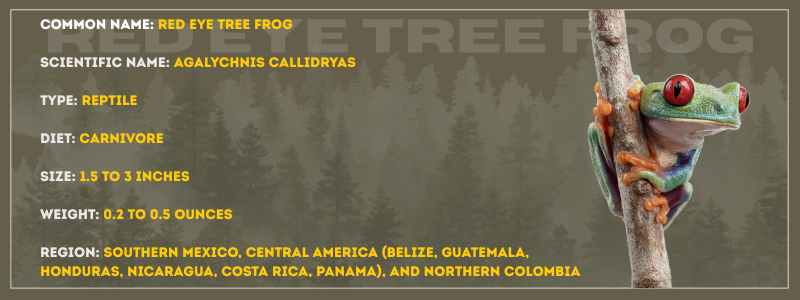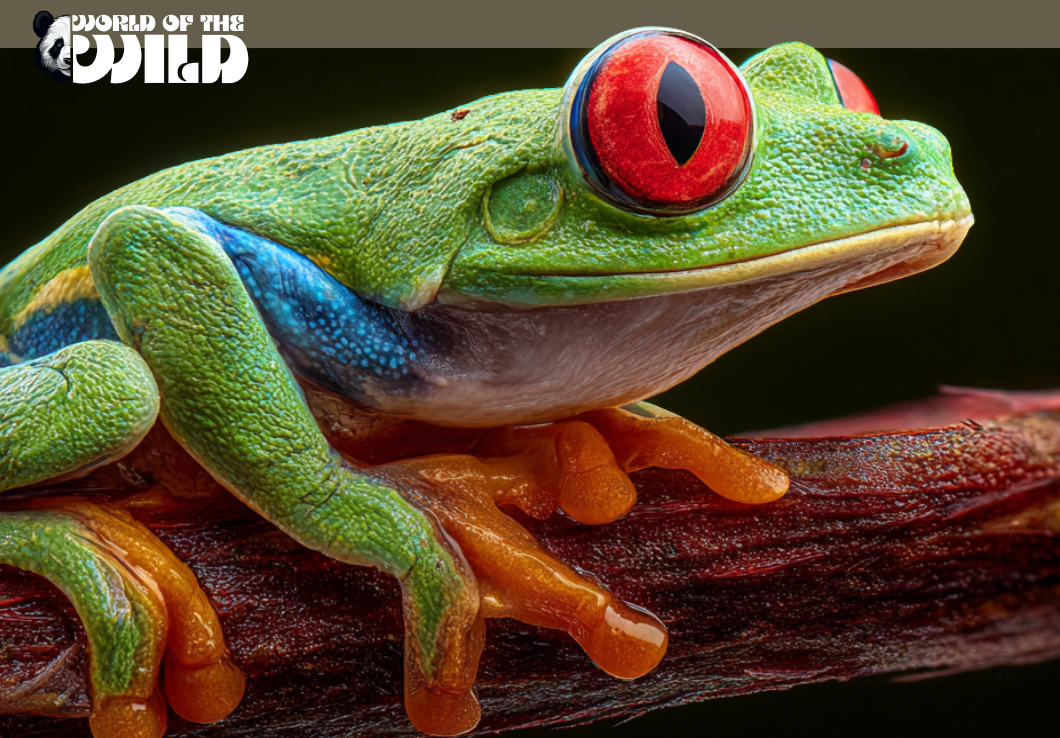

Picture this: a brilliant emerald body, electric blue and yellow striped sides, bright orange feet, and a pair of bulging crimson eyes staring directly at you through the darkness. The red-eyed tree frog is not just another amphibian—it’s a living work of art that has captivated scientists, photographers, and nature enthusiasts for generations. This iconic inhabitant of Central American rainforests has become one of the most recognizable amphibians on Earth, gracing countless nature documentaries, conservation posters, and science textbooks. Beyond its stunning appearance, this remarkable creature possesses fascinating survival strategies, unique behaviors, and adaptations that make it a true marvel of evolution. As rainforest habitats face mounting pressures, understanding and appreciating this vibrant species becomes more crucial than ever.
Facts
- Nocturnal Color-Changers: Red-eyed tree frogs can actually adjust their skin color, appearing much darker green at night and lighter during the day, helping them regulate their body temperature and blend into their surroundings.
- Startle Defense Mechanism: When threatened, these frogs employ a defense strategy called “startle coloration,” suddenly opening their bright red eyes and revealing their blue sides and orange feet to shock and confuse predators.
- Incredible Jumpers: Despite their relatively small size, red-eyed tree frogs can leap distances up to 150 times their body length, making them one of the most impressive jumpers in the amphibian world.
- Sticky Situation: Their toe pads contain specialized cells that create a molecular bond with surfaces, allowing them to cling to smooth leaves even while upside down without using any muscular effort.
- Breathing Through Skin: Like many amphibians, these frogs can absorb up to 80% of their oxygen directly through their skin, which is why keeping their skin moist is crucial for survival.
- Tadpole Communication: Research suggests that red-eyed tree frog tadpoles can detect vibrations from predators and will hatch prematurely—sometimes several days early—to escape danger while still in their eggs.
- Ancient Survivors: These frogs have remained relatively unchanged for millions of years, representing a successful evolutionary design perfectly adapted to rainforest canopy life.
Species
The red-eyed tree frog belongs to a fascinating taxonomic lineage that reveals its place in the tree of life:
- Kingdom: Animalia
- Phylum: Chordata
- Class: Amphibia
- Order: Anura
- Family: Phyllomedusidae
- Genus: Agalychnis
- Species: Agalychnis callidryas
The genus Agalychnis, commonly known as leaf frogs, contains several closely related species that share similar characteristics and habitats. The most notable relatives of the red-eyed tree frog include the gliding tree frog (Agalychnis spurrelli), which has evolved the ability to glide between trees using webbed feet, and the lemur leaf frog (Agalychnis lemur), known for its distinctive waxy coating. Another relative, the orange-sided leaf frog (Agalychnis moreletii), shares much of the same geographic range but can be distinguished by subtle differences in size and coloration patterns.
While there are no officially recognized subspecies of Agalychnis callidryas, researchers have noted some geographic variation in size and color intensity across the species’ range, with populations in different regions showing slight differences that may reflect local adaptations to their specific environments.
Appearance
The red-eyed tree frog is a masterpiece of natural coloration that seems almost too vibrant to be real. Adults typically measure between 1.5 to 3 inches in length, with females considerably larger than males. Females can reach up to 3 inches, while males usually max out around 2 inches. Despite their eye-catching appearance, these frogs are surprisingly lightweight, with adults weighing between 0.2 to 0.5 ounces.
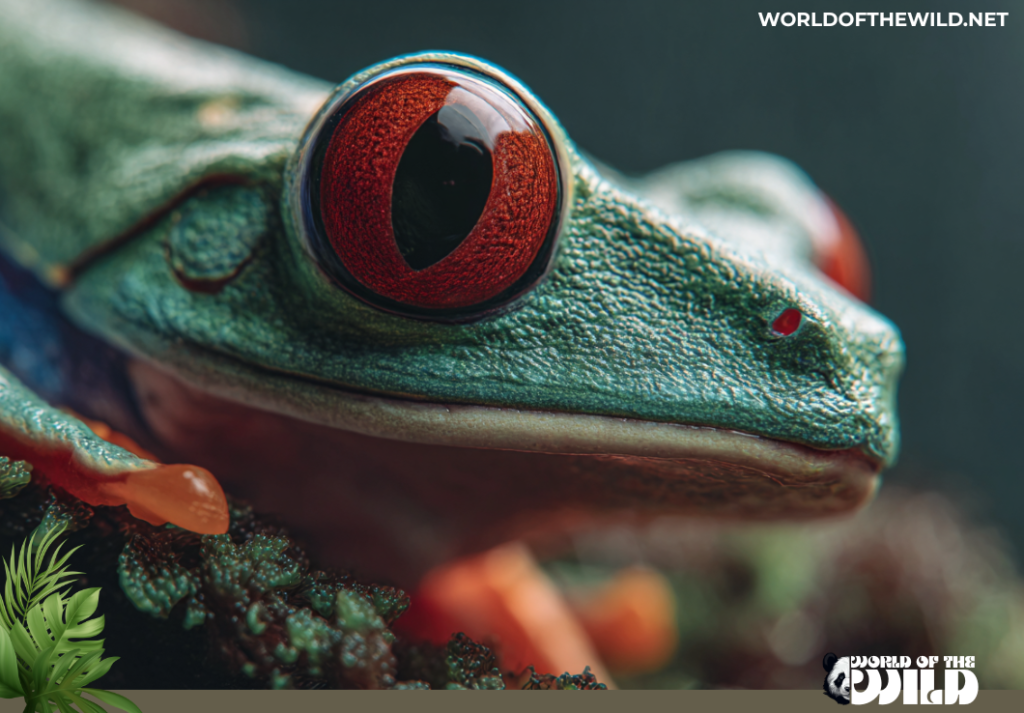
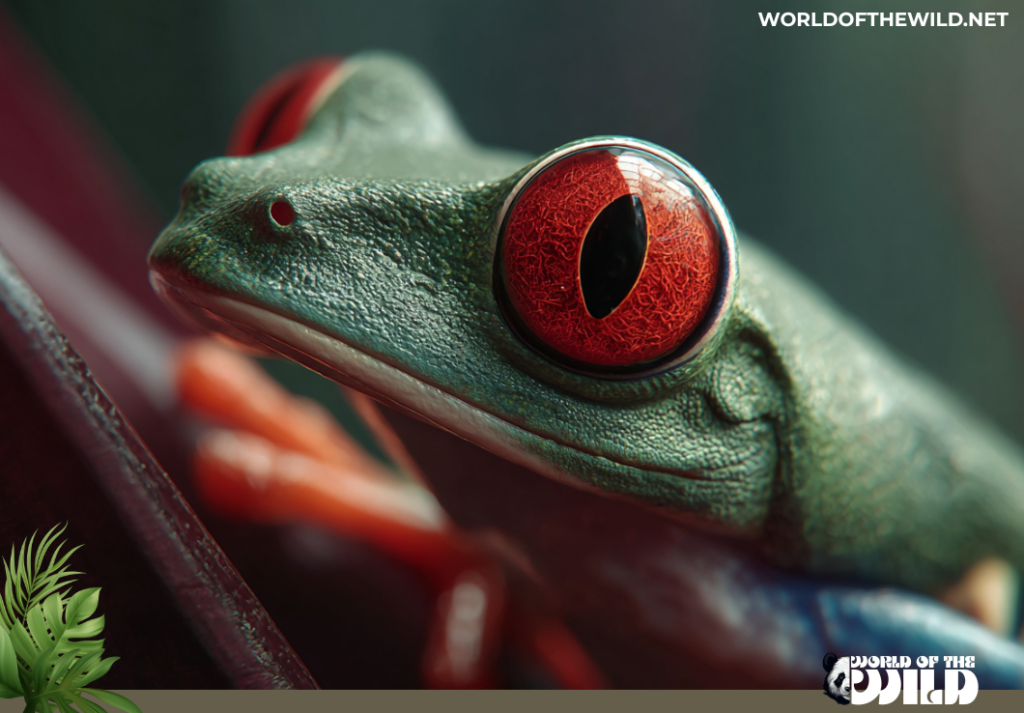
The most striking feature, of course, is those mesmerizing red eyes with vertical black pupils that seem to glow against the frog’s bright green body. The brilliant leaf-green dorsal coloration serves as excellent camouflage when the frog is at rest during the day, allowing it to disappear among the foliage. The green can vary from a neon lime to a deeper forest green depending on the individual frog and environmental conditions.
But the true spectacle reveals itself when the frog moves or feels threatened. The flanks display stunning vertical blue and yellow or cream-colored stripes, creating a dazzling pattern that contrasts sharply with the green back. The legs are similarly decorated, often showing blue patches on the thighs. The feet are perhaps the most surprising feature—bright orange or reddish-orange, equipped with prominent toe pads that give the frog its exceptional climbing abilities.
Males and females can be distinguished not only by size but also by the thickness of their limbs—males have noticeably thicker forearms, an adaptation related to their mating behavior. The skin texture is smooth and appears almost glossy when moist, though it can become slightly duller when the frog is dehydrated.
Behavior
Red-eyed tree frogs are primarily nocturnal creatures, spending their days motionless on the undersides of large leaves, their bright colors hidden as they press their limbs close to their bodies and close their vivid red eyes. This sleeping posture transforms them into nearly invisible green bumps, perfectly blending with the rainforest vegetation. As dusk approaches, they become active, opening those famous red eyes and beginning their nightly activities.
These frogs are generally solitary outside of the breeding season, though multiple individuals may congregate in prime hunting territories without showing aggression toward one another. They are arboreal specialists, rarely if ever descending to the ground, instead spending their entire lives in the canopy layer of the rainforest, typically 10 to 80 feet above the forest floor.
Communication among red-eyed tree frogs involves a variety of methods. Males produce a distinctive “chack-chack-chack” call during breeding season to attract females and establish territories. They also communicate through vibrations, shaking the branches they sit on to signal to rivals or potential mates. Recent research has revealed that these frogs possess a more sophisticated communication system than previously thought, with males able to adjust their call frequency and amplitude based on the presence of competing males.
When it comes to intelligence and problem-solving, red-eyed tree frogs demonstrate remarkable spatial awareness and memory. They can remember productive hunting locations and return to the same spots night after night. Their most famous behavioral adaptation is their startle defense—when a predator approaches, the frog will suddenly flash its bright red eyes, blue sides, and orange feet in a coordinated display meant to surprise and confuse the attacker, giving the frog precious seconds to leap to safety.
The hunting behavior of these frogs is equally fascinating. They are ambush predators with excellent vision, sitting motionless on leaves or branches until prey comes within striking distance. Once a target is identified, the frog’s long, sticky tongue shoots out with incredible speed and precision, capturing the prey and retracting back to the mouth in a fraction of a second.
Evolution
The evolutionary journey of the red-eyed tree frog stretches back millions of years, though the fossil record for tree frogs is relatively sparse due to their delicate skeletons and arboreal lifestyle. The family Phyllomedusidae is believed to have originated in South America during the Paleogene period, roughly 30 to 40 million years ago, when tropical rainforests were expanding across the continent.
Ancestral phyllomedusids were likely less specialized than modern red-eyed tree frogs, gradually developing the suite of arboreal adaptations we see today. The development of specialized toe pads with microscopic hexagonal cells capable of molecular adhesion represents a key evolutionary innovation that allowed these frogs to exploit the canopy environment more effectively than their terrestrial ancestors. This adaptation arose independently in several frog lineages, representing a classic example of convergent evolution.
The brilliant coloration of red-eyed tree frogs evolved through a combination of natural and sexual selection. The bright warning colors may have initially evolved as a form of aposematism—warning potential predators of toxicity—though interestingly, red-eyed tree frogs are not particularly toxic compared to many other frog species. Instead, their coloration now primarily serves the dual purpose of camouflage (when hidden) and startle defense (when revealed), representing an evolutionary shift in the function of their striking appearance.
The genus Agalychnis diversified as Central American land bridges formed and reformed over millions of years, creating opportunities for populations to become isolated and evolve distinct characteristics. The red-eyed tree frog represents one of the most successful adaptations to the rainforest canopy environment, with its combination of cryptic and aposematic coloration providing a versatile survival strategy.
Molecular studies suggest that Agalychnis callidryas diverged from its closest relatives between 5 and 10 million years ago, during a period of significant climatic changes that affected Central American ecosystems. The species has remained remarkably stable in its morphology since then, suggesting that it achieved an optimal evolutionary design for its ecological niche relatively early in its history.
Habitat
Red-eyed tree frogs are found exclusively in the Neotropics, ranging from southern Mexico through Central America to northern Colombia. Their distribution includes parts of Mexico (particularly the Yucatan Peninsula), Belize, Guatemala, Honduras, Nicaragua, Costa Rica, Panama, and extending into western Colombia. This range corresponds closely with lowland and mid-elevation tropical rainforest zones.
These frogs are obligate rainforest species, requiring the specific environmental conditions found in humid tropical forests. They inhabit the canopy and sub-canopy layers, typically at elevations from sea level up to about 4,000 feet, though they are most abundant in lowland areas below 2,000 feet. The ideal habitat features a dense, multi-layered canopy that maintains high humidity levels and provides protection from direct sunlight and wind.
The microhabitats preferred by red-eyed tree frogs include areas near slow-moving streams, ponds, and temporary pools—water sources essential for their reproductive cycle. They show a particular fondness for broadleaf plants, especially those overhanging water, where they can hunt for insects and easily access breeding sites. During the wet season, they may be found on vegetation immediately adjacent to ponds and streams, while during drier periods, they retreat deeper into the forest canopy.
Temperature and humidity are critical environmental factors for these frogs. They thrive in consistently warm conditions, typically between 75-85°F during the day and slightly cooler at night, with humidity levels rarely dropping below 80%. The dense rainforest canopy creates the perfect microclimate, trapping moisture and moderating temperature fluctuations.
The structural complexity of their habitat is equally important. Red-eyed tree frogs require a variety of perch heights, leaf sizes, and branch thicknesses to support their lifestyle. Large, smooth leaves serve as daytime sleeping platforms, while smaller branches and leaf clusters provide hunting perches and pathways through the canopy. The presence of epiphytes, vines, and the general structural diversity of pristine rainforest creates the three-dimensional habitat these frogs need to thrive.
Diet
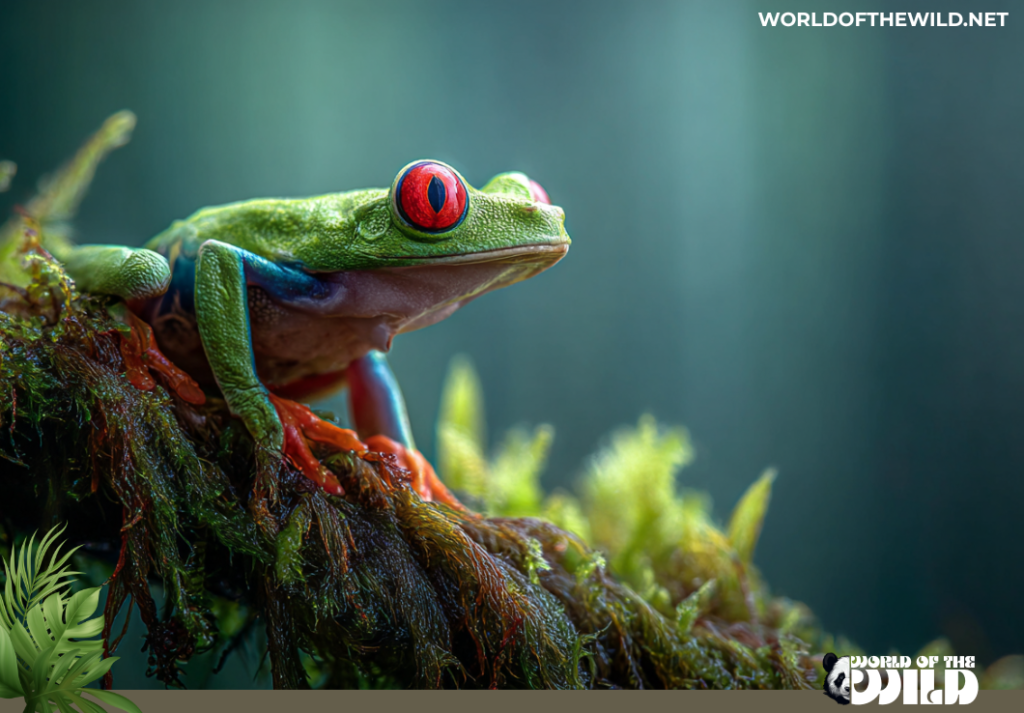
Red-eyed tree frogs are carnivorous insectivores, feeding exclusively on live prey that they capture using their remarkable visual acuity and lightning-fast tongue. Their diet consists primarily of a variety of flying and crawling insects that share their canopy habitat.
Moths form a significant portion of their diet, particularly during night hours when these insects are most active. The frogs will sit motionless on leaves or branches, their large eyes scanning for the telltale flutter of moth wings. Crickets and grasshoppers are also favored prey items, providing substantial nutritional value due to their size and protein content. Other common prey includes flies, particularly larger species, as well as beetles, katydids, and various other flying insects that venture within striking range.
Occasionally, red-eyed tree frogs will consume smaller frogs, including their own species, though this cannibalistic behavior is relatively rare and typically occurs only when other food sources are scarce or when a particularly small individual crosses paths with a much larger one. Young frogs and juveniles may also eat small spiders and other arachnids.
The hunting strategy of these frogs is one of patient ambush. They position themselves on strategic perches where insect traffic is high, often returning to the same productive hunting spots night after night. Their stereoscopic vision allows them to accurately judge the distance to prey, critical for the success of their tongue-strike attack. Once prey is within approximately 2-3 inches, the frog’s sticky tongue extends in a rapid flicking motion, capturing the insect and pulling it back to the mouth in less than a second.
Interestingly, red-eyed tree frogs do not drink water in the conventional sense. Instead, they absorb moisture through their skin, particularly through a specialized patch of skin on their belly and thighs known as the “pelvic patch” or “drinking patch.” They will often press this area against wet leaves or sit in shallow water to rehydrate, demonstrating their intimate connection with the humid rainforest environment.
Predators and Threats
Despite their toxic appearance and startle defense mechanisms, red-eyed tree frogs face numerous natural predators throughout their life stages. Snakes are perhaps their most significant natural enemy, with species like the cat-eyed snake (Leptodeira) being specialist predators of sleeping frogs. These snakes hunt at night, using their keen sense of smell to locate frogs resting on leaves. Birds, including toucans, motmots, and various species of owls, also prey on adult frogs, often snatching them from their daytime resting spots.
Bats represent another aerial threat, with some species capable of detecting and catching frogs mid-leap. On the rare occasions when red-eyed tree frogs descend to lower vegetation or near the ground, they become vulnerable to larger predators such as opossums and small wild cats. The tadpole and egg stages face different predators entirely, including aquatic insects like water beetles and dragonfly larvae, fish, other tadpoles, and even shrimp in some habitats.
However, the most significant threats to red-eyed tree frog populations are anthropogenic in nature. Habitat destruction through deforestation is by far the greatest danger these frogs face. As tropical rainforests are cleared for agriculture, cattle ranching, and development, the specialized canopy habitat that red-eyed tree frogs require simply disappears. Unlike some more adaptable species, these frogs cannot survive in degraded or secondary forest—they need pristine rainforest conditions.
Climate change poses an increasingly serious threat. Changes in rainfall patterns can dry up the temporary breeding pools these frogs depend on, while rising temperatures may push conditions beyond their physiological tolerance. Even subtle shifts in humidity levels or temperature can disrupt their reproductive cycles and reduce survival rates.
The international pet trade has historically impacted wild populations, though this has been somewhat mitigated by captive breeding programs that now supply most of the demand. Pollution, particularly pesticide runoff from agricultural areas adjacent to forests, can contaminate water sources and directly harm frogs through their permeable skin. Additionally, the spread of chytrid fungus (Batrachochytrium dendrobatidis), a devastating amphibian pathogen responsible for global amphibian declines, poses a potential threat, though red-eyed tree frogs have shown some resistance to this disease compared to other species.
Reproduction and Life Cycle
The reproductive cycle of red-eyed tree frogs is intricately tied to the rainy season, with mating activities peaking when seasonal rains create ideal conditions for tadpole development. The process begins with males establishing territories on vegetation overhanging water bodies and producing their distinctive “chack-chack-chack” mating calls to attract females.
When a receptive female approaches, the male will climb onto her back in a position called amplexus, where he clings to her using his specially adapted thick forearms. The female, being larger and stronger, then carries the male to a suitable egg-laying site—typically a broad leaf hanging over water. The selection of this site is critical, as the leaf must be positioned so that when the tadpoles hatch, they can drop directly into the water below.
The female lays a clutch of approximately 40-50 eggs, though the number can range from as few as 20 to as many as 75. As she deposits the eggs in a jelly-like mass on the underside of the leaf, the male simultaneously fertilizes them. The entire laying process can take several hours, and females may mate with multiple males during a single breeding season, laying several clutches.
The eggs are remarkable structures, appearing as translucent blue-green spheres within the protective jelly. Over the next 6-7 days, the embryos develop visibly within the eggs, and observers can watch as the tadpoles form, complete with external gills and developing tails. This period is when the tadpoles’ incredible vibration-detection ability comes into play—if they sense a predator such as a snake approaching the leaf, they can trigger early hatching and drop into the water below, even if they’re not fully developed.
When the time is right, the tadpoles break free from their egg cases and wriggle out of the jelly, dropping 5, 10, or even 20 feet down into the pond or stream below. Upon entering the water, the tadpoles are approximately 0.5 inches long and are entirely aquatic. They spend the next 60-80 days in the water, growing and developing. During this aquatic stage, they feed on algae, detritus, and microscopic organisms, gradually developing their limbs.
The transformation from tadpole to froglet is dramatic. The hind legs appear first, followed by the front legs. The tail gradually shrinks as it is reabsorbed by the body, and the tadpole’s internal organs restructure to support a terrestrial lifestyle. The gills disappear as lungs develop, and the mouth structure changes from a scraping apparatus to the wide mouth of a carnivore.
Newly metamorphosed froglets emerge from the water at approximately 0.5 to 0.75 inches in length, already displaying the characteristic red eyes and green coloration, though their colors are less vibrant than adults. These young frogs are extremely vulnerable and face high mortality rates during their first few months. They must immediately begin hunting tiny insects while avoiding the numerous predators that target juvenile frogs.
Red-eyed tree frogs reach sexual maturity at approximately 1-2 years of age, depending on environmental conditions and food availability. In the wild, their average lifespan is believed to be around 5 years, though individuals in protected environments have been known to live considerably longer—up to 8-12 years in captivity under optimal conditions.
Population
The red-eyed tree frog is currently classified as “Least Concern” by the International Union for Conservation of Nature (IUCN), a designation that indicates the species is not currently facing immediate extinction risk across its entire range. However, this classification requires context and shouldn’t lead to complacency about the species’ future.
Precise global population estimates for red-eyed tree frogs are difficult to establish due to their nocturnal, arboreal lifestyle and the challenges of surveying canopy-dwelling species. However, researchers believe that populations remain relatively stable in protected areas and regions where suitable rainforest habitat persists. In some areas, particularly in Costa Rica and Panama where extensive protected forest reserves exist, red-eyed tree frogs can be locally abundant.
Despite the overall “Least Concern” status, population trends vary considerably across the species’ range. In some areas, particularly where deforestation has been extensive—such as parts of southern Mexico and Honduras—local populations have declined significantly or disappeared entirely. Conversely, in well-protected areas like Tortuguero National Park in Costa Rica or the La Amistad International Park spanning Costa Rica and Panama, populations appear healthy and stable.
Several factors work in favor of the red-eyed tree frog’s conservation status. First, the species has a relatively broad geographic range spanning multiple countries, which provides some buffer against localized threats. Second, these frogs can achieve high population densities in suitable habitat, with dozens or even hundreds of individuals congregating during breeding season. Third, their reproductive strategy of laying multiple clutches and producing numerous offspring provides resilience to natural mortality.
However, conservationists remain vigilant about several concerning trends. The rate of rainforest loss in Central America continues to pose the primary long-term threat to the species. Some studies have documented local population declines even in seemingly suitable habitat, suggesting that subtle environmental changes or disease may be affecting populations in ways not yet fully understood. Climate change predictions for Central America include altered rainfall patterns and increased frequency of extreme weather events, both of which could significantly impact the temporary pools these frogs depend on for reproduction.
The species benefits from occurring in numerous protected areas throughout its range, including national parks and biological reserves in every country where it lives. Additionally, the red-eyed tree frog has become something of a flagship species for rainforest conservation, its striking appearance and charismatic nature making it an effective ambassador for broader ecosystem protection efforts.
Conclusion
The red-eyed tree frog stands as a vivid reminder of the extraordinary diversity and beauty found in tropical rainforests. From its spectacular coloration to its fascinating reproductive strategies and remarkable adaptations for canopy life, this species exemplifies the intricate relationships between organisms and their environments. The frog’s bright red eyes, which have captivated millions around the world, serve as windows into a complex ecosystem that supports countless species, many still unknown to science.
While currently not endangered, the red-eyed tree frog’s future remains inextricably linked to the fate of Central American rainforests. Every acre of forest lost represents not just the disappearance of these iconic frogs, but the unraveling of entire ecological communities. The good news is that red-eyed tree frogs can thrive when their habitat is protected, offering hope that conservation efforts can make a real difference.
As we move forward in an era of unprecedented environmental change, the red-eyed tree frog reminds us what we stand to lose if we fail to protect these irreplaceable ecosystems. Supporting rainforest conservation organizations, making sustainable consumer choices, and raising awareness about the importance of tropical forest protection are all ways individuals can contribute to ensuring that future generations will still be able to marvel at these jewels of the rainforest canopy. The red-eyed tree frog isn’t just surviving—it’s a symbol of the wild beauty we must fight to preserve.
Scientific Name: Agalychnis callidryas
Diet Type: Carnivore (Insectivore)
Size: 1.5 to 3 inches (3.8 to 7.6 cm)
Weight: 0.2 to 0.5 ounces (6 to 14 grams)
Region Found: Southern Mexico, Central America (Belize, Guatemala, Honduras, Nicaragua, Costa Rica, Panama), and northern Colombia