
A flash of brilliant scarlet slices through the cattails as a jet-black bird lands on a swaying reed, throwing back its head to deliver a triumphant “conk-la-ree!” If you’ve spent any time near a wetland, marsh, or even a roadside ditch in North America, you’ve almost certainly encountered the Red-Winged Blackbird, one of the continent’s most abundant and recognizable songbirds. Yet despite their familiarity, these striking birds harbor surprising secrets—from their complex polygamous societies to their remarkable ability to thrive in both pristine wilderness and human-altered landscapes. The Red-Winged Blackbird represents a conservation success story in an age of declining bird populations, but their story also offers crucial insights into the adaptability required for wildlife to survive in our rapidly changing world.
Facts
- Polygamous Powerhouses: Male Red-Winged Blackbirds can mate with up to 15 females in a single breeding season, defending territories that may contain multiple nests from different mates.
- Hidden in Plain Sight: Females and males look so dramatically different that early ornithologists initially classified them as separate species. The cryptically colored brown females bear almost no resemblance to their flashy male counterparts.
- Population Giants: Red-Winged Blackbirds are one of the most abundant birds in North America, with an estimated population exceeding 200 million individuals during peak seasons.
- Seasonal Superflock: During migration and winter, Red-Winged Blackbirds gather in massive mixed-species flocks with other blackbirds, grackles, and starlings—some congregations numbering in the millions.
- Agricultural Impact: These birds can consume significant quantities of agricultural crops, particularly rice and sunflower seeds, leading to damage estimates of millions of dollars annually, making them both ecologically important and economically controversial.
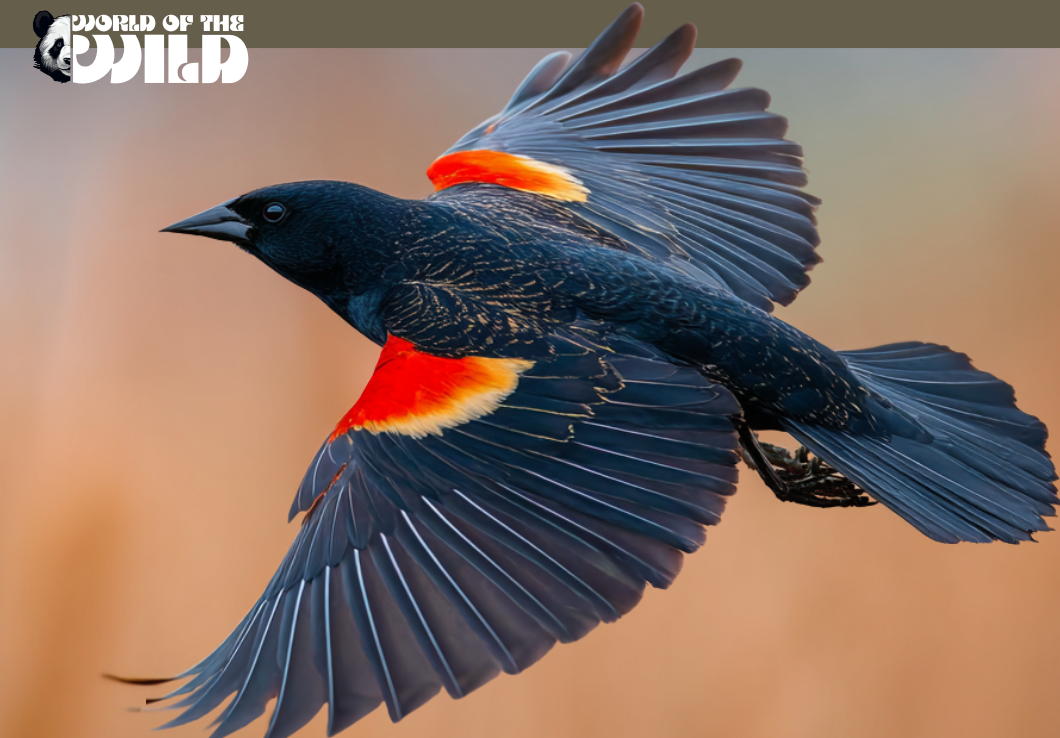
- Epaulet Communication: Males can control the visibility of their red shoulder patches, flashing them during territorial displays or concealing them when trying to avoid confrontation with dominant males.
- Ancient Wetland Survivors: Red-Winged Blackbirds have been thriving in North American wetlands for at least 35,000 years, surviving multiple ice ages and dramatic climate shifts.
Species
Kingdom: Animalia
Phylum: Chordata
Class: Aves
Order: Passeriformes
Family: Icteridae (New World blackbirds)
Genus: Agelaius
Species: Agelaius phoeniceus
The Red-Winged Blackbird belongs to a diverse genus that includes approximately ten species distributed across the Americas. Within Agelaius phoeniceus itself, taxonomists recognize up to 22 subspecies, though this classification remains somewhat fluid as genetic studies continue to refine our understanding of their relationships.
The primary subspecies include the widespread A. p. phoeniceus found across much of North America, the California subspecies A. p. californicus, the Gulf Coast subspecies A. p. littoralis, and the Florida-based A. p. floridanus, among others. These subspecies show subtle variations in size, plumage intensity, and song dialects, reflecting their adaptation to different regional environments.
Close relatives within the genus include the Tricolored Blackbird (Agelaius tricolor), found exclusively in California and distinguished by white wing bars and deeper red epaulets, and the Tawny-Shouldered Blackbird (Agelaius humeralis) of Cuba and Haiti. The broader Icteridae family encompasses other familiar birds including orioles, meadowlarks, grackles, and cowbirds.
Appearance
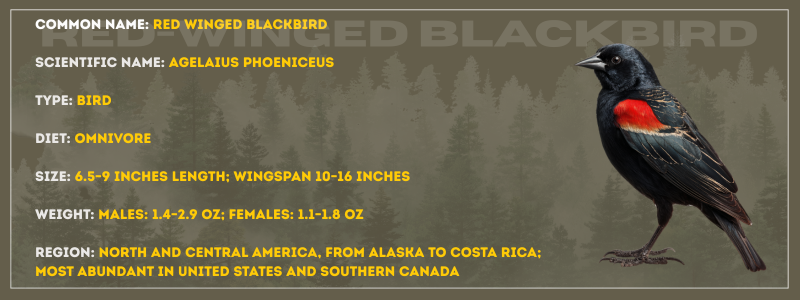
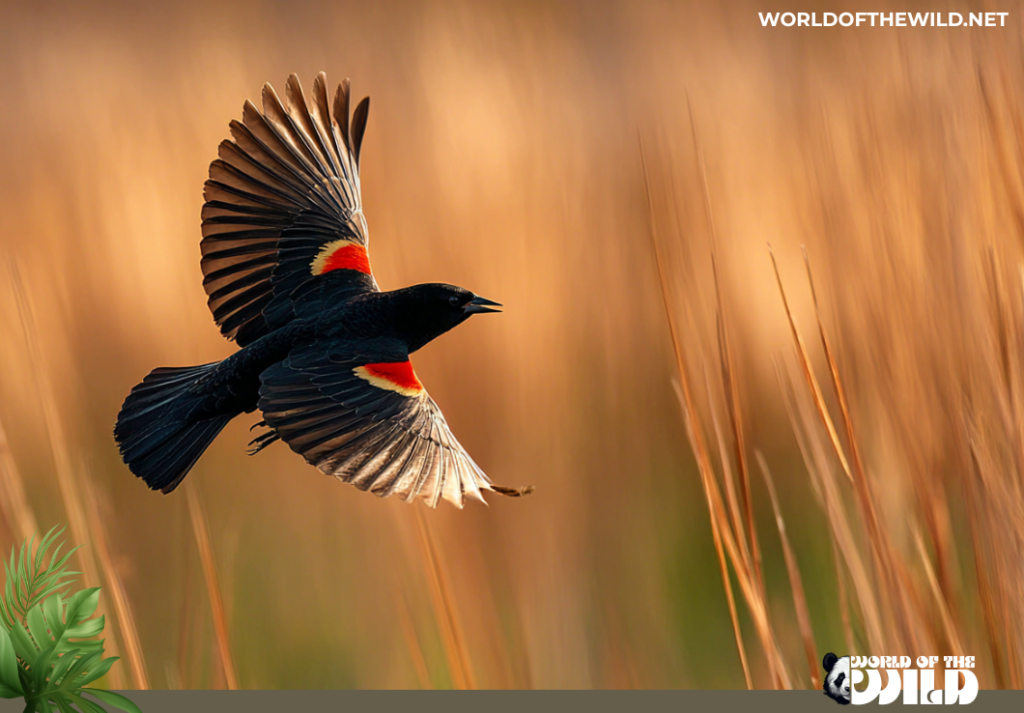
The Red-Winged Blackbird exhibits one of the most pronounced cases of sexual dimorphism among North American songbirds. Males are sleek, glossy black birds measuring 7 to 9 inches in length with a wingspan of 12 to 16 inches. Their most distinctive feature is the brilliant red-and-yellow shoulder patches, called epaulets, which blaze like warning signals against their dark plumage. The red portion is actually covered by yellow feathers at the trailing edge, creating a striking bicolored badge. Males typically weigh between 1.4 and 2.9 ounces.
Females present an entirely different appearance, so dramatically distinct that they’re often mistaken for a different species altogether. They are heavily streaked with brown, buff, and white coloration that provides excellent camouflage in their marshy habitats. Females are noticeably smaller than males, measuring 6.5 to 7.5 inches in length with wingspans of 10 to 13 inches, and weighing just 1.1 to 1.8 ounces. Their plumage features dark brown streaking on a lighter background, with a distinctive pale eyebrow stripe and a stout, pointed bill.
Juvenile males resemble females during their first summer but gradually acquire adult plumage through their first winter, initially showing rusty edging on their feathers and dull orange shoulder patches before developing the full glossy black plumage and vivid red epaulets by their first breeding season.
The birds’ bills are sharply pointed and conical, perfectly designed for their omnivorous diet, while their strong legs and feet allow them to grasp and balance on vertical reeds and cattails with remarkable agility.
Behavior
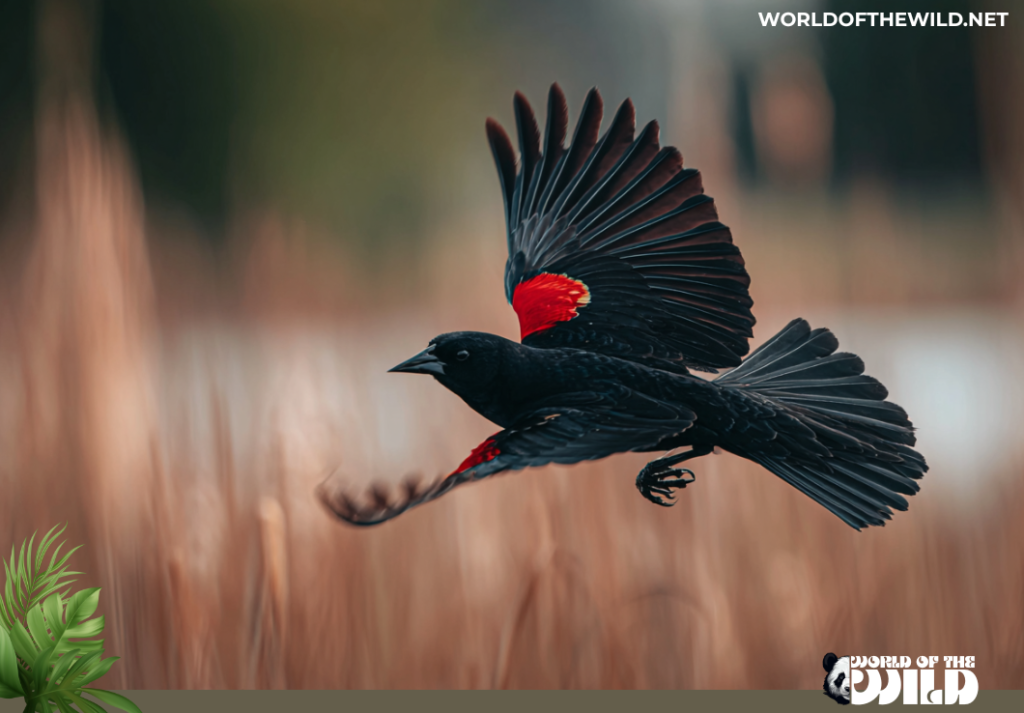
Red-Winged Blackbirds are diurnal and highly social outside the breeding season, but males become intensely territorial during spring and summer. Male territorial behavior is one of nature’s most energetic displays: they perch prominently atop cattails or other tall vegetation, spreading their wings and tail, puffing up their red epaulets, and singing their distinctive “conk-la-ree” song to advertise territory ownership and attract females. They’re remarkably aggressive defenders, readily attacking much larger birds—and even humans—that venture too close to their nests.
These birds communicate through a sophisticated repertoire of vocalizations. Beyond the familiar territorial song, they produce various calls including sharp “chuck” notes to signal alarm, chattering calls within flocks, and distinctive flight calls. Males may sing hundreds of times per hour during peak breeding season, and different populations have developed regional song dialects.
The species demonstrates considerable intelligence and adaptability. They quickly learn to exploit human-modified environments, nesting in roadside ditches, agricultural drainage systems, and suburban retention ponds just as readily as natural marshes. They’ve also shown the ability to recognize individual humans, becoming more aggressive toward people who have previously approached their nests while ignoring regular passersby.
During fall and winter, Red-Winged Blackbirds abandon their territorial behavior and gather in enormous communal roosts that may contain millions of birds from multiple species. These flocks engage in spectacular synchronized movements and travel together to feeding areas during the day before returning to roosting sites at dusk. Within these flocks, they exhibit complex social hierarchies and cooperative behaviors, including shared vigilance for predators.
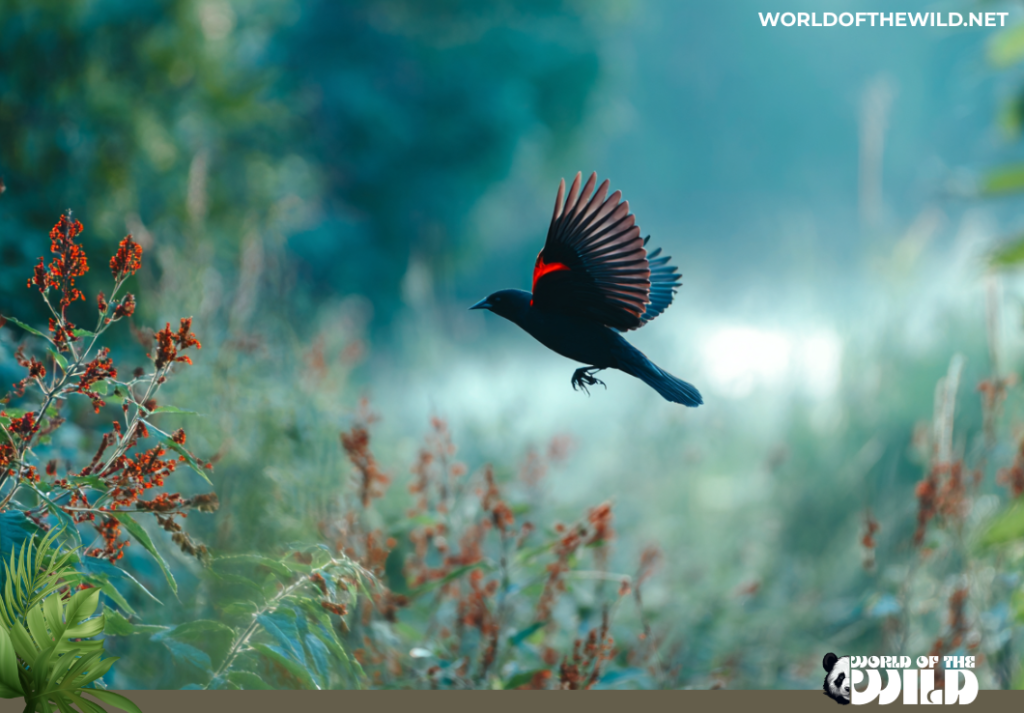
The birds are strong, direct fliers with rapid wingbeats, though they typically make short flights between feeding areas and perches within their territories. During migration, they can cover substantial distances, with northern populations traveling thousands of miles between breeding and wintering grounds.
Evolution
The Red-Winged Blackbird belongs to the Icteridae family, which evolved in the Americas and represents a remarkable radiation of songbirds that diversified to fill numerous ecological niches. Fossil evidence and molecular studies suggest that the Icteridae family originated approximately 20 to 25 million years ago during the Miocene epoch, when grasslands and open habitats were expanding across the continents.
The genus Agelaius itself is believed to have diverged from other icterids around 5 to 10 million years ago during the Pliocene epoch. The Red-Winged Blackbird’s ancestors likely evolved in association with the expanding wetland habitats of North America, developing their specialized adaptations for marsh living during this period.
Genetic evidence indicates that Red-Winged Blackbirds survived the Pleistocene ice ages in multiple refugia—isolated pockets of suitable habitat south of the glacial ice sheets. As glaciers retreated and advanced multiple times over the past two million years, populations expanded and contracted, leading to the diversification of the various subspecies we see today. This explains the substantial genetic and morphological variation across their current range.
The evolution of their extreme sexual dimorphism likely resulted from intense sexual selection, with females preferring males with the brightest, most vivid epaulets, while males competed intensely for territories and mating opportunities. This process led to the dramatic divergence in appearance between sexes.
The Red-Winged Blackbird’s closest living relative is the Tricolored Blackbird, and these two species likely shared a common ancestor less than a million years ago. Their evolutionary divergence appears related to different breeding strategies and habitat preferences, with Tricolored Blackbirds being more colonial and specialized.
Habitat
Red-Winged Blackbirds occupy an enormous geographic range spanning most of North America, from central Alaska and northern Canada south through Central America, with some populations reaching as far south as Costa Rica. They’re found across the entire continental United States and southern Canada, making them one of the most widely distributed native birds on the continent.
The species shows remarkable habitat flexibility but demonstrates a strong preference for wetland environments. Their ideal breeding habitat consists of freshwater and brackish marshes dominated by cattails, bulrushes, sedges, and other emergent vegetation. They require vertical plant stems for nest attachment and territorial song posts, along with shallow water or wet substrate underneath for foraging and predator protection.
However, Red-Winged Blackbirds have proven extraordinarily adaptable to human-altered landscapes. They readily colonize agricultural drainage ditches, irrigation canals, roadside wetlands, stormwater retention ponds, and even small temporary wetlands in urban parks. During the non-breeding season, they expand into a wider variety of habitats including agricultural fields, pastures, feedlots, suburban areas, and woodland edges.
The birds occupy habitats from sea level to elevations exceeding 8,000 feet in suitable wetland areas. They can tolerate a wide range of climatic conditions, from hot, humid Gulf Coast marshes to cold northern prairie potholes, though they generally avoid extremely arid regions lacking wetland habitats.
Many northern populations are migratory, traveling south for winter to avoid frozen wetlands and reduced food availability, while southern populations remain year-round residents. During migration and winter, they often roost in vast numbers in marshes, agricultural fields, or wooded areas, sometimes creating mixed-species congregations with grackles, cowbirds, and European Starlings.
Diet
Red-Winged Blackbirds are omnivores with a diet that shifts substantially between seasons, demonstrating remarkable dietary flexibility that contributes to their widespread success.
During the breeding season—spring and summer—their diet consists primarily of animal protein, with insects and other invertebrates comprising 70 to 90 percent of their food intake. They actively hunt beetles, caterpillars, grasshoppers, crickets, flies, mosquitoes, dragonflies, and spiders. They glean insects from vegetation, probe into marsh substrate, and occasionally catch flying insects in mid-air. This high-protein diet is particularly important for feeding growing nestlings, which require substantial nutrition for rapid development.
In fall and winter, Red-Winged Blackbirds transition to a predominantly vegetarian diet, consuming seeds from grasses, sedges, and weeds. They become significant consumers of waste grain in agricultural areas, feeding on spilled corn, wheat, oats, rice, and sunflower seeds. This dietary shift has made them controversial in agricultural regions—while they consume enormous quantities of insect pests during summer, they also damage ripening crops and stored grain during fall and winter.
The birds also eat various wild fruits and berries when available, including elderberries, blackberries, and wild cherries. They occasionally consume the eggs and nestlings of other small birds, though this represents a minor component of their diet.
Their foraging technique involves walking or hopping on the ground while probing the soil with their sharp bills, perching on plant stems to extract seeds from seed heads, or gleaning insects from leaves and stems. They’re opportunistic feeders and quickly locate and exploit concentrated food sources, which explains their tendency to congregate in large flocks at productive feeding sites.
Predators and Threats
Red-Winged Blackbirds face predation throughout their life cycle, though their wetland nesting habitat provides some protection from terrestrial predators. Eggs and nestlings are vulnerable to a variety of predators including marsh wrens, which sometimes destroy eggs, American crows, Common Ravens, Black-billed Magpies, and various snake species that can climb vegetation to raid nests. Northern Harriers, Short-eared Owls, and American Kestrels hunt both young and adult birds in open marsh habitats.
Adult Red-Winged Blackbirds fall prey to various raptors including Sharp-shinned Hawks, Cooper’s Hawks, Merlins, and Peregrine Falcons. Mammalian predators such as raccoons, mink, weasels, and foxes opportunistically catch adults and raid accessible nests, while domestic cats pose a significant threat in suburban areas.
Anthropogenic threats, while not currently endangering the species as a whole, include several significant factors. Wetland drainage and degradation remain ongoing concerns, with an estimated 50 percent of North America’s historic wetlands already lost to agricultural conversion and development. Although Red-Winged Blackbirds adapt well to artificial wetlands, the continued loss of large, high-quality marsh habitats affects their optimal breeding success.
Agricultural pesticides pose both direct and indirect threats through poisoning and by reducing insect prey populations. Some agricultural operations conduct lethal control programs targeting blackbird flocks to reduce crop damage, killing millions of birds annually through shooting, trapping, and poison baits, though these programs’ impacts on overall populations remain debated.
Climate change presents emerging challenges including altered precipitation patterns affecting wetland hydrology, shifting migration timing, and potential mismatches between insect prey availability and nestling-rearing periods. Collisions with windows, vehicles, and communication towers also kill substantial numbers annually.
Despite these threats, the Red-Winged Blackbird’s adaptability, generalist habits, and enormous population provide significant resilience against most current pressures.
Reproduction and Life Cycle
Red-Winged Blackbirds employ a polygynous mating system, with males defending territories and mating with multiple females while providing minimal parental care. The breeding season begins in early spring, with males arriving at breeding territories before females to establish and defend territories through aggressive displays and vocalizations.
Males advertise their territories through spectacular displays, spreading their wings to flash their red epaulets while singing repeatedly from prominent perches. Females select mates based on territory quality and male display intensity, with older, more experienced males typically controlling the best territories and attracting more mates. A successful male may mate with 3 to 15 females within his territory, though 2 to 5 is more typical.
Females construct nests independently, weaving cup-shaped structures from marsh vegetation—grasses, sedges, cattail leaves—and lining them with fine grasses and mud. Nests are typically suspended between vertical plant stems 1 to 8 feet above water or wet ground, providing protection from terrestrial predators. Construction takes 3 to 6 days.
Females lay 3 to 4 eggs per clutch (range 2 to 6), with eggs being pale blue-green marked with dark spots and scrawls. Incubation lasts 11 to 13 days and is performed exclusively by females. Males defend territory boundaries but rarely participate in incubation or feeding duties.
Nestlings are altricial—born naked, blind, and completely helpless. Females provide all parental care, brooding young and making up to 10 feeding trips per hour. Nestlings develop rapidly on their high-protein insect diet, fledging at 10 to 14 days old. However, they remain dependent on parental feeding for another two weeks after leaving the nest.
Many females attempt two or even three broods per season if conditions permit, with later nests often suffering higher predation rates. First-year birds can breed, though males typically don’t acquire prime territories until their second or third year.
In the wild, average lifespan is relatively short—most birds survive only 1 to 2 years. However, individuals can live substantially longer, with the oldest known wild Red-Winged Blackbird surviving 15 years and 9 months.
Population
The Red-Winged Blackbird is currently classified as Least Concern by the International Union for Conservation of Nature (IUCN), reflecting its enormous population and extensive range. This represents one of the conservation success stories among North American birds during an era of widespread avian population declines.
Population estimates for Red-Winged Blackbirds are staggering. The species’ global population is estimated at approximately 210 million individuals, making it one of the most abundant birds in North America. During peak seasons when including recently fledged young, total numbers may exceed 250 million birds.
However, long-term population monitoring through the North American Breeding Bird Survey reveals a concerning trend. Despite their current abundance, Red-Winged Blackbird populations have declined by approximately 30 percent since 1966, representing a loss of roughly 90 million birds over five decades. This decline rate of about 0.7 percent per year is relatively modest but sustained, raising questions about long-term viability.
The causes of this decline remain incompletely understood but likely involve multiple factors: continued wetland loss and degradation, agricultural intensification reducing insect prey, lethal control programs, pesticide exposure, and changing land-use patterns. Interestingly, populations in some regions—particularly where wetland restoration has occurred—show stable or increasing trends, demonstrating the species’ capacity for recovery when quality habitat is available.
Despite the decline, Red-Winged Blackbirds remain ubiquitous across their range, and their adaptability to human-modified landscapes provides some buffer against future pressures. Conservation efforts focus primarily on wetland protection and restoration rather than species-specific interventions, as healthy wetland ecosystems benefit Red-Winged Blackbirds along with hundreds of other wetland-dependent species.
Conclusion
The Red-Winged Blackbird stands as a testament to adaptability and resilience in the modern world. From their spectacular courtship displays and complex polygynous societies to their ability to thrive in both pristine marshes and roadside ditches, these birds embody the flexibility required to survive in rapidly changing landscapes. Their glossy black plumage and brilliant scarlet epaulets have become synonymous with wetland habitats across North America, serving as reliable harbingers of spring’s arrival and symbols of wild places.
Yet their story also serves as a reminder that even abundance doesn’t guarantee security. The loss of 90 million Red-Winged Blackbirds over recent decades—largely unnoticed by the general public—illustrates how dramatic wildlife declines can occur even among our most common species. Their fate remains intimately tied to the wetlands they depend upon, ecosystems that continue to face pressure from development, agriculture, and climate change.
As we move forward, the Red-Winged Blackbird challenges us to recognize that conservation isn’t only about saving rare species from the brink of extinction—it’s also about maintaining the abundance and ecological vitality of common species that form the foundation of healthy ecosystems. Supporting wetland conservation, reducing pesticide use, and creating wildlife-friendly agricultural landscapes will ensure that future generations can still experience the thrill of seeing scarlet epaulets flash through the cattails and hear that triumphant “conk-la-ree!” echoing across the marshes.
Scientific Name: Agelaius phoeniceus
Diet Type: Omnivore (primarily insects in summer, seeds in winter)
Size: 6.5–9 inches (17–23 cm) in length; wingspan 10–16 inches (25–40 cm)
Weight: Males: 1.4–2.9 oz (41–82 g); Females: 1.1–1.8 oz (32–52 g)
Region Found: North and Central America, from Alaska to Costa Rica; most abundant in United States and southern Canada