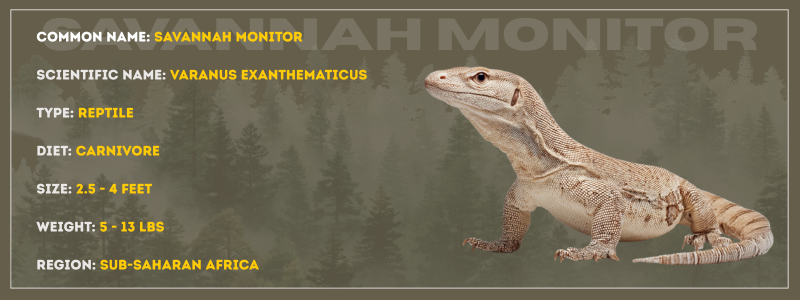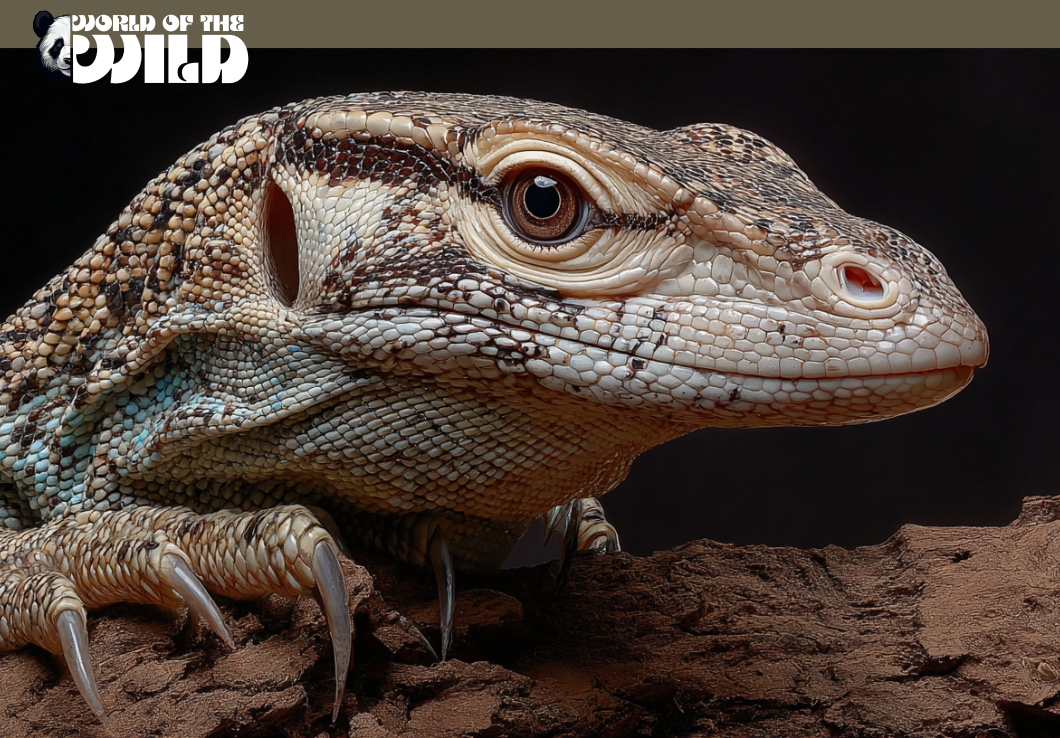

Beneath the scorching sun of Africa’s sprawling grasslands, a powerful predator prowls with prehistoric grace. The Savannah Monitor, a stocky lizard built like a miniature dinosaur, commands respect as one of the continent’s most adaptable reptiles. With their muscular bodies, keen intelligence, and surprising speed, these remarkable creatures have thrived in some of Earth’s harshest environments for millions of years. Unlike their giant cousins like the Komodo dragon, Savannah Monitors have mastered the art of survival through versatility rather than sheer size, making them one of the most successful monitor species on the planet. Their story is one of resilience, adaptation, and the remarkable ways evolution shapes life to conquer challenging landscapes.
Facts
- Underground Architects: Savannah Monitors are exceptional diggers, capable of excavating burrows up to 6 feet deep to escape extreme heat and predators, creating complex tunnel systems with multiple chambers.
- Tail as a Weapon: When threatened, they can use their powerful, muscular tail like a whip, delivering painful strikes that can deter predators twice their size.
- Fat Storage Specialists: These monitors store excess fat in their tail, which becomes noticeably plumper during times of abundance and serves as a survival reserve during dry seasons when food is scarce.
- Surprisingly Fast: Despite their stocky build, Savannah Monitors can run at speeds up to 20 mph in short bursts, making them formidable hunters of swift prey.
- Opportunistic Egg Raiders: They possess a remarkable sense of smell that allows them to detect buried bird and reptile eggs from considerable distances, making them expert nest predators.
- Temperature-Dependent Personalities: Individual monitors show distinct personality variations based on the temperatures they experienced during egg incubation, with warmer incubation producing bolder, more aggressive individuals.
- Extended Breath-Holding: While not aquatic, Savannah Monitors can hold their breath for up to 30 minutes when necessary, allowing them to raid submerged termite mounds during seasonal flooding.
Species
The Savannah Monitor belongs to the following taxonomic classification:
Kingdom: Animalia
Phylum: Chordata
Class: Reptilia
Order: Squamata
Family: Varanidae
Genus: Varanus
Species: Varanus exanthematicus
The Savannah Monitor sits within the Varanus genus, which contains approximately 80 species of monitor lizards distributed across Africa, Asia, and Oceania. Within the species V. exanthematicus, there are two recognized subspecies: Varanus exanthematicus exanthematicus, found in West and Central Africa, and Varanus exanthematicus microstictus, which inhabits East Africa. These subspecies differ slightly in scalation patterns and coloration.
The Savannah Monitor is closely related to other African monitors, including the Nile Monitor (Varanus niloticus), which is larger and more aquatic, and the White-throated Monitor (Varanus albigularis), found in southern Africa. All members of the Varanidae family share common characteristics including forked tongues, powerful limbs, and relatively high intelligence compared to other lizards.
Appearance
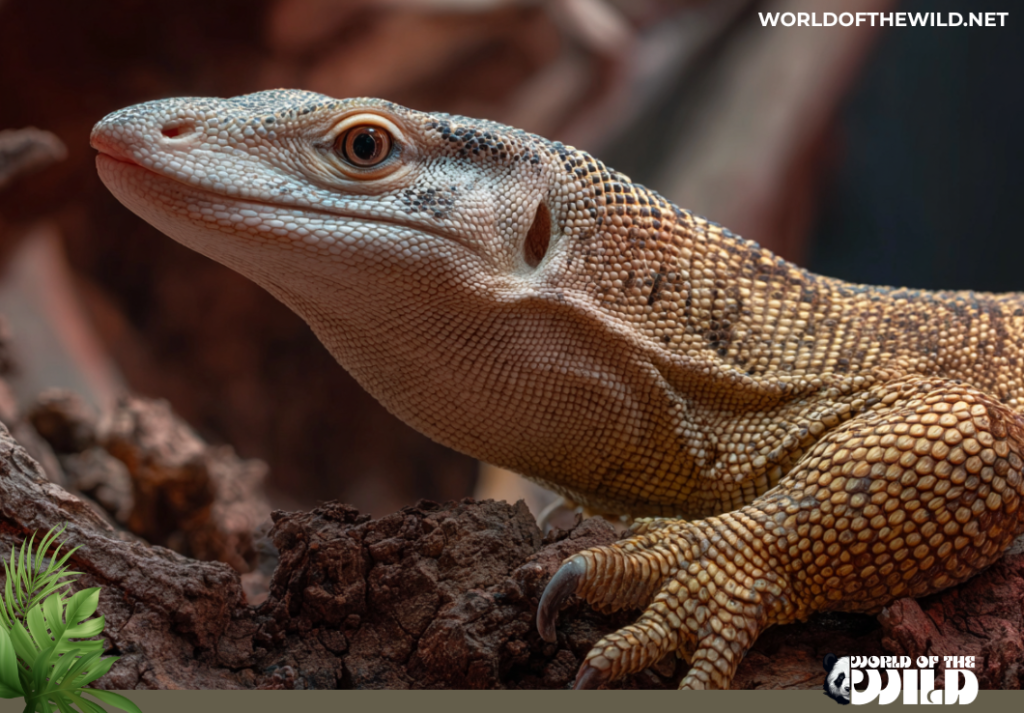
The Savannah Monitor is a robust, heavily-built lizard with a distinctly muscular appearance that sets it apart from more slender monitor species. Adults typically measure between 2.5 to 4 feet in total length, though exceptional individuals may reach 5 feet. Their weight ranges from 5 to 13 pounds, with well-fed specimens occasionally exceeding this range, particularly in captivity.
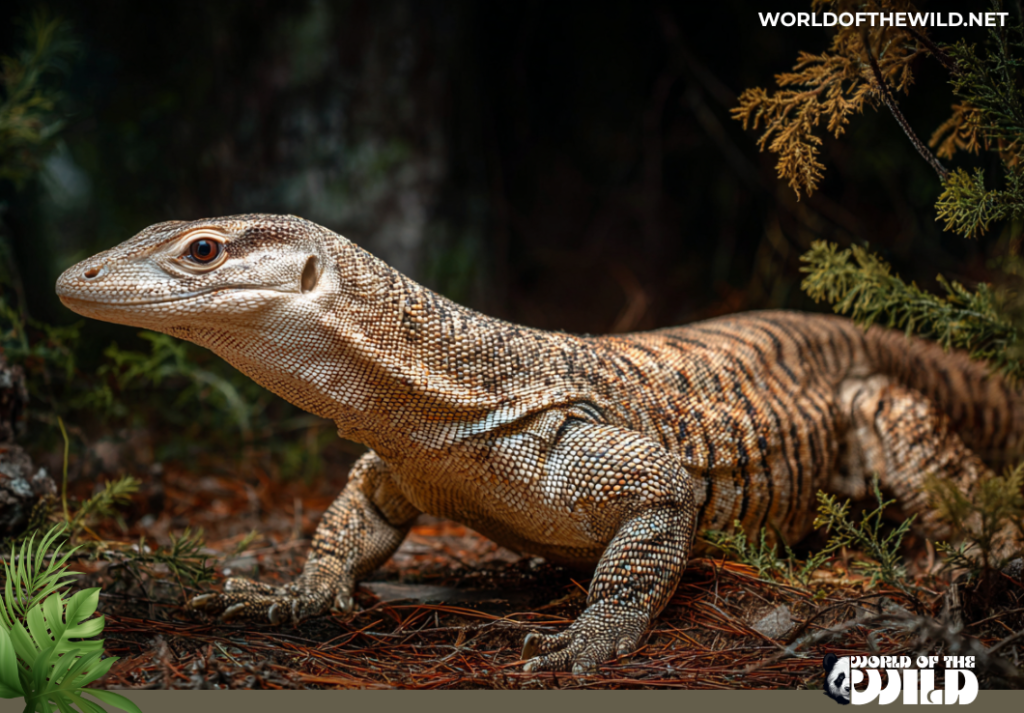
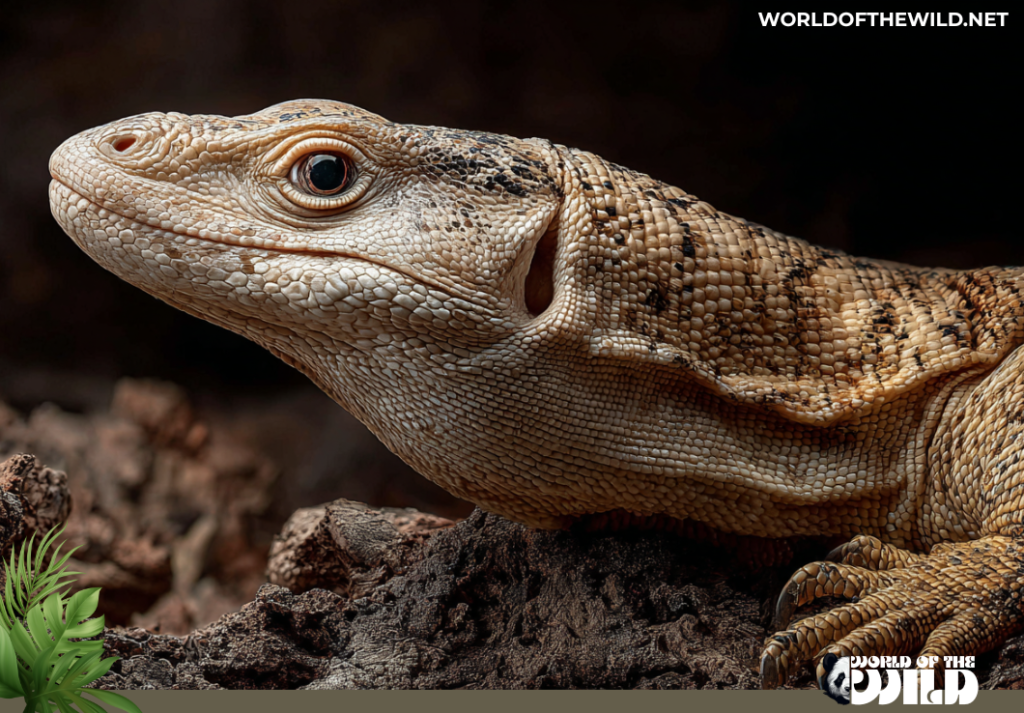
Their coloration provides excellent camouflage in their grassland habitat. The base color ranges from gray to tan or yellowish-brown, adorned with darker bands and ocellated spots across the body. These markings are more pronounced in juveniles, gradually fading as the animal matures. The underside is typically cream to pale yellow with darker speckling.
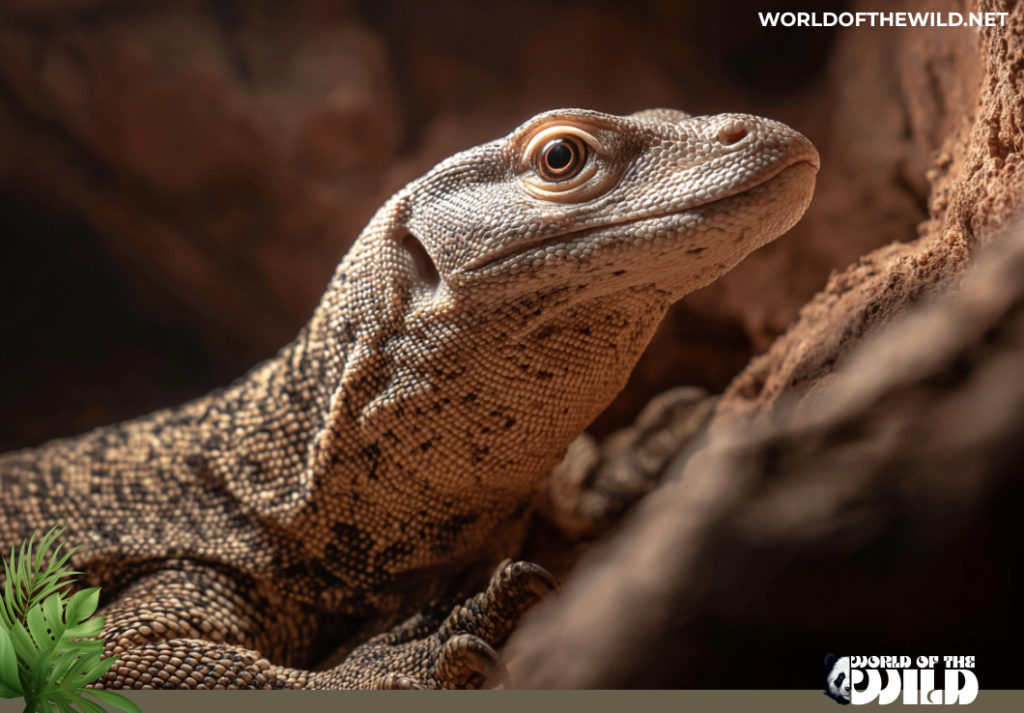
The head is broad and triangular, featuring a blunt snout and powerful jaw muscles visible as bulges behind the eyes. Their eyes are dark with round pupils, and like all monitors, they possess excellent vision. The forked tongue, constantly flicking to sample air particles, delivers chemical information to the Jacobson’s organ in the roof of the mouth.
Their body is covered in small, bead-like scales with larger, keeled scales running down the back. The tail is thick and muscular, roughly equal in length to the body, and marked with alternating dark and light bands. Each of their four powerful legs ends in five toes equipped with sharp, curved claws designed for digging and gripping prey. Their skin appears somewhat loose-fitting, allowing for expansion after large meals and providing some protection during confrontations.
Behavior
Savannah Monitors are primarily solitary creatures, interacting with others of their species mainly during breeding season or when multiple individuals converge on abundant food sources. They are diurnal, meaning they are active during daylight hours, with peak activity occurring during morning and late afternoon when temperatures are moderate.
These monitors are highly intelligent reptiles, demonstrating problem-solving abilities and complex spatial memory. They can remember the locations of productive hunting grounds, water sources, and multiple burrow systems across their territory. Some researchers have observed them using tools in captivity and displaying individual hunting strategies that suggest learning and adaptation.
Communication occurs through a combination of body language, hissing sounds, and chemical signals. When threatened, a Savannah Monitor will inflate its throat, stand tall on its legs, and emit a loud hiss while gaping its mouth to appear larger. If this display fails to deter a threat, they will lash with their tail, bite, or attempt to flee to the nearest burrow.
Their most notable behavioral adaptation is their extensive burrowing. Savannah Monitors spend significant portions of their day either digging new burrows or maintaining existing ones. These underground retreats serve multiple purposes: protection from predators, shelter from extreme temperatures (both heat and cold), and safe locations for shedding skin. During the hottest part of the day and throughout the night, they retreat underground where temperatures remain more stable.
They are also known for their patience as hunters. Rather than engaging in extended chases, Savannah Monitors often employ a sit-and-wait strategy near rodent burrows or insect colonies, relying on their excellent camouflage and stillness to ambush prey. However, they are capable of surprising bursts of speed when necessary and will actively pursue fleeing prey over short distances.
Evolution
The evolutionary lineage of monitor lizards extends back to the Cretaceous period, approximately 90 million years ago, making them contemporaries of the last dinosaurs. The Varanidae family represents one of the most successful groups of carnivorous lizards, having survived multiple mass extinction events that eliminated many other reptilian lineages.
Molecular and fossil evidence suggests that monitor lizards originated in Asia before dispersing to Africa and Australia. The African monitor species, including the Savannah Monitor, likely evolved from Asian ancestors that crossed into Africa during the Miocene epoch, roughly 15-20 million years ago, when land bridges and geographic proximity allowed such migrations.
The Savannah Monitor’s ancestors adapted to the expanding grasslands and savannas that characterized Africa’s changing climate during the Miocene and Pliocene epochs. As forests receded and grasslands proliferated, these monitors evolved their robust build and powerful digging capabilities to exploit the new environment. Their stockier body plan, compared to tree-dwelling or aquatic monitors, represents an adaptation to terrestrial life in open habitats where burrowing provides essential protection.
Interestingly, monitor lizards are closely related to snakes, with both groups sharing a common ancestor. This relationship is evident in their forked tongues and flexible skulls. Some scientists consider monitors to be among the closest living relatives to the extinct mosasaurs, massive marine reptiles that dominated Cretaceous oceans.
The genus Varanus has proven remarkably adaptable, radiating into diverse ecological niches. The Savannah Monitor’s evolution reflects a specialization toward terrestrial environments with seasonal extremes, developing behaviors and physical traits that allow them to thrive where other reptiles struggle. Their ability to store fat, dig extensive burrows, and maintain activity across a wide temperature range represents millions of years of evolutionary refinement.
Habitat
Savannah Monitors inhabit a broad swath of sub-Saharan Africa, ranging from Senegal and Mauritania in West Africa, extending eastward through the Sahel region to Sudan, Ethiopia, and Somalia, and southward to northern regions of Tanzania and Kenya. Their distribution follows the savanna belt that stretches across the continent, though they are notably absent from rainforest regions and true deserts.
The typical habitat of the Savannah Monitor consists of grasslands, open woodlands, and thornbush savannas characterized by seasonal rainfall patterns. They thrive in areas where the landscape provides a mosaic of open ground for basking and hunting, scattered trees and shrubs for shade, and soil suitable for extensive burrowing. These environments experience distinct wet and dry seasons, with the monitors showing remarkable behavioral flexibility in response to these changes.
During the wet season, when food is abundant and temperatures are moderated by cloud cover and rain, Savannah Monitors are highly active, ranging widely across their territories in search of prey. The landscape during this period teems with insects, rodents, and ground-nesting birds, providing ample hunting opportunities.
As the dry season intensifies, bringing scorching temperatures and food scarcity, these monitors become increasingly dependent on their burrow systems. In the harshest conditions, they may enter a state of reduced activity similar to hibernation, called brumation, remaining underground for extended periods and living off stored fat reserves.
The soil type is crucial for Savannah Monitor habitat quality. They require earth that is firm enough to maintain stable burrow structures but soft enough to excavate efficiently. Sandy or clay-rich soils in savanna regions typically meet these requirements. Their burrows often feature multiple entrances and can extend several feet underground, maintaining temperatures 10-20 degrees cooler than the surface during peak heat.
While primarily terrestrial, Savannah Monitors will occasionally climb low trees or termite mounds to bask, survey their territory, or raid bird nests. However, they are far less arboreal than many other monitor species, with their robust build and short claws better suited for ground-dwelling life.
Diet
The Savannah Monitor is a carnivorous opportunist with a diverse diet that reflects the seasonal abundance of their savanna habitat. Their feeding strategy combines active hunting with scavenging, allowing them to exploit whatever protein sources are available.
Primary prey items include large invertebrates such as beetles, grasshoppers, scorpions, centipedes, and millipedes. Land snails constitute a significant portion of their diet in some regions, with the monitors using their powerful jaws to crush shells and extract the soft bodies within. They are particularly fond of various insect larvae and will excavate soil or rotting wood to access these rich food sources.
Small vertebrates also feature prominently in their diet. Rodents, particularly ground squirrels and various mouse species, are taken whenever encountered. The monitors will stake out rodent burrows, either waiting for the occupant to emerge or digging them out entirely. They also consume small birds, especially nestlings and ground-nesting species, along with bird eggs, which they swallow whole. Lizards, including smaller members of their own species, fall prey to larger Savannah Monitors.
Their hunting technique varies with prey type. For fast-moving insects and rodents, they employ quick lunges and snapping bites. For eggs and snails, they use their powerful jaws to crush protective shells. When feeding on larger prey, they employ a “death shake,” violently thrashing their head from side to side to subdue struggling animals or tear apart carcasses.
Savannah Monitors possess a remarkably efficient digestive system that allows them to extract maximum nutrition from their food. They can survive extended periods without eating by slowing their metabolism and living off fat stored in their tail and body. During times of abundance, particularly at the onset of the wet season, they feed voraciously to build these reserves.
Their sense of smell is their primary hunting tool. The constantly flicking forked tongue collects airborne chemical particles, which are analyzed by the Jacobson’s organ, allowing them to detect prey, carrion, and even buried eggs from considerable distances. This chemosensory ability makes them devastatingly effective hunters in their environment.
Predators and Threats
Despite their formidable defensive capabilities, Savannah Monitors face predation, particularly as juveniles. Natural predators include various large birds of prey such as martial eagles, crowned eagles, and large owl species, which can snatch young monitors from the ground. Terrestrial predators include large snakes like pythons and cobras, wild cats such as leopards and caracals, honey badgers, and monitor species’ ancient enemies, various mongoose species, which are quick enough to avoid the monitor’s bite and agile enough to exploit vulnerabilities.
Adult Savannah Monitors are considerably safer from predation due to their size, strength, and defensive behaviors. However, they may still fall victim to apex predators like lions, hyenas, and large crocodiles near water sources. Their primary defense strategy combines intimidation displays, powerful bites delivered by strong jaws lined with sharp teeth, tail-whipping, and rapid retreat to burrows when overmatched.
Human-caused threats pose a far more significant danger to Savannah Monitor populations than natural predation. Habitat loss due to agricultural expansion, particularly the conversion of savannas to cropland and pasture, represents the most pervasive threat across their range. As human populations grow throughout sub-Saharan Africa, the grasslands and open woodlands these monitors require are increasingly fragmented or eliminated.
The international pet trade has created substantial pressure on wild populations. Tens of thousands of Savannah Monitors are captured annually for export to North America, Europe, and Asia, where they are sold as exotic pets. While captive breeding produces some specimens, wild-caught individuals still dominate the trade. The collection methods and transport conditions often result in high mortality rates even before animals reach their destinations.
In some regions, Savannah Monitors are killed out of fear or misunderstanding, as some communities believe them to be venomous (they are not) or dangerous to livestock (rarely, if ever, true). Others are killed for traditional medicine, with various body parts believed to possess healing properties in certain cultural contexts.
Climate change presents an emerging threat, as shifting rainfall patterns alter the seasonal cycles these monitors depend upon. Extended droughts can reduce prey populations and make successful reproduction more difficult, while changes in temperature regimes may affect egg incubation success rates and juvenile survival.
Road mortality is also increasing as road networks expand through savanna regions, with monitors often killed while basking on warm asphalt or crossing roads in search of territory or mates.
Reproduction and Life Cycle
Savannah Monitors reach sexual maturity at approximately 2 to 4 years of age, depending on food availability and growth rates. Breeding typically occurs during the transition from dry to wet season, with exact timing varying by region. Males become noticeably more aggressive and territorial during this period, engaging in combat with rival males that involves wrestling, biting, and attempts to pin opponents to the ground.
Courtship is a relatively brief affair. Males locate receptive females using chemical cues detected by their Jacobson’s organ, tracking pheromone trails across the landscape. The male approaches with a distinctive bobbing gait and may stroke or bite the female gently. If she is receptive, mating occurs and may last from several minutes to over an hour.
Females are oviparous, laying eggs rather than giving live birth. Approximately 6 to 8 weeks after mating, the female seeks out suitable nesting sites, showing a preference for termite mounds, which provide excellent insulation and humidity control. If termite mounds are unavailable, she will excavate her own burrow in sandy soil. The clutch typically contains 15 to 40 eggs, though exceptional clutches of up to 50 have been recorded. The eggs are leathery-shelled, white, and roughly the size of a chicken egg.
After carefully positioning her eggs and covering the nest chamber, the female provides no further parental care. The eggs incubate for approximately 120 to 270 days, depending on ambient temperatures, with warmer conditions accelerating development. Interestingly, incubation temperature influences not only development rate but also hatchling characteristics, including size, coloration, and even behavioral tendencies.
Hatchlings emerge at about 5 to 8 inches in length, replicas of adults but with more vivid banding and coloration. They are immediately independent and face the highest mortality rates of any life stage. Their first year is spent in constant search for food while avoiding the numerous predators that view them as meals. Those that survive grow rapidly during their first few years, with growth rates slowing considerably after sexual maturity.
In the wild, Savannah Monitors typically live 8 to 12 years, though individuals that successfully avoid predators, disease, and human threats can potentially reach 15 years or more. Captive specimens, free from predation and provided with consistent food and veterinary care, have been documented living over 20 years.
Population
The Savannah Monitor is currently classified as “Least Concern” by the International Union for Conservation of Nature (IUCN), indicating that the species as a whole does not face immediate risk of extinction. This classification reflects their relatively wide distribution across sub-Saharan Africa and their documented ability to persist in moderately disturbed habitats, including areas with some agricultural development and human presence.
However, this overall assessment masks significant regional variation in population health. In West Africa, where the international pet trade extracts the highest numbers and habitat conversion is most intensive, local populations have experienced notable declines. Some areas that historically supported robust monitor populations now see them only occasionally. In contrast, populations in more remote regions of the Sahel and East Africa remain relatively stable, though comprehensive surveys are lacking for many areas.
Precise global population estimates are unavailable due to the species’ large range, cryptic behavior, and the challenging logistics of surveying monitor populations across diverse African landscapes. The secretive nature of these reptiles, combined with their extensive use of underground burrows, makes population assessment particularly difficult. However, experts generally agree that while the species is not endangered, the trajectory is concerning in heavily exploited regions.
The international trade statistics provide some insight into pressure on wild populations. CITES (Convention on International Trade in Endangered Species) data indicates that hundreds of thousands of Savannah Monitors have been exported from African countries over the past few decades, primarily to the United States, Europe, and Asia. While the species is listed under CITES Appendix II, which requires monitoring of trade to ensure it doesn’t threaten survival, enforcement varies considerably by country, and illegal trade adds to documented exports.
Population trends appear stable in protected areas and national parks where habitat is preserved and collection is prohibited, suggesting that with appropriate conservation measures, Savannah Monitor populations can persist alongside human activities. However, without improved regulation of the pet trade and habitat protection, localized extinctions and range contraction remain realistic possibilities, particularly in West Africa.
Conclusion
The Savannah Monitor stands as a testament to the power of adaptation and resilience in the face of environmental challenges. From their prehistoric origins to their current status as masters of the African savanna, these remarkable reptiles have refined survival into an art form. Their intelligence, versatility, and robust physiology enable them to thrive in habitats that swing between seasonal extremes, while their complex behaviors reveal a sophistication that defies the common misconception of reptiles as simple, instinct-driven creatures.
Yet the same qualities that make Savannah Monitors fascinating to naturalists and appealing to pet enthusiasts also place them at risk. The international demand for these animals as exotic pets, combined with the relentless conversion of African grasslands to human use, threatens to undermine millions of years of evolutionary success. While currently not endangered, the warning signs are present in declining regional populations and the ongoing pressures that show no sign of abating.
The future of the Savannah Monitor depends on our willingness to recognize that these ancient survivors deserve more than to be collected and caged. By supporting habitat conservation in sub-Saharan Africa, demanding stricter regulation of the wildlife trade, and choosing captive-bred animals over wild-caught specimens, we can ensure that future generations will know these magnificent monitors not just in terrariums, but prowling the sunbaked grasslands where they truly belong. The choice, as with so many species, ultimately rests with us. Will we be the generation that cherished the Savannah Monitor into security, or the one that took them for granted until the savannas fell silent?
Scientific Name: Varanus exanthematicus
Diet Type: Carnivore
Size: 2.5 to 4 feet (up to 5 feet in exceptional individuals)
Weight: 5 to 13 pounds
Region Found: Sub-Saharan Africa (West Africa from Senegal to Somalia, south to northern Tanzania and Kenya)