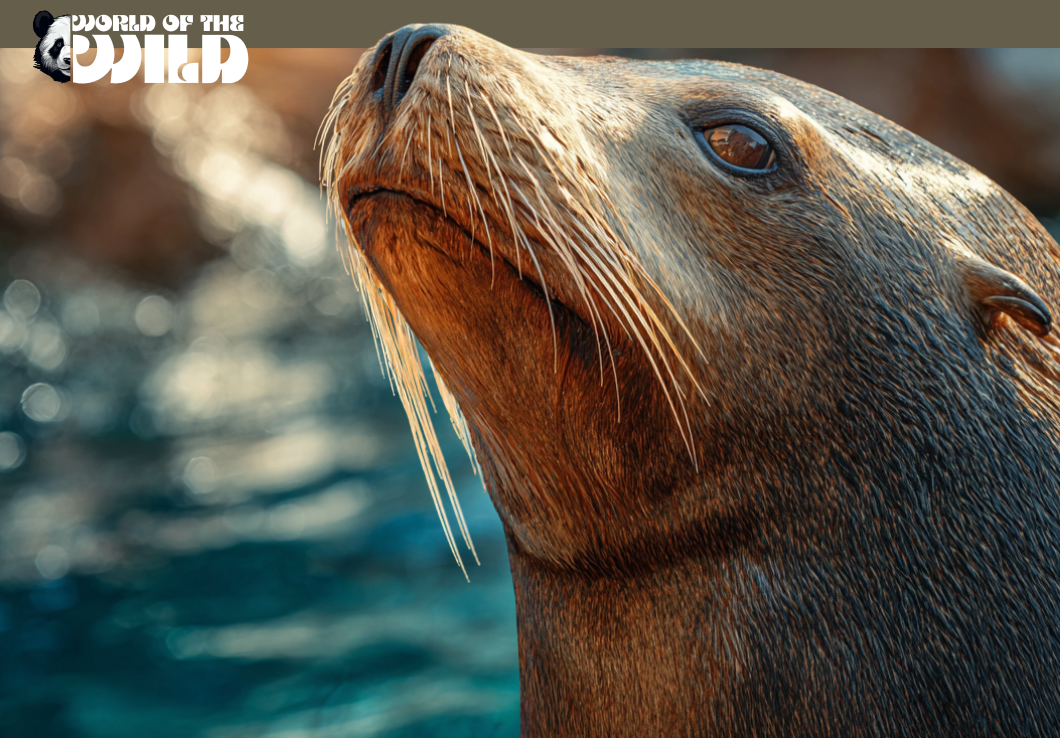

Picture a creature that can outswim Olympic athletes, “walk” on all fours across rocky shorelines, and learn complex tasks faster than most domestic animals — all while barking loudly enough to be heard a mile away. The sea lion is one of nature’s most dynamic and captivating marine mammals, a creature that seems equally at home gliding silently through deep blue water and basking lazily in the sun with hundreds of its rowdy companions. Unlike their quieter cousins the seals, sea lions possess an undeniable personality — bold, curious, and surprisingly intelligent.
These animals occupy a fascinating ecological niche at the intersection of land and sea, and their story touches on evolutionary transformation, complex social lives, and an increasingly uncertain future shaped by human activity. Whether you encounter one in the wild, at an aquarium, or performing in a nature documentary, the sea lion has a way of demanding your full attention.
Facts
- Sea lions can sleep underwater. They enter a state called “unihemispheric slow-wave sleep,” allowing one half of the brain to rest while the other stays alert — enabling them to surface for air without fully waking up.
- They are among the few non-human animals that can keep a beat. A California sea lion named Ronan famously demonstrated the ability to bob her head in time to music, a cognitive feat previously thought unique to vocal-learning species like parrots and humans.
- Sea lions can rotate their rear flippers forward. Unlike true seals, this anatomical ability allows them to “walk” on land using all four limbs, making them far more agile on shore.
- Their whiskers are sensory supertools. Their vibrissae (whiskers) are so sensitive they can detect the hydrodynamic wake of a fish that swam through the water up to 30 seconds earlier.
- The U.S. Navy trains sea lions for military operations. The Navy Marine Mammal Program has trained California sea lions to detect underwater mines and tag enemy divers with retrieval devices.
- They can dive to depths exceeding 900 feet. Their bodies are adapted to manage pressure and oxygen in ways that would incapacitate a human diver in seconds.
- Sea lions can recognize themselves in mirrors, suggesting a level of self-awareness that places them among an elite group of cognitively advanced animals.
Species
Sea lions belong to the following taxonomic classification:
- Kingdom: Animalia
- Phylum: Chordata
- Class: Mammalia
- Order: Carnivora
- Family: Otariidae (eared seals)
- Genus/Species: Multiple (see below)
The family Otariidae encompasses both sea lions and fur seals, distinguished from true seals (Phocidae) by their visible external ear flaps and their ability to rotate their hind flippers. There are seven recognized species of sea lion:
- California Sea Lion (Zalophus californianus) — The most familiar and widely recognized species, native to the Pacific Coast of North America. This is the species most often seen in aquariums and trained performances.
- Steller (Northern) Sea Lion (Eumetopias jubatus) — The largest of all sea lion species, found along the North Pacific rim from California to Japan.
- South American Sea Lion (Otaria flavescens) — Found along the coasts of South America from Peru around to Brazil.
- Australian Sea Lion (Neophoca cinerea) — Endemic to Australia, one of the rarest sea lion species and the only one with a non-annual breeding cycle.
- New Zealand Sea Lion (Phocarctos hookeri) — Also called Hooker’s sea lion, native to New Zealand’s subantarctic islands and one of the world’s rarest sea lions.
- Galápagos Sea Lion (Zalophus wollebaeki) — A close relative of the California sea lion, found exclusively in the Galápagos Islands.
- Japanese Sea Lion (Zalophus japonicus) — Declared extinct in the 1970s, once inhabited the Sea of Japan and surrounding coastlines.
Appearance
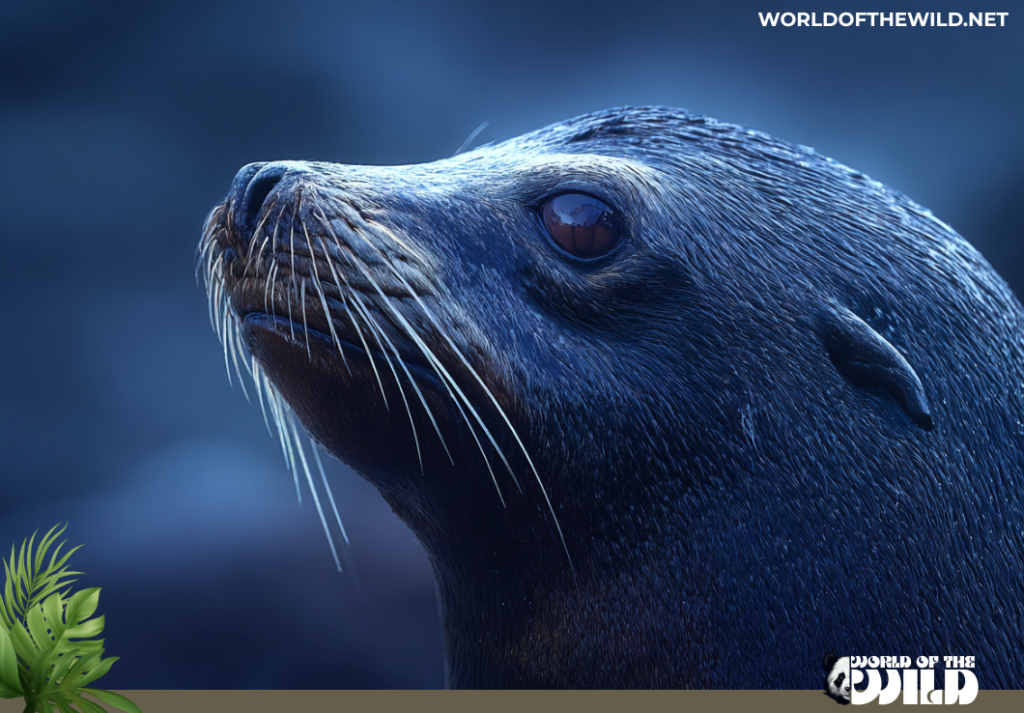
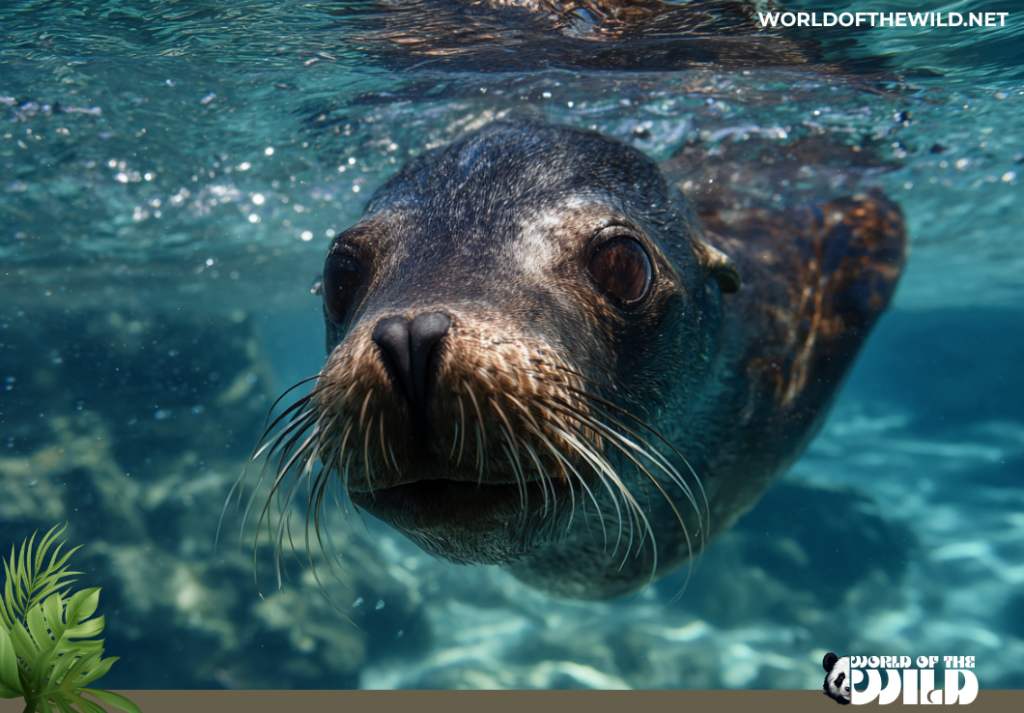
Sea lions are robust, muscular pinnipeds with torpedo-shaped bodies built for hydrodynamic efficiency. Their most immediately recognizable features are the visible external ear flaps (pinnae) — a key distinction from true seals — and their large, powerful front flippers, which they use to propel themselves through the water like underwater wings.
Male sea lions, known as bulls, are dramatically larger than females (cows), a trait called sexual dimorphism. A fully grown male California sea lion typically weighs between 440 and 880 pounds and stretches 7 to 8 feet in length, while females average a much slimmer 200 to 250 pounds and 5 to 6 feet. Steller sea lions take this even further — bulls can tip the scales at over 2,400 pounds and reach lengths of 11 feet, making them the size of a small car.
Coloration varies by species and sex, but most sea lions range from tawny brown to dark chocolate, often appearing nearly black when wet. Adult males frequently develop a pronounced sagittal crest — a bony bump on the top of the skull — that gives their heads a distinctly blocky appearance. Their large, liquid eyes are adapted for low-light underwater vision, and their short, dense fur provides some insulation, though they rely more heavily on a thick layer of blubber for thermoregulation than fur seals do.
Behavior
Sea lions are intensely social animals. Outside of breeding season, they congregate in large groups called rafts when in the water and colonies or rookeries when on land — and both settings are typically loud, boisterous affairs. Communication is a near-constant activity; sea lions bark, growl, and honk to establish territory, attract mates, locate pups, and warn rivals.
On land, dominant males are fiercely territorial, patrolling defined stretches of beach and using vocalizations, posturing, and physical confrontations to defend their turf. In the water, however, much of this hierarchy dissolves, and sea lions become playful and highly cooperative. They have been observed body-surfing on ocean swells purely for recreation — a behavior scientists interpret as genuine play.
Their intelligence is exceptional. Sea lions can follow pointing gestures, understand symbolic logic, and exhibit concept formation — the ability to grasp that two objects share a common rule rather than just a common appearance. In the wild, this cognitive horsepower manifests in sophisticated hunting strategies: sea lions frequently hunt cooperatively, herding schools of fish into tight “bait balls” before taking turns feeding through the concentrated prey.
They are also remarkably fast swimmers, capable of bursts up to 25 miles per hour, and their maneuverability underwater — twisting, rolling, and reversing direction in an instant — is breathtaking to witness.
Evolution
Sea lions belong to a lineage that made one of evolution’s most dramatic pivots: a return from land back to the sea. The ancestors of all pinnipeds were terrestrial carnivores that began transitioning to an aquatic lifestyle approximately 25 to 30 million years ago, during the late Oligocene epoch. Fossil evidence points to a bear-like ancestor from the North Pacific as the probable starting point for the otariid lineage (sea lions and fur seals), while true seals likely arose from a separate, otter-like ancestor in the North Atlantic.
The earliest known otariid-like fossils date to the early Miocene, roughly 18 million years ago, found in what is now Oregon and California. Over millions of years, natural selection sculpted their bodies for aquatic life: forelimbs became powerful flippers, hind limbs repositioned to aid in swimming, nostrils evolved to seal shut underwater, and respiratory systems became extraordinarily efficient at oxygen storage in blood and muscle tissue.
Crucially, sea lions never fully abandoned the land — they retained the ability to walk on all four limbs and continued to breed on shore, giving them the dual-realm lifestyle that makes them such compelling animals today. The seven modern sea lion species represent the successful diversification of this lineage across the Pacific Ocean and Southern Hemisphere coastlines over the last several million years.
Habitat
Sea lions are found exclusively along coastlines of the Pacific Ocean and parts of the Southern Ocean, with the notable exception of the Galápagos sea lion, which straddles the Pacific near the equator. They are fundamentally coastal animals, rarely venturing into the open ocean except during extended foraging trips.
Their preferred habitats are rocky coastlines, sandy beaches, and offshore islands that offer easy access to productive fishing grounds. They favor areas where cold, nutrient-rich upwellings support abundant fish populations — which is why the California Current along the western coast of North America supports one of the world’s largest and most visible sea lion populations.
On land, they seek out flat, open areas near the water’s edge where large groups can haul out and warm themselves. Sea lions are not particularly sensitive to temperature extremes, and different species occupy habitats ranging from the frigid Aleutian Islands in Alaska (home to Steller sea lions) to the sun-baked rocks of the Galápagos nearly on the equator. What all these habitats share is proximity to the ocean and freedom from heavy vegetation — sea lions need unobstructed sight lines and quick escape routes to the water.
Diet
Sea lions are dedicated carnivores, and the ocean is their pantry. Their diet is anchored by fish, with anchovies, herring, sardines, salmon, rockfish, and hake among the most common prey depending on species and location. They supplement fish with squid and octopus, and some larger individuals — particularly Steller sea lions — will occasionally take smaller marine mammals such as fur seal pups.
Hunting is an active, energetic affair. Sea lions use their sensitive whiskers to detect prey movements in murky water and at depth, and they are pursuit predators, using speed and agility to chase down individual fish or work cooperatively to corral entire schools. They swallow prey whole or in large pieces — their teeth are designed for gripping, not chewing.
Adult males, due to their significantly larger body mass, require substantially more food than females — an adult male California sea lion may consume 15 to 35 pounds of fish per day during peak feeding periods. Sea lions do not drink seawater; they obtain all needed fresh water from the metabolic processing of their prey.
Predators and Threats
Natural Predators
Sea lions sit near the top of their food web, but they are not without enemies. Orcas (killer whales) are their most formidable natural predator, and their cooperative hunting strategies make them highly effective at isolating sea lions from protective groups. Great white sharks are the other major natural threat, particularly to younger and smaller animals that stray into deeper, open water. In some regions, sea lions haul out in places specifically chosen to minimize exposure to both threats.
Human-Caused Threats
The picture becomes considerably darker when human activity enters the equation:
- Overfishing devastates the fish populations that sea lions depend on, forcing animals to travel farther for food, leading to malnutrition, reduced reproduction, and starvation in pups.
- Entanglement in fishing gear (bycatch) kills thousands of sea lions each year. Nets, longlines, and other gear can trap and drown animals that cannot surface to breathe.
- Climate change and the associated warming and disruption of ocean currents — particularly El Niño events — periodically crash local fish populations. Extended El Niño events have caused catastrophic pup mortality events in California and Galápagos sea lion populations.
- Marine pollution, including plastic debris and chemical contaminants like PCBs and mercury, accumulates in the tissues of sea lions through the fish they eat, impairing immune function and reproductive success.
- Habitat disturbance from coastal development and heavy human presence on beaches disrupts breeding colonies and causes animals to abandon traditional haul-out sites.
- Direct persecution: Historically, sea lions were hunted extensively for their skins, oil, and meat. Some fishermen still regard them as competition and occasionally shoot them illegally.
Reproduction and Life Cycle
Sea lions are polygynous, meaning dominant males mate with multiple females. Each year, males arrive at breeding beaches ahead of the females and engage in intense territorial battles, using vocalizations, posturing, and physical combat to establish and defend sections of beach. The largest and most powerful bulls command the most desirable territories — and access to the most females.
Females arrive at the rookery already pregnant from the previous year’s mating, and they give birth to a single pup within days of arriving on shore. The gestation period lasts approximately 11 months, though this includes a phenomenon called delayed implantation — the fertilized egg remains dormant for about three months before implanting in the uterus, a timing adaptation that synchronizes births with the optimal season.
Newborn pups are born relatively large and alert, with their eyes open, and they begin nursing almost immediately on the mother’s extraordinarily rich, fat-dense milk. The mother-pup bond is primarily established through vocal recognition — within days, a mother can identify her pup’s bark out of hundreds in a crowded rookery, and the pup similarly learns its mother’s voice. Mothers leave pups on shore to go on feeding trips lasting several days, returning to nurse before departing again.
Pups are nursed for 6 months to over a year depending on species, and during this time they begin learning to swim — often hesitantly at first, in shallow tidal pools. Shortly after giving birth, females mate again with the territory-holding male, restarting the cycle.
Sea lions reach sexual maturity at 4–5 years of age, though males typically don’t hold breeding territories successfully until they are 8–10 years old and have the physical size to compete. In the wild, sea lions live an average of 15 to 20 years, with females generally outliving males (who burn through their bodies with the intense energy demands of competing for territory). In captivity, well-cared-for individuals have lived to 30 years.
Population
Conservation status varies considerably across species:
- California Sea Lion: Least Concern — Population estimated at over 300,000 individuals and increasing, making it a genuine conservation success story following protections under the U.S. Marine Mammal Protection Act (1972).
- Steller Sea Lion: Listed as Near Threatened. The western distinct population segment saw a dramatic decline of over 80% in the latter half of the 20th century, though some recovery has been observed recently. Total population approximately 50,000–70,000.
- South American Sea Lion: Least Concern, with a population of around 265,000.
- Australian Sea Lion: Endangered — With only approximately 12,000–15,000 individuals remaining and a population that has been declining, this species is among the most vulnerable pinnipeds in the world.
- New Zealand Sea Lion: Endangered — Estimated at fewer than 12,000 animals, making it one of the rarest sea lions. Population trends remain concerning.
- Galápagos Sea Lion: Endangered — Highly vulnerable to El Niño events; estimated population is approximately 15,000–20,000 but has experienced sharp crashes during climate anomalies.
- Japanese Sea Lion: Extinct since approximately the 1970s.
Conclusion
The sea lion is far more than the charming, clapping performer of children’s imaginations. It is a product of tens of millions of years of evolutionary refinement — a mammal that bridged two worlds and thrived, developing intelligence, social complexity, and physical capabilities that continue to astonish researchers. From the massive, battle-scarred Steller sea lion bulls of Alaska to the sun-loving Galápagos pups riding waves for sheer joy, sea lions reveal the extraordinary depth of life that the ocean sustains.
But their story is increasingly shadowed by the consequences of human decisions. Overfishing empties their larders. Warming oceans disrupt the currents that make their hunting grounds productive. Plastic and pollution travel up food chains to accumulate in their bodies. Some species are edging toward the same extinction that already claimed the Japanese sea lion forever.
The good news is that where protections have been implemented, sea lions respond. California sea lion populations rebounded dramatically once hunting was banned — proof that these animals are resilient when we give them space to be. The question is whether we will extend that same goodwill to the endangered species before time runs out. Sea lions have spent millions of years learning to thrive on this planet. The only variable they cannot adapt to is our indifference.
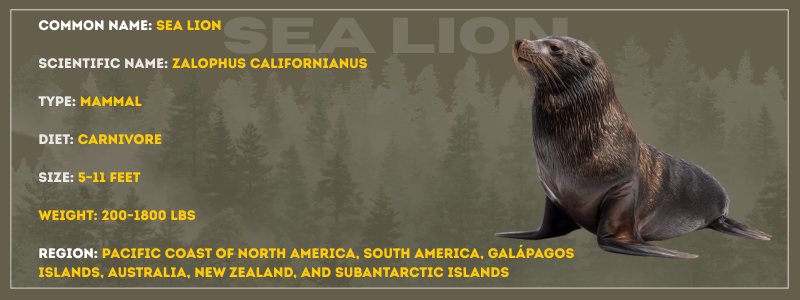
| Catagories | Details |
|---|---|
| Scientific Name | Zalophus californianus (California Sea Lion); family Otariidae encompasses all 6 living species |
| Diet Type | Carnivore |
| Size | 60–96 inches (5–8 feet) for females; up to 132 inches (11 feet) for Steller males |
| Weight | 200–880 lbs (females to males, California sea lion); up to 2,400 lbs (Steller sea lion bulls) |
| Region Found | Pacific Coast of North America, South America, Galápagos Islands, Australia, New Zealand, and subantarctic islands |