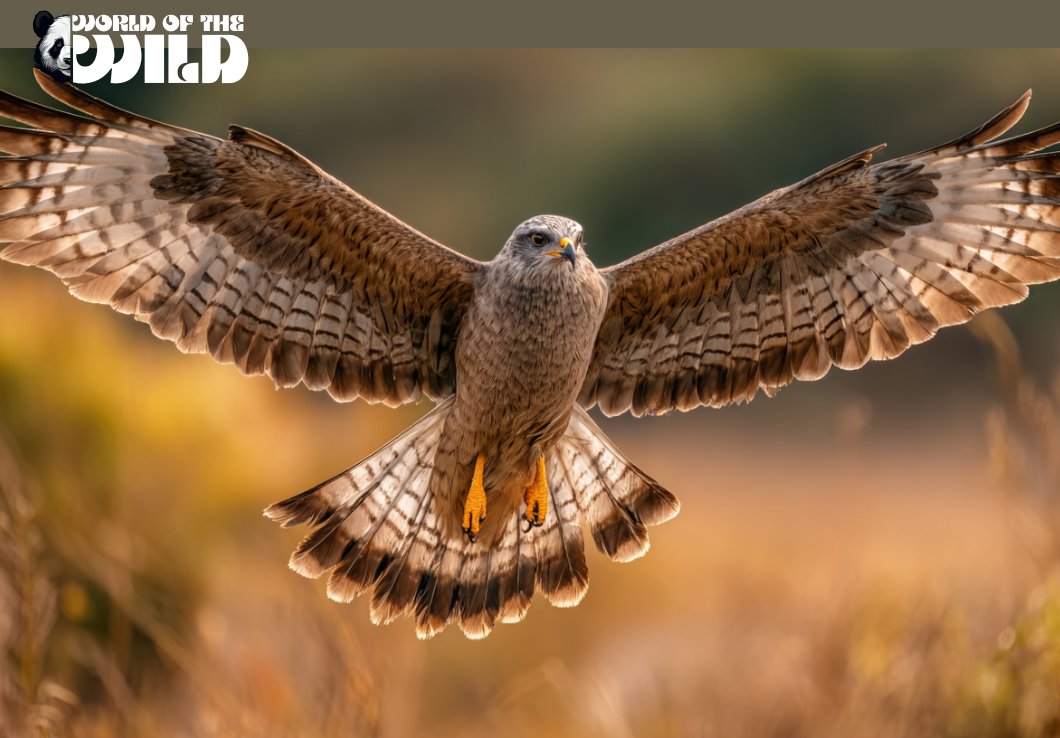

In the lush wetlands of the Americas, a medium-sized raptor glides low over the marsh grasses, its eyes scanning the shallow waters below. Suddenly, it spots movement—the telltale pink shell of an apple snail breaking the surface. With remarkable precision, the bird swoops down, plucks the snail from the water, and flies to a nearby perch. Using its extraordinarily specialized, hook-tipped beak, it extracts the soft-bodied mollusk from its shell in a matter of seconds. This is the Snail Kite, one of the world’s most dietary-specialized raptors and a living testament to the power of evolutionary adaptation.
The Snail Kite is fascinating not merely for its unusual diet, but because it represents an ecological paradox: extreme specialization has allowed this bird to thrive in specific niches, yet that same specialization makes it vulnerable to environmental changes. As wetland ecosystems face mounting pressures from human development and climate change, the fate of the Snail Kite serves as a bellwether for the health of freshwater marshes across the Americas.
Facts
- Master of One Trade: The Snail Kite’s beak is so perfectly adapted for extracting apple snails that it curves into an extreme hook, unlike any other raptor in the Americas.
- Gender Reveal Through Color: Adult male and female Snail Kites look dramatically different—males sport sleek slate-gray plumage while females wear rich brown feathers with heavy streaking, making them one of the most sexually dimorphic raptors in their range.
- Flying Low: Unlike most hawks that soar at great heights, Snail Kites typically hunt just a few feet above the water’s surface, using a slow, methodical flight pattern that allows them to spot snails below.
- One-Clawed Dining: These birds have developed the remarkable ability to eat while flying—they can hold a snail in one foot while maneuvering with the other and using their beak to extract the meal mid-flight.
- Wetland Nomads: Snail Kites don’t maintain permanent territories in the traditional sense; instead, they move nomadically based on water levels and snail abundance, sometimes traveling hundreds of miles to find suitable feeding grounds.
- Young Birds in Disguise: Juvenile Snail Kites resemble adult females but have more pronounced streaking and a different eye color, making age determination relatively straightforward for researchers.
- Endangered Ambassadors: The Everglade Snail Kite, a subspecies found in Florida, was one of the first species listed under the Endangered Species Act in 1967 and has become an iconic symbol of wetland conservation.
Species
Classification:
- Kingdom: Animalia
- Phylum: Chordata
- Class: Aves
- Order: Accipitriformes
- Family: Accipitridae
- Genus: Rostrhamus
- Species: Rostrhamus sociabilis
The Snail Kite belongs to a unique genus, Rostrhamus, which contains only two species. The genus name derives from Latin, meaning “hooked bill,” a direct reference to their distinctive beak structure.
Subspecies:
There are three recognized subspecies of Snail Kite, each occupying different geographic regions:
Rostrhamus sociabilis sociabilis – The nominate subspecies found throughout much of South America, from eastern Panama through Colombia, Venezuela, the Guianas, and south to northern Argentina.
Rostrhamus sociabilis major – Known as the Cuban Snail Kite, this subspecies is endemic to Cuba and is slightly larger than its relatives, with a more robust build adapted to the island’s wetland systems.
Rostrhamus sociabilis plumbeus – The Everglade Snail Kite, found exclusively in Florida, USA. This is the smallest and most critically threatened subspecies, and it has become the focus of intensive conservation efforts.
The only other member of the genus is the Slender-billed Kite (Rostrhamus hamatus), found in wetlands of South America, though it occupies a different ecological niche and lacks the extreme dietary specialization of the Snail Kite.
Appearance
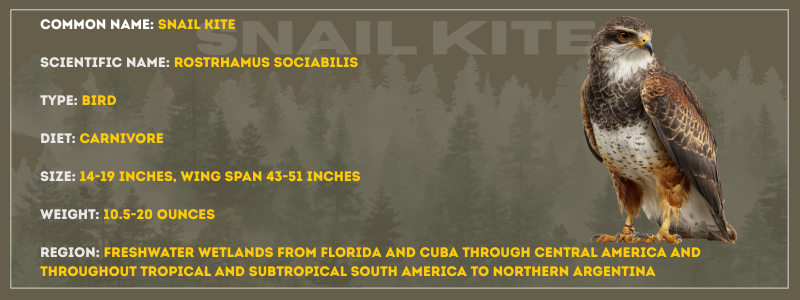
The Snail Kite is a medium-sized raptor with a distinctive silhouette characterized by its broad, rounded wings and relatively short, squared tail. Adults measure between 36 and 48 centimeters (14 to 19 inches) in length, with a wingspan ranging from 110 to 130 centimeters (43 to 51 inches). Their weight varies from 300 to 570 grams (10.5 to 20 ounces), with females typically larger than males—a common trait in raptors known as reverse sexual dimorphism.
The most striking feature of the Snail Kite is its bill, which curves into an exceptionally long, thin hook—far more pronounced than in other hawks. This specialized tool measures up to 20 millimeters in length and enables the bird to reach deep into snail shells to extract the soft body within. The upper mandible extends well beyond the lower, creating a forceps-like structure perfect for precision work.
Sexual dimorphism is dramatic in this species. Adult males are clothed in smooth slate-gray or dark gray plumage across their entire body, with black flight feathers. Their legs and cere (the fleshy area at the base of the beak) are bright red-orange, creating a stunning contrast. The tail displays a distinctive white base with a broad black terminal band, particularly visible during flight.
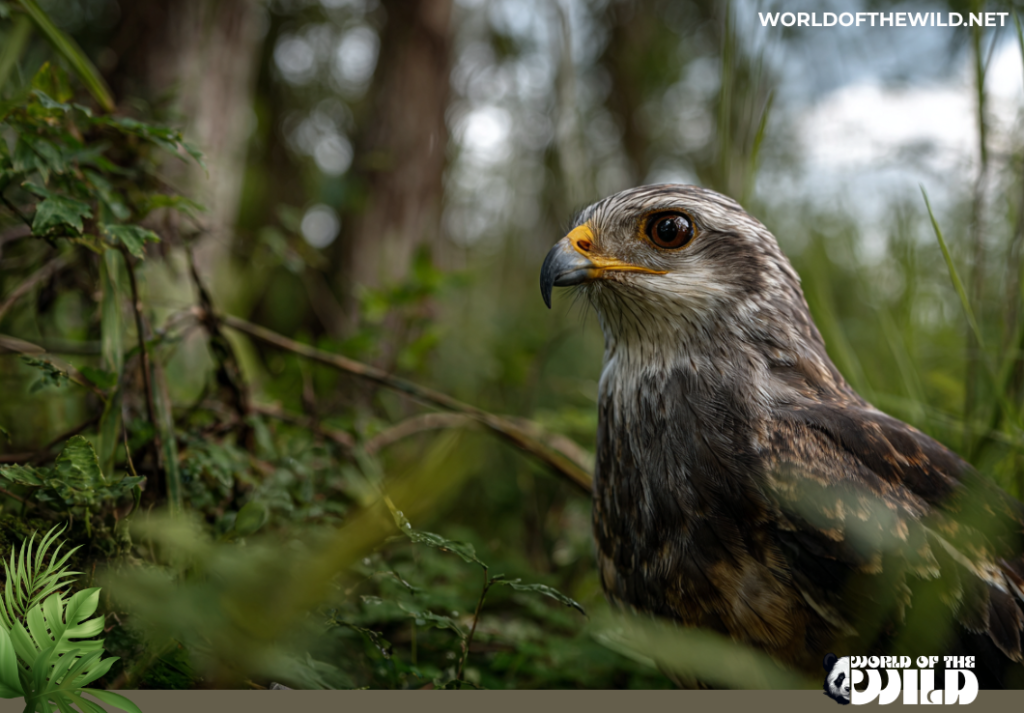
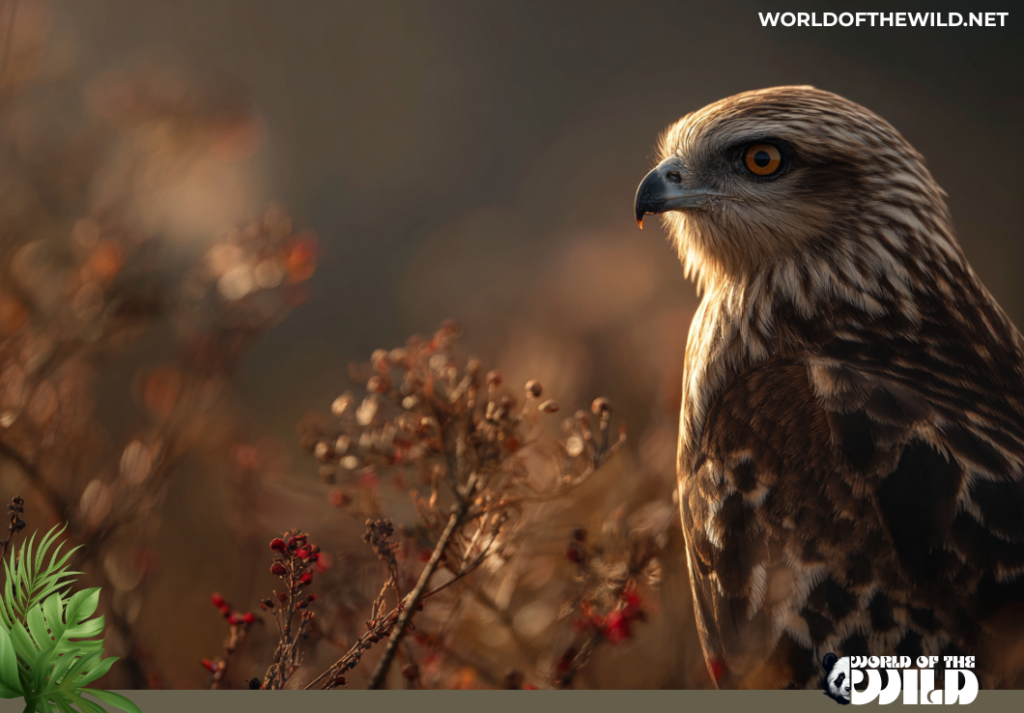
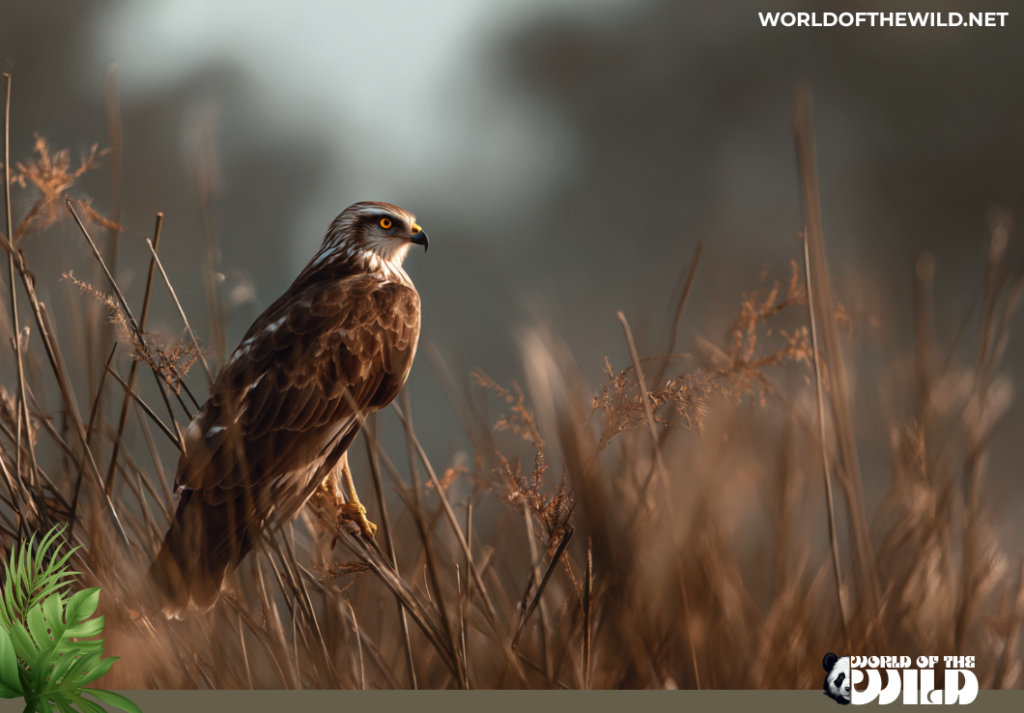
Adult females and immature birds present a completely different appearance. They wear brown plumage heavily streaked with buff and white, creating a mottled pattern that provides excellent camouflage while nesting. Their facial pattern is distinctive, featuring a bold white or buffy supercilium (eyebrow stripe) above a dark eye line, giving them an expressive appearance. Like males, they have the white tail base with dark band, though their leg and cere coloration is duller yellow-orange.
Both sexes possess dark red or reddish-brown eyes, though juveniles display grayish or pale brown eyes that darken with age. In flight, Snail Kites appear relatively long-winged with a buoyant, harrier-like flight style. The white rump patch and banded tail are conspicuous field marks that aid in identification even at considerable distances.
Behavior
Snail Kites exhibit fascinating behavioral patterns shaped entirely by their specialized diet. Unlike most raptors that are territorial, Snail Kites are highly social and often congregate in loose colonies where apple snails are abundant. Groups of dozens or even hundreds of individuals may gather in particularly productive wetlands, demonstrating a level of sociability unusual among birds of prey.
Their hunting technique is methodical and distinctive. Flying slowly at heights of just 1 to 10 meters above the water surface, they scan the shallows with their heads tilted downward. When a snail is spotted—often by the characteristic pink or golden shell visible near the surface—the kite hovers briefly before dropping down with outstretched legs. The capture itself is surprisingly gentle; the bird’s long, slender toes grasp the snail with precision, avoiding any need for the crushing grip employed by other raptors when catching vertebrate prey.
Once captured, the real artistry begins. The Snail Kite has perfected the technique of extracting the snail while perched or even in flight. Holding the shell in one foot, the bird inserts its specialized hooked bill into the shell opening and, with surgical precision, severs the columellar muscle that attaches the snail to its shell. The soft body is then extracted intact and consumed, while the empty shell is dropped to the marsh below. This entire process can take as little as 10 to 30 seconds for an experienced adult.
Communication among Snail Kites includes a variety of vocalizations. The most common call is a distinctive, rattling “ka-ka-ka-ka” sound, often heard during social interactions or when birds gather at communal roosts. During breeding season, males perform aerial displays, including undulating flight patterns and vocalizations to attract females.
Snail Kites demonstrate remarkable adaptability in their movement patterns. Rather than defending fixed territories, they practice what biologists call “nomadism,” moving extensively in response to water levels and snail abundance. During droughts, when water levels drop and snails become scarce in one location, entire populations may relocate hundreds of kilometers to find suitable feeding grounds. This flexibility allows them to survive in the highly variable wetland environments they depend upon.
Roosting behavior is communal, with birds gathering at traditional sites—often in low trees or shrubs near productive feeding areas. These roosts may contain from a handful to over a hundred individuals, creating a spectacular sight at dawn and dusk as the birds depart for or return from their foraging grounds.
Evolution
The evolutionary history of the Snail Kite represents a fascinating case study in dietary specialization. While the fossil record for this specific species is limited, the Snail Kite belongs to the family Accipitridae, which has roots extending back to the Oligocene epoch, approximately 30 to 35 million years ago. The family Accipitridae, which includes hawks, eagles, and kites, underwent significant diversification during the Miocene epoch (23 to 5 million years ago), a period when modern wetland ecosystems were expanding across the Americas.
The genus Rostrhamus likely diverged from other kite lineages several million years ago, developing its characteristic hooked bill in response to the abundant freshwater snail populations in South American wetlands. This represents a striking example of coevolution, as the Snail Kite’s morphology and behavior became increasingly refined to exploit a specific ecological niche—the predation of large freshwater gastropods, particularly apple snails of the genus Pomacea.
Molecular studies suggest that the Snail Kite is most closely related to the Slender-billed Kite and shares ancestry with other New World kites, though it has diverged significantly in both morphology and ecology. The extreme specialization of the Snail Kite’s bill represents a derived characteristic—a feature that evolved relatively recently in evolutionary terms and differs markedly from the ancestral raptor bill structure.
The split between the three modern subspecies likely occurred during the Pleistocene epoch (2.6 million to 11,700 years ago), driven by geographic isolation as sea levels fluctuated and wetland habitats became fragmented. The Cuban and Florida subspecies, in particular, show genetic distinctiveness resulting from their isolation on islands or island-like peninsular habitats.
From an evolutionary perspective, the Snail Kite demonstrates both the advantages and risks of specialization. On one hand, specialization allowed these birds to exploit a food resource with minimal competition—few other predators have developed the anatomical tools necessary to efficiently extract apple snails. On the other hand, this specialization has made the species vulnerable to any factors that affect snail populations, creating an evolutionary trade-off between efficiency and flexibility.
Habitat
The Snail Kite inhabits freshwater wetlands throughout the tropical and subtropical Americas, with a range extending from Florida and Cuba in the north to Argentina in the south. The species’ distribution is closely tied to the presence of suitable wetland habitat and abundant populations of apple snails, creating a discontinuous range that follows major wetland systems.
In South America, Snail Kites are found extensively throughout the Amazon Basin, the Orinoco River delta, the Pantanal wetlands of Brazil, and various coastal and inland marshes across the continent. They also occur throughout Central America, particularly in lowland wetland areas of Panama, Costa Rica, and Nicaragua. The northern extent of their range includes southern Mexico, Cuba, and—most famously—the Florida Everglades and surrounding wetlands.
The specific habitat requirements of Snail Kites are quite precise. They require freshwater marshes, lakes, and slow-moving rivers with extensive areas of shallow water (typically 0.5 to 1.5 meters deep) where apple snails thrive. Ideal habitat includes abundant emergent vegetation such as sawgrass, cattails, bulrushes, and water lilies, which provide both foraging opportunities and nesting substrate. The birds also need scattered trees and shrubs for perching, nesting, and roosting.
Water level is critical to Snail Kite habitat suitability. The birds prefer areas with fluctuating but relatively stable water levels that support healthy snail populations. During the wet season, when water levels rise and flooding occurs, snails become more accessible and populations expand, supporting larger numbers of kites. During dry periods, if water levels drop too low, snails may become less available or even die off, forcing the kites to relocate.
In Florida, the Everglade Snail Kite occupies freshwater marshes throughout central and southern portions of the state, including Lake Okeechobee, the Everglades Water Conservation Areas, and various other wetland complexes. These birds have shown adaptability by colonizing human-created habitats such as retention ponds and water management areas, provided apple snails are present.
The vegetation structure of Snail Kite habitat is also important. They require low trees and shrubs (such as willows, buttonbush, and cattails) for nest building, typically over or very near water. The presence of open water interspersed with emergent vegetation creates the mosaic habitat structure that allows the birds to hunt effectively while also providing protection from predators.
Climate plays a role in habitat suitability as well. Snail Kites are birds of warm climates, rarely occurring where water freezes for extended periods. The tropical and subtropical wetlands they inhabit typically feature year-round warmth, though they can tolerate seasonal temperature variation in more temperate locations like Florida.
Diet
The Snail Kite is one of the world’s most highly specialized feeders, with a diet consisting almost exclusively of freshwater apple snails. This extreme dietary specialization is rare among raptors and has driven every aspect of the bird’s morphology, behavior, and ecology.
Apple snails of the genus Pomacea constitute 95 to 99 percent of the Snail Kite’s diet. These large freshwater gastropods have globular shells that can reach 5 to 7 centimeters in diameter and contain substantial amounts of protein-rich flesh. Different species of Pomacea are consumed across the kite’s range: in Florida, the Florida apple snail (Pomacea paludosa) was historically the primary prey species, though the introduced island apple snail (Pomacea maculata) has recently become a major food source. In South America, various Pomacea species fill this ecological role.
The hunting process is a marvel of evolutionary refinement. Snail Kites locate their prey visually, spotting the snails as they crawl on aquatic vegetation or breathe at the water’s surface through their siphon. The birds have keen eyesight adapted for detecting the distinctive coloration and shape of snail shells against the wetland substrate.
Upon capturing a snail, the kite employs its specialized bill with remarkable efficiency. The long, curved hook allows the bird to reach deep into the shell’s aperture and precisely sever the columellar muscle—the single attachment point between the snail’s body and its shell. This requires both the correct angle of approach and appropriate force; too little pressure fails to detach the muscle, while too much could damage the bill. Adult Snail Kites perform this extraction so smoothly that it appears effortless, though juveniles require weeks or months of practice to master the technique.
An adult Snail Kite typically consumes between 4 and 8 apple snails per day, depending on the size of the snails and the bird’s energy requirements. During breeding season, when adults must provision nestlings, consumption rates increase substantially, with parent birds making numerous foraging trips daily.
While apple snails dominate the diet, Snail Kites occasionally consume other prey items, particularly when their primary food source is scarce. Documented alternative prey includes freshwater crabs, small turtles, and even small fish, though these items make up less than 5 percent of their total food intake. Juveniles, still perfecting their extraction technique, may spend more time on alternative prey than adults.
The reliance on apple snails creates both advantages and vulnerabilities. On the positive side, this specialization means Snail Kites face minimal competition from other predators—few species have evolved the tools or techniques to exploit this food source efficiently. However, anything that affects snail populations—drought, flooding, water pollution, or changes in water chemistry—directly impacts kite survival and reproduction.
Predators and Threats
Despite being predators themselves, Snail Kites face threats from larger raptors and other animals throughout their range. Natural predation, however, represents a far smaller concern than the anthropogenic threats that have placed some populations in jeopardy.
Natural Predators:
Adult Snail Kites have relatively few natural predators due to their flight capabilities and vigilance. Large raptors such as Great Horned Owls, Bald Eagles, and various hawk species may occasionally take adult or juvenile kites, particularly when the kites are focused on foraging or roosting. However, such predation events are relatively uncommon.
Nests face greater vulnerability. Eggs and nestlings are targeted by a variety of predators including raccoons, opossums, snakes (particularly rat snakes and water snakes), and crows. Fire ants have also been documented as significant nest predators in some areas, destroying eggs and attacking nestlings. Nesting over water provides some protection from terrestrial predators, but does not eliminate the threat entirely.
Anthropogenic Threats:
The most significant threat to Snail Kite populations is habitat loss and degradation. Wetland drainage for agriculture, urban development, and water management has eliminated vast areas of suitable habitat throughout the species’ range. In Florida alone, over 50 percent of the original Everglades ecosystem has been lost to development and agriculture, dramatically reducing available habitat for the Everglade Snail Kite.
Water management practices pose complex challenges. The construction of canals, levees, and water control structures has altered the natural hydroperiod (seasonal water level fluctuations) of many wetlands. While some water management infrastructure can create suitable habitat, inappropriate water levels—either too high or too low—can devastate snail populations and force kites to abandon areas.
Water pollution represents another serious threat. Agricultural runoff containing pesticides, herbicides, and excess nutrients can poison snails directly or alter wetland chemistry in ways that make habitats unsuitable. Mercury contamination, resulting from industrial pollution and atmospheric deposition, accumulates in apple snails and subsequently in Snail Kites, potentially affecting reproductive success and survival.
Climate change is emerging as a significant long-term threat. Changes in rainfall patterns, increased frequency of extreme weather events (both droughts and floods), and rising sea levels all have the potential to alter wetland ecosystems in ways that affect both snails and the birds that depend on them. Extended droughts can dry wetlands completely, causing local extinctions of snail populations and forcing kites to relocate or face starvation.
The introduction of non-native species presents both opportunities and challenges. In Florida, the island apple snail, an introduced species much larger than the native Florida apple snail, has provided an additional food source and allowed kite populations to expand into new areas. However, non-native species can also disrupt ecosystems in unpredictable ways, and reliance on introduced prey creates additional uncertainty for conservation planning.
In some regions, Snail Kites are also threatened by persecution. Though direct hunting is rare, some landowners view the birds as pests or indicators of wetland protection regulations and may destroy nests or harass birds to discourage their presence.
Reproduction and Life Cycle
Snail Kites exhibit a flexible breeding strategy closely tied to environmental conditions, particularly water levels and snail abundance. Unlike many temperate-zone raptors that breed on a strict seasonal schedule, Snail Kites can breed opportunistically throughout the year when conditions are favorable, though peak breeding activity often coincides with seasonal patterns in their specific regions.
Courtship and Mating:
Courtship behavior in Snail Kites involves elaborate aerial displays. Males perform undulating flight patterns, ascending and diving while vocalizing, to attract females and establish pair bonds. Courtship feeding is also common, with males presenting freshly caught snails to potential mates—a behavior that demonstrates both hunting prowess and the male’s ability to provision offspring.
Snail Kites are socially monogamous within a breeding season, though pairs may change between nesting attempts. Both sexes participate in nest building, selecting sites in low trees, shrubs, or emergent vegetation over or very near water. Willows, buttonbush, sawgrass, and cattails are commonly used nesting substrates. The nest itself is a relatively loose platform of sticks and aquatic vegetation, measuring 30 to 60 centimeters in diameter.
Egg Laying and Incubation:
Females typically lay clutches of 1 to 4 eggs, with 2 to 3 being most common. The eggs are whitish or pale buff with brown or reddish spots and blotches, measuring approximately 43 by 35 millimeters. Egg laying intervals are usually 2 to 3 days apart.
Incubation begins with the first egg and lasts approximately 24 to 30 days. The female performs most of the incubation duties, though males occasionally relieve their partners. Males are primarily responsible for hunting and providing food to the incubating female during this period.
Nestling Period:
Chicks hatch asynchronously (over several days) and are covered in white down. They are semi-altricial, meaning they are relatively helpless at birth but have open eyes. The female broods the young intensively for the first 2 to 3 weeks while the male provides food. As the nestlings grow, both parents hunt to meet increasing food demands.
Young Snail Kites develop slowly compared to some raptors. They fledge (leave the nest) at approximately 27 to 37 days of age but remain dependent on their parents for several weeks afterward. During this post-fledging period, juveniles learn the complex skill of extracting snails from shells—a process that requires considerable practice. Young birds can often be seen attempting to extract snails with varying degrees of success, gradually improving their technique over weeks or months.
Reproductive Success and Challenges:
Reproductive success is highly variable and depends largely on environmental conditions. In years of good water levels and abundant snails, pairs may successfully raise multiple broods. Conversely, during drought conditions or when snail populations crash, nest abandonment is common, and reproductive success plummets.
Snail Kites can begin breeding as early as one year of age, though most individuals don’t breed successfully until their second year. The extended parental care period and the time required for juveniles to master foraging skills mean that even successful fledglings face challenges during their first year of independence.
Lifespan:
In the wild, Snail Kites can live approximately 10 to 15 years, though precise longevity data is limited. Banding studies have documented individuals surviving at least 12 years in the wild. Mortality is highest during the first year of life, when inexperienced birds are most vulnerable to starvation, predation, and environmental challenges. Once individuals reach adulthood and master foraging techniques, survival rates improve substantially.
The nomadic nature of Snail Kites means that successful breeding requires not just appropriate nesting habitat but also the ability to locate productive foraging areas—sometimes over vast distances—throughout the year. This combination of breeding biology and ecological specialization creates a life history uniquely adapted to the dynamic wetland environments these remarkable birds call home.
Population
The conservation status of Snail Kites varies significantly across their range, with some populations thriving while others face critical challenges. The International Union for Conservation of Nature (IUCN) lists the species overall as Least Concern on a global scale, reflecting the relatively large and stable populations in South America. However, this global classification masks serious concerns for specific subspecies and regional populations.
Global Population:
Estimating the total global population of Snail Kites is challenging due to their nomadic behavior and the vast, often remote wetlands they inhabit. Current estimates suggest a global population of approximately 100,000 to 500,000 individuals, with the vast majority residing in South America. The nominate subspecies (R. s. sociabilis) is widespread and common throughout much of South America, particularly in the extensive wetlands of Brazil, Venezuela, and Argentina.
Regional and Subspecies Status:
The Everglade Snail Kite (R. s. plumbeus) represents the conservation community’s greatest concern. This subspecies is federally listed as Endangered under the U.S. Endangered Species Act and was one of the first species to receive such protection in 1967. The Florida population has fluctuated dramatically over the past several decades, reaching a low of approximately 800 individuals in 2007 before rebounding to around 3,000 to 4,000 birds in recent years.
This population increase in Florida has been attributed partly to the birds’ adoption of the non-native island apple snail as prey, which is larger and potentially provides more nutrition than the native Florida apple snail. The kites have expanded into new areas, including urban retention ponds and agricultural impoundments, demonstrating adaptability that offers some cause for optimism. However, concerns remain about the sustainability of relying on non-native prey and human-modified habitats.
The Cuban Snail Kite (R. s. major) is less well-studied, but available information suggests stable populations in suitable wetland habitats across Cuba. However, comprehensive population surveys are lacking, and habitat loss remains a potential concern.
Population Trends:
Throughout much of South America, Snail Kite populations appear stable, with no evidence of significant declines. The species remains common in extensive wetland systems such as the Pantanal, Amazon floodplains, and llanos of Venezuela and Colombia.
In Florida, population trends have been characterized by dramatic fluctuations driven largely by water management decisions and climatic cycles. Extended droughts can cause sharp population declines, while periods of favorable water levels allow rapid recovery. This boom-and-bust pattern is concerning from a conservation perspective, as it suggests the population remains vulnerable to environmental stochasticity.
Long-term trends indicate that while Snail Kite populations have shown resilience in some areas, ongoing habitat loss and water management challenges mean that vigilance is required. The Florida population, in particular, remains subject to ongoing monitoring and management efforts, with water level management in the Everglades and surrounding areas specifically considering the needs of this iconic species.
Conservation Measures:
Active conservation efforts for Snail Kites include habitat protection and restoration, water management tailored to support both snail populations and nesting birds, population monitoring, and research into the species’ ecology and adaptation to changing conditions. The species has become a flagship for wetland conservation, particularly in Florida, where protection of Snail Kite habitat benefits entire wetland ecosystems.
Conclusion
The Snail Kite stands as one of nature’s most exquisite examples of evolutionary specialization—a raptor so perfectly adapted to its ecological niche that its very identity is defined by its relationship with a single prey item. From its precision-engineered hooked bill to its nomadic lifestyle tracking the ebb and flow of wetland resources, every aspect of this remarkable bird reflects millions of years of refinement.
Yet the Snail Kite’s story is also a cautionary tale about the double-edged nature of specialization. While this bird has mastered the art of snail predation like no other species, that same mastery has made it vulnerable to the dramatic environmental changes reshaping wetlands across the Americas. The fate of the Everglade Snail Kite, in particular, reminds us that even our most iconic wildlife can be pushed to the brink when we alter the natural systems upon which they depend.
There is hope, however. The recent population recovery in Florida demonstrates that when we prioritize wetland conservation and thoughtful water management, these adaptable birds can respond positively. The Snail Kite’s willingness to utilize new habitats and prey sources shows that specialization need not mean inflexibility—at least within limits.
As we face a future of climate uncertainty and continued development pressure on natural areas, the Snail Kite serves as both an indicator and an ambassador. Its presence signals a healthy, functioning wetland ecosystem. Its absence warns of degradation and imbalance. By protecting the marshes, managing water wisely, and preserving the intricate web of relationships that sustain these wetlands, we protect not just one specialized raptor, but the entire community of life that makes these ecosystems among Earth’s most productive and biologically rich environments.
The next time you see a kite gliding low over a marsh, remember that you’re witnessing a master craftsman at work—a bird that has devoted its entire evolutionary history to perfecting a single skill, and in doing so, has become irreplaceable in the grand tapestry of wetland life.
Scientific Name: Rostrhamus sociabilis
Diet Type: Carnivore (malacophage – snail specialist)
Size: 36-48 cm (14-19 inches) in length; wingspan 110-130 cm (43-51 inches)
Weight: 300-570 grams (10.5-20 ounces)
Region Found: Freshwater wetlands from Florida and Cuba through Central America and throughout tropical and subtropical South America to northern Argentina