
Against the endless white expanse of the Arctic tundra, a pair of blazing yellow eyes pierce through the polar twilight. The Snowy Owl, one of nature’s most magnificent predators, sits motionless atop a windswept rise, its pristine plumage blending seamlessly with the snow-covered landscape. Unlike the nocturnal hunters that give owls their mysterious reputation, this Arctic phantom often hunts in broad daylight, a spectacular sight that has captivated human imagination for millennia.
The Snowy Owl stands as a symbol of wilderness and resilience, representing one of the few avian predators capable of thriving in Earth’s harshest environments. From its starring role in popular culture to its critical position in Arctic ecosystems, this remarkable bird embodies the raw beauty and unforgiving nature of the far north, while its occasional winter migrations southward bring a touch of Arctic wonder to millions who might otherwise never witness such grandeur.
Facts
- Arctic Nomads: Snowy Owls are true wanderers, sometimes traveling over 3,000 miles during irruptive migrations when lemming populations crash in their breeding grounds.
- Heavyweight Champion: Among owl species, Snowy Owls are one of the heaviest, with large females weighing up to 6.5 pounds—nearly twice the weight of a Great Horned Owl.
- Daytime Hunter: Unlike most owls, Snowy Owls are diurnal during the Arctic summer when the sun never sets, hunting in 24-hour daylight for weeks on end.
- Patience Incarnate: A hunting Snowy Owl may sit completely motionless for hours, conserving energy in temperatures that can plummet to -50°F while waiting for prey to emerge.
- Feathered Snowshoes: Every inch of a Snowy Owl is insulated, including the bottoms of its feet, which are covered in thick feathers that act like built-in snowshoes.
- Boom and Bust Breeders: In years when lemming populations explode, a female Snowy Owl may lay up to 11 eggs, but in lean years, pairs may not breed at all.
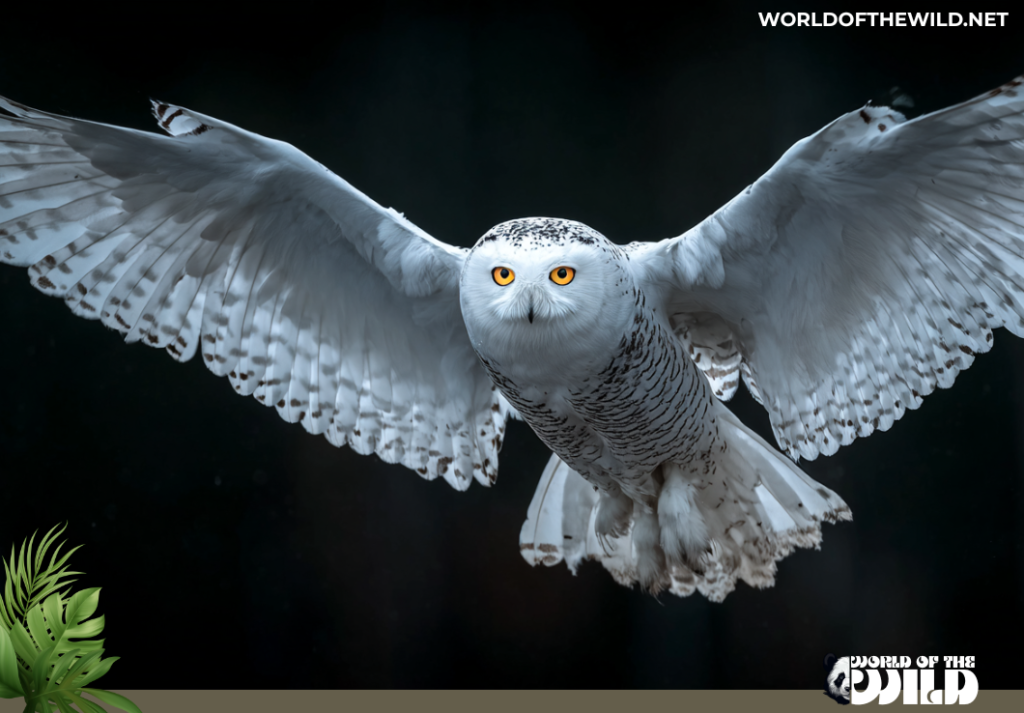
- Silent Death: Despite their large size, Snowy Owls fly in near-complete silence thanks to specialized feather structures that muffle the sound of air passing over their wings.
Sounds of the Snowy Owl
Species
Kingdom: Animalia
Phylum: Chordata
Class: Aves
Order: Strigiformes
Family: Strigidae
Genus: Bubo
Species: Bubo scandiacus
The Snowy Owl was historically classified in its own genus, Nyctea, but modern genetic analysis has placed it firmly within the Bubo genus alongside eagle-owls, making it a close relative of the Eurasian Eagle-Owl and Great Horned Owl. Currently, no subspecies are recognized, though there is ongoing debate among ornithologists about potential genetic variations between North American and Eurasian populations.
The Snowy Owl’s closest relatives include other members of the Bubo genus, such as the Eurasian Eagle-Owl, which shares similar size and hunting prowess, and the Great Horned Owl of the Americas. However, the Snowy Owl’s extreme Arctic specialization sets it apart from its temperate-dwelling cousins, representing a unique evolutionary path toward cold-weather mastery.
Appearance
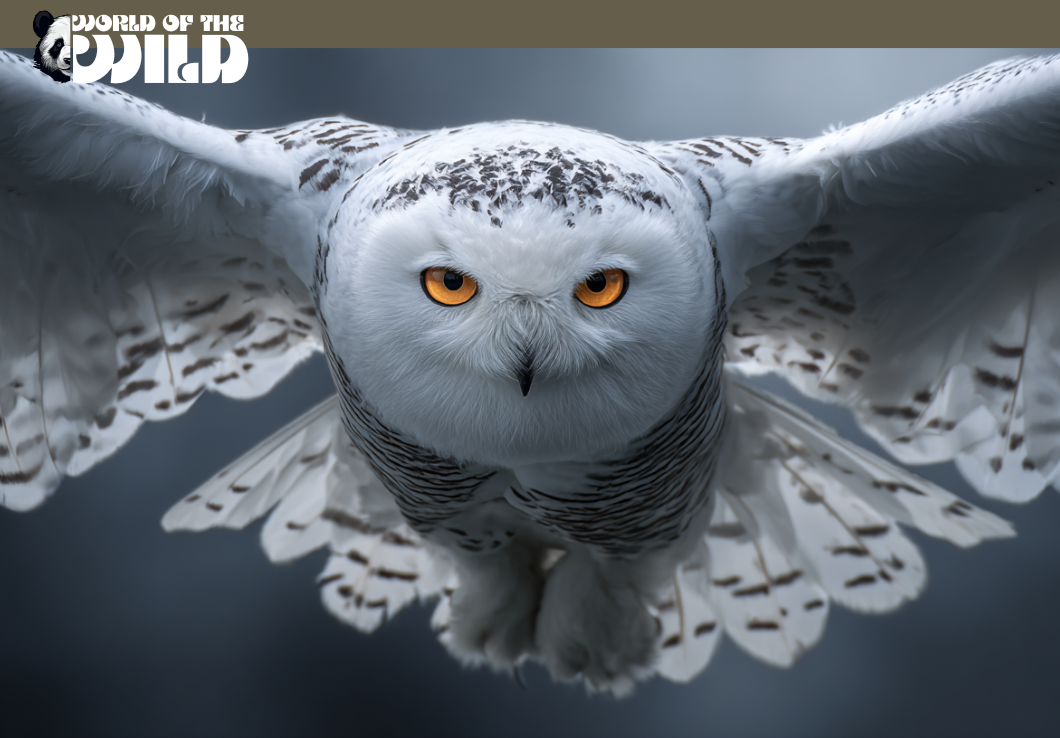
The Snowy Owl is a study in Arctic adaptation dressed in ethereal white plumage. Adult males are often almost pure white with minimal barring, while females and juveniles display more extensive dark brown barring across their white feathers, creating a stunning pattern that provides camouflage against rocks and shadows in their tundra habitat.
Standing 20 to 28 inches tall with a wingspan reaching an impressive 4.5 to 5.5 feet, the Snowy Owl commands attention. Males typically weigh between 3.5 to 4.5 pounds, while the larger females range from 4 to 6.5 pounds, making them one of the most sexually dimorphic owl species in terms of size and coloration.
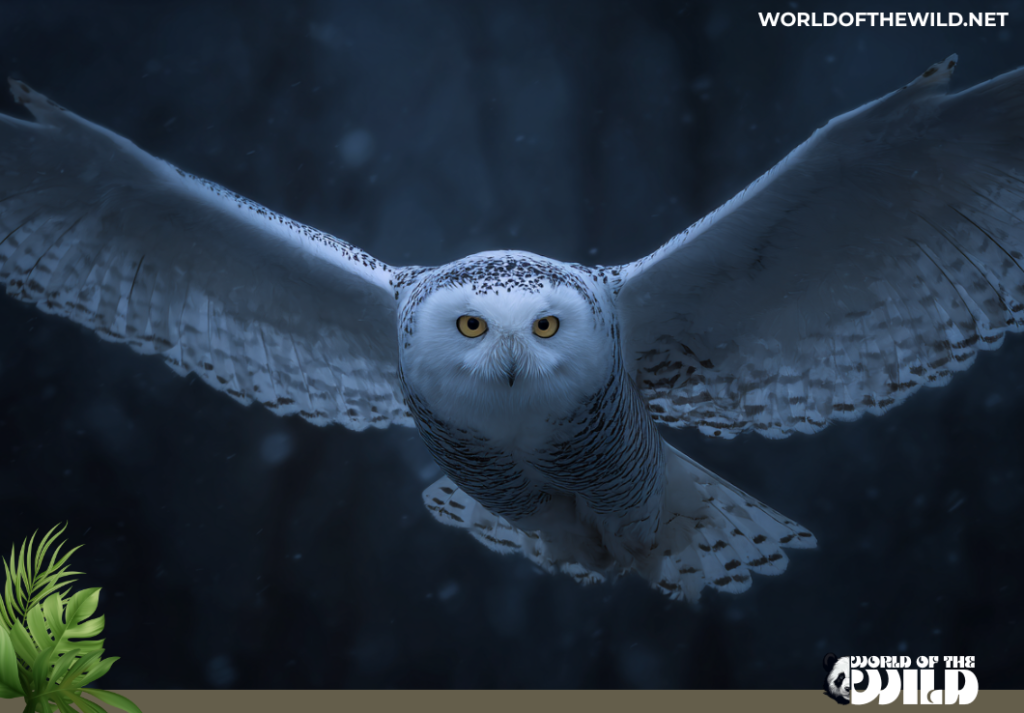
The owl’s large, rounded head lacks the ear tufts characteristic of many owl species, giving it a distinctive smooth-crowned appearance. Its most striking features are its blazing golden-yellow eyes, which seem to glow against the white plumage. The black beak is small and nearly hidden beneath facial feathers, while the legs and talons are among the most heavily feathered of any raptor, appearing like thick white boots.
Dense plumage covers the entire body in multiple layers, providing insulation that allows these birds to maintain body temperature in extreme Arctic conditions. Individual feathers are specially structured with soft edges that enable silent flight, while their white coloration serves dual purposes: camouflage in snowy landscapes and efficient heat retention in the polar environment.
Behavior
Snowy Owls defy the conventional wisdom about owl behavior in numerous ways. Unlike their predominantly nocturnal relatives, they are active hunters during daylight hours, a necessary adaptation to Arctic summers when the sun never sets. During winter, they may hunt at any time but show preference for dawn and dusk when prey is most active.
These birds are typically solitary outside the breeding season, maintaining large hunting territories that they patrol from elevated perches. A hunting Snowy Owl employs a “sit-and-wait” strategy, perching on rocks, fence posts, or other vantage points where it can scan the surrounding landscape for movement. Once prey is spotted, the owl launches in a direct, powerful flight, striking with deadly accuracy.
Snowy Owls communicate through a variety of vocalizations, though they are generally quieter than many owl species. Males produce deep, booming hoots during courtship, while females respond with higher-pitched calls. Both sexes make barking alarm calls when defending territory or young, and fledglings produce loud begging calls that can be heard from considerable distances.
Intelligence manifests in their remarkable ability to adapt hunting strategies based on conditions. In coastal areas, they’ve been observed hunting seabirds; near airports, they capitalize on abundant rodent populations; and some individuals have learned to hunt over open water, snatching ducks from the surface. Their exceptional visual and auditory acuity allows them to detect and capture prey beneath snow cover, a skill that requires sophisticated sensory processing.
During the breeding season, males perform elaborate aerial displays, flying in undulating patterns while carrying prey items to attract females. Pairs may form strong seasonal bonds, though they typically separate after breeding concludes.

Evolution
The evolutionary story of the Snowy Owl traces back millions of years to the divergence of owl lineages during the Paleogene period. Molecular studies suggest that the Strigidae family, to which Snowy Owls belong, emerged approximately 25 to 30 million years ago, with the Bubo genus appearing later as a highly successful lineage of large, powerful owls.
The Snowy Owl’s ancestors likely evolved in northern regions during the Pleistocene epoch, when glacial cycles created vast tundra habitats across the Northern Hemisphere. The extreme specialization for Arctic conditions suggests a long evolutionary history in cold climates, with adaptations accumulating over hundreds of thousands of years of natural selection.
Key evolutionary developments include the extensive feathering that covers even the feet and face, the predominantly white plumage that provides camouflage in snowy environments, and physiological adaptations for surviving extreme cold, such as an exceptionally slow metabolic rate during periods of food scarcity. The ability to hunt in continuous daylight represents a crucial behavioral adaptation that separated Snowy Owls from their nocturnal ancestors.
Fossil evidence of Snowy Owls or their immediate ancestors is limited due to the harsh Arctic environment being unfavorable for fossilization. However, remains of similar-sized owls from Pleistocene deposits in Europe and North America suggest that large, Arctic-adapted owls have existed for at least several hundred thousand years, persisting through multiple glacial cycles.
The species likely experienced significant range expansions and contractions following ice age cycles, with populations isolated in glacial refugia potentially developing into the genetic variations observed today. Climate fluctuations throughout the Pleistocene may have driven the evolution of their nomadic tendencies and flexible breeding strategies, allowing them to track shifting populations of prey species across vast distances.
Habitat
Snowy Owls are quintessentially Arctic birds, breeding in the circumpolar tundra regions of North America, Greenland, Scandinavia, and Russia. Their breeding range extends across the northernmost reaches of the continent, from Alaska through the Canadian Arctic archipelago, northern Greenland, Iceland, northern Scandinavia, and across Siberia to the Bering Strait.
The preferred breeding habitat consists of open Arctic tundra characterized by rolling terrain, sparse vegetation, and rocky outcrops that provide elevated perches and nesting sites. Unlike most owls, which nest in trees or cavities, Snowy Owls nest on the ground, selecting slight rises or hummocks that offer good visibility across the surrounding landscape. These areas must provide both hunting grounds rich in small mammals and suitable elevated sites for nest scrapes.
During winter, Snowy Owls undertake variable southward movements, with some individuals remaining in Arctic regions while others travel to southern Canada and the northern United States. In irruption years, when Arctic prey populations crash, they may appear as far south as the southern United States and even reach central Europe and Asia. Winter habitat preferences include open landscapes that resemble their tundra home: coastal dunes, prairie grasslands, agricultural fields, frozen lakes, and even airport grasslands.
The Arctic tundra environment where Snowy Owls thrive is characterized by permafrost, minimal precipitation, extreme temperature ranges from -50°F in winter to occasional summer highs above freezing, and continuous daylight in summer transitioning to continuous darkness in winter. Vegetation is sparse, consisting primarily of low-growing grasses, sedges, mosses, and lichens, with no trees to obstruct the owl’s need for long sight lines across the landscape.
These birds show remarkable adaptability in selecting winter habitats, requiring only open terrain with sufficient prey. They’ve been documented on coastal beaches, lakeshores, farm fields, marshes, and even urban areas, always favoring locations that provide unobstructed views and elevated perches from which to hunt.
Diet
Snowy Owls are specialized carnivores, and their diet revolves almost exclusively around small to medium-sized mammals, particularly lemmings. During the Arctic breeding season, lemmings can constitute 90% or more of their diet, with a single owl consuming three to five lemmings daily. A breeding pair with nestlings may capture over 1,500 lemmings during a single breeding season.
The relationship between Snowy Owls and lemming populations is so intertwined that owl breeding success, population movements, and even whether pairs attempt to breed at all depends on lemming abundance. In years when lemming populations peak in their cyclical boom-and-bust pattern, Snowy Owls thrive and produce large clutches. When lemming populations crash, owls may not breed and instead wander great distances in search of alternative prey.
Beyond lemmings, the diet expands based on availability and season. Arctic hares, particularly young leverets, provide substantial meals. Ground squirrels, voles, mice, and other small rodents supplement the diet, especially during migration and winter. The hunting repertoire also includes birds: ptarmigan, ducks, geese, gulls, shorebirds, and even smaller owls occasionally fall prey to these formidable hunters.
Hunting strategy varies by terrain and prey type. The classic method involves perching on an elevated position—a rock, hummock, fence post, or hay bale—and watching for movement across the snow or grass. Upon detecting prey, the owl launches in a swift, direct flight, striking with powerful talons. The heavily feathered feet provide protection from struggling prey while delivering a killing grip.
Snowy Owls possess exceptional hearing and can detect prey moving beneath snow cover, diving through the snow surface to capture hidden rodents. During summer when the ground is snow-free, they hunt by sight, their keen vision capable of detecting small movements at distances exceeding 300 yards. They typically hunt during daylight in summer but may shift to crepuscular or nocturnal hunting during winter in temperate regions.
Like all owls, Snowy Owls swallow small prey whole and regurgitate pellets containing indigestible bones, fur, and feathers several hours after feeding. These pellets provide valuable data for researchers studying diet composition and prey populations.
Predators and Threats
Adult Snowy Owls face relatively few natural predators due to their large size, remote habitat, and formidable defensive capabilities. Arctic foxes pose the greatest natural threat, particularly to eggs and young nestlings. These opportunistic predators will raid nests if they can evade the aggressive defense mounted by parent owls. Wolves and wolverines occasionally take eggs or chicks, though encounters are rare given the open habitat Snowy Owls prefer.
Avian predators rarely threaten adults but may target juveniles. Golden Eagles, Gyrfalcons, and Peregrine Falcons have been documented attacking young or weakened Snowy Owls, though such predation appears uncommon. Jaegers and gulls may harass nesting owls and steal eggs if the opportunity arises.
The most significant threats to Snowy Owls come from human activities and environmental changes. Climate change represents an existential threat to this Arctic specialist. Rising temperatures are altering tundra ecosystems, shifting vegetation patterns, reducing snow cover duration, and disrupting the lemming cycles upon which owl breeding depends. As shrubs expand into previously open tundra and permafrost thaws, traditional breeding habitat may become unsuitable.
Collisions with vehicles, power lines, and aircraft pose serious hazards, particularly during winter when owls hunt near roads and airports where open grasslands attract them. The birds’ tendency to perch on fence posts and utility poles along highways makes them vulnerable to vehicle strikes. Airport environments, while offering excellent hunting grounds, create collision risks with aircraft.
Shooting, though illegal in most jurisdictions, still occurs. Some owls are killed by poachers seeking trophies or by individuals who mistakenly view them as threats to domestic animals or game birds. Education efforts have reduced such incidents, but illegal killing remains a concern.
Contaminants present another threat. Persistent organic pollutants, heavy metals like mercury, and rodenticides accumulate in Arctic food webs and concentrate in predators like Snowy Owls. These toxins can impair reproduction, compromise immune function, and cause direct mortality.
Disturbance at nest sites from tourism, research activities, or resource extraction can cause nest abandonment. The Arctic, while remote, faces increasing human activity from oil and gas development, mining, and adventure tourism, all potentially disrupting breeding owls.
Reproduction and Life Cycle
The Snowy Owl’s reproductive cycle is intimately tied to prey availability, making it one of the most variable breeding strategies among raptors. Courtship begins in late winter or early spring when males establish territories and begin elaborate displays. Males perform aerial courtship flights, undulating through the air while carrying lemmings and emitting deep booming calls. Ground displays involve the male approaching the female with wings raised, showing off his white plumage while calling and presenting prey.
Nest site selection occurs in April or May, with pairs choosing elevated areas on the tundra that offer good visibility and drainage. The “nest” is simply a scrape in the ground, usually on a hummock or rise, lined minimally with available materials like lichens, mosses, or feathers. The same sites may be used across multiple years if conditions remain favorable.
Egg-laying begins in May or early June, with clutch size ranging dramatically from three to eleven eggs depending on prey abundance. In years of exceptional lemming populations, females may lay seven to eleven eggs, while during moderate prey years, clutches average four to seven eggs. When prey is scarce, pairs may skip breeding entirely. Eggs are laid at two-day intervals, and incubation begins with the first egg, resulting in asynchronous hatching.
The female alone incubates for approximately 32 days per egg while the male provides food. During this vulnerable period, both parents aggressively defend the nest, diving at intruders including Arctic foxes, wolves, and even humans. They strike with powerful talons and can inflict serious injuries on threats approaching the nest.
Chicks hatch covered in white down, blind and helpless. Their eyes open after several days, and they grow rapidly on a diet of lemmings delivered by both parents. Siblings hatch days apart, creating a size hierarchy that ensures survival of at least some chicks if food becomes scarce—the youngest may starve if prey is insufficient. Chicks begin leaving the nest scrape at 14 to 26 days old, well before they can fly, wandering the tundra while still dependent on parental feeding.
First flight occurs at approximately 50 to 60 days of age, though young birds remain with parents and continue receiving food for several additional weeks while perfecting hunting skills. Family groups typically disperse by late summer or early fall.
Sexual maturity is reached at one to two years of age, though many birds do not successfully breed until their second or third year. In the wild, Snowy Owls may live 9 to 10 years on average, though maximum documented ages exceed 23 years in banded wild birds and over 28 years in captivity. Mortality is highest in the first year of life, with young birds facing the challenges of migration, hunting proficiency, and avoiding predators.
Population
The Snowy Owl is currently classified as Vulnerable on the IUCN Red List, a designation reflecting significant concerns about population trends and future prospects. This represents a decline from the previous status, with the species uplisted due to evidence of population decline and threats from climate change.
Estimating global population size for a nomadic Arctic species presents substantial challenges. Current estimates suggest a global population of approximately 28,000 to 40,000 individuals, though uncertainty remains high. The breeding population is estimated at roughly 14,000 to 28,000 mature individuals distributed across the circumpolar Arctic.
Population trends indicate a decline, with research suggesting a reduction of approximately 30 to 49 percent over three generations (approximately 30 years). This decline appears linked to multiple factors including climate change impacts on Arctic ecosystems, loss of breeding habitat, and changing prey dynamics.
Populations fluctuate naturally in response to lemming cycles, making it difficult to distinguish normal variation from long-term trends. However, broader climate-driven changes in tundra ecosystems suggest the recent declines may reflect systemic problems rather than natural cycles. Reduced snow cover, altered vegetation patterns, and shifting lemming population dynamics all threaten the ecological foundation upon which Snowy Owls depend.
Regional variations exist, with some populations appearing more stable than others. North American populations, particularly those breeding in northern Canada and Alaska, face pressures from climate change and increasing human activity in the Arctic. Eurasian populations confront similar challenges with additional pressures from disturbance and habitat changes.
Conservation efforts focus on research, monitoring, and habitat protection. Long-term banding studies, satellite tracking programs, and citizen science initiatives like eBird help scientists understand movements, survival rates, and population trends. Protected areas in the Arctic preserve critical breeding habitat, though the vast ranges these birds occupy make comprehensive protection challenging.
International cooperation is essential, as Snowy Owls cross multiple national boundaries during migration and winter movements. The species is protected under various national laws and international agreements, including the Migratory Bird Treaty Act in North America and similar legislation in Europe and Asia.
Conclusion
The Snowy Owl stands as both an icon of Arctic wilderness and a sentinel species revealing the profound changes sweeping across polar regions. From its remarkable adaptations allowing survival in Earth’s harshest climates to its dependence on the delicate balance of Arctic ecosystems, this magnificent predator embodies the interconnectedness of life in extreme environments.
These ghost-white hunters have survived ice ages, continental shifts, and countless challenges across hundreds of thousands of years of evolution. Yet they now face their greatest test as human-driven climate change fundamentally alters the Arctic tundra they call home. The sight of a Snowy Owl perched against a winter sky is more than a stunning encounter with nature—it’s a reminder of what we stand to lose if we fail to address the environmental changes threatening wild places and the creatures that depend on them.
Whether you encounter a Snowy Owl during an irruptive winter migration or simply admire them from afar, consider supporting organizations working to protect Arctic habitats and combat climate change. The future of these remarkable birds rests not just in the remote tundra they inhabit, but in the choices we make in our daily lives and the collective action we take to preserve the wild world that sustains us all.
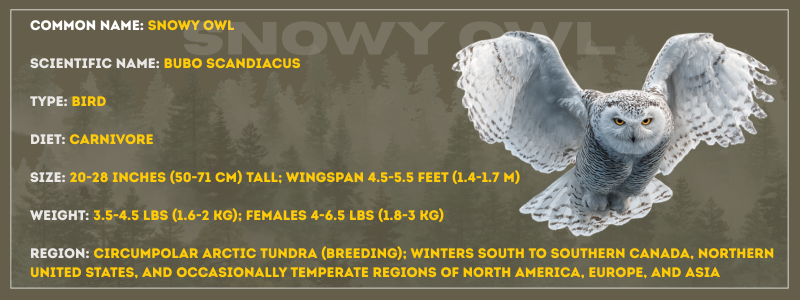
Scientific Name: Bubo scandiacus
Diet Type: Carnivore
Size: 20-28 inches (50-71 cm) tall; wingspan 4.5-5.5 feet (1.4-1.7 m)
Weight: Males 3.5-4.5 lbs (1.6-2 kg); Females 4-6.5 lbs (1.8-3 kg)
Region Found: Circumpolar Arctic tundra (breeding); winters south to southern Canada, northern United States, and occasionally temperate regions of North America, Europe, and Asia