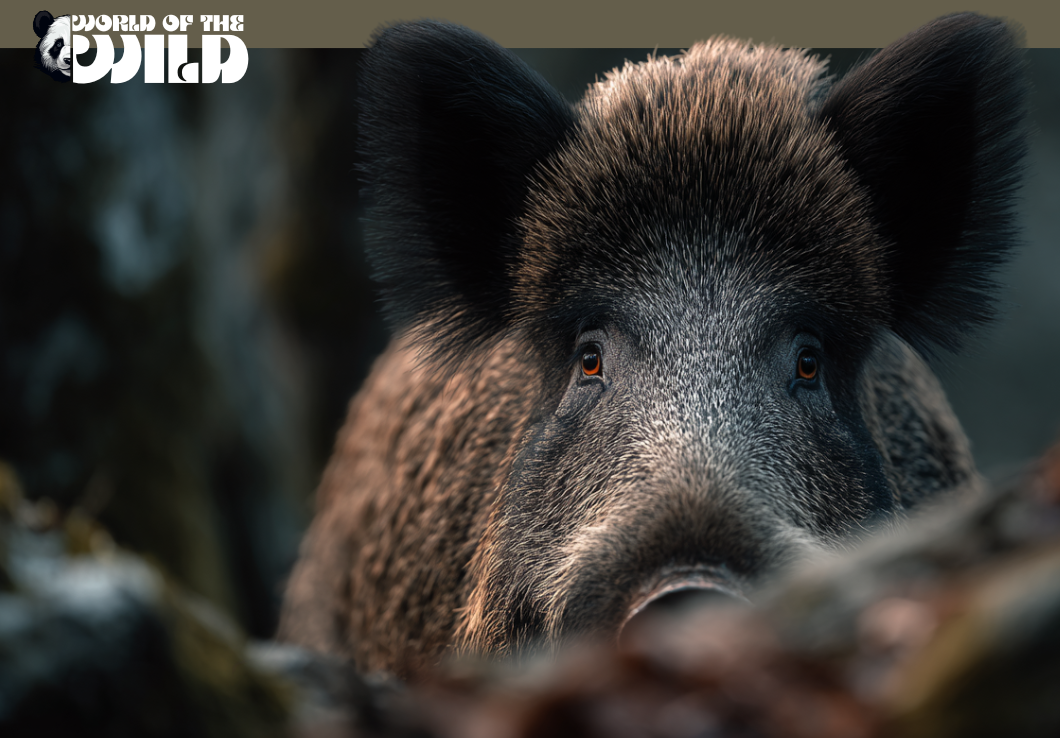

Few animals on Earth have matched the wild boar’s extraordinary ability to thrive alongside — and despite — humanity. This rugged, tusked creature has roamed the forests, wetlands, and grasslands of the world for millions of years, outlasting ice ages, human persecution, and habitat destruction with a tenacity that borders on supernatural. It has fed civilizations, inspired mythology, and frustrated farmers across six continents. Yet for all its familiarity, the wild boar remains deeply misunderstood — dismissed by many as a destructive pest while quietly serving as one of the planet’s most ecologically important large mammals. Whether you see it as a villain or a marvel, one thing is beyond dispute: the wild boar is among the most successful, adaptable, and fascinating animals that has ever walked the earth.
Facts
- Wild boars can run at speeds of up to 30 miles per hour and are surprisingly agile swimmers, capable of crossing wide rivers and open stretches of sea between islands.
- Their sense of smell is so extraordinarily developed that it is estimated to be 2,000 times more powerful than that of a human being — making them highly effective foragers even beneath deep snow.
- Wild boars possess a specialized cartilaginous disc on the tip of their snout called the prenasal bone, which acts like a built-in shovel, reinforcing the nose for digging through hard soil.
- Unlike most hoofed mammals, wild boars are true omnivores — they will readily eat carrion, bird eggs, small mammals, and even snakes alongside roots, fungi, and fruit.
- A group of wild boars is called a sounder, and these family groups can range from a handful of individuals to assemblies of more than 100 animals in areas with abundant food.
- Wild boars have four continuously growing tusks — two on top, two on the bottom — that act as natural self-sharpening blades, with the upper and lower tusks grinding against each other to maintain razor-sharp edges throughout the animal’s lifetime.
- Research has shown that wild boars demonstrate a remarkable capacity for problem-solving and tool use, with documented cases of individuals using sticks and bark to dig and manipulate their environment — a level of cognitive ability rarely seen outside of primates.
Species
The wild boar occupies a well-defined position within the tree of life, sitting at the crossroads of some of the planet’s most successful and ecologically dominant animal families.
Full Taxonomic Classification:
- Kingdom: Animalia
- Phylum: Chordata
- Class: Mammalia
- Order: Artiodactyla
- Family: Suidae
- Genus: Sus
- Species: Sus scrofa
The species Sus scrofa is itself divided into a remarkable number of recognized subspecies — estimates range from 16 to over 20 depending on the authority consulted. Among the most notable are Sus scrofa scrofa, the nominate European wild boar, which ranges across Western and Central Europe and represents the ancestral stock of most domestic pig breeds; Sus scrofa ussuricus, the large Ussuri boar of Russia and Northeast Asia, known for its especially heavy build and dense winter coat; Sus scrofa cristatus, the Indian wild boar, distinguished by a tall, bristly mane running along its back; and Sus scrofa vittatus, the Banded pig of Southeast Asia, which displays distinctive facial striping in juveniles.
Closely related species within the Sus genus include the Visayan Warty Pig (Sus cebifrons), the Palawan Bearded Pig (Sus ahoenobarbus), and the Sulawesi Warty Pig (Sus celebensis), all of which are island-endemic species found in the Philippine and Indonesian archipelagos and face far more precarious conservation situations than their widespread cousin.
Appearance
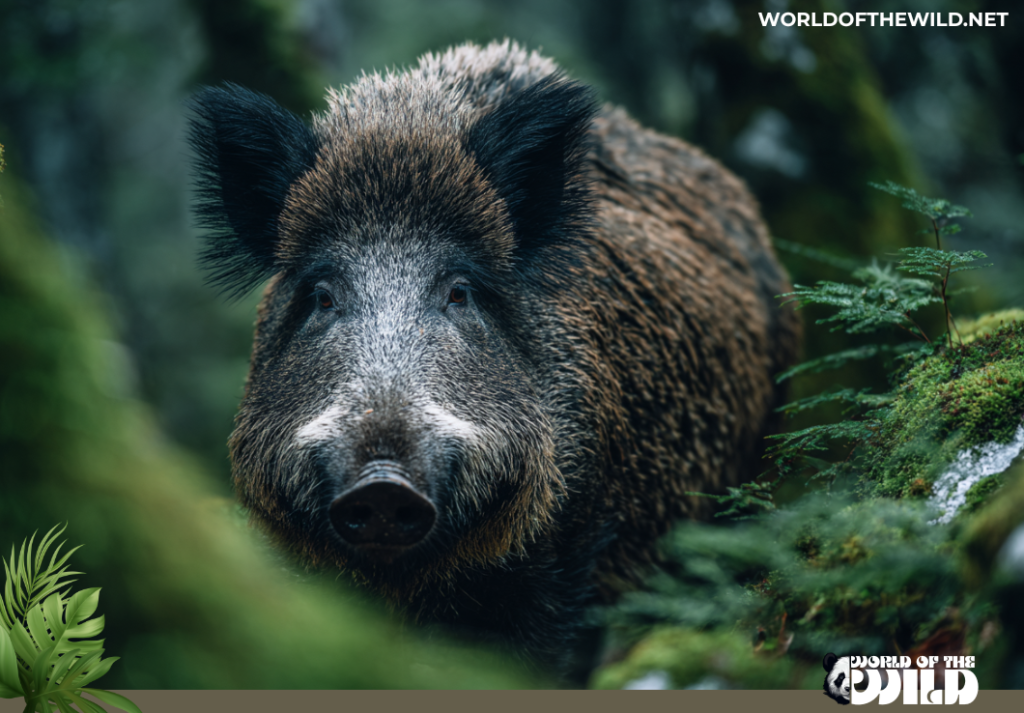
The wild boar is a powerfully built animal that communicates raw physical strength at a glance. Its body is compact and wedge-shaped — broad through the shoulders and tapering toward the haunches — a form perfectly engineered for driving through dense undergrowth at speed. The head is disproportionately large, constituting nearly a third of the animal’s total body length, and ends in that distinctive mobile, disc-like snout.
Adult wild boars typically measure between 55 and 78 inches (roughly 4.5 to 6.5 feet) in body length, with a shoulder height ranging from 22 to 43 inches. Body weight varies enormously across geographic range and season — most adults fall between 110 and 200 pounds, but exceptional individuals, particularly aged males in food-rich European forests, have been recorded exceeding 660 pounds. Males, called boars, are significantly larger than females, called sows.
The coat consists of coarse, bristly guard hairs underlaid by a softer underfur that thickens considerably during winter months. Coloration ranges from dark brown to gray, black, and even reddish tones depending on region, age, and season. One of the most iconic features of the wild boar is its tusks. The lower canines — the most visible pair — curve upward and outward and can reach lengths of 4 to 10 inches in mature males. Females also possess tusks but they are substantially shorter and less curved. Piglets are born with a striking coat of reddish-brown fur adorned with pale horizontal stripes along the body — nature’s camouflage in a world of dappled forest light — that fades to the adult coloration within their first six months of life.
Behavior
The wild boar is fundamentally a social creature, and understanding its society reveals a fascinating world of complex relationships. The basic social unit is the sounder — a matriarchal group composed of related adult females and their offspring of various ages. Adult males, by contrast, are largely solitary for most of the year, joining sounders only during the breeding season, known as the rut.
Within a sounder, bonds are tight and communication is rich. Wild boars employ an impressive repertoire of vocalizations — researchers have identified more than a dozen distinct calls, including grunts, squeals, growls, and a low, rhythmic contact call used to maintain cohesion while foraging through dense vegetation. Scent also plays an enormous role; boars possess multiple sets of scent glands and use urine, feces, and glandular secretions to mark territories, signal reproductive status, and leave information about individual identity for other boars.
Behaviorally, wild boars are predominantly crepuscular and nocturnal — most active during the hours around dawn and dusk, and through the night. This pattern is especially pronounced in areas where humans are present, as boars appear to make deliberate behavioral adjustments to minimize contact with people — a form of behavioral adaptation documented in numerous studies.
Rooting — the act of using the snout to excavate soil in search of food — is perhaps the most defining behavioral characteristic of the species. A single sounder can overturn astonishing quantities of earth in a single night. While this behavior earns the wild boar no friends among farmers and land managers, it plays a critical ecological role, aerating soil, cycling nutrients, and creating disturbed patches that benefit a range of plant and invertebrate species.
Intelligence in wild boars is consistently underestimated. Captive and wild studies have demonstrated their ability to solve multi-step problems, remember solutions for extended periods, and even display rudimentary empathy — comforting distressed companions with physical contact — a behavior associated almost exclusively with animals possessing advanced cognitive abilities.
Evolution
The evolutionary story of Sus scrofa stretches back approximately 34 million years to the early Oligocene epoch, when the ancestors of all modern suids diverged from the broader artiodactyl lineage that would also give rise to deer, cattle, hippos, and whales. The earliest pig-like animals belonged to extinct families such as the Entelodontidae — nightmarish, aggressive creatures sometimes nicknamed “hell pigs” — that bear only a superficial resemblance to modern boars but represent early experimentation with the omnivorous, rootling ecological niche.
The true family Suidae emerged around 20 million years ago, diversifying extensively across Africa, Europe, and Asia during the Miocene. The genus Sus itself first appears in the fossil record approximately 5 to 6 million years ago, during the late Miocene, in Southeast Asia — a region still home to some of the greatest diversity of wild pig species on Earth. From that tropical cradle, ancestors of Sus scrofa spread westward, reaching Europe during the Pliocene and ultimately colonizing an enormous range from Ireland to Indonesia.
A pivotal chapter in the boar’s evolutionary history is its relationship with Homo sapiens. The domestication of wild boar into domestic pigs (Sus scrofa domesticus) occurred independently in at least two separate regions — once in the Near East approximately 9,000 to 10,000 years ago, and separately in China roughly 8,000 years ago — making the pig one of the earliest domestic animals and one of the most important partnerships in the history of human civilization. Genetic studies continue to reveal remarkable complexity in the domestication story, with evidence of multiple introgression events as early domestic populations interbred with local wild boar populations across Eurasia.
Habitat
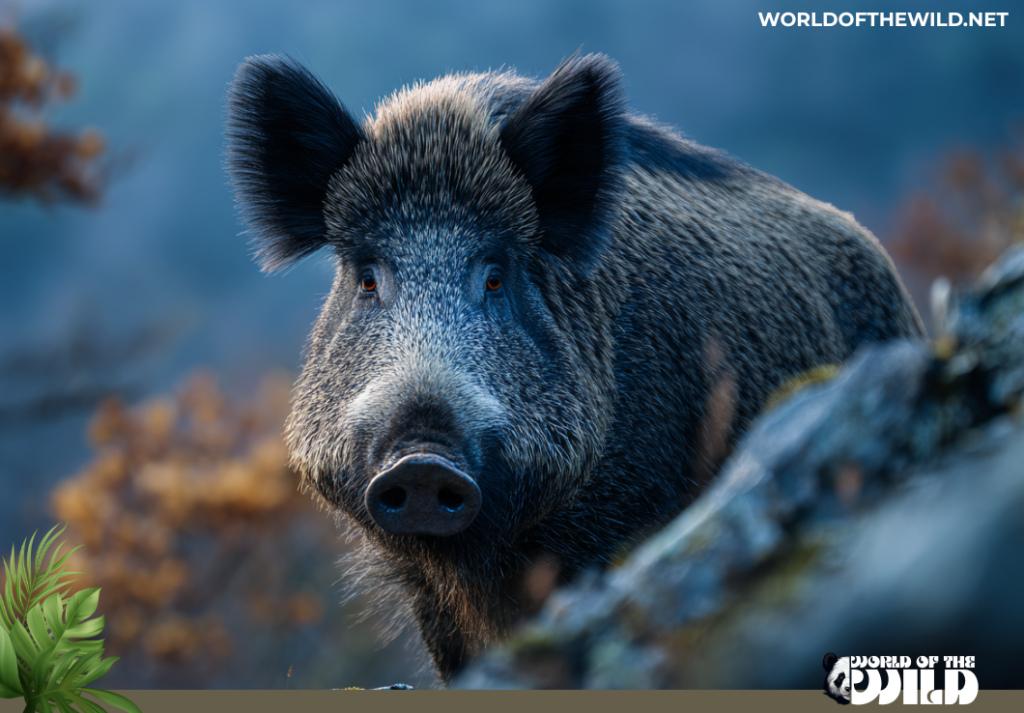
Few mammals on Earth can claim a habitat range as expansive as that of the wild boar. Originally native to a band stretching from Western Europe and North Africa eastward through much of Asia to Japan and the islands of Southeast Asia, the species has since been introduced — deliberately or accidentally — to every inhabited continent except Antarctica. Today, Sus scrofa is established across North America, South America, Australia, New Zealand, and numerous island groups worldwide, making it one of the most geographically widespread large mammals on the planet.
Within this vast range, the wild boar is a consummate habitat generalist. It thrives in temperate and subtropical broadleaf forests, where mast crops of oak acorns, beechnuts, and chestnuts provide seasonal bonanzas of high-energy food. It colonizes Mediterranean scrubland and maquis, tropical rainforest edges, river valleys, reed beds, agricultural margins, and even semi-arid steppes. In Europe, wild boars have expanded dramatically into the fringes of suburban and urban environments, with breeding populations now documented in the outskirts of cities including Rome, Berlin, and Barcelona.
The key habitat requirements are relatively simple: adequate cover for resting and raising young, access to water — boars wallow in mud and water regularly, both for thermoregulation and parasite control — and a food supply diverse enough to sustain an omnivore through seasonal fluctuations. Where these conditions are met, wild boars flourish with remarkable consistency.
Diet
The wild boar is an archetypal omnivore — and perhaps the most behaviorally flexible large omnivore among hoofed mammals. Its diet shifts constantly across seasons, geographies, and individual opportunity, reflecting a feeding strategy built on adaptability rather than specialization.
Plant matter forms the foundation of the diet throughout the year, with underground roots, tubers, bulbs, and rhizomes being particularly important. These are accessed through the boar’s signature rooting behavior. Fallen mast — particularly acorns and beechnuts during autumn — can constitute an enormous proportion of the autumn and early winter diet, and boars will travel considerable distances to exploit rich mast years. Grasses, sedges, fungi, berries, and agricultural crops round out the plant component.
Animal matter supplements the diet in ways that vary enormously between individuals and populations. Earthworms, beetles, and other invertebrates are consumed routinely during rooting. Small mammals, ground-nesting bird eggs and chicks, frogs, lizards, snakes, and carrion are all taken opportunistically. In some populations, particularly on islands with vulnerable seabird colonies or sea turtle nesting beaches, the predatory impact of wild boars on wildlife can be ecologically significant and conservation-relevant.
Foraging typically occurs in bouts during the crepuscular and nighttime hours, with adults capable of consuming up to 4,000 calories worth of food per day during periods of high metabolic demand such as winter cold, lactation, or the male rut.
Predators and Threats
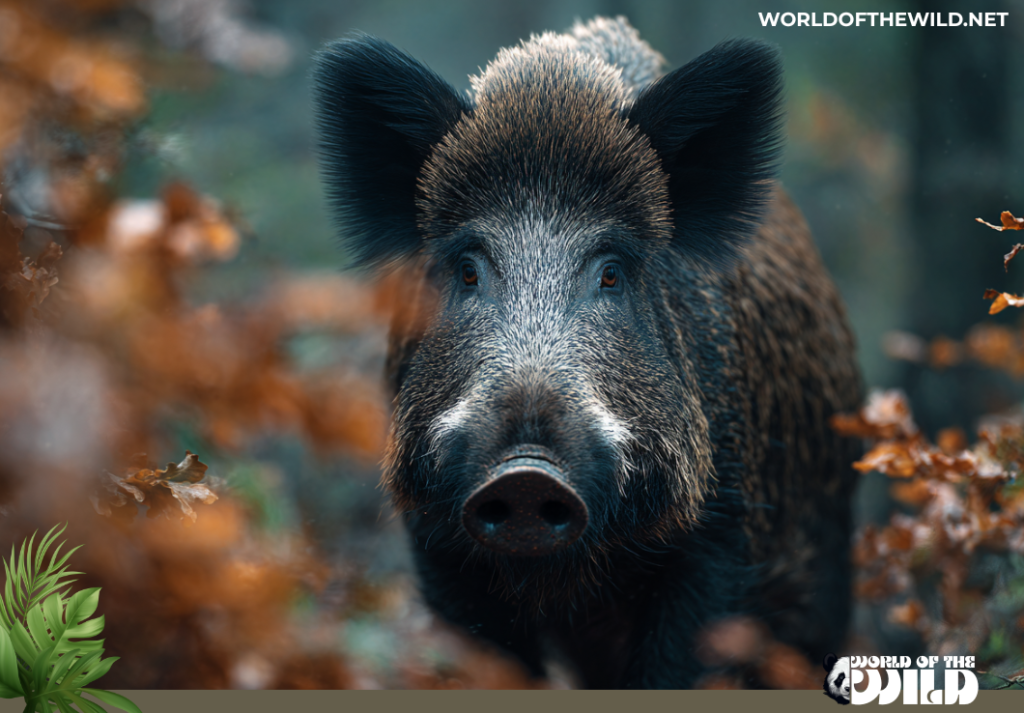
For a well-armed, socially organized, and physically formidable animal, the wild boar faces a relatively modest suite of natural predators — and yet human pressure has historically posed a far more significant challenge.
Natural predators vary by region. In Europe, the grey wolf (Canis lupus) is the primary natural check on wild boar populations, with studies in areas of wolf recovery documenting measurable effects on boar density and behavior. Brown bears, Eurasian lynx, and Amur leopards take boars when opportunity arises. In South and Southeast Asia, tigers, leopards, and dholes all regularly prey upon boars. In North America, where the species is non-native and invasive, American black bears, mountain lions, and alligators have been recorded killing feral hogs.
Human-caused threats have historically been far more consequential. Centuries of intensive hunting drove wild boar populations to extinction in large parts of their former European range by the early 20th century. Habitat destruction — particularly the conversion of ancient forests to monoculture agriculture — reduced both the quality and connectivity of suitable habitat across much of Eurasia. African Swine Fever (ASF), a viral hemorrhagic disease spreading rapidly across Europe and Asia, now represents a potentially devastating biological threat to wild boar populations, with mortality rates approaching 100% in some outbreaks.
Paradoxically, in the contemporary context, the greatest ecological threat associated with wild boars in many regions is not to the boars themselves, but from them — as invasive populations in North America, Australia, the Caribbean, and elsewhere cause severe damage to native ecosystems, agricultural land, and vulnerable species. Feral pig management has become a major wildlife management challenge on multiple continents.
Reproduction and Life Cycle
The wild boar’s reproductive strategy is built for resilience — a high reproductive rate that allows populations to recover rapidly from hunting pressure, disease, or harsh winters, which partly explains the species’ extraordinary success even under human persecution.
The breeding season, or rut, typically occurs from November through January in temperate regions, though populations in tropical and subtropical areas may breed year-round. During the rut, formerly solitary males seek out sounders with receptive females. Competition between males is intense and sometimes violent — boars clash with tusks and shoulder strength in confrontations that can inflict serious injuries. The characteristic frothy saliva that males produce during the rut, combined with secretions from pre-orbital and carpal glands, creates a powerful olfactory advertisement of fitness and dominance.
Gestation lasts approximately 115 days — almost exactly four months — after which sows give birth to a litter of 4 to 12 piglets, with 5 to 6 being typical. Litter sizes tend to be larger in populations that experienced hunting pressure or food abundance the previous autumn, reflecting a fascinating physiological feedback between environmental conditions and reproductive output. Sows construct a nest of grass, leaves, and branches — called a farrowing nest — to give birth and protect newborns during their first vulnerable days.
Piglets are born fully furred with their distinctive striped camouflage coats and are mobile within hours. Weaning occurs at around 3 to 4 months, and females remain with the sounder, often becoming breeding adults themselves within the group. Young males typically disperse at 1 to 2 years of age to avoid inbreeding.
Sexual maturity is reached at approximately 8 to 10 months in females and 18 to 24 months in males, though males typically do not achieve dominance and breed successfully until they are older. Wild lifespan typically ranges from 8 to 12 years, with exceptional individuals occasionally reaching 15 years. In captivity, wild boars have been known to live beyond 20 years.
Population
The wild boar holds the IUCN Red List status of Least Concern — a designation that reflects its extraordinary global abundance and range, even as local and regional pictures vary considerably.
Global population estimates are difficult to pin down with precision given the species’ vast range, cryptic behavior, and the complications introduced by feral and hybrid populations. Conservative estimates suggest a worldwide population of several hundred million individuals when feral populations across the Americas, Australia, and the Pacific are included. The core native Eurasian population alone likely numbers in the tens of millions.
Across much of its native European range, the wild boar has experienced a dramatic population boom since the 1980s and 1990s, driven by a combination of factors: the recovery of forest cover, reduced persecution, exceptionally productive mast years linked to climate shifts, and the documented behavioral adaptability of the species itself. In Germany, France, Poland, and Italy, wild boar populations are at historic highs, and agricultural damage — as well as road traffic accidents involving boars — has become a significant management challenge.
In contrast, island endemic pig species within the broader family Suidae, including the Visayan Warty Pig (Sus cebifrons) and the Javan Warty Pig (Sus verrucosus), are considered Critically Endangered and Vulnerable respectively, threatened by deforestation, hunting, and hybridization with domestic pigs — reminders that the family’s success is far from universal.
Conclusion
The wild boar is, in nearly every sense of the word, a survivor. It has accompanied humanity for millennia — feeding our ancestors, entering our mythologies, frustrating our farmers, and adapting to our ever-changing landscapes with a flexibility that rivals our own. It is simultaneously an ecological engineer of considerable importance, turning over soil and dispersing seeds across vast landscapes, and a formidable invasive species capable of causing serious ecological harm when translocated beyond its natural range.
What the wild boar ultimately asks of us is not sympathy, but understanding. It is an animal that rewards careful observation with genuine wonder — from the social sophistication of its sounders to the remarkable intelligence hiding behind that bristled, mud-streaked exterior. As we grapple with the complex task of managing wild spaces, agricultural land, and native biodiversity in an era of rapid environmental change, the wild boar sits squarely at the intersection of all these challenges. To engage honestly with this animal — its biology, its history, and its future — is to engage honestly with our own relationship to the natural world. And that, perhaps more than anything, is why the wild boar deserves far more than a passing glance.
Quick Reference
| Field | Details |
|---|---|
| Scientific Name | Sus scrofa |
| Diet Type | Omnivore |
| Body Length | 55–78 inches (approx. 4.5–6.5 feet) |
| Shoulder Height | 22–43 inches (approx. 1.8–3.6 feet) |
| Weight | 110–660 pounds (typical adults: 110–200 lbs) |
| Region Found | Europe, Asia, North Africa; introduced to North America, South America, Australia, New Zealand, and numerous island groups worldwide |