
In the frozen wilderness of the northern hemisphere, where few creatures dare to tread, stalks one of nature’s most formidable survivors. The wolverine, often called the “glutton” or “skunk bear,” is a solitary wanderer whose reputation far exceeds its relatively modest size. This fierce carnivore has captured human imagination for centuries, appearing in indigenous folklore as a trickster spirit and symbol of ferocity. Yet despite its legendary status, the wolverine remains one of the least understood mammals on Earth, preferring the most remote and inhospitable landscapes where few researchers can follow. What makes this animal truly fascinating is not just its legendary tenacity and strength, but its remarkable ability to thrive in environments that would challenge animals twice its size.
Facts
- Pound-for-pound powerhouse: Wolverines can take down prey five times their own size, including caribou and moose weakened by deep snow.
- Extraordinary travelers: A single wolverine may patrol a territory spanning up to 600 square miles, traveling 15-20 miles daily in search of food.
- Built-in snowshoes: Their large, furry paws act as natural snowshoes, distributing their weight and allowing them to move across deep snow where other predators would flounder.
- Frost-resistant fur: Wolverine fur is uniquely resistant to frost accumulation, making it prized by Arctic peoples for parka hoods where breath won’t freeze onto the material.
- Dental power tools: Wolverines possess specialized molars rotated 90 degrees, enabling them to shear through frozen meat and bone with remarkable efficiency.
- Scent marking champions: They possess powerful anal scent glands and mark their vast territories so thoroughly that their musky odor can be detected by human noses from considerable distances.
- Delayed implantation masters: Female wolverines can delay embryo implantation for months, ensuring their young are born during optimal spring conditions regardless of when mating occurred.
Species
The wolverine belongs to the following taxonomic classification:
- Kingdom: Animalia
- Phylum: Chordata
- Class: Mammalia
- Order: Carnivora
- Family: Mustelidae (the weasel family)
- Genus: Gulo
- Species: Gulo gulo
The wolverine is the largest land-dwelling member of the Mustelidae family, which includes weasels, badgers, otters, and martens. While currently classified as a single species, two main subspecies are recognized based on geographic distribution. The Old World subspecies (Gulo gulo gulo) inhabits northern Europe and Asia, while the New World subspecies (Gulo gulo luscus) is found across northern North America. Some researchers have proposed additional subspecies, but these classifications remain debated within the scientific community.
The wolverine shares its genus with no other living species, making it evolutionarily unique. Its closest living relatives include the martens, particularly the fisher (Pekania pennanti), though wolverines are significantly larger and more robust than these tree-dwelling cousins.
Appearance
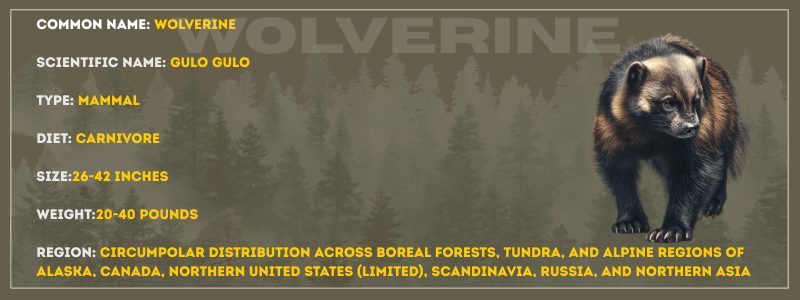
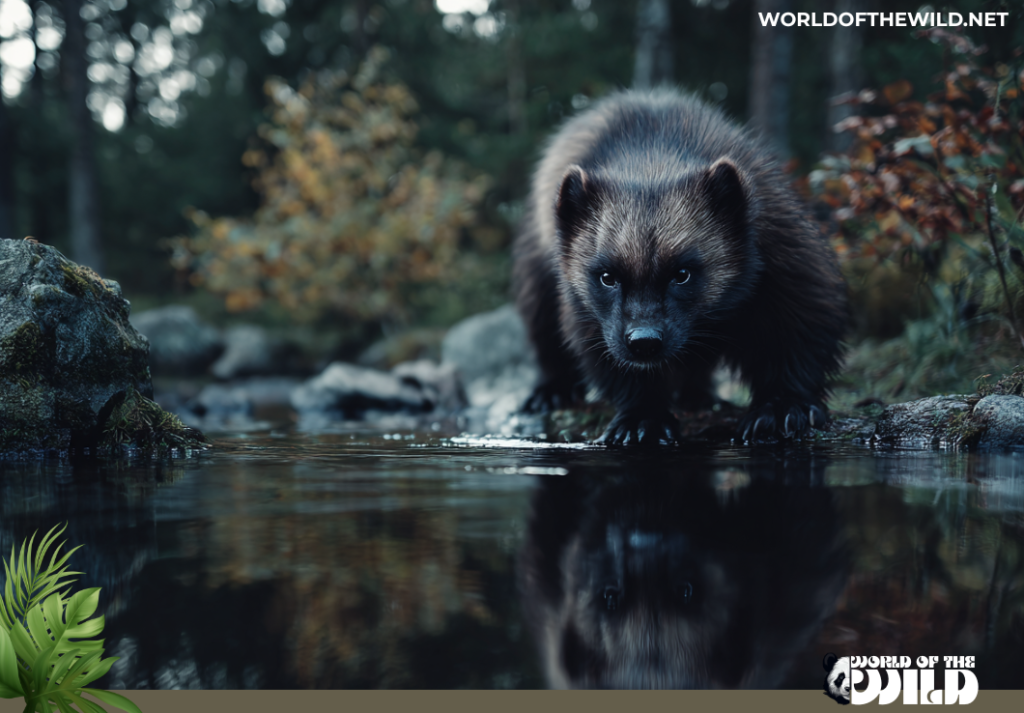
The wolverine resembles a small bear crossed with a large badger, sporting a stocky, muscular build that exudes raw power. Adults typically measure 26 to 42 inches in body length, with an additional bushy tail adding another 7 to 10 inches. Males are considerably larger than females, weighing between 24 to 40 pounds (occasionally reaching 55 pounds), while females typically weigh 17 to 26 pounds. Despite these modest dimensions, wolverines project an impression of much greater size due to their dense musculature and thick fur.
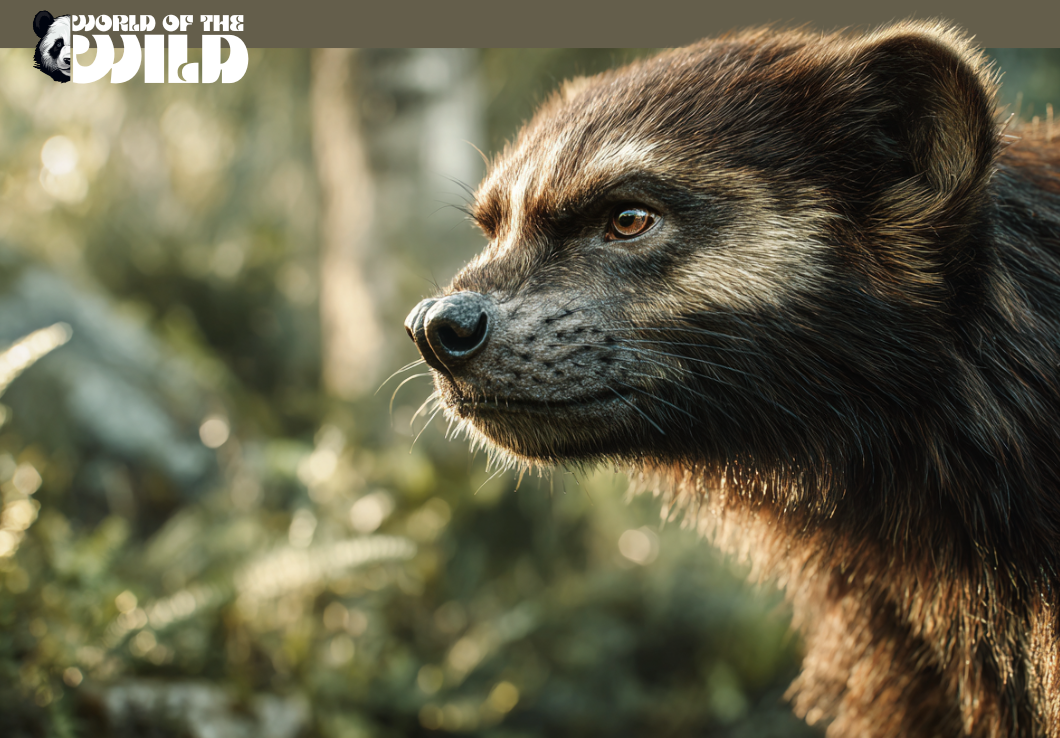
Their coat is luxuriously thick and dark brown to black, with distinctive lighter bands running from the shoulders along both flanks to the base of the tail, creating a dramatic contrast pattern. Some individuals display cream or golden facial markings, giving each wolverine a unique appearance. The fur is exceptionally dense, with long guard hairs protecting a soft, warm underfur—an essential adaptation for survival in subzero temperatures.
The wolverine’s head is broad and rounded with small, dark eyes and short, rounded ears that minimize heat loss. Their jaws are massively powerful relative to their size, housing 38 teeth including specialized carnassial teeth for shearing meat and unique rotated molars for crushing bone. The paws are disproportionately large and semi-plantigrade (meaning they walk on the soles of their feet), equipped with long, semi-retractable claws ideal for climbing, digging, and gripping prey. These features combine to create an animal that appears simultaneously compact and formidable.
Behavior
Wolverines are quintessentially solitary creatures, coming together only briefly to mate and separating again shortly after. Males and females maintain separate, overlapping territories, with male ranges often encompassing the territories of several females. These animals are not truly territorial in the defensive sense but rather engage in mutual avoidance, respecting each other’s space through extensive scent marking using anal glands, urine, and specialized scent glands on their abdomens.
As primarily crepuscular and nocturnal hunters, wolverines are most active during twilight hours and throughout the night, though they will hunt during daylight in winter when days are short. They are perpetual wanderers, constantly patrolling their enormous ranges in search of food opportunities. Wolverines demonstrate remarkable tenacity and determination, capable of pursuing prey through deep snow for miles or excavating frozen carcasses from beneath several feet of snow and ice.
Intelligence is a hallmark of wolverine behavior. They exhibit problem-solving abilities, cache excess food in scattered locations to create “refrigerators” in the snow, and remember these cache sites months later. Wolverines also show tactical hunting behavior, sometimes herding prey toward cliffs or deep snow where their snowshoe-like paws give them a decisive advantage.
Communication occurs primarily through scent marking, though wolverines also produce various vocalizations including growls, snarls, and surprisingly birdlike chatters. Young wolverines are particularly vocal, staying in contact with their mothers through high-pitched calls. Despite their reputation for ferocity, wolverines typically avoid confrontation with humans and will flee rather than fight when given the opportunity.
Their boldness toward other predators is legendary. Wolverines have been documented driving grizzly bears, mountain lions, and wolf packs away from kills, using their aggressive displays, fearless charges, and powerful scent to intimidate animals many times their size. This audacious behavior, combined with their willingness to defend food resources aggressively, has cemented their reputation as animals far tougher than their size would suggest.
Evolution
The wolverine’s evolutionary story stretches back millions of years within the mustelid family, which first appeared during the Oligocene epoch approximately 30 million years ago. The genus Gulo emerged much more recently, with fossil evidence suggesting wolverine-like mustelids appeared in Eurasia during the Pliocene epoch, roughly 5 million years ago.
The modern wolverine (Gulo gulo) evolved during the Pleistocene epoch, adapting specifically to cold, harsh climates during the ice ages that characterized this period. Fossil evidence indicates that wolverines once ranged much farther south than their current distribution, inhabiting regions across Europe, Asia, and North America wherever ice age conditions prevailed. During interglacial warm periods, wolverine populations contracted northward, only to expand again during subsequent glacial advances.
Several extinct relatives of the wolverine have been identified through the fossil record, including Gulo schlosseri from the Pliocene of Europe. The wolverine’s evolutionary path shows increasing specialization for scavenging and surviving in extreme cold environments. Key adaptations that evolved include their massive jaws for crushing frozen bone, large paws for snow travel, and thick, frost-resistant fur.
The wolverine’s closest extinct relative was Plesiogulo, a similar but larger mustelid that lived during the Miocene and Pliocene epochs across North America and Eurasia. Some paleontologists suggest that wolverines may have evolved from Plesiogulo ancestors as they adapted to increasingly harsh glacial conditions.
Following the last ice age approximately 11,000 years ago, wolverine populations became increasingly fragmented as their preferred cold, alpine, and tundra habitats retreated northward and to higher elevations. This post-glacial contraction has resulted in the wolverine’s current circumpolar distribution in the far north, with isolated populations in mountain ranges where suitable conditions persist.
Habitat
Wolverines maintain a circumpolar distribution across the northern hemisphere, inhabiting the boreal forests, tundra, and alpine regions of North America, northern Europe, and northern Asia. In North America, their range extends across Alaska, northern Canada, and into the northern Rocky Mountains, Cascade Range, and Sierra Nevada of the western United States, though populations in the lower 48 states are extremely limited. In Eurasia, wolverines are found across Scandinavia, Russia, Siberia, and parts of the Baltic states.
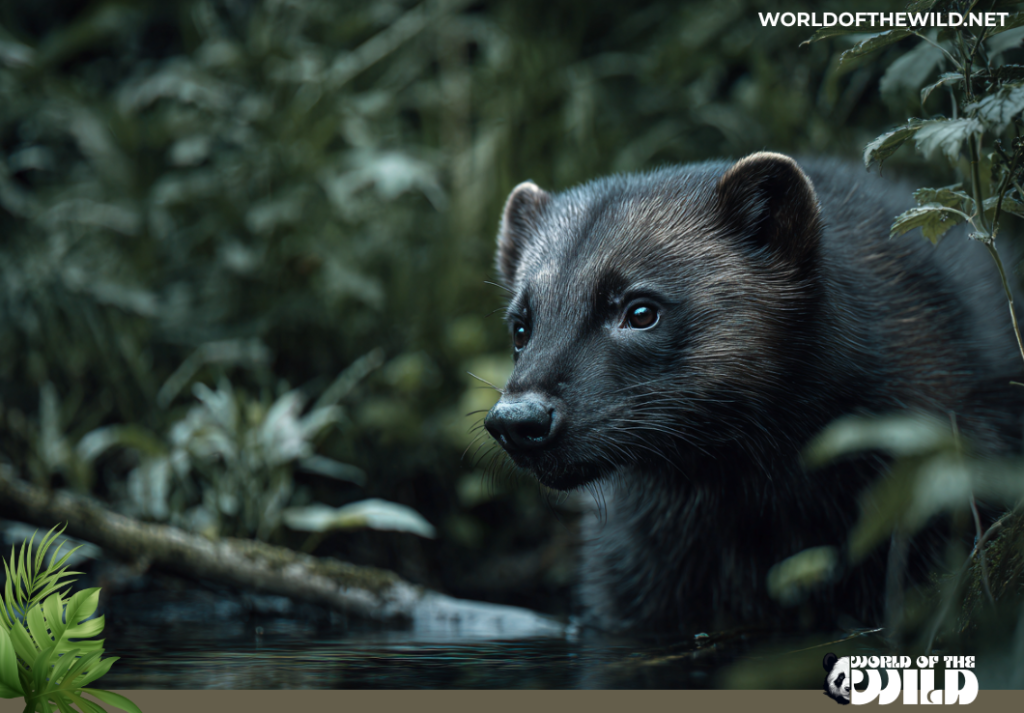
These animals are intimately associated with cold environments and persistent snow cover. Wolverines specifically seek areas where snow remains on the ground for extended periods, typically requiring snow cover from mid-autumn through late spring. This snow-dependency is critical because wolverines cache food in snow, den in snow caves, and rely on their snowshoe-like paws to outmaneuver prey and competitors in deep snow.
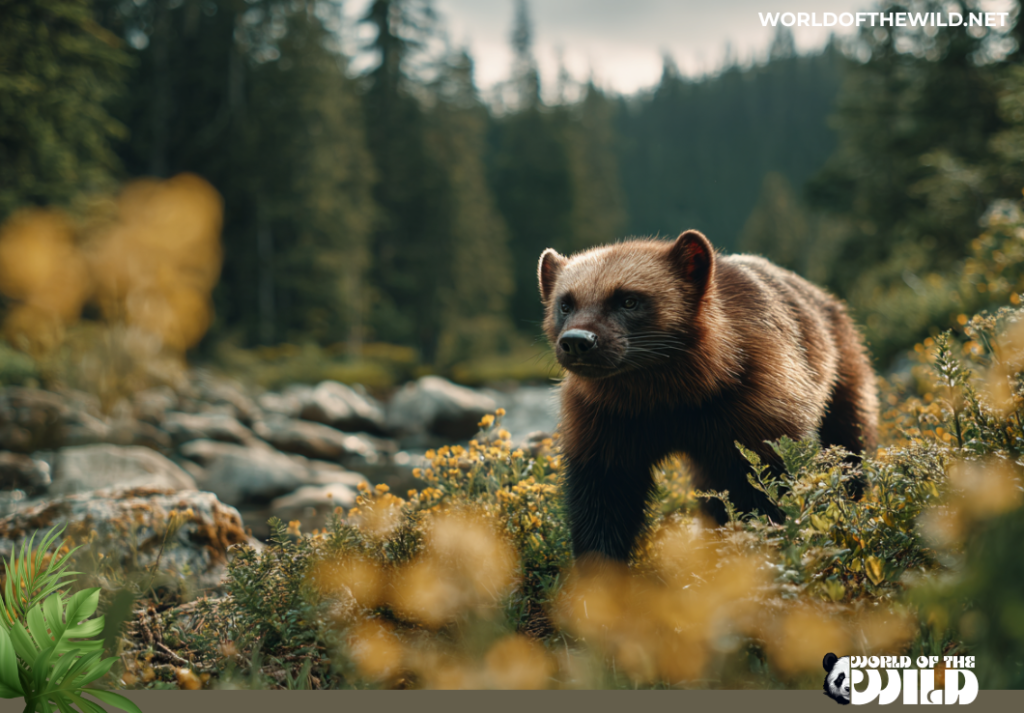
Their preferred habitat includes vast wilderness areas far from human development—boreal and montane coniferous forests dominated by spruce, pine, and fir; alpine tundra above the tree line; and Arctic tundra in the far north. Wolverines favor rugged, rocky terrain with plenty of natural cover including boulders, deadfall timber, and complex topography. They require enormous, unbroken expanses of wilderness; a single wolverine may utilize between 100 to 600 square miles depending on food availability and sex (males range more widely than females).
Denning sites are carefully selected, typically located in remote areas with deep, stable snowpack. Females excavate maternal dens in snow drifts against rocks, under fallen trees, or in natural caves, choosing locations where snow will persist well into spring. These dens can have tunnels extending 50 feet or more through the snow, providing insulation and protection for vulnerable kits.
The wolverine’s habitat requirements make them highly vulnerable to climate change and human development. They cannot tolerate heavily fragmented landscapes and avoid areas with significant human activity, roads, and development. This need for vast, undisturbed wilderness makes wolverines an important indicator species for ecosystem health in northern regions.
Diet
Wolverines are carnivorous opportunists with a diet that varies seasonally and regionally based on food availability. While capable hunters, they are equally proficient scavengers, often relying on carrion for a substantial portion of their caloric intake, particularly during winter months.
As hunters, wolverines primarily target small to medium-sized mammals including snowshoe hares, ground squirrels, marmots, beavers, and porcupines. They are surprisingly capable of killing prey much larger than themselves, successfully bringing down weakened or injured caribou, deer, moose, and mountain goats, particularly when deep snow impedes these larger animals while the wolverine’s snowshoe paws allow easy movement. However, these large kills are opportunistic rather than routine.
During summer, wolverines diversify their diet considerably, consuming ground-nesting birds, bird eggs, insects, berries, and roots. They are adept at raiding the nests of ground-dwelling birds like ptarmigan and waterfowl during breeding season. Small rodents like voles and lemmings provide important protein when available.
Scavenging represents a crucial dietary strategy, especially in winter. Wolverines possess an exceptional sense of smell that allows them to detect carrion beneath several feet of snow. They routinely scavenge the kills of wolves, bears, and mountain lions, either finding abandoned carcasses or boldly appropriating kills from these larger predators through aggressive intimidation displays. Their powerful jaws and specialized rotated molars allow them to consume parts of carcasses other scavengers cannot, including frozen meat, skin, tendons, and bone.
Wolverines are remarkably efficient at food utilization. They cache excess food in scattered locations throughout their territory, creating natural freezers in snow banks and beneath rocks. These caches are revisited during lean periods, providing critical sustenance when hunting opportunities are scarce. A single wolverine may maintain dozens of cache sites simultaneously, demonstrating impressive spatial memory.
Their hunting technique varies by prey type. For small prey, wolverines employ a stalk-and-pounce method, using their acute hearing to locate prey beneath snow. For larger animals, they often employ endurance tactics, pursuing weakened animals through deep snow until exhaustion allows the wolverine to attack. They typically target the neck or throat, using their powerful jaws to deliver a crushing, fatal bite.
Predators and Threats
As formidable predators themselves, adult wolverines have relatively few natural enemies. Their primary predators include wolves, which occasionally kill wolverines during territorial disputes or competition over carcasses, though such encounters are infrequent. Mountain lions and large bears (both grizzly and black bears) may kill wolverines opportunistically, particularly younger or smaller individuals, though wolverines’ fierce defensive behavior makes them an unappealing target for most predators. Golden eagles have been documented attacking wolverine kits, though this threat diminishes as young wolverines grow.
The greatest threats to wolverine populations are anthropogenic—caused by human activities. Habitat fragmentation and loss represent the most significant challenge. Wolverines require vast, uninterrupted wilderness areas, making them extremely vulnerable to road construction, logging, oil and gas development, and human settlement patterns that carve up continuous habitat into isolated fragments. Wolverine populations cannot persist in developed or heavily modified landscapes.
Climate change poses an existential threat to wolverines. Their dependence on persistent spring snowpack for denning means that warming temperatures directly threaten reproductive success. As climate change reduces spring snow cover and shortens the snow season, suitable denning habitat shrinks and becomes increasingly fragmented. Studies indicate that wolverines require snow cover lasting until at least mid-May for successful kit-rearing, a condition that is becoming less common across portions of their historical range.
Historically, trapping for fur decimated wolverine populations across much of their range, particularly in the southern portions of their distribution in Europe and the contiguous United States. While trapping pressure has decreased in many regions due to protective regulations, it remains a concern in some areas, particularly where regulations are poorly enforced or non-existent.
Human-wildlife conflict, though less common than with other carnivores, occasionally occurs when wolverines prey on livestock or raid traplines and stored food. Such conflicts sometimes result in retaliatory killing. Additionally, wolverines are susceptible to poisoning through secondary exposure to rodenticides and through consuming poisoned carcasses intended for other predators.
Road mortality represents an emerging threat as transportation corridors increasingly bisect wolverine habitat. Wolverines, as wide-ranging animals, must cross roads during their extensive movements, making them vulnerable to vehicle collisions.
Perhaps most insidiously, wolverines face the challenge of small, isolated populations. In areas like the lower 48 United States, where wolverine numbers are critically low and populations are geographically isolated, genetic diversity becomes a conservation concern. Small populations are vulnerable to inbreeding depression and lack the genetic variability needed to adapt to changing conditions.
Reproduction and Life Cycle
Wolverines follow a distinctive reproductive strategy characterized by delayed implantation and seasonal breeding. Mating typically occurs during late spring and summer, from May through August, when males expand their ranging behavior to overlap with multiple females’ territories. During this period, a male may mate with several females whose ranges fall within his own territory. Courtship is brief, involving some physical interaction and scent communication, after which the pair separates.
Following fertilization, wolverines employ delayed implantation—the fertilized embryo does not immediately implant in the uterine wall but remains in a state of suspended development. This delay can last six to nine months, with actual implantation occurring in late winter, typically January or February. This reproductive strategy allows females to time birth optimally regardless of when mating occurred. Active gestation following implantation lasts only 30-40 days, resulting in total elapsed time from mating to birth of seven to nine months.
Females give birth between February and April, specifically timing births to coincide with deep, stable snowpack. Litter sizes range from one to five kits (typically two to three), which are born blind, helpless, and covered in fine, pale fur. Birth occurs in carefully constructed maternal dens excavated deep into snowdrifts, providing insulation and protection from predators and harsh weather.
Kits develop slowly compared to many carnivores. Their eyes open at approximately three to four weeks, and they remain in the den for eight to ten weeks before venturing outside. During this vulnerable period, the mother provides all care, nursing the kits and periodically moving them between multiple prepared dens if disturbance threatens. Females are fiercely protective mothers, defending their young aggressively against any threat.
Weaning begins around eight to ten weeks but proceeds gradually, with kits consuming a combination of milk and regurgitated or cached meat. Young wolverines remain with their mothers through their first winter and into the following spring or summer, learning essential hunting and survival skills. This extended period of maternal care, lasting 13-17 months, is unusually long for an animal of the wolverine’s size and reflects the complexity of skills young wolverines must master.
Sexual maturity is reached at approximately two years of age for females and slightly later for males, though males may not successfully breed until establishing a territory, which can take several additional years. In the wild, wolverines typically live 7-12 years, though some individuals reach 13-15 years. In captivity, with consistent food and veterinary care, wolverines have survived beyond 17 years.
Reproductive rates are inherently low. Females typically breed only every other year or even less frequently, producing small litters with high juvenile mortality. This slow reproductive rate means wolverine populations cannot quickly recover from declines, making them particularly vulnerable to overharvesting and habitat loss.
Population
The wolverine is currently classified as Least Concern on the IUCN Red List globally, though this classification masks significant regional variation in population status. In many portions of their range, particularly in remote areas of Russia, Canada, and Alaska, wolverine populations remain relatively stable. However, in the southern periphery of their range and in areas with high human density, wolverines face serious conservation challenges.
Global population estimates are uncertain due to the wolverine’s elusive nature and preference for remote habitat, but current estimates suggest approximately 15,000-30,000 wolverines worldwide. The vast majority inhabit Russia and Canada, where extensive wilderness remains. Alaska supports an estimated 2,000-3,000 wolverines, while Scandinavia hosts several hundred.
In the contiguous United States, wolverines are critically rare, with perhaps only 250-300 individuals persisting primarily in Montana, Idaho, and Wyoming, with occasional sightings in Washington, Oregon, and California. These southern populations are of particular conservation concern due to their isolation and vulnerability to climate change. The species was extirpated from much of the lower 48 states during the 19th and early 20th centuries through trapping and predator control programs.
Population trends vary regionally. In Scandinavia, wolverine populations have increased in recent decades following protection and management programs, expanding from historical lows. However, this recovery has generated human-wildlife conflict over livestock predation, leading to controversial culling programs that threaten to reverse positive trends.
In North America, populations appear stable in northern regions but face mounting pressure from climate change and development in southern portions of their range. The southern Rocky Mountain populations are particularly vulnerable, existing as small, isolated groups separated from the main distribution by hundreds of miles.
Several jurisdictions have granted the wolverine varying levels of protection. In the United States, wolverines receive no federal protection under the Endangered Species Act despite being proposed for listing multiple times, though they are protected at state levels in some regions. Canada lists wolverines as a species of Special Concern in some provinces. European countries offer varying levels of protection, with the species listed in Appendix III of the Bern Convention.
The primary conservation challenge lies in maintaining habitat connectivity and addressing climate change impacts. Wolverines serve as an important indicator species for wilderness health—their presence indicates large, intact ecosystems with minimal human disturbance.
Conclusion
The wolverine stands as a testament to nature’s ability to craft survivors perfectly adapted to the planet’s most unforgiving environments. This remarkable mustelid, though relatively small, embodies strength, tenacity, and adaptability that few animals can match. From its powerful jaws capable of crushing frozen bone to its snowshoe paws that carry it across landscapes where others founder, every aspect of the wolverine reflects millions of years of evolution fine-tuning an apex survivor for life in the far north.
Yet for all its toughness, the wolverine faces an uncertain future. Climate change threatens the deep snowpack essential for successful reproduction, while human development fragments the vast wilderness expanses these solitary wanderers require. The wolverine’s slow reproductive rate means populations cannot quickly rebound from losses, making every individual precious to the species’ persistence.
As we move further into an era of unprecedented environmental change, the wolverine’s fate will serve as a barometer for the health of northern wilderness ecosystems. Protecting these enigmatic carnivores requires preserving the last great wild spaces on Earth—the remote forests, tundra, and mountains where wolverines still roam freely. By safeguarding wolverine habitat, we protect countless other species that share these magnificent landscapes. The question remains whether we possess the collective will to ensure that future generations can still marvel at nature’s most tenacious survivor, wandering wild and free across the frozen north.
Scientific Name: Gulo gulo
Diet Type: Carnivore (hunter and scavenger)
Size: 26-42 inches in body length (plus 7-10 inch tail)
Weight: Males: 24-40 lbs (up to 55 lbs); Females: 17-26 lbs
Region Found: Circumpolar distribution across boreal forests, tundra, and alpine regions of Alaska, Canada, northern United States (limited), Scandinavia, Russia, and northern Asia