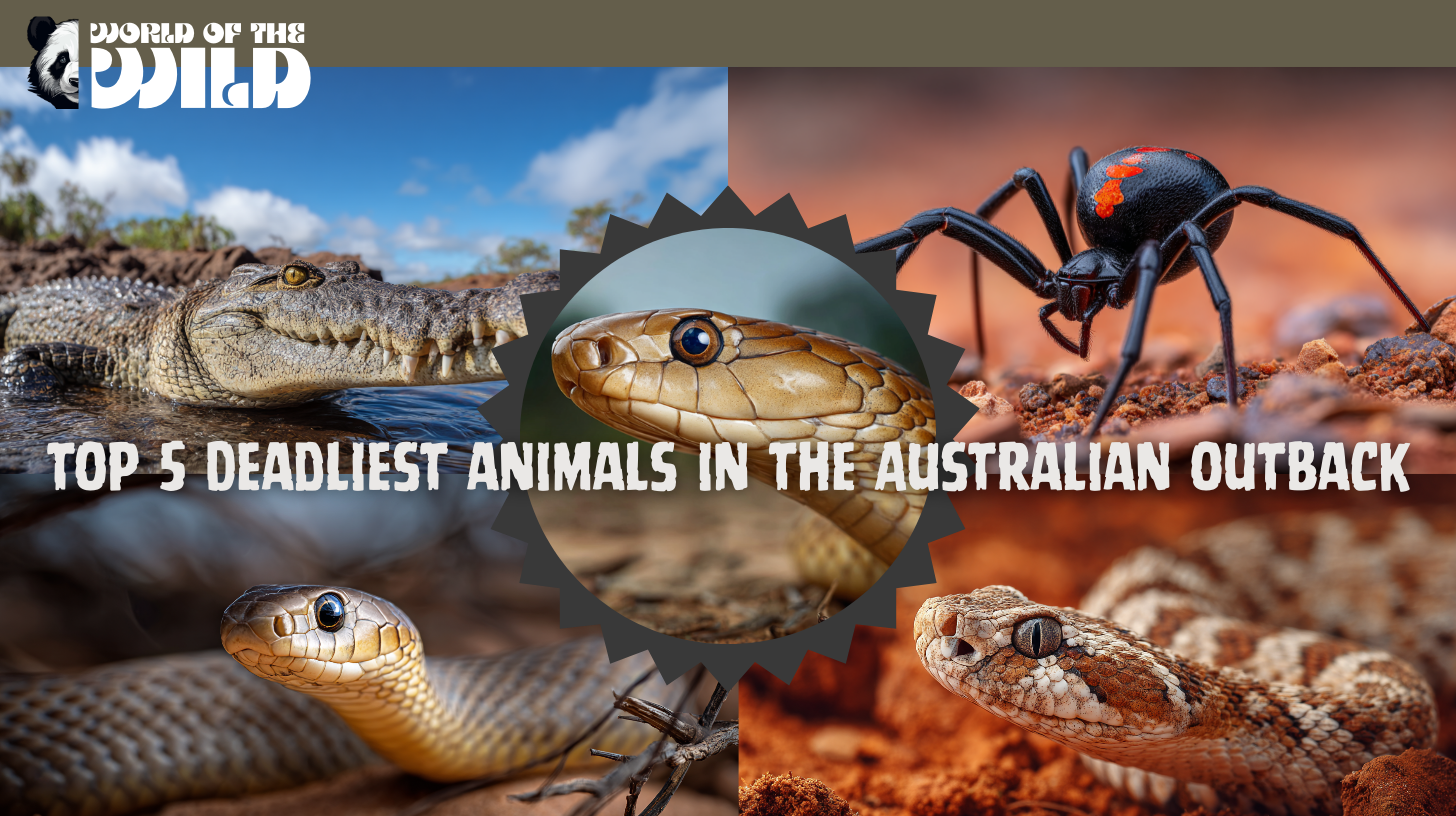

Introduction: Where Beauty Meets Danger in Australia’s Wilderness
The Australian Outback is a land of breathtaking contrasts—a vast, sun-scorched wilderness where ancient red earth meets endless blue skies, and where some of the planet’s most extraordinary wildlife has evolved in isolation for millions of years. While the region captivates visitors with its rugged beauty and unique ecosystems, it’s also home to creatures that command both respect and caution. The deadliest animals in the Australian Outback aren’t just dangerous; they’re masterpieces of evolution, perfectly adapted predators that have honed their hunting techniques over countless generations.
What makes these animals truly remarkable isn’t simply their capacity to harm humans—encounters are actually quite rare—but rather their incredible biological adaptations. From venom so potent it could theoretically kill hundreds of people with a single dose, to prehistoric reptiles that have remained virtually unchanged for millions of years, these species represent nature’s most formidable designs. The inland regions of Australia, stretching across deserts, scrublands, and remote bushland, provide the perfect stage for these animals to thrive, often hidden from human eyes but always present in the complex web of life.
Understanding these creatures is essential not only for safety but for appreciating the delicate balance of Australia’s ecosystems. Each of these animals plays a crucial role in controlling pest populations, maintaining biodiversity, and contributing to the health of their environments. As we explore the top five deadliest animals in the Australian Outback, you’ll discover that behind their fearsome reputations lie fascinating behaviors, remarkable survival strategies, and surprising vulnerabilities. These aren’t monsters—they’re survivors, perfectly equipped for their harsh environment and deserving of our fascination and protection.
5. Redback Spider – The Venomous Widow of the Outback
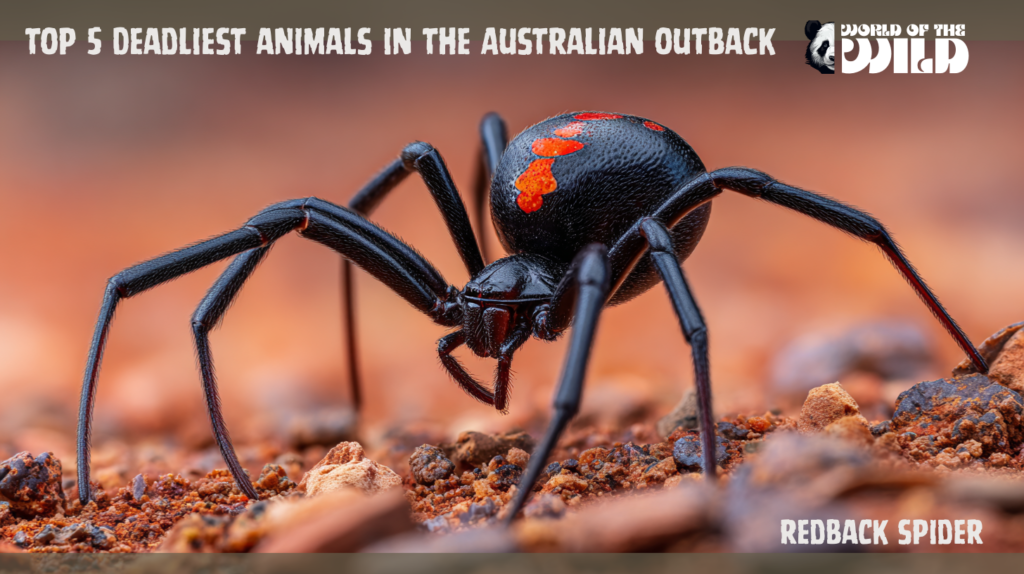
Scientific Name: Latrodectus hasseltii
Classification: Arachnida, Araneae, Theridiidae
The Redback Spider is one of Australia’s most iconic and feared arachnids, instantly recognizable by the distinctive red or orange stripe that adorns the upper abdomen of the female. While males are significantly smaller and harmless, measuring just 3-4 millimeters, female Redbacks can reach 10 millimeters in body length, with legs spanning up to 20 millimeters. Their jet-black bodies create a striking contrast with the crimson marking, serving as a warning signal to potential predators. The underside of the female features an additional red hourglass shape, linking her to the infamous black widow spiders found across other continents.
These spiders are remarkably adaptable and can be found throughout mainland Australia and the Outback, thriving in both natural bushland and human-modified environments. Redbacks prefer dry, sheltered locations and are notorious for establishing their messy, tangled webs in sheds, outdoor furniture, mailboxes, and under the rims of trash bins. Their webs may appear haphazard, but they’re ingeniously designed with strong vertical threads that can trap even large prey like lizards and small mice.
The Redback’s hunting strategy is one of patient ambush. Once an insect, small lizard, or other prey becomes ensnared in the sticky silk threads, the spider delivers a venomous bite that immobilizes the victim. The venom contains a neurotoxin called alpha-latrotoxin, which causes severe pain, sweating, muscle rigidity, and nausea in humans. Before the development of antivenom in 1956, Redback bites resulted in at least 14 recorded deaths in Australia. Today, while approximately 2,000 people are bitten annually, no deaths have occurred since the antivenom became available.
One fascinating aspect of Redback biology is their mating behavior. Male Redbacks perform an extraordinary sacrifice during reproduction—after mating, the male actually somersaults into the female’s jaws, offering himself as a meal. This increases the duration of copulation and the likelihood of successful fertilization, making it one of nature’s most extreme examples of sexual cannibalism.
4. Common Death Adder – The Master of Deceptive Ambush
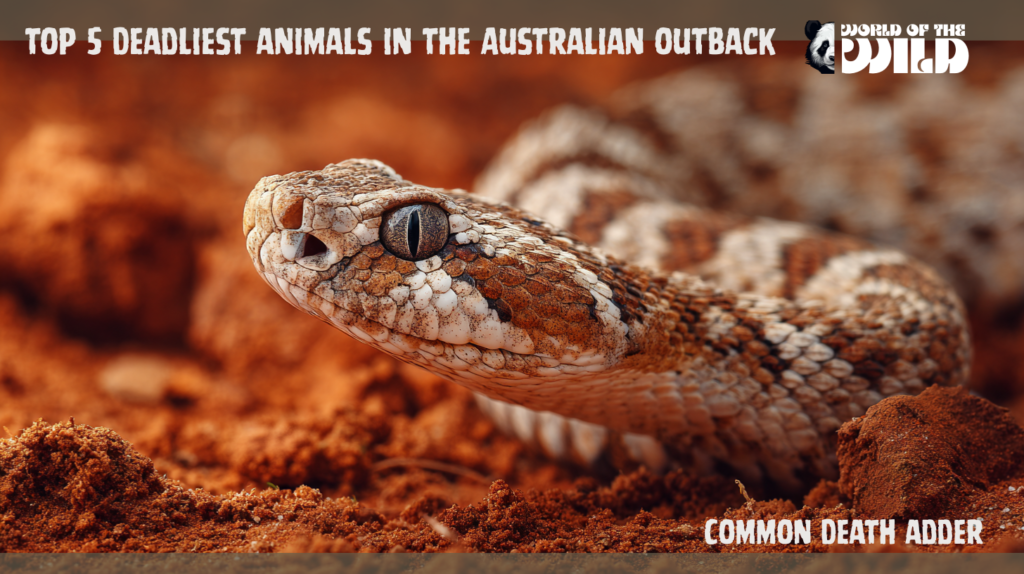
Scientific Name: Acanthophis antarcticus
Classification: Reptilia, Squamata, Elapidae
Despite its name suggesting otherwise, the Common Death Adder is anything but common in its hunting prowess. This thick-bodied, medium-sized snake typically measures 70-100 centimeters in length, with a distinctly triangular head that’s broader than its neck—an unusual feature among Australian elapid snakes. The Death Adder’s coloration varies dramatically depending on its environment, ranging from reddish-brown to grey or even cream, adorned with darker crossbands that provide exceptional camouflage against the Outback’s sandy soils and leaf litter.
Found across eastern and coastal Australia, extending into the Outback regions of Queensland, New South Wales, and South Australia, the Death Adder occupies a variety of habitats including woodlands, grasslands, heaths, and scrublands. Unlike most Australian snakes that actively hunt and flee when threatened, Death Adders are ambush predators that rely on extraordinary patience and camouflage. They partially bury themselves in sand or leaf litter, remaining motionless for days or even weeks while waiting for prey to wander within striking distance.
What truly sets the Death Adder apart is its remarkable luring technique. The snake uses its tail as a fishing lure, wiggling the thin, worm-like appendage to attract small mammals, birds, and lizards. When curious prey investigates what appears to be an easy meal, the Death Adder strikes with lightning speed—among the fastest strikes of any snake species worldwide, occurring in less than 0.13 seconds. The venom is a potent neurotoxin that causes progressive paralysis, and before the introduction of antivenom, approximately 50% of Death Adder bites were fatal to humans.
The Death Adder’s conservation status is listed as Least Concern nationally, but certain populations have declined due to habitat loss and the introduction of the cane toad. Death Adders often mistake cane toads for prey, and consuming these toxic amphibians proves fatal. A surprising fact: Death Adders are ovoviviparous, meaning females give birth to live young rather than laying eggs—a reproductive strategy shared by only a fraction of snake species globally, providing offspring with a better chance of survival in variable Outback conditions.
3. Saltwater Crocodile – The Prehistoric Apex Predator
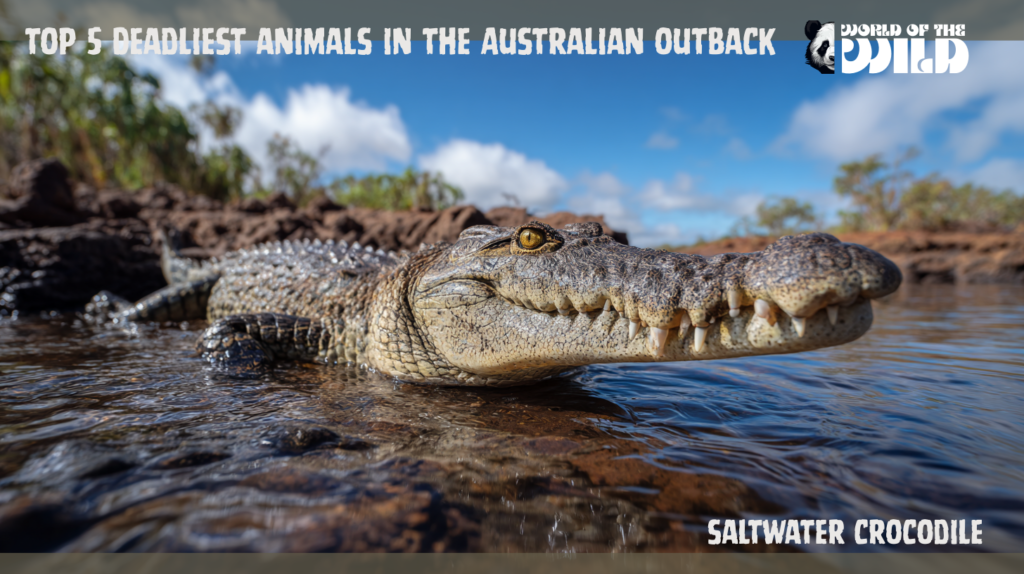
Scientific Name: Crocodylus porosus
Classification: Reptilia, Crocodylia, Crocodylidae
The Saltwater Crocodile, affectionately known as “salties” by Australians, represents the largest living reptile on Earth and an apex predator that has remained virtually unchanged for over 200 million years. Male Saltwater Crocodiles can reach staggering lengths of 6-7 meters (20-23 feet) and weigh over 1,000 kilograms (2,200 pounds), though historical accounts describe specimens exceeding 8 meters. Females are considerably smaller, typically reaching 2.5-3 meters. These massive reptiles possess powerful jaws capable of generating a bite force of 3,700 pounds per square inch—the strongest bite force ever measured in a living animal.
While their name might suggest exclusive saltwater habitats, these adaptable predators are equally at home in freshwater rivers, billabongs, and swamps throughout northern Australia, from Western Australia through the Northern Territory and into Queensland. During wet season floods, salties can travel far inland, bringing them into the Outback’s remote waterways. They’ve even been recorded swimming hundreds of kilometers out to sea, facilitating their spread across coastal regions and islands.
Saltwater Crocodiles are opportunistic carnivores with a diet that changes throughout their life stages. Juveniles feed on insects, crustaceans, and small fish, while adults hunt larger prey including fish, birds, wild boar, water buffalo, and occasionally livestock or unwary humans. Their hunting technique is one of patient surveillance and explosive ambush. A crocodile can remain motionless in water for hours, with only its eyes and nostrils visible, before launching a devastating attack. They employ a technique called the “death roll,” spinning rapidly while gripping prey to dismember it or drag it underwater to drown.
Listed as Least Concern globally, Australian Saltwater Crocodile populations have made a remarkable recovery since receiving full protection in the 1970s, when unregulated hunting had pushed them toward extinction. The population now exceeds 100,000 in the Northern Territory alone. One surprising fact that few people know: Saltwater Crocodiles exhibit temperature-dependent sex determination, meaning the temperature at which eggs are incubated determines whether hatchlings will be male or female. Eggs incubated at 31.6°C (89°F) produce males, while temperatures above or below this threshold produce females—a characteristic that makes them particularly vulnerable to climate change.
2. Eastern Brown Snake – The Quick-Tempered Speed Demon
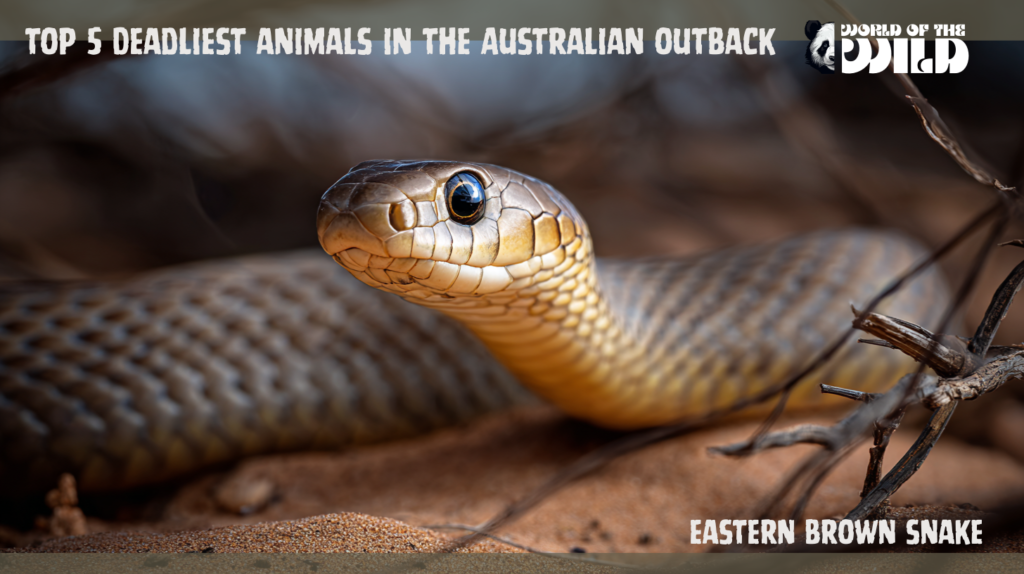
Scientific Name: Pseudonaja textilis
Classification: Reptilia, Squamata, Elapidae
The Eastern Brown Snake holds the ominous distinction of being responsible for more human fatalities in Australia than any other snake species, accounting for approximately 60% of snake-bite deaths. This slender, fast-moving serpent typically measures 1.5-2 meters in length, though specimens over 2.4 meters have been recorded. Despite its name, the Eastern Brown displays remarkable color variation, ranging from light tan and grey-brown to dark chocolate brown or even black, with some individuals showing orange or cream bellies. Juvenile Eastern Browns can be spectacularly patterned with dark bands and blotches, though these markings typically fade as they mature.
Distributed throughout eastern and central Australia, from Queensland through New South Wales, Victoria, South Australia, and extending into the southern regions of the Northern Territory, the Eastern Brown Snake thrives in a variety of habitats. It particularly favors open grasslands, agricultural areas, and scrublands of the Outback, often bringing it into close contact with human settlements. Unlike many snakes that avoid populated areas, Eastern Browns have successfully adapted to farmland and even suburban environments where they hunt rodents attracted to human food sources.
These diurnal hunters are active predators with a diet consisting primarily of small mammals, particularly mice, rats, and young rabbits, though they’ll also consume birds, bird eggs, and other reptiles including other snakes. Eastern Browns hunt by active pursuit, using their excellent vision and speed—they’re among the fastest snakes in Australia, capable of moving at approximately 4 kilometers per hour when threatened. When hunting, they deliver multiple rapid strikes, injecting venom that contains powerful neurotoxins and blood coagulants that cause progressive paralysis and internal bleeding in prey.
What makes the Eastern Brown particularly dangerous is its behavior when threatened. Rather than fleeing, these snakes are notoriously defensive and quick-tempered. When cornered or surprised, they’ll raise the front portion of their body in an S-shape, flatten their neck, and gape their mouth before striking repeatedly. Their venom is extraordinarily potent—ranked as the second most toxic land snake venom in the world, with a median lethal dose of just 0.0365 mg/kg. A single bite can deliver 5-15 mg of venom, enough to kill over 20 adult humans.
A surprising fact about Eastern Browns: they’re actually quite beneficial to agriculture, with studies showing that a single Eastern Brown can consume over 500 mice in a year, providing natural pest control worth thousands of dollars to farmers. Additionally, females can store sperm for months after mating, allowing them to fertilize eggs when conditions are optimal—a reproductive strategy that enhances their survival success in the unpredictable Outback environment.
1. Inland Taipan – The World’s Most Venomous Snake
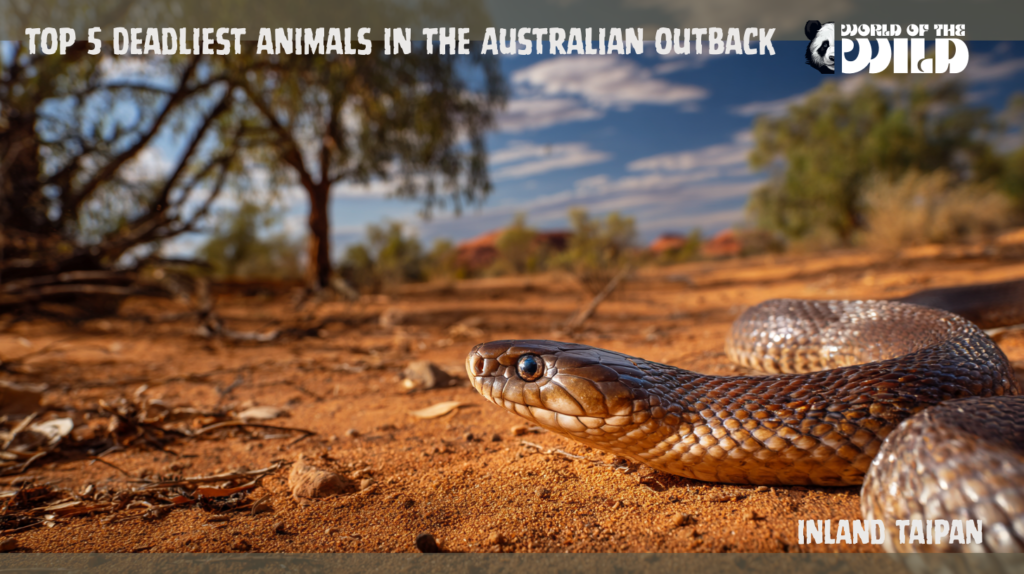
Scientific Name: Oxyuranus microlepidotus
Classification: Reptilia, Squamata, Elapidae
Claiming the title of the world’s most venomous land snake, the Inland Taipan—also known as the “fierce snake”—possesses venom so extraordinarily toxic that a single bite contains enough poison to kill 100 adult humans or 250,000 mice. This remarkable serpent typically measures 1.8-2.5 meters in length, with a small, somewhat rounded head and large, dark eyes that provide excellent vision for hunting in its harsh desert environment. The Inland Taipan displays remarkable seasonal color variation: during cooler months, its scales darken to a deep, glossy brown or olive, maximizing heat absorption, while in summer, they lighten to a golden tan or straw color, reflecting the intense desert heat.
Unlike its coastal cousin, the Coastal Taipan, which ranges across northern Australia, the Inland Taipan inhabits one of the most isolated regions on Earth—the remote, semi-arid black soil plains and rocky outcrops of the Channel Country spanning southwestern Queensland and northeastern South Australia. This extreme habitat experiences scorching summers exceeding 50°C (122°F) and freezing winter nights, creating an environment where few predators can survive. The Inland Taipan has adapted to these harsh conditions by sheltering in deep soil cracks and abandoned burrows of the Long-haired Rat, emerging primarily during the cooler parts of the day.
The Inland Taipan is a specialist hunter with a diet consisting almost exclusively of small to medium-sized mammals, particularly the Long-haired Rat (Rattus villosissimus), whose population explosions during favorable conditions provide abundant food. The snake’s hunting strategy is devastatingly efficient: it delivers multiple rapid strikes—sometimes eight or more in a single attack—ensuring that even the most vigorous prey receives a fatal dose. The venom contains a sophisticated cocktail of neurotoxins, hemotoxins, myotoxins, and nephrotoxins that causes rapid paralysis, internal bleeding, muscle destruction, and kidney failure. Tests show the venom is approximately 50 times more toxic than that of an Indian cobra and 10 times more potent than a rattlesnake’s.
Despite possessing the world’s most lethal venom, the Inland Taipan’s temperament is remarkably placid compared to other dangerous snakes. Its nickname “fierce snake” refers to its venom’s potency rather than its disposition. In fact, there are no recorded human fatalities from Inland Taipan bites, and documented bites number fewer than a dozen—most involving experienced snake handlers. When threatened, the Inland Taipan prefers to escape into crevices rather than engage defensively, though it will strike if cornered.
Currently listed as Least Concern by the IUCN, the Inland Taipan faces minimal threats due to its remote habitat, though climate change poses potential long-term challenges to its specialized ecosystem. One truly remarkable fact: The Inland Taipan’s venom composition changes seasonally in response to fluctuations in its prey’s physiology. During winter, when rats build up resistance through physiological changes, the snake’s venom becomes even more potent—a stunning example of evolutionary arms race playing out in real-time across the Australian desert.
Conclusion: Respecting the Outback’s Magnificent Predators
The five deadliest animals in the Australian Outback represent far more than just creatures to fear—they embody millions of years of evolutionary refinement, each species a testament to nature’s incredible capacity for innovation and adaptation. From the Inland Taipan’s unparalleled venom potency to the Saltwater Crocodile’s ancient dominance, from the Eastern Brown Snake’s agricultural benefits to the Death Adder’s patient hunting artistry, and even the Redback Spider’s remarkable survival in human-modified landscapes, these animals deserve our respect, fascination, and protection.
What’s truly remarkable is that despite their fearsome capabilities, fatal encounters with these species are exceedingly rare. Modern medical interventions, particularly the development of antivenoms, have drastically reduced mortality rates from snake and spider bites. The real danger lies not in the animals themselves but in ignorance and carelessness. Understanding their behaviors, respecting their habitats, and maintaining a safe distance are the keys to peaceful coexistence.
These apex predators and specialized hunters play irreplaceable roles in maintaining the ecological balance of the Outback. They control rodent populations, prevent disease spread, and contribute to the biodiversity that makes Australia’s wilderness so unique. As human development increasingly encroaches on their territories, it becomes our responsibility to ensure these magnificent species continue to thrive for future generations to study, admire, and yes, even fear—in the healthiest sense of the word.
The Australian Outback remains one of Earth’s last great wild frontiers, and these five animals are among its most captivating inhabitants. Whether you’re planning a visit to the Outback, fascinated by wildlife biology, or simply curious about the natural world, remember that these creatures are integral threads in the vast tapestry of life that makes our planet extraordinary.
Ready to explore more incredible wildlife? Dive deeper into the fascinating world of Australian fauna by exploring our comprehensive guides to the Great Barrier Reef’s marine life, the unique marsupials of Tasmania, or the remarkable bird species of the Kimberley region. Subscribe to World of the Wild for weekly wildlife facts, conservation updates, and the latest discoveries from nature’s wildest corners. Share this article with fellow nature enthusiasts and join our community of wildlife lovers celebrating Earth’s most remarkable species!